Was Nostradamus a true prophet?
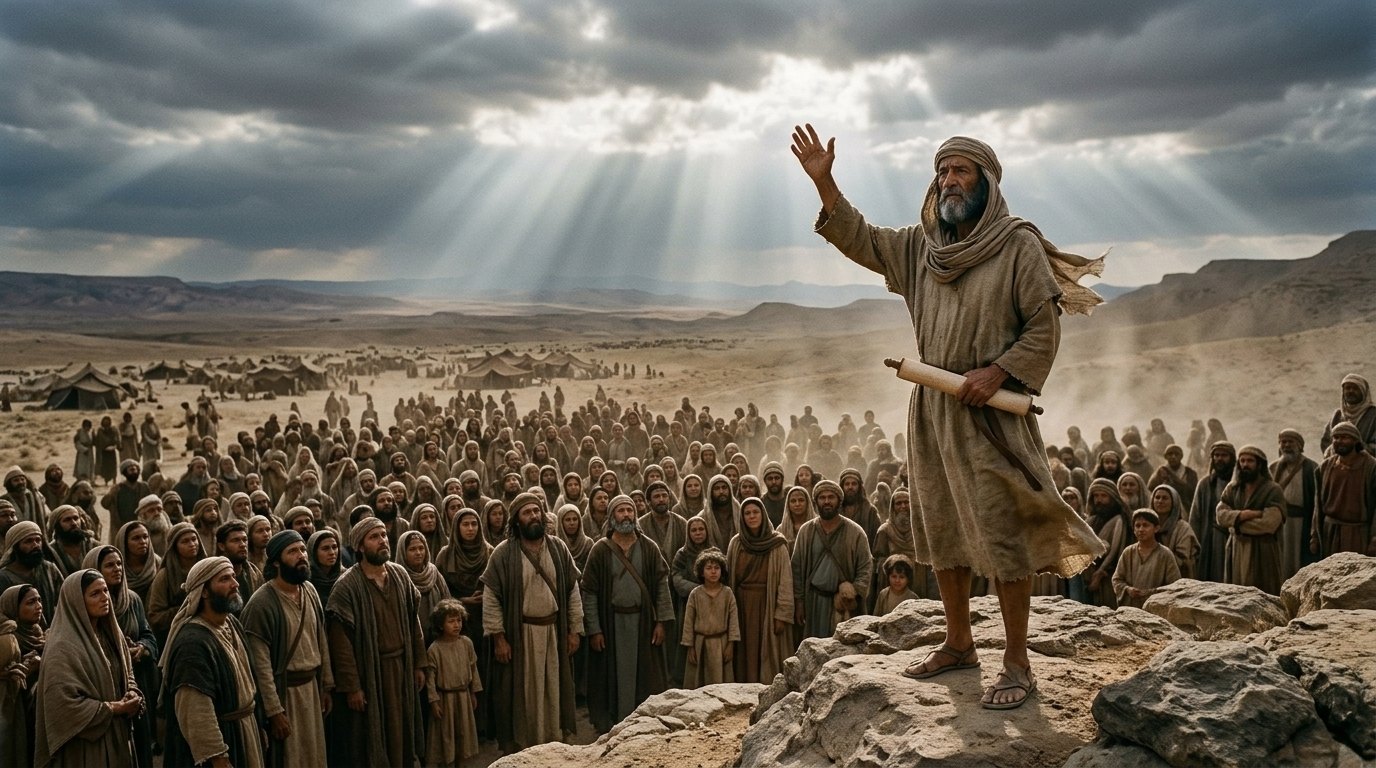
Deuteronomy 18:20-22
20 But a prophet who presumes to speak in my name anything I have not commanded, or a prophet who speaks in the name of other gods, is to be put to death.”
21 You may say to yourselves, “How can we know when a message has not been spoken by the LORD?”
22 If what a prophet proclaims in the name of the LORD does not take place or come true, that is a message the LORD has not spoken. That prophet has spoken presumptuously, so do not be alarmed.
New International Version (NIV)
The answer
No. Nostradamus was not a true prophet of God. He was a sixteenth-century French physician and astrologer whose Centuries contained cryptic rhymed verses called quatrains. Their language is so ambiguous that interpreters continually fit them to later events; that is not the clear, testable fulfilment Scripture requires.
Scripture gives decisive tests:
- The source must be God, not divination. Deuteronomy 18:10-12 forbids divination, fortune-telling, sorcery and consulting spirits, calling such practices an abomination to Yahweh. Nostradamus’s prophetic work was bound up with astrology. Seeking hidden knowledge through such practices is not receiving revelation from God.
- The word must actually come to pass. Deuteronomy 18:22 says, “if the thing doesn’t follow, nor happen, that is the thing which Yahweh has not spoken.” Verses elastic enough to be applied to many different events cannot establish that God spoke.
- Even an impressive sign is not enough by itself. Deuteronomy 13:1-5 teaches that if a sign occurs but the speaker draws people after other gods, God’s people must not listen. Apparent accuracy would never legitimize a message that turns people away from Him.
God also condemns those who announce His word when He has not sent them (Ezekiel 13:6). Nostradamus’s predictions therefore must not be treated as biblical prophecy or as guidance from God. True prophecy comes from God and agrees with His revealed word; divination remains forbidden even when it appears impressive or successful.
Answered from Scripture · reviewed November 24, 2026
True prophecy and Nostradamus tested by Scripture
Each row is one test Scripture gives for a prophet. Read across to see how true prophecy passes it and Nostradamus's quatrains fail it.
| True prophecy | Nostradamus | |
|---|---|---|
| Source | Comes from God, by revelation | Bound up with astrology, a form of divination God forbids |
| Fulfilment | The word clearly comes to pass | Ambiguous quatrains fitted again and again to later events |
| Signs | Agrees with God's revealed word and never draws people from Him | Apparent accuracy would never make a message from God |
| Sent | Spoken by those God sends | Not to be treated as biblical prophecy or guidance from God |

Scripture gives exacting, non-negotiable standards for anyone who claims to speak for God, testing both their source and their accuracy. Evaluated against the Word of God, Nostradamus was an astrologer whose occult methods and ambiguous verses fall under biblical condemnation rather than genuine prophetic revelation. Believers are called to anchor their trust in God's completed and inerrant word, turning entirely away from divination.
The Test of Truth
God Requires Absolute Accuracy in Prophecy

If what a prophet proclaims in the name of the LORD does not take place or come true, that is a message the LORD has not spoken. That prophet has spoken presumptuously, so do not be alarmed.
Deuteronomy 18:22 (NIV)
It gives God's standard that any prophecy failing to come to pass proves the speaker was not sent by Him.
The inspired Word of God provides an absolute, infallible criterion for distinguishing a true spokesman of God from an imposter. In Deuteronomy 18:22, the divine standard is set down without compromise: if a prophet speaks in the name of the Lord and the thing does not happen, the Lord has not spoken it. God demands one hundred percent accuracy because His own omniscience and holy veracity stand behind genuine revelation. Moses warned Israel in Deuteronomy 18:20 that anyone presuming to speak a word in the Lord's name that was never commanded, or who speaks in the name of other gods, was worthy of death. This standard left no room for guesswork or ambiguity. Deuteronomy 18:21 anticipates the practical question of how believers can discern such falsehood, grounding the test entirely on whether the proclaimed outcome occurs. When measured against this biblical plumb line, Nostradamus fails immediately. His quatrains rely on cryptic, open-ended wordplay that interpreters manipulate after historical events have already transpired. Jeremiah 28:9 reiterates that only when a prophet's word genuinely comes to pass is it acknowledged that the Lord truly sent him. In Isaiah 41:21-24, God issues a formal challenge to pagan prognosticators to declare the future accurately, exposing their inability to do so and declaring both them and their works an abomination. Finally, in Isaiah 46:9-10, the Lord proclaims His unique glory: He alone declares the end from the beginning, accomplishing all His sovereign purpose. True biblical prophecy is the clear declaration of God's sovereign will, not the vague calculations of a sixteenth-century seer.
| Passage | What it says |
|---|---|
| Deuteronomy 18:20 | A prophet who speaks presumptuously in the Lord's name or in other gods' names must die. |
| Deuteronomy 18:21 | Israel is told how to question and discern a word the Lord has not spoken. |
| Deuteronomy 18:22 | If a predicted event fails to happen, the Lord has not spoken it. |
| Jeremiah 28:9 | Only when a prophet's word comes to pass is it recognized that the Lord truly sent him. |
| Isaiah 41:21-24 | The Lord challenges pagan predictors to declare the future accurately, declaring those unable to do so as an abomination. |
| Isaiah 46:9-10 | God declares He alone knows the end from the beginning and brings all His declared purpose to pass. |
Forbidden Arts
Divination and Astrology Are Abominations to God
Let no one be found among you who sacrifices their son or daughter in the fire, who practices divination or sorcery, interprets omens, engages in witchcraft, or casts spells, or who is a medium or spiritist or who consults the dead. Anyone who does these things is detestable to the LORD; because of these same detestable practices the LORD your God will drive out those nations before you.
Deuteronomy 18:10-12 (NIV)
It lists occult practices, including divination and omens, and declares anyone practicing them an abomination.
Beyond testing accuracy, Scripture explicitly condemns the occult methods by which Nostradamus formulated his predictions. Nostradamus did not seek the God of Abraham, Isaac, and Jacob in prayer and humble submission; he practiced scrying over bowls of water, cast astrological charts, and consulted esoteric texts. God's law pronounces an unqualified verdict on these dark arts in Deuteronomy 18:10-12: anyone who practices divination, tells fortunes, interprets omens, or consults the dead is an abomination to the Lord. These practices are not innocent curiosities; they are pagan rebellions against divine providence. Leviticus 19:26 commands God's covenant people never to practice fortune-telling or interpret omens. When Babylon faced divine destruction, the prophet Isaiah mocked their reliance on celestial mapping, declaring in Isaiah 47:13-14 that the astrologers, stargazers, and monthly prognosticators were like stubble consumed by fire, wholly unable to save themselves from God's wrath. Similarly, when King Nebuchadnezzar sought interpretation for his dream, Daniel 2:27-28 underscored that the astrologers, magicians, and enchanters of Babylon were completely powerless; only the God in heaven reveals deep mysteries. Leviticus 20:6 warns that God sets His face against any person who turns to mediums and spiritists. For every matter of faith and the future, Isaiah 8:19-20 directs believers to God's own law and testimony, warning that anyone who speaks contrary to this Word has no light in them.
| Passage | What it says |
|---|---|
| Deuteronomy 18:10-12 | Practicing divination, telling fortunes, or interpreting omens is detestable to the Lord. |
| Leviticus 19:26 | God commands His people neither to practice divination nor to seek fortune-telling. |
| Isaiah 47:13-14 | Astrologers and monthly prognosticators cannot deliver anyone from God's righteous judgment. |
| Daniel 2:27-28 | Astrologers and magicians cannot reveal deep mysteries, but God in heaven reveals them. |
| Leviticus 20:6 | God sets His face against anyone who turns to mediums or spiritists to prostitute themselves after them. |
| Isaiah 8:19-20 | The faithful must inquire of God rather than consulting the dead, testing every teaching against God's law and testimony. |
Unsent Voices
God Rebukes Those Who Claim False Revelations

Their visions are false and their divinations a lie. Even though the LORD has not sent them, they say, “The LORD declares,” and expect him to fulfill their words.
Ezekiel 13:6 (NIV)
It explicitly condemns false seers who proclaim divine revelation through lying divination.
Scripture reserves its fiercest rebukes for self-appointed seers who manufacture revelations out of their own intellect while attributing spiritual insight to their words. Ezekiel 13:6 unmasks such figures plainly: they have envisioned vanity and lying divination, claiming the Lord says when the Lord has not sent them. Nostradamus wrote hundreds of rhymed verses drawn from his own reading, melancholic musings, and classical pagan myths, yet he claimed to perceive events through divine illumination. The Lord utterly disowns this practice. In Jeremiah 23:31-32, God announces His fierce opposition to those who use their own tongues to proclaim divine decrees, leading His people astray by their lies and recklessness. Jeremiah 27:15 confirms that those prophesying falsely were never commissioned by God. In Jeremiah 14:14, the Lord identifies the true source of these utterances: false visions, worthless divinations, and the deliberate deceit of their own minds. Believers are commanded in Jeremiah 23:16 not to listen to those who speak a vision from their own heart rather than from the mouth of the Lord. Ezekiel 13:2-3 pronounces a direct woe upon foolish prophets who walk after their own spirit and have seen nothing. Nostradamus fits every detail of these divine indictments; he was an unsent seer whose writings reflect the fallen human imagination, not the breath of the Holy Spirit.
| Passage | What it says |
|---|---|
| Ezekiel 13:6 | False prophets see vanity and lying divination, claiming the Lord sent them when He did not. |
| Jeremiah 23:31-32 | God declares He is against prophets who use their own tongues and claim 'He says.' |
| Jeremiah 27:15 | The Lord warns that those prophesying a lie in His name were never sent by Him. |
| Jeremiah 14:14 | Prophets prophesy lies, false visions, worthless divinations, and the deceit of their own minds. |
| Jeremiah 23:16 | The Lord commands His people not to listen to false prophets who speak visions out of their own imagination. |
| Ezekiel 13:2-3 | A woe pronounced on foolish prophets who follow their own spirit and have seen nothing. |
The Ultimate Test
Signs Cannot Validate Messages Leading Away From God

If a prophet, or one who foretells by dreams, appears among you and announces to you a sign or wonder, and if the sign or wonder spoken of takes place, and the prophet says, “Let us follow other gods” (gods you have not known) “and let us worship them,” you must not listen to the words of that prophet or dreamer. The LORD your God is testing you to find out whether you love him with all your heart and with all your soul.
Deuteronomy 13:1-3 (NIV)
It warns that even if a sign appears to come to pass, any voice leading away from God is false.
Even if an occult practitioner happens to produce an eerie coincidence that resembles historical reality, Scripture commands believers never to be deceived. Deuteronomy 13:1-3 warns that even if a sign or wonder comes to pass, any prophet who invites you to follow other gods is a test of your wholehearted love for the Lord. A prediction's perceived success can never validate a source that departs from the truth of God. Deuteronomy 13:4-5 commands God's people to walk after Him alone, obey His voice, and purge the evil from their midst. In the New Testament, the Lord Jesus Christ warned in Matthew 7:15-16 to beware of false prophets who come in sheep's clothing, teaching that their true character is revealed by their fruits. John instructs believers in 1 John 4:1 not to believe every spirit, but to test the spirits to discover whether they originate from God. As the end of the age approaches, deception intensifies; Matthew 24:24 warns that false christs and false prophets will arise with great signs and wonders to deceive, if possible, even the elect. The apostle Paul warns in 2 Thessalonians 2:9-10 that the mystery of lawlessness operates through deceitful signs, snaring those who refuse the love of the truth. Peter similarly cautions in 2 Peter 2:1 that destructive heresies are brought in secretly by false teachers. Believers must reject Nostradamus and rest entirely in the sure, finished revelation of Scripture.
| Passage | What it says |
|---|---|
| Deuteronomy 13:1-3 | Even if signs occur, any prophet leading people after other gods is testing Israel's fidelity. |
| Deuteronomy 13:4-5 | God's people must walk after the Lord alone, rejecting any rebel voice. |
| Matthew 7:15-16 | Jesus warns believers to beware of false prophets, recognizing them by their fruits. |
| 1 John 4:1 | Believers are instructed to test the spirits to see whether they are from God. |
| Matthew 24:24 | False christs and false prophets will arise performing signs and wonders to deceive if possible even the elect. |
| 2 Thessalonians 2:9-10 | The coming of the lawless one is with deceitful wonders, misleading those who refuse the love of the truth. |
| 2 Peter 2:1 | Just as false prophets arose among the people, false teachers will secretly introduce destructive heresies. |
Sufficiency of Scripture
God's Revelation Culminates in Christ and His Inerrant Word

In the past God spoke to our ancestors through the prophets at many times and in various ways, but in these last days he has spoken to us by his Son, whom he appointed heir of all things, and through whom also he made the universe.
Hebrews 1:1-2 (NIV)
It shows that God's definitive self-revelation is given in Christ, superseding all extra-biblical seers.
The definitive answer to whether any modern or extra-biblical seer speaks for the Lord rests in the supreme finality of Jesus Christ. Hebrews 1:1-2 declares that while God spoke in times past by the prophets, He has in these last days spoken to us by His Son. The revelation given through Christ and recorded by His chosen apostles is not a mere stepping stone to be supplemented by Renaissance astrologers or occult practitioners; it is the complete, climactic disclosure of God's redemptive will. Seeking divine insight from obscure quatrains dishonours the sufficiency of the Son, who has already revealed the way of salvation and the end of all things.
Scripture leaves no room for humanly devised or astrologically derived foretelling. In 2 Peter 1:19-21, the apostle Peter reminds the church that "no prophecy of Scripture comes from someone's own interpretation," because prophecy was never produced by human initiative. Instead, holy men spoke from God only as they were "carried along by the Holy Spirit." Authentic prophecy possesses the absolute certainty of a light shining in a dark place, bearing witness to Christ and originating solely in God's sovereign initiative. Nostradamus, by his own admission, relied on calculations of the stars and trance-like rituals, methods utterly alien to the Holy Spirit's inspiration.
Because God's written Word is entirely sufficient, it carries an inviolable boundary. Revelation 22:18-19 delivers an uncompromising warning against adding to or subtracting from the words of prophecy, fixing the canon and closing the door to competing revelations. The Christian is commanded to abide strictly in the inerrant Word of God, where nothing essential is missing and no self-appointed visionary is required.
| Passage | What it says |
|---|---|
| Hebrews 1:1-2 | God formerly spoke through the prophets, but in these last days He has spoken decisively to us by His Son. |
| 2 Peter 1:19-21 | Prophecy never came by human will, but men spoke from God carried along by the Holy Spirit. |
| Revelation 22:18-19 | A solemn warning against adding to or taking away from the completed words of biblical prophecy. |
Where in the Bible
| Book | Passages |
|---|---|
| Leviticus | 2 · Leviticus 19:26, Leviticus 20:6 |
| Deuteronomy | 6 · Deuteronomy 18:20, Deuteronomy 18:21, Deuteronomy 18:22, Deuteronomy 18:10-12, Deuteronomy 13:1-3, Deuteronomy 13:4-5 |
| Isaiah | 4 · Isaiah 41:21-24, Isaiah 46:9-10, Isaiah 47:13-14, Isaiah 8:19-20 |
| Jeremiah | 5 · Jeremiah 28:9, Jeremiah 23:31-32, Jeremiah 27:15, Jeremiah 14:14, Jeremiah 23:16 |
| Ezekiel | 2 · Ezekiel 13:6, Ezekiel 13:2-3 |
| Daniel | 1 · Daniel 2:27-28 |
| Matthew | 2 · Matthew 7:15-16, Matthew 24:24 |
| 2 Thessalonians | 1 · 2 Thessalonians 2:9-10 |
| Hebrews | 1 · Hebrews 1:1-2 |
| 2 Peter | 2 · 2 Peter 2:1, 2 Peter 1:19-21 |
| 1 John | 1 · 1 John 4:1 |
| Revelation | 1 · Revelation 22:18-19 |
The story in order
- God gives the Law (c. 1450 BC) · Deuteronomy 18:10-12 · Prohibits divination and fortune-telling.
- Isaiah challenges false gods (c. 700 BC) · Isaiah 41:21-24 · False gods cannot predict the future.
- God declares His sovereignty (c. 700 BC) · Isaiah 46:9-10 · Only God knows and controls the future.
- Jeremiah warns against false prophets (c. 600 BC) · Jeremiah 23:31-32 · God is against prophets who lie.
- Ezekiel denounces false prophets (c. 590 BC) · Ezekiel 13:6 · False prophets see vanity and lies.
- Daniel distinguishes God's power (c. 600 BC) · Daniel 2:27-28 · Only God reveals mysteries.
- Jesus warns of false prophets (c. AD 30) · Matthew 7:15-16 · Recognize them by their fruits.
- Jesus warns of false prophets (c. AD 30) · Matthew 24:24 · They perform signs to deceive.
- Apostles test the spirits (c. AD 90) · 1 John 4:1 · Test spirits to see if they are from God.
- Scripture is inspired (c. AD 65) · 2 Peter 1:19-21 · Prophecy came by men carried by the Spirit.
- God's final word is His Son (c. AD 65) · Hebrews 1:1-2 · God has spoken through His Son.
- Warning about Scripture's completion (c. AD 95) · Revelation 22:18-19 · Do not add to or take away from God's word.
Testing Prophecy
| Test | Biblical Standard | Outcome for False Prophets | Passage |
|---|---|---|---|
| Accuracy of prediction | Does the word come to pass? | Must die | Deuteronomy 18:20-22 |
| Source of the message | Is it from the Lord or other gods? | Must die | Deuteronomy 18:20 |
| Moral fruit | Do they lead people to God or away? | Beware of them | Matthew 7:15-16 |
| Alignment with God's Law | Does the teaching conform to God's word? | Test all teachings | Isaiah 8:19-20 |
God's Unique Knowledge of the Future
| God's Claim | Pagan Claim | Result | Passage |
|---|---|---|---|
| Declares the end from the beginning | Cannot declare the future | Abomination | Isaiah 41:21-24 |
| Brings His declared purpose to pass | Cannot deliver from judgment | Useless | Isaiah 47:13-14 |
| Reveals deep mysteries | Cannot reveal deep mysteries | Powerless | Daniel 2:27-28 |
Key words
- Prophet (nabi, נָבִיא)
- One who speaks for God, conveying His message. · Deuteronomy 18:20
- Divination (qesem, קֶסֶם)
- Seeking knowledge of the future or hidden things through supernatural means. · Deuteronomy 18:10
- Astrology (ḥôzeh kokabîm, חֹזֶה כוֹכָבִים)
- Interpreting celestial bodies' influence on human affairs. · Isaiah 47:13
- Abomination (tô‘ēbah, תּוֹעֵבָה)
- Something detestable or abhorrent to God. · Deuteronomy 18:12
- False prophet (nabi šeqer, נָבִיא שֶׁקֶר)
- One who claims to speak for God but does not, often with lies and deceit. · Jeremiah 23:31
God has not left His people in the dark, nor does He speak through the muddy waters of astrology and occult riddles. In Christ and through His written Word, we have the sure, completely trustworthy anchor for truth, hope, and salvation. We need look nowhere else.
28 passages, each cited once.
Scripture cited
- Deuteronomy 18:20-22
- Deuteronomy 13:1-5
- Ezekiel 13:6
- Deuteronomy 18:9-14