What does Isaiah 9:6 mean?
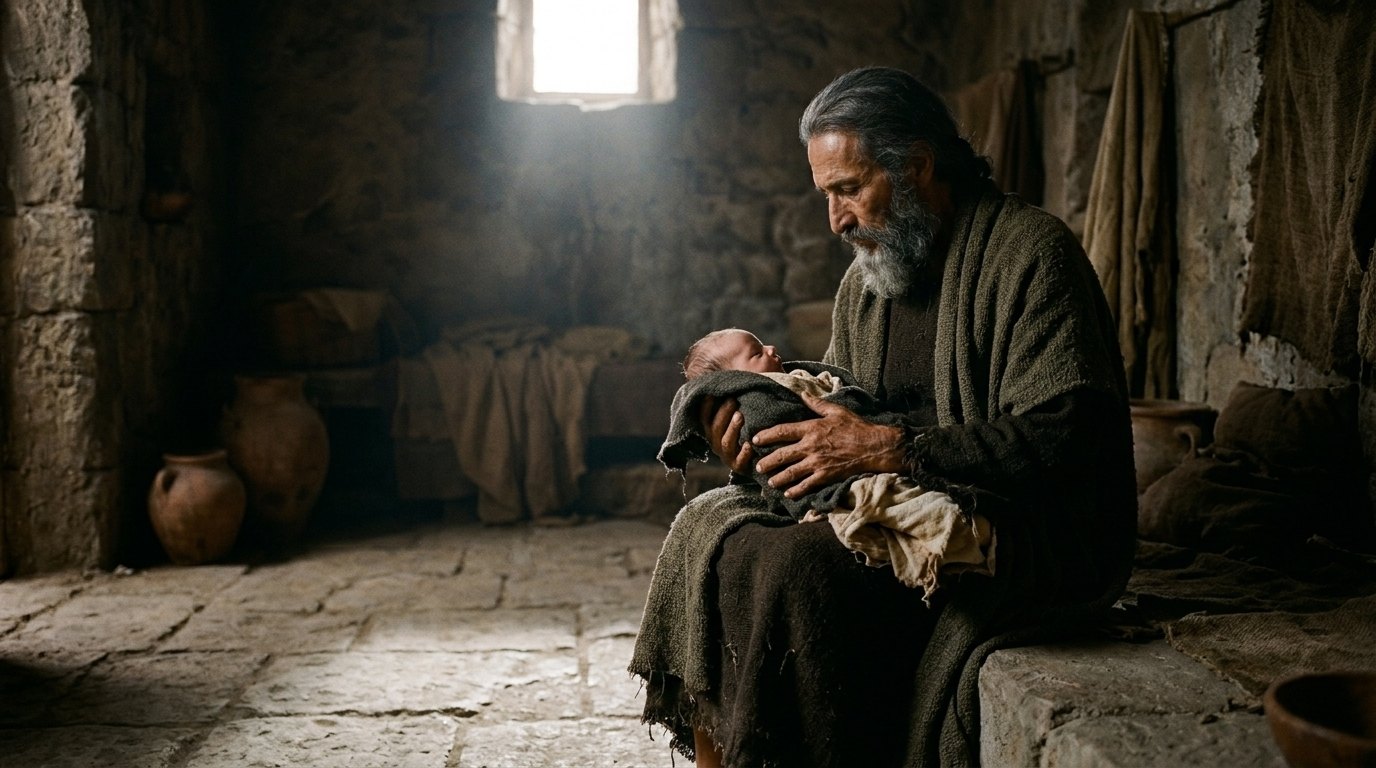
Isaiah 9:6-7
6 For to us a child is born, to us a son is given, and the government will be on his shoulders. And he will be called Wonderful Counselor, Mighty God, Everlasting Father, Prince of Peace.
7 Of the greatness of his government and peace there will be no end. He will reign on David’s throne and over his kingdom, establishing and upholding it with justice and righteousness from that time on and forever. The zeal of the LORD Almighty will accomplish this.
New International Version (NIV)
The answer
Isaiah 9:6 promises the Messiah: a truly human child who is also Mighty God, God’s gift to his people, and the righteous King whose government and peace never end. Jesus Christ fulfills this prophecy.
The child explains the deliverance
Isaiah 9:1-5 describes light replacing darkness, joy replacing anguish, the oppressor’s yoke being broken, and the equipment of war being burned. Isaiah 9:6 begins with “For” because the coming child is the reason for all of this. Salvation does not ultimately rest on a human army or political reform, but on the person God sends.
“A child is born to us” affirms his genuine human birth. “A son is given to us” presents him as God’s gracious gift. This corresponds to Isaiah 7:14, where the virgin’s son is called Immanuel, explained in Matthew 1:23 as “God with us.” The angel’s announcement in Luke 2:11 uses the same gracious direction toward others: “For unto you is born this day in the city of David a Saviour, which is Christ the Lord.”
His government rests on his shoulders
The shoulder pictures bearing the weight and responsibility of rule. Isaiah 22:22 similarly speaks of placing “the key of David’s house” on a ruler’s shoulder. In Isaiah 9:6-7, however, the ruler bears an incomparably greater kingdom: he sits on David’s throne, upholds justice and righteousness, and reigns forever.
This is fulfilled in Jesus. Luke 1:32-33 says that God would give him “the throne of his father David” and that “There will be no end to his Kingdom.” After his resurrection, Jesus declared in Matthew 28:18, “All power is given unto me in heaven and in earth.” Jeremiah 23:5-6 likewise promises David’s righteous Branch, a King who executes judgment and justice.
The four names reveal who he is
- Wonderful Counselor: The Hebrew word behind “Wonderful” concerns something extraordinary or miraculous. Joined with “Counselor,” it describes wisdom beyond that of ordinary rulers. The Messiah’s purposes and government are perfectly wise; he never rules through ignorance, folly, or mistaken counsel.
- Mighty God: This is an explicit declaration of the Messiah’s deity, not merely a description of an unusually strong man. Isaiah uses the same title, “the mighty God,” for Yahweh in Isaiah 10:21. The New Testament agrees: speaking of Jesus Christ, 1 John 5:20 says, “This is the true God, and eternal life.” The child born in weakness is, at the same time, truly God.
- Everlasting Father: This royal title describes the Messiah’s unending, fatherly care for his people; it does not confuse God the Son with God the Father. Scripture can call a ruler a “father” to those under his care, as Isaiah 22:21 does concerning Jerusalem and Judah. Unlike mortal kings, whose protection ends at death, this King’s care and reign are everlasting.
- Prince of Peace: He is the ruler who establishes peace—not simply a temporary ceasefire or an inward feeling, but reconciliation with God and the righteous wholeness of his kingdom. Ephesians 2:14 says, “For he is our peace,” and Ephesians 2:13-18 explains that those far off are brought near through Christ’s blood and reconciled to God through the cross. His peace therefore addresses humanity’s deepest hostility: sin and separation from God.
Isaiah 9:7 adds that his government and peace will have no end and that “The zeal of Yahweh of Armies will perform this.” God himself guarantees the promise. No ordinary king of Judah can exhaust its meaning.
The verse therefore calls for more than admiration of a beautiful prophecy. Jesus is the divine Son and rightful King, not merely a teacher or example. Peace with God comes through the reconciliation Christ accomplished by his blood, and life under his peace means trusting and obeying the One who possesses all authority.
Answered from Scripture · reviewed November 11, 2026
Isaiah 9:6 announces God's supreme answer to human darkness: a royal child given by pure grace, whose government lifts every burden and endures forever. Across its distinct movements—the gift of the child, the weight of the throne, and the fourfold throne-name—the prophecy reveals Jesus Christ as truly man and truly God. To unpack this verse is to understand how the King who rules the cosmos is also the Savior who tenderly guards his people.
The Child and Gift
True Humanity Given by Sovereign Grace
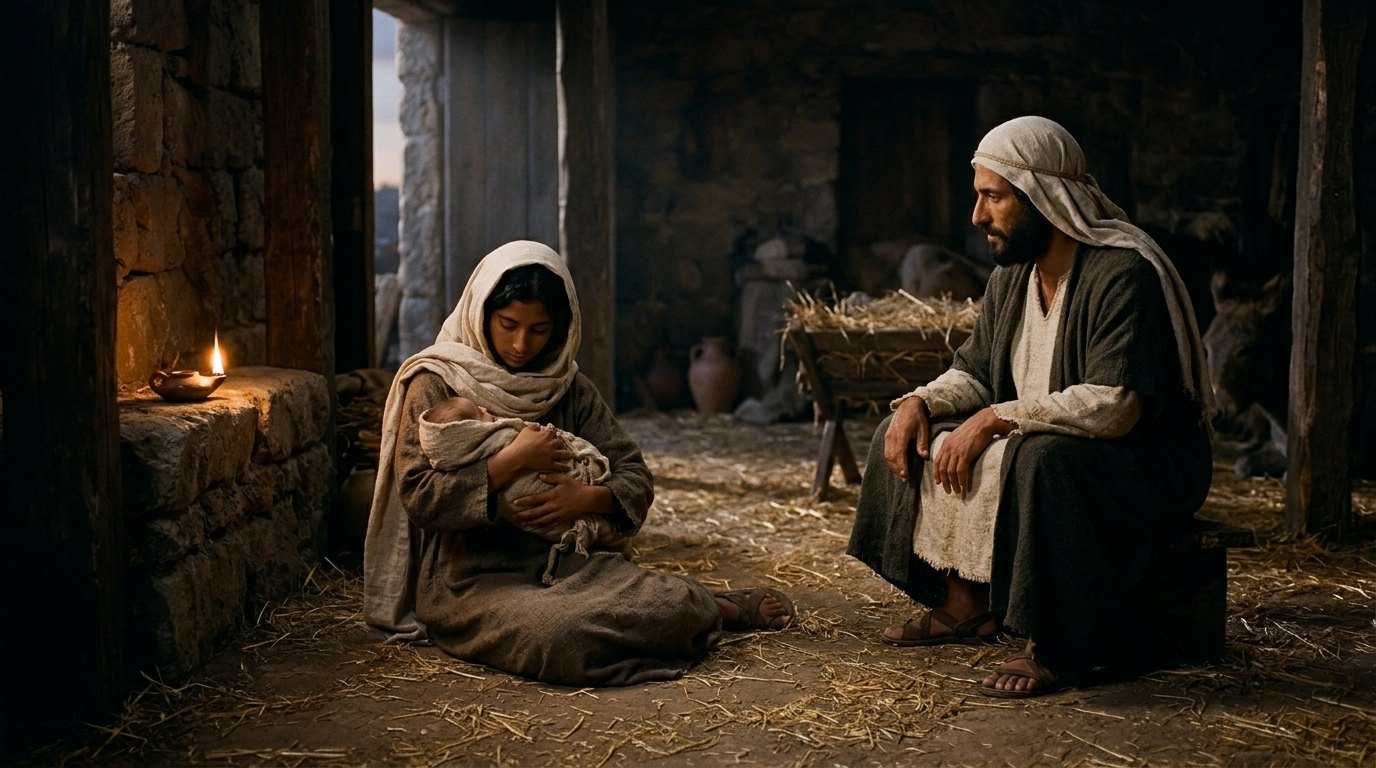
For to us a child is born, to us a son is given, and the government will be on his shoulders. And he will be called Wonderful Counselor, Mighty God, Everlasting Father, Prince of Peace.
Isaiah 9:6 (NIV)
It establishes both the genuine human birth of the Messiah and his status as a gratuitous divine gift given directly to us.
In Isaiah 9:6, the prophet heralds redemption with startling intimacy: unto us a child is born, unto us a son is given. The verse anchors cosmic deliverance in genuine human flesh. This child does not merely arrive as an abstract wonder; he is born of a human mother into the mess of human history, fulfilling the sign given to the house of David in Isaiah 7:14, where a virgin conceives and bears Immanuel, God with us, brought to pass in Matthew 1:21-23. The phrase unto us emphasizes pure grace. Humanity did not earn this deliverance; God gave his Son freely to an undeserving people. As Romans 8:32 reminds us, he who did not spare his own Son delivered him up for us all, an echo of the supreme love declared in John 3:16, where God gave his only begotten Son so that everyone who believes should not perish. When the angel Gabriel visits Mary in Luke 1:31-33, he directly fulfills this prophetic promise, announcing that she will conceive a Son who shall be called great and reign over David's house without end. The heavenly host reiterated this personal gift to trembling shepherds in Luke 2:10-11, proclaiming good news of great joy: born to you this day in the city of David is a Savior, Christ the Lord. The ancient promise meets mortal need through a flesh-and-blood baby wrapped in swaddling cloths.
| Passage | What it says | Fulfilled |
|---|---|---|
| Isaiah 7:14 | Prophesies that a virgin shall conceive and bear a son whose name is Immanuel, meaning God with us. | Matthew 1:21-23 |
| Isaiah 9:6 | Declares that a child is born to us and a son is given to us. | Luke 2:11, John 3:16 |
| Romans 8:32 | Affirms that God did not spare his own Son, but freely delivered him up for us all. | |
| Luke 1:31-33 | Announces the birth of the promised Davidic Son whose kingdom will have no end. | |
| Luke 2:10-11 | Declares that unto you is born in David's city a Savior, who is Christ the Lord. | |
| John 3:16 | Affirms God gave His only begotten Son so that believers receive eternal life. |
The Government on His Shoulder
A Sovereign Rule That Carries Every Burden
For as in the day of Midian’s defeat, you have shattered the yoke that burdens them, the bar across their shoulders, the rod of their oppressor.
Isaiah 9:4 (NIV)
It provides the immediate contrast between the oppressive yoke resting on Israel's shoulder and the righteous rule resting on the Messiah's.
Isaiah 9:4 exposes why the King's arrival brings such relief: God breaks the oppressive yoke of burden and the staff of the oppressor from Israel's shoulder. In the very next breath, Isaiah 9:6 announces that the government rests upon the shoulders of this royal child. While tyrannical empires heap crushing loads upon their subjects, the true King shoulders the government himself. This royal imagery recalls Isaiah 22:22, where the key of the house of David is laid upon the shoulder of Eliakim, granting authority that none can shut, a type fulfilled in Revelation 3:7 where Christ holds David's royal key. Unlike fragile human dynasties, Isaiah 9:7 promises that the increase of his government and peace will know no end upon David's throne, fulfilled in Luke 1:32-33. This royal victory dawns where darkness was deepest; as Isaiah 9:1-2 prophesied, light broke upon Galilee of the Gentiles, which Matthew 4:14-16 identifies with the start of Jesus' ministry. Because Christ carries the sovereign government, Matthew 11:28-30 invites all who labor and are heavy laden to find rest beneath his light burden. Today, as Matthew 28:18 proclaims, all authority in heaven and on earth belongs to him. Ephesians 1:20-22 depicts the exalted Son seated far above all rule and dominion, reigning until Revelation 19:16 displays the final triumph of the King of kings and Lord of lords.
| Passage | What it says | Fulfilled |
|---|---|---|
| Isaiah 9:4 | Describes the breaking of the heavy yoke and the staff of the oppressor from off the people's shoulder. | Matthew 11:28-30 |
| Isaiah 22:22 | Promises that the key of the house of David will be set upon Eliakim's shoulder, opening and shutting without hindrance. | Revelation 3:7 |
| Isaiah 9:7 | Announces that of the increase of his government and of peace there will be no end upon David's throne. | Luke 1:32-33 |
| Matthew 28:18 | Proclaims the risen Christ's possession of all authority in heaven and on earth. | |
| Isaiah 9:1-2 | Foresees great light dawning in Galilee of the Gentiles, setting the prophecy's historical context. | Matthew 4:14-16 |
| Ephesians 1:20-22 | Shows Christ exalted above all rule and dominion, head over all things. | |
| Revelation 19:16 | Names Christ King of kings and Lord of lords upon His royal robe. |
Wonderful Counselor and Mighty God
Divine Wisdom and Uncreated Might
The Spirit of the LORD will rest on him— the Spirit of wisdom and of understanding, the Spirit of counsel and of might, the Spirit of the knowledge and fear of the LORD—
Isaiah 11:2 (NIV)
It shows that the Spirit resting on the Branch grants the divine wisdom, counsel, and strength named in Isaiah 9:6.
In Isaiah 11:2, the prophet unveils the inner equipment of the Davidic Branch: the Spirit of wisdom and understanding, the Spirit of counsel and might rests upon him. This divine endowal explains why Isaiah 9:6 names the child Wonderful Counselor and Mighty God. The title Wonderful Counselor speaks of divine wisdom beyond human contrivance. Isaiah 28:29 identifies Yahweh himself as wonderful in counsel, a glory realized in Christ, whom 1 Corinthians 1:24 proclaims as the wisdom of God and Colossians 2:2-3 reveals as holding all treasures of wisdom. Luke 2:40-47 shows this wisdom astonishing the teachers in Jerusalem, while Luke 4:18 marks his Spirit-anointed ministry. Yet Isaiah does not stop at wisdom; he calls the child El Gibbor, Mighty God. Isaiah 10:21 uses this precise title for Yahweh himself, the Mighty God to whom Jacob's remnant returns. Jeremiah 23:5-6 matches this truth by naming the Davidic Branch The Lord Our Righteousness, fulfilled in 1 Corinthians 1:30. The New Testament boldly applies this divine reality to Jesus: John 1:1-3 reveals the Word was God and made all things, John 20:28 records Thomas worshiping him as my Lord and my God, Romans 9:5 names Christ God over all, Titus 2:13 anticipates our great God and Savior Jesus Christ, and Hebrews 1:8 records the Father proclaiming to the Son that his divine throne stands forever.
| Passage | What it says | Fulfilled |
|---|---|---|
| Isaiah 28:29 | Declares that the Lord of hosts is wonderful in counsel and magnificent in divine wisdom. | 1 Corinthians 1:24, Colossians 2:3 |
| Isaiah 11:2 | Foretells the Spirit of wisdom, understanding, counsel, and might resting upon David's royal Branch. | Luke 2:40-47, Luke 4:18 |
| Isaiah 10:21 | Identifies Yahweh as the Mighty God to whom the remnant of Jacob shall return. | Titus 2:13, 1 John 5:20 |
| Jeremiah 23:5-6 | Names the reigning Davidic Branch as The Lord Our Righteousness, affirming his full divinity. | 1 Corinthians 1:30 |
| John 1:1-3 | Identifies the Word as fully God and Maker of all created things. | |
| John 20:28 | Records Thomas confessing Jesus directly as my Lord and my God. | |
| Romans 9:5 | Affirms Christ according to the flesh is God over all, blessed forever. | |
| Titus 2:13 | Anticipates the glorious appearing of our great God and Savior, Jesus Christ. | |
| Hebrews 1:8 | Cites the Father addressing the Son directly as God whose throne endures forever. | |
| 1 Corinthians 1:24 | Designates Christ the wisdom of God and the power of God. | |
| Colossians 2:2-3 | Affirms all treasures of wisdom and knowledge are hidden in Christ. |
Everlasting Father and Prince of Peace
Enduring Paternal Care and Transcendent Peace
And he will be our peace when the Assyrians invade our land and march through our fortresses. We will raise against them seven shepherds, even eight commanders,
Micah 5:5 (NIV)
It explicitly identifies the ruler from Bethlehem as one who personally shall be the peace of his flock.
Micah 5:5 declares of the shepherd-king from Bethlehem that this one shall be peace. This assurance explains why Isaiah 9:6 crowns the Messiah's throne-name with Everlasting Father and Prince of Peace. In Hebrew idiom, Everlasting Father describes a ruler who protects, provides for, and cherishes his subjects with enduring paternal devotion. Psalm 103:13 shows the Lord pitying his children with a father's tender care, and Isaiah 63:16 confesses Yahweh as Israel's true Father and Redeemer. Micah 5:2 reveals that this Bethlehem ruler's origins are from of old, from everlasting, fulfilled in Matthew 2:5-6. Christ fulfills this paternal guardianship in John 10:28-30, declaring no one can pluck his sheep from his hand, and in John 14:9, revealing that whoever has seen him has seen the Father. Hebrews 2:13 quotes Christ saying, 'Here am I and the children God has given me.' As the Prince of Peace, his reign does not merely cease hostilities; it establishes comprehensive wholeness. This peace was purchased at tremendous cost: Isaiah 53:5 foretold that the chastisement for our peace fell upon him, fulfilled when Colossians 1:20 declared that he made peace through the blood of his cross. Therefore, John 14:27 leaves us his supernatural peace, Romans 5:1 assures us of justified peace with God, and Ephesians 2:14-17 celebrates that Christ himself is our peace, having broken down every dividing wall forever.
| Passage | What it says | Fulfilled |
|---|---|---|
| Psalms 103:13 | Shows the Lord pitying and protecting his children with the compassionate love of an earthly father. | John 10:28-30, Hebrews 2:13 |
| Isaiah 63:16 | Confesses Yahweh as the true and everlasting Father and Redeemer of his chosen people. | John 14:9 |
| Micah 5:2 | Identifies the ruler coming out of Bethlehem as one whose origins are from old, from everlasting. | Matthew 2:5-6 |
| Micah 5:5 | Names the coming shepherd-king of Israel as the personal source and guarantor of lasting peace. | John 14:27, Ephesians 2:14 |
| Isaiah 53:5 | Reveals that the chastisement that brought our peace was laid directly upon the suffering Servant. | Romans 5:1, Colossians 1:20 |
| John 10:30 | Asserts the unified divine essence and will of the Father and the Son. | |
| John 14:9 | Reveals that whoever has seen the Son has seen the Father. | |
| Hebrews 2:13 | Presents Christ identifying His redeemed people as children God has given Him. | |
| John 14:27 | Bestows Christ's unique peace upon His disciples, distinct from worldly peace. | |
| Romans 5:1 | Declares that justified believers possess lasting peace with God through Jesus Christ. | |
| Ephesians 2:14-17 | Proclaims Christ Himself is our peace, reconciling Jew and Gentile to God. | |
| Colossians 1:20 | States Christ made peace through the blood of His cross for all things. |
Where in the Bible
| Book | Passages |
|---|---|
| Psalms | 1 · Psalms 103:13 |
| Isaiah | 11 · Isaiah 7:14, Isaiah 9:6, Isaiah 9:4, Isaiah 22:22, Isaiah 9:7, Isaiah 9:1-2, Isaiah 28:29, Isaiah 11:2, Isaiah 10:21, Isaiah 63:16, Isaiah 53:5 |
| Jeremiah | 1 · Jeremiah 23:5-6 |
| Micah | 2 · Micah 5:2, Micah 5:5 |
| Matthew | 1 · Matthew 28:18 |
| Luke | 2 · Luke 1:31-33, Luke 2:10-11 |
| John | 6 · John 3:16, John 1:1-3, John 20:28, John 10:30, John 14:9, John 14:27 |
| Romans | 3 · Romans 8:32, Romans 9:5, Romans 5:1 |
| 1 Corinthians | 1 · 1 Corinthians 1:24 |
| Ephesians | 2 · Ephesians 1:20-22, Ephesians 2:14-17 |
| Colossians | 2 · Colossians 2:2-3, Colossians 1:20 |
| Titus | 1 · Titus 2:13 |
| Hebrews | 2 · Hebrews 1:8, Hebrews 2:13 |
| Revelation | 1 · Revelation 19:16 |
The story in order
- Creation and Fall (c. 4000 BC) · Genesis 1:26-28 · God creates humanity in His image, establishing dominion.
- Abrahamic Covenant (c. 2000 BC) · Genesis 12:1-3 · God promises a great nation and blessing through Abraham.
- Exodus and Law (c. 1450 BC) · Exodus 19:1-6 · God delivers Israel and gives them His law.
- Davidic Kingdom (c. 1000 BC) · 2 Samuel 7:11-16 · God promises an everlasting dynasty through David.
- Divided Kingdom (c. 931 BC) · 1 Kings 12:16-17 · Israel splits, leading to spiritual decline.
- Prophetic Warnings (c. 740 BC) · Isaiah 1:1-4 · Prophets warn of judgment and call for repentance.
- Exile (586 BC) · 2 Kings 25:1-12 · Judah is conquered and Jerusalem destroyed.
- Return and Rebuilding (538 BC) · Ezra 1:1-4 · Exiles return to rebuild the temple and city.
- Jesus' Birth (c. 4 BC) · Luke 2:10-11 · The promised Savior, Christ the Lord, is born.
- Jesus' Ministry (AD 26-30) · Matthew 4:12-17 · Jesus brings light and announces the kingdom.
- Resurrection and Ascension (AD 30-33) · Matthew 28:18 · Christ receives all authority in heaven and earth.
- The Church Age (AD 30-present) · Ephesians 1:20-22 · Christ is exalted, ruling over all things.
The Child and His Names
| Child's Identity | His Divine Names | His Role | Passage |
|---|---|---|---|
| A child is born, a son is given | Wonderful Counselor, Mighty God | Government on His shoulder | Isaiah 9:6 |
| The promised Son | Everlasting Father | Prince of Peace | Isaiah 9:6 |
| The virgin's son | Immanuel (God with us) | Savior, Christ the Lord | |
| God's own Son | The Lord Our Righteousness | Ruler whose origins are from everlasting |
Key words
- Immanuel (עִמָּנוּ אֵל ('immānû 'ēl))
- God with us, signifying Christ's divine presence. · Isaiah 7:14
- Wonderful Counselor (פֶּלֶא יוֹעֵץ (pele yō‘ēṣ))
- Exhibiting marvelous wisdom and providing divine guidance. · Isaiah 9:6
- Mighty God (אֵל גִּבּוֹר ('ēl gibbôr))
- Possessing supreme power and divine authority. · Isaiah 9:6
- Everlasting Father (אֲבִיעַד (’ăḇî‘aḏ))
- The eternal source of paternal care and protection. · Isaiah 9:6
- Prince of Peace (שַׂר שָׁלוֹם (śar šālōm))
- The ruler who personally brings lasting peace. · Isaiah 9:6
- Government (מִשְׂרָה (miśrāh))
- The administration and authority of His rule. · Isaiah 9:6
Isaiah 9:6 is not merely a seasonal poem but the bedrock promise of who Jesus Christ is for you today. Because the government rests on his shoulders rather than your own, you can cast every anxiety upon him with absolute confidence. He reigns right now as your Wonderful Counselor to guide you, your Mighty God to deliver you, your Everlasting Father to care for you, and your Prince of Peace to quiet your soul.
36 passages, each cited once.
Scripture cited
- Isaiah 9:6
- Luke 2:11
- Matthew 28:18
- Jeremiah 23:5-6
- Isaiah 7:14
- Matthew 1:23
- 1 John 5:20
- Isaiah 9:1-7
- Ephesians 2:13-18
- Isaiah 10:20-21
- Isaiah 22:20-22
- Luke 1:31-33