Will we remember our life on earth in heaven?

Isaiah 65:17
17 “See, I will create new heavens and a new earth. The former things will not be remembered, nor will they come to mind.
New International Version (NIV)
The answer
Yes—Scripture gives strong reason to expect that believers will remember their earthly lives, but without the sorrow, pain, or sinful reactions that those memories can bring now. It does not teach that entering heaven erases personal history, though it does not promise recall of every detail.
Isaiah 65:17 is not promising amnesia. Its statement that “the former things will not be remembered, nor come into mind” must be read with the surrounding verses: the “former troubles” are forgotten and hidden from God’s eyes (Isaiah 65:16), and weeping and crying cease (Isaiah 65:19). The old troubles will no longer occupy or trouble God’s people because of the surpassing joy of what He creates. Jeremiah uses similar language about the ark of the covenant: it will not be remembered, missed, or remade because God’s presence will surpass what the ark represented (Jeremiah 3:16-17). Forgetting there means no longer needing or longing for it—not losing the ability to know it existed.
Other passages show memory continuing after death:
- The martyrs in heaven remember that they were killed and ask God how long until He judges those responsible (Revelation 6:9-11).
- The rich man in Hades is told, “Son, remember that you, in your lifetime, received your good things,” and he remembers his five brothers still living on earth (Luke 16:25-28). This concerns Hades rather than heaven, but it plainly shows that death itself does not erase memory.
- The multitude before God’s throne is identified as those who “came out of the great suffering,” while God wipes away every tear (Revelation 7:14-17). Their earthly suffering is known, yet it no longer has the final word.
The promise of the new creation is therefore not the loss of memory, but the end of pain: “Death will be no more; neither will there be mourning, nor crying, nor pain any more. The first things have passed away” (Revelation 21:4). Present knowledge is partial, but Paul looks forward to knowing fully, “even as I was also fully known” (1 Corinthians 13:12). Whatever memories remain will be held within God’s complete redemption—without unanswered grief corrupting the joy of being with Him.
Answered from Scripture · reviewed November 11, 2026
Scripture reveals that we do not enter eternity as blank slates: our identity, personal history, and the memory of God's redemptive mercy endure forever. Yet the sorrow, guilt, and lingering pain of the fallen order are permanently swallowed up in the glory of the new creation. Understanding what we remember and what passes away anchors our hope in a resurrected life that is truly our own, redeemed and unburdened.
Identity and Continuity
Our identity and personhood are permanently preserved before God
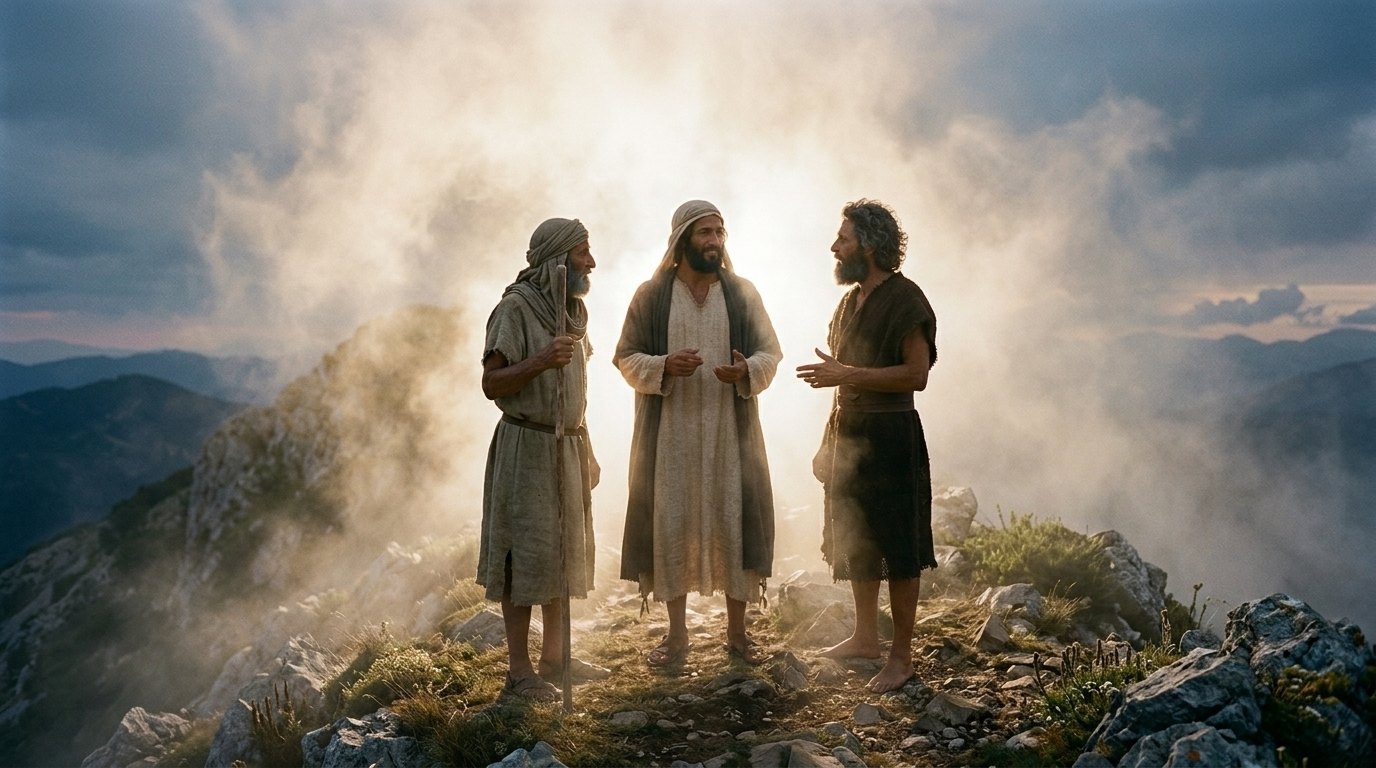
“As the new heavens and the new earth that I make will endure before me,” declares the LORD, “so will your name and descendants endure.
Isaiah 66:22 (NIV)
God explicitly connects the enduring nature of the new creation with the permanent preservation of His people's name and seed.
In Isaiah 66:22, the Lord establishes an unbreakable guarantee: just as the new heavens and the new earth endure before Him, so our name and our seed shall remain. Scripture never presents the afterlife as an impersonal mist or an erasing of who we are. Before we drew a single breath, Psalm 139:16 tells us that the Lord's eyes beheld our unformed substance, and every one of our days was written in His book. Death does not shred those pages. Even across the gulf of Sheol in Luke 16:25, Abraham addresses the rich man with the direct summons to remember what he received during his earthly pilgrimage. When the kingdom broke into time on the mountain in Matthew 17:3, Moses and Elijah did not materialize as anonymous spirits; they appeared in their recognizable personal identities, conversing with Jesus about His approaching departure at Jerusalem, as Luke 9:30-31 records. They knew their God, they knew their earthly history, and they knew the prophecies their lives had served.
Our resurrection bodies carry this unbroken thread forward. The risen Christ invited His terrified disciples to touch His hands and feet in Luke 24:39-40, proving that He retained His identifiable form and the very scars of His earthly passion. In the New Jerusalem, historical identity is etched into the architecture forever: Revelation 21:12 shows the twelve gates bearing the names of the tribes of Israel, while Revelation 21:14 shows the twelve foundations inscribed with the names of the Lamb’s apostles. Jesus promised in Matthew 8:11 that the redeemed will sit down at the table with Abraham, Isaac, and Jacob, enjoying recognizable fellowship. Paul anchored his pastoral joy in 1 Thessalonians 2:19-20 on the certainty that he would see and rejoice over his converts at Christ's coming. As 1 Corinthians 13:12 confirms, our vision will not be narrowed in glory; rather, we will know fully, even as we are fully known.
| Passage | What it says |
|---|---|
| Isaiah 66:22 | Declares that as the new heavens and earth endure, so shall the name and descendants of God's people remain forever. |
| Psalms 139:16 | Attests that God saw our unformed substance and recorded all our days in His book before they began. |
| Luke 16:25 | Shows Abraham speaking to the rich man after death, instructing him explicitly to remember the circumstances of his earthly life. |
| Matthew 17:3 | Shows Moses and Elijah appearing on the Mount of Transfiguration, distinctly recognizable in their personal identities centuries after leaving earth. |
| 1 Corinthians 13:12 | Promises that whereas we now see through a glass darkly, in eternity we will know fully, even as we are fully known. |
| Revelation 21:12 | Records the names of the twelve tribes of Israel inscribed on the gates of the New Jerusalem, marking enduring historical identity. |
| Revelation 21:14 | Records the names of the twelve apostles of the Lamb written upon the city's foundation stones. |
| Matthew 8:11 | Believers will sit at table with Abraham, Isaac, and Jacob, showing distinct historical identities are fully recognized in the kingdom. |
| Luke 9:30-31 | Moses and Elijah speak with Jesus concerning His departure at Jerusalem, demonstrating conscious awareness of earthly events and prophecies. |
| Luke 24:39-40 | The resurrected Christ retains His identifiable physical body and the marks of His earthly crucifixion. |
| 1 Thessalonians 2:19-20 | Paul expects to recognize and rejoice over earthly converts at the coming of the Lord Jesus Christ. |
Former Things Forgotten
The grief, shame, and ruin of the old world pass away

“See, I will create new heavens and a new earth. The former things will not be remembered, nor will they come to mind.
Isaiah 65:17 (NIV)
It establishes that the former fallen order will not be remembered or brought to mind because of the surpassing glory of the new creation.
Isaiah 65:17 promises that when God creates the new heavens and the new earth, the former things shall not be remembered or come into mind. This is not celestial amnesia, but the total triumph of God's redemption over the agonizing weight of the curse. In Isaiah 43:18, God commanded His people not to dwell on the former things because His coming deliverance would completely eclipse the past. Jeremiah 3:16 foretold that the ark of the covenant—once the reminder of judgment, boundary, and the broken tablets of the law—would never again be sought or brought to mind when the Lord Himself dwelt among His people. The memory of former ruin loses all power to wound, just as Job 11:16 describes earthly suffering being recalled only as waters that have passed away.
The final reality of this deliverance appears in Revelation 21:4, where God wipes every tear from our eyes. Death, sorrow, crying, and pain vanish because the entire former order of sin and decay has passed away. Isaiah 25:8 foretold that the Lord God would swallow up death in victory and remove the rebuke of His people from all the earth. Finally, Revelation 20:14 shows Death and Hades hurled into the lake of fire. What is forgotten in glory is the guilt, the sting of grief, and the bitter dominion of sin. The shadow of our former brokenness can never intrude upon the joyful reality of the new creation.
| Passage | What it says |
|---|---|
| Isaiah 65:17 | Promises that God will create new heavens and a new earth where former things shall not be remembered or come to mind. |
| Isaiah 43:18 | Commands God's people not to remember the former things or dwell on the things of old in light of His new work. |
| Jeremiah 3:16 | Foretells that in days of restoration, the former symbols of judgment and shadow will neither be visited nor come to mind. |
| Revelation 21:4 | Declares that God will wipe away every tear, with death, sorrow, crying, and pain passing away with the former things. |
| Isaiah 25:8 | Promises that the Lord God will swallow up death forever and wipe away tears from all faces. |
| Job 11:16 | Earthly misery will be forgotten or recalled only as waters that have flowed away. |
| Revelation 20:14 | Death and Hades are cast into the lake of fire, ending all reign of earthly sorrow and mortality. |
Earthly Faith Remembered
Heaven remembers our earthly pilgrimage and works of faith
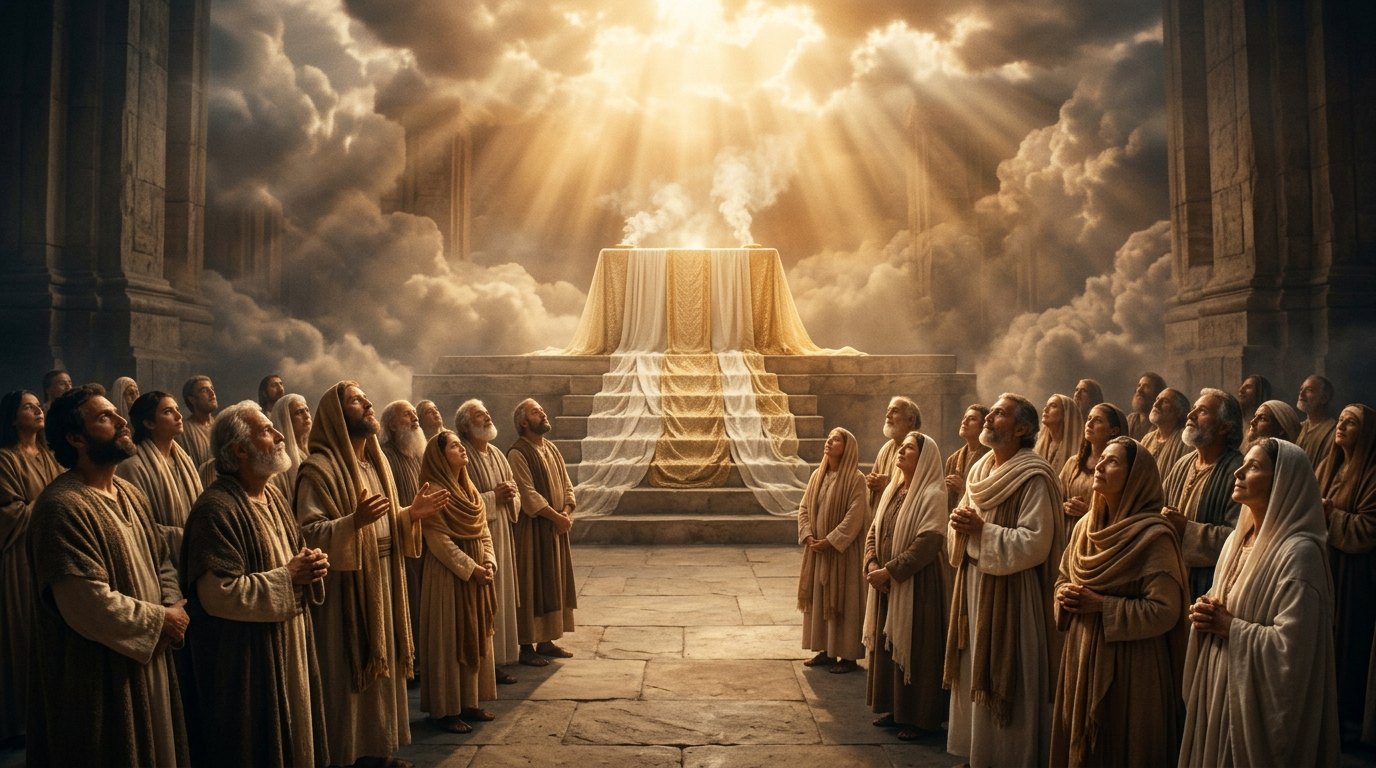
Then I heard a voice from heaven say, “Write this: Blessed are the dead who die in the Lord from now on.” “Yes,” says the Spirit, “they will rest from their labor, for their deeds will follow them.”
Revelation 14:13 (NIV)
This passage directly states that the deeds of the saints follow them into their eternal rest.
Revelation 14:13 pronounces an eternal blessing upon those who die in the Lord: they rest from their labors, and their works do follow them. Heaven is not an erasure of our earthly pilgrimage of faith, but its divine vindication. In Revelation 6:9-10, the souls of the martyrs beneath the altar possess clear memory of their earthly deaths, crying out to the Sovereign Lord concerning their blood poured out on the earth. God does not dismiss their history. Hebrews 6:10 assures us that God is not unrighteous to forget our work and the labor of love shown toward His name. In 2 Corinthians 5:10, Paul warns that we must all appear before the judgment seat of Christ to receive what was done in the body, whether good or worthless.
Our Lord remembers every single act done in His name. In Matthew 25:34-40, the King recounts specific earthly kindnesses—clothing the naked, visiting the prisoner, feeding the hungry—revealing that our quiet service has eternal significance. Malachi 3:16 records that a book of remembrance is written before the Lord for those who feared Him and esteemed His name. This is why Jesus urged us in Matthew 6:19-20 to lay up treasures in heaven, and declared in Matthew 10:42 that even a cup of cold water given to a disciple will never lose its reward. As 1 Corinthians 3:13-14 teaches, the fire will test each person's work, and whatever survives will receive a reward. Paul approached the end of his life in 2 Timothy 4:7-8 with full confidence, knowing he had fought the good fight and finished the course, ready to receive the crown of righteousness from the righteous Judge.
| Passage | What it says |
|---|---|
| Revelation 14:13 | Pronounces blessed the dead who die in the Lord, for their labors rest and their deeds follow them. |
| Revelation 6:9-10 | Depicts martyrs under the altar who vividly remember their earthly deaths and appeal to God concerning their blood. |
| Hebrews 6:10 | Affirms that God is not unjust to forget the work and labor of love shown toward His name. |
| 2 Corinthians 5:10 | States that every believer must appear before the judgment seat of Christ to receive what was done in the body. |
| Matthew 25:34-40 | Presents the King recalling specific earthly deeds of mercy done to the least of His brothers. |
| Malachi 3:16 | A book of remembrance is written before the Lord for those who feared Him and thought upon His name. |
| Matthew 6:19-20 | Believers are instructed to lay up treasures in heaven, which remain safely preserved and accounted for eternity. |
| Matthew 10:42 | Even giving a cup of cold water to a disciple on earth will not lose its reward before God. |
| 1 Corinthians 3:13-14 | Each believer's earthly work will be revealed by fire and rewarded according to what survives. |
| 2 Timothy 4:7-8 | Paul finishes his earthly race with the assurance of the crown of righteousness awarded on that Day. |
The Song of Redemption
Eternal praise relies on the memory of what Christ rescued us from
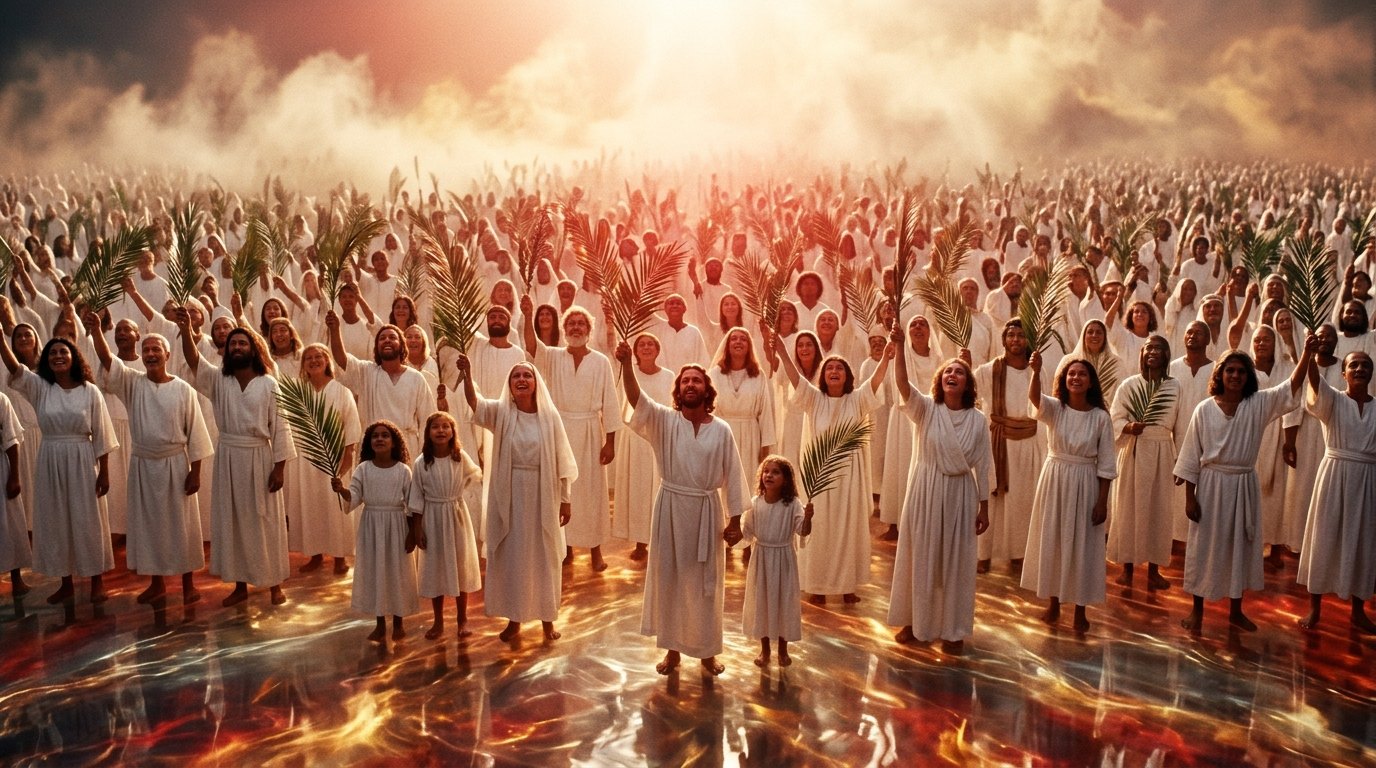
And they sang a new song, saying: “You are worthy to take the scroll and to open its seals, because you were slain, and with your blood you purchased for God persons from every tribe and language and people and nation.
Revelation 5:9 (NIV)
The new song sung by the redeemed celebrates their historical ransom out of every tribe, tongue, and nation.
In Revelation 5:9, the elders and living creatures fall before the Lamb and sing a new song: 'You were slain, and have redeemed us to God by Your blood out of every tribe and tongue and people and nation.' Worship in glory is rooted in the memory of the cross. If heaven erased our memory of our fallen condition, our rescue would mean nothing, and the title of the Lamb would lose its glory. The redeemed in Revelation 7:14 are expressly identified as those who came out of great tribulation and washed their robes in the blood of the Lamb. Their joy is not born of ignorance, but of contrast: they know what they were saved from, and they know the price paid to bring them home.
This praise echoes through eternity as the song of Moses and of the Lamb in Revelation 15:3, celebrating the Lord’s righteous judgments and great deliverance. In 2 Peter 3:13, we look forward to the new heavens and earth where righteousness dwells, a promised land made precious because we knew the wilderness of exile. Even now, Luke 15:7 tells us that there is conscious joy in heaven over one sinner on earth who repents. In Ephesians 2:7, Paul explains God’s ultimate purpose: that in the ages to come He might show the exceeding riches of His grace in His kindness toward us through Christ Jesus. We will gaze upon our Redeemer with eternal gratitude, remembering forever that we were once lost, but now are found.
| Passage | What it says |
|---|---|
| Revelation 5:9 | Shows the heavenly assembly singing a new song that recalls Christ being slain and redeeming them by His blood out of every nation. |
| Revelation 7:14 | Identifies the redeemed multitude as those who came out of great tribulation and washed their robes in the Lamb's blood. |
| Revelation 15:3 | Depicts the victorious saints singing the song of Moses and of the Lamb, praising God's righteous deliverance. |
| 2 Peter 3:13 | Encourages believers to look for the promised new heavens and new earth wherein righteousness dwells. |
| Luke 15:7 | There is conscious joy in heaven over one sinner on earth who repents. |
| Ephesians 2:7 | In the ages to come God shows the exceeding riches of His grace in kindness toward us in Christ Jesus. |
Where in the Bible
| Book | Passages |
|---|---|
| Job | 1 · Job 11:16 |
| Psalms | 1 · Psalms 139:16 |
| Isaiah | 4 · Isaiah 66:22, Isaiah 65:17, Isaiah 43:18, Isaiah 25:8 |
| Jeremiah | 1 · Jeremiah 3:16 |
| Malachi | 1 · Malachi 3:16 |
| Matthew | 5 · Matthew 17:3, Matthew 8:11, Matthew 25:34-40, Matthew 6:19-20, Matthew 10:42 |
| Luke | 4 · Luke 16:25, Luke 9:30-31, Luke 24:39-40, Luke 15:7 |
| 1 Corinthians | 2 · 1 Corinthians 13:12, 1 Corinthians 3:13-14 |
| 2 Corinthians | 1 · 2 Corinthians 5:10 |
| Ephesians | 1 · Ephesians 2:7 |
| 1 Thessalonians | 1 · 1 Thessalonians 2:19-20 |
| 2 Timothy | 1 · 2 Timothy 4:7-8 |
| Hebrews | 1 · Hebrews 6:10 |
| 2 Peter | 1 · 2 Peter 3:13 |
| Revelation | 9 · Revelation 21:12, Revelation 21:14, Revelation 21:4, Revelation 20:14, Revelation 14:13, Revelation 6:9-10, Revelation 5:9, Revelation 7:14, Revelation 15:3 |
The story in order
- God records our days (c. 1000 BC) · Psalms 139:16 · God's foreknowledge and recording of our lives.
- Martyrs remember their earthly deaths (c. AD 95) · Revelation 6:9-10 · Souls in heaven recall their earthly suffering.
- Former things will not be remembered (c. 700 BC) · Isaiah 65:17 · God's promise of a new creation where old sorrows are forgotten.
- Abraham remembers earthly life (c. AD 30) · Luke 16:25 · Apostolic teaching on post-mortem memory.
- Moses and Elijah recognized (c. AD 30) · Matthew 17:3 · Personal identity preserved after death.
- Resurrected Christ's recognizable body (AD 30) · Luke 24:39-40 · Physical continuity of identity after resurrection.
- Paul expects to recognize converts (c. AD 50) · 1 Thessalonians 2:19-20 · Anticipation of eternal recognition of fellow believers.
- Works and deeds follow believers (c. AD 95) · Revelation 14:13 · Heavenly remembrance of earthly faith and labor.
- Judgment seat of Christ (c. AD 55) · 2 Corinthians 5:10 · Accountability for deeds done in the body.
- New Jerusalem's enduring names (c. AD 95) · Revelation 21:12 · Eternal preservation of historical and spiritual identity.
- New heavens and new earth (c. AD 67) · 2 Peter 3:13 · Hope for a redeemed existence where righteousness dwells.
Key words
- Remember (זָכַר (zakhar))
- To recall to mind; to retain in memory. · Psalms 139:16
- Former things (דָּבָר הָרִאשׁוֹן (davar harishon))
- Past events, especially those of sorrow or ruin. · Isaiah 65:17
- New creation (בריאה חדשה (bri'ah chadashah))
- God's renewed heavens and earth, free from sin and sorrow. · Isaiah 65:17
- Identity (שֵׁם (shem))
- The distinct qualities of a person that are preserved. · Isaiah 66:22
- Known fully (ἐπιγνώσομαι καθὼς καὶ ἐπεγνώσθην (epignosomai kathōs kai…)
- Complete understanding and recognition. · 1 Corinthians 13:12
Your earthly journey is neither meaningless nor destined for total oblivion, because every act of faith and every work of grace in your life is preserved by God. In the resurrection, the sting of grief, regret, and sin will vanish completely, while your gratitude and recognition of God's faithfulness will endure eternally. You will know and be known, worshipping Christ with the full memory of the cross that brought you home.
34 passages, each cited once.
Scripture cited
- Isaiah 65:17
- Revelation 21:1-5
- Isaiah 65:16-25
- Luke 16:19-31
- Revelation 6:9-11
- 1 Corinthians 13:9-12
- Jeremiah 3:14-18
- Revelation 7:13-17