Who was King Saul?
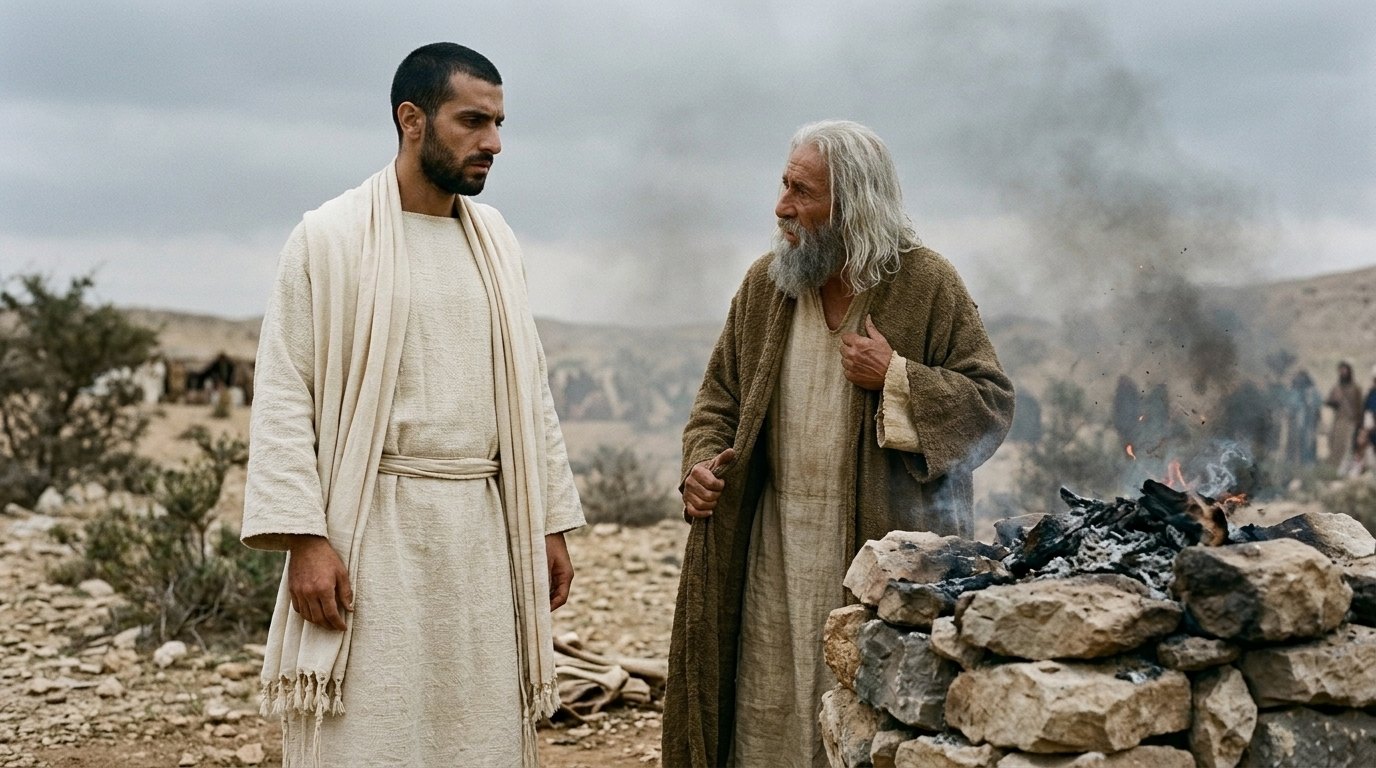
1 Samuel 15:22-23
22 But Samuel replied: “Does the LORD delight in burnt offerings and sacrifices as much as in obeying the LORD? To obey is better than sacrifice, and to heed is better than the fat of rams.
23 For rebellion is like the sin of divination, and arrogance like the evil of idolatry. Because you have rejected the word of the LORD, he has rejected you as king.”
New International Version (NIV)
The answer
King Saul was Israel’s first king, the son of Kish from the tribe of Benjamin. God gave him to Israel through the prophet Samuel after the people demanded a king like the surrounding nations. His reign began with courage and promise, but his repeated disobedience led God to reject him as king and raise up David as his successor. Acts 13:21-22 describes Saul’s rule as lasting forty years.
His rise to the throne
Israel’s demand for a king involved rejecting God’s direct rule over the nation, as 1 Samuel 8:4-7 makes clear. Nevertheless, God directed Samuel to anoint Saul. First Samuel 9:1-2 describes him as an impressive, handsome young man who stood taller than anyone else in Israel. Samuel poured oil on his head and declared that Yahweh had anointed him to rule His inheritance, according to 1 Samuel 10:1.
One of Saul’s finest moments came when God’s Spirit empowered him to rally Israel and rescue Jabesh Gilead from the Ammonites. After the victory, he refused to execute his opponents and credited the deliverance to Yahweh, as recorded in 1 Samuel 11:1-13.
His decisive disobedience
Saul’s reign turned through two major acts of disobedience:
- At Gilgal: Rather than waiting for Samuel as instructed, Saul offered the burnt offering himself. Samuel told him that he had acted foolishly, had not kept God’s command, and that his kingdom would not continue. God would appoint “a man after his own heart” instead, meaning David (1 Samuel 13:8-14).
- Against Amalek: God commanded Saul to destroy Amalek completely, but Saul spared King Agag and the best livestock. When confronted, he blamed the people and claimed the animals had been kept for sacrifice to God (1 Samuel 15:1-21).
Samuel’s verdict in 1 Samuel 15:22 was, “Behold, to obey is better than sacrifice, and to listen than the fat of rams.” Then 1 Samuel 15:23 identifies Saul’s conduct as rebellion and stubbornness and declares that, because he rejected Yahweh’s word, Yahweh rejected him from being king. His sin was not a minor procedural mistake: he disobeyed God’s explicit command and then tried to cover that disobedience with religious worship.
His decline and death
First Samuel 16:13-14 records that David was anointed, Yahweh’s Spirit came upon David, and Yahweh’s Spirit departed from Saul. When the women celebrated David’s victories more highly than Saul’s, Saul became jealous and afraid of David; he even threw his spear at him, according to 1 Samuel 18:6-12.
Before Saul’s final battle, Yahweh did not answer his inquiries. Saul then disguised himself and consulted a medium at Endor, despite having previously expelled such practitioners from the land. Samuel announced that the kingdom had been given to David and that Saul and his sons would die the next day (1 Samuel 28:3-25). In the battle on Mount Gilboa, the Philistines killed Jonathan, Abinadab and Malchishua. As the battle closed in, Saul took his sword and fell on it, dying together with his three sons and his armor bearer, as 1 Samuel 31:1-6 records.
What his life teaches
Saul’s life warns that ability, position, spiritual experiences, military success and sacrificial worship cannot replace obedience to God. Religious excuses do not make rebellion acceptable. The response God requires to sin is repentance rather than self-justification. Romans 5:8 declares that Christ died for sinners, and 1 John 1:9 promises God’s forgiveness and cleansing to those who confess their sins.
Answered from Scripture · reviewed November 12, 2026
Scripture cited
- 1 Samuel 9:1-2
- 1 Samuel 10:1
- 1 Samuel 11:1-13
- 1 Samuel 15:1-23
- 1 Samuel 18:6-12
- 1 Samuel 28:3-25
- 1 Samuel 31:1-13
- 1 Samuel 8:4-7
- 1 Samuel 13:8-14
- 1 Samuel 16:13-14
- Acts 13:21-22