What does the Bible say about in-laws?
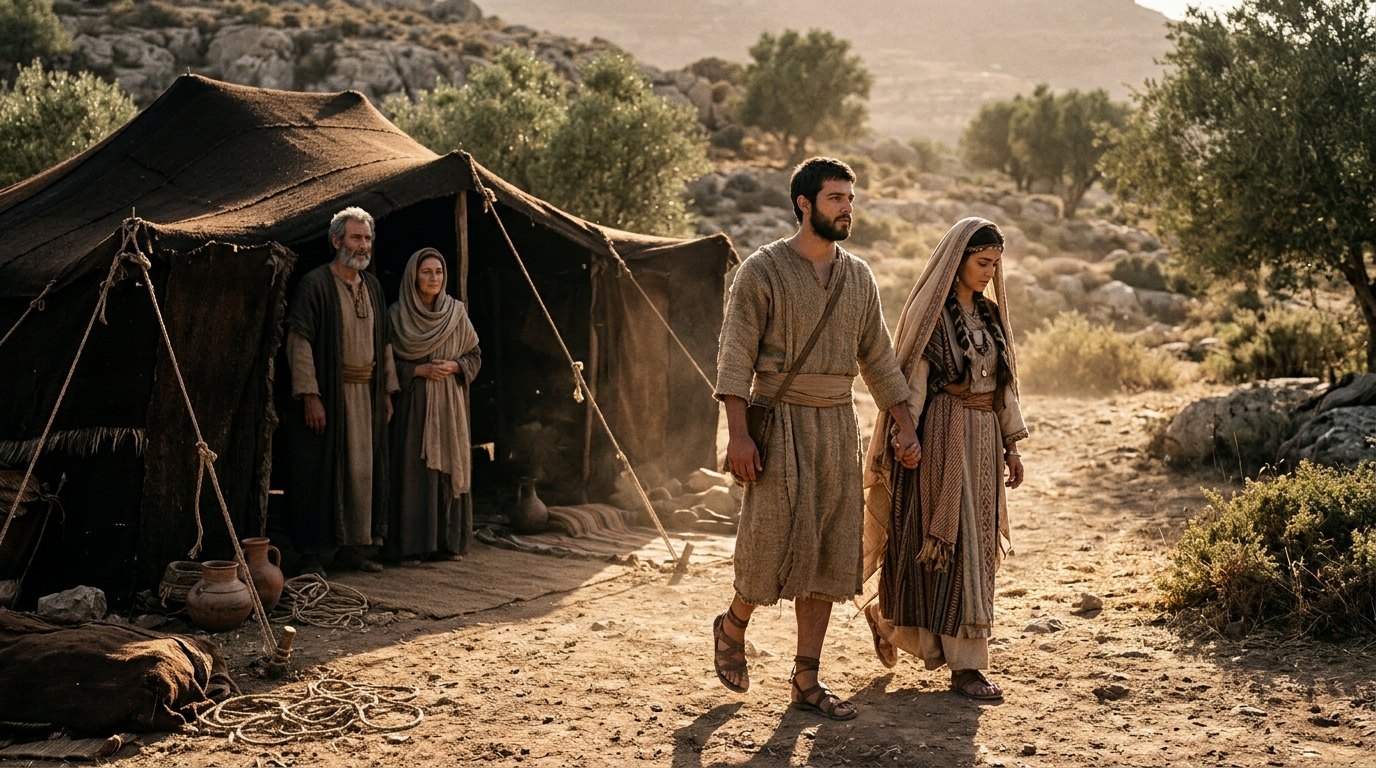
Genesis 2:24
24 That is why a man leaves his father and mother and is united to his wife, and they become one flesh.
New International Version (NIV)
The answer
The Bible does not use the term “in-laws,” but it says that parents and married children should honor one another, that marriage is a covenant that parents should not disrupt, and that believers should respond to conflict with patience, forgiveness, and peace.
What Scripture teaches
- Marriage is a covenant between the spouses. Genesis 2:24 says, “Therefore a man will leave his father and his mother, and will join with his wife, and they will be one flesh.” A husband is to leave his parents—including a father-in-law—and cleave to his wife. Parents do not retain authority to control their child’s marriage.
- The husband leads his own household. Ephesians 5:28-31 says, “So ought men to love their wives as their own bodies,” and explains that a man is to leave father and mother and cleave to his wife. A son-in-law therefore should not surrender his responsibilities as husband to interference from his wife’s parents.
- Honor your parents. The commandment to honor father and mother continues after marriage (Exodus 20:12; Ephesians 6:2). This does not require disobeying God or abandoning a spouse; it calls for respectful treatment whenever possible.
- Do not let anger grow. Ephesians 4:26 says, “Be ye angry, and sin not: let not the sun go down upon your wrath.” Conflicts with in-laws should not become enduring resentment or insults against one another.
- Forgive as God has forgiven you. Ephesians 4:32 commands believers to “be ye kind one toward another, tenderhearted, forgiving one another, even as God in Christ forgave you.” This applies when an in-law speaks or acts against us.
- Make peace where possible. Romans 12:18 says, “If it be possible, as much as lieth in you, living peaceably with all men.” Biblical peace does not require pretending that wrongdoing is acceptable, but it rules out needless retaliation.
- The wife’s faithful conduct can speak effectively. 1 Peter 3:1-7 says wives are to live in a manner that wins without the word when their husbands do not obey the word. It also tells wives to be adorned “not with outward adorning” but with “a meek and quiet spirit,” which cannot be forced but is an appropriate pattern for pursuing peace within the family.
- Sexual faithfulness belongs within marriage. 1 Corinthians 7:2-4 says, “Let every man have his own wife, and let every woman have her own husband.” In-laws should neither pressure a married couple toward sexual immorality nor interfere with the marriage covenant.
Applying this today
Honor in-laws where you can, but your spouse, home, and marriage come under your own responsibilities before God. Set loving boundaries, do not participate in gossip or ridicule, speak gently, and avoid retaliation. When an in-law’s demands would violate Scripture or endanger the marriage, seek counsel from a pastor or another mature Christian who can help both parties pursue peace.
Scripture leaves many ordinary details—such as how often families visit or who chooses the holiday location—undetermined. Those decisions should be handled patiently, using principles such as mutual respect, self-control, and peace.
Answered from Scripture · reviewed November 11, 2026
Scripture does not use the modern phrase 'in-laws', but it speaks directly and authoritatively to the family bonds forged through marriage. From creation, God establishes marriage as a new, primary covenant requiring spouses to leave parental authority and cleave to one another, while continuing to honor parents and pursue peace across extended family relationships.
The Marriage Foundation
Leaving and Cleaving Establishes a New Household
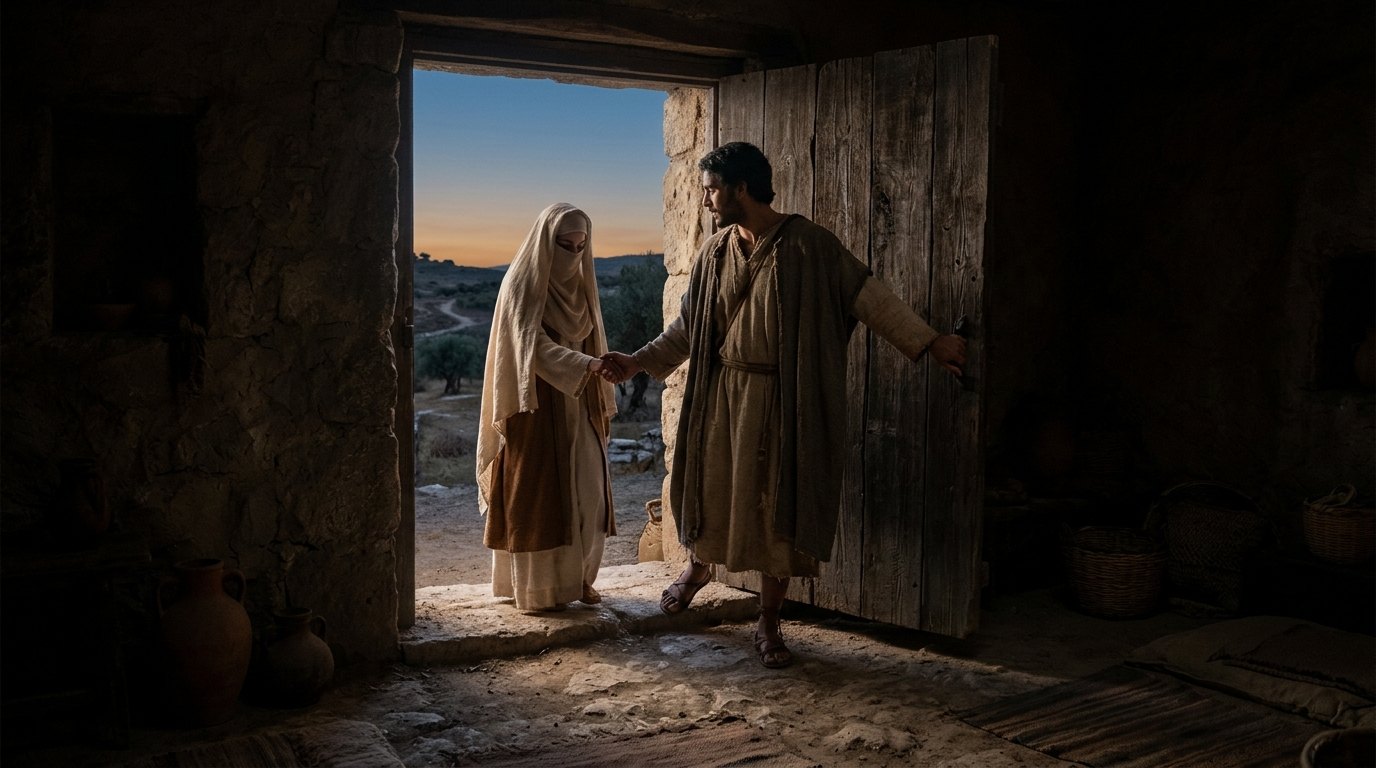
That is why a man leaves his father and mother and is united to his wife, and they become one flesh.
Genesis 2:24 (NIV)
God defines marriage at creation as a departure from parents to form an indissoluble, one-flesh union.
God’s design for marriage begins with an intentional, decisive reordering of human loyalties. In Genesis 2:24, the Lord declares: "Therefore a man shall leave his father and his mother and hold fast to his wife, and they shall become one flesh." From the dawn of creation, long before the establishment of extended kinship codes, God instituted marriage as the primary human bond. The Hebrew verb for "leave" ('azab) denotes a departure from parental authority, oversight, and reliance, while "hold fast" (dabaq) signifies an indissoluble covenantal adherence. A new, autonomous household is brought into existence, one that must not remain an appendage of the parental home.
When confronted by the Pharisees regarding the integrity of marriage, Matthew 19:4–6 records Christ rooting His verdict directly in this creation mandate. Jesus explains that the Creator made humanity male and female, joining husband and wife so intimately that "they are no longer two but one flesh." He adds the solemn divine seal: "What therefore God has joined together, let not man separate." This boundary guards against any external interference, including that of well-meaning parents or extended relatives.
The Apostle Paul cites this foundational text once again in Ephesians 5:31, revealing that the marital union is a sacred mystery pointing to Christ and His church. Because the husband and wife display the very gospel of God, the priority of the covenant union surpasses all previous ties of lineage. While parental affection remains good and honorable, the marital bond supersedes parental authority. Healthy in-law dynamics flow solely from this bedrock principle: spouses must first establish their unified home before they can rightly minister to their wider families.
| Passage | What it says |
|---|---|
| Genesis 2:24 | A man leaves his father and mother to hold fast to his wife as one flesh. |
| Matthew 19:4-6 | Jesus reaffirms that God joins husband and wife together above parental claims. |
| Ephesians 5:31 | Paul quotes the creation mandate to show the covenantal priority of marriage. |
Enduring Honor
Honoring Parents Extends Through Every Season
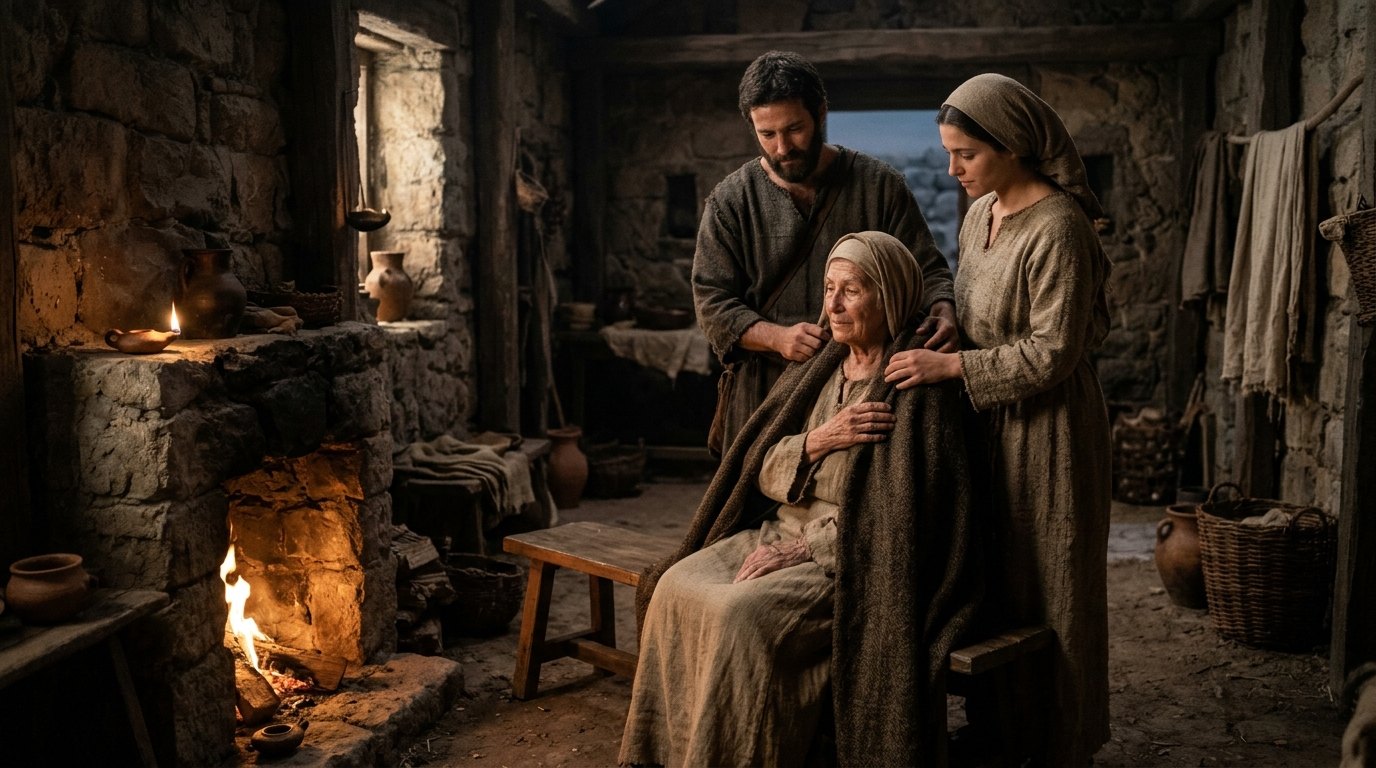
“Honor your father and your mother, so that you may live long in the land the LORD your God is giving you.
Exodus 20:12 (NIV)
The fifth commandment binds children to honor their parents with lifelong respect and care.
Leaving parental authority does not sever the lifelong obligation to extend honor. In Exodus 20:12, God thunders the fifth commandment from Sinai: "Honor your father and your mother, that your days may be long in the land that the Lord your God is giving you." Marriage changes the structure of authority, but it never repeals the moral duty of filial respect. To honor (kabad) means to treat parents with weight, dignity, and active consideration throughout their lives, a standard that inevitably shapes how a husband and wife engage both sets of parents.
The New Testament reaffirms this command without dilution. In Ephesians 6:2–3, the Apostle Paul cites this precept as "the first commandment with a promise," reminding believers that the call to honor parents endures under the new covenant. Marriage does not grant permission to neglect, dismiss, or treat extended parents with contempt. Rather, mature Christian spouses honor their parents by listening graciously, offering kindness, and refusing to allow legitimate marital boundaries to degenerate into callous indifference or bitterness.
Furthermore, this honor demands practical, sacrificial provision as parents age. Writing to Timothy, Paul sets forth the church's standard for family care in 1 Timothy 5:4: "If a widow has children or grandchildren, let them first learn to show godliness to their own household and to make some return to their parents, for this is pleasing in the sight of God." Caring for elderly parents and in-laws is an act of true worship. A godly marriage does not insulate a couple from the needs of their aging fathers and mothers, but equips them to minister faithfully as fellow heirs of the grace of life.
| Passage | What it says |
|---|---|
| Exodus 20:12 | God commands honoring father and mother that days may be long. |
| Ephesians 6:2-3 | Paul confirms that honoring parents remains a foundational Christian duty. |
| 1 Timothy 5:4 | Children and grandchildren must repay their parents as an act pleasing to God. |
Scriptural Precedent
Biblical Examples of In-Law Relationships
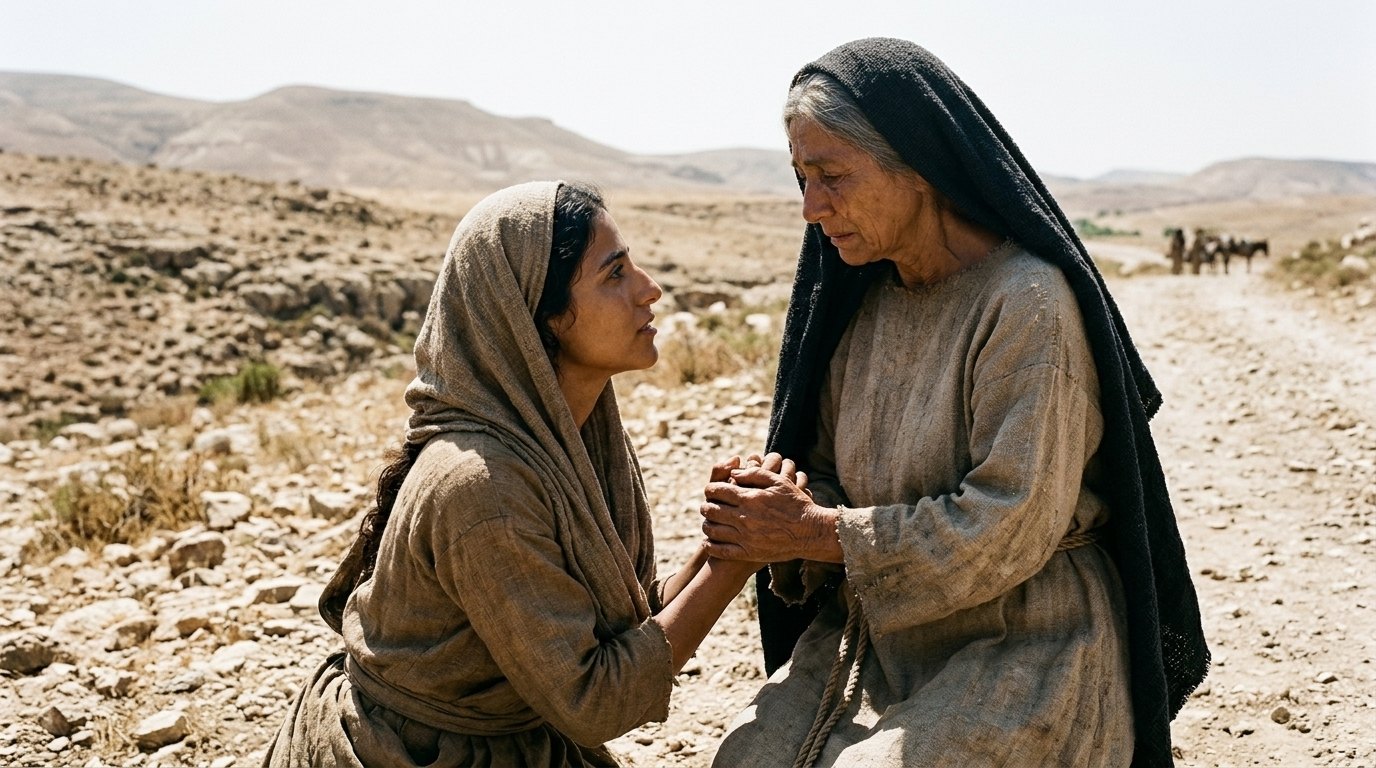
But Ruth replied, “Don’t urge me to leave you or to turn back from you. Where you go I will go, and where you stay I will stay. Your people will be my people and your God my God. Where you die I will die, and there I will be buried. May the LORD deal with me, be it ever so severely, if even death separates you and me.”
Ruth 1:16-17 (NIV)
Ruth demonstrates covenant love and selfless devotion toward her grieving mother-in-law, Naomi.
Scripture provides rich narratives demonstrating both the blessings and hazards of in-law relationships. In Ruth 1:16–17, Ruth displays extraordinary covenant loyalty (chesed) to her widowed mother-in-law, declaring, "Where you go I will go, and where you lodge I will lodge. Your people shall be my people, and your God my God." Ruth’s sacrificial devotion receives high praise in Ruth 2:11–12, where Boaz commends her for leaving her homeland to serve Naomi, and in Ruth 4:14–15, where the women of Bethlehem affirm that Ruth’s love for her mother-in-law is better than seven sons.
Warm respect between in-laws also shines in Moses’s interaction with Jethro. In Exodus 18:7, Moses goes out to greet his father-in-law, bowing down and kissing him in mutual affection. Moses then demonstrates humility in Exodus 18:13–24 by listening to Jethro’s wise counsel on delegating judicial burdens. Similarly, in Judges 19:3–7, a father-in-law displays effusive hospitality, urging his son-in-law to refresh his heart. In the New Testament, Mark 1:30–31 records Jesus entering Simon Peter’s home, where He tenderly takes Peter’s sick mother-in-law by the hand and heals her fever, honoring the intergenerational family network.
Yet Scripture also candidly exposes the friction that sin introduces. In Genesis 31:26–28, Laban bitterly rebukes Jacob for departing secretly, though they eventually establish a covenant boundary at Mizpah in Genesis 31:48–50, calling God to witness that Jacob will not mistreat his daughters. A tragic picture appears in 1 Samuel 18:27–29, where King Saul gives his daughter Michal to David only to become his lifelong enemy. Ultimately, fallen relationships can fracture deeply: Micah 7:6 laments the day when a daughter-in-law rises against her mother-in-law, and in Matthew 10:35–37, Christ warns that loyalty to Him must surpass even extended family ties. Covenant love and godly wisdom turn in-law relationships into blessings, while selfish pride breeds strife.
| Passage | What it says |
|---|---|
| Exodus 18:13-24 | Moses receives and implements the wise administrative counsel of his father-in-law Jethro. |
| Ruth 1:16-17 | Ruth cleaves to Naomi, embracing her people and her God unto death. |
| Ruth 2:11-12 | Boaz commends Ruth for her kindness and loyalty to her mother-in-law. |
| 1 Samuel 18:27-29 | Saul gives his daughter Michal to David but treats his son-in-law with hostility. |
| Mark 1:30-31 | Jesus enters Peter's home and heals his mother-in-law of a severe fever. |
| Exodus 18:7 | Moses goes out to meet his father-in-law Jethro, bows down, kisses him, and warmly brings him into his tent. |
| Ruth 4:14-15 | The women praise God to Naomi for Ruth's exceptional love, declaring Ruth is better to her than seven sons. |
| Genesis 31:26-28 | Laban confronts Jacob after his secret departure, rebuking him for carrying off his daughters and grandchildren without a peaceful farewell. |
| Genesis 31:48-50 | Laban and Jacob establish a covenant heap at Mizpah, solemnly charging Jacob not to mistreat his daughters. |
| Judges 19:3-7 | The Levite's father-in-law warmly detains him for several days, showing generous hospitality and reluctance to let him depart. |
| Micah 7:6 | The prophet laments familial breakdown where a daughter rises against her mother and a daughter-in-law against her mother-in-law. |
| Matthew 10:35-37 | Jesus warns that loyalty to Him transcends immediate kinship, noting division between daughter-in-law and mother-in-law. |
Household Order
Protecting Covenant Roles from Outside Interference
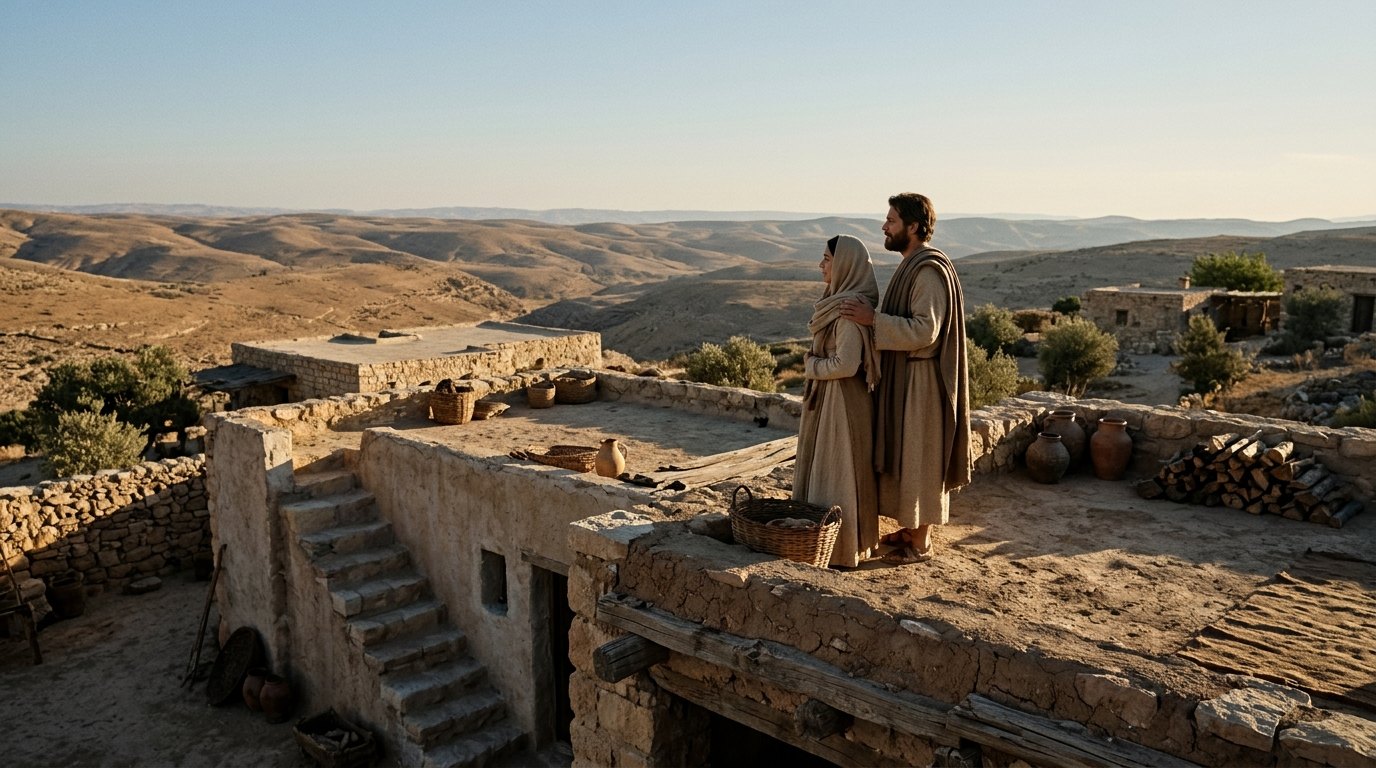
In this same way, husbands ought to love their wives as their own bodies. He who loves his wife loves himself. After all, no one ever hated their own body, but they feed and care for their body, just as Christ does the church— for we are members of his body.
Ephesians 5:28-30 (NIV)
The husband's duty to nourish and cherish his wife cannot be yielded to parental control.
To preserve harmony across the extended family, Scripture clearly assigns the spiritual headship and domestic duties of the home to the husband and wife alone. In Ephesians 5:28–30, Paul commands: "In the same way husbands should love their wives as their own bodies. He who loves his wife loves himself. For no one ever hated his own flesh, but nourishes and cherishes it, just as Christ does the church." A husband is personally accountable before God to protect, nourish, and lead his wife, a sacred responsibility he cannot abdicate to his own parents or surrender to the control of his in-laws.
This authority structure is expanded in Ephesians 5:22–25, where wives are called to submit to their own husbands as to the Lord, and husbands are commanded to love their wives self-sacrificially, just as Christ loved the church and gave Himself up for her. When extended family members seek to dictate marital decisions, financial priorities, or child-rearing practices, they disrupt God’s ordained domestic order. Spouses must stand united, establishing respectful yet firm boundaries so that neither set of parents usurps the biblical role of the husband or the wife.
Scripture further safeguards this intimacy in 1 Corinthians 7:2–4, stating that the husband’s body belongs to the wife, and the wife’s body belongs to the husband, establishing absolute domestic exclusivity. In 1 Peter 3:1–7, wives are commended for their gentle and quiet spirit, while husbands are charged to live with their wives in an understanding way, honoring them as fellow heirs of the grace of life so their prayers are not hindered. When Christian spouses guard their home against external manipulation and fulfill their God-given callings, they protect their marriage and bear a vibrant witness before extended family.
| Passage | What it says |
|---|---|
| Ephesians 5:22-25 | Wives submit to husbands and husbands love wives self-sacrificially as Christ loves the church. |
| 1 Corinthians 7:2-4 | Spouses have mutual authority over each other's bodies, excluding parental intrusion. |
| 1 Peter 3:1-7 | Wives display a gentle spirit and husbands honor their wives as fellow heirs. |
Resolving Conflict
Pursuing Peace and Forgiveness When Tensions Arise
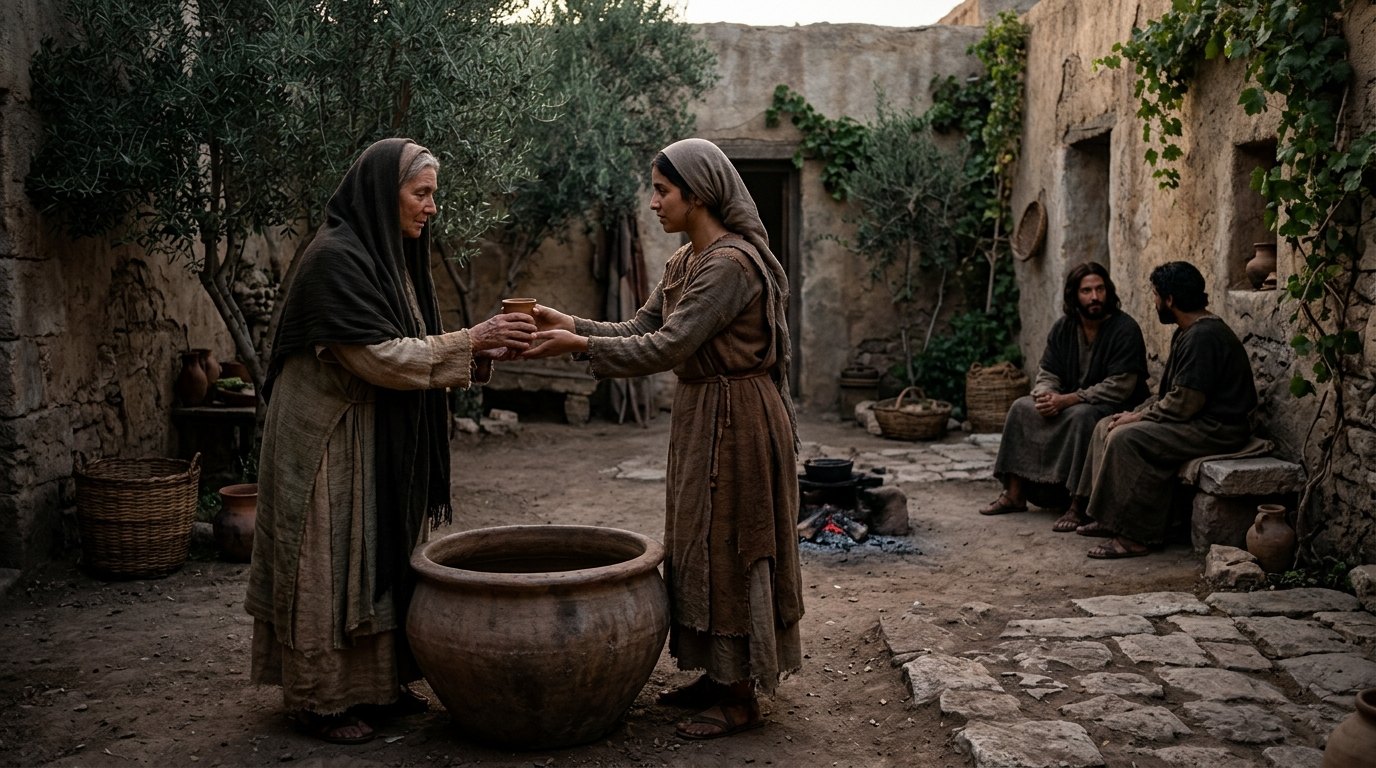
If it is possible, as far as it depends on you, live at peace with everyone.
Romans 12:18 (NIV)
Paul instructs believers to pursue peace with all people as far as personal responsibility permits.
When navigating tensions with in-laws, Romans 12:18 establishes the governing standard for Christian conduct: 'If possible, so far as it depends on you, live peaceably with all.' Scripture recognizes that reconciliation requires two parties, yet the believer's personal obligation is unreserved—to exhaust every godly avenue for harmony without compromising truth.
Unresolved friction between extended family members readily festers into spiritual vulnerability. Paul warns in Ephesians 4:26-27 not to let the sun go down on anger, giving no place to the devil through nursing private grudges or passive resentment. Instead, believers must actively dismantle hostile habits. Ephesians 4:31-32 commands that all bitterness, wrath, anger, clamor, and slander be put away, replaced by kindness and tenderhearted forgiveness, mirroring how God in Christ forgave us. This same standard is reinforced in Colossians 3:12-13, which calls the elect of God to put on compassionate hearts, bearing with one another and forgiving whatever complaint arises against another.
Hebrews 12:14 elevates this charge further, commanding us to strive for peace with everyone and for holiness, reminding the reader that relational rebellion defiles many. In daily speech across family gatherings, Proverbs 15:1 supplies essential wisdom: a soft answer turns away wrath, whereas grievous words stir up strife. When conflicts emerge over boundaries, traditions, or expectations, answering with deliberate gentleness disarms escalation. Finally, Galatians 6:10 urges the believer to do good to all people as opportunities arise, especially toward fellow believers. Walking in these commands allows Christ's cross to define our responses, replacing familial discord with patience, humility, and steadfast love.
| Passage | What it says |
|---|---|
| Romans 12:18 | Believers are commanded to live peaceably with all men as much as possible. |
| Ephesians 4:26-27 | Wrath must be settled quickly without giving the devil a foothold in relationships. |
| Ephesians 4:31-32 | All bitterness is put away, forgiving one another just as God in Christ forgave. |
| Colossians 3:12-13 | God's elect bear with one another and forgive grievances as the Lord forgave them. |
| Hebrews 12:14 | Believers are commanded to pursue peace with everyone and holiness, without which no one will see the Lord. |
| Proverbs 15:1 | A gentle answer turns away wrath, but a harsh word stirs up grievance and familial strife. |
| Galatians 6:10 | Exhortation to do good to everyone, especially to those who are of the household of faith. |
Where in the Bible
| Book | Passages |
|---|---|
| Genesis | 3 · Genesis 2:24, Genesis 31:26-28, Genesis 31:48-50 |
| Exodus | 3 · Exodus 20:12, Exodus 18:13-24, Exodus 18:7 |
| Judges | 1 · Judges 19:3-7 |
| Ruth | 3 · Ruth 1:16-17, Ruth 2:11-12, Ruth 4:14-15 |
| 1 Samuel | 1 · 1 Samuel 18:27-29 |
| Proverbs | 1 · Proverbs 15:1 |
| Micah | 1 · Micah 7:6 |
| Matthew | 2 · Matthew 19:4-6, Matthew 10:35-37 |
| Mark | 1 · Mark 1:30-31 |
| Romans | 1 · Romans 12:18 |
| 1 Corinthians | 1 · 1 Corinthians 7:2-4 |
| Galatians | 1 · Galatians 6:10 |
| Ephesians | 5 · Ephesians 5:31, Ephesians 6:2-3, Ephesians 5:22-25, Ephesians 4:26-27, Ephesians 4:31-32 |
| Colossians | 1 · Colossians 3:12-13 |
| 1 Timothy | 1 · 1 Timothy 5:4 |
| Hebrews | 1 · Hebrews 12:14 |
| 1 Peter | 1 · 1 Peter 3:1-7 |
The story in order
- Marriage established as one flesh (c. 4000 BC) · Genesis 2:24 · God establishes marriage as a primary covenant, superseding parental ties.
- Command to honor parents (c. 1450 BC) · Exodus 20:12 · Honor for parents is a foundational commandment with a promise.
- Jethro advises Moses (c. 1450 BC) · Exodus 18:13-24 · A father-in-law provides wise counsel that is received and implemented.
- Laban confronts Jacob (c. 1400 BC) · Genesis 31:26-28 · Tensions arise over departing daughters and grandchildren, requiring covenantal resolution.
- Ruth's loyalty to Naomi (c. 1100 BC) · Ruth 1:16-17 · Exceptional devotion shown to a mother-in-law, embracing her people and God.
- Saul's hostility to David (c. 1000 BC) · 1 Samuel 18:27-29 · A father-in-law's negative relationship with his son-in-law.
- Jesus heals mother-in-law (c. AD 28) · Mark 1:30-31 · Jesus shows care for family relationships by healing Peter's mother-in-law.
- Jesus reaffirms marriage (c. AD 30) · Matthew 19:4-6 · Jesus confirms the creation mandate of marriage as a primary bond.
- Paul on marriage priority (c. AD 60) · Ephesians 5:31 · Paul quotes Genesis to emphasize marriage's covenantal priority.
- Mutual marital authority (c. AD 55) · 1 Corinthians 7:2-4 · Spouses have authority over each other's bodies, excluding parental intrusion.
- Honor and submission in marriage (c. AD 60) · 1 Peter 3:1-7 · Instructions for wives and husbands to honor each other within marriage.
- Children honor parents (c. AD 65) · 1 Timothy 5:4 · Children and grandchildren have a duty to repay parents.
- Familial breakdown lamented (c. 700 BC) · Micah 7:6 · Prophet laments extreme familial strife, including daughter-in-law vs. mother-in-law.
- Jesus on kinship loyalty (c. AD 30) · Matthew 10:35-37 · Loyalty to Christ can create division even within immediate family.
Biblical Examples of In-Law Relationships
| Relationship | Description | Outcome/Note | Passage |
|---|---|---|---|
| Father-in-law and Son-in-law | Jethro advises Moses. | Wise counsel received and implemented. | Exodus 18:13-24 |
| Mother-in-law and Daughter-in-law | Ruth cleaves to Naomi. | Exceptional loyalty and embrace of God. | Ruth 1:16-17 |
| Mother-in-law and Daughter-in-law | Boaz commends Ruth. | Ruth's kindness and loyalty praised. | Ruth 2:11-12 |
| Father-in-law and Son-in-law | Saul's hostility to David. | Negative relationship marked by animosity. | 1 Samuel 18:27-29 |
| Mother-in-law and Son-in-law | Jesus heals Peter's mother-in-law. | Jesus shows care for family. | Mark 1:30-31 |
| Father-in-law and Son-in-law | Laban confronts Jacob. | Tension over daughters and grandchildren. | Genesis 31:26-28 |
| Father-in-law and Son-in-law | Laban and Jacob's covenant. | Charge to not mistreat daughters. | Genesis 31:48-50 |
| Father-in-law and Son-in-law | Levite and father-in-law. | Generous hospitality and reluctance to part. | Judges 19:3-7 |
| Daughter-in-law and Mother-in-law | Micah's lament. | Extreme familial breakdown. | Micah 7:6 |
Pursuing Peace in Relationships
| Command | Application/Principle | Passage |
|---|---|---|
| Live peaceably with all men. | As much as possible. | Romans 12:18 |
| Settle wrath quickly. | Do not give the devil a foothold. | Ephesians 4:26-27 |
| Put away bitterness. | Forgive one another as God forgave. | Ephesians 4:31-32 |
| Bear with one another. | Forgive grievances as the Lord forgave. | Colossians 3:12-13 |
| Pursue peace with everyone. | And holiness. | Hebrews 12:14 |
| A gentle answer turns away wrath. | A harsh word stirs up strife. | Proverbs 15:1 |
| Do good to everyone. | Especially to the household of faith. | Galatians 6:10 |
Key words
- Cleave (dabaq, דָּבַק)
- To hold fast to, be loyal to, stick closely to. · Genesis 2:24
- Honor (kabad, כָּבַד)
- To show respect, regard with esteem, value highly. · Exodus 20:12
- One flesh (basar echad, בָּשָׂר אֶחָד)
- A profound marital union, establishing a new primary relationship. · Genesis 2:24
- Peace (shalom, שָׁלוֹם)
- Well-being, welfare, tranquility, harmony in relationships. · Romans 12:18
- Forgive (charizomai, χαρίζομαι)
- To grant pardon, remit a debt or offense, let go of resentment. · Ephesians 4:32
Navigating relationships with in-laws requires honoring parents without compromising the sacred boundary God placed around marriage. When friction arises, believers are called to set aside bitterness, practice Christlike forgiveness, and stand faithfully in the roles God has ordained.
28 passages, each cited once.
Scripture cited
- Genesis 2:24
- Ephesians 5:28-31
- 1 Peter 3:1-7
- 1 Corinthians 7:2-4