What does the number 7 mean in the Bible?

Genesis 2:1-3
1 Thus the heavens and the earth were completed in all their vast array.
2 By the seventh day God had finished the work he had been doing; so on the seventh day he rested from all his work.
3 Then God blessed the seventh day and made it holy, because on it he rested from all the work of creating that he had done.
New International Version (NIV)
The answer
In the Bible, seven often points to completeness or fullness, especially God bringing a work to its appointed completion. It is not a magical number, and Scripture does not give every occurrence a hidden symbolic meaning.
The foundation: creation and rest
Genesis 2:1-3 says that creation was finished, God rested on the seventh day, and he blessed that day and made it holy. Exodus 20:11 explicitly connects the Sabbath with this same pattern of six days of work followed by the seventh day of rest. Seven is therefore associated first with completed work, rest, and holiness, not luck.
How the pattern appears elsewhere
- Passage — What seven signifies in its context
- Leviticus 25:8-10 — Seven Sabbaths of years—seven times seven—lead to the fiftieth year, which is made holy and proclaimed as a year of liberty. The full cycle leads to release and restoration.
- Joshua 6:4-16 — Seven priests carry seven trumpets; on the seventh day Israel marches seven times. At the seventh time, Joshua announces that God has given them the city. The repetition marks the complete course God appointed.
- Matthew 18:21-35 — Peter suggests forgiving seven times, but Jesus answers, “seventy times seven,” and then teaches a parable about imitating God’s mercy. Forgiveness is not to be limited by arithmetic.
- Revelation 15:1 — Seven angels have the seven last plagues, “for in them God’s wrath is finished.” Here seven is explicitly connected with judgment brought to completion.
Read each occurrence in context
- Let Scripture explain its symbols. Revelation 1:20 directly identifies the seven stars as the angels of seven assemblies and the seven lampstands as seven assemblies.
- Seven is not inherently good or holy. The dragon also has seven heads in Revelation 12:3. The number’s significance depends on what the passage is describing.
- A real count can also form a meaningful pattern. The text may describe literal people, days, or objects while displaying completeness through their arrangement.
The sound approach is to derive the meaning from the passage itself and the rest of Scripture, rather than treating seven as a stand-alone code for predicting events or discovering hidden messages.
Answered from Scripture · reviewed November 11, 2026
Across the whole canon of Scripture, the number seven serves as God's signature of sacred completion, covenant fullness, and holy consecration. Rooted in the primordial rhythm of the creation week, where God ceased from His labor on the seventh day and made it holy, the number unfolds through every layer of Israel's law, worship, prophetic calendar, and apocalyptic destiny. Tracing this number from Genesis to Revelation reveals how the Creator binds His redemptive promises to an unshakeable pattern of divine rest and total fulfillment.
Creation and Rest
The Creation Week Anchors the Pattern of Seven

By the seventh day God had finished the work he had been doing; so on the seventh day he rested from all his work.
Genesis 2:2 (NIV)
Moses declares that on the seventh day God completed His work and rested, establishing seven as the primary biblical measure of divine fulfillment.
In Genesis 2:2, Moses writes that on the seventh day God completed His work which He had done, and He rested on the seventh day from all His work. This primordial cessation is not born of divine exhaustion, but of absolute consummation: the cosmos was whole, harmonious, and entirely sufficient. At the conclusion of the sixth day, Genesis 1:31 records that God surveyed everything He had made and declared it "very good." Genesis 2:1 affirms that the heavens, the earth, and all their vast host were entirely finished. When God blessed the seventh day and sanctified it in Genesis 2:3, He inscribed a rhythm of holy completeness directly into the fabric of creation.
This primordial blueprint forms the direct theological foundation for Israel's moral and communal life. In Exodus 20:8-10, the Lord commands Israel to remember the Sabbath day to keep it holy, prohibiting work on the seventh day. Exodus 20:11 expressly grounds this commandment in the historical reality of creation week: the Lord made heaven, earth, and sea in six days and rested on the seventh, blessing and hallowing it. In Exodus 31:17, the Sabbath is declared a perpetual sign between God and His covenant people, commemorating that God ceased and was refreshed.
This pattern ultimately directs our gaze toward our redemptive destination. In Hebrews 4:4, the New Testament quotes Genesis 2:2 to demonstrate that God's rest has been waiting since the foundation of the world. The weekly seventh day was never merely an ancient statute; it was a living signpost pointing to the eternal Sabbath rest prepared for all who trust in the finished work of Jesus Christ.
| Passage | What it says |
|---|---|
| Genesis 1:31 | God saw everything He had made and pronounced it very good at the close of the sixth day of creation. |
| Genesis 2:1 | The heavens, the earth, and all their vast host were entirely finished before God instituted His rest. |
| Genesis 2:2 | God finished His creative labor on the seventh day and rested from all the work He had done. |
| Genesis 2:3 | God blessed the seventh day and sanctified it as holy because He rested upon it from His creation. |
| Exodus 20:11 | The fourth commandment grounds the weekly Sabbath in God's creation of heaven and earth in six days and rest on the seventh. |
| Exodus 31:17 | The Sabbath is an everlasting covenant sign recalling that the Lord rested and was refreshed on the seventh day. |
| Hebrews 4:4 | The New Testament links God's rest on the seventh day to the promised eternal rest awaiting His faithful people. |
| Exodus 20:8-10 | Commandment instituting the seventh day as a sacred Sabbath to the Lord. |
Covenant and Sacred Time
Sabbaths, Feasts, and Jubilees Mark Israel's Calendar

“ ‘Count off seven sabbath years—seven times seven years—so that the seven sabbath years amount to a period of forty-nine years.
Leviticus 25:8 (NIV)
Counting seven Sabbaths of years structures the grand arrival of the Jubilee, multiplying completeness into comprehensive liberation.
In Leviticus 25:8, God commands Moses to count off seven sabbaths of years, seven times seven years, so that the time of the seven sabbaths of years shall be to you forty-nine years. This counting reaches its apex in Leviticus 25:10, where the fiftieth year is sanctified as the Jubilee, proclaiming liberty throughout the land, canceling all debts, and restoring ancestral heritages. This magnificent liberation finds its true substance in Jesus Christ, who in Luke 4:18-19 unrolls the scroll of Isaiah in Nazareth to preach release to the captives and proclaim the acceptable year of the Lord, boldly announcing in Luke 4:21 that this Scripture was fulfilled in their hearing.
The number seven governs every pulse of Israel's calendar. Exodus 23:12 ordains the weekly seventh-day rest for servants, strangers, and beasts, prefiguring the soul-rest Christ offers to the weary in Matthew 11:28. Leviticus 23:3 marks the seventh day as a sacred convocation, which Colossians 2:16-17 identifies as a shadow pointing to Christ. During the Passover feast, Exodus 12:15 requires eating unleavened bread for seven days. Deuteronomy 16:9 and Leviticus 23:15-16 direct Israel to number seven weeks—fifty days—unto the Feast of Weeks, a calendar realized when the Holy Spirit descended on Pentecost in Acts 2:1.
Agricultural rhythms obeyed the same divine cadence. Deuteronomy 15:1-2 and Leviticus 25:4 established every seventh year as a release of debts and a Sabbath of solemn rest for the soil, typifying the lasting spiritual rest outlined in Hebrews 4:9. In Leviticus 23:34, the Feast of Booths gathered Israel for seven days in the seventh month, pointing forward to the living waters Christ proclaimed on its final great day in John 7:37-38.
| Passage | What it says | Fulfilled |
|---|---|---|
| Exodus 23:12 | Six days labor is commanded, while the seventh day provides physical rest and refreshment for servants, strangers, and beasts. | Matthew 11:28 |
| Leviticus 23:3 | The seventh day is designated a Sabbath of solemn rest and a holy convocation to the Lord. | Colossians 2:16-17 |
| Leviticus 23:15-16 | Israel counted fifty days—seven complete Sabbaths plus one day—from the wave offering to the Feast of Weeks. | Acts 2:1 |
| Leviticus 23:34 | The Feast of Booths was observed for seven days in the seventh month, culminating the annual cycle of agricultural feasts. | John 7:37-38 |
| Leviticus 25:4 | The seventh year was ordained as a Sabbath of solemn rest for the agricultural land before the Lord. | Hebrews 4:9 |
| Leviticus 25:8 | Seven intervals of seven years, numbering forty-nine years, set the stage for the Jubilee year. | Luke 4:18-19 |
| Leviticus 25:10 | The fiftieth year proclaimed liberty throughout the land, releasing debts and returning inherited land to original owners. | Luke 4:21 |
| Exodus 12:15 | Seven days commanded for eating unleavened bread during Passover. | |
| Deuteronomy 15:1-2 | Debts released at the conclusion of every seven-year cycle. | |
| Deuteronomy 16:9 | Seven weeks counted from sickle to standing grain leading to Pentecost. |
Sanctuary and Atonement
Sevenfold Rituals Purify and Consecrate God's Dwelling
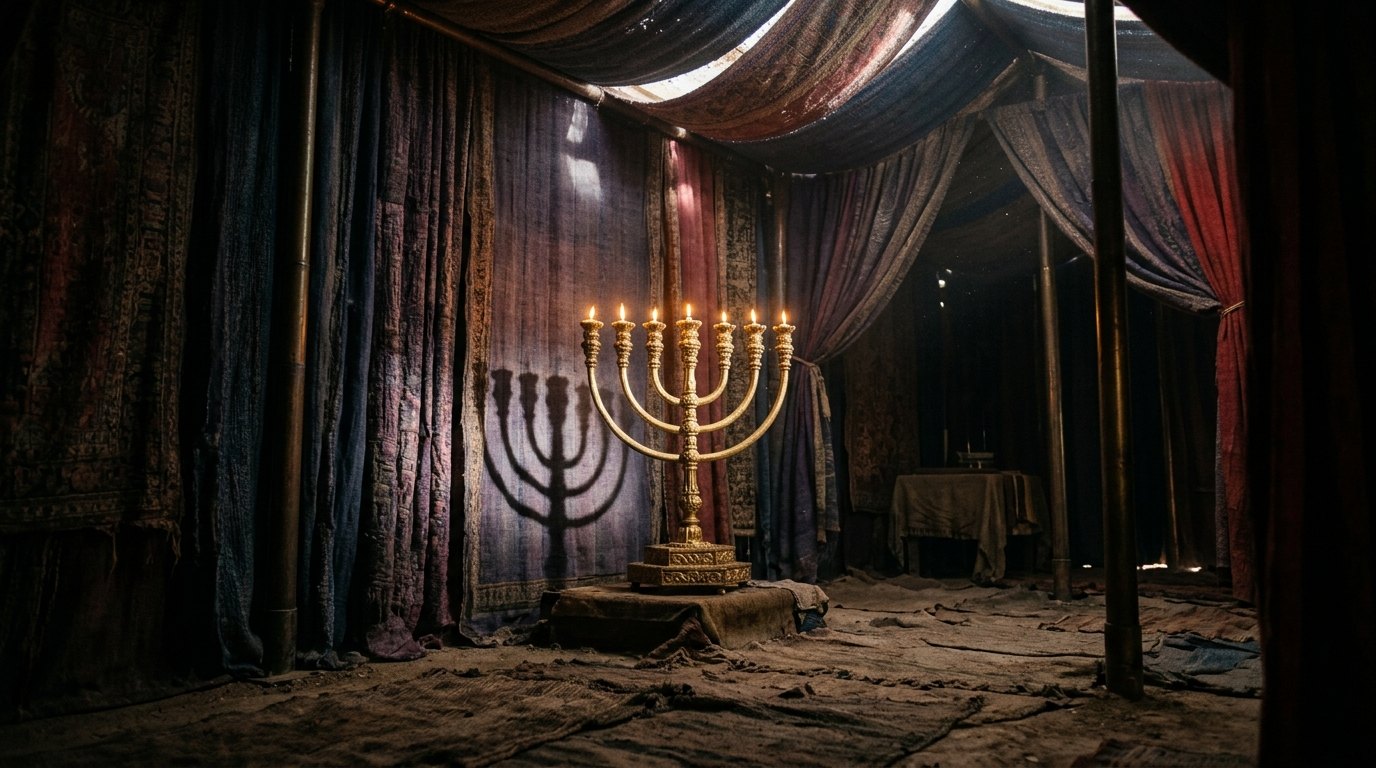
He is to take some of the bull’s blood and with his finger sprinkle it on the front of the atonement cover; then he shall sprinkle some of it with his finger seven times before the atonement cover.
Leviticus 16:14 (NIV)
Sprinkling sacrificial blood seven times before the mercy seat enacts absolute, unimpeachable ceremonial cleansing on the Day of Atonement.
In Leviticus 16:14, the high priest takes the blood of a bull and sprinkles it with his finger on the front of the mercy seat on the east side, and in front of the mercy seat he sprinkles some of the blood with his finger seven times. This sevenfold application signified an absolute, irreversible satisfaction of divine justice on the Day of Atonement. The author of Hebrews reveals that this ceremonial cleansing was a shadow of Christ's perfect sacrifice: Hebrews 9:25-28 and Hebrews 10:10-14 explain that our great High Priest did not offer Himself repeatedly, but through His single offering put away sin forever, providing the total cleansing that ancient ritual could only symbolize.
Within the tabernacle, this sacred number illuminated and consecrated every sacred space. Exodus 25:37 ordained that the golden menorah bear seven oil lamps to emit light continually before God, anticipating the seven golden lampstands surrounding the exalted Son of Man in Revelation 1:12-13. In Leviticus 4:6 and Leviticus 4:17, the priest sprinkled sin offering blood seven times before the sanctuary veil, a purification fulfilled when Christ entered the holy places once for all by His own blood in Hebrews 9:12. Leviticus 8:11 records Moses sprinkling anointing oil seven times on the altar, while Leviticus 8:33 required priests to remain seven days at the tent of meeting for their consecration, prefiguring the heavenly sanctification described in Hebrews 9:21-23.
Purification rituals consistently demanded this sevenfold seal. Leviticus 14:7 and Leviticus 14:16-51 commanded the priest to sprinkle blood, oil, and living water seven times over lepers and infected houses, a cleansing fulfilled when Jesus touched the leper and made him whole in Matthew 8:3-4. Numbers 19:4 mandated sprinkling the red heifer's blood seven times toward the tabernacle, pointing directly to Christ purifying our consciences in Hebrews 9:13-14, while Numbers 28:11 and Numbers 29:12 structured covenant sacrifices around seven unblemished lambs and the seven-day feast of booths.
| Passage | What it says | Fulfilled |
|---|---|---|
| Exodus 25:37 | The golden lampstand in the holy place was fashioned with seven lamps to provide continual light before God. | Revelation 1:12-13 |
| Leviticus 4:6 | The anointed priest sprinkled blood seven times before the veil of the sanctuary for sin offering atonement. | Hebrews 9:12 |
| Leviticus 8:11 | Moses sprinkled anointing oil on the altar seven times to sanctify it and its utensils for service. | Hebrews 9:21-23 |
| Leviticus 14:7 | The priest sprinkled cleansing water and blood seven times upon a healed leper before pronouncing him ceremonially clean. | Matthew 8:3-4 |
| Leviticus 16:14 | Blood of the bull was sprinkled seven times on and before the mercy seat during the Day of Atonement. | Hebrews 9:25-28 |
| Leviticus 16:19 | The high priest cleansed and consecrated the altar by sprinkling blood upon it seven times. | Hebrews 10:10-14 |
| Numbers 19:4 | Eleazar the priest sprinkled the blood of the red heifer directly toward the front of the tabernacle seven times. | Hebrews 9:13-14 |
| Leviticus 4:17 | Priest sprinkles sin offering blood seven times before the veil. | |
| Leviticus 8:33 | Consecration of the priests requires seven days at the tent of meeting. | |
| Leviticus 14:16 | Priest sprinkles oil with finger seven times before the Lord for cleansing. | |
| Leviticus 14:51 | House cleansing ritual requires sevenfold sprinkling of blood and living water. | |
| Numbers 28:11 | Monthly offerings specify seven male lambs without blemish. | |
| Numbers 29:12 | Feast of Tabernacles celebrated for seven days with extensive sacrifices. |
Historical Events
Decisive Acts of Deliverance and Cleansing Unfold by Sevens
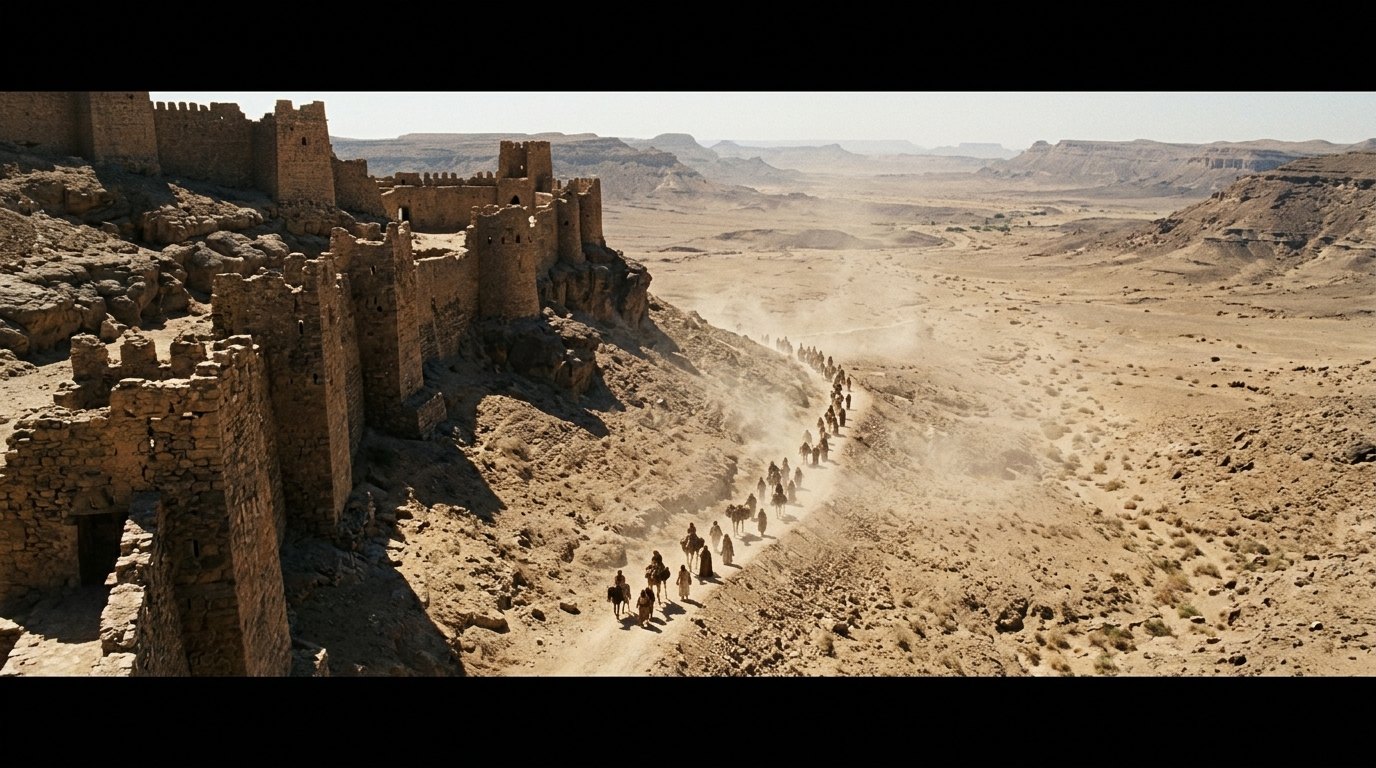
Have seven priests carry trumpets of rams’ horns in front of the ark. On the seventh day, march around the city seven times, with the priests blowing the trumpets.
Joshua 6:4 (NIV)
Seven priests bearing seven trumpets marching for seven days around Jericho illustrates victory accomplished through God's ordained order.
In Joshua 6:4, God commanded that seven priests shall bear seven trumpets of rams' horns before the ark; and on the seventh day you shall march around the city seven times, and the priests shall blow the trumpets. The fortress of Jericho yielded not to battering rams, but to the sovereign obedience of a sevenfold march. In Joshua 6:15, Israel rose at dawn on the seventh day and circled the walls seven times; Hebrews 11:30 celebrates this triumph, declaring that by faith the walls of Jericho fell after they had been encircled for seven days.
From the dawn of redemptive history, God organized critical deliverances around seven. In Genesis 7:2-4, God commanded Noah to preserve clean beasts by sevens and gave seven days before opening the windows of heaven, a historical judgment and salvation mirrored in Matthew 24:37-39 and 1 Peter 3:20. Genesis 8:10-12 records Noah waiting successive seven-day intervals before releasing the dove. Genesis 21:28-30 marks Abraham's covenant with Abimelech through seven ewe lambs. Genesis 29:18-30 chronicles Jacob's seven-year labors for Rachel, Genesis 33:3 his sevenfold bow before Esau, and Genesis 41:2-54 Egypt's seven years of plenty and seven years of famine. After Egypt's river ran red for seven days in Exodus 7:25, Israel's history repeatedly echoed this motif: Gideon's seven-year bull in Judges 6:25, Samson's seven feast days and seven locks in Judges 14:12 and Judges 16:13, and Solomon's seven-year temple construction in 1 Kings 6:38 and 1 Kings 8:65.
Miracles of restoration bear the same divine imprint. In 2 Kings 5:10-14, Elisha commanded Naaman to dip seven times in the Jordan, restoring his flesh as foreshadowed in Luke 4:27. Elijah sent his servant seven times toward the sea before rain fell in 1 Kings 18:43-44, the Shunammite's son sneezed seven times in 2 Kings 4:35, and Job's friends observed seven days of silence before offering seven bulls and seven rams in Job 2:13 and Job 42:8.
| Passage | What it says | Fulfilled |
|---|---|---|
| Genesis 7:2-3 | Noah was commanded to bring seven pairs of every clean animal and bird into the ark to preserve life. | 1 Peter 3:20 |
| Genesis 7:4 | God warned Noah that after seven days He would cause torrential rain to fall upon the earth for forty days. | Matthew 24:37-39 |
| Genesis 41:2 | Pharaoh dreamed of seven healthy cows followed by seven sickly cows emerging from the Nile River. | |
| Genesis 41:53-54 | Seven years of immense agricultural abundance were immediately followed by seven years of severe, widespread famine in Egypt. | |
| Joshua 6:4 | Seven priests bore seven ram-horn trumpets before the ark of the covenant during the encirclement of Jericho. | Hebrews 11:30 |
| Joshua 6:15 | On the seventh day the Israelites rose early and circled the city of Jericho seven times before the walls fell. | Hebrews 11:30 |
| 2 Kings 5:10 | Elisha instructed Naaman the Syrian commander to wash seven times in the Jordan River to heal his leprosy. | Luke 4:27 |
| 2 Kings 5:14 | Naaman dipped himself seven times in the Jordan according to Elisha's word and his flesh was fully restored. | |
| Genesis 8:10 | Noah waits seven days before sending the dove again from the ark. | |
| Genesis 8:12 | Noah waits another seven days before sending the dove a final time. | |
| Genesis 21:28-30 | Abraham sets seven ewe lambs apart as witness of a covenant. | |
| Genesis 29:18-20 | Jacob serves seven years for Rachel because of his love for her. | |
| Genesis 29:27-30 | Jacob completes Leah's week and serves seven more years for Rachel. | |
| Genesis 33:3 | Jacob bows to the ground seven times approaching his brother Esau. | |
| Exodus 7:25 | Seven full days pass after the Nile is turned into blood. | |
| Judges 6:25 | Gideon commanded to take father's second bull of seven years old. | |
| Judges 14:12 | Samson offers a riddle to be solved within seven days of the feast. | |
| Judges 16:13 | Samson mentions the seven locks of his head tied to the web. | |
| 1 Kings 6:38 | Solomon builds the temple of the Lord over a span of seven years. | |
| 1 Kings 8:65 | Solomon and Israel hold a feast of seven days and seven days. | |
| 1 Kings 18:43-44 | Elijah instructs his servant seven times to look toward the sea for rain. | |
| 2 Kings 4:35 | The Shunammite woman's resurrected son sneezes seven times and opens eyes. | |
| Job 2:13 | Job's friends sit with him in silence for seven days and nights. | |
| Job 42:8 | Job's friends commanded to offer seven bulls and seven rams for sacrifice. |
Prophecy and Punishment
Covenant Retribution and Prophetic Timelines Measure God's Judgment
“Seventy ‘sevens’ are decreed for your people and your holy city to finish transgression, to put an end to sin, to atone for wickedness, to bring in everlasting righteousness, to seal up vision and prophecy and to anoint the Most Holy Place.
Daniel 9:24 (NIV)
Daniel's seventy weeks of years delineate the precise prophetic blueprint culminating in the atonement for sin and the coming of Messiah.
In Daniel 9:24, the Lord reveals that seventy weeks are decreed for Israel to finish transgression, make reconciliation for iniquity, and usher in everlasting righteousness, finding ultimate fulfilment when Christ died to reconcile us to God (Romans 5:10-11; Galatians 4:4). Across redemptive history, God measures holy discipline and prophetic reckoning through the number seven. At the dawn of human rebellion, the Lord warned that Cain's murderer would suffer sevenfold vengeance (Genesis 4:15), a mercy later distorted by Lamech's boast of seventy-sevenfold revenge (Genesis 4:24). When ratifying His covenant with Israel, the Lord declared repeatedly that persistent idolatry would bring discipline struck seven times over (Leviticus 26:18, 21, 24, 28). In covenant victory, enemies would advance by one path and flee seven ways (Deuteronomy 28:7); yet under covenant curse, an unfaithful Israel would likewise scatter seven ways (Deuteronomy 28:25).
When Judah unceasingly violated the land's sabbatical rests, God appointed their exile through Jeremiah, decreeing seventy years of Babylonian bondage (Jeremiah 25:11; 29:10). This sentence of exile fulfilled the exact sabbatical debt of the land until King Cyrus issued the decree of return (2 Chronicles 36:21; Ezra 1:1). As Daniel pondered these seventy years recorded in Scripture (Daniel 9:2), he received an even greater prophetic timeline. Before Messiah was cut off to seal covenant redemption, pagan pride was humbled: Nebuchadnezzar was driven to pasture until seven periods of time elapsed over him (Daniel 4:16, 23, 25, 32). From the decree to rebuild Jerusalem, sixty-nine sevens would mark the path to Messiah the Prince (Daniel 9:25; fulfilled in Mark 1:15), who was cut off to confirm the new covenant for the many (Daniel 9:26-27).
| Passage | What it says | Fulfilled |
|---|---|---|
| Genesis 4:15 | The Lord declared that vengeance would be taken sevenfold on anyone who murdered Cain. | |
| Leviticus 26:18 | God warned Israel that continued rebellion would bring discipline seven times more severely for their sins. | |
| Leviticus 26:28 | Persistent breach of the covenant would result in God striking His people sevenfold for their transgressions. | |
| Jeremiah 25:11 | Jeremiah prophesied that Judah would serve the king of Babylon during a designated seventy-year desolation. | 2 Chronicles 36:21 |
| Jeremiah 29:10 | The Lord promised to visit the exiles and fulfill His word of return after seventy years were completed in Babylon. | Ezra 1:1 |
| Daniel 9:2 | Daniel perceived in the sacred scriptures that the desolations of Jerusalem would last for seventy years. | |
| Daniel 9:24 | Seventy weeks are decreed for Daniel's people to finish transgression, make reconciliation for iniquity, and bring in everlasting righteousness. | Romans 5:10-11, Galatians 4:4 |
| Daniel 9:25 | Seven weeks and sixty-two weeks are measured from the decree to rebuild Jerusalem until the arrival of the Messiah. | Mark 1:15 |
| Genesis 4:24 | Lamech declares vengeance seventy-sevenfold compared to Cain's sevenfold protection. | |
| Leviticus 26:21 | God promises sevenfold blows for continued disobedience against His commandments. | |
| Leviticus 26:24 | God warns He will strike Israel seven times for their sins. | |
| Deuteronomy 28:7 | Enemies come in one way and flee before Israel seven ways. | |
| Deuteronomy 28:25 | Israel shall go out one way and flee seven ways before enemies. | |
| Daniel 4:16 | Nebuchadnezzar's heart made like a beast until seven periods of time pass. | |
| Daniel 4:23 | Decree of Nebuchadnezzar's humiliation continues until seven periods of time pass. | |
| Daniel 4:25 | Nebuchadnezzar driven from men to eat grass until seven periods pass. | |
| Daniel 4:32 | Seven periods of time pass over Nebuchadnezzar until he acknowledges the Most High. | |
| Daniel 9:26 | Messiah cut off and Jerusalem destroyed after sixty-two weeks of seven. | |
| Daniel 9:27 | A firm covenant confirmed with many for the final one week. |
Gospels and Epistles
Christ Fulfills Boundless Grace and the Perfect Rest

Jesus answered, “I tell you, not seven times, but seventy-seven times.
Matthew 18:22 (NIV)
Jesus replaces human scorekeeping with seventy times seven forgiveness, manifesting the endless fullness of kingdom mercy.
When Peter inquired about the limits of personal grace, Jesus answered in Matthew 18:22 that forgiveness must extend seventy times seven, shattering human calculation to unveil the boundless, inexhaustible mercy of God's kingdom. Peter had offered to forgive an offending brother seven times (Matthew 18:21), a gesture that already exceeded standard rabbinic tradition; yet the Lord doubled the standard to seventy-seven or seventy times seven, teaching elsewhere that if a brother repents seven times in a day, he must be pardoned every time (Luke 17:4). Human retributive scales yield wholly to divine fullness.
This pattern of sevenfold completeness defines Christ's authority over material lack and spiritual darkness. When preaching to four thousand men in the wilderness, Jesus took seven loaves of bread and fish, broke them, and filled the crowd until seven large hampers of fragments remained (Matthew 15:34, 37). In the spiritual realm, Jesus described the horrific hazard of moral reformation without inner regeneration, warning that an expelled demon will return with seven other spirits more wicked than itself (Matthew 12:45; Luke 11:26). Yet His authority over the demonic is absolute: He completely liberated Mary Magdalene, driving out seven tormenting demons so she could become the first witness of His resurrection (Mark 16:9; Luke 8:2). When the early church required leaders of spotless integrity to minister mercy to widows, the apostles directed the congregation to choose seven men filled with the Holy Spirit and wisdom (Acts 6:3), manifesting Christ's ordered governance over His holy body.
| Passage | What it says |
|---|---|
| Matthew 15:34 | Jesus miraculously multiplied seven loaves and a few small fish to feed a multitude of four thousand people. |
| Matthew 15:37 | The disciples gathered seven large baskets filled with broken pieces left over after the multitude ate. |
| Matthew 18:21 | Peter asked Jesus whether he should forgive his brother who sinned against him up to seven times. |
| Matthew 18:22 | Jesus answered that forgiveness should be extended not merely seven times, but seventy-seven or seventy times seven times. |
| Mark 16:9 | Jesus appeared first to Mary Magdalene, out of whom He had cast seven tormenting demons. |
| Acts 6:3 | The early church selected seven men of good reputation, full of the Spirit and wisdom, to oversee daily distribution. |
| Matthew 12:45 | Unclean spirit returns taking seven other spirits more wicked than itself. |
| Luke 8:2 | Mary Magdalene delivered from seven demons follows and provides for Jesus. |
| Luke 11:26 | Unclean spirit brings seven other spirits more evil into the swept house. |
| Luke 17:4 | Disciple commanded to forgive brother who repents seven times a day. |
Apocalyptic Consummation
Revelation Culminates History with Sevens of Perfection and Wrath
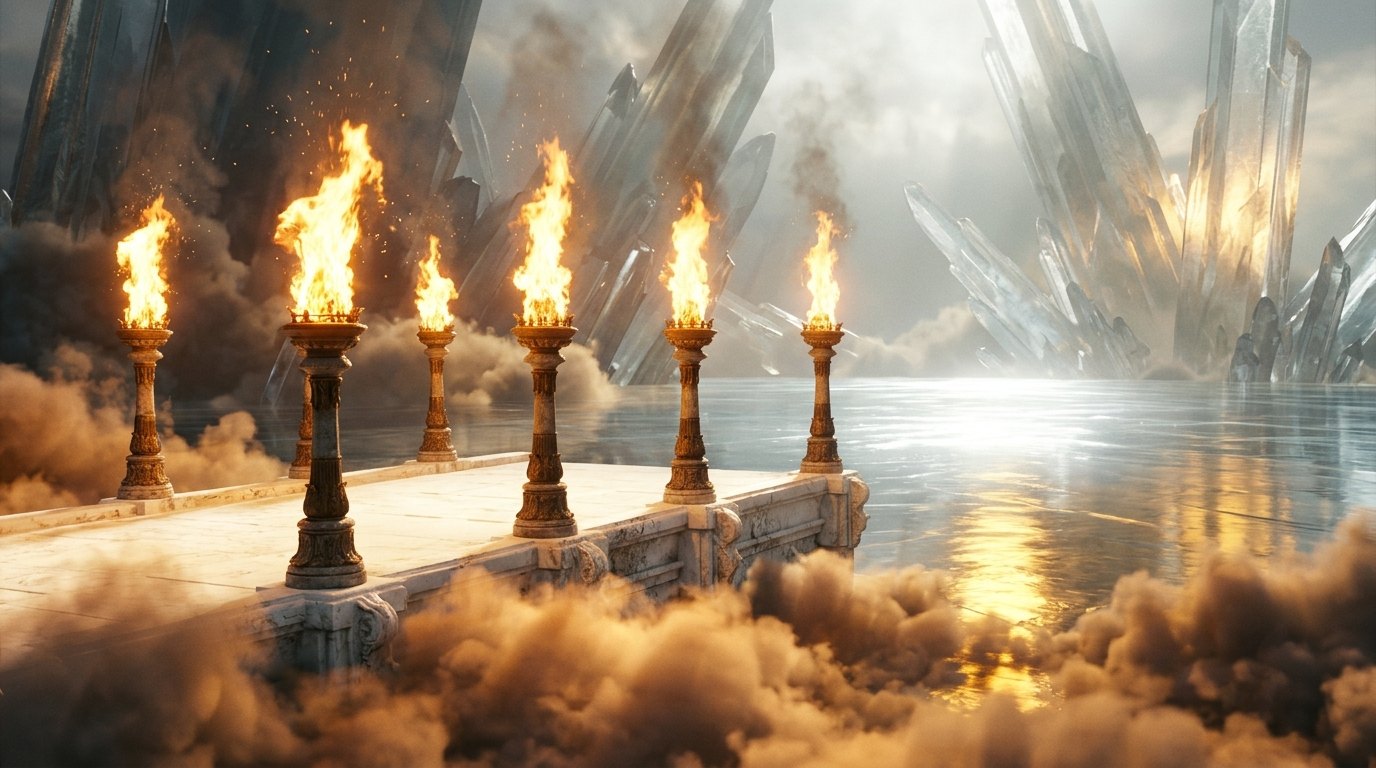
Then I saw a Lamb, looking as if it had been slain, standing at the center of the throne, encircled by the four living creatures and the elders. The Lamb had seven horns and seven eyes, which are the seven spirits of God sent out into all the earth.
Revelation 5:6 (NIV)
The Lamb standing as slain possesses seven horns and seven eyes, personifying perfect divine omnipotence and omniscient wisdom.
At the cosmic center of the heavenly court, the Apostle John beholds a Lamb standing as though slain, having seven horns and seven eyes, personifying absolute omnipotence and the perfect, searching omniscience of the Spirit sent into all the earth (Revelation 5:6). The final book of Scripture unfurls as an intricate tapestry of divine sevens. The greeting of grace descends from the seven Spirits before the throne to the seven historical churches of Asia (Revelation 1:4), while the exalted Christ walks among seven golden lampstands and holds seven stars in His right hand (Revelation 1:12, 16, 20; 3:1). Before His crystal throne burn seven blazing torches of fire, revealing the unsearchable fullness of God's presence (Revelation 4:5).
As the Lamb takes the scroll from the Father's right hand, He alone breaks its seven seals, setting loose the sovereign verdicts that govern history (Revelation 5:1). God's final summons sounds as seven angels take seven trumpets to proclaim warning judgments upon the earth (Revelation 8:2, 6), punctuated by the unwritten voices of seven thunders (Revelation 10:3-4) and the judgment in the great city where seven thousand perish (Revelation 11:13). Evil feigns this completeness: the great red dragon and the blasphemous beast from the sea each possess seven heads wearing crowns (Revelation 12:3; 13:1; 17:3, 9-10). Yet the rebellion of Satan is shattered when seven angels pour out the seven last plagues from seven golden bowls, completing the wrath of God and ushering in His eternal reign (Revelation 15:1; 16:1).
| Passage | What it says |
|---|---|
| Revelation 1:4 | Grace and peace are sent to the seven churches in Asia from the seven Spirits before God's throne. |
| Revelation 1:12 | John turned and saw seven golden lampstands representing the whole witnessed church in the world. |
| Revelation 5:1 | The Father held a scroll sealed tightly with seven seals, containing the judgments and destiny of the earth. |
| Revelation 5:6 | A Lamb standing as if slain had seven horns and seven eyes, which are the seven Spirits of God. |
| Revelation 8:2 | Seven angels standing before God were given seven trumpets to sound final warnings and divine visitations upon the earth. |
| Revelation 15:1 | Seven angels were seen having the seven last plagues in which the wrath of God is brought to completion. |
| Revelation 16:1 | A loud voice commanded the seven angels to pour out the seven golden bowls of God's wrath upon the earth. |
| Revelation 1:16 | Son of Man holds seven stars in His right hand. |
| Revelation 1:20 | Mystery of seven stars and seven golden lampstands explained by Christ. |
| Revelation 3:1 | Christ holds the seven Spirits of God and the seven stars. |
| Revelation 4:5 | Seven torches of fire burn before God's throne as seven Spirits. |
| Revelation 8:6 | Seven angels prepared to blow their seven apocalyptic trumpets. |
| Revelation 10:3-4 | Seven thunders sound their voices and John is told to seal words. |
| Revelation 11:13 | Seven thousand people killed in the great city earthquake. |
| Revelation 12:3 | Great red dragon appears having seven heads with seven diadems. |
| Revelation 13:1 | Beast rises out of the sea having ten horns and seven heads. |
| Revelation 17:3 | Scarlet beast covered with blasphemous names possesses seven heads and ten horns. |
| Revelation 17:9-10 | Seven heads represent seven mountains and seven successive kings. |
Poetry and Wisdom
Wisdom Literature and Visions Portray Perfection Through Seven
And the words of the LORD are flawless, like silver purified in a crucible, like gold refined seven times.
Psalms 12:6 (NIV)
It shows seven used poetic-theologically to denote absolute purity and flawless completion in God's speech.
In the Psalms, David declares that the words of the Lord are pure words, like silver refined seven times in a furnace of earth (Psalms 12:6). Here, the number seven serves as the supreme poetic standard for absolute flawlessness, free from any dross, falsehood, or defect. In response to such immaculate revelation, the psalmist commits to a posture of constant thanksgiving: "Seven times a day I praise you for your righteous rules" (Psalms 119:164). This cadence captures an entire life ordered around perpetual adoration and reliance upon God's enduring truth.
Throughout the wisdom literature, seven frames the moral order of creation and the heart of man. Solomon observes that while a righteous person may fall seven times, God faithfully raises him up again, contrasting him with the wicked who collapse in ruin (Proverbs 24:16). Wisdom herself establishes stability by carving out seven solid pillars for her grand banquet house (Proverbs 9:1). Conversely, the depth of human corruption is weighed by the same standard: the Lord hates six things, indeed seven are an utter abomination to His soul (Proverbs 6:16), just as a deceitful speaker harbors seven abominations within his heart (Proverbs 26:25). In the post-exilic visions of Zechariah, divine wisdom and covenant restoration converge upon the high priest Joshua, before whom God sets a single stone inscribed with seven watchful eyes (Zechariah 3:9). These match the golden lampstand with its seven lamps, identified as the eyes of the Lord that scan the whole earth to accomplish His work not by might, nor by power, but by His Spirit (Zechariah 4:2, 10).
| Passage | What it says |
|---|---|
| Psalms 12:6 | Words of the Lord are pure words, like silver refined seven times. |
| Psalms 119:164 | Psalmist praises God seven times a day on account of righteous rules. |
| Proverbs 6:16 | Six things the Lord hates, indeed seven are an abomination to Him. |
| Proverbs 9:1 | Wisdom builds her house and hews out her seven pillars. |
| Proverbs 24:16 | A righteous man falls seven times and rises again. |
| Proverbs 26:25 | Hateful speaker conceals seven abominations within his deceitful heart. |
| Zechariah 3:9 | Stone set before Joshua the high priest has seven eyes upon it. |
| Zechariah 4:2 | Golden lampstand seen with a bowl on top and seven lamps. |
| Zechariah 4:10 | Seven lamps represent the eyes of the Lord ranging across the earth. |
Where in the Bible
| Book | Passages |
|---|---|
| Genesis | 16 · Genesis 1:31, Genesis 2:1, Genesis 2:2, Genesis 2:3, Genesis 7:2-3, Genesis 7:4, Genesis 41:2, Genesis 41:53-54, Genesis 8:10, Genesis 8:12, Genesis 21:28-30, Genesis 29:18-20, Genesis 29:27-30, Genesis 33:3, Genesis 4:15, Genesis 4:24 |
| Exodus | 7 · Exodus 20:11, Exodus 31:17, Exodus 20:8-10, Exodus 23:12, Exodus 12:15, Exodus 25:37, Exodus 7:25 |
| Leviticus | 19 · Leviticus 23:3, Leviticus 23:15-16, Leviticus 23:34, Leviticus 25:4, Leviticus 25:8, Leviticus 25:10, Leviticus 4:6, Leviticus 8:11, Leviticus 14:7, Leviticus 16:14, Leviticus 16:19, Leviticus 4:17, Leviticus 8:33, Leviticus 14:16, Leviticus 14:51, Leviticus 26:18, Leviticus 26:28, Leviticus 26:21, Leviticus 26:24 |
| Numbers | 3 · Numbers 19:4, Numbers 28:11, Numbers 29:12 |
| Deuteronomy | 4 · Deuteronomy 15:1-2, Deuteronomy 16:9, Deuteronomy 28:7, Deuteronomy 28:25 |
| Joshua | 2 · Joshua 6:4, Joshua 6:15 |
| Judges | 3 · Judges 6:25, Judges 14:12, Judges 16:13 |
| 1 Kings | 3 · 1 Kings 6:38, 1 Kings 8:65, 1 Kings 18:43-44 |
| 2 Kings | 3 · 2 Kings 5:10, 2 Kings 5:14, 2 Kings 4:35 |
| Job | 2 · Job 2:13, Job 42:8 |
| Psalms | 2 · Psalms 12:6, Psalms 119:164 |
| Proverbs | 4 · Proverbs 6:16, Proverbs 9:1, Proverbs 24:16, Proverbs 26:25 |
| Jeremiah | 2 · Jeremiah 25:11, Jeremiah 29:10 |
| Daniel | 9 · Daniel 9:2, Daniel 9:24, Daniel 9:25, Daniel 4:16, Daniel 4:23, Daniel 4:25, Daniel 4:32, Daniel 9:26, Daniel 9:27 |
| Zechariah | 3 · Zechariah 3:9, Zechariah 4:2, Zechariah 4:10 |
| Matthew | 5 · Matthew 15:34, Matthew 15:37, Matthew 18:21, Matthew 18:22, Matthew 12:45 |
| Mark | 1 · Mark 16:9 |
| Luke | 3 · Luke 8:2, Luke 11:26, Luke 17:4 |
| Acts | 1 · Acts 6:3 |
| Hebrews | 1 · Hebrews 4:4 |
| Revelation | 18 · Revelation 1:4, Revelation 1:12, Revelation 5:1, Revelation 5:6, Revelation 8:2, Revelation 15:1, Revelation 16:1, Revelation 1:16, Revelation 1:20, Revelation 3:1, Revelation 4:5, Revelation 8:6, Revelation 10:3-4, Revelation 11:13, Revelation 12:3, Revelation 13:1, Revelation 17:3, Revelation 17:9-10 |
The story in order
- Creation Week (c. 4000 BC) · Genesis 2:2 · God rested on the seventh day, making it holy.
- Noah's Ark (c. 2350 BC) · Genesis 7:4 · God warned Noah of rain after seven days.
- Sabbath Commandment (c. 1446 BC) · Exodus 20:11 · Sabbath grounded in God's seven-day creation.
- Feast of Booths (c. 1445 BC) · Leviticus 23:34 · Observed for seven days in the seventh month.
- Jubilee Year (c. 1445 BC) · Leviticus 25:10 · Announced by a trumpet blast after seven cycles of seven years.
- Jericho's Fall (c. 1400 BC) · Joshua 6:15 · Israelites marched around Jericho seven times on the seventh day.
- Naaman's Cleansing (c. 850 BC) · 2 Kings 5:14 · Naaman washed seven times in the Jordan to be healed.
- Temple Construction (c. 960 BC) · 1 Kings 6:38 · Solomon built the temple over seven years.
- Seventy-Year Exile (c. 605 BC) · Jeremiah 25:11 · Prophecy of Judah serving Babylon for seventy years.
- Daniel's Seventy Weeks (c. 539 BC) · Daniel 9:24 · Seventy weeks decreed for Israel's future.
- Jesus Feeds Four Thousand (c. AD 30) · Matthew 15:37 · Seven loaves and seven baskets of leftovers.
- Seven Churches (c. AD 95) · Revelation 1:4 · Grace and peace sent to the seven churches.
- Seven Seals Opened (c. AD 95) · Revelation 5:1 · Scroll with seven seals contains God's judgments.
- Seven Trumpets Sounded (c. AD 95) · Revelation 8:2 · Seven angels given seven trumpets for warnings.
Key words
- Sabbath (שָּׁבָת (shavat))
- A day of rest and worship, commanded by God and rooted in creation. · Genesis 2:3
- Holy (קָדוֹשׁ (qadosh))
- Set apart by God for His purposes; consecrated and sacred. · Genesis 2:3
- Covenant (בְּרִית (berit))
- A solemn agreement or promise between God and His people. · Exodus 31:17
- Feast (חַג (chag))
- A designated time of religious observance, often involving sacrifices and celebration. · Leviticus 23:34
- Jubilee (יוֹבֵל (yobel))
- The fiftieth year, a special year of release, restoration, and liberty. · Leviticus 25:10
- Atonement (כִּפֻּר (kippur))
- The act of making amends or reconciliation for sin, often through sacrifice. · Leviticus 16:14
- Prophecy (נְבוּאָה (nevu'ah))
- A message or prediction from God, often concerning future events. · Jeremiah 25:11
- Seventy Weeks (שָׁבוּעִים (shavu'im))
- A specific prophetic period of 490 years decreed for Daniel's people. · Daniel 9:24
Far from being a mere curious cipher or arbitrary symbol, the number seven reminds believers that God brings every promise, every judgment, and all of redemptive history to its absolute consummation. Because Christ entered the true heavenly sanctuary and offered the final, all-sufficient sacrifice, He brings His people into an eternal Sabbath rest that no power can shake. We can rest in faith knowing that the God who completed creation in perfection will faithfully complete His finished work in us.
111 passages, each cited once.
Scripture cited
- Genesis 2:1-3
- Exodus 20:11
- Leviticus 25:8-10
- Joshua 6:4-16
- Matthew 18:21-35
- Revelation 1:20
- Revelation 15:1-7
- Revelation 12:3