What is the Tower of Babel about?
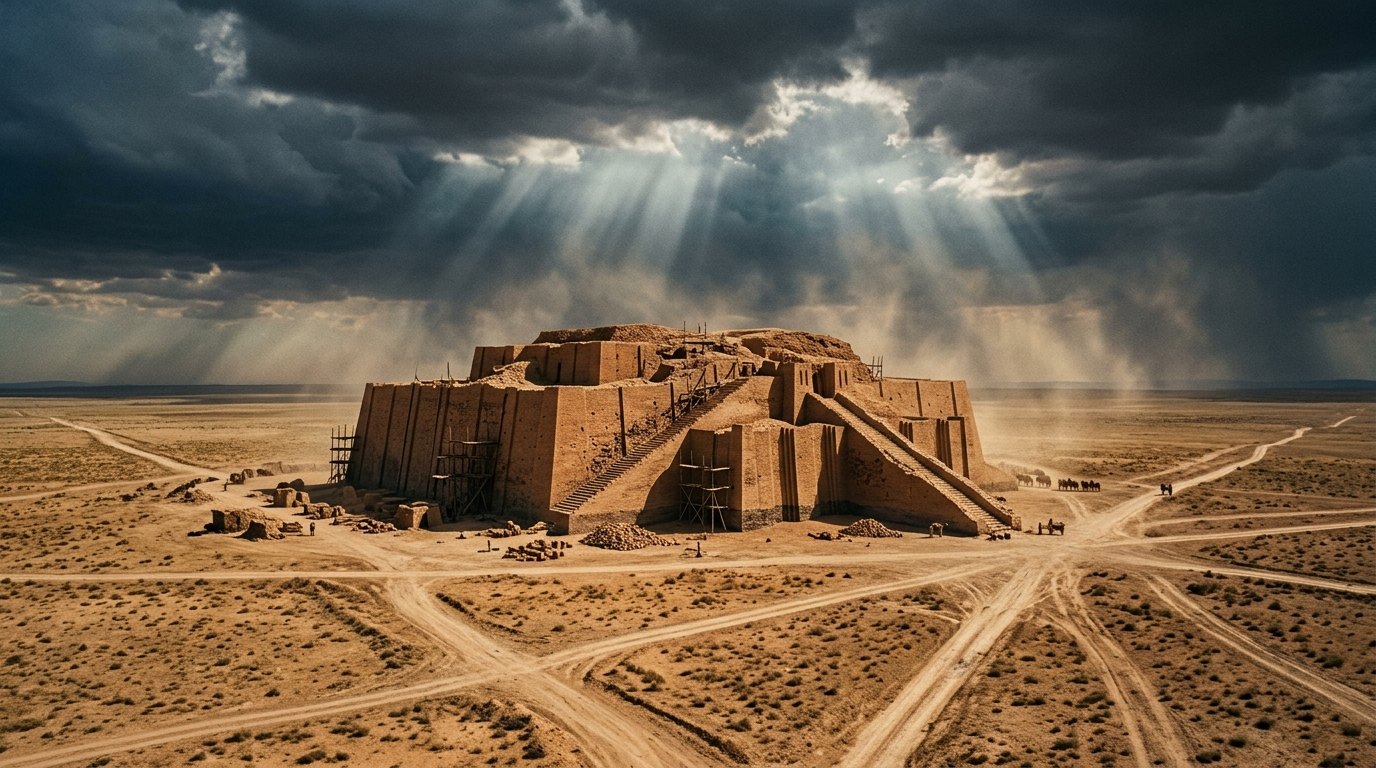
Genesis 11:1-9
1 Now the whole world had one language and a common speech.
2 As people moved eastward, they found a plain in Shinar and settled there.
3 They said to each other, “Come, let’s make bricks and bake them thoroughly.” They used brick instead of stone, and tar for mortar.
4 Then they said, “Come, let us build ourselves a city, with a tower that reaches to the heavens, so that we may make a name for ourselves; otherwise we will be scattered over the face of the whole earth.”
5 But the LORD came down to see the city and the tower the people were building.
6 The LORD said, “If as one people speaking the same language they have begun to do this, then nothing they plan to do will be impossible for them.
7 Come, let us go down and confuse their language so they will not understand each other.”
8 So the LORD scattered them from there over all the earth, and they stopped building the city.
9 That is why it was called Babel—because there the LORD confused the language of the whole world. From there the LORD scattered them over the face of the whole earth.
New International Version (NIV)
The answer
The Tower of Babel is about human pride meeting God's sovereign rule, and the origin of the world's different languages.
What happened
After the flood, all people still lived together with one language and one speech (Genesis 11:1). They traveled east into the plain of Shinar and settled there. Instead of filling the earth as God had commanded (Genesis 9:1), they gathered in one place and announced their plan: "Come, let's build ourselves a city, and a tower whose top reaches to the sky, and let's make a name for ourselves, lest we be scattered abroad" (Genesis 11:4).
What the tower meant
The tower was a monument to human unity apart from God and against God. Two motives drive them in Genesis 11:4:
- Self-glory: "let's make a name for ourselves"
- Self-preservation: "lest we be scattered abroad" — refusing to do what God had said
They used burnt brick (no easy stone in the plain) and tar, building the kind of ziggurat the Mesopotamian world is famous for. The goal was nothing less than reaching heaven on their own terms.
What God did
"Yahweh came down to see the city and the tower" (Genesis 11:5) — a deliberate, almost amused descent, signalling that their great project did not threaten Him. His verdict: "Behold, they are one people, and they all have one language... now nothing will be withheld from them, which they intend to do" (Genesis 11:6). United in rebellion, they would keep going.
So the Lord "came down" a second time and confused their language, so that they could not understand one another (Genesis 11:7). Work stopped (Genesis 11:8), and the people were scattered abroad over all the earth — exactly what they had tried to prevent.
Why the name "Babel"
"Therefore its name was called Babel, because there Yahweh confused the language of all the earth" (Genesis 11:9). The name Babel sounds like the Hebrew word for "confusion," though it is also linked to the later great city of Babylon — the classic enemy of God's people in Scripture.
The bigger picture
Babel is the opposite of what God intends for His people. At Pentecost the Spirit reverses Babel: instead of one proud city scattering into many confused tongues, many nations gather to "hear them speak in his own language" (Acts 2:6). And Scripture promises a day when God "will turn to the people a pure language, that they may all call upon the name of the LORD, to serve him with one consent" (Zephaniah 3:9). What humans tried to build for themselves, God will one day build for His own glory — gathered, not scattered.
Take it home
- Human beings make their proudest plans and still serve an infinite God.
- Unity without God is dangerous; unity with God is the goal.
- Languages, nations, and borders are not accidents — they fall under the Lord who scatters and gathers.
Answered from Scripture · reviewed November 7, 2026
The Tower of Babel records humanity's unified defiance against God's command to fill the earth, met by God's sovereign judgment in confusing their tongues and scattering them abroad. This historic event explains the origin of diverse languages and marks Babylon as the enduring biblical archetype of human self-exaltation apart from God. Ultimately, Babel highlights the vanity of human pride while anticipating God's redemptive gathering of all nations under Christ.
The Rebellious Plan
Man Unites to Make a Name and Defy God
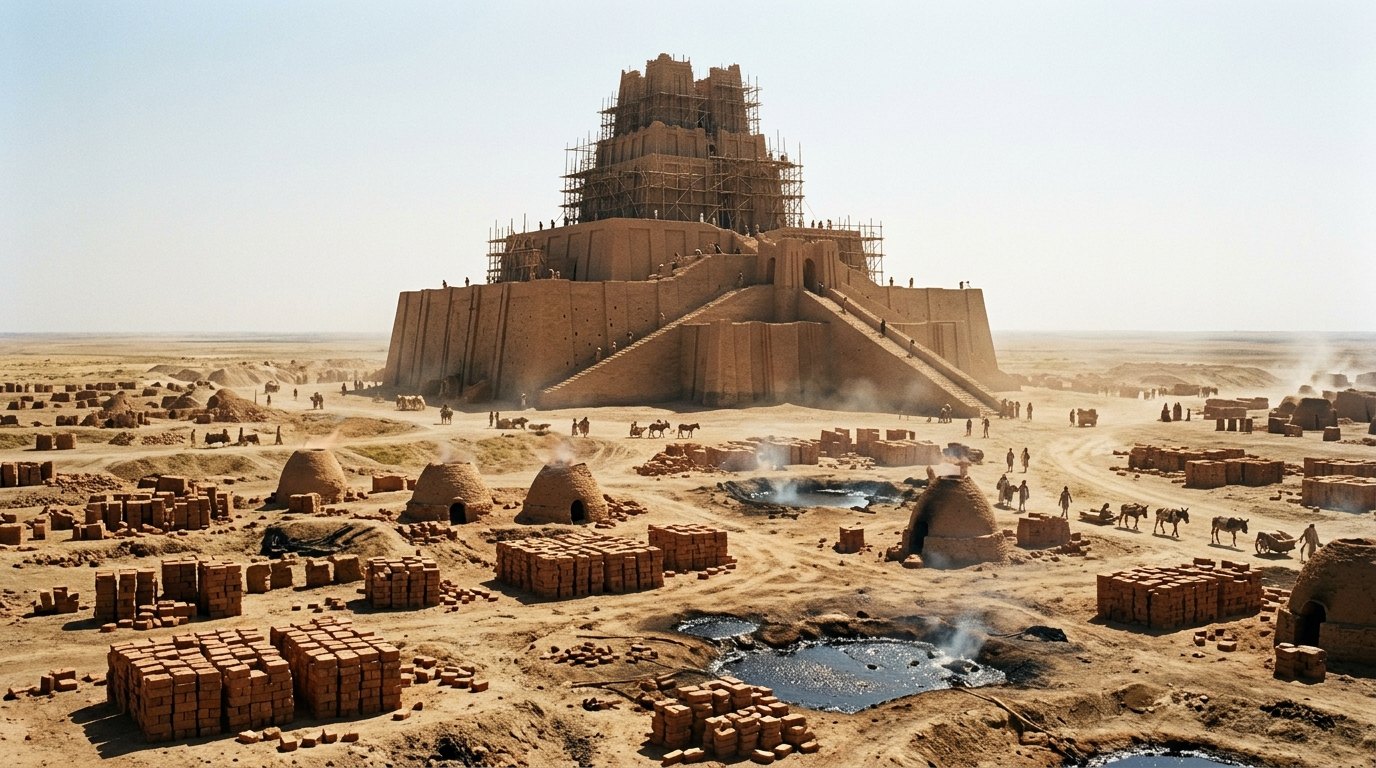
Then they said, “Come, let us build ourselves a city, with a tower that reaches to the heavens, so that we may make a name for ourselves; otherwise we will be scattered over the face of the whole earth.”
Genesis 11:4 (NIV)
This verse exposes humanity's core motives: self-glorification and a deliberate refusal to obey God's mandate to fill the earth.
In Genesis 11:4, the rebellious human heart reveals its quintessential ambition: "Come, let us build ourselves a city and a tower with its top in the heavens, and let us make a name for ourselves, lest we be dispersed over the face of the whole earth." Here is pride unvarnished. From the beginning, God ordained that image-bearers should be fruitful, multiply, and fill the earth, as established in Genesis 1:28 and repeated to Noah in Genesis 9:1 after the flood. Yet humanity gathered in deliberate defiance of that mandate. Genesis 11:1 records that the whole earth had one language and a single vocabulary, giving fallen man unprecedented capacity for coordinated rebellion. Journeying east, they found a plain in Shinar and settled there (Genesis 11:2), rejecting God's command to scatter and steward the wider creation.
Technological innovation immediately served autonomous pride. In Genesis 11:3, the builders manufactured kiln-fired bricks and used bitumen for mortar, seeking permanence and self-reliance rather than resting upon the provision of their Creator. This urban fortress was tied directly to the early empire of Nimrod, who established the beginning of his kingdom at Babel in Shinar (Genesis 10:8-10). Rather than trusting God to make their name great, they sought to forge an autonomous reputation and build a colossal ziggurat to storm the heavens. Genesis 10:32 frames this generation within the broader families of Noah's sons, reminding us that despite their collective attempt to maintain self-directed unity, God's creational purposes for humanity would brook no human defiance.
| Passage | What it says |
|---|---|
| Genesis 9:1 | God commands Noah and his sons to be fruitful, multiply, and fill the earth after the flood. |
| Genesis 11:1 | The whole earth possesses a single language and common vocabulary before the dispersion. |
| Genesis 11:2 | Migrating east, people settle together in a plain in the land of Shinar. |
| Genesis 11:3 | The builders manufacture kiln-fired bricks and use bitumen for mortar to construct their city. |
| Genesis 11:4 | They resolve to build a city and a heaven-reaching tower to make a name and prevent dispersal. |
| Genesis 1:28 | God commands humanity to fill the earth and subdue it, establishing the original mandate Babel directly defied. |
| Genesis 10:8-10 | Nimrod builds the beginning of his kingdom at Babel in the land of Shinar. |
| Genesis 10:32 | The nations branch out after the flood according to their genealogies. |
The Divine Judgment
God Comes Down and Scatters the Builders
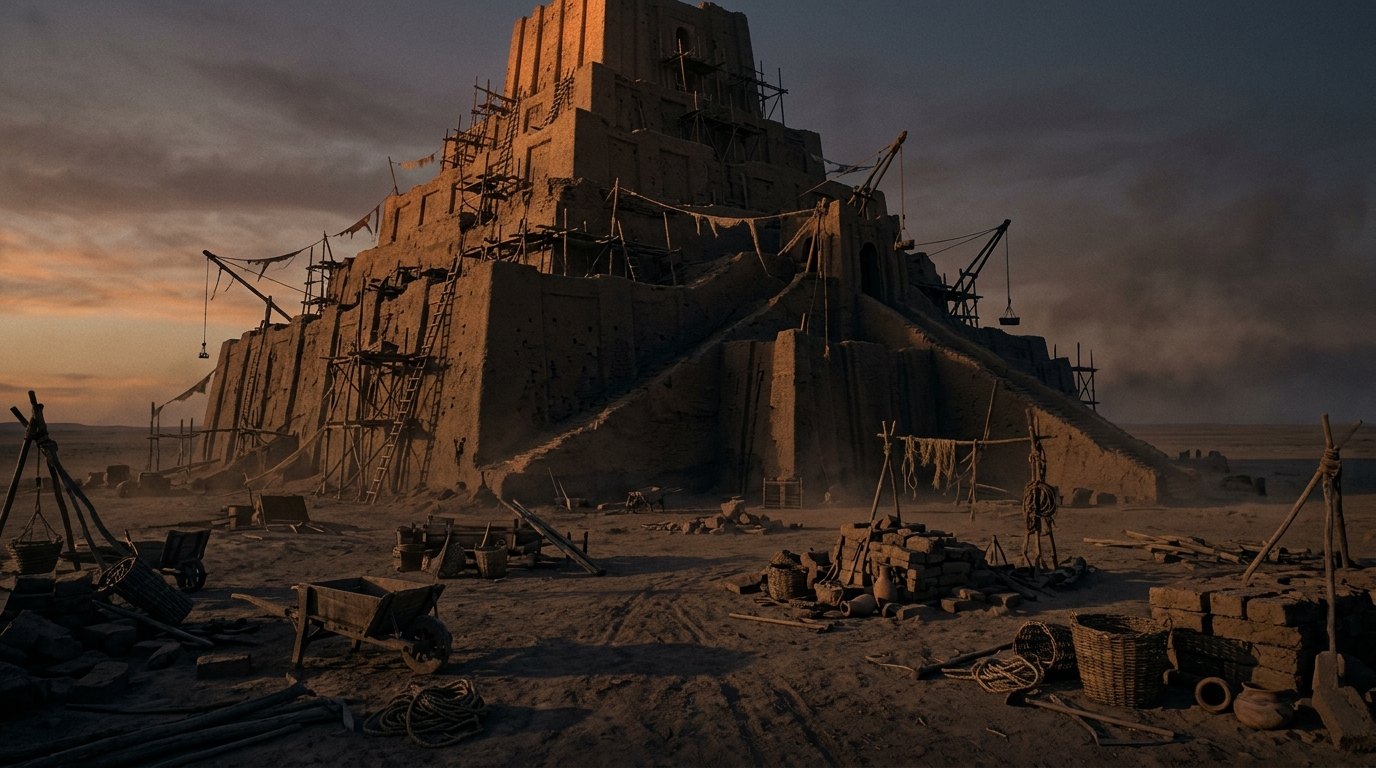
Come, let us go down and confuse their language so they will not understand each other.”
Genesis 11:7 (NIV)
The triune God intervenes directly to confuse their speech, decisively shattering human collusion in sin.
The decisive turning point of the narrative appears in Genesis 11:7, where the Lord declares, "Come, let us go down and there confuse their language, so that they may not understand one another's speech." With sharp divine irony, the tower that men intended to reach heaven was so puny that the transcendent God had to descend just to inspect it (Genesis 11:5). God observed that their singular language and geographical solidarity left no wicked scheme restrained (Genesis 11:6). His judgment was both swift and surgically merciful: by splintering their common tongue, He dismantled their ability to conspire against His throne.
Consequently, Genesis 11:8 records that the Lord scattered them from that place abroad over the face of all the earth, bringing the construction of their autonomous city to an abrupt halt. The site was permanently branded Babel, meaning confusion (Genesis 11:9), memorializing how human arrogance collapses before divine sovereignty. This historic judgment laid the foundation for the geopolitical borders of the ancient world. Deuteronomy 32:8 affirms that when the Most High gave the nations their inheritance, He fixed the boundaries of the peoples, a truth the apostle Paul reasserted in Acts 17:26 when explaining that God determined mankind's allotted periods and boundaries. Human conspiracies against God remain utterly futile; as Psalm 2:1-4 and Psalm 33:10-11 declare, the Lord frustrates the plots of the nations, laughing their vain confederacies to scorn while His sovereign counsel endures forever.
| Passage | What it says |
|---|---|
| Genesis 11:5 | The Lord descends from heaven to examine the city and tower built by mortal men. |
| Genesis 11:6 | The Lord observes that their unified rebellion will leave no future scheme restrained. |
| Genesis 11:7 | God confounds their language so they cannot understand one another's speech. |
| Genesis 11:8 | The Lord scatters them across the earth, forcing the construction of the city to cease. |
| Genesis 11:9 | The place is named Babel because the Lord confused all earth's languages and dispersed humanity. |
| Deuteronomy 32:8 | The Most High divides mankind and fixes the borders of the peoples. |
| Psalms 2:1-4 | The nations conspire in vain against the Lord, who laughs from heaven and terrifies them. |
| Psalms 33:10-11 | The Lord frustrates the plans of the peoples, but His counsel stands forever. |
| Acts 17:26 | God determines allotted periods and boundaries of mankind's dwelling across all the earth. |
The Redemptive Reversal
God Gathers the Divided Nations Through Christ
When they heard this sound, a crowd came together in bewilderment, because each one heard their own language being spoken.
Acts 2:6 (NIV)
At Pentecost, the Holy Spirit overcomes linguistic division, enabling people from every nation to hear God's mighty works.
Acts 2:6 marks the stunning redemptive reversal of Babel's curse: "And at this sound the multitude came together, and they were bewildered, because each one was hearing them speak in his own language." Where God had scattered humanity in judgment for their pride, He now gathers the scattered nations in grace through the Holy Spirit. Immediately after dispersing the rebels at Babel, God initiated this global redemption by calling Abram in Genesis 12:1-3, promising that in his seed all families of the earth would be blessed. Centuries later, the prophets foresaw the healing of fractured human speech. Zephaniah 3:9 promised that God would give the peoples a pure speech to call on His name together, fulfilled at Pentecost (Acts 2:4) and in the unified praise of the church (Romans 15:6). Similarly, Isaiah 19:18 foretold that foreign peoples would speak the language of faith, fulfilled as nations drew near to God (Acts 2:10; Ephesians 2:13).
When the Holy Spirit descended at Pentecost (Acts 2:1-5), devout Jews from every nation under heaven were gathered in Jerusalem. Rather than stripping away their distinct tongues, the Spirit empowered the apostles to proclaim the mighty works of God in every native dialect simultaneously (Acts 2:7-11). Through the blood of the cross, Christ destroyed the hostility between alienated peoples, forging one new humanity in Himself (Ephesians 2:13-16). This redemption culminates around the heavenly throne. Revelation 5:9-10 and Revelation 7:9-10 unveil the consummate harvest: a ransomed multitude from every tribe, language, people, and nation standing before the Lamb, singing in unified worship the praises of their Redeemer.
| Passage | What it says | Fulfilled |
|---|---|---|
| Zephaniah 3:9 | God promises to purify the speech of the peoples so all may call upon His name in unison. | Acts 2:4, Romans 15:6 |
| Isaiah 19:18 | Prophecy that foreign cities in Egypt will swear allegiance to the Lord and speak Canaan's tongue. | Acts 2:10, Ephesians 2:13 |
| Acts 2:6 | A multitude from various nations hears the apostles declaring God's wonders in their own native languages. | Revelation 5:9, Revelation 7:9 |
| Genesis 12:1-3 | God calls Abram to bless all families of the earth immediately after Babel's scattering. | |
| Acts 2:1-5 | The Holy Spirit falls at Pentecost while devout men from every nation reside in Jerusalem. | |
| Acts 2:7-11 | People from diverse nations hear God's mighty works proclaimed simultaneously in their native tongues. | |
| Ephesians 2:13-16 | Christ reconciles separated people into one new body through the cross, destroying hostility. | |
| Revelation 5:9-10 | The Lamb ransoms people for God from every tribe, language, people, and nation. | |
| Revelation 7:9-10 | A multitude from every nation, tribe, and tongue stands before the throne praising God. |
The Tale of Two Cities
Man’s Arrogant Empire Falls Before the True City of God
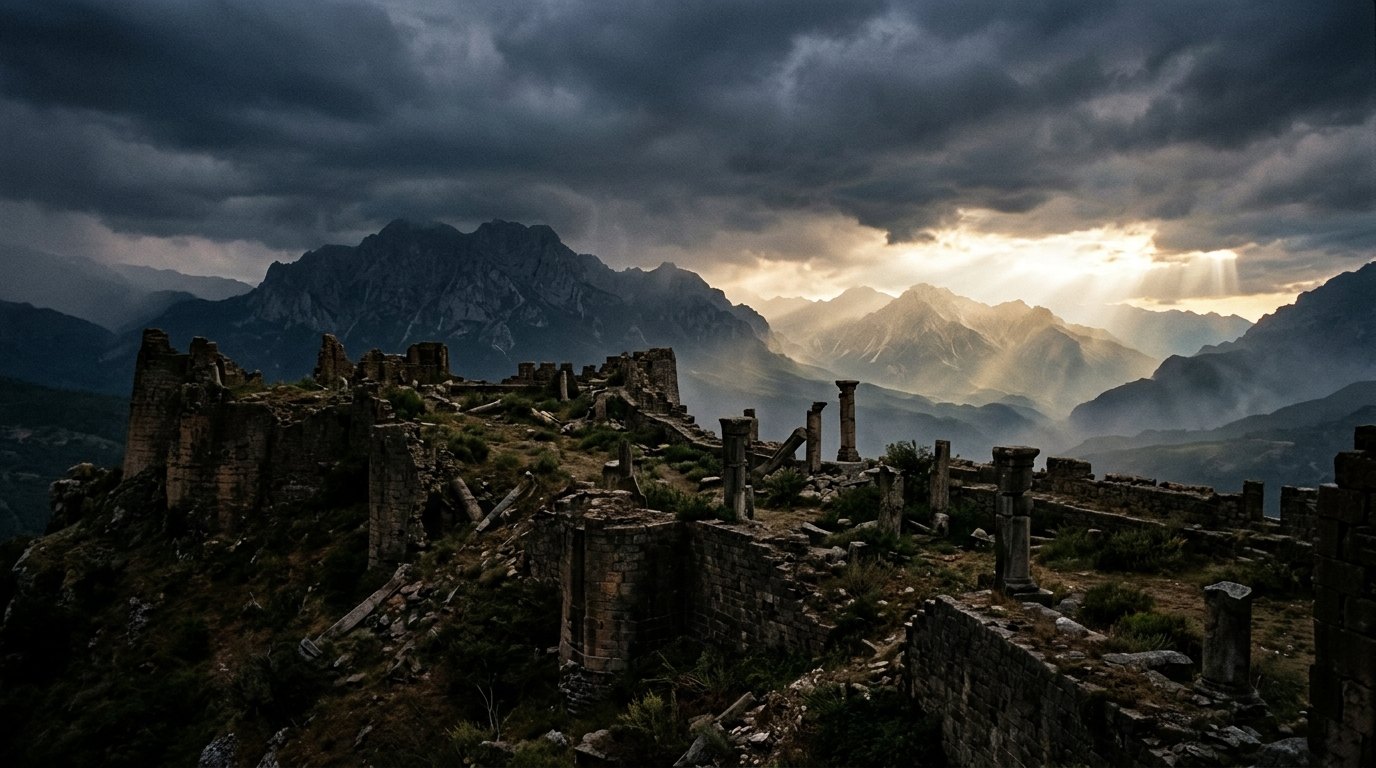
You said in your heart, “I will ascend to the heavens; I will raise my throne above the stars of God; I will sit enthroned on the mount of assembly, on the utmost heights of Mount Zaphon. I will ascend above the tops of the clouds; I will make myself like the Most High.”
Isaiah 14:13-14 (NIV)
It captures the prideful ambition to ascend above the stars of God, echoing Babel's foundational sin.
The foundational sin of Babel reverberates across redemptive history, reaching its poetic exposure in Isaiah 14:13-14: "You said in your heart, 'I will ascend to heaven; above the stars of God I will set my throne on high... I will make myself like the Most High.'" Here the prophet unmasks the spirit of Babylon—the perennial human urge to dethrone God and achieve autonomy. Yet Isaiah 14:12-15 demonstrates the inevitable outcome of such hubris: the proud ruler who sought to scale the heavens is brought down to Sheol, to the depths of the pit. This historic pattern recurred when King Nebuchadnezzar walked upon the roof of his palace, boasting that great Babylon was built by the might of his power and for his glory, only to be struck down into madness that very hour until he recognized heaven's rule (Daniel 4:30-32).
Throughout the canon, Scripture traces a tale of two cities: the arrogant city of man versus the holy city of God. In Revelation 17:5, this fallen global system reaches its zenith as "Mystery Babylon," the mother of spiritual whoredom and worldly defiance. Revelation 18:2-4 announces her final, catastrophic overthrow, issuing an urgent command for God's saints to depart from her sins lest they share in her plagues. In contrast to Babel's desperate attempt to build a tower up to heaven, Revelation 21:2-3 reveals the true sanctuary: the New Jerusalem, descending out of heaven from God as a bride adorned for her husband. Man's prideful empire ends in absolute ruins, but God's eternal city endures forever as His dwelling with redeemed mankind.
| Passage | What it says |
|---|---|
| Isaiah 14:12-15 | The king of Babylon boasts of ascending to heaven and being like the Most High, yet is brought down. |
| Daniel 4:30-32 | Nebuchadnezzar boasts of great Babylon built by his power for his glory and receives swift divine judgment. |
| Revelation 17:5 | Mystery Babylon is identified as the mother of prostitutes and abominations of the earth. |
| Revelation 18:2-4 | The fallen worldly system of Babylon is overthrown and God's people are commanded to come out. |
| Revelation 21:2-3 | The New Jerusalem comes down out of heaven from God as the true dwelling of God with man. |
Where in the Bible
| Book | Passages |
|---|---|
| Genesis | 14 · Genesis 9:1, Genesis 11:1, Genesis 11:2, Genesis 11:3, Genesis 11:4, Genesis 1:28, Genesis 10:8-10, Genesis 10:32, Genesis 11:5, Genesis 11:6, Genesis 11:7, Genesis 11:8, Genesis 11:9, Genesis 12:1-3 |
| Deuteronomy | 1 · Deuteronomy 32:8 |
| Psalms | 2 · Psalms 2:1-4, Psalms 33:10-11 |
| Isaiah | 2 · Isaiah 19:18, Isaiah 14:12-15 |
| Daniel | 1 · Daniel 4:30-32 |
| Zephaniah | 1 · Zephaniah 3:9 |
| Acts | 4 · Acts 17:26, Acts 2:6, Acts 2:1-5, Acts 2:7-11 |
| Ephesians | 1 · Ephesians 2:13-16 |
| Revelation | 5 · Revelation 5:9-10, Revelation 7:9-10, Revelation 17:5, Revelation 18:2-4, Revelation 21:2-3 |
The story in order
- God commands Noah to fill the earth (c. 2350 BC) · Genesis 9:1 · Establishes God's mandate for humanity's spread.
- Humanity settles in Shinar (c. 2200 BC) · Genesis 11:2 · The location chosen for the Tower of Babel.
- Builders plan a city and tower (c. 2200 BC) · Genesis 11:4 · Their goal: make a name and prevent dispersal.
- God descends to inspect the tower (c. 2200 BC) · Genesis 11:5 · God observes the builders' unified defiance.
- God confuses their languages (c. 2200 BC) · Genesis 11:7 · Divine judgment to halt their plan.
- God scatters humanity across earth (c. 2200 BC) · Genesis 11:8 · Fulfills God's command to fill the earth.
- Nations are divided and established (c. 1450 BC) · Deuteronomy 32:8 · God's sovereign act in establishing nations.
- Abram called to bless all nations (c. 2090 BC) · Genesis 12:1-3 · God's redemptive plan begins after Babel.
- Nations rage against the Lord (c. 1000 BC) · Psalms 2:1-4 · Reflects ongoing human opposition to God.
- King of Babylon boasts (c. 700 BC) · Isaiah 14:12-15 · Archetype of human pride and fall.
- Pentecost: Tongues understood (AD 30) · Acts 2:6 · God reverses Babel by enabling understanding.
- Christ unites divided people (c. AD 60) · Ephesians 2:13-16 · Reconciliation through Christ breaks down barriers.
- Nations before God's throne (c. AD 95) · Revelation 7:9-10 · Ultimate fulfillment of God gathering all nations.
Babel's Defiance and God's Response
| Human Action | God's Response | Outcome | Passage |
|---|---|---|---|
| Unite to build a city and tower to make a name. | Confuses their language. | Scatters them across the earth. | |
| Nations conspire against the Lord. | Laughs and terrifies them. | Plans are frustrated. | |
| King of Babylon boasts of reaching heaven. | Brings him down. | Humiliation and fall. | Isaiah 14:12-15 |
From Scattered Tongues to Unified Worship
| Problem at Babel | Divine Solution | Ultimate Fulfillment | Passage |
|---|---|---|---|
| Single language, but unified defiance. | Confused languages, scattered people. | Divine judgment and dispersal. | Genesis 11:1-9 |
| Diverse languages hinder understanding. | Apostles speak in native tongues. | People hear God's wonders. | Acts 2:4-11 |
| Division and hostility between peoples. | Christ makes one new humanity. | Reconciliation and unity. | Ephesians 2:13-16 |
| Nations divided by language and origin. | Lamb ransoms people from every nation. | All nations worship God. | Revelation 5:9-10 |
Key words
- Babel (בָּבֶל (Bāḇel))
- Confusion; the place where God confused the languages of the world. · Genesis 11:9
- Make a name
- To gain fame, renown, or glory for oneself. · Genesis 11:4
- Scatter (פָּרַץ (pāraṣ))
- To disperse or spread out widely. · Genesis 11:8
- Fill the earth
- God's command for humanity to populate and steward the planet.
- Call upon the name of the Lord
- To worship, pray to, and acknowledge God. · Zephaniah 3:9
Babel stands as an enduring warning that human unity severed from God produces only confusion and judgment. True unity cannot be forged by human ambition or pride, but only through the cross of Jesus Christ, who gathers every tribe, tongue, and nation into one eternal kingdom for His glory.
31 passages, each cited once.
Scripture cited
- Acts 2:6
- Zephaniah 3:9