What was the tree of the knowledge of good and evil?

Genesis 2:16-17
16 And the LORD God commanded the man, “You are free to eat from any tree in the garden;
17 but you must not eat from the tree of the knowledge of good and evil, for when you eat from it you will certainly die.”
New International Version (NIV)
The answer
It was a real fruit tree in the middle of Eden, the one tree whose fruit God forbade. Its name concerns the knowledge of good and evil associated with eating it, not a particular fruit species; Genesis never identifies it as an apple tree.
Genesis 2:9 places it in the garden alongside the tree of life. God then gave Adam permission to eat freely from every other tree but commanded him not to eat from this one, warning that doing so would bring death (Genesis 2:16-17). The account never calls the fruit evil or poisonous. The sin was disobedience to God’s clear command: Adam and Eve rejected God’s authority over good and evil instead of trusting and obeying Him.
The serpent promised that eating would open their eyes and make them like God, knowing good and evil (Genesis 3:5). After they ate, their eyes were opened, but their immediate knowledge was of their nakedness, leading them to make coverings and hide in shame (Genesis 3:6-10). God Himself subsequently acknowledged that the man had come to know good and evil, while confirming that this had not made him divine (Genesis 3:22). They now knew evil as guilty participants in it, rather than remaining innocent under God’s rule.
God’s warning of death was not empty. Adam was told that he would return to the dust, and both were expelled from Eden and barred from the tree of life (Genesis 3:17-19, Genesis 3:23-24). The tree’s importance is therefore moral and spiritual, not botanical. Paul identifies Adam’s act as the disobedience through which many were made sinners, and contrasts it with Christ’s obedience, through which many will be made righteous (Romans 5:18-19).
Answered from Scripture · reviewed November 11, 2026
The tree of the knowledge of good and evil was an actual, physical tree planted by God in the garden of Eden to serve as the probationary test of man's love, trust, and obedience. Its fruit possessed no mystical power of its own; rather, God drew a line around it by His explicit command so that man would live in humble dependence upon the Word of his Creator. To eat was to cast off God's sovereign authority and seize moral autonomy, plunging our first parents and all their posterity into death.
The Garden Sanctuary
God Placed Two Distinct Trees in Eden's Center

The LORD God made all kinds of trees grow out of the ground—trees that were pleasing to the eye and good for food. In the middle of the garden were the tree of life and the tree of the knowledge of good and evil.
Genesis 2:9 (NIV)
It shows that God Himself planted both the tree of life and the tree of the knowledge of good and evil within the abundant garden.
In Genesis 2:9, Scripture reveals that the Lord God caused every tree pleasant to the sight and good for food to grow out of the fertile soil, planting both the tree of life and the tree of the knowledge of good and evil right in the midst of Eden. This was no enchanted forest or symbolic realm; it was a physical sanctuary prepared by the Creator. Earlier, in Genesis 1:29, God had graciously endowed humanity with every seed-bearing plant and every fruit-yielding tree across the face of the earth. When He inspected His finished work in Genesis 1:31, God pronounced all that He had made to be very good. Nothing in Eden was inherently toxic, malicious, or corrupt.
God set man in this paradise, as Genesis 2:8 recounts, placing Adam into an environment saturated with divine generosity. The tree of the knowledge of good and evil was an ordinary, physical tree created by God Himself. Its wood, sap, leaves, and fruit possessed no natural poison or magical properties. As Paul later reminds the church in 1 Timothy 4:4, every creature of God is fundamentally good, and in 1 Timothy 6:17, he affirms that God richly gives us all things to enjoy. The distinction of this particular tree arose entirely from God’s spoken boundary, marking the boundary line where creaturely love and faith were to be exercised.
| Passage | What it says |
|---|---|
| Genesis 1:29 | God gives man every seed-bearing plant and fruit-yielding tree for food throughout the original creation. |
| Genesis 1:31 | God declares everything He made to be very good, showing that no created element in the garden was inherently evil. |
| Genesis 2:8 | The Lord God plants a garden eastward in Eden and places the man He had formed within it. |
| Genesis 2:9 | God causes every pleasant and nourishing tree to sprout, placing both the tree of life and the tree of knowledge in the garden. |
| 1 Timothy 4:4 | Paul confirms that every creature of God is good in itself and nothing to be refused when received with thanksgiving. |
| 1 Timothy 6:17 | Paul testifies that the living God richly gives all things to His creatures for their enjoyment. |
The Probationary Test
God's Command Established the Boundary of Creaturely Obedience

but you must not eat from the tree of the knowledge of good and evil, for when you eat from it you will certainly die.”
Genesis 2:17 (NIV)
It records the sole negative prohibition and defines the absolute penalty of death for eating from this specific tree.
The focal point of God's covenant test appears in Genesis 2:17, where the Lord commanded the man: "Of the tree of the knowledge of good and evil you shall not eat, for in the day that you eat of it you shall surely die." Before this sole restriction was uttered, God established boundless liberty. In Genesis 2:15, He placed Adam in the garden to tend and keep it as a sacred trust, and in Genesis 2:16, He extended lavish provision: Adam was free to eat of every other tree without restraint.
The forbidden tree stood as a moral boundary marker. Scripture frequently uses the phrase "knowing good and evil" to refer to discernment, authority, and moral responsibility. In Deuteronomy 1:39, little children are described as having no knowledge of good and evil because they lack mature discernment, while in 1 Kings 3:9 Solomon prays for an understanding heart to discern between good and evil under God's law. Likewise, Hebrews 5:14 speaks of mature believers trained to discern both good and evil. In Eden, however, to seize the fruit meant rejecting God’s definition of good and evil in order to determine reality independently. As 1 Samuel 15:22 declares, obedience to the voice of the Lord surpasses all else. God set before Adam a choice parallel to Deuteronomy 30:19, calling him to choose life through joyful submission to His Creator.
| Passage | What it says |
|---|---|
| Genesis 2:15 | The Lord God puts man in the garden to work it and keep it in covenant service. |
| Genesis 2:16 | God grants generous liberty to Adam to eat freely from every single tree in the garden. |
| Genesis 2:17 | God commands man not to eat of the tree of the knowledge of good and evil upon pain of certain death. |
| 1 Samuel 15:22 | Samuel proclaims that to obey the voice of the Lord is far better than external sacrifice. |
| Deuteronomy 30:19 | Moses sets before the covenant people life and death, blessing and curse, urging them to choose life by loving God's voice. |
| Deuteronomy 1:39 | Describes little children who have no knowledge of good and evil, illuminating the biblical idiom of moral maturity and discernment. |
| 1 Kings 3:9 | Solomon requests an understanding heart to discern between good and evil, showing that true knowledge belongs properly to God-dependent wisdom. |
| Hebrews 5:14 | Connects mature spiritual senses with the trained ability to discern both good and evil through God's word. |
The Temptation and Fall
The Serpent Twisted God's Word and Incited Rebellion
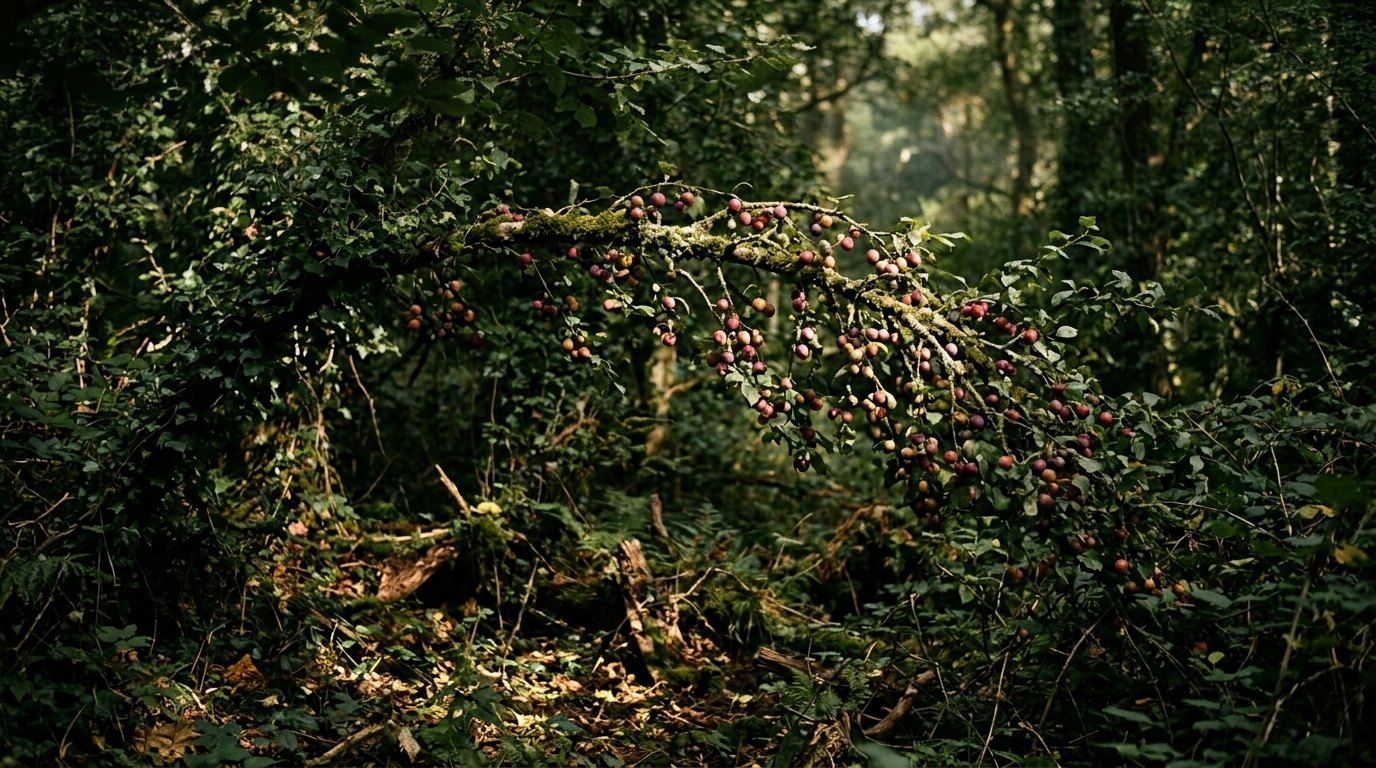
“For God knows that when you eat from it your eyes will be opened, and you will be like God, knowing good and evil.”
Genesis 3:5 (NIV)
The serpent falsely promises that eating the forbidden fruit will make humans like God, determining good and evil for themselves.
The crisis of human history began when the serpent assaulted God's integrity, climaxing in Genesis 3:5 with the seductive promise: "God knows that when you eat of it your eyes will be opened, and you will be like God, knowing good and evil." The tempter's opening move in Genesis 3:1 was to sow subtle doubt, asking whether God had truly placed restrictions on every tree. In Genesis 3:2 and Genesis 3:3, the woman recited the command but softened its precision, noting that eating or touching the fruit in the midst of the garden would bring death.
The adversary then delivered a brazen, direct lie in Genesis 3:4, declaring they would not surely die. He framed God's holy prohibition as a jealous withholding of enlightenment. Beguiled by this slander, the woman observed in Genesis 3:6 that the tree was good for food, a delight to the eyes, and desirable for making one wise; she took of its fruit, ate, and gave it to her husband, who was with her and ate also. As Paul warns in 2 Corinthians 11:3, the serpent deceived Eve through his craftiness, and 1 Timothy 2:14 notes that the woman was thoroughly deceived, while Adam knowingly transgressed. Instantly, in Genesis 3:7, their eyes were indeed opened—not to divine majesty, but to the crushing awareness of their own nakedness, guilt, and alienation.
| Passage | What it says |
|---|---|
| Genesis 3:1 | The serpent craftily questions the divine word by asking whether God truly forbade eating from every tree. |
| Genesis 3:2 | The woman replies to the serpent, recounting that they may eat of the trees in the garden. |
| Genesis 3:3 | The woman explains that touching or eating the fruit of the tree in the midst brings death. |
| Genesis 3:4 | The serpent directly contradicts God's warning by asserting that man will not surely die. |
| Genesis 3:5 | The serpent claims eating will open their eyes to become as gods, knowing good and evil. |
| Genesis 3:6 | The woman sees the tree is good for food and desirable for wisdom, eats its fruit, and gives it to Adam. |
| Genesis 3:7 | Their eyes are opened to their guilt, leading them to sew fig leaves to cover their exposed nakedness. |
| 2 Corinthians 11:3 | Paul warns believers against being deceived just as Eve was beguiled by the serpent's subtlety. |
| 1 Timothy 2:14 | Paul records that Adam was not deceived, but the woman was thoroughly deceived and fell into transgression. |
The Consequence and Curse
Disobedience Brought Immediate Guilt and Inevitable Death
By the sweat of your brow you will eat your food until you return to the ground, since from it you were taken; for dust you are and to dust you will return.”
Genesis 3:19 (NIV)
It confirms the physical fulfillment of God's threat of death as man returns to the dust from which he came.
The terrible verdict fell in Genesis 3:19 when God pronounced judgment upon fallen man: "By the sweat of your face you shall eat bread, till you return to the ground, for out of it you were taken; for you are dust, and to dust you shall return." Immediately following their rebellion, Adam and his wife experienced shame and dread. Genesis 3:8 shows them cowering among the trees at the sound of the Lord walking in the cool of the day. When summoned in Genesis 3:11, God asked whether they had eaten from the forbidden tree. Adam evaded responsibility in Genesis 3:12 by blaming the woman God gave him, and the woman confessed in Genesis 3:13 that the serpent had tricked her. In Genesis 3:17, God cursed the ground because Adam listened to his wife and broke the sacred command.
The catastrophe reached far beyond Eden's borders. In Romans 5:12, Paul explains that sin entered the world through this one man, and death through sin, spreading to all mankind. As Romans 6:23 summarizes, the wages of sin is death. Yet Scripture sets this tragedy against the triumph of the gospel. Romans 5:18 and Romans 5:19 show that while Adam's one trespass brought condemnation, Christ's one righteous act brings justification of life; where one man's disobedience made many sinners, the obedience of the Last Adam makes many righteous. As 1 Corinthians 15:21 and 1 Corinthians 15:22 celebrate, just as death came through Adam, so resurrection life comes through Jesus Christ.
| Passage | What it says |
|---|---|
| Genesis 3:8 | Adam and his wife hide from the presence of the Lord among the trees of the garden in terror. |
| Genesis 3:11 | God confronts Adam directly regarding whether he has eaten from the forbidden tree. |
| Genesis 3:12 | Adam shifts blame to the woman God gave him, confessing that he took from the tree and ate. |
| Genesis 3:13 | Eve acknowledges that the serpent deceived her into eating the forbidden fruit. |
| Genesis 3:17 | God curses the ground because Adam listened to his wife and ate of the tree He commanded against. |
| Genesis 3:19 | God pronounces the sentence of physical mortality, declaring that man will return to dust. |
| Romans 5:12 | Paul explains that sin entered the world through this one man's act, and death through sin passed to all. |
| Romans 6:23 | Paul confirms that the wages of sin is death, fulfilling the Edenic warning. |
| Romans 5:18 | Contrasts Adam's one trespass at the tree bringing condemnation to all with Christ's one act of righteousness bringing justification. |
| Romans 5:19 | Declares that through Adam's disobedience at the tree many were made sinners, whereas through Christ's obedience many are made righteous. |
| 1 Corinthians 15:21 | Establishes that since death came through a man eating the forbidden fruit, resurrection also came through a man. |
| 1 Corinthians 15:22 | Confirms that as in Adam all die because of the fall, so in Christ all will be made alive. |
Exile and Redemption
Barred from Life in Adam, Restored by Christ's Tree

And the LORD God said, “The man has now become like one of us, knowing good and evil. He must not be allowed to reach out his hand and take also from the tree of life and eat, and live forever.”
Genesis 3:22 (NIV)
It reveals God barring fallen man from the tree of life so he does not live forever in an unredeemed state of death.
Genesis 3:22 captures the solemn climax of the fall: the Lord God acts in holy mercy to bar fallen humanity from reaching out, eating of the tree of life, and being forever sealed in an unredeemed state of death. As promised in Eden, disobedience yielded catastrophic ruin; God sent man forth from the garden in Genesis 3:23 to labor upon cursed soil until he returned to the dust, an exile that Romans 5:18-19 reveals brought condemnation to all through Adam's offense. At the east of Eden, God placed the cherubim and a flaming sword turning every way to guard the way to the tree of life (Genesis 3:24), establishing that fallen humanity could never regain communion with God on its own terms.
Yet God’s redemptive purpose turned the tragedy of a tree into the triumph of salvation. To undo what took place at the tree of testing, Jesus Christ absorbed the divine penalty, as Galatians 3:13 proclaims that Christ redeemed us from the curse of the law by becoming a curse for us upon the tree of Calvary. In the vivid declaration of 1 Peter 2:24, Christ bore our sins in His own body on the tree, putting sin to death and opening the way once shut by flaming blade—a new and living way consecrated through His flesh (Hebrews 10:19-20).
Because of the cross, the way to eternal communion is completely reopened. In Revelation 2:7, the risen Lord promises the overcomer the right to eat of the tree of life, which is in the paradise of God. When redemptive history reaches its glorious culmination in Revelation 22:2, the tree of life stands on both sides of the crystal river, yielding fruit every month with leaves for the healing of the nations, where there shall be no more curse (Revelation 22:3). Finally, Revelation 22:14 seals this restoration with boundless joy, promising that those who wash their robes in the blood of the Lamb have the right to the tree of life and may enter the gates of the eternal city forever.
| Passage | What it says | Fulfilled |
|---|---|---|
| Genesis 3:22 | God acknowledges man's experiential knowledge of good and evil and prevents him from eating of the tree of life. | Romans 5:17, Revelation 22:2 |
| Genesis 3:23 | The Lord God drives man out from the garden of Eden to till the ground from which he was taken. | Romans 5:18, Romans 5:19 |
| Genesis 3:24 | God places cherubim and a flaming sword turning every way to guard the way to the tree of life. | Hebrews 10:19, Hebrews 10:20 |
| Galatians 3:13 | Christ redeemed believers from the curse of the law by becoming a curse for us on the tree of the cross. | 1 Peter 2:24 |
| Revelation 2:7 | Jesus promises that to the one who overcomes He will give to eat of the tree of life in God's paradise. | Revelation 22:14 |
| Revelation 22:2 | The tree of life yields fruit continually in the New Jerusalem for the eternal life and healing of the nations. | Revelation 22:3 |
| 1 Peter 2:24 | Reveals Christ bearing our sins in his body on the tree, undoing the curse incurred by eating from the tree. | |
| Revelation 22:14 | Promises that those who wash their robes have the right to the tree of life, reversing Eden's exile forever. |
Where in the Bible
| Book | Passages |
|---|---|
| Genesis | 23 · Genesis 1:29, Genesis 1:31, Genesis 2:8, Genesis 2:9, Genesis 2:15, Genesis 2:16, Genesis 2:17, Genesis 3:1, Genesis 3:2, Genesis 3:3, Genesis 3:4, Genesis 3:5, Genesis 3:6, Genesis 3:7, Genesis 3:8, Genesis 3:11, Genesis 3:12, Genesis 3:13, Genesis 3:17, Genesis 3:19, Genesis 3:22, Genesis 3:23, Genesis 3:24 |
| Deuteronomy | 2 · Deuteronomy 30:19, Deuteronomy 1:39 |
| 1 Samuel | 1 · 1 Samuel 15:22 |
| 1 Kings | 1 · 1 Kings 3:9 |
| Romans | 4 · Romans 5:12, Romans 6:23, Romans 5:18, Romans 5:19 |
| 1 Corinthians | 2 · 1 Corinthians 15:21, 1 Corinthians 15:22 |
| 2 Corinthians | 1 · 2 Corinthians 11:3 |
| Galatians | 1 · Galatians 3:13 |
| 1 Timothy | 3 · 1 Timothy 4:4, 1 Timothy 6:17, 1 Timothy 2:14 |
| Hebrews | 1 · Hebrews 5:14 |
| 1 Peter | 1 · 1 Peter 2:24 |
| Revelation | 3 · Revelation 2:7, Revelation 22:2, Revelation 22:14 |
The story in order
- Creation of Eden and its trees (c. 4000 BC) · Genesis 2:8 · God establishes the garden with two significant trees at its center.
- God's command and man's test (c. 4000 BC) · Genesis 2:16-17 · Man is given liberty to eat from all trees except one, with a warning of death.
- The serpent's temptation (c. 4000 BC) · Genesis 3:1 · The serpent questions God's command, initiating deception.
- The Fall: Eve eats the fruit (c. 4000 BC) · Genesis 3:6 · Eve desires the fruit for wisdom and eats, giving it to Adam.
- God confronts Adam and Eve (c. 4000 BC) · Genesis 3:8-13 · Disobedience leads to hiding and blame-shifting.
- God pronounces the curse (c. 4000 BC) · Genesis 3:17-19 · The ground is cursed, and mortality is pronounced.
- Man is exiled from Eden (c. 4000 BC) · Genesis 3:23-24 · Cherubim guard the way to the tree of life, barring access.
- Sin and death enter the world (c. AD 60) · Romans 5:12 · Paul explains how Adam's sin brought death to all humanity.
- Christ redeems from the curse (c. AD 55) · Galatians 3:13 · Christ became a curse on the tree of the cross for us.
- Christ bears sins on the tree (c. AD 65) · 1 Peter 2:24 · Christ's suffering on the cross undoes the curse of the fall.
- Access to the tree of life restored (c. AD 95) · Revelation 22:14 · Washed robes grant the right to the tree of life in paradise.
Key words
- Tree of the knowledge of good and evil
- A physical tree in Eden, God's test of obedience, eating from which brought sin and death. · Genesis 2:9
- Tree of life
- A physical tree in Eden, symbolizing eternal life, access to which was lost in the Fall but restored in Christ. · Genesis 2:9
- Moral autonomy
- Self-governance in determining right and wrong, contrasted with dependence on God's revealed will. · Genesis 3:5
- Discernment
- The ability to distinguish between good and evil, a gift from God, not seized through rebellion. · 1 Kings 3:9
- Obedience
- Submitting to God's commands, which is better than sacrifice and leads to life. · 1 Samuel 15:22
- Transgression
- An act of disobedience or sin, particularly against a known divine command. · 1 Timothy 2:14
The tree in Eden teaches that true life is found not in seizing moral autonomy, but in resting upon every word that comes from the mouth of God. Though Adam plunged the human race into sin and ruin at that tree, Jesus Christ bore the curse on another tree, redeeming believers and restoring them to the eternal fellowship of God.
43 passages, each cited once.
Scripture cited
- Genesis 2:16-17
- Genesis 2:9
- Genesis 2:8-17
- Genesis 3:1-24
- Romans 5:18-19