Why did God flood the earth?
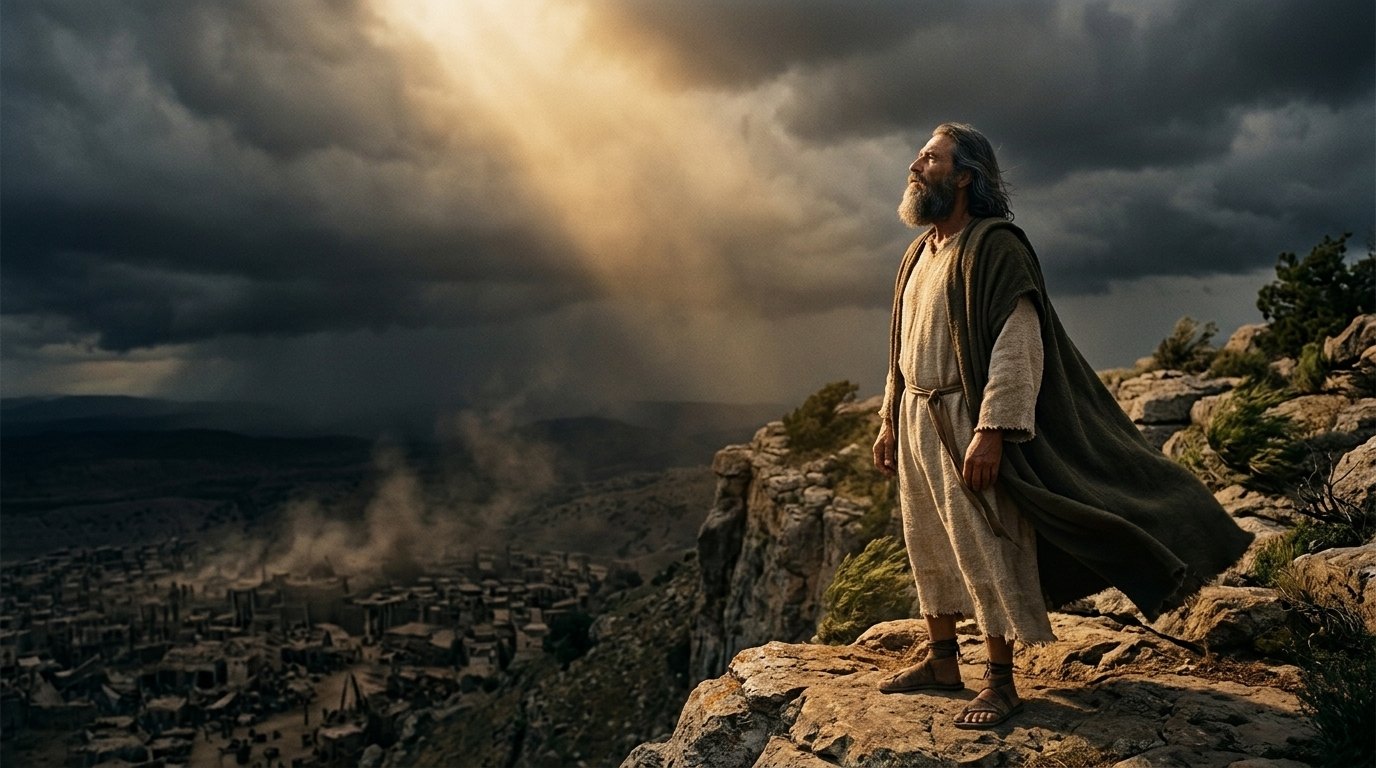
Genesis 6:5-8
5 The LORD saw how great the wickedness of the human race had become on the earth, and that every inclination of the thoughts of the human heart was only evil all the time.
6 The LORD regretted that he had made human beings on the earth, and his heart was deeply troubled.
7 So the LORD said, “I will wipe from the face of the earth the human race I have created—and with them the animals, the birds and the creatures that move along the ground—for I regret that I have made them.”
8 But Noah found favor in the eyes of the LORD.
New International Version (NIV)
The answer
God flooded the earth as His righteous judgment on pervasive human wickedness. Humanity’s corruption had reached both the inner life—thoughts, desires, and intentions—and outward conduct, filling the earth with violence.
- The human heart was continually evil: Genesis 6:5 says, “every imagination of the thoughts of man’s heart was continually only evil.” The problem was not merely a few isolated crimes, but deep and persistent rebellion against God.
- The earth was corrupt and violent: Genesis 6:11-13 says the earth was “corrupt before God” and “filled with violence,” because “all flesh had corrupted their way on the earth.” God therefore declared that He would destroy that corrupt world.
- God was grieved by human sin: Genesis 6:6 says, “Yahweh was sorry that he had made man on the earth, and it grieved him in his heart.” The flood was not an indifferent or meaningless act of destruction; it was God’s holy response to evil.
Yet judgment was accompanied by grace. Genesis 6:8 says, “But Noah found favor in Yahweh’s eyes,” and Genesis 6:9 describes Noah as righteous and blameless among his generation, a man who “walked with God.” The account therefore reveals both God’s holy opposition to sin and His gracious favor toward Noah.
Answered from Scripture · reviewed November 12, 2026
Scripture states plainly that God flooded the earth in holy judgment against universal, unyielding human wickedness and rampant violence. The deluge was neither an arbitrary catastrophe nor an impersonal disaster, but God's righteous decree upon an earth whose every thought and intention had turned entirely to evil. In the midst of this just wrath, God showed extraordinary mercy by saving righteous Noah and his house, establishing a lasting pattern of judgment and redemption.
Total Inward Corruption
Every imagination of the heart was only evil continually
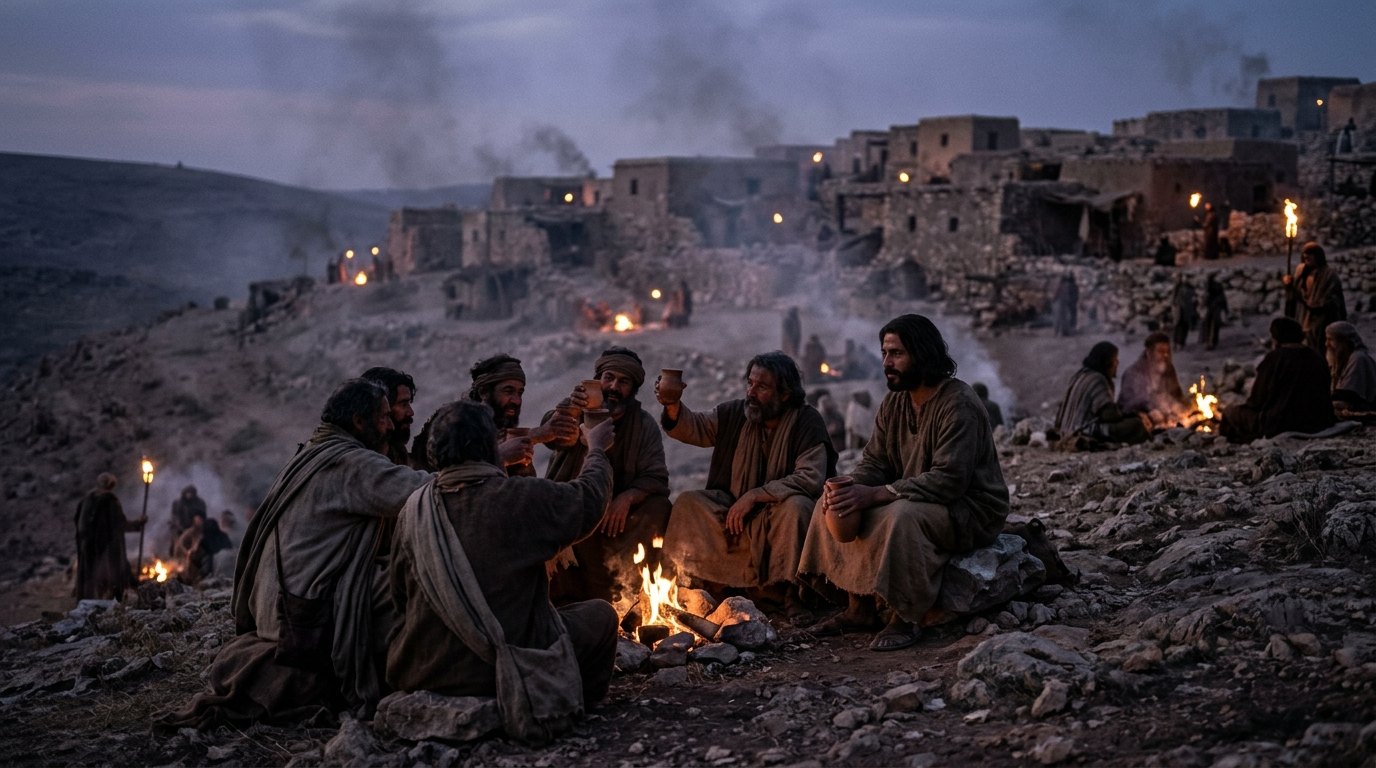
The LORD saw how great the wickedness of the human race had become on the earth, and that every inclination of the thoughts of the human heart was only evil all the time.
Genesis 6:5 (NIV)
This verse diagnoses the root cause of the flood: a pervasive, internal rebellion where every intent of human thought was entirely evil.
Genesis 6:5 reveals the root cause of the flood: human corruption had penetrated every intent and thought of the heart. Scripture does not present the deluge as a capricious natural disaster, but as a deliberate response from a holy Creator to universal inward rebellion. In Genesis 6:1-2, humanity crossed divine boundaries, multiplying rebellion by taking wives arbitrarily based on unbridled desire. God observed the earth, and the divine verdict of Genesis 6:5 leaves no room for exception: human wickedness had become so pervasive that "every imagination of the thoughts of his heart was only evil continually."
This condition was not a superficial lapse in behavior. It exposed an incurable spiritual bankruptcy, a reality God later reaffirmed after the waters receded in Genesis 8:21, noting that "the imagination of man's heart is evil from his youth." The rest of Scripture affirms this uniform diagnosis. In Jeremiah 17:9, the prophet declares that the heart is "deceitful above all things, and desperately wicked." When the Lord Jesus walked among us, He traced outward transgressions back to this identical fountainhead, stating in Matthew 15:19 that murders, adulteries, and blasphemies proceed directly from the human heart.
Genesis 6:4 underscores that the men of that ancient era took great pride in their renown and stature, celebrating their defiant independence from God. Yet human acclaim cannot disguise spiritual depravity. Paul writes in Romans 1:28-31 that when men reject God, they are given over to debased minds filled with malice, insolence, and unrighteousness. Across all generations, Romans 3:10-18 gathers this testimony into one absolute verdict: "There is none righteous, no, not one." Before God struck the ancient earth with water, He weighed the thoughts and intents of its inhabitants and found absolute, unrelenting rebellion against His holiness.
| Passage | What it says |
|---|---|
| Genesis 6:1-2 | Men began to multiply and took wives of all whom they chose, departing from God's holy design. |
| Genesis 6:5 | The Lord saw that human wickedness was great and that every imagination of the heart was continually only evil. |
| Genesis 8:21 | The Lord affirms after the flood that the intention of man's heart remains evil from his youth. |
| Jeremiah 17:9 | The prophet records that the human heart is deceitful above all things and desperately sick. |
| Matthew 15:19 | Jesus explains that out of the heart come evil thoughts, murders, adulteries, sexual immorality, thefts, false witness, and slanders. |
| Romans 1:28-31 | Paul describes God giving over rebellious humanity to a debased mind filled with unrighteousness, wickedness, and malice. |
| Genesis 6:4 | Describes the renown and pride of men during the days when widespread apostasy and wickedness flourished on the earth. |
| Romans 3:10-18 | Affirms Scripture's uniform verdict that none is righteous and that all have turned aside to ungodliness. |
Outward Ruin and Violence
The earth was corrupt and filled with violence
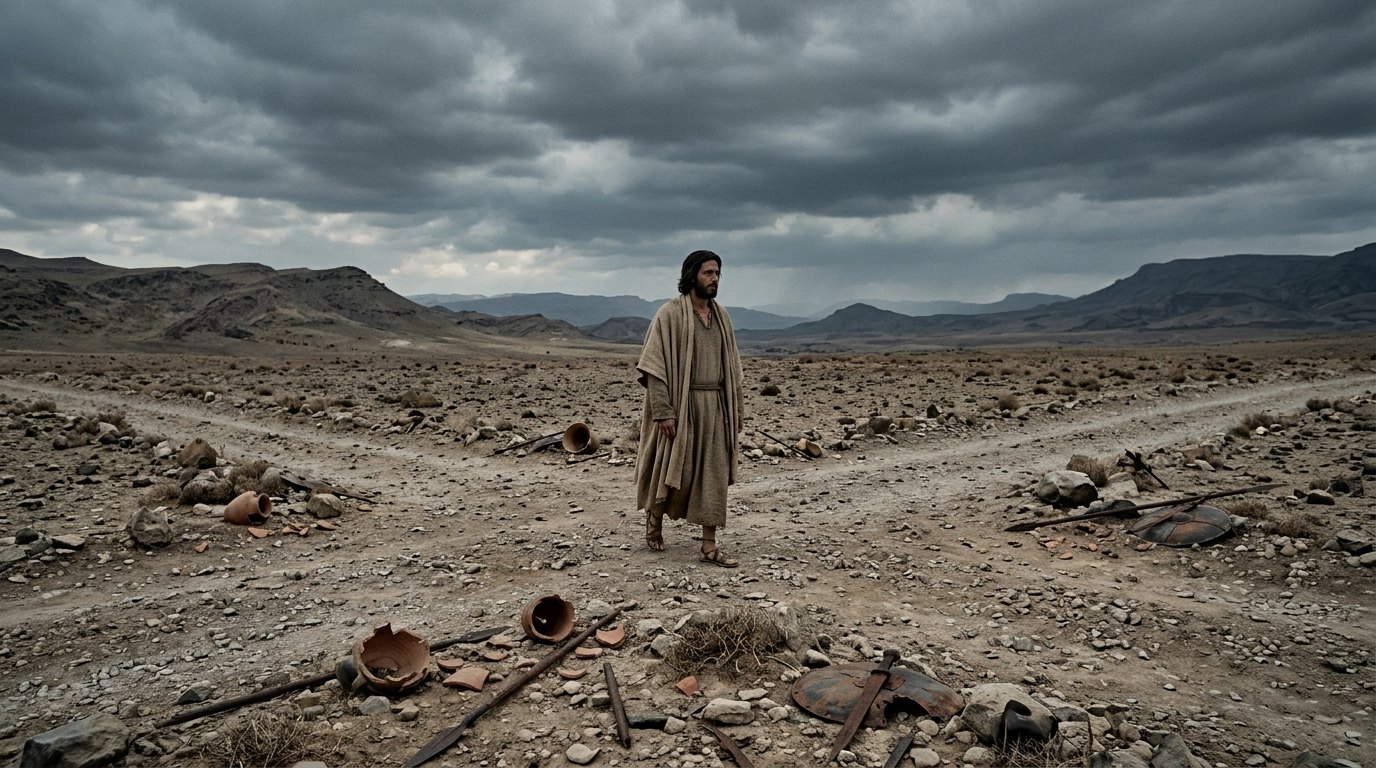
Now the earth was corrupt in God’s sight and was full of violence.
Genesis 6:11 (NIV)
It defines the concrete manifestation of human wickedness that desecrated the created order before God's sight.
Genesis 6:11 exposes the outward result of inner corruption: the entire earth was ruined and thoroughly filled with violence. Sin in the heart never remains confined to thought; it inevitably breaks out into lawless destruction. The trajectory of bloodshed began immediately outside the Garden of Eden in Genesis 4:8, when Cain rose up against his brother Abel and murdered him in the field. Within generations, unrepentant malice multiplied. In Genesis 4:23-24, Cain's descendant Lamech brazenly boasted to his wives that he had killed a young man simply for wounding him, glorying in violent retribution.
By Noah's generation, this personal vengeance had overrun the entire world. Genesis 6:11 states plainly that "the earth also was corrupt before God, and the earth was filled with violence." Lawlessness dominated every human interaction. When God looked down upon the globe in Genesis 6:12, He observed that "all flesh had corrupted his way upon the earth." The created order had been desecrated by rapacious bloodshed and unchecked oppression.
Consequently, the Lord delivered His solemn decree to Noah in Genesis 6:13: "The end of all flesh is come before me; for the earth is filled with violence through them; and, behold, I will destroy them with the earth." God does not turn a blind eye when humanity abuses His gift of life. Centuries later, Hosea 4:1-2 reiterated that when truth, mercy, and knowledge of God vanish, swearing, lying, killing, and bloodshed inevitably break out until the land mourns. The flood was God’s righteous response to an earth suffocated by unchecked cruelty.
| Passage | What it says |
|---|---|
| Genesis 4:8 | Cain rises up against his brother Abel and murders him, beginning humanity's descent into bloodshed. |
| Genesis 4:23-24 | Lamech boasts of killing a young man for wounding him, multiplying vengeance and unbridled violence. |
| Genesis 6:11 | The earth was corrupt before God and thoroughly filled with ruthless violence. |
| Genesis 6:12 | God looked upon the earth and saw that all flesh had corrupted their way upon it. |
| Genesis 6:13 | God declares to Noah that the end of all flesh has come because the earth is filled with violence through them. |
| Hosea 4:1-2 | Shows God's abiding controversy with a land when faithfulness ceases and violent bloodshed breaks out. |
Holy Grief and Righteous Wrath
The Lord was grieved to His heart
The LORD regretted that he had made human beings on the earth, and his heart was deeply troubled.
Genesis 6:6 (NIV)
It shows that God's judgment is not cold or detached, but the solemn reaction of a holy Creator deeply grieved by sin.
Genesis 6:6 shows that God's wrath is neither detached nor arbitrary, but the solemn grief of a righteous Creator over ungodliness. The deluge was preceded by extended divine patience. In Genesis 6:3, the Lord declared, "My spirit shall not always strive with man, for that he also is flesh," giving a period of one hundred and twenty years for repentance. When that warning was spurned, Genesis 6:6 records the divine agony: "And it repented the Lord that he had made man on the earth, and it grieved him at his heart." This grieved holiness shows that sin is a direct wound against God's loving intent for His creation.
Because God is holy, His grief leads inexorably to righteous justice. In Genesis 6:7, the decree was sealed: "I will destroy man whom I have created from the face of the earth." When the catastrophic day arrived, Genesis 7:21-23 records the execution of that sentence, as all breathing flesh upon the dry land perished beneath the towering deluge, and only those preserved in the ark survived.
Psalm 11:5-6 testifies that while the Lord tests the righteous, His soul hates the wicked and the lover of violence, promising that upon them He will rain coals and brimstone. Paul echoes this terrifying reality in Romans 1:18, declaring that "the wrath of God is revealed from heaven against all ungodliness and unrighteousness of men." Judgment is never an accident of nature; Hebrews 10:30-31 warns that God will judge His people, reminding every generation that "it is a fearful thing to fall into the hands of the living God."
| Passage | What it says |
|---|---|
| Genesis 6:3 | The Lord declares His Spirit will not strive with man forever, limiting man's days to one hundred and twenty years. |
| Genesis 6:6 | The Lord was sorry that He had made man on the earth, and it grieved Him in His heart. |
| Genesis 6:7 | The Lord decrees the destruction of man and beast from the surface of the ground in righteous judgment. |
| Genesis 7:21-23 | All flesh died that moved upon the earth, and only Noah and those with him in the ark remained alive. |
| Psalms 11:5-6 | The Lord tests the righteous, but His soul hates the wicked and the one who loves violence. |
| Romans 1:18 | Reveals the wrath of God against all ungodliness and unrighteousness of men who suppress the truth. |
| Hebrews 10:30-31 | Warns of the terror of falling into the hands of the living God when His judgment falls on sin. |
Grace and Solemn Warning
Noah found favor in the eyes of the Lord
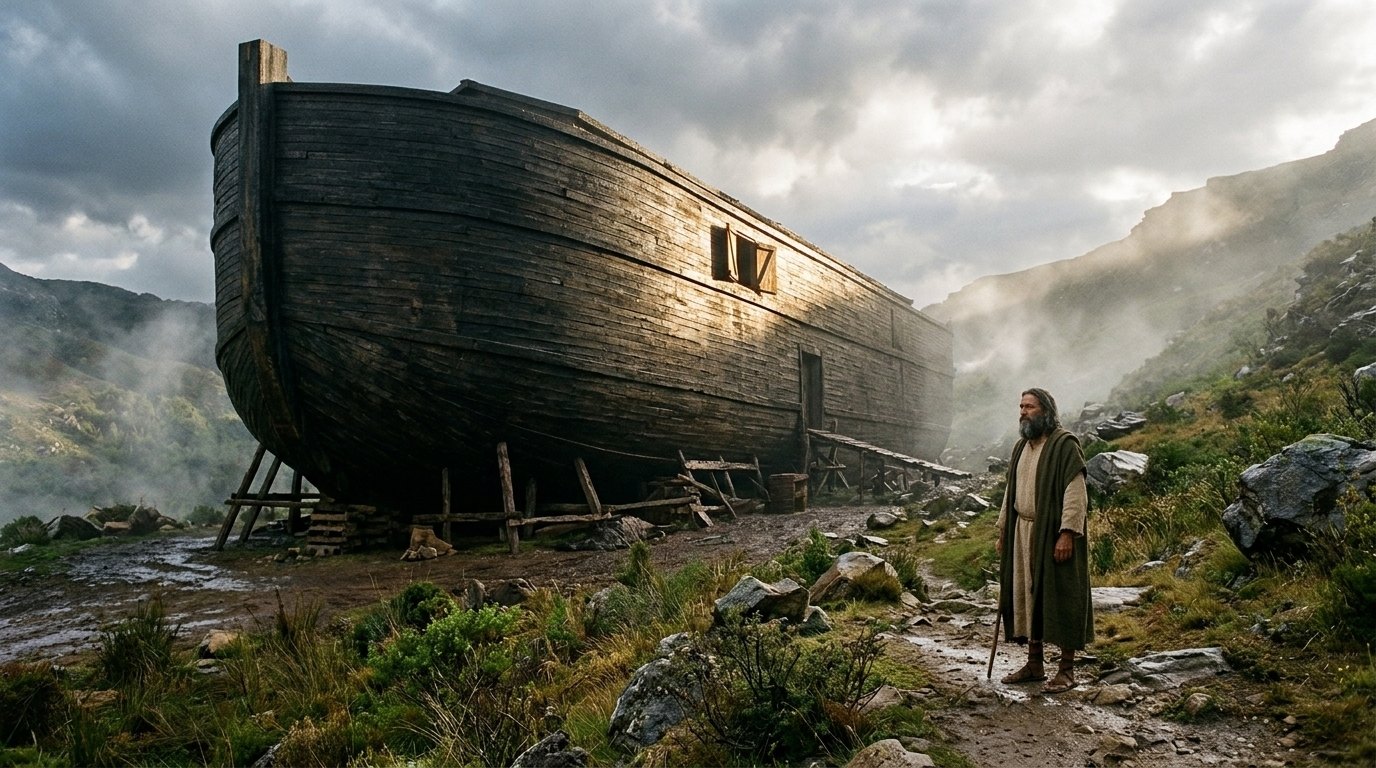
But Noah found favor in the eyes of the LORD.
Genesis 6:8 (NIV)
It introduces the sovereign mercy of God preserving a remnant amid universal condemnation.
Genesis 6:8 provides the single beacon of hope in a dying world: Noah found grace in the eyes of the Lord. Amid total condemnation, God preserves a remnant. Genesis 6:9 records that Noah was a righteous, blameless man who walked with God, a faith fulfilled and explained in 2 Peter 2:5, where he is named a herald of righteousness preserved alongside seven others when water overwhelmed the ungodly. In Genesis 6:18, God established an unbreakable covenant to protect Noah's family within the ark, an event 1 Peter 3:20-21 reveals as an enduring picture of salvation through Christ.
When the appointed hour arrived, Genesis 7:1 gave the divine invitation: "Come thou and all thy house into the ark." Hebrews 11:7 explains that Noah obeyed by faith, building the vessel to the saving of his household and thereby condemning the world. As 1 Peter 3:20 notes, God waited with long-suffering patience while the timber was planed and pitched, yet the surrounding world remained blind to the coming terror.
The Lord Jesus Himself made the deluge a direct type of the end of the age. In Matthew 24:37-39 and Luke 17:26-27, Christ warned that in the days of Noah, men ate, drank, and married without care until the flood came and swept them all away. So will it be at the coming of the Son of Man. 2 Peter 3:5-7 reminds us that just as the ancient world perished under water, the present heavens and earth are kept for fire against the day of judgment. The ark of Noah stands as an enduring sign that salvation is found only where God provides a refuge, calling every sinner to turn from ungodliness and find life in Christ before the final door is shut.
| Passage | What it says | Fulfilled |
|---|---|---|
| Genesis 6:8 | Noah found unmerited favor and grace in the eyes of the Lord amidst a perverse generation. | Hebrews 11:7 |
| Genesis 6:9 | Noah was a righteous man, blameless in his generations, who walked faithfully with God. | 2 Peter 2:5 |
| Genesis 6:18 | God establishes His covenant with Noah to preserve him and his family inside the ark. | 1 Peter 3:20-21 |
| Matthew 24:37-39 | Jesus warns that the days of Noah illustrate the sudden judgment that will fall upon an unsuspecting, wicked world. | |
| 2 Peter 2:5 | God did not spare the ancient world but preserved Noah, a preacher of righteousness, bringing a flood upon the ungodly. | |
| 2 Peter 3:5-7 | The ancient world perished in water, and the present heavens and earth are kept for fire on the day of judgment. | |
| Genesis 7:1 | The Lord invites righteous Noah and his household into the ark of safety before the deluge arrives. | |
| Hebrews 11:7 | Explains that Noah, warned of unseen events, built the ark in reverent fear, condemning the world. | |
| 1 Peter 3:20 | Recalls God's patient waiting in the days of Noah while the ark was being prepared. | |
| Luke 17:26-27 | Jesus warns that careless living and indifference to divine warning preceded the flood's sudden destruction. |
Where in the Bible
| Book | Passages |
|---|---|
| Genesis | 17 · Genesis 6:1-2, Genesis 6:5, Genesis 8:21, Genesis 6:4, Genesis 4:8, Genesis 4:23-24, Genesis 6:11, Genesis 6:12, Genesis 6:13, Genesis 6:3, Genesis 6:6, Genesis 6:7, Genesis 7:21-23, Genesis 6:8, Genesis 6:9, Genesis 6:18, Genesis 7:1 |
| Psalms | 1 · Psalms 11:5-6 |
| Jeremiah | 1 · Jeremiah 17:9 |
| Hosea | 1 · Hosea 4:1-2 |
| Matthew | 2 · Matthew 15:19, Matthew 24:37-39 |
| Luke | 1 · Luke 17:26-27 |
| Romans | 3 · Romans 1:28-31, Romans 3:10-18, Romans 1:18 |
| Hebrews | 2 · Hebrews 10:30-31, Hebrews 11:7 |
| 1 Peter | 1 · 1 Peter 3:20 |
| 2 Peter | 2 · 2 Peter 2:5, 2 Peter 3:5-7 |
The story in order
- Creation of Man (c. 4000 BC) · Genesis 1:27 · God made humanity in His image, male and female.
- The Fall (c. 4000 BC) · Genesis 3:1-19 · Sin entered the world, corrupting humanity.
- Cain Murders Abel (c. 3900 BC) · Genesis 4:8 · First instance of human violence and bloodshed.
- Widespread Wickedness (c. 2350 BC) · Genesis 6:5 · Every imagination of the heart was only evil continually.
- Earth Filled with Violence (c. 2350 BC) · Genesis 6:11 · Corruption and ruthless violence filled the earth.
- God's Grief and Decree (c. 2350 BC) · Genesis 6:6-7 · God was grieved and decreed destruction.
- Noah Warned and Prepares Ark (c. 2350 BC) · Genesis 6:14-22 · Noah built the ark in reverent fear.
- The Flood Begins (c. 2350 BC) · Genesis 7:11 · The fountains of the great deep burst open.
- All Flesh Dies (c. 2350 BC) · Genesis 7:21-23 · All flesh that moved on the earth perished.
- Ark Rests on Ararat (c. 2350 BC) · Genesis 8:4 · The ark came to rest on the mountains of Ararat.
- Noah and Family Saved (c. 2350 BC) · Genesis 8:18 · Noah, his wife, sons, and their wives left the ark.
- God's Covenant (c. 2350 BC) · Genesis 9:8-17 · God established His covenant with Noah and all living creatures.
Key words
- Wickedness (rāšāʿ (רָשָׁע))
- Moral corruption and deviation from God's standards. · Genesis 6:5
- Violence (ḥāmās (חָמָס))
- Ruthlessness, destruction, and bloodshed. · Genesis 6:11
- Grieved (nāḥam (נָחַם))
- Deeply sorrowful or pained in heart. · Genesis 6:6
- Righteous (ṣaddîq (צַדִּיק))
- Morally upright and conforming to God's will. · Genesis 6:9
- Favor (ḥēn (חֵן))
- Unmerited kindness or approval. · Genesis 6:8
- Flood (mabbūl (מַבּוּל))
- A great deluge of water covering the earth. · Genesis 6:17
The account of the global flood stands as a sober reminder that the holy God will not permit sin and violence to reign unchecked forever. Yet even in the darkest hour of judgment, the Lord provided an ark of safety, pointing forward to the ultimate salvation found in Jesus Christ for all who turn to Him in faith.
31 passages, each cited once.
Scripture cited
- Genesis 6:5-13