Can a Christian drink?
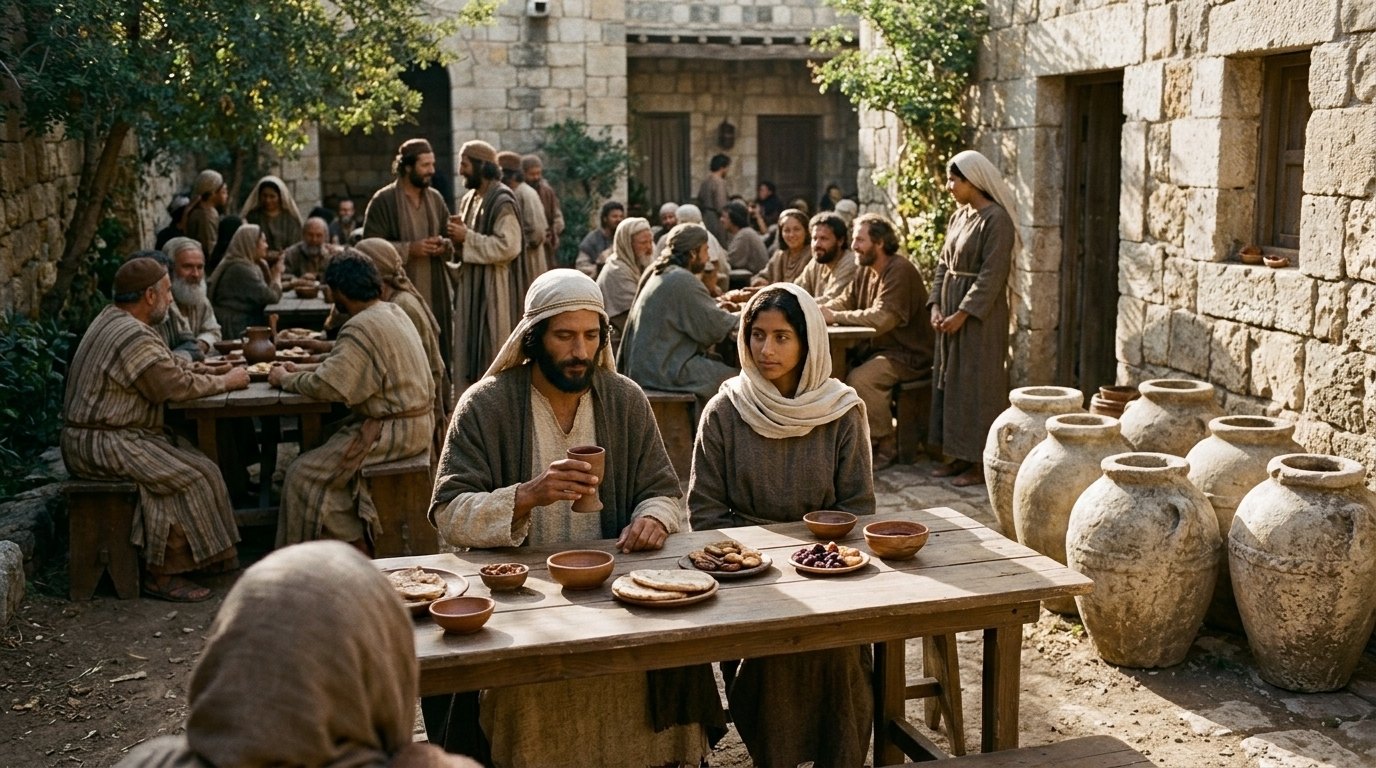
Ephesians 5:18
18 Do not get drunk on wine, which leads to debauchery. Instead, be filled with the Spirit,
New International Version (NIV)
The answer
A Christian may drink wine in moderation, but drunkenness is sin. Scripture never lays down a blanket ban on alcohol for God's people in general; what it forbids, plainly and repeatedly, is drunkenness and the life that runs with it.
What Scripture permits
- Jesus Himself made wine. At the wedding in Cana, when the wine ran out, Jesus turned water into wine — and the ruler of the feast called it good wine (John 2:1-11). The Son of God would not have supplied what He forbids.
- Paul told Timothy to take a little wine. "Be no longer a drinker of water only, but use a little wine for your stomach's sake and your frequent infirmities" (1 Timothy 5:23). Notice the measure: a little, for health, not for escape.
- Eating and drinking are not the kingdom. "For God's Kingdom is not eating and drinking, but righteousness, peace, and joy in the Holy Spirit" (Romans 14:17). A glass of wine is a small thing; holiness is the great thing.
What Scripture forbids
- Drunkenness, without exception. "Don't be drunken with wine, in which is dissipation, but be filled with the Spirit" (Ephesians 5:18). The contrast is the point: being mastered by drink and being filled with the Spirit are two opposing fillings.
- It keeps the unrepentant out of the kingdom. "Nor thieves, nor covetous, nor drunkards, nor slanderers, nor extortionists, will inherit God's Kingdom" (1 Corinthians 6:10). Galatians 5:21 warns the same. This is not a small matter.
- The whole partying life is to be left behind. Believers have "spent enough of our past time doing the desire of the Gentiles, and having walked in lewdness, lusts, drunken binges, orgies, carousings, and abominable idolatries" (1 Peter 4:3). Romans 13:13 names "rioting and drunkenness" among the works of darkness to put off.
Wine is a mocker
"Wine is a mocker, strong drink is raging: and whosoever is deceived thereby is not wise" (Proverbs 20:1). Proverbs 23:29-35 gives the full portrait — woe, strife, bloodshot eyes, a mind that imagines confusing things, and a man who, beaten and insensible, wakes saying he will look for more. That last line is the danger in one sentence: drink deceives, and deceives about itself. "Woe unto them that are mighty to drink wine" (Isaiah 5:22). A believer should take these warnings as seriously as the permissions.
The tests that govern the glass
- Mastery: "I will not be brought under the power of anything" (1 Corinthians 6:12). If a drink is needed, craved, or hard to refuse, it has begun to rule, and that is the line to stop at.
- Love for a brother: "It is good to not eat meat, drink wine, nor do anything by which your brother stumbles, is offended, or is made weak" (Romans 14:21). Around a recovering alcoholic, a weak conscience, or anyone it would embolden to sin, love abstains gladly.
- A clear conscience: "Whatever is not of faith is sin" (Romans 14:23). Doubt settles the question toward abstinence.
- God's glory: "Whether therefore you eat or drink, or whatever you do, do all to the glory of God" (1 Corinthians 10:31).
Total abstinence is a good and often wise choice, and no one should be pressed to drink. John the Baptist drank "neither wine nor strong drink" and was "filled with the Holy Ghost" (Luke 1:15) — yet that consecration was his particular calling, not a command laid on all. Equally, no one should treat moderation as permission to drift toward drunkenness.
For anyone who has been a drunkard, there is this word: "Some of you were such, but you were washed. You were sanctified. You were justified in the name of the Lord Jesus, and in the Spirit of our God" (1 Corinthians 6:11). Christ forgives and frees; the grace that saves also breaks the chain.
Answered from Scripture · reviewed November 12, 2026
How the major Christian traditions read this
All Christian traditions agree from Scripture that drunkenness is a grave sin that harms the soul and excludes an unrepentant person from the kingdom of God (Ephesians 5:18; 1 Corinthians 6:9-10).
Catholic
We teach that wine and alcoholic beverages are part of God's good creation to be received with thanksgiving and used in moderation. Drunkenness, however, deprives a person of the use of reason and is a serious sin against temperance (Galatians 5:21). Christ Himself sanctified wine by turning water into wine at the wedding in Cana (John 2:1-11) and instituted the Holy Eucharist under the species of bread and wine (Matthew 26:27-29). St. Paul advises taking a little wine for bodily infirmities (1 Timothy 5:23). Thus, drinking is permissible, but it must never cross into excess, loss of self-control, or scandal to a weaker brother (Romans 14:21).
Scripture: John 2:1-11, Matthew 26:27-29, 1 Timothy 5:23, Galatians 5:21, Romans 14:21
Orthodox
In the Orthodox Church, wine is honored as a divine gift that gladdens the heart of man (Psalm 104:15) and serves as the matter for the Holy Eucharist, the very Blood of Christ (Matthew 26:27-28). Christ's first miracle at Cana manifests wine as a blessing of fellowship and joy (John 2:1-11). Ascetic discipline and the fasts of the Church teach us self-mastery, requiring abstinence from wine on designated days to guard against passions. Drunkenness is firmly condemned as a work of the flesh (Romans 13:13). A Christian may drink in moderation, maintaining sobriety of mind and vigilance over the soul at all times.
Scripture: Psalms 104:15, John 2:1-11, Matthew 26:27-28, Romans 13:13
Lutheran
We hold that God's creation is good, and wine is a gift of God to be enjoyed with thanksgiving within the bounds of Christian freedom and moderation. Our Lord drank wine and gave it to His Church in the Sacrament of the Altar, commanding all to drink of it (Matthew 26:27; Augsburg Confession 22). What Scripture condemns is not the drink itself, but the abuse of it through drunkenness, dissipation, and carousing (Ephesians 5:18; 1 Peter 4:3). Where God has not bound the conscience with a total prohibition, we do not make human laws; rather, we let the Word rule the heart in soberness, avoiding causing our brother to stumble (Romans 14:13-17).
Scripture: Matthew 26:27, Ephesians 5:18, 1 Peter 4:3, Romans 14:13-17
Reformed & Presbyterian
We confess that God created wine to gladden the human heart (Psalm 104:15), and our Lord Jesus both made wine and drank it (John 2:1-11; Luke 7:34). Christian liberty allows the moderate use of alcohol as a matter indifferent in itself, provided it is received with gratitude (1 Timothy 4:4-5). Yet this liberty is strictly bounded by God's holy law: drunkenness is an explicit sin that unfits a person for the kingdom (1 Corinthians 6:9-10). Furthermore, love requires that we never flaunt our freedom to destroy or cause stumbling to a brother who is weak or struggling with drink (Romans 14:20-21).
Scripture: Psalms 104:15, John 2:1-11, Luke 7:34, 1 Timothy 4:4-5, Romans 14:20-21
Anglican & Episcopal
Anglican teaching upholds the moderate use of wine as consistent with Holy Scripture and the practice of the ancient Church. Christ chose wine for the Sacrament of His Holy Communion, commanding us to receive it in remembrance of Him (Luke 22:17-20). The Thirty-Nine Articles require only what may be proved by Scripture (Article 6), and Scripture nowhere bans alcohol entirely; it warns against excess, riot, and drunkenness (Romans 13:13; Ephesians 5:18). Christians are called to temperate living, using their liberty prudently so as not to bring shame on the Gospel or trip up a weaker neighbour (1 Corinthians 8:9).
Scripture: Luke 22:17-20, Romans 13:13, Ephesians 5:18, 1 Corinthians 8:9
Baptist
Many in our tradition practice total abstinence from alcohol as a matter of personal holiness, Christian witness, and pastoral wisdom. Scripture warns that wine is a mocker and strong drink is raging (Proverbs 20:1), bringing woe, sorrow, and ruin (Proverbs 23:29-35). While recognizing that Jesus turned water into wine and Paul advised Timothy to use a little for his stomach (1 Timothy 5:23), the devastating fruit of alcohol in families and communities moves many Baptist churches to require or urge total abstinence. Moreover, Christian love compels us to lay aside any liberty rather than cause another brother to stumble or fall into sin (Romans 14:21).
Scripture: Proverbs 20:1, Proverbs 23:29-35, 1 Timothy 5:23, Romans 14:21
Methodist & Wesleyan
Our Wesleyan heritage has historically urged total abstinence from intoxicating liquor. John Wesley strongly warned against the manufacture, sale, and consumption of spirituous liquors because of their destructive power over the human soul, the body, and the community. While Scripture records that Jesus made wine (John 2:1-11), it also warns against seeking strong drink (Isaiah 5:22) and commands us to flee works of the flesh (Galatians 5:21). Our calling to entire sanctification and outward holiness leads us to practice self-denial and protect the vulnerable, choosing not to drink lest our liberty become a stumbling block to anyone (Romans 14:21).
Scripture: John 2:1-11, Isaiah 5:22, Galatians 5:21, Romans 14:21
Pentecostal & Charismatic
In our churches, complete abstinence from alcoholic beverages is widely taught and expected. We are commanded not to be drunk with wine, wherein is dissipation, but to be filled with the Holy Spirit (Ephesians 5:18). John the Baptist was set apart by drinking neither wine nor strong drink while being filled with the Spirit from birth (Luke 1:15). Because our bodies are temples of the Holy Ghost (1 Corinthians 6:19-20), we seek an uncompromising standard of spiritual power and purity. Given alcohol's deceitful nature (Proverbs 20:1) and the danger of addiction, we choose total abstinence to give an uncompromised testimony.
Scripture: Ephesians 5:18, Luke 1:15, 1 Corinthians 6:19-20, Proverbs 20:1
Non-denominational & Evangelical
We look directly to Scripture, recognizing two clear biblical principles: alcohol in itself is not sin, but drunkenness is strictly forbidden (Ephesians 5:18; 1 Corinthians 6:10). Jesus created real wine at Cana (John 2:1-11), demonstrating that drinking in moderation is permissible. However, each believer must examine their conscience before God. If drinking causes a fellow Christian to stumble, love demands we abstain (Romans 14:21). Furthermore, if a person cannot drink without losing self-control or becoming enslaved, they must flee it entirely, for we are not to be mastered by anything (1 Corinthians 6:12).
Scripture: Ephesians 5:18, 1 Corinthians 6:10, John 2:1-11, Romans 14:21, 1 Corinthians 6:12
Where they differ
Whether total abstinence is expected
- Catholic
- Abstinence is voluntary penance; moderate drinking is fully permissible.
- Orthodox
- Moderate drinking is permitted; abstinence is observed during fasting seasons.
- Lutheran
- Moderate drinking is a matter of Christian liberty; abstinence is optional.
- Reformed & Presbyterian
- Scripture permits moderate drinking; conscience governs voluntary personal abstinence.
- Anglican & Episcopal
- Moderate drinking is lawful; temperance rather than total abstinence is required.
- Baptist
- Abstinence is widely urged or required for covenant church membership.
- Methodist & Wesleyan
- Abstinence is historically urged as an act of holy discipline.
- Pentecostal & Charismatic
- Abstinence is strongly expected to maintain holiness and spiritual power.
- Non-denominational & Evangelical
- Moderate drinking is permitted by liberty, though many practice personal abstinence.
Scripture: Proverbs 20:1, Romans 14:21, 1 Timothy 5:23
The nature of communion wine
- Catholic
- Must use natural fermented grape wine for valid Eucharistic consecration.
- Orthodox
- Must use fermented red grape wine mingled with warm water.
- Lutheran
- Uses fermented wine according to Christ's explicit institution.
- Reformed & Presbyterian
- Traditionally uses fermented wine, though some congregations permit grape juice.
- Anglican & Episcopal
- Uses fermented grape wine in the administration of Holy Communion.
- Baptist
- Almost exclusively uses unfermented grape juice for the Lord's Supper.
- Methodist & Wesleyan
- Standardly uses unfermented grape juice to promote temperance.
- Pentecostal & Charismatic
- Standardly uses unfermented grape juice for Communion.
- Non-denominational & Evangelical
- Varies by local church; frequently uses unfermented grape juice.
Scripture: Matthew 26:27-29, 1 Corinthians 11:25-26
Your pastor can tell you where your church stands.
Scripture cited
- Ephesians 5:18
- Luke 1:15
- Proverbs 20:1
- Romans 13:13
- Galatians 5:21-25
- Isaiah 5:22
- 1 Timothy 5:23
- 1 Corinthians 6:9-12
- Romans 14:13-23
- John 2:1-11
- 1 Corinthians 10:31
- 1 Peter 4:3-5