Is it a sin to worry?
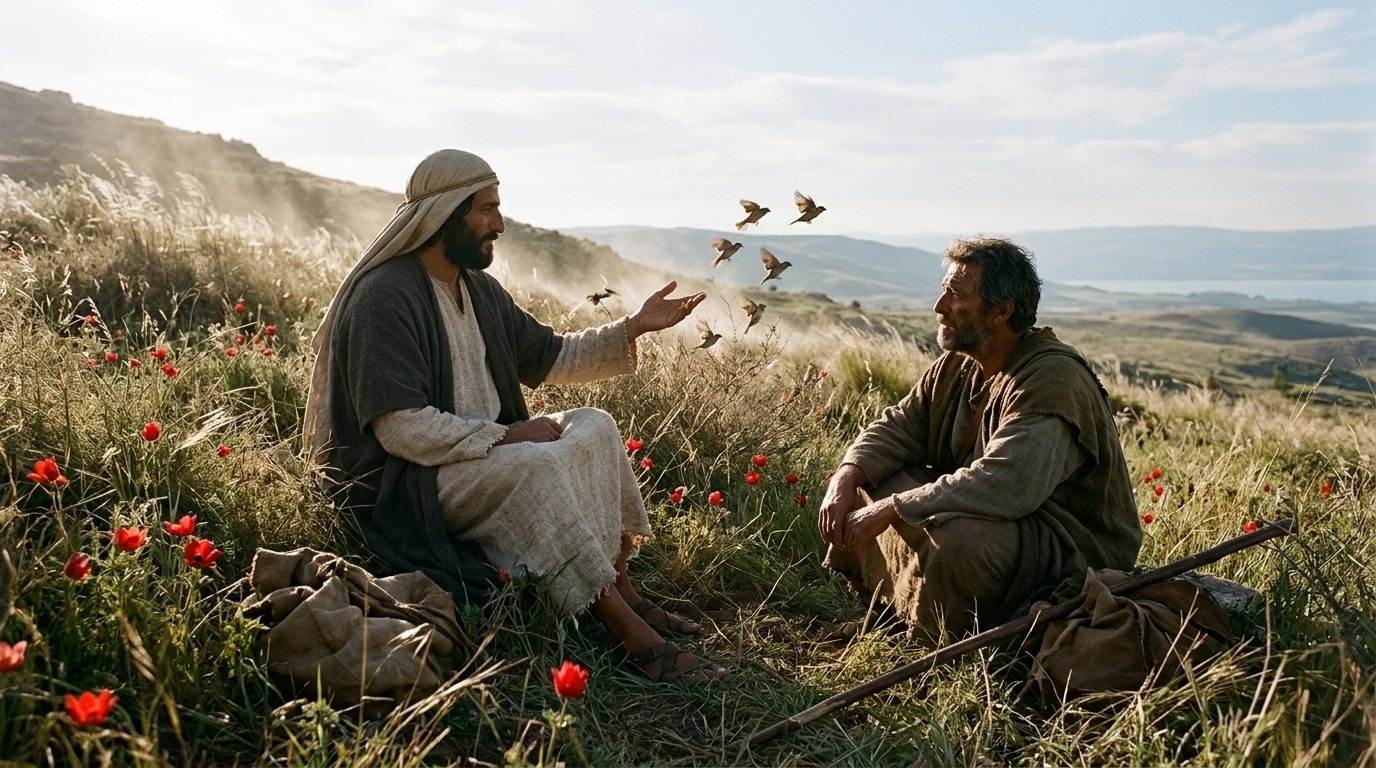
Matthew 6:25-34
25 “Therefore I tell you, do not worry about your life, what you will eat or drink; or about your body, what you will wear. Is not life more than food, and the body more than clothes?
26 Look at the birds of the air; they do not sow or reap or store away in barns, and yet your heavenly Father feeds them. Are you not much more valuable than they?
27 Can any one of you by worrying add a single hour to your life?
28 “And why do you worry about clothes? See how the flowers of the field grow. They do not labor or spin.
29 Yet I tell you that not even Solomon in all his splendor was dressed like one of these.
30 If that is how God clothes the grass of the field, which is here today and tomorrow is thrown into the fire, will he not much more clothe you—you of little faith?
31 So do not worry, saying, ‘What shall we eat?’ or ‘What shall we drink?’ or ‘What shall we wear?’
32 For the pagans run after all these things, and your heavenly Father knows that you need them.
33 But seek first his kingdom and his righteousness, and all these things will be given to you as well.
34 Therefore do not worry about tomorrow, for tomorrow will worry about itself. Each day has enough trouble of its own.
New International Version (NIV)
The answer
Worry is not automatically a sin, but Scripture commands believers not to live in anxious worry. Jesus teaches in Matthew 6:31, “Therefore don’t be anxious,” and in Matthew 6:34 says not to worry about tomorrow because “tomorrow will be anxious for itself.” Philippians 4:6 puts it this way: “In nothing be anxious, but in everything, by prayer and petition with thanksgiving, let your requests be made known to God.”
So the question is not whether every feeling of concern is sinful. Concern can lead us to pray, plan, prepare, and seek help. But anxious preoccupation that forgets God and tries to control the future is against the command of Christ. Worry does not add even one moment to our lifespan (Matthew 6:27), and Jesus teaches us to seek God’s Kingdom first, trusting Him with our needs (Matthew 6:33).
The proper response is to cast our cares on God, not to carry them ourselves: “Casting all your worries on him, because he cares for you” (1 Peter 5:7). This does not mean pretending that problems do not exist. It means bringing them honestly to God in prayer, expressing gratitude where possible, and acting faithfully rather than being ruled by fear.
If worry is controlling your heart, Scripture calls you to repent—not to shame yourself, but to turn back to Christ. “If we confess our sins, he is faithful and righteous to forgive us the sins, and to cleanse us from all unrighteousness” (1 John 1:9). God’s care does not deny your needs; He knows them and calls His children to trust Him (Matthew 6:32).
Answered from Scripture · reviewed November 11, 2026
Scripture distinguishes between legitimate, loving concern and debilitating anxiety that forgets God's sovereign care. When worry becomes an anxious effort to control the future apart from faith, Christ plainly commands us not to yield to it. Learning to cast our burdens on the Lord transforms fear into prayer, trusting the Father who supplies all our needs.
The Command of Christ
Jesus Forbids Living Under the Dominance of Worry
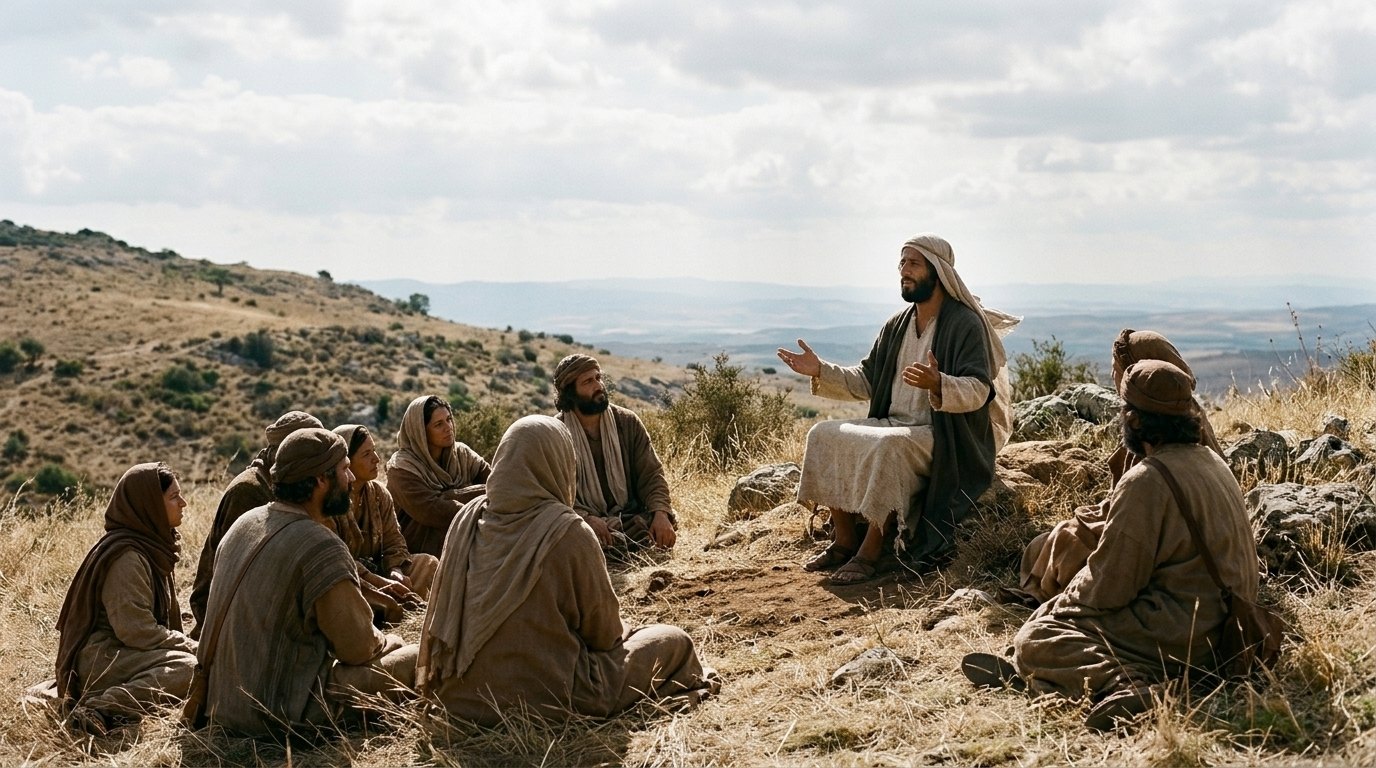
“Therefore I tell you, do not worry about your life, what you will eat or drink; or about your body, what you will wear. Is not life more than food, and the body more than clothes?
Matthew 6:25 (NIV)
Jesus directly forbids His disciples from being anxious about bodily survival, pointing them to God's higher design for their lives.
In Matthew 6:25, Jesus issues an unmistakable imperative: "Do not be anxious about your life." The Lord does not frame freedom from worry as an optional spiritual luxury, but as an explicit command to His disciples. He reminds us that life is far more than food and the body far more than clothing. Anxious striving assumes a burden that belongs solely to God, yet it yields zero control over circumstance. As Jesus pointedly asks in Matthew 6:27, which of us by being anxious can add a single hour to our span of life? Fretting cannot extend our earthly days, nor can it secure our physical tomorrow.
Christ returns to this command repeatedly to dismantle our self-reliance. In Matthew 6:31, He tells us not to be anxious, saying, 'What shall we eat?' or 'What shall we wear?' Luke 12:22 and Luke 12:29 underline the exact same principle, instructing believers not to set their minds on basic earthly sustenance or live with a suspended, doubtful mind. In Matthew 6:34, Jesus diagnoses the folly of borrowing grief from the future: each day possesses sufficient trouble of its own. When worry hardens into habitual unbelief, Scripture reveals its spiritual gravity. Romans 14:23 warns that whatever does not proceed from faith is sin, while Hebrews 11:6 declares that without faith it is impossible to please God. When anxiety treats the living God as absent or incapable, it departs from faith and must be repented of, leading us straight back to the forgiving mercy of Christ.
| Passage | What it says |
|---|---|
| Matthew 6:25 | Christ commands believers not to be anxious regarding life, food, drink, or clothing. |
| Matthew 6:27 | Jesus notes that anxious striving cannot add a single cubit or moment to one's lifespan. |
| Matthew 6:31 | Jesus repeats the explicit prohibition against anxiously questioning where basic provision will come from. |
| Matthew 6:34 | Christ warns against borrowing trouble from tomorrow, teaching that each day has enough trouble of its own. |
| Luke 12:22 | Jesus instructs the disciples to take no thought or anxious care for their physical sustenance. |
| Luke 12:29 | Christ instructs His followers not to be of doubtful or anxious mind concerning their provisions. |
| Romans 14:23 | Whatever does not proceed from faith is sin, identifying unbelieving anxiety at root as sin. |
| Hebrews 11:6 | Without faith it is impossible to please God, revealing how persistent worry grieves Him. |
The Father's Proven Care
Creation Proves the Father Cares for His Children

Look at the birds of the air; they do not sow or reap or store away in barns, and yet your heavenly Father feeds them. Are you not much more valuable than they?
Matthew 6:26 (NIV)
The Lord uses the feeding of common birds to prove that God's children are of infinitely greater value to Him.
The definitive antidote to fear is the sovereign character and watchful fatherhood of God. In Matthew 6:26, Jesus invites us to look at the birds of the air: they neither sow nor reap nor gather into barns, and yet your heavenly Father feeds them. The logic of Christ is absolute: if God sustains creatures of the air who possess neither storehouses nor spiritual understanding, He will not abandon the children He made in His own image. In Matthew 6:28-29, the Lord draws our eyes downward to the wild lilies of the field, which neither toil nor spin, yet outshine King Solomon in all his royal magnificence.
From these ordinary wonders of creation, Jesus presses the conviction home in Matthew 6:30: if God so clothes the grass of the field, which is alive today and tomorrow is thrown into the oven, how much more will He clothe His people, O you of little faith? The world frantically chases after temporary provisions, but Matthew 6:32 reminds us that our heavenly Father knows our needs before we ever speak them. This covenantal care mirrors the truth of Psalms 104:27, where every living creature looks to God for seasonal sustenance, and Psalms 103:13, which describes the Lord's tender compassion toward those who fear Him as a father pities his children. Above all, Romans 8:32 settles every doubt: He who did not spare His own Son, but gave Him up for us all, will graciously give us all things in Him.
| Passage | What it says |
|---|---|
| Matthew 6:26 | Birds neither sow nor reap, yet God faithfully feeds them, proving believers have much greater worth. |
| Matthew 6:28 | Jesus points to the lilies of the field that grow effortlessly under divine care. |
| Matthew 6:29 | Even King Solomon in all his splendor was not clothed like the wild flowers. |
| Matthew 6:30 | If God clothes the temporary grass, He will far more faithfully clothe His people of faith. |
| Matthew 6:32 | While unbelievers chase worldly necessities, the heavenly Father already knows what His children need. |
| Romans 8:32 | God, having delivered up His own Son for us, will freely and graciously give us all things. |
| Psalms 103:13 | The Lord shows compassion to those who fear Him, as a father shows compassion to his children. |
| Psalms 104:27 | All creatures look to God to give them their food in due season, proving His faithful provision. |
Casting Cares Upon God
Prayer Replaces Anxiety With the Peace of God
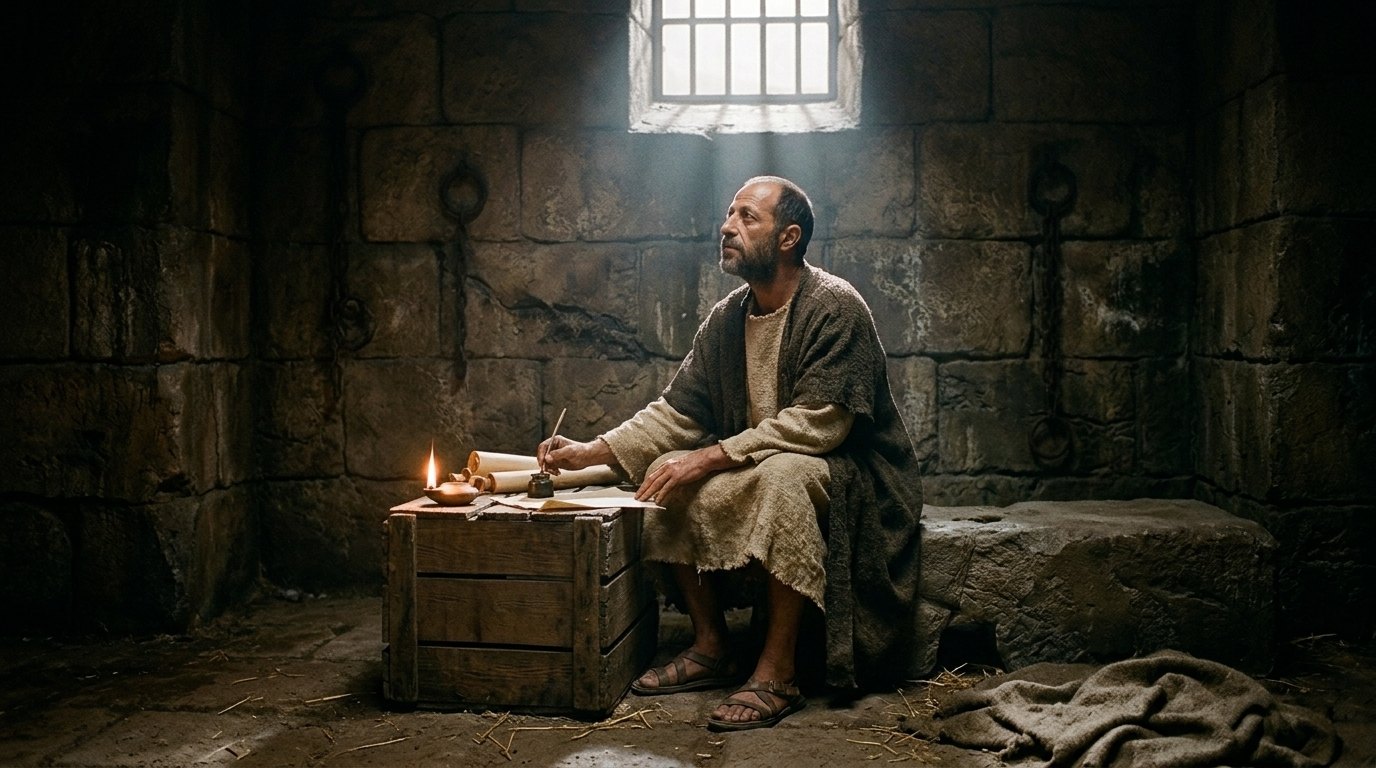
Do not be anxious about anything, but in every situation, by prayer and petition, with thanksgiving, present your requests to God.
Philippians 4:6 (NIV)
Paul commands that anxiety be met immediately with thankful prayer and petition in every circumstance.
God does not command us to bury our burdens; He commands us to transfer them to His shoulders through prayer. In Philippians 4:6, the apostle Paul gives the divine exchange: do not be anxious about anything, but in everything by prayer and supplication with thanksgiving let your requests be made known to God. The moment a distressing thought enters the mind, it must be met with deliberate petition and gratitude for what God has already done. The immediate fruit of this surrender is outlined in Philippians 4:7: the peace of God, which surpasses all human comprehension, will stand guard over our hearts and minds in Christ Jesus like an unassailable garrison.
The same instruction anchors 1 Peter 5:7, where we are urged to cast all our anxieties upon Him, precisely because He cares for us. Yet Peter prefaced this in 1 Peter 5:6 by commanding believers to humble themselves under the mighty hand of God; chronic worry is often rooted in pride, refusing to submit to God's providence and timing. David discovered this sanctuary in Psalms 55:22, declaring that those who cast their burden upon the Lord will be sustained and never shaken. When distress rises within us, Psalms 94:19 reminds us that God's consolations bring joy to the wounded soul, and Isaiah 26:3 promises that He keeps in perfect peace those whose minds stay anchored upon Him. If we have allowed worry to degenerate into sinful unbelief, 1 John 1:9 assures us that confessing our sin meets His faithful cleansing.
| Passage | What it says |
|---|---|
| Philippians 4:6 | Believers are told to be anxious for nothing, turning every concern into prayer with thanksgiving. |
| Philippians 4:7 | God's surpassing peace will guard the hearts and minds of those who pray in Christ Jesus. |
| 1 Peter 5:7 | Believers are instructed to cast all their anxieties upon God because He genuinely cares for them. |
| Psalms 55:22 | David urges casting burdens upon the Lord, who promises to sustain the righteous and never let them fall. |
| 1 John 1:9 | Confessing our sins of distrust brings faithful cleansing and total forgiveness through Christ. |
| Psalms 94:19 | When cares and anxieties multiply within the heart, God's consolations bring joy to the soul. |
| Isaiah 26:3 | God keeps in perfect peace those whose minds are stayed on Him, because they trust Him. |
| 1 Peter 5:6 | Humble yourselves under God's mighty hand, showing that anxiety often resists submission to His timing. |
Kingdom Priorities
Seeking God's Kingdom Displaces the Grip of Fear
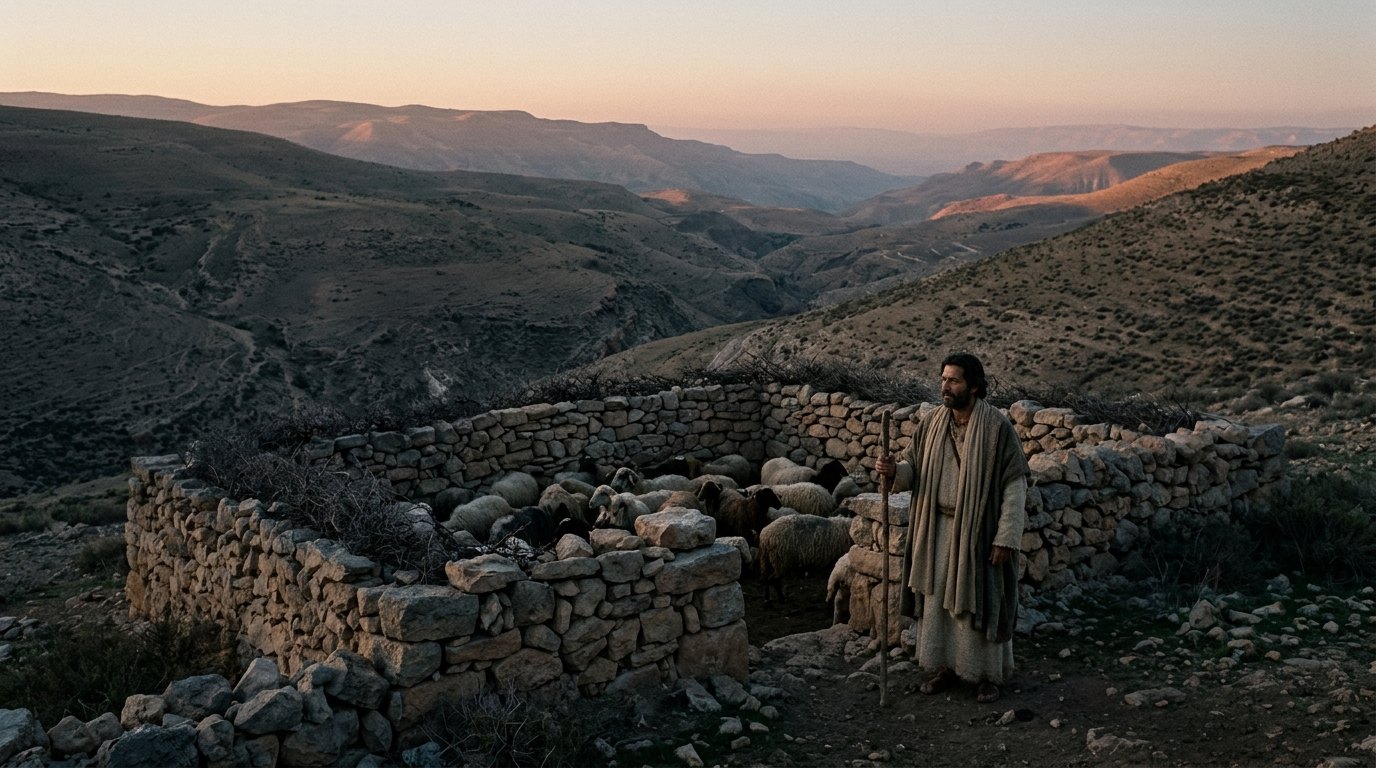
But seek first his kingdom and his righteousness, and all these things will be given to you as well.
Matthew 6:33 (NIV)
Jesus provides the definitive remedy for anxiety: ordering one's life around God's reign and righteousness.
Anxiety is ultimately displaced when our highest affections are redirected toward the eternal rule of God. In Matthew 6:33, Jesus delivers the master key to personal peace: "Seek first the kingdom of God and his righteousness, and all these things will be added to you." Worry naturally fixates on secondary necessities, enslaving the mind to survival and circumstance. But when a believer's supreme pursuit is the reign and holiness of Christ, God assumes total responsibility for the secondary details of daily provision. Luke 12:31 reaffirms this identical promise, binding the provision of food, shelter, and clothing directly to kingdom obedience.
To banish fear, Christ tenderly addresses His people in Luke 12:32: "Fear not, little flock, for it is your Father's good pleasure to give you the kingdom." If the Father delights to grant us an eternal, unshakable inheritance through His Son, He will certainly not leave us destitute on the road to reaching it. This unwavering confidence demands an intentional surrender of human self-reliance. Proverbs 3:5 commands us to trust in the Lord with all our heart and not lean on our own limited, fragile understanding. When, as Proverbs 3:6 teaches, we acknowledge Him in all our ways, He faithfully straightens our paths and carries us through every earthly trial.
| Passage | What it says |
|---|---|
| Matthew 6:33 | Seeking God's kingdom and righteousness first ensures that all earthly needs will be added. |
| Luke 12:31 | Seeking the kingdom of God guarantees that all necessary provisions will be supplied by Him. |
| Luke 12:32 | Jesus comforts the little flock, declaring that the Father is well pleased to give them the kingdom. |
| Proverbs 3:5 | Trusting the Lord with all one's heart replaces relying on limited human understanding. |
| Proverbs 3:6 | Acknowledging God in every way results in Him directing and making straight our paths. |
Choked by Care
The Destructive Fruit of Unchecked Anxiety
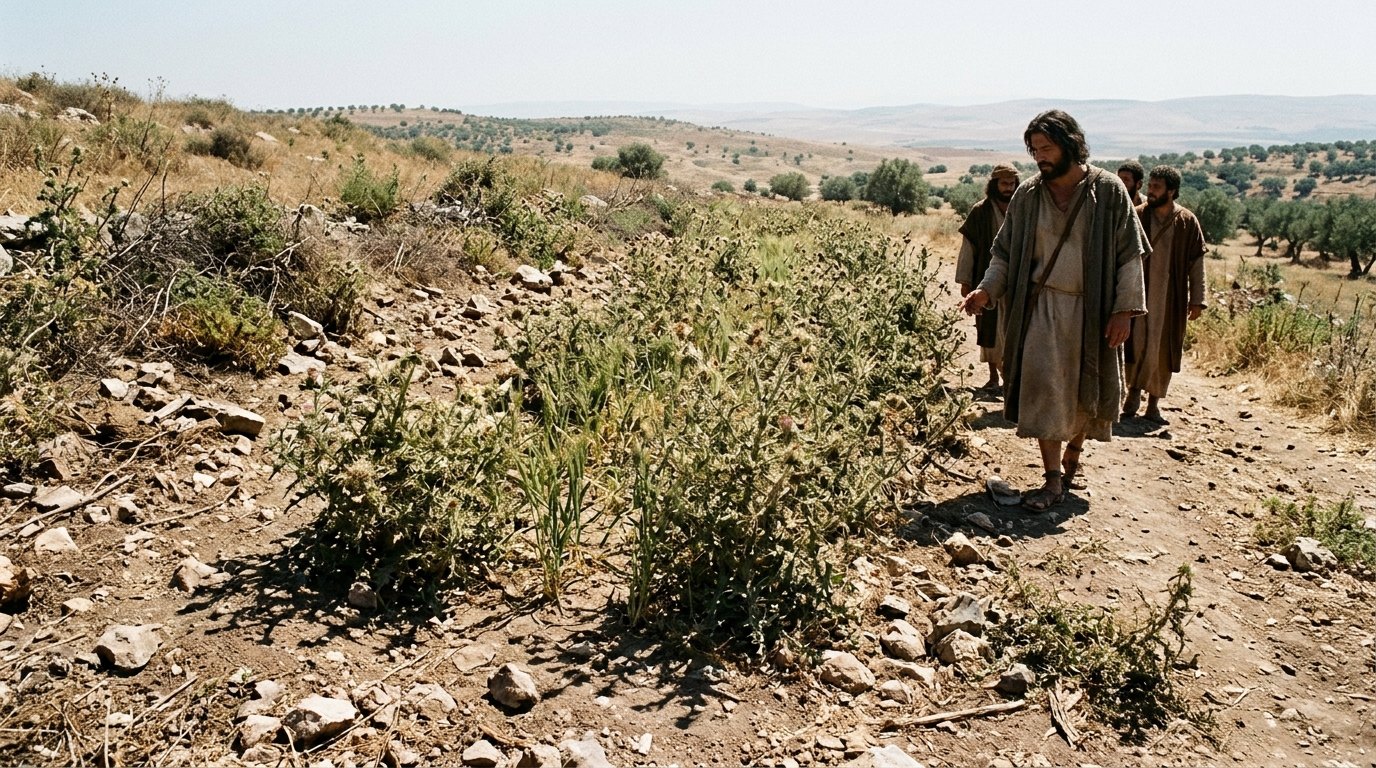
The seed falling among the thorns refers to someone who hears the word, but the worries of this life and the deceitfulness of wealth choke the word, making it unfruitful.
Matthew 13:22 (NIV)
Jesus warns that the cares of this age choke out His word and make a life unfruitful.
In Matthew 13:22, Jesus warns of the seed sown among thorns: the cares of this world choke the word, and it proves unfruitful. Anxious preoccupation is not merely an emotional discomfort; it acts as an aggressive weed that smothers spiritual vitality. The Greek word for care (merimna) implies being drawn in conflicting directions, fracturing the believer's focus away from God's sovereign promises. Mark 4:19 confirms that the deceitfulness of wealth and the desires for other things enter in alongside daily anxieties to strangle the truth before it bears fruit.
This progressive suffocation touches every part of the Christian walk. In Luke 8:14, Christ explains that those choked by life's cares, riches, and pleasures fail to mature, yielding no ripe harvest. Anxiety diverts spiritual energy toward self-preservation and future speculation, blinding the soul to God's immediate sufficiency. Later, in Luke 21:34, Jesus warns His followers to watch themselves, lest your hearts be weighed down with dissipation and drunkenness and cares of this life, leaving them unprepared for His sudden return. Earthly anxiety is placed side by side with reckless self-indulgence because both weigh down the heart and numb spiritual watchfulness.
Long before the Gospels recorded Christ's warnings, the wisdom literature diagnosed the physiological and spiritual toll of unchecked fear. Proverbs 12:25 observes plainly that anxiety in a man's heart weighs him down, but a good word makes him glad. Worry acts as an unbearable internal anchor, bending the soul toward despair. Yet when believers heed God's good word of promise in Christ, the suffocating grip of worldly care is broken by the liberating truth of His steadfast providence.
| Passage | What it says |
|---|---|
| Matthew 13:22 | The cares of this world choke the word of God, rendering the hearer unfruitful. |
| Mark 4:19 | Anxieties of this life enter in and choke out the message of the kingdom. |
| Luke 8:14 | Those who fall among thorns are choked by life's cares, riches, and pleasures. |
| Luke 21:34 | Jesus warns disciples against letting their hearts be weighed down with the cares of this life. |
| Proverbs 12:25 | Anxiety in a person's heart weighs it down, but a good word makes it glad. |
Distraction and Devotion
Righteous Concern Versus Sinful Distraction
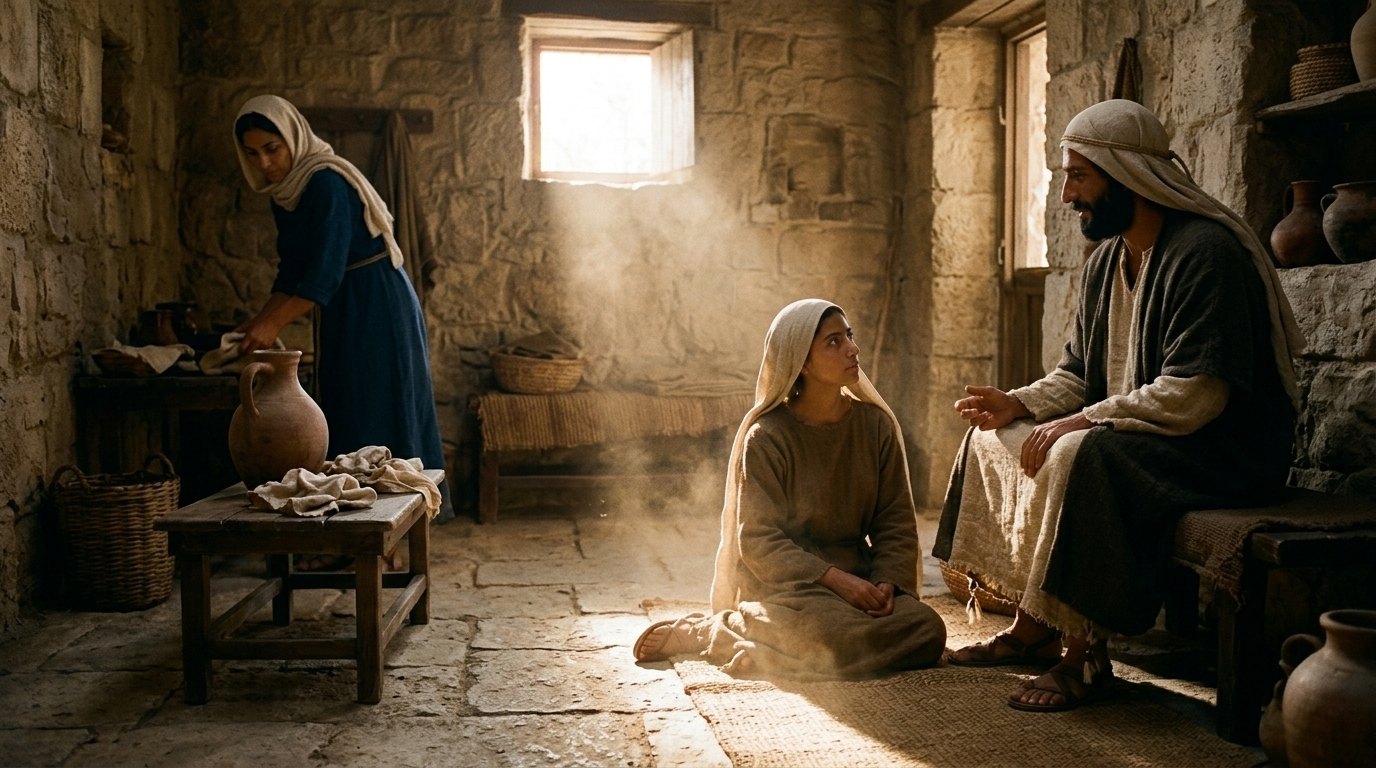
“Martha, Martha,” the Lord answered, “you are worried and upset about many things,
Luke 10:41 (NIV)
Christ directly confronts anxiety that distracts from devotion and fellowship with Him.
In Luke 10:41, Christ speaks directly into the frantic labor of hospitality with gentle clarity: "Martha, Martha, you are anxious and troubled about many things." Martha’s service was not inherently sinful, but her heart had become fractured by irritation and fretfulness. Anxiety had turned hospitality into resentment, prompting her to criticize her sister and instruct the Lord. Jesus corrects her in Luke 10:42 by declaring that one thing is necessary, and Mary has chosen the good portion, demonstrating that genuine devotion to Christ must take precedence over frenzied duty.
Scripture distinguishes between sinful, unbelieving worry and holy, diligent vigilance. In 1 Corinthians 7:32, the apostle Paul writes that he desires believers to be free from anxieties, wanting their lives uncluttered so they may focus upon pleasing the Lord without divided loyalty. When worry consumes the mind, it fractures undivided devotion to Christ. Yet the biblical call to cast off fretfulness does not mean cold indifference toward people or duties. In 2 Corinthians 11:28, Paul describes his own apostolic life: "apart from other things, there is the daily pressure on me of my anxiety for all the churches."
The care Paul bore was not faithless doubt about God's power, but a holy, sacrificial burden for the spiritual safety of his brethren. Righteous concern moves a believer to fervent prayer, sacrificial labor, and intercession; sinful worry turns inward, dwelling on control and despair. By sitting first at Christ’s feet, believers receive the grace to carry real responsibilities with a quieted and reliant spirit.
| Passage | What it says |
|---|---|
| Luke 10:41 | Jesus gently rebukes Martha for being anxious and troubled about many things instead of one needful thing. |
| Luke 10:42 | Only one thing is necessary, choosing the good portion of sitting at Jesus' feet. |
| 1 Corinthians 7:32 | Paul desires believers to be free from anxieties so they may serve the Lord without distraction. |
| 2 Corinthians 11:28 | Paul describes his daily godly pressure and concern for all the churches, distinguishing care from unbelieving fretfulness. |
Where in the Bible
| Book | Passages |
|---|---|
| Psalms | 4 · Psalms 103:13, Psalms 104:27, Psalms 55:22, Psalms 94:19 |
| Proverbs | 3 · Proverbs 3:5, Proverbs 3:6, Proverbs 12:25 |
| Isaiah | 1 · Isaiah 26:3 |
| Matthew | 11 · Matthew 6:25, Matthew 6:27, Matthew 6:31, Matthew 6:34, Matthew 6:26, Matthew 6:28, Matthew 6:29, Matthew 6:30, Matthew 6:32, Matthew 6:33, Matthew 13:22 |
| Mark | 1 · Mark 4:19 |
| Luke | 8 · Luke 12:22, Luke 12:29, Luke 12:31, Luke 12:32, Luke 8:14, Luke 21:34, Luke 10:41, Luke 10:42 |
| Romans | 2 · Romans 14:23, Romans 8:32 |
| 1 Corinthians | 1 · 1 Corinthians 7:32 |
| 2 Corinthians | 1 · 2 Corinthians 11:28 |
| Philippians | 2 · Philippians 4:6, Philippians 4:7 |
| Hebrews | 1 · Hebrews 11:6 |
| 1 Peter | 2 · 1 Peter 5:7, 1 Peter 5:6 |
| 1 John | 1 · 1 John 1:9 |
The story in order
- God's provision for creation (c. 1000 BC) · Psalms 104:27 · Shows God's care for all creatures.
- David casts his burdens (c. 1000 BC) · Psalms 55:22 · Shows casting cares on the Lord.
- Trusting the Lord (c. 700 BC) · Proverbs 3:5 · Trusting God directs our paths.
- Jesus forbids anxiety (c. AD 30) · Matthew 6:25 · Christ commands not to be anxious.
- Jesus points to birds (c. AD 30) · Matthew 6:26 · God feeds birds, believers are more valuable.
- Jesus points to lilies (c. AD 30) · Matthew 6:28 · God clothes the lilies.
- Seek first the kingdom (c. AD 30) · Matthew 6:33 · Seeking God's kingdom ensures provision.
- Parable of the sower (c. AD 30) · Matthew 13:22 · Cares choke the word.
- Jesus comforts the disciples (c. AD 30) · Luke 12:32 · The Father gives the kingdom.
- Paul on serving the Lord (c. AD 55) · 1 Corinthians 7:32 · Freedom from anxiety allows service.
- Casting anxieties on God (c. AD 65) · 1 Peter 5:7 · God cares for believers.
- God's peace guards hearts (c. AD 60) · Philippians 4:7 · Peace guards minds of those who pray.
Anxiety vs. Faith
| Anxiety leads to... | Faith leads to... | Passage |
|---|---|---|
| Choking the word, unfruitful | Seeking God's kingdom, provision | |
| Distrust, sin | Pleasing God, prayer | |
| Hearts weighed down | Peace guarding hearts | |
| Resisting God's mighty hand | Humbling under God's hand | 1 Peter 5:6 |
God's Provision for His Creation and Children
| Who? | What they do | God's action | Passage |
|---|---|---|---|
| Birds | Neither sow nor reap | God feeds them | Matthew 6:26 |
| Lilies of the field | Toil not, spin not | God clothes them | Matthew 6:28 |
| All creatures | Look to God | He gives food in due season | Psalms 104:27 |
| Believers | Anxiously question | Father knows what they need | Matthew 6:32 |
| Believers | Cast burdens | He sustains them | Psalms 55:22 |
| Believers | Anxious for nothing | God gives peace | Philippians 4:6-7 |
Key words
- Anxiety (merimnaō, μεριμνάω)
- Worrying about future needs, often to the point of distress and distrust. · Matthew 6:25
- Faith (pistis, πίστις)
- Trust and reliance on God and His promises. · Hebrews 11:6
- Provision (chreia, χρεία)
- The act of supplying needs, especially food and clothing. · Matthew 6:32
- Kingdom of God (basileia tou theou, βασιλεία τοῦ θεοῦ)
- The reign and rule of God, now and in the future. · Matthew 6:33
- Peace (eirēnē, εἰρήνη)
- A state of tranquility and security, especially from God. · Philippians 4:7
Worry loses its grip when we measure our tomorrow against the steadfast faithfulness of God. Rather than shouldering anxieties in isolation, we are invited to bring every burden directly to the throne of grace in prayer. In Christ, who gave His life for us, we find enduring peace and daily strength to seek His kingdom first.
38 passages, each cited once.
Scripture cited
- Matthew 6:25-34
- Philippians 4:6
- 1 Peter 5:7
- Matthew 6:31
- Philippians 4:6-7
- 2 Timothy 2:22