Who divided the Bible into chapters and verses?
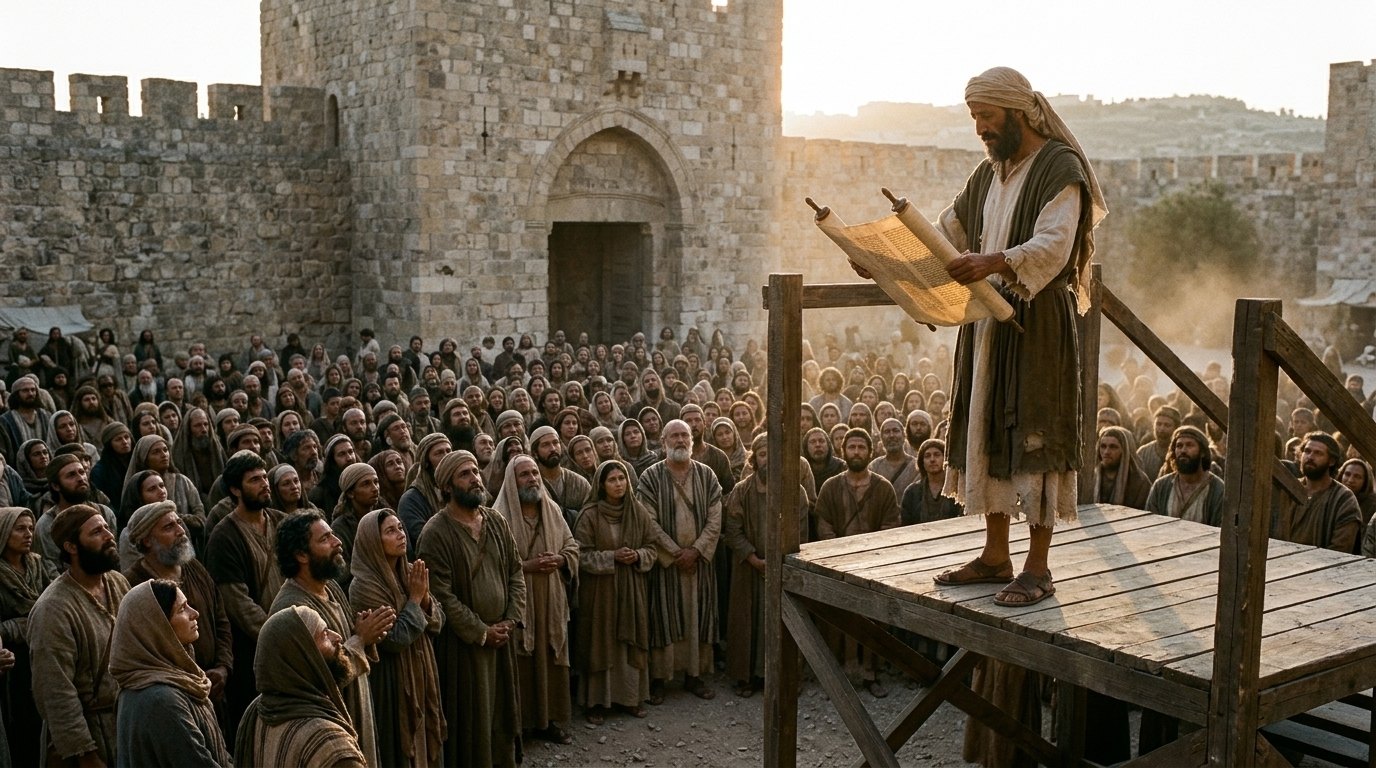
Nehemiah 8:1-8
1 all the people came together as one in the square before the Water Gate. They told Ezra the teacher of the Law to bring out the Book of the Law of Moses, which the LORD had commanded for Israel.
2 So on the first day of the seventh month Ezra the priest brought the Law before the assembly, which was made up of men and women and all who were able to understand.
3 He read it aloud from daybreak till noon as he faced the square before the Water Gate in the presence of the men, women and others who could understand. And all the people listened attentively to the Book of the Law.
4 Ezra the teacher of the Law stood on a high wooden platform built for the occasion. Beside him on his right stood Mattithiah, Shema, Anaiah, Uriah, Hilkiah and Maaseiah; and on his left were Pedaiah, Mishael, Malkijah, Hashum, Hashbaddanah, Zechariah and Meshullam.
5 Ezra opened the book. All the people could see him because he was standing above them; and as he opened it, the people all stood up.
6 Ezra praised the LORD, the great God; and all the people lifted their hands and responded, “Amen! Amen!” Then they bowed down and worshiped the LORD with their faces to the ground.
7 The Levites—Jeshua, Bani, Sherebiah, Jamin, Akkub, Shabbethai, Hodiah, Maaseiah, Kelita, Azariah, Jozabad, Hanan and Pelaiah—instructed the people in the Law while the people were standing there.
8 They read from the Book of the Law of God, making it clear and giving the meaning so that the people understood what was being read.
New International Version (NIV)
The answer
No single person divided the whole Bible. Stephen Langton devised the chapter divisions generally used today, while Robert Estienne, also called Stephanus, produced the standard New Testament verse numbering. Old Testament verse divisions have much older Jewish roots.
- Chapters: Langton, later Archbishop of Canterbury, divided the Latin Vulgate into chapters while teaching in Paris, probably between 1203 and 1207. His arrangement spread through Latin Bibles and then into other translations.
- Old Testament verses: Jewish scribes had long marked verse units in the Hebrew text. Rabbi Isaac Nathan ben Kalonymus’s concordance, compiled around 1447, helped establish the numbered system used in later printed editions.
- New Testament verses: Estienne published a Greek-Latin New Testament with his numbered verses in 1551. His 1555 Latin Bible combined that system with Old Testament versification, producing the arrangement widely used today.
- English Bibles: The Geneva New Testament adopted verse divisions in 1557, and the complete Geneva Bible of 1560 became the first English Bible to use both chapter and verse numbers throughout.
These numbers are later reference aids, not part of the original inspired wording. They make passages easier to locate, but a chapter break does not always mark the end of a thought, so the surrounding context still matters. Nehemiah 8:8 gives the enduring priority: “They read in the book, in the law of God, distinctly; and they gave the sense, so that they understood the reading.”
Answered from Scripture · reviewed November 12, 2026
The chapter numbers and verse markings in modern Bibles were not penned by the original prophets and apostles, but were added centuries later by dedicated scholars and printers to aid study and reference. While God inspired every word of sacred Scripture, these numbered boundaries are human tools designed to navigate the text rather than divide its meaning. Understanding their origins frees believers to read passages in their full, continuous context as God gave them.
The Ancient Scrolls
Scripture Was Received and Read as Continuous Proclamation

They read from the Book of the Law of God, making it clear and giving the meaning so that the people understood what was being read.
Nehemiah 8:8 (NIV)
It models the reading of God's Word in continuous narrative and oral explanation so the people could understand the whole sense.
When God delivered His revelation to prophets and apostles, it arrived not in numbered snippets, but as living, uninterrupted discourse. In Nehemiah 8:8, the Levites "read from the book of the Law of God clearly, and they gave the sense, so that the people understood the reading." The entire scene underscores how ancient believers received the Word. As recorded in Nehemiah 8:1-3, the assembly gathered as one man before the Water Gate, calling upon Ezra to bring the scroll of Moses, which he read aloud continuously from daybreak until midday before attentive ears. Standing upon an elevated wooden platform with faithful leaders (Nehemiah 8:4), Ezra unrolled the scroll, prompting the entire assembly to stand in reverent awe (Nehemiah 8:5). With lifted hands and faces bowed to the dust, the people worshiped the Lord (Nehemiah 8:6), while the Levites circulated through the multitude to instruct and explain the meaning of the unbroken narrative (Nehemiah 8:7).
Centuries later, the New Testament church inherited this exact practice of continuous reading. When the Lord Jesus entered the synagogue at Nazareth, He unrolled the scroll of Isaiah to find the appointed prophecy of His messianic anointing (Luke 4:17), searching the continuous text without the aid of chapter headings or numerical markers. Similarly, when Philip encountered the Ethiopian official on the desert road, Luke notes simply that "the passage of the Scripture that he was reading was this" (Acts 8:32), citing the content rather than a numbered citation. Synagogue worship followed this unbroken rhythm, reading systematically from the Law and the Prophets before preaching an exhortation (Acts 13:15). When the apostles wrote their epistles, they expected the same unified reception. Paul commanded the Colossians to ensure his letter was read aloud to the entire gathering and then exchanged with Laodicea (Colossians 4:16), placing the Thessalonians under solemn oath that his epistle be read aloud to all the brethren (1 Thessalonians 5:27). The Scriptures were designed to be heard in their breathtaking, continuous fullness.
| Passage | What it says |
|---|---|
| Nehemiah 8:1 | The assembly gathers as one person before the Water Gate, calling Ezra to bring the continuous book of the Law of Moses. |
| Nehemiah 8:2 | Ezra the priest presents the scroll before all who could listen with understanding on the first day of the seventh month. |
| Nehemiah 8:3 | Ezra reads aloud from daybreak to midday to attentive men, women, and all who could comprehend the text. |
| Nehemiah 8:4 | Ezra stands elevated on a wooden platform flanked by faithful leaders supporting the solemn public reading of the scroll. |
| Nehemiah 8:5 | As Ezra unrolls the sacred scroll in sight of the entire congregation, the people stand in reverent awe. |
| Nehemiah 8:6 | Ezra praises the Lord, and the people respond with lifted hands and bowed faces in humble worship. |
| Nehemiah 8:7 | The Levites circulate among the listeners to instruct them and explain the meaning of the spoken law. |
| Nehemiah 8:8 | They read from the book of the Law clearly and give the sense so that the hearers comprehend the full message. |
| Luke 4:17 | Jesus was handed the scroll of Isaiah and unrolled it to find the place, showing how ancient Scripture lacked modern chapter numbers. |
| Acts 8:32 | Luke identifies the portion of Scripture being read as 'the passage' rather than citing a chapter or verse number. |
| Acts 13:15 | Synagogue worship centered on reading continuously from the Law and the Prophets before an exhortation was offered. |
| Colossians 4:16 | Apostolic letters were intended to be read aloud entirely to the whole congregation and shared with other churches. |
| 1 Thessalonians 5:27 | Paul charges the believers by the Lord that his epistle be read aloud to all the holy brethren. |
The Faithful Scribes
Preserving and Teaching the Word Through the Generations
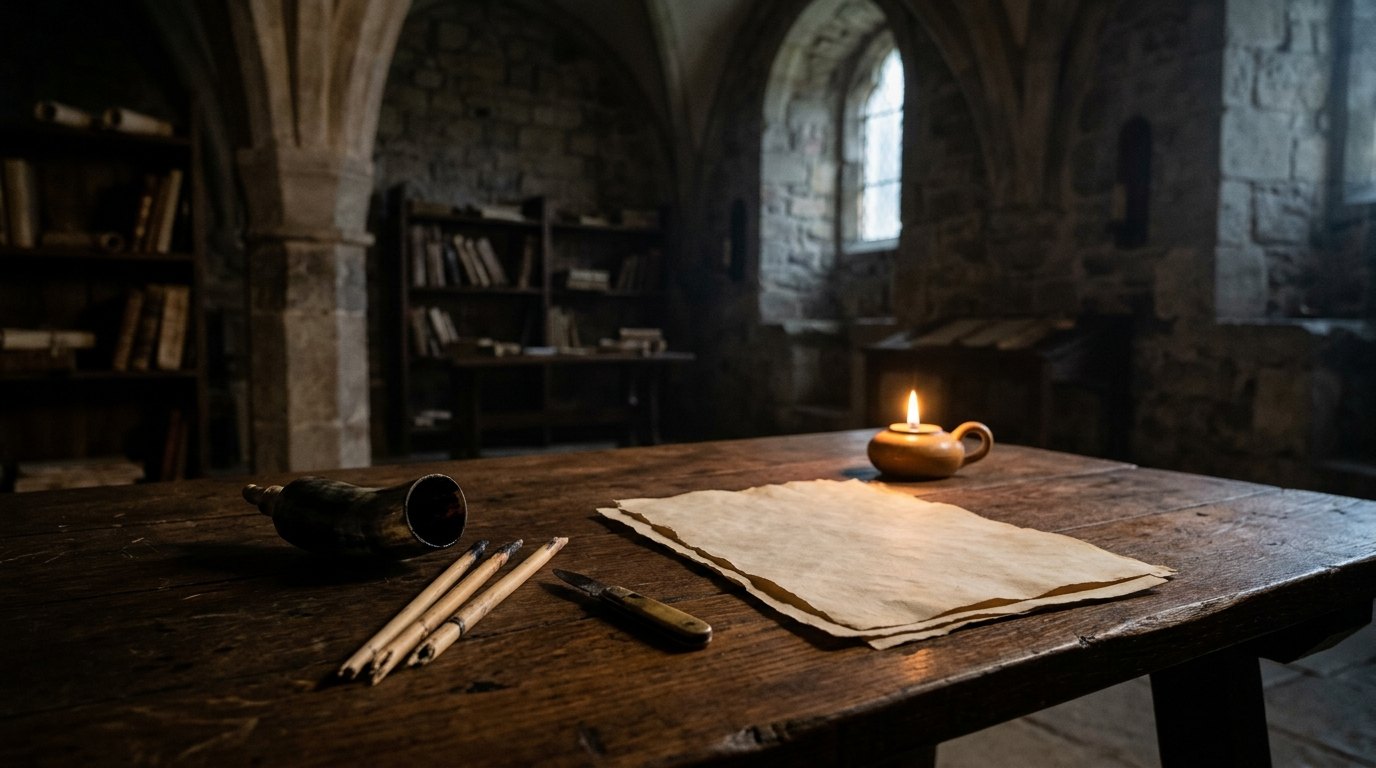
this Ezra came up from Babylon. He was a teacher well versed in the Law of Moses, which the LORD, the God of Israel, had given. The king had granted him everything he asked, for the hand of the LORD his God was on him.
Ezra 7:6 (NIV)
It shows that ancient scribes devoted their lives to mastering and preserving the text as a unified, sacred whole.
The preservation of Scripture across the generations was entrusted to diligent scribes and priests who revered every consonant of God's Word. In Ezra 7:6, Ezra stands as the model scholar: "a scribe skilled in the Law of Moses that the Lord, the God of Israel, had given." Artaxerxes acknowledged him as a priest and scribe fully versed in the Lord's statutes (Ezra 7:11). Scribes were not innovators who carved up texts into isolated fragments, but faithful custodians who maintained the integrity of the divine deposit. When Hilkiah found the long-neglected book of the Law during Josiah's reign, he handed the intact text to Shaphan the scribe for immediate royal reading (2 Chronicles 34:15). In the post-exilic restoration, the people gathered in unison to reestablish sacred worship (Ezra 3:1), dwelling near the Water Gate where the temple servants lived and the Law was preserved (Nehemiah 3:26). Jesus affirmed this high calling, noting that every scribe trained for the kingdom brings out of his treasure things new and old (Matthew 13:52).
This scribal tradition traces back to Moses, who wrote down the divine law and delivered it to the Levitical priests to keep beside the Ark of the Covenant as a permanent witness (Deuteronomy 31:9, 26). When Jeremiah received prophecies against Judah, Baruch the scribe recorded every word from the prophet's mouth onto a scroll (Jeremiah 36:4). Even after King Jehoiakim cut the scroll with a scribe's knife and cast it into the fire, Jeremiah dictated the words anew, adding many like words at God's command (Jeremiah 36:32). Through centuries of copying, these faithful men guarded the sacred text. Centuries later, historical scholars stepped into this heritage to aid public reading: Stephen Langton, Archbishop of Canterbury, introduced our modern chapter divisions around 1205 into the Latin Vulgate, and French printer Robert Estienne (Stephanus) added verse numbers in 1551. These additions were designed not to alter the text, but to serve it.
| Passage | What it says |
|---|---|
| Ezra 7:6 | Ezra is identified as a skilled scribe in the Law of Moses, guided by the benevolent hand of God upon him. |
| Ezra 7:11 | King Artaxerxes issues a decree recognizing Ezra as a priest and scribe learned in the commands and statutes of the Lord. |
| 2 Chronicles 34:15 | Hilkiah the high priest discovers the lost book of the Law in the temple and entrusts it to Shaphan the scribe. |
| Ezra 3:1 | The restored community gathers in Jerusalem as one body in the seventh month, united around divine worship. |
| Nehemiah 3:26 | The temple servants live near the Water Gate, the historical setting where the community later heard Scripture proclaimed. |
| Matthew 13:52 | Jesus describes every scribe trained for the kingdom of heaven as a householder bringing out treasures both new and old. |
| Deuteronomy 31:9 | Moses wrote down the law and delivered it to the priests and elders to preserve and guard faithfully. |
| Deuteronomy 31:26 | The Book of the Law was placed beside the Ark of the Covenant as a witness for future generations. |
| Jeremiah 36:4 | Baruch wrote down on a scroll from the mouth of Jeremiah all the words the Lord had spoken to him. |
| Jeremiah 36:32 | Jeremiah dictated the Lord's words again onto another scroll after the first was burned, adding many similar words. |
Dividing the Text
Human Tools Laid Over God's Inerrant Word

All Scripture is God-breathed and is useful for teaching, rebuking, correcting and training in righteousness,
2 Timothy 3:16 (NIV)
It distinguishes the divine origin and complete inspiration of Scripture's words from later human formatting systems.
Because Scripture is the very speech of God, believers must distinguish between the inspired text itself and the human formatting laid over it. In 2 Timothy 3:16, Paul establishes the bedrock truth that "all Scripture is breathed out by God and profitable for teaching, for reproof, for correction, and for training in righteousness." Every syllable of the original manuscripts carries divine authority. Therefore, the worker approved by God must handle the word of truth with utmost precision (2 Timothy 2:15), never allowing human chapter breaks to slice a unified argument in half or isolate a verse from its surrounding paragraph. Holy men of God spoke not by private human impulse, but carried along by the Holy Spirit (2 Peter 1:21).
God's people have always been warned never to treat His Word carelessly. Moses commanded Israel, "You shall not add to the word that I command you, nor take from it" (Deuteronomy 4:2). Agur echoed this reverence in the wisdom literature, testifying that every word of God proves true like metal refined in fire (Proverbs 30:5) and warning that anyone who dares add to His words will be rebuked and found a liar (Proverbs 30:6). The canon closes with John's solemn warning against altering the inspired prophecy of Revelation (Revelation 22:18-19). Numbered chapters and verses are valuable reference tools that enable the church to locate passages swiftly together, but they are not inspired boundaries. Everything written in former days was recorded for our enduring instruction (Romans 15:4). By recognizing that modern numbers are helpful street signs rather than divine walls, we honor God's Word as the coherent, living river of truth He breathed out.
| Passage | What it says |
|---|---|
| 2 Timothy 3:16 | All Scripture is breathed out by God and profitable for teaching, reproof, correction, and training in righteousness. |
| 2 Timothy 2:15 | Believers are urged to handle the word of truth with precision and care, discerning its rightful context and flow. |
| 2 Peter 1:21 | Prophecy originated not from human will, but holy men spoke from God as they were carried along by the Holy Spirit. |
| Deuteronomy 4:2 | Israel is commanded neither to add to nor take away from the words that the Lord has commanded. |
| Proverbs 30:5 | Every word of God is tested and proven true, serving as a shield to those who take refuge in Him. |
| Revelation 22:18 | A severe warning is pronounced against anyone who adds to the words of the prophecy of the book. |
| Revelation 22:19 | A solemn warning against taking away from the words of the book, guarding God's inspired revelation. |
| Proverbs 30:6 | Scripture warns not to add to God's words, lest He rebuke you and prove you a liar. |
| Romans 15:4 | Whatever was written in former times was recorded for our instruction, that through endurance we might have hope. |
Where in the Bible
| Book | Passages |
|---|---|
| Deuteronomy | 3 · Deuteronomy 31:9, Deuteronomy 31:26, Deuteronomy 4:2 |
| 2 Chronicles | 1 · 2 Chronicles 34:15 |
| Ezra | 3 · Ezra 7:6, Ezra 7:11, Ezra 3:1 |
| Nehemiah | 9 · Nehemiah 8:1, Nehemiah 8:2, Nehemiah 8:3, Nehemiah 8:4, Nehemiah 8:5, Nehemiah 8:6, Nehemiah 8:7, Nehemiah 8:8, Nehemiah 3:26 |
| Proverbs | 2 · Proverbs 30:5, Proverbs 30:6 |
| Jeremiah | 2 · Jeremiah 36:4, Jeremiah 36:32 |
| Matthew | 1 · Matthew 13:52 |
| Luke | 1 · Luke 4:17 |
| Acts | 2 · Acts 8:32, Acts 13:15 |
| Romans | 1 · Romans 15:4 |
| Colossians | 1 · Colossians 4:16 |
| 1 Thessalonians | 1 · 1 Thessalonians 5:27 |
| 2 Timothy | 2 · 2 Timothy 3:16, 2 Timothy 2:15 |
| 2 Peter | 1 · 2 Peter 1:21 |
| Revelation | 2 · Revelation 22:18, Revelation 22:19 |
The story in order
- Moses writes the Law (c. 1400 BC) · Deuteronomy 31:9 · The Law was written down and entrusted to priests and elders.
- Law placed beside the Ark (c. 1400 BC) · Deuteronomy 31:26 · The Book of the Law served as a witness for future generations.
- Jeremiah dictates words to Baruch (c. 600 BC) · Jeremiah 36:4 · Words of the Lord were written onto a scroll.
- Hilkiah finds the Law (c. 620 BC) · 2 Chronicles 34:15 · The lost book of the Law was discovered in the temple.
- Ezra skilled in the Law (c. 450 BC) · Ezra 7:6 · Ezra was a scribe guided by God's hand.
- Ezra reads the Law (c. 445 BC) · Nehemiah 8:1 · Ezra presented the continuous book of the Law to the assembly.
- Jesus reads Isaiah (c. AD 30) · Luke 4:17 · Jesus unrolled the scroll to a specific place.
- Paul's letters read aloud (c. AD 62) · Colossians 4:16 · Apostolic letters were meant to be read entirely to congregations.
- Paul's letters read aloud (c. AD 51) · 1 Thessalonians 5:27 · Paul charged believers to read his epistle to all.
- Apostles inspired (c. AD 65) · 2 Peter 1:21 · Holy men spoke from God as carried by the Spirit.
Scripture is continuous and read as a whole
| Event | Description | Passage |
|---|---|---|
| Ezra reads the Law | Ezra reads aloud from daybreak to midday to attentive men, women, and all who could comprehend the text. | Nehemiah 8:3 |
| Levites explain the Law | They read from the Book of the Law clearly and give the sense so that the hearers comprehend the full message. | Nehemiah 8:8 |
| Jesus reads Isaiah | Jesus was handed the scroll of Isaiah and unrolled it to find the place. | Luke 4:17 |
| Philip explains Scripture | Philip opened his mouth, and beginning with this Scripture he told him the good news about Jesus. | Acts 8:35 |
| Synagogue reading | Synagogue worship centered on reading continuously from the Law and the Prophets before an exhortation was offered. | Acts 13:15 |
| Paul's letters | Paul charges the believers by the Lord that his epistle be read aloud to all the holy brethren. | 1 Thessalonians 5:27 |
Warnings against altering Scripture
| Command/Warning | Consequence | Passage |
|---|---|---|
| Do not add to or take away from the words | Lest He rebuke you and prove you a liar. | |
| Do not add to the words of prophecy | God will add to him the plagues described in this book. | Revelation 22:18 |
| Do not take away from the words | God will take away his share in the tree of life. | Revelation 22:19 |
Key words
- Scribe (sopher, סוֹפֵר)
- A person learned in the Law, responsible for preserving and teaching Scripture. · Ezra 7:6
- Handle the word of truth (orthotomeō, ὀρθοτομέω)
- To accurately interpret and apply Scripture, discerning its rightful context. · 2 Timothy 2:15
- All Scripture (pasa graphē, πᾶσα γραφή)
- The entirety of God's inspired Word, profitable for all aspects of spiritual life. · 2 Timothy 3:16
- Holy Spirit (pneuma hagion, πνεῦμα ἅγιον)
- God's Spirit who carried the prophets to speak His divine message. · 2 Peter 1:21
Knowing that chapter and verse numbers are practical guides rather than divinely inspired boundaries enriches our devotional life and Bible study. It encourages us to look past artificial breaks, read paragraphs as unified arguments, and receive the full counsel of God with fresh clarity. May we approach the open text with the reverence and hunger of ancient Jerusalem, eager to understand every word the Lord has spoken.
32 passages, each cited once.
Scripture cited
- Nehemiah 8:8