What does the Bible say about alcohol?
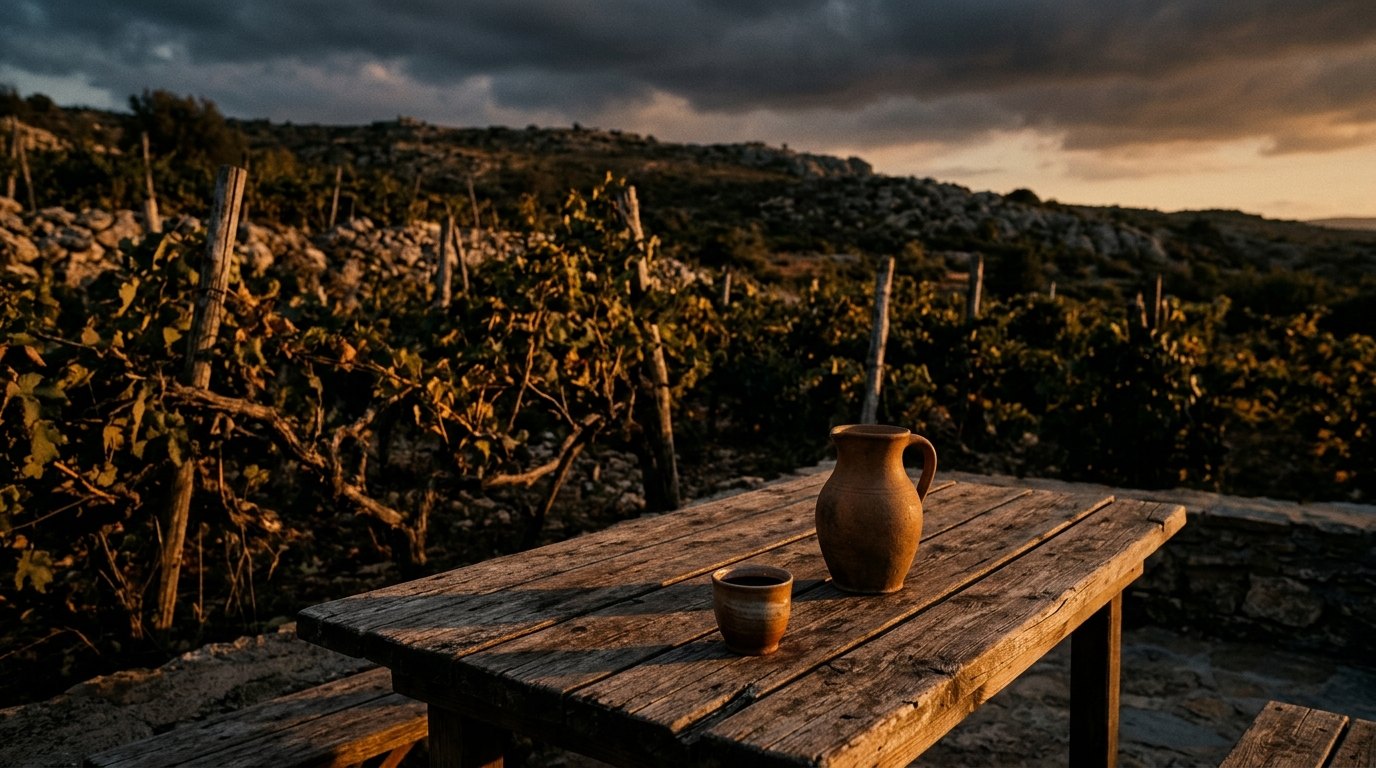
Proverbs 20:1
1 Wine is a mocker and beer a brawler; whoever is led astray by them is not wise.
New International Version (NIV)
The answer
The Bible does not forbid every use of alcohol, but it plainly condemns drunkenness and every use that brings a person under alcohol’s power. Wine can be received as one of God’s gifts, yet Scripture treats it as dangerous and calls believers to sobriety, self-control, love, and a willingness to abstain whenever drinking would lead into sin or harm another person.
Wine can be a gift, but never an excuse for excess
Psalm 104:15 names “wine that makes the heart of man glad” among God’s provisions. Jesus turned water into wine at the wedding in Cana, and the wine was recognized as good (John 2:1-11). Paul also told Timothy to use “a little wine” for his stomach and frequent infirmities (1 Timothy 5:23). These passages show that drinking alcohol is not inherently sinful.
Nevertheless, Proverbs 20:1 warns, “Wine is a mocker and beer is a brawler. Whoever is led astray by them is not wise.” Proverbs 23:29-35 describes wine’s attractive appearance followed by sorrow, strife, confused thinking, injury, and compulsively returning for more. A possible gift must therefore be handled with real caution.
Drunkenness is sin
Ephesians 5:18 directly commands believers not to be drunk with wine but to be filled with the Spirit. Drunkenness competes with the Spirit’s rule by surrendering judgment and self-control to alcohol.
- It corrupts judgment: Isaiah 28:7 describes priests and prophets erring in vision and stumbling in judgment through wine and strong drink.
- It endangers responsibility: Proverbs 31:4-5 warns rulers against drink that would cause them to forget the law and pervert justice.
- It enslaves: Proverbs 23:35 ends with the drinker waking and immediately seeking more. The Christian’s declaration must instead be, “I will not be brought under the power of anything” (1 Corinthians 6:12).
- Its unrepentant practice excludes people from God’s kingdom: Galatians 5:21 lists drunkenness among the works of the flesh and warns that those who do such things will not inherit God’s kingdom. First Corinthians 6:9-10 gives the same warning concerning drunkards.
Christian freedom has clear limits
- Remain sober: First Peter 5:8 commands sobriety, self-control, and watchfulness because the devil seeks someone to devour.
- Put love before liberty: Romans 14:21 says it is good not to drink wine or do anything by which a brother or sister stumbles. Abstaining is the loving choice when drinking would pressure someone, encourage a violated conscience, or strengthen another person’s destructive temptation.
- Seek God’s glory, not merely permission: First Corinthians 10:31-33 requires eating and drinking to be done for God’s glory and without placing an occasion for stumbling before others.
Some Christians practise complete abstinence as a safeguard and an expression of love; others accept moderate use. Scripture permits voluntary abstinence and does not forbid all wine use, but it never permits intoxication, addiction, or careless disregard for others. No one should be pressured to drink, and no one should treat alcohol as something needed for joy, courage, belonging, or relief.
There is grace for those who repent
Immediately after warning that drunkards will not inherit God’s kingdom, Paul writes, “Some of you were such, but you were washed. You were sanctified. You were justified in the name of the Lord Jesus, and in the Spirit of our God” (1 Corinthians 6:11). The gospel neither excuses drunkenness nor leaves the repentant without hope. Jesus Christ gives cleansing and new life; turning to Him means turning away from drunkenness and alcohol’s mastery, not making peace with them.
Answered from Scripture · reviewed November 11, 2026
Scripture nowhere pronounces alcohol inherently evil, yet it relentlessly warns of its power to deceive, corrupt, and enslave. From Genesis to Revelation, the Bible distinguishes between wine received temperately as an earthly gift and drunkenness, which it condemns as destructive sin. For the believer, Christian liberty must always be governed by absolute sobriety, self-control, and self-sacrificing love for others.
God's Provision
Wine can be received as an earthly blessing
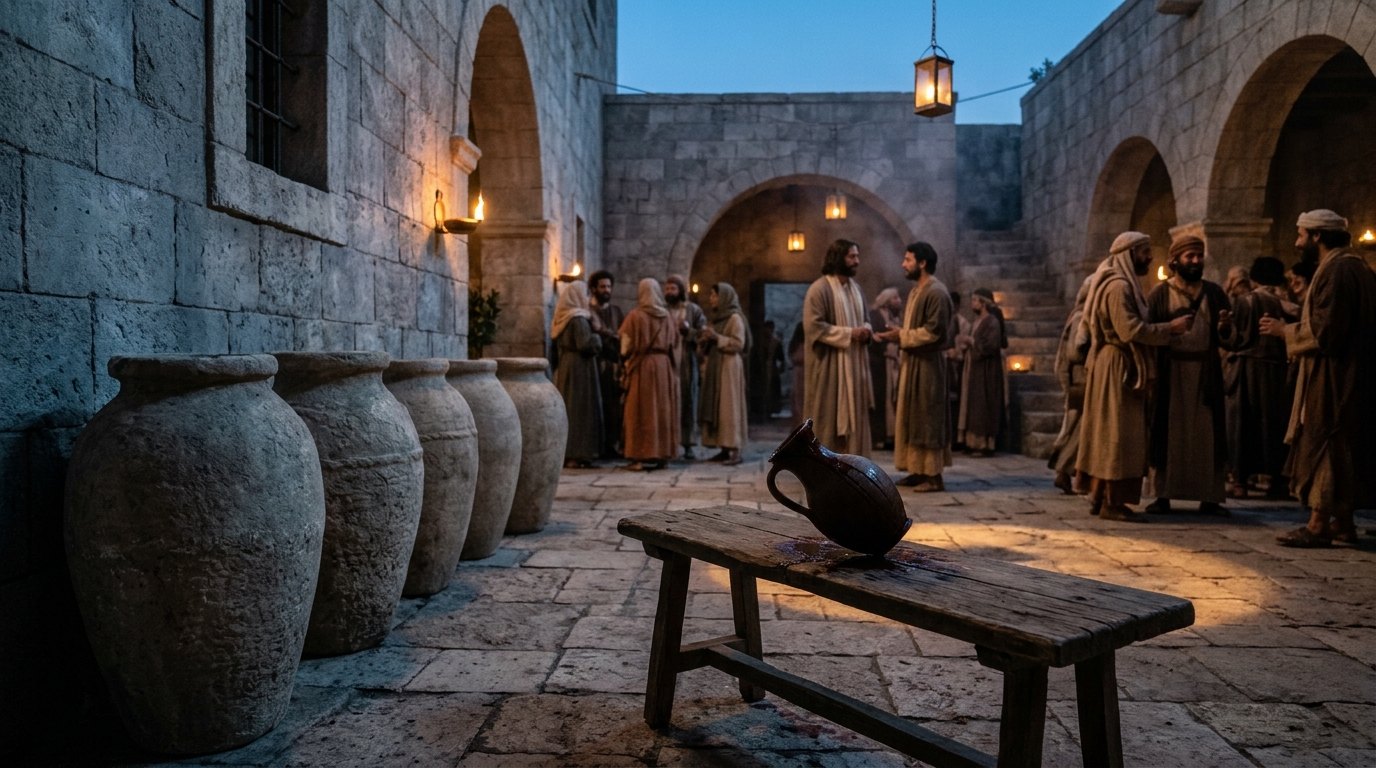
wine that gladdens human hearts, oil to make their faces shine, and bread that sustains their hearts.
Psalms 104:15 (NIV)
It explicitly identifies wine as part of God's good creation meant to bring gladness, showing alcohol is not intrinsically sinful.
The psalmist declares that the Creator causes vegetation to grow, bringing forth wine that makes glad the heart of man, alongside oil and bread for daily sustenance (Psalm 104:15). God's material creation is inherently good when received with thanksgiving and kept within His ordained boundaries, proving that alcohol itself is not intrinsically evil. Ancient covenant blessings frequently linked physical abundance with the fruit of the vine. Isaac blessed Jacob with the dew of heaven and plenty of grain and new wine (Genesis 27:28), while Moses affirmed that obedience in the Promised Land would yield abundant new wine as a covenant sign (Deuteronomy 7:13). In Jotham’s ancient parable, the vine describes its yield as that which cheers both God and man (Judges 9:13), and the prophet Amos foretold a day of restoration when God's people would plant vineyards and enjoy their wine in peace (Amos 9:14).
This pattern of festivity and hospitality runs throughout redemption history. When Abram returned from battle, Melchizedek king of Salem brought out bread and wine as priest of the Most High God to refresh and bless him (Genesis 14:18). Under Mosaic legislation, God permitted worshipers traveling from afar to exchange tithes for silver and purchase cattle, sheep, wine, or strong drink to rejoice before the Lord in holy celebration (Deuteronomy 14:26). The Teacher in Ecclesiastes similarly commends enjoying bread with joy and drinking wine with a merry heart when God approves one's life (Ecclesiastes 9:7).
In the New Testament, our Lord Jesus Christ launched His public ministry at a wedding in Cana by turning large stone jars of water into wine of exquisite quality, manifesting His divine glory and endorsing the gladness of marital fellowship (John 2:1-11). The Apostle Paul likewise instructed young Timothy to set aside water-only asceticism and use a little wine medicinally for his frequent stomach infirmities (1 Timothy 5:23). Scripture consistently affirms that fermented drink can serve as an earthly provision, provided it never leads to moral surrender or bodily ruin.
| Passage | What it says |
|---|---|
| Genesis 14:18 | Melchizedek king of Salem brings out bread and wine to bless Abram following victory in battle. |
| Deuteronomy 14:26 | Israelites may spend their tithe money on wine or strong drink to rejoice before the Lord at festival meals. |
| Psalms 104:15 | God gives wine to make glad the heart of man, along with oil and bread for bodily sustenance. |
| Ecclesiastes 9:7 | The preacher commends eating bread with joy and drinking wine with a merry heart when God approves one's works. |
| John 2:1-11 | Jesus miraculously transforms water into superior wine at a Cana wedding feast, revealing his glory. |
| 1 Timothy 5:23 | Paul counsels Timothy to take a little wine for medicinal relief of his stomach and frequent ailments. |
| Genesis 27:28 | Isaac blesses Jacob with the dew of heaven, fatness of the earth, and plenty of grain and new wine. |
| Deuteronomy 7:13 | God promises to bless the fruit of the land, including grain, new wine, and oil, as covenant blessings. |
| Judges 9:13 | The vine observes that its wine cheers both God and men in Jotham's parable. |
| Amos 9:14 | God promises the restored exiles will plant vineyards and drink their wine. |
Stern Warnings
Scripture warns of alcohol's deceitful and destructive power
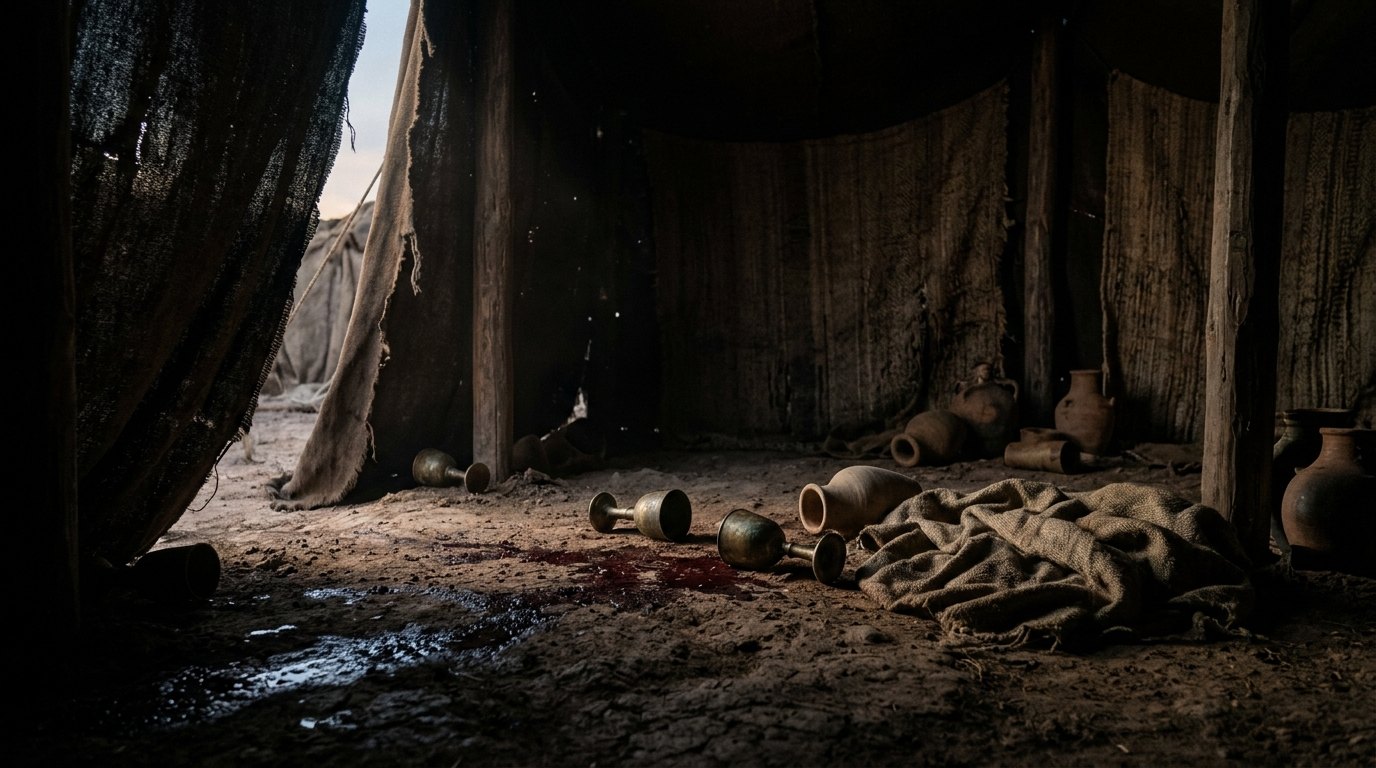
Wine is a mocker and beer a brawler; whoever is led astray by them is not wise.
Proverbs 20:1 (NIV)
This proverb personifies wine and strong drink as active deceivers that rob those who indulge of wisdom.
The book of Proverbs cuts through all romanticized notions of drinking with an unsparing diagnosis: wine is a mocker, strong drink is a brawler, and whoever is led astray by them is not wise (Proverbs 20:1). Scripture never minimizes alcohol's treacherous potential to overthrow moral discernment, dismantle dignity, and spark catastrophe. The earliest biblical narratives display this darkness without apology. Noah, a righteous man preserved through the flood, planted a vineyard, drank of its wine, and lay disgraced and exposed in his tent, fracturing his family (Genesis 9:20-23). Soon after, Lot's daughters exploited their father’s drunken oblivion in a mountain cave to commit incestuous wickedness, producing historic enemies of Israel (Genesis 19:32-35).
Alcohol routinely numbs conscience and delivers individuals into sudden peril. Nabal gorged himself with wine until his heart became like stone within him, dying under divine judgment days later (1 Samuel 25:36-38). King Elah of Israel was assassinated by Zimri while drinking himself into a stupor at Tirzah (1 Kings 16:9-10), and Amnon was struck down by Absalom’s servants at the very moment his heart was merry with wine (2 Samuel 13:28). The prophet Hosea warns that sexual sin and wine rob the human heart of true understanding (Hosea 4:11), while Habakkuk pronounces an enduring woe upon anyone who gives intoxicating drink to neighbors to gaze upon their nakedness (Habakkuk 2:15).
Wisdom literature issues graphic warnings against the downward spiral of consumption. The author of Proverbs asks who experiences woe, sorrow, contentions, babbling, wounds without cause, and bloodshot eyes, answering that it belongs to those who linger long over mixed wine (Proverbs 23:29-35). It bites like a serpent and stings like an adder, driving the drinker into hallucinations, bruising, and compulsive addiction. The pursuit of pleasure and wine leaves a person destitute (Proverbs 21:17; Proverbs 23:20-21). God declares woe upon those who rise early to pursue strong drink until night inflames them (Isaiah 5:11-12), and upon those who boast as champions at mixing intoxicating beverages while ignoring the works of the Lord (Isaiah 5:22).
| Passage | What it says |
|---|---|
| Genesis 9:20-23 | Noah plants a vineyard, becomes drunk on his wine, and lies uncovered in shameful vulnerability inside his tent. |
| Genesis 19:32-35 | Lot's daughters ply their father with wine to commit incestuous acts while his moral discernment is compromised. |
| Proverbs 20:1 | Wine is called a mocker and strong drink a brawler, making anyone led astray by them unwise. |
| Proverbs 23:29-35 | A vivid description of alcohol's poison: sorrow, redness of eyes, hallucination, physical injury, and compulsive addiction. |
| Isaiah 5:11-12 | A woe is pronounced on those who rise early and stay up late pursuing intoxicating drink instead of God. |
| Hosea 4:11 | Hosea warns that sexual immorality and old and new wine rob people of their understanding and heart. |
| Habakkuk 2:15 | God declares woe upon anyone who gives intoxicating drink to their neighbor to look upon their nakedness. |
| 1 Samuel 25:36-38 | Nabal drinks heavily at a feast and dies after his heart becomes like stone. |
| 2 Samuel 13:28 | Absalom commands his servants to strike and kill Amnon when his heart is merry with wine. |
| 1 Kings 16:9-10 | Elah king of Israel is assassinated by Zimri while drinking himself drunk. |
| Proverbs 21:17 | Whoever loves pleasure and wine and oil will not become rich. |
| Proverbs 23:20-21 | Believers are warned not to be among heavy drinkers of wine or gluttonous eaters. |
| Isaiah 5:22 | Woe is pronounced to those who are heroes at drinking wine and champions at mixing drinks. |
Drunkenness Condemned
Intoxication is an ungodly sin that forfeits God's kingdom
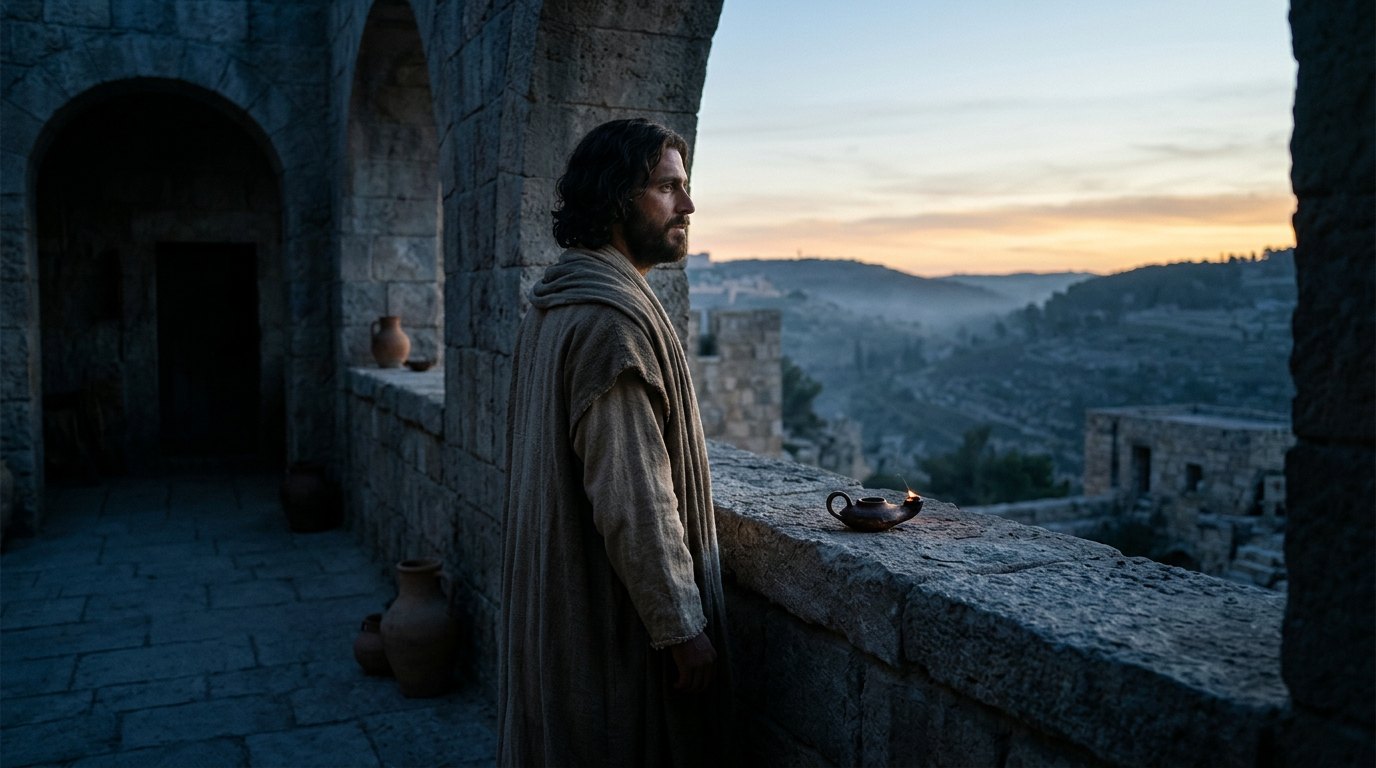
Do not get drunk on wine, which leads to debauchery. Instead, be filled with the Spirit,
Ephesians 5:18 (NIV)
Paul places being drunk with wine in direct antithesis to being filled and governed by the Holy Spirit.
The New Testament draws a decisive line concerning the conduct of believers: do not get drunk with wine, for that is debauchery, but be filled with the Spirit (Ephesians 5:18). Paul sets drunkenness and the Holy Spirit in direct opposition, contrasting chemical loss of control with supernatural empowerment and moral clarity. Intoxication is not an excusable lapse or mere physical weakness; Scripture categorizes it as sin that flows from the fallen nature. Paul commands the church to walk properly as in the light of day, casting off orgies and drunkenness, sexual immorality, and sensuality (Romans 13:13).
Because persistent unrepentant sin destroys fellowship and denies the gospel, the church is commanded not to eat or keep company with any professing believer who remains a drunkard (1 Corinthians 5:11). The stakes could not be higher for eternity. In solemn warnings to Corinth and Galatia, the Apostle enumerates drunkards alongside the sexually immoral, idolaters, thieves, and extortioners, affirming plainly that those who practice such things will not inherit the kingdom of God (1 Corinthians 6:9-10; Galatians 5:19-21). For the Christian, such behavior belongs entirely to the dead past. Peter urges believers to recognize that the time already past suffices for doing what pagans love to do, carrying on in sensuality, passions, drunkenness, drinking bouts, and lawless idolatry (1 Peter 4:3).
Our Lord Jesus Christ repeatedly warned that alcohol-induced lethargy leaves people spiritually blind to imminent eternity. The wicked servant reasons that his master is delayed, begins to beat fellow servants and to eat and drink with drunkards, only to face swift, terrifying dismemberment and hypocrites' punishment when the master arrives unannounced (Luke 12:45-46). Jesus commands His disciples to guard their hearts constantly, lest their minds become weighed down with dissipation, drunkenness, and the anxieties of this life, and that final day spring upon them suddenly like an inescapable trap (Luke 21:34). True freedom in Christ is liberation from sin, not an excuse to indulge the flesh.
| Passage | What it says |
|---|---|
| Romans 13:13 | Paul commands believers to walk properly as in daylight, not in orgies, drunkenness, or sexual impurity. |
| 1 Corinthians 5:11 | The church must not associate or eat with any professing brother who persists as a drunkard. |
| 1 Corinthians 6:9-10 | Drunkards are numbered among the unrighteous who will not inherit the kingdom of God without repentance. |
| Galatians 5:19-21 | Drunkenness and orgies are explicitly listed as works of the flesh that exclude practitioners from God's kingdom. |
| Ephesians 5:18 | Christians are commanded not to get drunk with wine, which leads to debauchery, but to be Spirit-filled. |
| 1 Peter 4:3 | Peter reminds believers that their past life in drunkenness, drinking parties, and lawless idolatry is long past. |
| Luke 12:45-46 | The unfaithful servant drinks, becomes drunk, and faces sudden judgment upon the master's return. |
| Luke 21:34 | Jesus warns believers not to weigh down their hearts with dissipation, drunkenness, and the cares of life. |
Leaders and Service
Leaders are held to strict standards of sobriety and abstinence
It is not for kings, Lemuel— it is not for kings to drink wine, not for rulers to crave beer, lest they drink and forget what has been decreed, and deprive all the oppressed of their rights.
Proverbs 31:4-5 (NIV)
It explains that kings and rulers must not drink lest they forget God's law and pervert the rights of the afflicted.
Spiritual leadership demands total clarity of thought, because it is not for kings to drink wine, nor for rulers to crave strong drink, lest they drink and forget what has been decreed and pervert the rights of the afflicted (Proverbs 31:4-5). Those entrusted with governance, teaching, and sacred service bear a heavy responsibility before God, where impaired judgment works immediate ruin. Following the tragic death of Nadab and Abihu, the Lord commanded Aaron that neither he nor his sons should drink wine or strong drink when entering the tent of meeting, so that they might distinguish between the holy and the common, and instruct Israel in all God's statutes (Leviticus 10:8-11; Ezekiel 44:21). When prophets and priests violated this solemn trust, Isaiah observed with horror that they staggered through wine, stumbled in judgment, and swallowed up their sacred visions (Isaiah 28:7).
God highlighted voluntary abstinence as a mark of singular devotion and covenant fidelity throughout redemptive history. The Nazirite vow required men and women to separate themselves unto the Lord by renouncing wine, strong drink, grapes, raisins, and everything produced by the grapevine for the entire duration of their consecration (Numbers 6:1-4). God praised the Rechabites through Jeremiah because they stubbornly obeyed their ancestor Jonadab, refusing wine across successive generations despite public invitation to drink (Jeremiah 35:5-6). Daniel resolved in his heart that he would not defile his body or conscience with the Babylonian king's choice meat or rich wine, flourishing instead under God’s blessing (Daniel 1:8). In the inauguration of the new covenant era, the angel Gabriel announced that John the Baptist would drink neither wine nor strong drink, being filled with the Holy Spirit from his mother's womb (Luke 1:15).
In the pastoral epistles, the New Testament establishes explicit qualifications for local church officers. An overseer must be temperate, sober-minded, dignified, and not given to drunkenness or quarrelsome brawling (1 Timothy 3:2-3; Titus 1:7). Deacons must likewise be men of dignity, holding the mystery of the faith with a pure conscience and not addicted to much wine (1 Timothy 3:8). Older women are charged to be reverent in demeanor and not enslaved to wine, so they can faithfully train younger women in holiness, purity, and family devotion (Titus 2:3). Spiritual authority and self-indulgence cannot walk hand in hand.
| Passage | What it says |
|---|---|
| Leviticus 10:8-11 | The Lord forbids Aaron and priests from drinking wine when entering the tabernacle so they may teach Israel rightly. |
| Numbers 6:1-4 | The Nazirite vow requires total separation from wine, strong drink, grapes, or any product of the grapevine. |
| Proverbs 31:4-5 | Lemuel is warned that wine and strong drink pervert justice and lead kings to forget the decree. |
| Isaiah 28:7 | Priests and prophets stagger from wine and strong drink, erring in spiritual vision and stumbling in judgment. |
| 1 Timothy 3:2-3 | An overseer must be sober-minded, self-controlled, and not a drunkard or addicted to wine. |
| 1 Timothy 3:8 | Deacons must likewise be dignified, upright, and not addicted to much wine. |
| Titus 1:7 | As God's steward, an overseer must be blameless and not given to heavy drinking or violence. |
| Titus 2:3 | Older women are instructed to be reverent in behavior, teaching what is good, and not enslaved to much wine. |
| Jeremiah 35:5-6 | The Rechabites steadfastly refuse wine in obedience to the ancestral command of Jonadab. |
| Ezekiel 44:21 | Priests are forbidden to drink wine when entering the inner court of the sanctuary. |
| Daniel 1:8 | Daniel resolves not to defile himself with the royal food or the king's wine. |
| Luke 1:15 | John the Baptist is set apart to drink no wine or strong drink, being filled with the Spirit. |
Liberty and Love
Christian freedom must always yield to love and self-control
It is better not to eat meat or drink wine or to do anything else that will cause your brother or sister to fall.
Romans 14:21 (NIV)
Paul lays down the supreme law of Christian love: personal liberty in food or wine must be laid down if it causes a brother to stumble.
The governing principle of the Christian life is not the aggressive defense of one's rights, but the active pursuit of love. In Romans 14:21, the Apostle Paul establishes that it is good neither to eat meat nor to drink wine, nor to do anything whereby a brother stumbles, is offended, or is made weak. Christian liberty is never an absolute entitlement to indulge; it is always subordinate to the spiritual health of the body of Christ. While a specific drink may not be inherently sinful, using one's freedom in a manner that emboldens or wounds a vulnerable conscience is a direct failure of love. Paul reiterates this boundary in 1 Corinthians 8:9, warning believers to take care lest this liberty become a stumbling block to the weak. Personal freedom ceases to be Christian when it destroys the one for whom Christ died.
Furthermore, the believer's life must remain free from every form of enslavement. In 1 Corinthians 6:12, Paul declares that while all things may be lawful, he will not be dominated by anything. Alcohol possesses an intoxicating power that readily strips a person of self-mastery, rendering voluntary indulgence an open door to bondage. Therefore, the ultimate standard for every meal and every drink is laid down in 1 Corinthians 10:31: whether you eat or drink, or whatever you do, do all to the glory of God. An action that clouds judgment, harms testimony, or grieves a brother cannot glorify God.
Scripture consequently demands continuous spiritual alertness. In 1 Thessalonians 5:6-8, believers are summoned to be sober and watchful, putting on the breastplate of faith and love, because they belong to the light of day. Spiritual lethargy and physical intoxication both forfeit this vigilance. The urgency of this sobriety is underscored in 1 Peter 5:8, which commands believers to be sober-minded and watchful because the devil prowls around like a roaring lion, seeking someone to devour. A mind impaired by alcohol cannot stand firm in the armor of God.
| Passage | What it says |
|---|---|
| Romans 14:21 | It is good not to eat meat, drink wine, or do anything by which a fellow believer stumbles. |
| 1 Corinthians 6:12 | Though things may be lawful, the believer refuses to be mastered or dominated by the power of anything. |
| 1 Corinthians 8:9 | Christians are warned to take care that their liberty does not become a stumbling block to the weak. |
| 1 Corinthians 10:31 | Whether eating, drinking, or whatever one does, all actions must be directed toward the glory of God. |
| 1 Thessalonians 5:6-8 | Believers belong to the day and must remain sober and watchful, putting on faith, love, and salvation. |
| 1 Peter 5:8 | Peter commands sobriety and alertness because the devil prowls around like a roaring lion seeking prey. |
Sacred Offerings
Wine serves sacred purposes in sacrifices and the Lord's Supper
Then he took a cup, and when he had given thanks, he gave it to them, saying, “Drink from it, all of you. This is my blood of the covenant, which is poured out for many for the forgiveness of sins.
Matthew 26:27-28 (NIV)
Jesus takes the cup of the fruit of the vine and designates it as His blood of the new covenant poured out for forgiveness.
In Matthew 26:27-28, Jesus sanctified the cup forever when He took it, gave thanks, and gave it to His disciples, saying, "Drink of it, all of you, for this is my blood of the covenant, which is poured out for many for the forgiveness of sins." The fruit of the vine, which had long served as an element of solemn worship under the old covenant, was elevated to become the ongoing remembrance of the redemptive sacrifice of the Son of God. At that table, the cup was not an instrument of casual indulgence or revelry, but the holy symbol of the new covenant sealed in His own blood.
This sacramental use was foreshadowed throughout the ceremonial law given at Mount Sinai. In Exodus 29:40, the Lord commanded that a drink offering of a quarter of a hin of wine be poured out alongside the daily morning and evening lamb offering. Similarly, Numbers 15:5 prescribed wine as a drink offering to accompany burnt offerings, rising as a pleasing aroma dedicated wholly to the Lord. In Numbers 28:7, God instructed that strong drink be poured out before Him in the holy place as an offering of devotion, entirely consumed upon the altar rather than consumed by the priest, marking the complete surrender of earthly gifts unto God's holiness.
This pattern finds its lasting home in the worship of the gathered church. In Matthew 26:29, Jesus promised that He would not drink again of this fruit of the vine until that day when He drinks it new with His people in His Father's kingdom. Following His command, the Apostle Paul instructed the early church in 1 Corinthians 11:25-26 to take the cup in remembrance of Him, proclaiming the Lord's death until He comes. Handled in reverent obedience, the cup points the believer away from carnal indulgence directly to the cross, where Christ bore the full cup of God's wrath to purchase eternal life.
| Passage | What it says |
|---|---|
| Exodus 29:40 | A quarter of a hin of wine is commanded as a drink offering with the daily lamb sacrifice. |
| Numbers 15:5 | A drink offering of wine is prescribed to accompany the burnt offering or sacrifice. |
| Numbers 28:7 | Strong drink is commanded to be poured out as a drink offering to the Lord in the holy place. |
| Matthew 26:27-29 | Jesus institutes the Lord's Supper with the cup representing His blood of the covenant. |
| 1 Corinthians 11:25-26 | Paul instructs the church to drink the cup in remembrance of Christ until He comes. |
Where in the Bible
| Book | Passages |
|---|---|
| Genesis | 4 · Genesis 14:18, Genesis 27:28, Genesis 9:20-23, Genesis 19:32-35 |
| Exodus | 1 · Exodus 29:40 |
| Leviticus | 1 · Leviticus 10:8-11 |
| Numbers | 3 · Numbers 6:1-4, Numbers 15:5, Numbers 28:7 |
| Deuteronomy | 2 · Deuteronomy 14:26, Deuteronomy 7:13 |
| Judges | 1 · Judges 9:13 |
| 1 Samuel | 1 · 1 Samuel 25:36-38 |
| 2 Samuel | 1 · 2 Samuel 13:28 |
| 1 Kings | 1 · 1 Kings 16:9-10 |
| Psalms | 1 · Psalms 104:15 |
| Proverbs | 5 · Proverbs 20:1, Proverbs 23:29-35, Proverbs 21:17, Proverbs 23:20-21, Proverbs 31:4-5 |
| Ecclesiastes | 1 · Ecclesiastes 9:7 |
| Isaiah | 3 · Isaiah 5:11-12, Isaiah 5:22, Isaiah 28:7 |
| Jeremiah | 1 · Jeremiah 35:5-6 |
| Ezekiel | 1 · Ezekiel 44:21 |
| Daniel | 1 · Daniel 1:8 |
| Hosea | 1 · Hosea 4:11 |
| Amos | 1 · Amos 9:14 |
| Habakkuk | 1 · Habakkuk 2:15 |
| Matthew | 1 · Matthew 26:27-29 |
| Luke | 3 · Luke 12:45-46, Luke 21:34, Luke 1:15 |
| John | 1 · John 2:1-11 |
| Romans | 2 · Romans 13:13, Romans 14:21 |
| 1 Corinthians | 6 · 1 Corinthians 5:11, 1 Corinthians 6:9-10, 1 Corinthians 6:12, 1 Corinthians 8:9, 1 Corinthians 10:31, 1 Corinthians 11:25-26 |
| Galatians | 1 · Galatians 5:19-21 |
| Ephesians | 1 · Ephesians 5:18 |
| 1 Thessalonians | 1 · 1 Thessalonians 5:6-8 |
| 1 Timothy | 3 · 1 Timothy 5:23, 1 Timothy 3:2-3, 1 Timothy 3:8 |
| Titus | 2 · Titus 1:7, Titus 2:3 |
| 1 Peter | 2 · 1 Peter 4:3, 1 Peter 5:8 |
The story in order
- Noah's vineyard and drunkenness (c. 2300 BC) · Genesis 9:20-23 · Early warning of alcohol's destructive power and shame.
- Melchizedek blesses Abram with wine (c. 2000 BC) · Genesis 14:18 · Wine appears as a blessing and provision.
- Israelites commanded to use wine for festivals (c. 1400 BC) · Deuteronomy 14:26 · Wine is part of rejoicing before God.
- Nazirite vow requires abstinence (c. 1400 BC) · Numbers 6:1-4 · Total separation from wine for special service.
- Priests forbidden wine in tabernacle (c. 1400 BC) · Leviticus 10:8-11 · Sobriety required for sacred duties.
- Proverbs warns against wine's deceit (c. 900 BC) · Proverbs 20:1 · Alcohol is a mocker and brawler.
- Isaiah warns against drunkenness (c. 700 BC) · Isaiah 5:11-12 · Woe to those pursuing intoxication over God.
- Daniel refuses king's wine (c. 600 BC) · Daniel 1:8 · Resolve to avoid defilement by royal wine.
- John the Baptist abstains from wine (c. 1 BC) · Luke 1:15 · Set apart for God, abstaining from wine.
- Jesus turns water into wine (AD 30) · John 2:1-11 · Jesus provides superior wine, revealing His glory.
- Paul warns against drunkenness (AD 55) · 1 Corinthians 6:9-10 · Drunkards will not inherit God's kingdom.
- Paul commands sobriety (AD 60) · Ephesians 5:18 · Be filled with the Spirit, not wine.
- Peter warns to be sober (AD 65) · 1 Peter 5:8 · Be alert and sober because of the devil.
- Jesus institutes the Lord's Supper (AD 30) · Matthew 26:27-29 · Wine used in remembrance of Christ's sacrifice.
Key words
- Drunkenness
- State of being intoxicated by alcohol, leading to loss of control and judgment. · Genesis 9:20-23
- Wine
- Fermented juice of grapes, used as a beverage, sometimes for celebration, medicinal, or sacred purposes. · Genesis 14:18
- Strong drink
- Intoxicating beverage made from fermented grains or fruits, distinct from wine. · Deuteronomy 14:26
- Sober
- Characterized by seriousness, self-control, and clear judgment; not intoxicated. · 1 Timothy 3:2
- Abstinence
- The practice of refraining from something, in this context, from drinking alcohol. · Numbers 6:3
- Liberty
- Christian freedom, which must be exercised with self-control and love for others. · 1 Corinthians 6:12
- Stumbling block
- An action or behavior that causes a weaker believer to sin. · Romans 14:21
Believers are summoned to live with clear minds, disciplined bodies, and hearts wholly devoted to Christ. Whether one practices total abstinence or uses wine with strict moderation, drunkenness is never an option, and personal liberty must always yield to the spiritual good of one's neighbor. True joy and fulfillment are found not in intoxication, but in being continually filled with the Holy Spirit.
54 passages, each cited once.
How the major Christian traditions read this
All Christian traditions agree that Scripture firmly condemns drunkenness as a sin that destroys self-control and harms souls, while calling every believer to sobriety and vigilant self-control (Ephesians 5:18; 1 Peter 5:8).
Catholic
We receive wine as part of God's good creation that gladdens the human heart (Psalm 104:15), chosen by Christ Himself to become His Precious Blood in the Holy Eucharist (Matthew 26:27-29). The virtue of temperance governs our use of alcohol: moderate drinking is an exercise of Christian freedom, while the sin of drunkenness deprives a person of the use of reason and harms health, violating the fifth commandment (Galatians 5:21). Total abstinence is an honourable personal sacrifice, but alcohol itself is not evil.
Scripture: Psalms 104:15, Matthew 26:27-29, Galatians 5:21
Orthodox
We see wine as a blessed gift of God, sanctified preeminently at the wedding in Cana (John 2:1-11) and in the Divine Liturgy. Creation is good, and ascetic struggle (askesis) is directed toward overcoming the passions, not fleeing material things. We drink wine in thanksgiving and moderation, fasting from it strictly during appointed penitential seasons. Drunkenness is a destructive passion of the flesh that darkens the mind (Ephesians 5:18), but the wine itself is pure when received with a sober and grateful heart (1 Timothy 4:4-5).
Scripture: John 2:1-11, Ephesians 5:18, 1 Timothy 4:4-5
Lutheran
We hold that God gives wine as a blessing to be enjoyed in faith and moderation (Psalm 104:15). Drunkenness is explicitly forbidden as a work of the flesh that ruins faith and life (1 Corinthians 6:9-10). Yet Christian liberty means that eating and drinking are free matters, sanctified by God's word and thanksgiving. Christ shared fermented wine with His disciples at the Last Supper and commanded its continued use in the Sacrament of the Altar (Luke 22:17-20). We must neither despise God's gift nor abuse it through self-indulgence.
Scripture: Psalms 104:15, 1 Corinthians 6:9-10, Luke 22:17-20
Reformed & Presbyterian
We confess the goodness of God’s creation and affirm that wine is given to gladden our hearts and serve as a legitimate refreshment (Psalm 104:15; 1 Timothy 5:23). Scripture leaves drinking to Christian liberty, provided it is governed by modesty, sobriety, and love for our weaker neighbours (Romans 14:21). Drunkenness is a grievous sin that surrenders the mind to ungodly desires and invites God's judgment (Isaiah 28:7). Believers are called to walk circumspectly, using God's gifts for His glory without being mastered by anything (1 Corinthians 6:12).
Scripture: Psalms 104:15, 1 Timothy 5:23, Romans 14:21, 1 Corinthians 6:12, Isaiah 28:7
Anglican & Episcopal
We follow the historic, biblical practice of receiving wine as a good creature of God, used centrally in the Holy Communion (1 Corinthians 11:23-26). Scripture teaches sobriety, moderation, and the disciplined stewardship of the body as the temple of the Holy Spirit (1 Corinthians 6:19-20). Drunkenness is clearly condemned as sinful excess (Ephesians 5:18). At the same time, we do not bind consciences by forbidding what Scripture permits; rather, we call each believer to exercise prudence, self-restraint, and charitable consideration of others in their use of Christian freedom (Romans 14:13-17).
Scripture: 1 Corinthians 11:23-26, 1 Corinthians 6:19-20, Ephesians 5:18, Romans 14:13-17
Baptist
We emphasize that Scripture repeatedly warns against the deceitful and destructive nature of alcohol (Proverbs 20:1; Proverbs 23:29-35). Believers are commanded to be filled with the Spirit rather than drunk with wine (Ephesians 5:18). Because alcohol easily leads to spiritual downfall, addiction, and social harm, total abstinence is urged as the wisest course and the safest testimony to the world. Even where liberty might be argued, the law of love commands us not to cause a brother to stumble or fall into sin (Romans 14:21).
Scripture: Proverbs 20:1, Proverbs 23:29-35, Ephesians 5:18, Romans 14:21
Methodist & Wesleyan
We traditionally advocate for total abstinence from intoxicating liquor as an essential expression of holiness, love for neighbour, and social justice. John Wesley warned forcefully against the production and consumption of spirits because of their ruinous impact on individuals, families, and communities. Scripture warns that strong drink steals away the heart and leads rulers and priests astray (Hosea 4:11; Isaiah 28:7). Out of love for those afflicted by addiction, we practice self-denial and use unfermented grape juice at the Lord's Table so all may partake without hindrance (Romans 14:21).
Scripture: Hosea 4:11, Isaiah 28:7, Romans 14:21
Pentecostal & Charismatic
We teach that the Christian life is to be marked by absolute consecration and the active filling of the Holy Spirit, which stands in direct opposition to intoxication (Ephesians 5:18). Wine is a mocker that steals vigilance and leads believers into fleshly bondage (Proverbs 20:1). Because we are called to stay watchful and alert against spiritual attacks (1 Peter 5:8), our community strongly encourages complete abstinence from alcoholic beverages. We avoid alcohol to protect our testimony, avoid causing others to stumble, and maintain clean vessels for the Holy Spirit (Romans 14:21).
Scripture: Ephesians 5:18, Proverbs 20:1, 1 Peter 5:8, Romans 14:21
Non-denominational & Evangelical
We look directly to the biblical text: Scripture forbids drunkenness without exception (Ephesians 5:18; Galatians 5:21), yet it does not give a universal prohibition against drinking in moderation (John 2:1-11; 1 Timothy 5:23). Many of us choose total abstinence to guard against addiction, avoid being mastered by anything (1 Corinthians 6:12), and prevent causing others to stumble (Romans 14:21). Others partake moderately with thanksgiving. In all cases, we urge believers to examine their hearts, keep clear judgment, and let love dictate their freedom.
Scripture: Ephesians 5:18, John 2:1-11, 1 Corinthians 6:12, Romans 14:21, Galatians 5:21
Where they differ
Permissibility of moderate drinking
- Catholic
- Permitted as a natural good and exercise of temperance.
- Orthodox
- Permitted with thanksgiving, except during designated fasting seasons.
- Lutheran
- Permitted under Christian liberty when received with faith and moderation.
- Reformed & Presbyterian
- Permitted in moderation, provided it does not cause another to stumble.
- Anglican & Episcopal
- Permitted in moderation as a lawful exercise of personal freedom.
- Baptist
- Strongly discouraged or forbidden, advocating total abstinence for spiritual safety.
- Methodist & Wesleyan
- Generally rejected in favour of total abstinence for holiness and social witness.
- Pentecostal & Charismatic
- Strongly discouraged in favour of total abstinence to maintain spiritual vigilance.
- Non-denominational & Evangelical
- Regarded as a matter of individual conscience and love under Christian liberty.
Scripture: Psalms 104:15, Proverbs 20:1, Romans 14:21
The element used in Holy Communion
- Catholic
- Only fermented natural grape wine may be validly consecrated.
- Orthodox
- Only fermented natural grape wine, mixed with warm water, is used.
- Lutheran
- Fermented wine is traditionally required as Christ instituted it.
- Reformed & Presbyterian
- Fermented wine is traditionally used, though unfermented juice is sometimes permitted.
- Anglican & Episcopal
- Fermented grape wine is the standard and historic element.
- Baptist
- Unfermented grape juice is standard to avoid promoting intoxicating drink.
- Methodist & Wesleyan
- Unfermented grape juice is prescribed to safeguard recovering alcoholics and total abstinence.
- Pentecostal & Charismatic
- Unfermented grape juice is almost universally used.
- Non-denominational & Evangelical
- Unfermented grape juice is commonly used, though practices vary by congregation.
Scripture: Matthew 26:27-29, 1 Corinthians 11:25
Your pastor can tell you where your church stands.
Scripture cited
- Proverbs 20:1
- Ephesians 5:18
- Isaiah 28:7
- Galatians 5:21
- Psalms 104:14-15
- John 2:1-11
- Romans 14:13-23
- 1 Timothy 5:23
- Proverbs 23:29-35
- 1 Corinthians 6:9-11
- 1 Peter 5:8
- 1 Corinthians 6:12