What does the Bible say about hypocrisy?

Matthew 23:25-28
25 “Woe to you, teachers of the law and Pharisees, you hypocrites! You clean the outside of the cup and dish, but inside they are full of greed and self-indulgence.
26 Blind Pharisee! First clean the inside of the cup and dish, and then the outside also will be clean.
27 “Woe to you, teachers of the law and Pharisees, you hypocrites! You are like whitewashed tombs, which look beautiful on the outside but on the inside are full of the bones of the dead and everything unclean.
28 In the same way, on the outside you appear to people as righteous but on the inside you are full of hypocrisy and wickedness.
New International Version (NIV)
The answer
Scripture condemns hypocrisy as pretence before God: outward religious righteousness that conceals an unbelieving, disobedient, or self-seeking heart. It is more than simply failing to live perfectly. The hypocrite uses religion to appear righteous rather than humbly seeking the righteousness and cleansing God gives. Jesus’ repeated verdict is, “Woe to you, scribes and Pharisees, hypocrites!” (Matthew 23:25-28).
What hypocrisy looks like
- Religion performed for human applause. Jesus warns against giving, praying, and fasting in order to be noticed and honoured by people (Matthew 6:1-6; Matthew 6:16-18). Those who seek that applause “have received their reward”; they should not expect the Father’s reward as well. The issue is the aim of the heart: God, who sees in secret, is not impressed by a public performance.
- An impressive outside hiding corruption within. Jesus says the Pharisees cleaned the outside of the cup while the inside was full of extortion and unrighteousness. They were like beautiful whitewashed tombs containing death and uncleanness: “Even so you also outwardly appear righteous to men, but inwardly you are full of hypocrisy and iniquity” (Matthew 23:25-28). His command is to begin with the inside so that the outside may genuinely become clean.
- Honouring God with the lips while the heart is far from Him. Jesus applies Isaiah’s words to people whose spoken worship did not match their hearts, and who replaced God’s commandments with human traditions (Matthew 15:7-9). External observance cannot cleanse the heart from which evil thoughts, murders, adulteries, sexual sins, thefts, false testimony, and blasphemies proceed (Matthew 15:18-20).
- Severe scrutiny of others combined with excuses for oneself. Jesus describes someone eagerly removing a speck from another person’s eye while ignoring the beam in his own (Matthew 7:3-5). This does not forbid helping a brother with his sin; it requires honest self-judgment first: “First remove the beam out of your own eye, and then you can see clearly to remove the speck out of your brother’s eye.”
- Teaching God’s truth while refusing to obey it. Paul asks those who instruct others whether they teach themselves, and whether they preach against stealing and adultery while practising those same sins (Romans 2:21-24). Such contradiction dishonours God. Titus 1:16 describes people who profess to know God but deny Him by their deeds.
- Hearing without doing, and claiming love without showing it. A person who hears the word without doing it deceives himself, like someone who looks in a mirror and immediately forgets what he saw (James 1:22-25). Likewise, claiming to love God while hating a brother is a lie (1 John 4:20-21). Christian love must be sincere: “Let love be without hypocrisy” (Romans 12:9).
Why it is so serious
Hypocrisy deceives other people and can deceive the hypocrite, but it never deceives God. It blinds spiritual leaders so that they become “blind guides” who lead others toward destruction (Matthew 15:14). It also turns religion into a means of self-exaltation rather than worship.
Even a genuine believer can fall into this sin. In Antioch, Peter withdrew from eating with Gentiles because he feared certain people; other Jewish believers joined him, and even Barnabas was carried away by their hypocrisy. Paul confronted Peter because their conduct was not walking uprightly according to the truth of the gospel (Galatians 2:11-14). Spiritual position and past faithfulness therefore do not make anyone immune.
Hypocrisy is not the same as struggling honestly with sin
A believer who sins, grieves over it, confesses it, and seeks God’s cleansing is not thereby proved a hypocrite. Scripture does not call anyone to pretend to be sinless: “If we say that we have no sin, we deceive ourselves, and the truth is not in us” (1 John 1:8). The opposite of hypocrisy is not flawless performance but sincere repentance and obedient faith. That gives no permission to continue deliberately in sin; it brings sin into the light instead of concealing or excusing it.
God’s remedy
The remedy begins within, exactly where Jesus placed it: “First clean the inside of the cup and of the platter, that its outside may become clean also” (Matthew 23:26). That cleansing cannot be produced by a more convincing religious appearance. It begins with confession: “If we confess our sins, he is faithful and righteous to forgive us the sins and to cleanse us from all unrighteousness” (1 John 1:9).
This forgiveness rests on Christ’s atoning death, not on self-improvement. He bore sins in His body on the tree so that those who belonged to sin might die to sin and live to righteousness (1 Peter 2:24). Those who have tasted His grace are therefore to put away hypocrisy, deceit, envy, and evil speaking, and to grow through His word (1 Peter 2:1-3).
Jesus’ parable of the Pharisee and the tax collector shows the heart God accepts. The Pharisee recited his religious achievements and despised another man; the tax collector could only cry, “God, be merciful to me, a sinner!” Jesus says that the tax collector, not the self-congratulating Pharisee, went home justified (Luke 18:9-14). The way out of hypocrisy begins with that same humble appeal for mercy, followed by a life that genuinely does what God’s word says.
Answered from Scripture · reviewed November 11, 2026
Scripture consistently treats hypocrisy not as a minor character flaw, but as a severe spiritual disease where outward religious performance masks inward decay. Across both Testaments, God repeatedly rejects hollow rituals and theatrical righteousness, demanding instead genuine integrity of heart. Tracing what the Bible reveals about hypocrisy exposes its spiritual danger and illuminates God's call to unvarnished repentance and sincere faith.
The Root Definition
Religious performance concealing inner decay
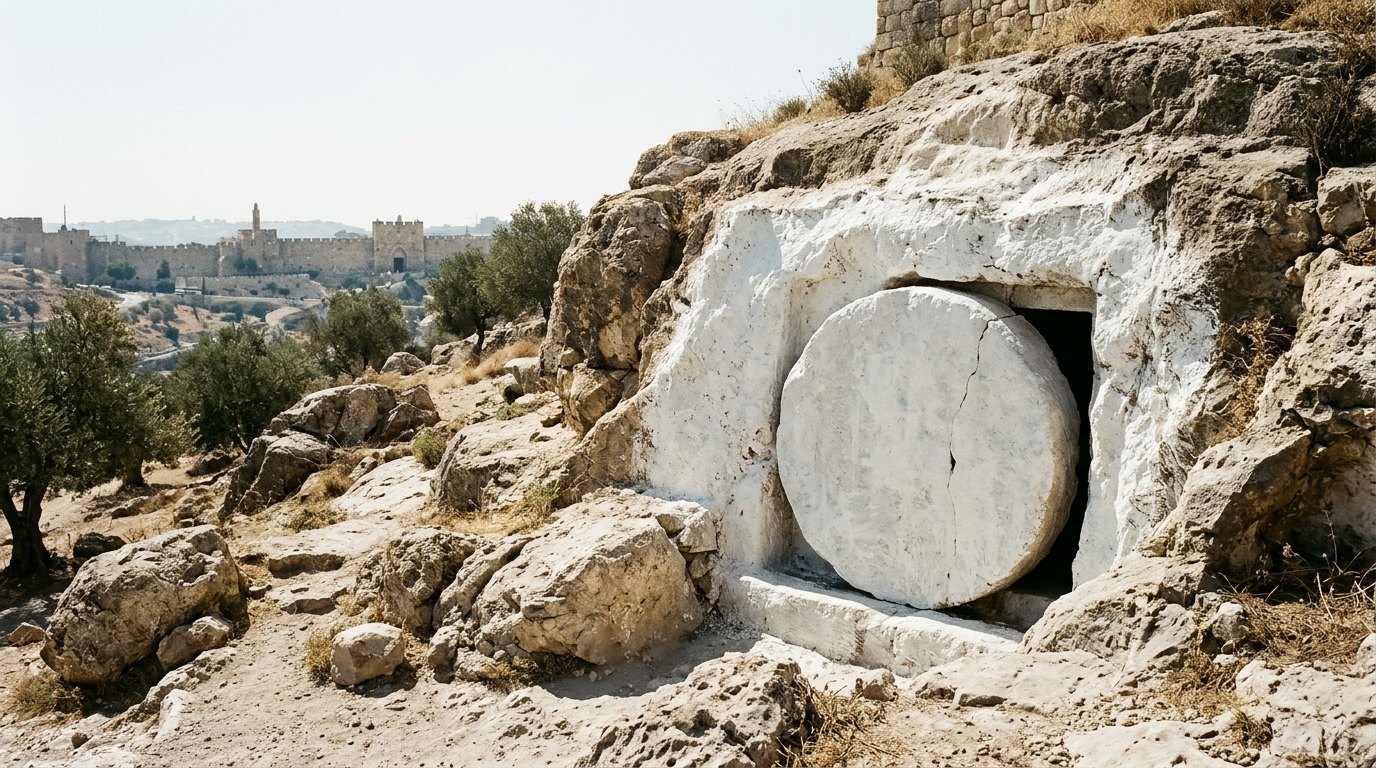
“Woe to you, teachers of the law and Pharisees, you hypocrites! You are like whitewashed tombs, which look beautiful on the outside but on the inside are full of the bones of the dead and everything unclean.
Matthew 23:27 (NIV)
Jesus provides the definitive picture of hypocrisy by comparing religious pretenders to whitewashed tombs masking corruption.
In Matthew 23:27, the Lord Jesus levels one of the most chilling metaphors in all of Scripture: "Woe to you, scribes and Pharisees, hypocrites! For you are like whitewashed tombs, which outward indeed appear beautiful, but within are full of dead men’s bones and of all uncleanness." The word hypocrite originally referred to an actor wearing an exaggerated mask on stage, but Christ unmasks religious acting as spiritual death disguised as life. He underscores this fatal division in Matthew 23:25 by denouncing leaders who wash only the exterior of dishes while leaving the inside brimming with extortion and self-indulgence. In Matthew 23:26, He demands the obvious remedy: clean the inside first, so that the outside may be genuinely pure.
Outward conformity without inner transformation is sheer theatrical fraud. In Matthew 23:28, Jesus explains that outwardly people see piety, but inwardly the soul remains full of hypocrisy and lawlessness. Luke 11:39 records a parallel dinner scene where Christ rebukes a Pharisee who marveled that Jesus did not perform ceremonial handwashing before eating, warning that cleaning the vessel externally does nothing for a heart full of wickedness. God is not deceived by physical motions; as Luke 11:40 states, the one who made the outside made the inner soul as well.
Because this contagion spreads quietly through religious circles, Jesus commands vigilance in Luke 12:1, telling His disciples to beware of the leaven of the Pharisees, which is hypocrisy. Self-deception thrives only in the dark, but in Luke 12:2 Jesus delivers the ultimate reality check: nothing covered will escape exposure, and nothing hidden will remain undisclosed before the judgment seat of God.
| Passage | What it says |
|---|---|
| Matthew 23:25 | Jesus pronounces woe on those who wash the outside of the cup while the inside remains full of greed. |
| Matthew 23:26 | Jesus demands first cleansing the inside of the cup so the exterior may become truly clean. |
| Matthew 23:27 | Jesus compares hypocrites to whitewashed tombs that look beautiful outside but contain dead bones within. |
| Matthew 23:28 | Jesus exposes outward appearances of righteousness hiding inward fullness of hypocrisy and lawlessness. |
| Luke 11:39 | The Lord rebukes cleaning external dishes while the inner heart is full of extortion and wickedness. |
| Luke 11:40 | Jesus reminds His hearers that the God who made the outside made the inside as well. |
| Luke 12:1 | Jesus warns the disciples to beware of the leaven of the Pharisees, which is hypocrisy. |
| Luke 12:2 | Christ declares that nothing covered up will remain secret, and nothing hidden will not be known. |
The Old Testament Indictment
Honoring God with lips while hearts stay distant

The Lord says: “These people come near to me with their mouth and honor me with their lips, but their hearts are far from me. Their worship of me is based on merely human rules they have been taught.
Isaiah 29:13 (NIV)
God defines hypocritical worship as honoring Him verbally while keeping the heart far removed from His authority.
Long before the Gospels, the prophets waged war against hollow religious performance. In Isaiah 29:13, the Lord exposes the heart of false worship: "Inasmuch as these people draw near with their mouths and honor Me with their lips, but have removed their hearts far from Me, and their fear toward Me is taught by the commandment of men." God never accepts verbal devotion when the heart is an absentee tenant. In 1 Samuel 16:7, the Lord settled this principle when anointing David, declaring that man looks on the outward appearance, but the Lord looks on the heart. Consequently, Isaiah 1:13 declares formal incense, sabbaths, and calling of assemblies to be an abomination when joined with unrepentant iniquity.
Ritual badges never guarantee divine protection. In Jeremiah 7:4, the prophet warned Judah against chanting, "The temple of the Lord, the temple of the Lord," as an amulet while breaking every covenant command. Ezekiel 33:31 sketches people sitting politely before the prophet as hearers of the word, yet pursuing lust and financial greed behind their pious postures. Amos 5:21 delivers God’s fiery verdict: He hates and despises formal feasts and assemblies devoid of justice.
Wisdom literature echoes this solemn warning. Job 8:13, Job 20:5, and Job 27:8 remind us that the hypocrite’s joy is brief and his hope perishes when God cuts him off. In Psalms 50:16-17, God rebukes the wicked for reciting His statutes while casting His actual words behind their backs. Solomon observes in Proverbs 26:24-26 that concealed malice will inevitably face public exposure. Isaiah 58:3-5 and Zechariah 7:5-6 reveal that self-focused fasting accompanied by worker exploitation and strife is utterly rejected by heaven, just as Malachi 1:8 repudiates priests who offer crippled, sick sacrifices while claiming to revere God's name.
| Passage | What it says |
|---|---|
| 1 Samuel 16:7 | The Lord tells Samuel that man looks on the outward appearance, but God looks on the heart. |
| Isaiah 1:13 | The Lord declares meaningless offerings and hypocritical solemn assemblies an abomination. |
| Isaiah 29:13 | The Lord condemns people drawing near with their mouth while removing their hearts far from Him. |
| Jeremiah 7:4 | Jeremiah warns against trusting in deceptive slogans claiming the presence of the temple guarantees safety. |
| Ezekiel 33:31 | Ezekiel observes hearers who listen to words but refuse to obey because their hearts pursue gain. |
| Amos 5:21 | God hates and despises formal religious feasts where justice and genuine righteousness are absent. |
| Job 8:13 | Bildad observes that the paths of all who forget God are lost, and the hypocrite's hope perishes. |
| Job 20:5 | Zophar asserts that the triumphing of the wicked is short, and the joy of the hypocrite lasts but a moment. |
| Job 27:8 | Job asks what hope the hypocrite possesses when he is cut off and God takes away his soul. |
| Psalms 50:16-17 | God rebukes the wicked for reciting his statutes while hating instruction and casting his words behind them. |
| Proverbs 26:24-26 | Solomon explains that hatred disguises itself with the lips, but its malice will be exposed in the public assembly. |
| Isaiah 58:3-5 | The Lord rejects external fasting that is accompanied by exploiting workers, strife, and malicious brawling. |
| Zechariah 7:5-6 | God asks whether their decades of ritual fasts were truly conducted for him or merely for themselves. |
| Malachi 1:8 | The Lord rebukes priests who offer blind, lame, and sick animals for sacrifice while claiming to honor him. |
Performing for Men
Trading heavenly reward for public applause

“Be careful not to practice your righteousness in front of others to be seen by them. If you do, you will have no reward from your Father in heaven.
Matthew 6:1 (NIV)
Jesus warns that practicing righteousness before people to be seen by them forfeits any reward from the Father.
The engine driving hypocrisy is almost always the hunger for human approval over divine glory. In Matthew 6:1, Jesus warns His followers plainly: "Take heed that you do not do your charitable deeds before men, to be seen by them. Otherwise you have no reward from your Father in heaven." The fatal trap of performative righteousness is that it receives exactly what it seeks—and nothing more. In Matthew 6:2, Jesus describes the theatrical benefactor who sounds a trumpet when distributing alms; such people have received their payment in full through temporary human applause.
The same spiritual pathology corrupts prayer and self-denial. In Matthew 6:5, Jesus targets those who love to stand in synagogues and prominent street corners so that onlookers will admire their piety. In Matthew 6:16, He censures those who adopt gloomy, disfigured faces during fasts so that public spectators perceive their rigorous discipline. Later, in Matthew 23:5, Christ notes how the religious elites broaden their phylacteries and enlarge the borders of their garments solely to draw human eyes.
This craving for prestige carries devastating spiritual consequences. John 12:43 explains why many rulers refused to confess Christ openly: they loved the praise of men more than the praise of God. Even worse, pious posturing often conceals active injustice. In Matthew 23:14 and Luke 20:46-47, Jesus warns of teachers who parade in long robes, feast on chief seats, and devour widows' houses while making lengthy prayers for a pretense. For such double-dealing, Christ promises greater condemnation.
| Passage | What it says |
|---|---|
| Matthew 6:1 | Jesus warns against practicing righteousness before men in order to be seen by them. |
| Matthew 6:2 | Sounding a trumpet when giving to be praised by others exhausts any eternal reward. |
| Matthew 6:5 | Praying on street corners to be seen by others receives its full reward immediately. |
| Matthew 6:16 | Disfiguring one's face while fasting to display self-denial publicly is condemned as hypocritical theater. |
| Matthew 23:5 | Jesus notes that scribes and Pharisees widen their phylacteries and lengthen tassels solely for public display. |
| John 12:43 | Unbelieving leaders refused to confess Christ because they loved human praise more than God's approval. |
| Matthew 23:14 | Jesus pronounces woe on the scribes and Pharisees for devouring widows' houses while making lengthy prayers for pretense. |
| Luke 20:46-47 | Christ warns of teachers who desire long robes, greetings in marketplaces, and chief seats, receiving greater condemnation. |
Censorious Blindness
Judging others while ignoring catastrophic personal sin

You hypocrite, first take the plank out of your own eye, and then you will see clearly to remove the speck from your brother’s eye.
Matthew 7:5 (NIV)
Jesus calls the person who inspects another's minor flaw while carrying an untreated log in their own eye a hypocrite.
Hypocrisy reaches its sharpest edge when unexamined personal sin transforms into self-righteous judgment of others. In Matthew 7:5, Jesus addresses the moral vigilante: "Hypocrite! First remove the plank from your own eye, and then you will see clearly to remove the speck from your brother’s eye." With cutting irony, Matthew 7:3 and Matthew 7:4 depict a person squinting to extract a tiny splinter from a neighbor's eye while oblivious to the massive timber protruding from their own. In Matthew 7:1-2, Christ commands against this critical spirit, warning that the harsh standard one applies to others will be measured back to them by God.
Luke 6:41-42 repeats this stark warning, and Luke 13:15-16 shows its practical outworking when a synagogue ruler objected to Jesus healing a crippled woman on the Sabbath. Jesus answered him, "Hypocrite! Does not each one of you on the Sabbath loose his ox or donkey from the stall, and lead it away to water it?" Compassion for an animal was permitted, but compassion for a daughter of Abraham bound for eighteen years was condemned by religious pedants.
Paul carries this principle into Romans 2:1, declaring that whoever judges another is without excuse, because the judge practices the very same things. In Romans 2:3, the apostle asks whether anyone truly believes they can condemn a neighbor while escaping God’s impartial scrutiny. Challenging those who boast in the moral law, Romans 2:21 and Romans 2:22-24 point out that preaching against theft while stealing, or condemning adultery while committing it, dishonors God and causes His name to be blasphemed among the nations.
| Passage | What it says |
|---|---|
| Matthew 7:3 | Jesus asks why one notices a speck in a brother's eye while ignoring a log in his own. |
| Matthew 7:4 | Jesus challenges the audacity of offering to remove a brother's speck with unaddressed personal blindness. |
| Matthew 7:5 | Jesus commands first removing the log from one's own eye to see clearly to help a brother. |
| Romans 2:1 | Paul states that passing judgment leaves a person without excuse because the judge practices the same sins. |
| Romans 2:3 | Paul asks the self-appointed judge whether he thinks he will escape the righteous judgment of God. |
| Romans 2:21 | Paul questions whether those who teach others and condemn theft fail to examine their own actions. |
| Matthew 7:1-2 | Jesus commands not to judge hypocritically, warning that the measure one uses will be measured back to them. |
| Luke 6:41-42 | Christ highlights the absurdity of attempting to extract a brother's speck while ignoring the plank in one's own eye. |
| Luke 13:15-16 | Jesus addresses synagogue officials as hypocrites for watering livestock on the Sabbath while objecting to a woman's healing. |
| Romans 2:22-24 | Paul convicts those who boast in the law while dishonoring God, causing his name to be blasphemed among Gentiles. |
Tradition Over Truth
Nullifying God's word with human commandments

You have let go of the commands of God and are holding on to human traditions.”
Mark 7:8 (NIV)
Jesus pinpoints the mechanism of hypocrisy: setting aside the direct commandment of God to maintain human traditions.
In Mark 7:8, Jesus exposes the very machinery of religious hypocrisy: "You leave the commandment of God and hold to the tradition of men." The Pharisees elevated their ceremonial traditions above Scripture itself, drawing the sharp rebuke of Isaiah via Mark 7:6, where Christ brands them actors who honor God with their lips while their hearts remain distant. In Mark 7:9 and Mark 7:13, the Lord demonstrates how easily man-made strictures actually nullify the living Word of God, replacing divine authority with invented rituals of washing and pretense. True spiritual corruption cannot be washed away with ceremonial basins, for as Matthew 15:19 establishes, defilement does not originate from unwashed hands, but rises out of an unregenerate heart. Those who instruct others while blind to God's truth are nothing more than blind guides leading their followers into a common ditch (Matthew 15:14).
This deadly inversion reaches its climax in the woes of Matthew 23. Religious hypocrites slam the gates of the kingdom of heaven in men's faces, neither entering themselves nor permitting seekers to pass through (Matthew 23:13). Their missionary zeal is equally warped; Matthew 23:15 describes them scouring land and sea to win a single convert, only to transform that soul into twice the son of hell they are. With biting irony, Christ exposes their casuistry regarding religious oaths in Matthew 23:16–22, showing how they conveniently valued temple gold over the sanctity of the temple itself. Furthermore, Matthew 23:23–24 indicts their selective scrupulosity: they obsessively tithed garden herbs like mint, dill, and cumin while blithely abandoning the weightier matters of God’s law—justice, mercy, and faithfulness. In doing so, they strain out a gnat while swallowing a camel whole.
| Passage | What it says |
|---|---|
| Mark 7:6 | Jesus cites Isaiah against the Pharisees, identifying them as hypocrites who honor God only with lips. |
| Mark 7:8 | Jesus charges leaders with abandoning God's commandment while stubbornly clinging to human tradition. |
| Mark 7:9 | Jesus exposes how readily religious leaders set aside God's word to establish their own traditions. |
| Mark 7:13 | Jesus warns that human traditions handed down nullify the living word of God. |
| Matthew 15:14 | Jesus describes hypocritical teachers as blind guides leading the blind into a pit. |
| Matthew 15:19 | Jesus explains that true defilement emerges from the heart rather than unwashed hands. |
| Matthew 23:13 | Jesus pronounces woe on hypocrites who shut the kingdom of heaven against men, neither entering nor permitting others in. |
| Matthew 23:15 | Christ condemns traveling across land and sea to make a single convert, only to make him twice the child of hell. |
| Matthew 23:16-22 | Jesus refutes deceitful oaths that distinguish between swearing by the temple and swearing by the gold within it. |
| Matthew 23:23-24 | Christ rebukes tithing mint and cumin while neglecting the weightier matters of the law: justice, mercy, and faithfulness. |
The Apostolic Warning
Apostasy, double-mindedness, and unfeigned love
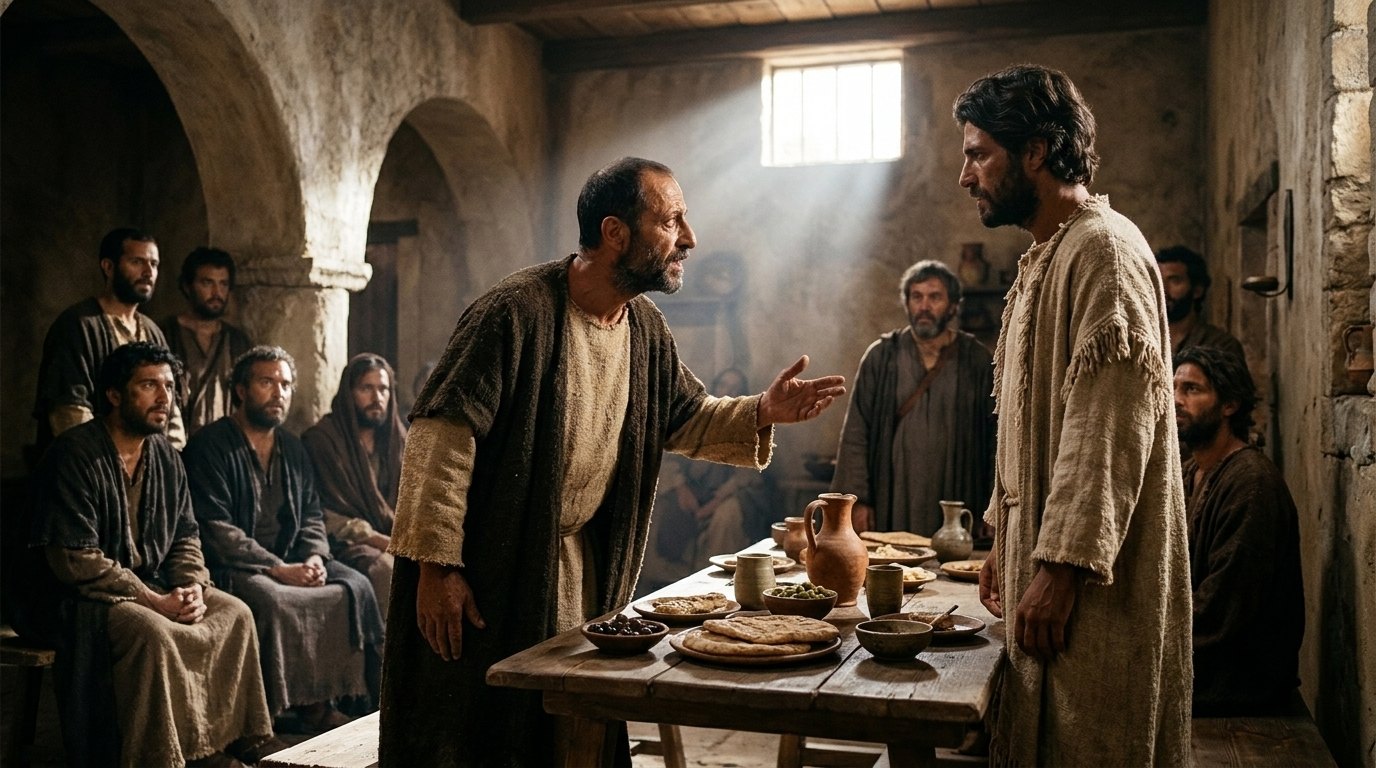
Do not merely listen to the word, and so deceive yourselves. Do what it says.
James 1:22 (NIV)
James warns believers that hearing God's word without doing it is a fatal form of self-deception.
The apostolic epistles confront hypocrisy not merely as an ancient Jewish error, but as an ever-present peril within the Christian church. James 1:22 lays down the primary diagnostic: "Be doers of the word, and not hearers only, deceiving yourselves." Merely listening to truth while neglecting obedience is self-inflicted spiritual deception. Even stalwart apostles were not immune to social pretense; in Galatians 2:13, Paul publicly confronted Peter and Barnabas when they separated from Gentile believers out of fear of circumcision advocates, drawing others into their insincerity. Looking to the latter days, 1 Timothy 4:2 warns that apostasy enters through hypocritical liars whose consciences are seared as with a hot iron. These figures maintain an empty appearance of godliness while denying its sanctifying power (2 Timothy 3:5), professing to know God while actively renouncing Him through detestable deeds (Titus 1:16). A profession of light combined with hatred toward a brother proves one remains in outer darkness (1 John 2:9).
In stark contrast to this theatrical piety, apostolic doctrine demands unfeigned holiness. Paul repeatedly commands that Christian love must be completely free of pretense (Romans 12:9; 2 Corinthians 6:6). Indeed, 1 Timothy 1:5 states that the ultimate aim of all biblical instruction is love born from a pure heart, a good conscience, and sincere faith—the very faith commended in Timothy and his family (2 Timothy 1:5). Heavenly wisdom is marked by purity, peace, mercy, and impartiality without a trace of hypocrisy (James 3:17). Having purified their souls in obeying the truth, Christians are urged to love one another fervently from a sincere heart (1 Peter 1:22), laying aside all malice, deceit, and hypocrisy (1 Peter 2:1), never loving merely in speech, but in tangible deed and truth (1 John 3:18).
| Passage | What it says |
|---|---|
| Galatians 2:13 | Paul records how Peter and Barnabas were temporarily drawn into insincere separation through fear of critics. |
| 1 Timothy 4:2 | Paul warns of end-times apostasy propagated through hypocritical liars whose consciences are seared. |
| 2 Timothy 3:5 | Paul identifies dangerous people who hold an outward form of godliness while denying its power. |
| Titus 1:16 | Paul laments those who profess to know God but deny Him through detestable, disobedient deeds. |
| James 1:22 | James urges believers to be doers of the word rather than mere hearers deceiving themselves. |
| 1 John 2:9 | John asserts that anyone claiming to be in the light while hating a brother remains in darkness. |
| Romans 12:9 | Paul commands that Christian love must be sincere, unfeigned, and free from all hypocrisy. |
| 2 Corinthians 6:6 | The apostle lists genuine, unhypocritical love among the marks proving the integrity of Christian ministry. |
| 1 Timothy 1:5 | Paul states that the goal of apostolic instruction is love issuing from a pure heart, good conscience, and sincere faith. |
| 2 Timothy 1:5 | Paul recalls and commends the unfeigned and sincere faith dwelling within Timothy, his mother, and his grandmother. |
| James 3:17 | James describes heavenly wisdom as pure, peaceable, gentle, open to reason, full of mercy, impartial, and sincere. |
| 1 Peter 1:22 | Peter calls believers who purified their souls through truth to exercise sincere, fervent brotherly love from the heart. |
| 1 Peter 2:1 | Peter commands believers to put away all malice, deceit, hypocrisy, envy, and all slander. |
| 1 John 3:18 | John exhorts the church not to love merely in word or talk, but in deed and in truth. |
Exposure and Judgment
Deceiving God Brings Unavoidable Exposure and Sure Judgment

He will cut him to pieces and assign him a place with the hypocrites, where there will be weeping and gnashing of teeth.
Matthew 24:51 (NIV)
It shows that hypocrites face the ultimate severity of divine judgment, classed alongside the most unfaithful.
Scripture makes clear that while hypocrisy may successfully deceive men for a season, it cannot withstand the piercing scrutiny of God. In Matthew 22:15–18, when the Pharisees and Herodians attempted to entrap Christ regarding imperial taxation through fawning flattery, Jesus instantly perceived their malice, asking: "Why put me to the test, you hypocrites?" Man's outward compliments never obscure inward treachery before the omniscient Lord. Similarly, Luke 12:54–56 records Christ rebuking the crowds as hypocrites because they could effortlessly forecast weather by observing clouds and winds, yet deliberately shut their eyes to the unmistakable messianic signs unfolding directly in their midst.
Because hypocrisy fundamentally mocks the truth of God, it invites sure and terrifying judgment. In Matthew 24:50–51, Christ describes the fate of the deceitful and abusive servant whose master arrives unexpectedly: "The master of that servant will come... and will cut him in pieces and put him with the hypocrites. In that place there will be weeping and gnashing of teeth." The hypocrite receives the severe destiny reserved for the unfaithful. The terrifying reality of divine exposure was demonstrated historically in the early church in Acts 5:1–11. Ananias and Sapphira conspired to present a portion of their land sale as though it were the entire proceeds, seeking the reputation of radical generosity without the cost. Peter unveiled the true nature of their theatrical offering: they had not merely lied to men, but to the Holy Spirit. Struck down in instant judgment before the assembly, their deaths established a lasting witness that God will never tolerate deceit within His household.
| Passage | What it says |
|---|---|
| Matthew 22:15-18 | Pharisees and Herodians flatter Christ to entrap him on taxes, but Jesus perceives their malice and exposes their hypocrisy. |
| Matthew 24:50-51 | The master will cut the wicked servant in pieces and assign him a place with the hypocrites amid weeping and gnashing. |
| Luke 12:54-56 | Jesus calls the crowds hypocrites for interpreting weather signs in the sky while failing to analyze the present messianic time. |
| Acts 5:1-11 | Ananias and Sapphira conspire to present a partial offering as the entire sum, lying to God and suffering instant judgment. |
Where in the Bible
| Book | Passages |
|---|---|
| 1 Samuel | 1 · 1 Samuel 16:7 |
| Job | 3 · Job 8:13, Job 20:5, Job 27:8 |
| Psalms | 1 · Psalms 50:16-17 |
| Proverbs | 1 · Proverbs 26:24-26 |
| Isaiah | 3 · Isaiah 1:13, Isaiah 29:13, Isaiah 58:3-5 |
| Jeremiah | 1 · Jeremiah 7:4 |
| Ezekiel | 1 · Ezekiel 33:31 |
| Amos | 1 · Amos 5:21 |
| Zechariah | 1 · Zechariah 7:5-6 |
| Malachi | 1 · Malachi 1:8 |
| Matthew | 22 · Matthew 23:25, Matthew 23:26, Matthew 23:27, Matthew 23:28, Matthew 6:1, Matthew 6:2, Matthew 6:5, Matthew 6:16, Matthew 23:5, Matthew 23:14, Matthew 7:3, Matthew 7:4, Matthew 7:5, Matthew 7:1-2, Matthew 15:14, Matthew 15:19, Matthew 23:13, Matthew 23:15, Matthew 23:16-22, Matthew 23:23-24, Matthew 22:15-18, Matthew 24:50-51 |
| Mark | 4 · Mark 7:6, Mark 7:8, Mark 7:9, Mark 7:13 |
| Luke | 8 · Luke 11:39, Luke 11:40, Luke 12:1, Luke 12:2, Luke 20:46-47, Luke 6:41-42, Luke 13:15-16, Luke 12:54-56 |
| John | 1 · John 12:43 |
| Acts | 1 · Acts 5:1-11 |
| Romans | 5 · Romans 2:1, Romans 2:3, Romans 2:21, Romans 2:22-24, Romans 12:9 |
| 2 Corinthians | 1 · 2 Corinthians 6:6 |
| Galatians | 1 · Galatians 2:13 |
| 1 Timothy | 2 · 1 Timothy 4:2, 1 Timothy 1:5 |
| 2 Timothy | 2 · 2 Timothy 3:5, 2 Timothy 1:5 |
| Titus | 1 · Titus 1:16 |
| James | 2 · James 1:22, James 3:17 |
| 1 Peter | 2 · 1 Peter 1:22, 1 Peter 2:1 |
| 1 John | 2 · 1 John 2:9, 1 John 3:18 |
The story in order
- God looks on the heart (c. 1000 BC) · 1 Samuel 16:7 · God rejects outward appearance, valuing inner reality.
- God hates hypocritical worship (c. 700 BC) · Isaiah 1:13 · Formal worship without inner sincerity is rejected.
- Hypocrites' hope perishes (c. 1000 BC) · Job 8:13 · False hope of the ungodly is ultimately destroyed.
- Jesus warns against Pharisaic leaven (c. AD 30) · Luke 12:1 · Hypocrisy is a dangerous spiritual contagion.
- Jesus condemns whitewashed tombs (c. AD 30) · Matthew 23:27 · Outward righteousness can hide inner corruption.
- Jesus warns against performing for men (c. AD 30) · Matthew 6:1 · Religious acts done for human praise lack eternal reward.
- Jesus condemns censorious blindness (c. AD 30) · Matthew 7:3 · Judging others while ignoring one's own sin is hypocritical.
- Pharisees nullify God's word (c. AD 30) · Mark 7:8 · Human tradition is elevated above divine commandment.
- Ananias and Sapphira's judgment (c. AD 33) · Acts 5:1-11 · Lying to God brings swift and severe judgment.
- Paul warns of hypocritical liars (c. AD 65) · 1 Timothy 4:2 · False teachers will have seared consciences.
- James urges doing the word (c. AD 45) · James 1:22 · Hearing without doing is self-deception.
- Peter calls for sincere love (c. AD 60) · 1 Peter 1:22 · Love must be genuine and from the heart.
Key words
- Hypocrisy (hypokritēs (ὑποκριτής))
- Religious performance masking inner decay; acting a part. · Matthew 23:27
- Leaven (zymē (ζύμη))
- A small amount of yeast that causes dough to rise; metaphor for corrupting influence. · Luke 12:1
- Heart (kardia (καρδία))
- The inner person, seat of motives, desires, and will. · 1 Samuel 16:7
- Righteousness (dikaiosynē (δικαιοσύνη))
- Conformity to God's will and standard; moral integrity. · Matthew 23:28
- Tradition (paradosis ( παράδοσις))
- Human teachings and practices passed down, often superseding God's word. · Mark 7:8
- Sincere (anypokritos (ἀνυπόκριτος))
- Genuine, unfeigned, without pretense or hypocrisy. · Romans 12:9
God cannot be deceived by religious theater, for He constantly searches the thoughts and intentions of the heart. The gospel exposes our hollow self-righteousness not to leave us condemned, but to invite us into genuine renewal through Jesus Christ. Walking in authentic faith requires laying down the mask of pretense and letting God cleanse the inside first.
68 passages, each cited once.
Scripture cited
- Matthew 23:25-28
- Matthew 6:1-18
- Matthew 7:1-5
- Romans 2:17-24
- James 1:22-25
- 1 John 1:8-10
- Galatians 2:11-14
- Matthew 15:1-20
- 1 Peter 2:1-3
- Romans 12:9-13
- Luke 18:9-14
- Titus 1:15-16