What is predestination?

Ephesians 1:3-6
3 Praise be to the God and Father of our Lord Jesus Christ, who has blessed us in the heavenly realms with every spiritual blessing in Christ.
4 For he chose us in him before the creation of the world to be holy and blameless in his sight. In love
5 he predestined us for adoption to sonship through Jesus Christ, in accordance with his pleasure and will—
6 to the praise of his glorious grace, which he has freely given us in the One he loves.
New International Version (NIV)
The answer
Predestination is God’s gracious purpose, settled before creation and carried out in Christ, to save his people and bring them to the destiny he appointed: adoption as his children, holiness, likeness to Christ, and final glory. It rests on God’s initiative and grace, not human merit, and it is not impersonal fate.
Ephesians 1:4-5 joins God’s choice with predestination: “he chose us in him before the foundation of the world” and “having predestined us for adoption as children through Jesus Christ to himself.” Romans 8:29-30 describes that appointed destiny more fully: those God foreknew were “predestined to be conformed to the image of his Son,” and those predestined were also called, justified, and glorified.
What Scripture makes clear
- It begins with God, before human history. God’s choosing took place “before the foundation of the world,” not because he first saw someone deserved salvation (Ephesians 1:4).
- It is centred on Christ. Believers are chosen in him and adopted through Jesus Christ, rather than through an abstract decree detached from Christ’s saving work (Ephesians 1:4-5).
- Its goal is adoption and transformation. Predestination is not only about reaching heaven; it concerns becoming holy, belonging to God’s family, and being made like his Son (Ephesians 1:4-5; Romans 8:29).
- It is accomplished through the gospel, faith, and the Spirit. God “chose you from the beginning for salvation through sanctification of the Spirit and belief in the truth,” and “called you through our Good News” (2 Thessalonians 2:13-14). Ephesians 1:13 likewise describes people hearing the gospel, believing, and being sealed with the Holy Spirit.
- It gives no ground for boasting. Salvation is “by grace … through faith” and “not of works, that no one would boast” (Ephesians 2:8-9).
Predestination therefore does not bypass hearing and believing the gospel, nor does it authorize passivity or sin. Its appointed end includes holiness and Christlikeness.
Where the main readings differ
Scripture plainly teaches predestination, but Christians disagree about the basis of God’s choice and how foreknowledge, grace, and faith relate:
- Reading — Distinctive emphasis
- Reformed / Calvinistic — God’s election is unconditional, not based on foreseen faith or works; his grace brings the elect to saving faith.
- Arminian / Wesleyan — God predestines those he foreknows will believe; his enabling grace makes faith possible, and faith earns nothing.
- Corporate election in Christ — God’s eternal choice centres on Christ and the people belonging to him; individuals participate through union with Christ by faith. Some combine this emphasis with one of the readings above.
The immediate response named in Ephesians 1:13 is not speculation about God’s hidden purposes, but hearing the gospel, believing in Christ, and living as people sealed by his Spirit.
Answered from Scripture · reviewed November 11, 2026
Predestination is God's sovereign decision, determined in eternity before the foundation of the world, to bring a people to Himself through Jesus Christ for adoption and eternal glory. Far from being an abstract puzzle, Scripture reveals this truth as the bedrock of Christian assurance, magnifying the unmerited freedom of God's grace and establishing the believer's final security.
Eternity Past
God marked out His children before creation began.

For he chose us in him before the creation of the world to be holy and blameless in his sight. In love he predestined us for adoption to sonship through Jesus Christ, in accordance with his pleasure and will—
Ephesians 1:4-5 (NIV)
It shows that election occurred before the foundation of the world, rooted purely in God's good pleasure toward adoption.
In Ephesians 1:4-5, the Apostle Paul anchors the reality of our salvation before the clock of creation began to tick: God chose us in Christ before the foundation of the world, having predestined us for adoption as sons. This sovereign decree was not prompted by anything He foresaw in human nature, but flowed strictly according to the kind intention of His will. Paul prefaces this by declaring that God has lavished believers with every spiritual blessing in the heavenly realm in Christ Jesus (Ephesians 1:3). The design of this eternal choice is twofold: that we should be holy and blameless before Him in love, and that all redemptive history would resound to the praise of the glory of His grace (Ephesians 1:6). In Ephesians 1:11, Paul returns to this bedrock truth, explaining that we have obtained an inheritance, having been predestined according to the purpose of Him who works all things after the counsel of His own will.
This deliberate, prehistoric initiative appears consistently throughout the New Testament witness. Paul writes in 2 Timothy 1:9 that God saved us and called us with a holy calling, not according to our works, but according to His own purpose and grace, which was given to us in Christ Jesus before the world began. Similarly, Titus 1:2 speaks of the hope of eternal life which God, who cannot lie, promised before ages began. The Book of Revelation twice reveals that redemption is not an afterthought to the Fall; Revelation 13:8 and Revelation 17:8 speak of the book of life belonging to the Lamb slain from the foundation of the world, wherein the names of His people were inscribed from eternity. Even the pathway of our obedience was mapped in advance, as Ephesians 2:10 tells us that we are created in Christ Jesus for good works, which God prepared beforehand that we should walk in them. Finally, Matthew 25:34 shows the culmination of this decree, when the King invites His redeemed into the kingdom prepared for them from the foundation of the world.
| Passage | What it says |
|---|---|
| Ephesians 1:3 | God has blessed believers with every spiritual blessing in the heavenly places in Christ Jesus. |
| Ephesians 1:4 | God chose believers in Christ before the world's foundation to be holy and blameless before Him in love. |
| Ephesians 1:5 | God predestined believers for adoption as sons through Jesus Christ according to His will's good pleasure. |
| Ephesians 1:6 | God's predestining purpose terminates in the praise of the glory of His grace in the Beloved. |
| Ephesians 1:11 | Believers obtained an inheritance, having been predestined according to the purpose of Him who works all things. |
| 2 Timothy 1:9 | God saved and called us according to His purpose and grace given in Christ before the world began. |
| Titus 1:2 | Eternal life was promised by God, who cannot lie, before the world began. |
| Revelation 13:8 | Names of the redeemed were written before the foundation of the world in the slain Lamb's book. |
| Revelation 17:8 | The dwellers on earth whose names were not written in the book of life from eternity marvel at the beast. |
| Ephesians 2:10 | God prepared good works beforehand that believers should walk in them. |
| Matthew 25:34 | The King welcomes the blessed into the kingdom prepared from the foundation of the world. |
The Golden Chain
Salvation flows unbroken from foreknowledge to glorification.

For those God foreknew he also predestined to be conformed to the image of his Son, that he might be the firstborn among many brothers and sisters. And those he predestined, he also called; those he called, he also justified; those he justified, he also glorified.
Romans 8:29-30 (NIV)
It establishes the unbreakable link connecting God's eternal decree to its final consummation in glory.
In Romans 8:29-30, Scripture displays the unbreakable chain of sovereign redemption: those whom God foreknew, He also predestined to be conformed to the image of His Son, and those He predestined He also called, justified, and glorified. Each link in this sequence is forged by God Himself, ensuring that not a single soul chosen in eternity will be lost along the way. Paul frames this golden sequence with the pastoral guarantee of Romans 8:28, reminding the church that all things work together for good to those who love God and are called according to His purpose. Because it is God who justifies and secures His people from start to finish, Paul can ask with triumph in Romans 8:33, who shall bring any charge against God's elect when the Judge of all has acquitted them?
This cohesive architecture of redemption is echoed across the apostolic epistles. Peter opens his first letter by greeting believers who are elect according to the foreknowledge of God the Father, through the sanctifying work of the Spirit, unto obedience and sprinkling of the blood of Jesus Christ (1 Peter 1:1-2). Election is never a static concept; it immediately sets the believer apart for practical holiness. While those who reject the gospel stumble over Christ in appointed disobedience, Peter affirms in 1 Peter 2:8-9 that believers remain a chosen race, a royal priesthood, a holy nation, and a people for God's own possession. Writing to the Thessalonians, Paul offers the same pastoral encouragement in 1 Thessalonians 5:9, assuring believers that God has not destined them for wrath, but to obtain salvation through our Lord Jesus Christ, making their final vindication entirely certain.
| Passage | What it says |
|---|---|
| Romans 8:28 | All things work together for good to those called according to God's eternal purpose. |
| Romans 8:29 | Those God foreknew He predestined to be conformed to the image of His Son. |
| Romans 8:30 | Those He predestined He called; those He called He justified; those He justified He also glorified. |
| Romans 8:33 | No one can bring any charge against God's elect, since it is God who justifies. |
| 1 Peter 1:1-2 | Believers are elect according to the foreknowledge of the Father, through sanctification of the Spirit, for obedience. |
| 1 Peter 2:8-9 | Unbelievers stumble as appointed, but believers are a chosen race and His own possession. |
| 1 Thessalonians 5:9 | God has not destined believers for wrath, but to obtain salvation through Jesus Christ. |
Sovereign Purpose
God's choice rests on grace rather than human merit.

Yet, before the twins were born or had done anything good or bad—in order that God’s purpose in election might stand:
Romans 9:11 (NIV)
It shows that election operates entirely apart from human deeds, ensuring the purpose of God stands.
In Romans 9:11, Paul exposes the engine of sovereign grace: before the children were born or had done anything good or evil, God's purpose according to election stood, not because of works but because of Him who calls. God's choice does not conform to human expectations or lineage, but preserves the freedom of His mercy. Paul reinforces this by citing Exodus: God will have mercy on whom He has mercy, and compassion on whom He has compassion, proving that salvation depends not on human will or human exertion, but on God who shows mercy (Romans 9:15-16). He drives the point home in Romans 9:18, stating that God has mercy on whomever He wills, and hardens whomever He wills. Far from demonstrating injustice, this displays God's sovereign prerogative to endure vessels of wrath prepared for destruction, while making known the riches of His glory upon vessels of mercy prepared beforehand for glory (Romans 9:22-23).
This pattern of gracious election is woven throughout the entire story of Scripture. In Deuteronomy 7:7-8 and Deuteronomy 10:14-15, Moses reminded Israel that the Lord did not set His love upon them because they were greater in number than other nations, but simply because He loved them and kept His oath. Paul applies this principle to the church age in Romans 11:5-7, demonstrating that there is at the present time a remnant chosen by grace; and if it is by grace, it is no longer based on human works. God's election consciously confounds worldly pride, as 1 Corinthians 1:26-29 declares that God deliberately chose the foolish, the weak, and the low things of this world to shame the strong, so that no flesh may boast in His presence. James 2:5 echoes this divine reversal, noting that God chose the poor of this world to be rich in faith and heirs of His kingdom, while 2 Thessalonians 2:13 thanks God that He chose believers from the beginning for salvation through sanctification by the Spirit and faith in the truth.
| Passage | What it says |
|---|---|
| Romans 9:11 | Before the twins were born or had done good or evil, God's purpose of election stood. |
| Romans 9:15-16 | God shows mercy on whom He wills; salvation depends not on human will or exertion, but on God. |
| Romans 9:18 | God has mercy on whom He wills, and He hardens whom He wills. |
| Romans 11:5-7 | A remnant remains chosen by grace; if by grace, it is no longer on the basis of works. |
| Deuteronomy 7:7-8 | The Lord set His love on Israel not for their numbers, but because He loved them. |
| 2 Thessalonians 2:13 | God chose believers from the beginning for salvation through sanctification by the Spirit and belief in truth. |
| Romans 9:22-23 | God endures vessels of wrath to make known His glory to vessels of mercy. |
| 1 Corinthians 1:26-29 | God chose the foolish, weak, and low to shame the strong so no flesh may boast. |
| James 2:5 | God chose the poor of this world to be rich in faith and heirs of the kingdom. |
| Deuteronomy 10:14-15 | The LORD set His heart in love on the fathers and chose their offspring above all peoples. |
The Son's People
The Father entrusts a definite flock to the Shepherd.

All those the Father gives me will come to me, and whoever comes to me I will never drive away.
John 6:37 (NIV)
It declares that everyone given by the Father will certainly come to Christ and never be cast out.
In John 6:37, Jesus articulates the absolute certainty of the Father's gift to the Son: all that the Father gives Me will come to Me, and the one who comes to Me I will certainly not cast out. Salvation is not left to chance; the Father has entrusted a specific people to the Son, and every single one of them will successfully come to Him. Jesus reinforces this divine covenant in John 6:39, stating that the will of the Father who sent Him is that He should lose nothing of all that He has been given, but raise it up on the last day. Human resistance cannot thwart this redemptive purpose, nor can natural human willpower achieve it, for Jesus explicitly teaches in John 6:44 and John 6:65 that no one can come to Him unless drawn by the Father, and unless it has been granted by the Father.
This shepherd-and-flock relationship establishes the ultimate safety of the redeemed. In John 10:27-29, Jesus reveals that His sheep hear His voice, follow Him, and are held securely in both His hand and His Father's hand, so that no one can snatch them away. When Christ intercedes in John 17, this eternal gift defines His entire prayer: the Father gave Him authority over all flesh so that He should give eternal life to all whom the Father has given Him (John 17:2). He manifested the Father's name to the people given to Him out of the world (John 17:6), and He specifically focuses His prayer upon them, declaring, 'I pray for them; I do not pray for the world, but for those whom You have given Me' (John 17:9). His ultimate longing is their eternal fellowship with Him, that they may behold His glory (John 17:24). Jesus summarizes this relationship to His disciples in John 15:16 and John 15:19: they did not choose Him, but He chose them out of the world, appointing them to bear fruit that remains.
| Passage | What it says |
|---|---|
| John 6:37 | All that the Father gives to the Son will come to Him, and none will be cast out. |
| John 6:39 | The Father's will is that the Son lose none of all He has been given, raising them up. |
| John 6:44 | No one can come to Christ unless drawn by the Father who sent Him. |
| John 6:65 | No one can come to the Son unless it is granted to him by the Father. |
| John 10:27-29 | The Father gave His sheep to the Son, and no one can pluck them from His hand. |
| John 17:2 | The Father gave the Son authority over all flesh to give eternal life to all given Him. |
| John 17:6 | Jesus manifested the Father's name to the people given to Him out of the world. |
| John 17:9 | Jesus prays specifically for those the Father has given Him, not for the world. |
| John 17:24 | Jesus desires that those given to Him be with Him to see His glory. |
| John 15:16 | Christ tells His disciples they did not choose Him, but He chose and appointed them. |
| John 15:19 | Believers do not belong to the world because Christ chose them out of the world. |
Sovereign Execution
God's predetermined counsel directs redemptive history.
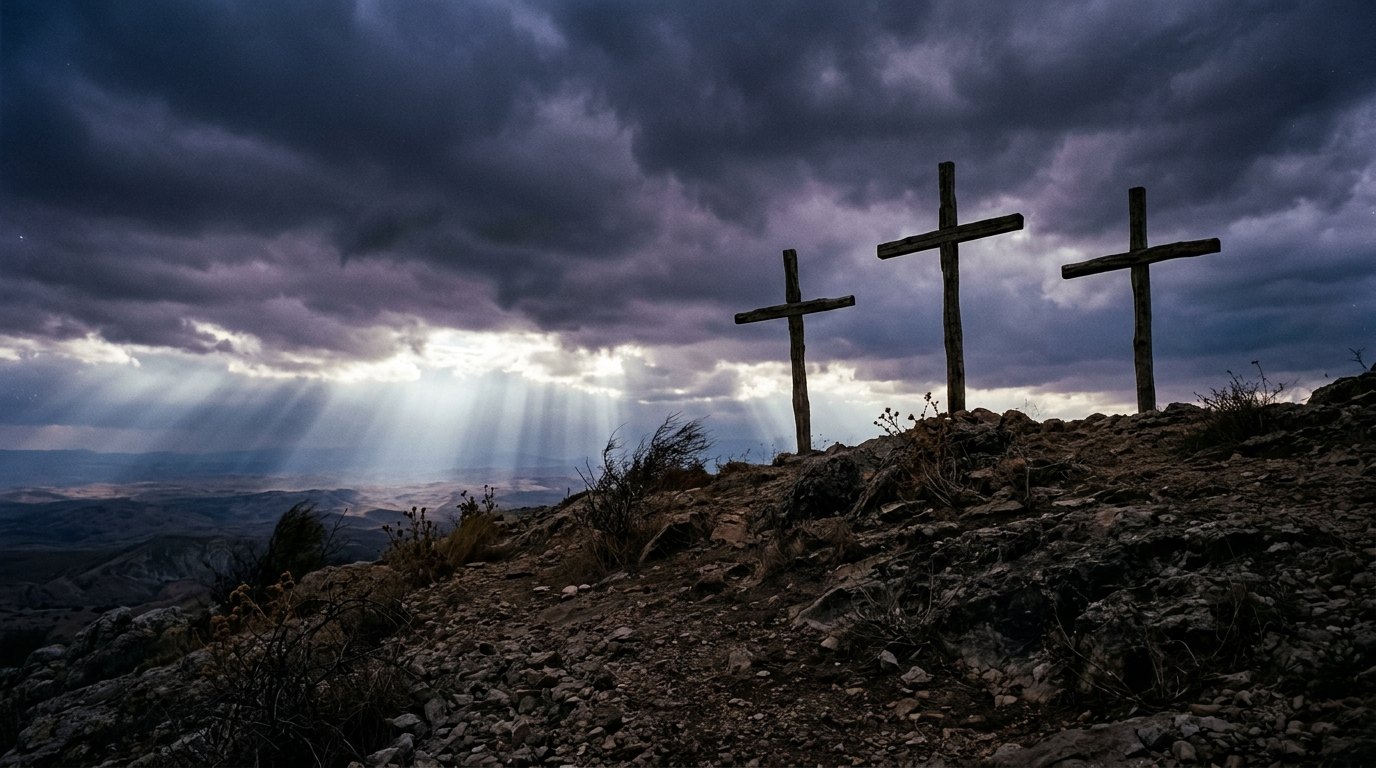
Indeed Herod and Pontius Pilate met together with the Gentiles and the people of Israel in this city to conspire against your holy servant Jesus, whom you anointed. They did what your power and will had decided beforehand should happen.
Acts 4:27-28 (NIV)
It demonstrates that even the cross was predestined by God's hand and plan to accomplish salvation.
In Acts 4:27-28, the early church lifts its voice in prayer, declaring that Herod, Pontius Pilate, the Gentiles, and the peoples of Israel gathered together against Jesus to do whatever God's hand and plan had predestined to take place. The central event of redemptive history—the crucifixion of the Son of God—was not an unexpected tragedy or an unforeseen disruption of the divine program. Instead, as Peter preached in Acts 2:23, Jesus was delivered up according to the definite plan and foreknowledge of God, even while lawless men bore full moral culpability for nailing Him to the tree.
This sovereign governing of all events stretches across all creation and history. In Isaiah 46:9-10, the LORD declares that He announces the end from the beginning, saying, "My counsel shall stand, and I will accomplish all my purpose." Daniel 4:35 reinforces that God does according to His will among the host of heaven and among the inhabitants of the earth, and none can stay His hand. Proverbs 16:4, Proverbs 16:9, and Proverbs 19:21 remind us that while human hearts devise their paths and form numerous plans, the purpose of the LORD alone will stand, governing every detail and establishing every step. What Joseph confessed in Genesis 50:20—that what human agents meant for evil, God meant for good to preserve life—finds its ultimate expression in God's eternal design.
This same sovereign determination governs the spread of the gospel and individual salvation. In 1 Corinthians 2:7, Paul speaks of God's hidden wisdom, which God predestined before the ages for our glory. When the gospel reached Pisidian Antioch in Acts 13:48, the outcome was mathematically clear: as many as were appointed to eternal life believed. Human belief is the fruit, not the root, of divine appointment. And in Acts 18:9-10, the Lord sustained Paul in Corinth by declaring, "I have many in this city who are my people," assuring him of a fruitful harvest because of God's prior claim on those souls.
| Passage | What it says |
|---|---|
| Acts 2:23 | Jesus was delivered over by the predetermined plan and foreknowledge of God to be crucified. |
| Acts 4:27-28 | Rulers gathered against Jesus to do whatever God's hand and purpose predestined to occur. |
| Acts 13:48 | When the Gentiles heard the word, as many as were appointed to eternal life believed. |
| Acts 18:9-10 | The Lord told Paul to keep speaking in Corinth because He had many people in that city. |
| 1 Corinthians 2:7 | Paul speaks God's hidden wisdom, which God predestined before the ages for our glory. |
| Genesis 50:20 | Man intended evil, but God meant and orchestrated it for good to save many alive. |
| Proverbs 16:4 | The LORD has made everything for its purpose, even the wicked for the day of trouble. |
| Proverbs 16:9 | The heart of man plans his way, but the LORD establishes his steps. |
| Proverbs 19:21 | Many plans are in man's mind, but the purpose of the LORD will stand. |
| Isaiah 46:9-10 | God declares the end from the beginning, stating His counsel and pleasure will stand. |
| Daniel 4:35 | God does according to His will among the host of heaven and earth's inhabitants. |
The Heavenly Register
God records His redeemed in the heavenly register.

However, do not rejoice that the spirits submit to you, but rejoice that your names are written in heaven.”
Luke 10:20 (NIV)
Jesus anchors true joy not in spiritual power or success, but in sovereign heavenly registration.
When the seventy-two disciples returned brimming with excitement over their authority over demons, Christ reoriented their wonder in Luke 10:20 with a decisive command: rejoice that your names are written in heaven. Earthly triumphs and spiritual victories are transient, but the believer's secure identity rests in an eternal register inscribed by God's own sovereign choice. True assurance is anchored not in what we achieve for the Lord, but in where our names have been permanently recorded by grace.
The New Testament repeatedly refers to this heavenly ledger. In Philippians 4:3, the apostle Paul comforts and honors his faithful fellow workers by affirming that their names are in the book of life. Writing to beleaguered Christians, the author of Hebrews 12:23 reminds them that they have come to Mount Zion, to the city of the living God, and to the joyful gathering of the firstborn who are enrolled in heaven. This enrollment is neither provisional nor precarious; it represents an immutable citizenship granted by divine grace.
In the final visions of Scripture, this heavenly register stands at the hinge of eternal destinies. Revelation 20:12 reveals that at the great white throne judgment, books are opened recording every human work, but alongside them another book is opened, which is the book of life. Revelation 20:15 soberly declares that if anyone's name was not found written in the book of life, he was cast into the lake of fire, demonstrating that salvation rests solely on divine mercy rather than human merit. Ultimately, Revelation 21:27 promises that nothing unclean will ever enter the New Jerusalem, but only those who are written in the Lamb's book of life. Predestination guarantees that every sheep given to the Lamb will enter His city and dwell with Him forever.
| Passage | What it says |
|---|---|
| Luke 10:20 | Jesus commands the disciples to rejoice because their names are written in heaven. |
| Philippians 4:3 | Paul refers to his fellow workers whose names are inscribed in the book of life. |
| Hebrews 12:23 | Believers come to the assembly of the firstborn who are enrolled in heaven. |
| Revelation 20:12 | The book of life is opened alongside the record of human deeds at final judgment. |
| Revelation 20:15 | Anyone whose name was not found written in the book of life is cast into the lake of fire. |
| Revelation 21:27 | Only those written in the Lamb's book of life enter the New Jerusalem. |
Where in the Bible
| Book | Passages |
|---|---|
| Genesis | 1 · Genesis 50:20 |
| Deuteronomy | 2 · Deuteronomy 7:7-8, Deuteronomy 10:14-15 |
| Proverbs | 3 · Proverbs 16:4, Proverbs 16:9, Proverbs 19:21 |
| Isaiah | 1 · Isaiah 46:9-10 |
| Daniel | 1 · Daniel 4:35 |
| Matthew | 1 · Matthew 25:34 |
| Luke | 1 · Luke 10:20 |
| John | 11 · John 6:37, John 6:39, John 6:44, John 6:65, John 10:27-29, John 17:2, John 17:6, John 17:9, John 17:24, John 15:16, John 15:19 |
| Acts | 4 · Acts 2:23, Acts 4:27-28, Acts 13:48, Acts 18:9-10 |
| Romans | 9 · Romans 8:28, Romans 8:29, Romans 8:30, Romans 8:33, Romans 9:11, Romans 9:15-16, Romans 9:18, Romans 11:5-7, Romans 9:22-23 |
| 1 Corinthians | 2 · 1 Corinthians 1:26-29, 1 Corinthians 2:7 |
| Ephesians | 6 · Ephesians 1:3, Ephesians 1:4, Ephesians 1:5, Ephesians 1:6, Ephesians 1:11, Ephesians 2:10 |
| Philippians | 1 · Philippians 4:3 |
| 1 Thessalonians | 1 · 1 Thessalonians 5:9 |
| 2 Thessalonians | 1 · 2 Thessalonians 2:13 |
| 2 Timothy | 1 · 2 Timothy 1:9 |
| Titus | 1 · Titus 1:2 |
| Hebrews | 1 · Hebrews 12:23 |
| James | 1 · James 2:5 |
| 1 Peter | 2 · 1 Peter 1:1-2, 1 Peter 2:8-9 |
| Revelation | 5 · Revelation 13:8, Revelation 17:8, Revelation 20:12, Revelation 20:15, Revelation 21:27 |
The story in order
- God's eternal decree (Eternity Past) · Ephesians 1:4 · God chose believers before the world's foundation.
- Creation of the world (c. 4000 BC) · Matthew 25:34 · The kingdom was prepared from the foundation of the world.
- Israel's election (c. 1400 BC) · Deuteronomy 7:7 · God set His love on Israel not for their numbers.
- Prophets speak God's will (c. 700 BC) · Isaiah 46:10 · God declares His counsel and pleasure will stand.
- Jesus' foreknowledge and death (AD 30) · Acts 2:23 · Jesus was delivered by God's foreknowledge and predestined plan.
- The Church is formed (c. AD 40) · Acts 13:48 · Gentiles appointed to eternal life believed.
- Paul's ministry (c. AD 50) · Acts 18:10 · The Lord had many people in Corinth.
- The Golden Chain of Salvation (c. AD 55) · Romans 8:30 · Predestined, called, justified, glorified.
- God's sovereign choice (c. AD 55) · 1 Corinthians 1:27 · God chose the weak and lowly to shame the strong.
- Names written in heaven (c. AD 60) · Luke 10:20 · Rejoice that your names are written in heaven.
- The Heavenly Register (c. AD 65) · Hebrews 12:23 · The assembly of the firstborn enrolled in heaven.
- Final Judgment (End Times) · Revelation 20:15 · Those not in the book of life are cast into the lake of fire.
God's Choice vs. Human Merit
| God's Sovereign Choice | Basis | Human Effort/Merit | Passage |
|---|---|---|---|
| God's purpose of election | His will | Not of works or human will | |
| God chose Israel | His love and choice | Not because of their numbers | Deuteronomy 7:7-8 |
| God chose the foolish, weak, lowly | To shame the strong | So no flesh should boast | 1 Corinthians 1:27-29 |
| God chose the poor | To be rich in faith | Heirs of the kingdom | James 2:5 |
Key words
- Predestined (proorizō (προορίζω))
- God's eternal decision to bring His chosen people to Himself. · Ephesians 1:5
- Election (eklogē (ἐκλογή))
- God's sovereign choice of individuals or a people for salvation. · Romans 9:11
- Foreknowledge (proginōskō (προγινώσκω))
- God's eternal knowledge of all things, including His chosen people. · Romans 8:29
- Purpose (boulē (βουλή))
- God's determined plan and intention, established before time. · Ephesians 1:11
- Grace (charis (χάρις))
- God's unmerited favor and kindness extended to sinners. · Ephesians 1:6
- Book of Life (biblos tēs zōēs (βίβλος τῆς ζωῆς))
- The heavenly register containing the names of the redeemed. · Philippians 4:3
To rest in biblical predestination is to realize that salvation was initiated, secured, and completed by God before the world ever took shape. It removes every ground for human boasting, replaces anxiety with unshakable assurance, and summons every believer to live holy and blameless to the praise of His glorious grace.
56 passages, each cited once.
How the major Christian traditions read this
All Christian traditions confess that God before the foundation of the world chose and predestined a people for salvation and adoption in Jesus Christ entirely by His sovereign grace and not human merit (Ephesians 1:4-5; Romans 8:29-30).
Catholic
We teach that predestination is God’s eternal design to bring souls to eternal life through Jesus Christ. God's grace always takes the absolute initiative, awakening and moving the soul before any merit can exist, as St. Paul writes in Ephesians 1:4-5. Yet God truly desires all people to be saved (1 Timothy 2:4) and endows humanity with genuine free will. Grace does not destroy our freedom but elevates and enables it, inviting voluntary cooperation. God predestines no one to damnation beforehand; eternal loss results solely from human rejection of His mercy and final impenitence.
Scripture: Ephesians 1:4-5, 1 Timothy 2:4, Romans 8:29-30
Orthodox
We confess that God predestines according to His foreknowledge of human synergy and faith. As the Confession of Dositheus affirms, God desires all people to be saved and come to the knowledge of the truth (1 Timothy 2:4), so He condemns no one without cause. In Romans 8:29, foreknowledge precedes predestination: God eternally sees how each person freely responds to His divine light and grace. Salvation is a living synergy between God's uncreated grace and man's willing cooperation, restoring the divine image and bringing the believer into theosis (2 Peter 1:4).
Scripture: Romans 8:29, 1 Timothy 2:4, 2 Peter 1:4
Lutheran
We teach that predestination is God's eternal election of grace unto salvation, revealed solely in the Gospel of Christ (Ephesians 1:4-6). God chose us in Christ before the world began out of pure mercy, without any regard to our foreseen faith or works (2 Timothy 1:9). This doctrine is given entirely for the consolation of penitent sinners, assuring us that our salvation rests securely in God's hands. At the same time, Scripture reveals that God earnestly desires the salvation of all (1 Timothy 2:4); therefore, we firmly reject any predestination to damnation.
Scripture: Ephesians 1:4-6, 2 Timothy 1:9, 1 Timothy 2:4
Reformed & Presbyterian
We hold that predestination is God's eternal, unchangeable decree whereby He chose a definite number of fallen sinners for everlasting life in Christ purely by His sovereign good pleasure, to the praise of His glorious grace (Ephesians 1:4-6, 11). This election is unconditional, not grounded upon foreseen faith, repentance, or obedience, but is the fountain from which all saving graces flow (Romans 9:11-16). Those whom God has not chosen He passes by according to the unsearchable counsel of His own will, leaving them to their sin to the praise of His justice.
Scripture: Ephesians 1:4-6, Ephesians 1:11, Romans 9:11-16
Anglican & Episcopal
As Article XVII of the Thirty-Nine Articles affirms, predestination to life is the everlasting purpose of God, whereby before the foundations of the world He constantly decreed to deliver from curse and damnation those He chose in Christ (Ephesians 1:4-5). God calls them by His Spirit in due season, justifies them freely, and conforms them to the image of His Son (Romans 8:29-30). This godly consideration of predestination is full of sweet and unspeakable comfort to those who feel in themselves the working of the Spirit of Christ, directing our eyes always to His promises.
Scripture: Ephesians 1:4-5, Romans 8:29-30
Baptist
We confess that before the world began, God sovereignly decreed to predestine and foreordain a specific, unchangeable number of sinners unto eternal life through Jesus Christ (Ephesians 1:4-5). As stated in the Baptist Confession of 1689, this election is entirely unconditional, resting solely upon the good pleasure of His will and not on foreseen faith or human merit (Romans 9:15-18). Those whom the Father has given to the Son are effectively called by the Holy Spirit, granted repentance and faith, and kept by God's power unto final glory (John 10:28-29).
Scripture: Ephesians 1:4-5, Romans 9:15-18, John 10:28-29
Methodist & Wesleyan
We hold that predestination rests on God's eternal foreknowledge of who would freely receive His offered grace in Christ (Romans 8:29). Christ died as a propitiation for the whole world (1 John 2:2), and God genuinely desires all to be saved (1 Timothy 2:4). By prevenient grace, God restores moral agency to fallen humanity, enabling anyone who hears the gospel to believe or resist (Acts 7:51). God's eternal decree is that all who repent and trust in Christ will be justified and glorified, making election conditional upon faith.
Scripture: Romans 8:29, 1 John 2:2, 1 Timothy 2:4, Acts 7:51
Pentecostal & Charismatic
We teach that God’s predestination is His sovereign plan centered in Christ to redeem everyone who responds in faith to the Holy Spirit’s drawing (John 3:16). God foreknew who would accept Jesus and ordained that all believers would be conformed to the likeness of His Son (Romans 8:29). The Holy Spirit actively convicts the world and extends the invitation to salvation, yet people may resist the Spirit's call (Acts 7:51). God’s heart is that none should perish (2 Peter 3:9), and His predestined promise secures every believer who abides in Christ.
Scripture: John 3:16, Romans 8:29, Acts 7:51, 2 Peter 3:9
Non-denominational & Evangelical
We look directly to the Word of God, affirming that God chose believers in Christ before the foundation of the world to be holy and adopted as His children (Ephesians 1:4-5). While believers hold varying views on whether election is unconditional or grounded in God's foreknowledge (Romans 8:29), we stand united on the essentials: salvation is entirely by grace through faith in Christ alone (Ephesians 2:8-9), God is completely sovereign, and every person is genuinely called to repent, believe the gospel, and walk faithfully in Him.
Scripture: Ephesians 1:4-5, Romans 8:29, Ephesians 2:8-9
Where they differ
The ground of election
- Catholic
- God's unmerited grace operating alongside foreseen human cooperation.
- Orthodox
- God's eternal foreknowledge of human faith and cooperation.
- Lutheran
- God's unconditional grace in Christ, excluding foreseen faith.
- Reformed & Presbyterian
- God's absolute, unconditional decree according to His sovereign will.
- Anglican & Episcopal
- God's everlasting, unmerited purpose to deliver chosen vessels.
- Baptist
- God's sovereign, unconditional choice of specific individuals.
- Methodist & Wesleyan
- God's foreknowledge of those who freely believe.
- Pentecostal & Charismatic
- God's foreknowledge of personal faith in Christ.
- Non-denominational & Evangelical
- Scripture presents both sovereign choice and personal faith.
Scripture: Romans 8:29, Romans 9:11, Ephesians 1:4-5
Decree regarding the lost
- Catholic
- No predestination to damnation; condemnation follows unrepented mortal sin.
- Orthodox
- Rejection of unconditional reprobation; condemnation follows foreseen wicked unbelief.
- Lutheran
- Rejection of double predestination; the lost perish by their own fault.
- Reformed & Presbyterian
- God sovereignly passed over the non-elect, ordaining their just condemnation.
- Anglican & Episcopal
- Affirms election to life while avoiding decrees of damnation.
- Baptist
- The non-elect are left in sin to their just condemnation.
- Methodist & Wesleyan
- Condemnation is solely the result of resisting God's grace.
- Pentecostal & Charismatic
- God desires all saved; condemnation comes from rejecting Christ.
- Non-denominational & Evangelical
- Condemnation rests entirely on human unbelief and sin.
Scripture: 1 Timothy 2:4, 2 Peter 3:9, Romans 9:22-23
Your pastor can tell you where your church stands.
Scripture cited
- Romans 8:28-30
- 2 Thessalonians 2:13-14
- Ephesians 2:8-10
- Ephesians 1:7-14