What is an apostle, and are there apostles today?
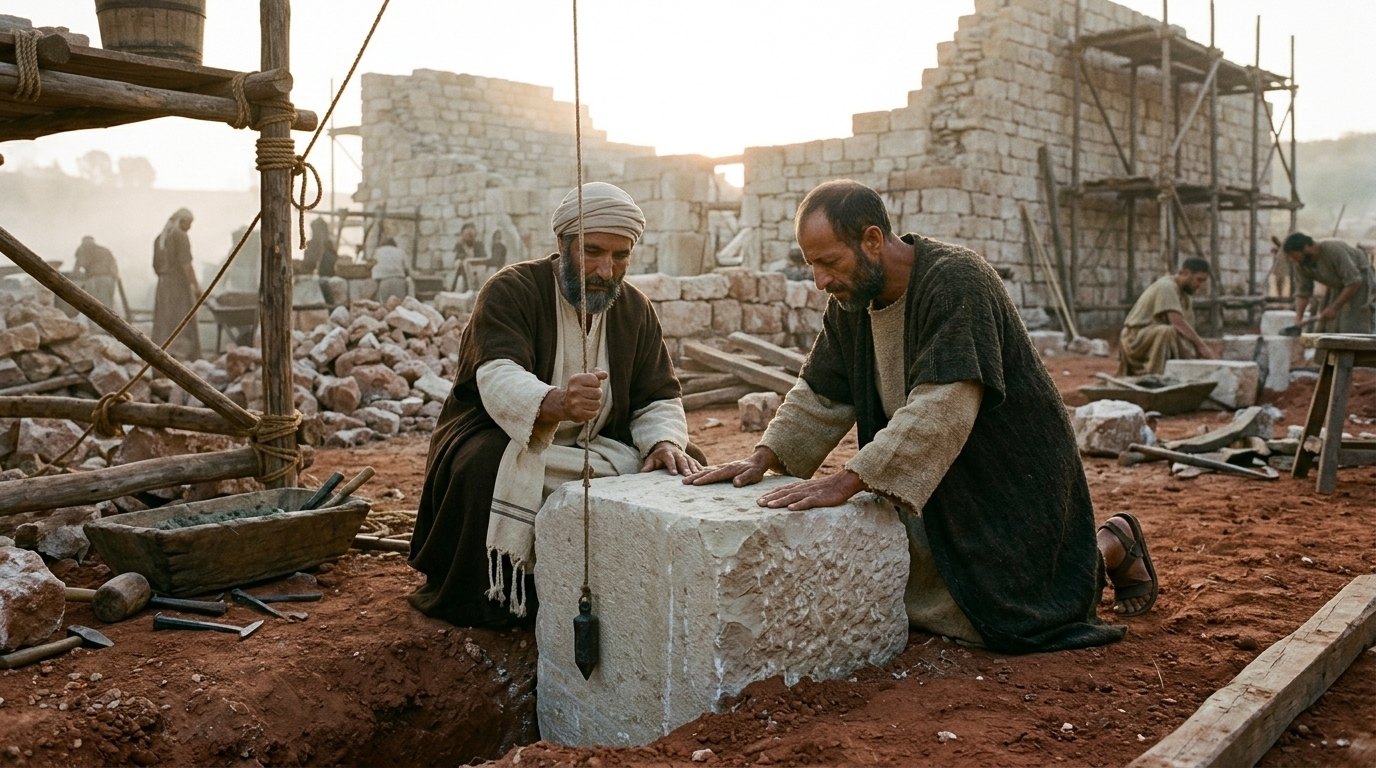
Ephesians 2:20
20 built on the foundation of the apostles and prophets, with Christ Jesus himself as the chief cornerstone.
New International Version (NIV)
The answer
An apostle is a sent one: a person commissioned to represent the sender. In its fullest New Testament sense, the title describes those specially chosen by Jesus to bear authoritative witness to him and help establish the church, especially the Twelve (Luke 6:13; Matthew 10:2-4). There are no apostles today with that same foundational authority. Apostolic ministry may continue in the lesser sense of pioneering, Christ-sent service, but always under Scripture and never above it.
The original apostles had a unique foundational role
Ephesians 2:20 says believers are "being built on the foundation of the apostles and prophets, Christ Jesus himself being the chief cornerstone." Several truths follow:
- Christ is supreme. The apostles are not the cornerstone; Jesus is. Their work and teaching direct the church to him.
- The foundation is not repeatedly relaid. First Corinthians 3:11 likewise identifies Jesus Christ as the only foundation that can be laid. Later generations build upon the apostolic foundation; they do not replace it with a new one.
- The church belongs to Christ. Jesus said that he would build his church (Matthew 16:18). No apostle, ancient or modern, owns the church or stands independently of Christ.
Consequently, no present-day leader can claim equality with the original apostles, authority to introduce doctrine binding like Scripture, or immunity from correction by Scripture.
What about apostles today?
Ephesians 4:11-13 names apostles alongside prophets, evangelists, pastors and teachers among Christ’s gifts for his church. This leaves room to distinguish the unrepeatable foundational office from a continuing functional ministry:
- Foundational apostles: No one today holds the distinctive authority belonging to the original apostolic witnesses.
- Apostolic ministry: The description can apply to pioneering missionaries, church planters and servants who establish or strengthen churches under Christ’s authority.
- Modern apostolic claims: A title proves nothing. Teaching must agree with Scripture, and the person remains accountable to Christ and to the apostolic teaching already given.
Christians differ over terminology. Some reserve apostle for the original foundational witnesses and describe later work as missionary or apostolic ministry. Others use apostle for the continuing functional ministry described above. The fixed biblical boundary is that no modern apostle can become a new foundation, exercise the Twelve’s unique authority, or place personal revelations alongside Scripture. Faithful service points back to Christ, the chief cornerstone, rather than exalting the person bearing the title.
Answered from Scripture · reviewed November 11, 2026
Scripture defines an apostle as one personally commissioned and sent out by the Lord Jesus Christ to proclaim His gospel, establish His church, and minister in the power of the Holy Spirit. While the Twelve and Paul hold an unrepeatable historical place as eyewitnesses of the risen Lord and foundational witnesses, the New Testament demonstrates that Christ continues to sovereignly give apostles to His church until all believers reach full unity and spiritual maturity.
The Commission of Christ
Jesus Called and Appointed the Twelve Apostles
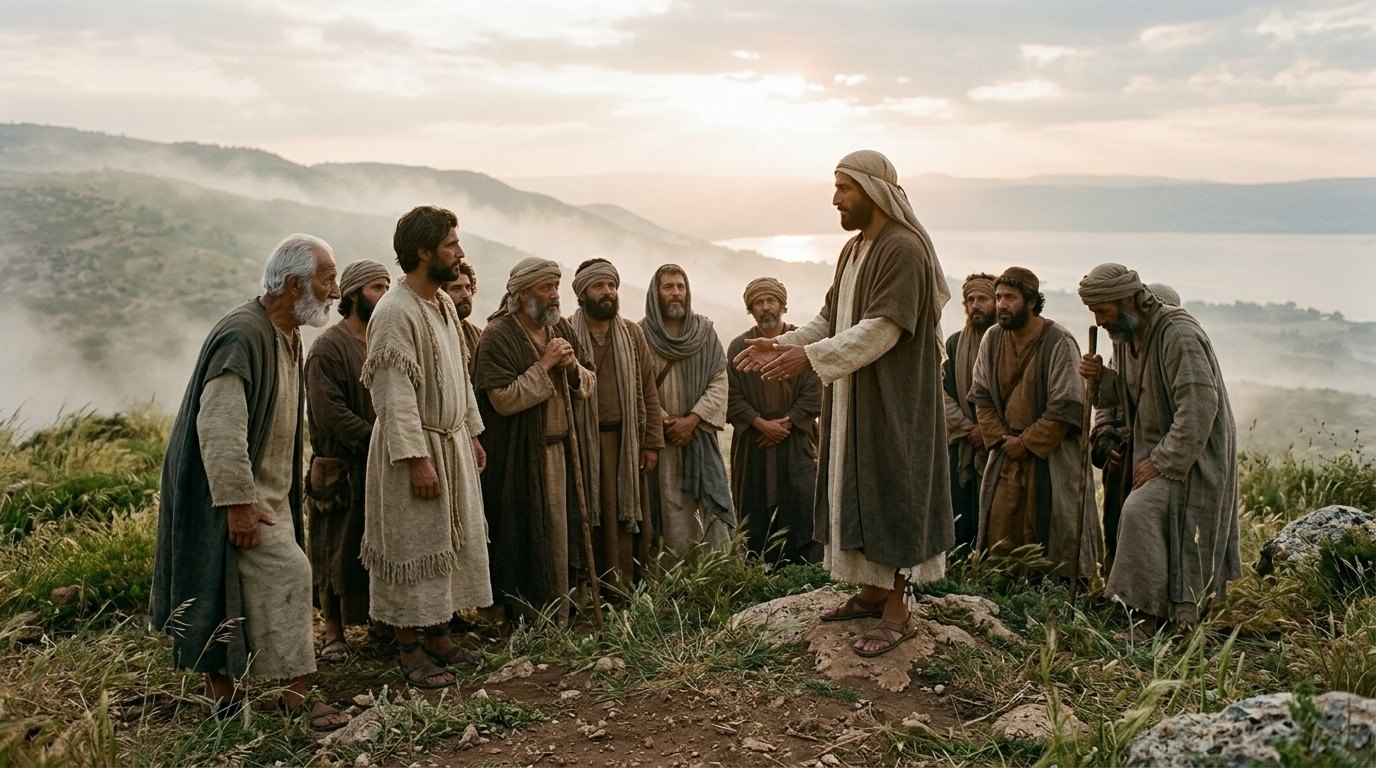
Jesus called his twelve disciples to him and gave them authority to drive out impure spirits and to heal every disease and sickness. These are the names of the twelve apostles: first, Simon (who is called Peter) and his brother Andrew; James son of Zebedee, and his brother John;
Matthew 10:1-2 (NIV)
Jesus explicitly names the Twelve as apostles after conferring authority upon them over unclean spirits and diseases.
In Matthew 10:1-2, Jesus explicitly confers His own authority over unclean spirits and diseases upon the twelve disciples, designating them officially as His sent apostles. Before sending them out to proclaim the kingdom of heaven, cast out demons, and heal the sick in Matthew 10:5-8, He spent the entire night in prayer to the Father, as recorded in Luke 6:12-13, before selecting them by name. Mark 3:14-15 reveals the deliberate pattern of this calling: Christ appointed the Twelve first that they might be with Him, and second that He might send them forth to preach with miraculous authority over demonic powers. Hebrews 3:1 anchors this entire commission in Christ Himself, naming Jesus the supreme Apostle and High Priest of our confession; as John 20:21 confirms, the Lord commissions His emissaries in the very manner that the Father originally sent Him into the world.
Following the betrayal and death of Judas, the early church recognized that the primary apostolic circle required a specific eyewitness qualification. In Acts 1:21-26, Peter establishes that a candidate to stand with the Eleven must have accompanied the Lord Jesus from the baptism of John until the day of His ascension, culminating in Matthias being chosen by lot to bear witness to the resurrection. This unique company holds an everlasting memorial in redemptive history, seen in Revelation 21:14 where the twelve foundation stones of the New Jerusalem bear the names of the twelve apostles of the Lamb. Yet their commission was far from an isolated historical event. In Matthew 28:18-20, the risen Christ delivers the Great Commission to disciple, baptize, and teach all nations to the end of the age, a global mission fueled by Acts 1:8, where the ascended Lord promises the baptism of the Holy Spirit to empower His witnesses to the uttermost parts of the earth.
| Passage | What it says |
|---|---|
| Matthew 10:1-4 | Jesus summons His twelve disciples, gives them power over unclean spirits and diseases, and formally identifies them as apostles. |
| Matthew 10:5-8 | Jesus instructs the apostles to preach the kingdom of heaven, heal the sick, raise the dead, and cast out demons. |
| Mark 3:14-15 | Jesus appoints twelve so that they might be with Him and that He might send them out to preach with authority. |
| Luke 6:12-13 | After praying all night, Jesus chooses twelve of His disciples whom He also names apostles. |
| Acts 1:21-26 | Matthias is numbered with the eleven apostles to replace Judas, having accompanied Jesus from John's baptism to the ascension. |
| Revelation 21:14 | The wall of the New Jerusalem has twelve foundation stones bearing the names of the twelve apostles of the Lamb. |
| Hebrews 3:1 | Designates Jesus Christ Himself as the ultimate Apostle and High Priest of the confession of the church. |
| John 20:21 | Jesus sends His disciples into the world just as the Father sent Him. |
| Matthew 28:18-20 | Jesus delivers the Great Commission, directing His chosen emissaries to disciple, baptize, and teach all nations. |
| Acts 1:8 | The risen Lord promises the Holy Spirit to empower the apostles as His witnesses to the earth's ends. |
Beyond the Twelve
The New Testament Names Other Sent Witnesses
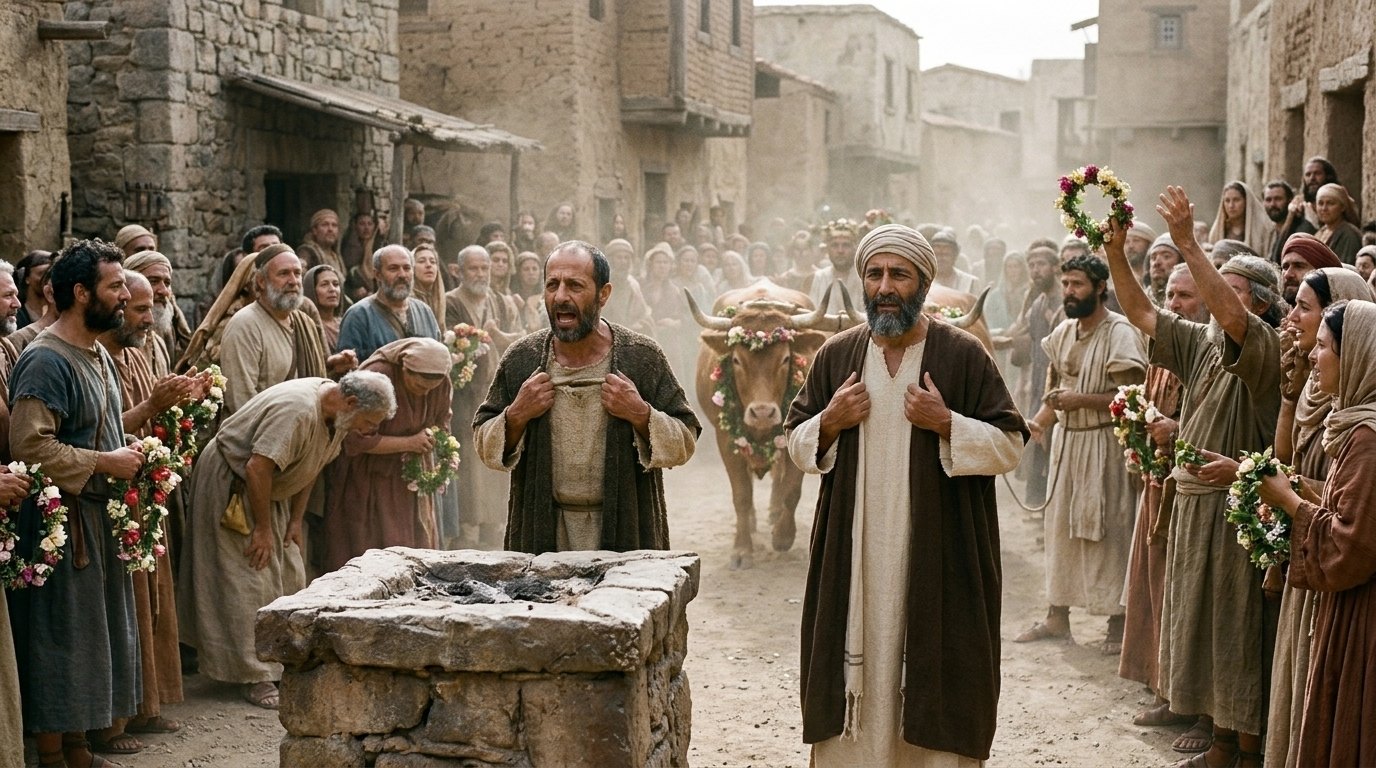
But when the apostles Barnabas and Paul heard of this, they tore their clothes and rushed out into the crowd, shouting:
Acts 14:14 (NIV)
Barnabas is explicitly identified as an apostle alongside Paul in the early church's missionary expansion.
Luke explicitly records in Acts 14:14 that Barnabas and Paul are both identified as apostles, tearing their garments when the citizens of Lystra attempt to offer sacrifices to them following a miraculous healing. This naming is not an isolated slip of the pen, for Acts 14:4 had already described the entire city of Iconium as divided between the local authorities and the apostles. Paul himself vigorously defended his authentic apostolic commission in 1 Corinthians 9:1-2, demanding of his detractors whether he had not seen Jesus our Lord and pointing directly to the Corinthian converts as the living seal of his apostleship. While 1 Corinthians 15:8-9 marks Paul as the last eyewitness to whom the resurrected Lord appeared in that foundational manner, designating himself the least of the apostles because he persecuted the church of God, his commission was unmistakably divine. As Galatians 1:1 declares, his sending came neither from men nor through man, but directly through Jesus Christ and God the Father.
The New Testament vocabulary of apostleship extends further into the life of the early congregations. In Galatians 1:19, Paul describes his early Jerusalem visit, testifying that he saw none of the other apostles except James, the Lord's brother. Writing to the believers in Thessalonica in 1 Thessalonians 2:6, the missionary team comprising Paul, Silvanus, and Timothy affirms that as apostles of Christ they possessed authority to make demands, yet chose gentleness among them. In Romans 16:7, Paul extends greetings to Andronicus and Junia, calling them kinsmen and fellow prisoners who are outstanding among the apostles. While the term is occasionally used functionally for emissaries sent by local congregations, such as the trusted messengers in 2 Corinthians 8:23 and Epaphroditus in Philippians 2:25, Scripture demonstrates that Christ raised up authentic apostolic laborers alongside and after the Twelve.
| Passage | What it says |
|---|---|
| Acts 14:4 | The city of Iconium is divided, with part of the populace siding with the Jews and part with the apostles. |
| Acts 14:14 | Luke designates Barnabas and Paul as apostles when they tear their clothes to prevent pagan sacrifice to them. |
| Romans 16:7 | Paul sends greetings to Andronicus and Junia, his kinsmen and fellow prisoners who are outstanding among the apostles. |
| 1 Corinthians 9:1-2 | Paul defends his apostleship on having seen Jesus our Lord and pointing to the Corinthians as his seal in the Lord. |
| 1 Corinthians 15:8-9 | Paul records the risen Christ appearing to him last of all, calling himself the least of the apostles. |
| Galatians 1:19 | Paul recalls seeing none of the other apostles in Jerusalem except James, the Lord's brother. |
| 1 Thessalonians 2:6 | Paul, Silvanus, and Timothy write that as apostles of Christ they might have made demands, yet were gentle. |
| 2 Corinthians 8:23 | Refers to the brethren assisting Paul as messengers, literally apostles of the churches, to the glory of Christ. |
| Philippians 2:25 | Paul refers to Epaphroditus as his brother, fellow worker, and the Philippians' apostle and minister to his need. |
| Galatians 1:1 | Paul clarifies his apostolic office came not from man or through man, but directly through Jesus Christ and God the Father. |
The Living Cornerstone
Christ Alone Is the Head and Supreme Foundation
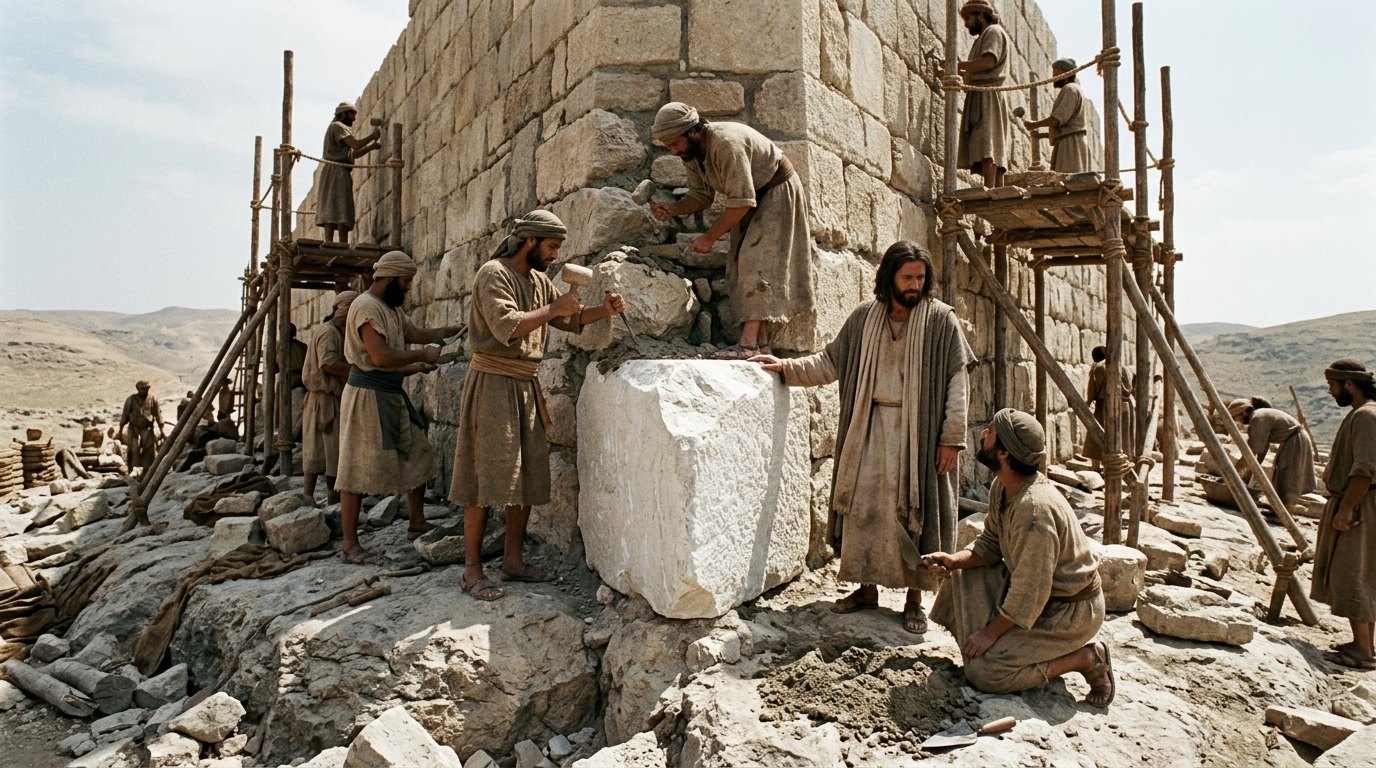
built on the foundation of the apostles and prophets, with Christ Jesus himself as the chief cornerstone.
Ephesians 2:20 (NIV)
The church is described as built on the apostolic and prophetic witness with Christ Jesus Himself as the chief cornerstone.
In Ephesians 2:20, the Apostle Paul reveals the architecture of the church, declaring that the household of God is built upon the foundation of the apostles and prophets, with Christ Jesus Himself being the chief cornerstone. This majestic declaration anchors the foundational witness of the New Testament messengers directly to the prophetic promises of the Old Testament. Centuries earlier, Psalm 118:22 foretold that the stone rejected by the builders would become the chief cornerstone, a promise echoed by the prophet in Isaiah 28:16, where the Lord God lays in Zion a tested stone, a precious cornerstone for a sure and unshakable foundation. When Jesus questioned His disciples at Caesarea Philippi in Matthew 16:18, He announced that He would build His church upon this rock, against which the gates of Hades will never prevail.
Scripture is uncompromising regarding the supreme supremacy of Jesus Christ in the structure of His people. In 1 Corinthians 3:11, Paul warns every builder that no one can lay any foundation other than the one already established, which is Jesus Christ alone. As believers are drawn into this redemption, Ephesians 2:19-22 explains that Gentiles and Jews are no longer strangers or aliens, but fellow citizens being fitted together into a holy temple in the Lord. Peter develops this same reality in 1 Peter 2:4-6, urging believers to come to Christ as living stones built up into a spiritual house, finding their security in the chosen and precious stone of Zion. Yet this cornerstone also marks an absolute divide; 1 Peter 2:7-8 warns that while the cornerstone is of supreme value to those who believe, He remains a stone of stumbling and a rock of offense to those who disobey the Word.
| Passage | What it says |
|---|---|
| Psalms 118:22 | The stone that the builders rejected has become the chief cornerstone. |
| Isaiah 28:16 | The Lord God lays in Zion a tested stone, a precious cornerstone for a sure foundation. |
| Matthew 16:18 | Jesus declares that He will build His church upon this rock and the gates of Hades shall not prevail. |
| 1 Corinthians 3:11 | Paul affirms that no one can lay any foundation other than the one already laid, which is Jesus Christ. |
| Ephesians 2:19-22 | Believers are fellow citizens and members of God's household, built upon the foundation of apostles and prophets with Christ as cornerstone. |
| 1 Peter 2:4-6 | Believers come to Christ as living stones being built into a spiritual house, resting upon the precious cornerstone. |
| 1 Peter 2:7-8 | To those who believe the stone is precious, but to the disobedient He is a stone of stumbling. |
The Ascended Gifts
Christ Bestows Apostles Until the Church Reaches Maturity
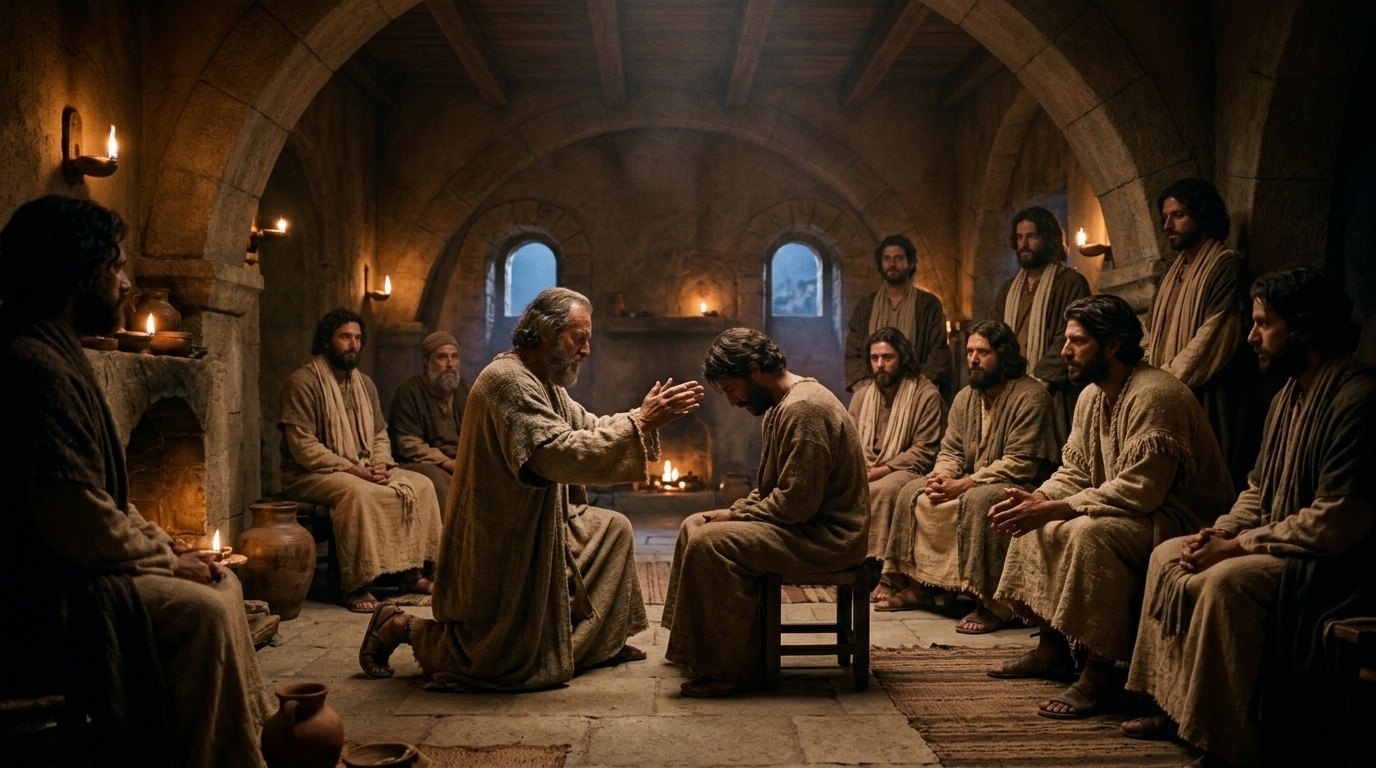
So Christ himself gave the apostles, the prophets, the evangelists, the pastors and teachers, to equip his people for works of service, so that the body of Christ may be built up until we all reach unity in the faith and in the knowledge of the Son of God and become mature, attaining to the whole measure of the fullness of Christ.
Ephesians 4:11-13 (NIV)
Ascension gifts—including apostles—are established to equip the saints until the body attains complete unity and mature fullness in Christ.
In Ephesians 4:11-13, the Apostle Paul declares that the ascended Christ gave apostles, prophets, evangelists, pastors, and teachers for a specific duration: until we all attain to the unity of the faith and mature fullness of Christ. Ephesians 4:7-10 grounds these ministry callings in the victorious ascension of Jesus, who conquered sin and death, led captivity captive, and poured out gifts to His church. Rather than a temporary scaffolding intended to be dismantled, these gifts operate to equip the saints for the work of ministry, building up the body of Christ so that believers are no longer children tossed to and fro by deceitful human doctrines, as outlined in Ephesians 4:14-16. Christ distributes these offices to ensure His church grows up into Him who is the living Head.
This continuous provision matches the sovereign operation of the Holy Spirit across the entire church age. According to 1 Corinthians 12:7-11, the Spirit distributes spiritual manifestations and gifts to each believer for the common good exactly as He wills, while 1 Corinthians 12:28 records that God has permanently appointed within the church first apostles, second prophets, and third teachers. Far from counseling believers to expect the cessation of the Spirit's gifts, Paul commands the church in 1 Corinthians 14:1 to pursue love and earnestly desire spiritual gifts, a command repeated in 1 Corinthians 14:39 not to forbid their exercise. The context of 1 Corinthians 13:8-12 proves that partial knowledge and prophecy give way only when the complete arrives—the day when believers see the Lord face to face at His return. As Peter boldly proclaimed at Pentecost in Acts 2:38-39, the promise of the Holy Spirit remains explicitly extended to every generation whom the Lord our God will call.
| Passage | What it says |
|---|---|
| Ephesians 4:7-10 | Grace was given to each according to the measure of Christ's gift when He ascended on high and led captivity captive. |
| Ephesians 4:11-12 | Christ gave apostles, prophets, evangelists, pastors, and teachers for equipping the saints for the work of ministry. |
| Ephesians 4:13-16 | These ministry gifts function until all attain unity of faith and maturity, growing up in all aspects into Christ. |
| 1 Corinthians 12:7-11 | The manifestation of the Spirit is given to each for profit, distributed individually just as the Spirit wills. |
| 1 Corinthians 12:28 | God has appointed in the church first apostles, second prophets, third teachers, then miracles, then gifts of healings and helps. |
| 1 Corinthians 14:1 | Paul urges believers to pursue love and earnestly desire the spiritual gifts. |
| 1 Corinthians 13:8-12 | Speaks of partial gifts continuing until the complete and mature state arrives when believers see face to face. |
| Acts 2:38-39 | Peter proclaims the gift of the Holy Spirit extends to all generations whom the Lord calls. |
| 1 Corinthians 14:39 | Paul commands believers to desire earnestly spiritual gifts and not forbid them in the assembly. |
True Versus False
Apostolic Authenticity Demands Testing Against Scripture
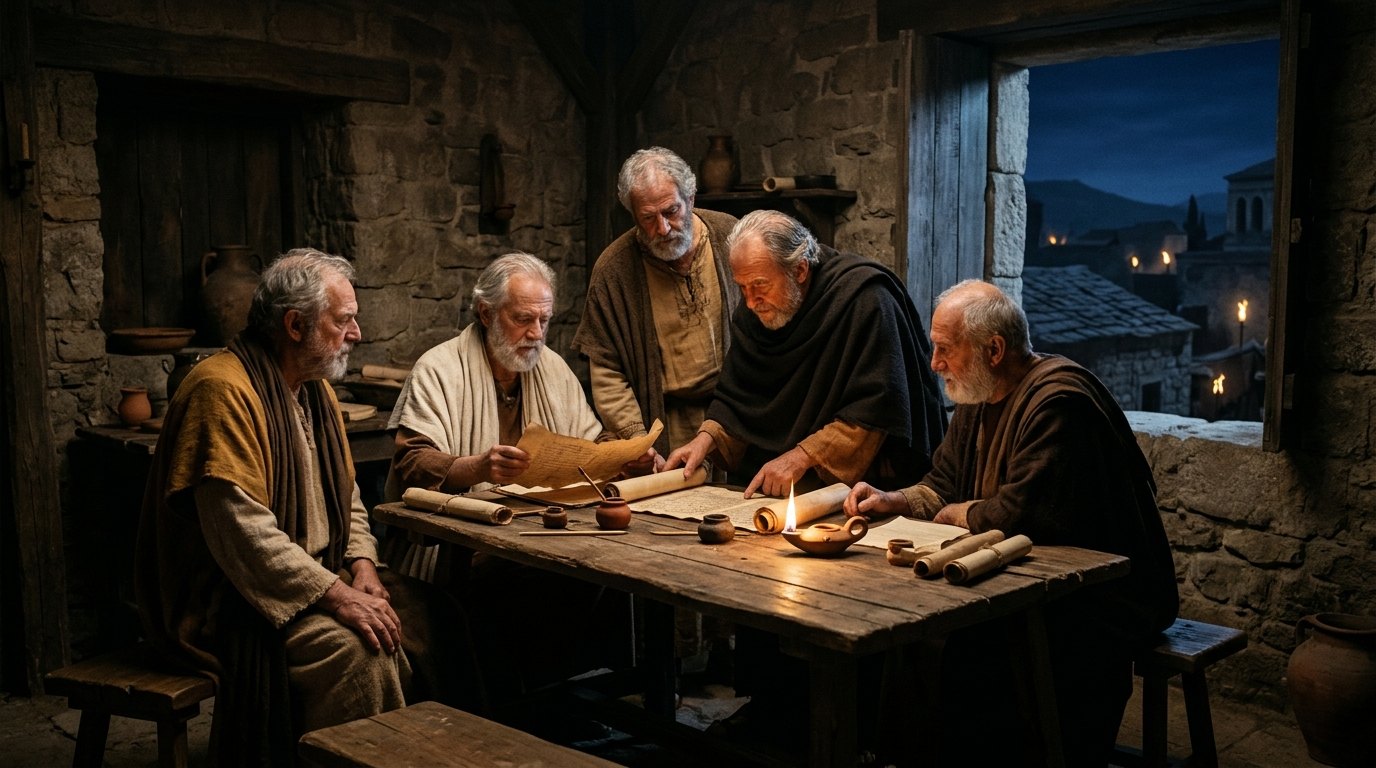
I persevered in demonstrating among you the marks of a true apostle, including signs, wonders and miracles.
2 Corinthians 12:12 (NIV)
Paul defines genuine apostolic ministry by patient endurance, signs, wonders, and mighty deeds accomplished by God.
Genuine apostolic ministry is validated not by self-promotion or charismatic titles, but by the undeniable work of God through human vessels. In 2 Corinthians 12:12, Paul writes that the signs of a true apostle were performed among you with utmost patience, with signs and wonders and mighty works. True apostles do not point to their own personal brilliance; rather, their calling is authenticated through patient endurance under trials, profound humility, and the unmistakable, miraculous power of the Holy Spirit.
Scripture explicitly warns that counterfeits will inevitably arise to deceive the flock. Paul unmasks these fraudulent laborers in 2 Corinthians 11:13-15, identifying them as deceitful workers who disguise themselves as apostles of Christ, masquerading in the same manner as Satan transforms himself into an angel of light. Because counterfeit ministry is a constant peril, believers are commanded in 1 Thessalonians 5:19-21 not to quench the Spirit or despise prophetic utterances, but to test everything and hold fast to that which is good. Similarly, 1 John 4:1 charges the church to test every spirit against the truth of the incarnation and God's revealed Word.
This responsibility of spiritual discernment is praised directly by Christ Himself. In Revelation 2:2, the glorified Lord commends the congregation in Ephesus because they carefully tested those who claimed to be apostles and exposed them as liars. The ultimate touchstone of apostolic authenticity is unswerving fidelity to God's revealed gospel: Galatians 1:8-9 warns that even if an apostle or an angel from heaven preaches a gospel contrary to what was delivered, let them be accursed. Believers are summoned in Jude 1:17 and 2 Peter 3:2 to remember the words and commandments delivered by the foundational apostles, walking in the pattern of Acts 2:42, where the church devoted themselves entirely to the apostles' teaching, fellowship, breaking of bread, and prayer.
| Passage | What it says |
|---|---|
| 2 Corinthians 11:13-15 | Paul warns against false apostles and deceitful workers who disguise themselves as apostles of Christ like Satan disguised as light. |
| 2 Corinthians 12:11-12 | The distinguishing signs of a true apostle were performed with utmost patience through signs, wonders, and miracles. |
| 1 Thessalonians 5:19-21 | Believers are commanded not to quench the Spirit or despise prophecies, but to examine all things and hold fast to the good. |
| 1 John 4:1 | The church is instructed not to believe every spirit, but to test the spirits to see whether they are from God. |
| Jude 1:17 | Jude exhorts believers to remember the predictions spoken beforehand by the apostles of our Lord Jesus Christ. |
| Revelation 2:2 | Jesus commends the church in Ephesus for testing those who call themselves apostles and are not, finding them false. |
| 2 Peter 3:2 | Peter instructs believers to remember the predictions of the prophets and the commandment of the Lord spoken through the apostles. |
| Galatians 1:8-9 | Paul pronounces anathema upon anyone, even an apostle or angel, who preaches a gospel contrary to the original truth. |
| Acts 2:42 | The early church continuously devoted themselves to the apostles' doctrine, fellowship, breaking of bread, and prayers. |
Where in the Bible
| Book | Passages |
|---|---|
| Psalms | 1 · Psalms 118:22 |
| Isaiah | 1 · Isaiah 28:16 |
| Matthew | 4 · Matthew 10:1-4, Matthew 10:5-8, Matthew 28:18-20, Matthew 16:18 |
| Mark | 1 · Mark 3:14-15 |
| Luke | 1 · Luke 6:12-13 |
| John | 1 · John 20:21 |
| Acts | 6 · Acts 1:21-26, Acts 1:8, Acts 14:4, Acts 14:14, Acts 2:38-39, Acts 2:42 |
| Romans | 1 · Romans 16:7 |
| 1 Corinthians | 8 · 1 Corinthians 9:1-2, 1 Corinthians 15:8-9, 1 Corinthians 3:11, 1 Corinthians 12:7-11, 1 Corinthians 12:28, 1 Corinthians 14:1, 1 Corinthians 13:8-12, 1 Corinthians 14:39 |
| 2 Corinthians | 3 · 2 Corinthians 8:23, 2 Corinthians 11:13-15, 2 Corinthians 12:11-12 |
| Galatians | 3 · Galatians 1:19, Galatians 1:1, Galatians 1:8-9 |
| Ephesians | 4 · Ephesians 2:19-22, Ephesians 4:7-10, Ephesians 4:11-12, Ephesians 4:13-16 |
| Philippians | 1 · Philippians 2:25 |
| 1 Thessalonians | 2 · 1 Thessalonians 2:6, 1 Thessalonians 5:19-21 |
| Hebrews | 1 · Hebrews 3:1 |
| 1 Peter | 2 · 1 Peter 2:4-6, 1 Peter 2:7-8 |
| 2 Peter | 1 · 2 Peter 3:2 |
| 1 John | 1 · 1 John 4:1 |
| Jude | 1 · Jude 1:17 |
| Revelation | 2 · Revelation 21:14, Revelation 2:2 |
The story in order
- Jesus calls the Twelve (c. AD 28) · Mark 3:14 · Jesus formally appoints twelve disciples as apostles.
- Jesus sends out the Twelve (c. AD 28) · Matthew 10:5 · He commissions them to preach and heal.
- Jesus commissions all disciples (c. AD 30) · Matthew 28:19 · The Great Commission empowers them to disciple nations.
- The promise of the Spirit (AD 30) · Acts 1:8 · The risen Lord promises power for witness.
- Matthias chosen as apostle (AD 30) · Acts 1:26 · He replaces Judas among the Twelve.
- Pentecost and the Spirit's gifts (AD 30) · Acts 2:4 · The Spirit empowers believers for ministry.
- Barnabas and Paul are apostles (c. AD 48) · Acts 14:14 · They are recognized as apostles by the church.
- Paul defends his apostleship (c. AD 55) · 1 Corinthians 9:1 · He asserts his commission from Christ.
- Christ gives apostles to the church (c. AD 60) · Ephesians 4:11 · Apostles equip saints until maturity.
- New Jerusalem foundations (c. AD 95) · Revelation 21:14 · Twelve apostles are the Lamb's foundation stones.
Key words
- Apostle (apostolos, ἀπόστολος)
- One personally commissioned and sent by Christ. · Mark 3:14
- Foundation (themelios, θεμέλιος)
- The basis upon which the church is built. · Ephesians 2:20
- Witness (martus, μάρτυς)
- One who testifies to what they have seen or heard. · Acts 1:8
- Equipping (katartismos, κατάρτισμος)
- Preparing believers for service and ministry. · Ephesians 4:12
- Maturity (teleiotēs, τελειότης)
- Reaching full spiritual development in Christ. · Ephesians 4:13
Recognizing the ongoing gifts of the ascended Christ invites the church to honor God's sovereign design without succumbing to counterfeit authority. The Lord who called and sent His servants continues to equip His body with every gift necessary until He presents her complete and blameless in His presence.
45 passages, each cited once.
How the major Christian traditions read this
All Christians confess that Jesus Christ appointed the Twelve and Paul as unique, foundational witnesses whose inspired testimony forms the bedrock of the church (Ephesians 2:20).
Catholic
We teach that the unique foundational office of the apostles continues through their successors, the bishops, with the Bishop of Rome presiding as the successor of Saint Peter (Matthew 16:18). Christ commissioned His apostles to guide and teach His flock, promising to be with them always (Matthew 28:18-20). While no new public revelation is given beyond the apostolic age, the fullness of apostolic authority to govern, teach, and administer the sacraments remains alive today through holy orders and apostolic succession.
Scripture: Matthew 16:18, Matthew 28:18-20, Ephesians 2:20
Orthodox
We confess the one, holy, catholic, and apostolic Church, preserved in unbroken continuity of faith, mysteries, and episcopal succession from the original apostles (Ephesians 2:20; 2 Timothy 2:2). The unique office of the Twelve is complete, yet their apostolic ministry and oversight continue in the college of bishops who safeguard the faith delivered once for all. We also honor great saints who evangelized whole nations with the title 'Equal-to-the-Apostles', recognizing their exceptional missionary labor under the authority of Christ's Church.
Scripture: Ephesians 2:20, 2 Timothy 2:2, Jude 1:3
Lutheran
We confess that the foundational office of apostle was unique to those directly called by Christ and eyewitnesses of His resurrection (Acts 1:21-22). Once that foundation was established in the Holy Scriptures, that extraordinary office ceased (Ephesians 2:20). Today, the apostolic work continues not through living apostles, but through the regular pastoral office: ministers called to preach the pure Word of God and rightly administer the holy Sacraments according to the Gospel (Romans 10:14-17).
Scripture: Acts 1:21-22, Ephesians 2:20, Romans 10:14-17
Reformed & Presbyterian
We hold that the apostolic office was extraordinary and temporary, given to lay the unrepeatable foundation of the church and provide the inerrant canon of Scripture (Ephesians 2:20; 1 Corinthians 3:11). An apostle had to be an eyewitness of the risen Christ and personally commissioned by Him with sign gifts (Acts 1:21-22; 2 Corinthians 12:12). Those qualifications cannot be met today. The ordinary and permanent offices of the church are now elders and deacons, whose sole authority rests upon the written Word of God.
Scripture: Acts 1:21-22, 1 Corinthians 3:11, Ephesians 2:20, 2 Corinthians 12:12
Anglican & Episcopal
We maintain that the foundational authority of the original apostles is preserved in the historic episcopate and the canonical Scriptures (Ephesians 2:20; 2 Timothy 2:2). The title of apostle belonged uniquely to the first witnesses chosen directly by the Lord. Today, their pastoral and governing oversight is carried forward through bishops in apostolic succession, whose calling is to guard the apostolic faith, preach the Word, and shepherd the flock under the supreme authority of Holy Scripture.
Scripture: Ephesians 2:20, 2 Timothy 2:2, Acts 20:28
Baptist
We believe the office of apostle belonged solely to the first century. Scripture clearly sets out the qualifications: one had to see the risen Lord and be commissioned directly by Him (1 Corinthians 9:1; Acts 1:21-22). Because the foundation has been laid once for all (Ephesians 2:20), no apostles exist today. Local churches are governed by pastors (elders) and deacons under the final authority of the Bible. Pioneering missionaries carry on apostolic work in function, but they never bear the apostolic title or office.
Scripture: Acts 1:21-22, 1 Corinthians 9:1, Ephesians 2:20
Methodist & Wesleyan
We understand that the original apostles had a singular, foundational role in the establishment of Christ's church and the giving of the New Testament (Ephesians 2:20). That authoritative office is not repeated. Nevertheless, Christ still sends out servants in an 'apostolic spirit'—as seen in John Wesley's missionary zeal and circuit riders—to spread scriptural holiness across the land and plant churches (Matthew 28:19-20). The ministry of the Gospel continues through ordained elders and bishops serving under Scripture.
Scripture: Matthew 28:19-20, Ephesians 2:20, 2 Timothy 4:1-2
Pentecostal & Charismatic
We distinguish between the foundational Twelve who penned Scripture and the ongoing ministry gift of the apostle listed in Ephesians 4:11-13. While no modern leader has authority to add to Scripture or claim the unique status of the Twelve (Revelation 21:14), Christ continues to give apostles to His church today until we reach full maturity. These are trans-local pioneers, church planters, and fathering leaders whose ministries are marked by spiritual breakthrough, signs, and missionary expansion (2 Corinthians 12:12).
Scripture: Ephesians 4:11-13, 2 Corinthians 12:12, Revelation 21:14
Non-denominational & Evangelical
We hold that the authoritative office of apostle was unique to the first-century eyewitnesses who laid the foundation of the faith (Acts 1:21-22; Ephesians 2:20). No one today can claim equal authority or speak new binding revelation. While some among us use 'apostolic' simply to describe pioneer church planting or cross-cultural mission work (Romans 15:20), the title and authoritative office of apostle are not active today. The local church is guided by elders subject entirely to the completed Scriptures.
Scripture: Acts 1:21-22, Romans 15:20, Ephesians 2:20
Where they differ
The continuation of the apostolic office
- Catholic
- Apostolic authority continues through the historic succession of bishops under the Pope.
- Orthodox
- Apostolic oversight continues through the college of bishops in historical succession.
- Lutheran
- The office ceased entirely; pastoral ministry carries on through the Word.
- Reformed & Presbyterian
- The extraordinary office ceased once the New Testament foundation was established.
- Anglican & Episcopal
- The original office ceased, but its governing ministry continues in bishops.
- Baptist
- The office ended with the original eyewitnesses; only pastors and deacons remain.
- Methodist & Wesleyan
- The office was unique and temporary, though an apostolic missionary spirit continues.
- Pentecostal & Charismatic
- The ministry gift of apostle continues today for church planting and leadership.
- Non-denominational & Evangelical
- The office ceased; modern apostolic work is strictly functional church planting.
Scripture: Acts 1:21-22, Ephesians 2:20, Ephesians 4:11-13
Meaning of Ephesians 4:11 gifts today
- Catholic
- Fulfilled in the hierarchy of bishops, priests, and deacons in the Church.
- Orthodox
- Expressed through the hierarchical and sacramental life of the Church's bishops.
- Lutheran
- Fulfilled in the regular, ordained office of the holy ministry preaching Christ.
- Reformed & Presbyterian
- Apostles and prophets were foundational; evangelists, pastors, and teachers remain active.
- Anglican & Episcopal
- Expressed in the historic threefold ministry of bishops, priests, and deacons.
- Baptist
- Refers to foundational gifts that gave way to pastors and teachers.
- Methodist & Wesleyan
- Reflects ministries that build the church, with apostles being historically foundational.
- Pentecostal & Charismatic
- All five ministry offices remain active until the church reaches full maturity.
- Non-denominational & Evangelical
- Apostolic role was foundational; functional roles like teaching and evangelism continue.
Scripture: Ephesians 4:11-13, 1 Corinthians 12:28
Your pastor can tell you where your church stands.
Scripture cited
- Ephesians 2:20
- Ephesians 4:11-13
- Matthew 16:18
- Ephesians 4:7-16