What does the Bible say about cancer?

2 Corinthians 4:16-18
16 Therefore we do not lose heart. Though outwardly we are wasting away, yet inwardly we are being renewed day by day.
17 For our light and momentary troubles are achieving for us an eternal glory that far outweighs them all.
18 So we fix our eyes not on what is seen, but on what is unseen, since what is seen is temporary, but what is unseen is eternal.
New International Version (NIV)
The answer
Scripture does not name cancer, but it speaks directly to the realities cancer brings: sickness in a world under decay, compassionate prayer and medical care, God’s power to heal, and the certainty that Christ will finally abolish death and pain. A cancer diagnosis is not proof that the sick person sinned or lacks faith.
Cancer is not automatic evidence of personal sin
When the disciples asked whose sin had caused a man’s blindness, Jesus answered, “This man didn’t sin, nor did his parents, but that the works of God might be revealed in him” (John 9:3). That forbids the cruel shortcut from diagnosis to accusation.
More broadly, sickness belongs to a creation subjected to futility and “the bondage of decay,” groaning as it awaits liberation (Romans 8:20-22). This explains the condition of the world; it does not give observers the right to identify the divine purpose behind every tumour or to treat suffering people as though their pain were imaginary.
Jesus meets sickness with compassion and power
Jesus “healed all who were sick” in Matthew 8:16, and Matthew 8:17 connects his healing ministry with the words, “He took our infirmities and bore our diseases.” His healings reveal both his compassion and his authority over disease.
He also grieves with the suffering. At Lazarus’s grave, Jesus was deeply troubled, and John 11:35 says simply, “Jesus wept” (John 11:33-35). Christ is neither indifferent to suffering nor defeated by disease.
Pray earnestly for healing, without making healing a test of faith
James 5:14-15 instructs sick believers to call for the elders, who are to pray over them and anoint them with oil in the Lord’s name. James 5:16 adds, “The insistent prayer of a righteous person is powerfully effective.” God truly heals, and persistent prayer for healing is right.
Yet healing is not something faith can demand on a timetable. After Paul repeatedly asked for his affliction to depart, the Lord told him, “My grace is sufficient for you, for my power is made perfect in weakness” (2 Corinthians 12:8-9). Paul also wrote, “I left Trophimus at Miletus sick” (2 Timothy 4:20). Continuing cancer therefore does not prove weak faith, secret sin or abandonment by God. Prayer trusts God and seeks his will (1 John 5:14); it is not a technique that guarantees remission.
Medical care and prayer belong together
Luke is called “the beloved physician” (Colossians 4:14), and Jesus commended the Samaritan who bound a wounded man’s injuries, applied oil and wine, transported him and arranged continuing care (Luke 10:33-35). Receiving medical treatment is not unbelief, and treatment should not be abandoned to demonstrate faith.
A particular cancer plan is a medical matter: keep the oncology team’s plan and make decisions about treatment, side effects and palliative care with the medical professionals responsible for it. Prayer, practical help and skilled care can work together rather than compete.
Hope can be completely honest about bodily suffering
Paul does not deny bodily decline: “our outward person is decaying,” yet “our inward person is renewed day by day” (2 Corinthians 4:16). He calls affliction “light” and “for the moment” in comparison with “an eternal weight of glory” (2 Corinthians 4:17), and directs attention from temporary, visible things to eternal, unseen things (2 Corinthians 4:18).
This does not mean pretending cancer is small. It means cancer is not the largest or final reality. God is “the Father of mercies and God of all comfort” (2 Corinthians 1:3), and his comfort equips suffering people to comfort others with the compassion they themselves have received (2 Corinthians 1:4).
Christ’s resurrection is the final answer to cancer
Jesus said, “I am the resurrection and the life. He who believes in me will still live, even if he dies” (John 11:25). His resurrection is the first fruits of the resurrection of his people (1 Corinthians 15:20-23), and “the last enemy that will be abolished is death” (1 Corinthians 15:26).
The Christian hope is therefore not merely an improved outlook, but bodily resurrection and a renewed creation. There, “Death will be no more; neither will there be mourning, nor crying, nor pain any more” (Revelation 21:4). God seals that promise with the declaration that “these words of God are faithful and true” (Revelation 21:5).
Answered from Scripture · reviewed November 11, 2026
While modern medical terms like cancer do not appear in the ancient biblical text, Scripture speaks directly to every reality an illness touches: bodily frailty, deep suffering, the mystery of disease, and the enduring presence of God. It neither ignores physical decay nor treats illness as an automatic sign of personal sin, offering instead an honest foundation for lament, endurance, and eternal hope.
Bodily Frailty
Our Outer Person Decays While the Inward Is Renewed

Therefore we do not lose heart. Though outwardly we are wasting away, yet inwardly we are being renewed day by day.
2 Corinthians 4:16 (NIV)
Paul plainly acknowledges physical wasting while revealing God's continuous interior renewal.
The apostle Paul confronts the unvarnished reality of physical decay when he writes in 2 Corinthians 4:16 that though our outer self is wasting away, our inner self is being renewed day by day. Scripture never denies the painful reality of biological decline; mortal flesh carries the vulnerability of dust. Yet this outer wasting is met by an ongoing, sovereign work of divine preservation within the human spirit. Because believers have received this ministry through the mercy of God, 2 Corinthians 4:1 affirms that we do not lose heart when weakness overtakes our limbs.
This physical vulnerability points forward to an incomparable hope. In 2 Corinthians 4:17, Paul frames the sharpest afflictions of this present age as a light, momentary weight that prepares for us an eternal weight of glory beyond all comparison. The passage does not minimize the agony of the sickbed, but establishes a true scale: mortal suffering is bounded by time, whereas the glory it heralds is without measure. Therefore, as 2 Corinthians 4:18 instructs, the believer looks not to the transient things seen by human eyes, but to the unseen promises established in Christ.
This bodily decline is not an individual anomaly, but part of a fallen cosmos. In Romans 8:22, Scripture reveals that the whole creation groans together in the pains of childbirth under the bondage of corruption. Believers are not exempt from this universal struggle; according to Romans 8:23, we who have the firstfruits of the Spirit groan inwardly while eagerly waiting for our adoption as sons, the full redemption of our bodies. Cancer and bodily decay belong to this interim groaning, an ordeal that will terminate in bodily resurrection.
| Passage | What it says |
|---|---|
| 2 Corinthians 4:16 | Affirms that while the mortal body wastes away, our inner spirit is being renewed day by day. |
| 2 Corinthians 4:17 | Frames present afflictions as temporary burdens producing an eternal weight of glory beyond comparison. |
| 2 Corinthians 4:18 | Directs focus away from visible, transient physical realities toward the unseen and eternal promises. |
| 2 Corinthians 4:1 | Declares that receiving God's mercy keeps the believer from losing heart amid arduous service. |
| Romans 8:22 | Describes the entire created order groaning together under the burden of corruption. |
| Romans 8:23 | Explains that believers groan inwardly as they await the full redemption of their bodies. |
Exhausted Strength
God Sustains the Faint When Mortal Strength Ceases
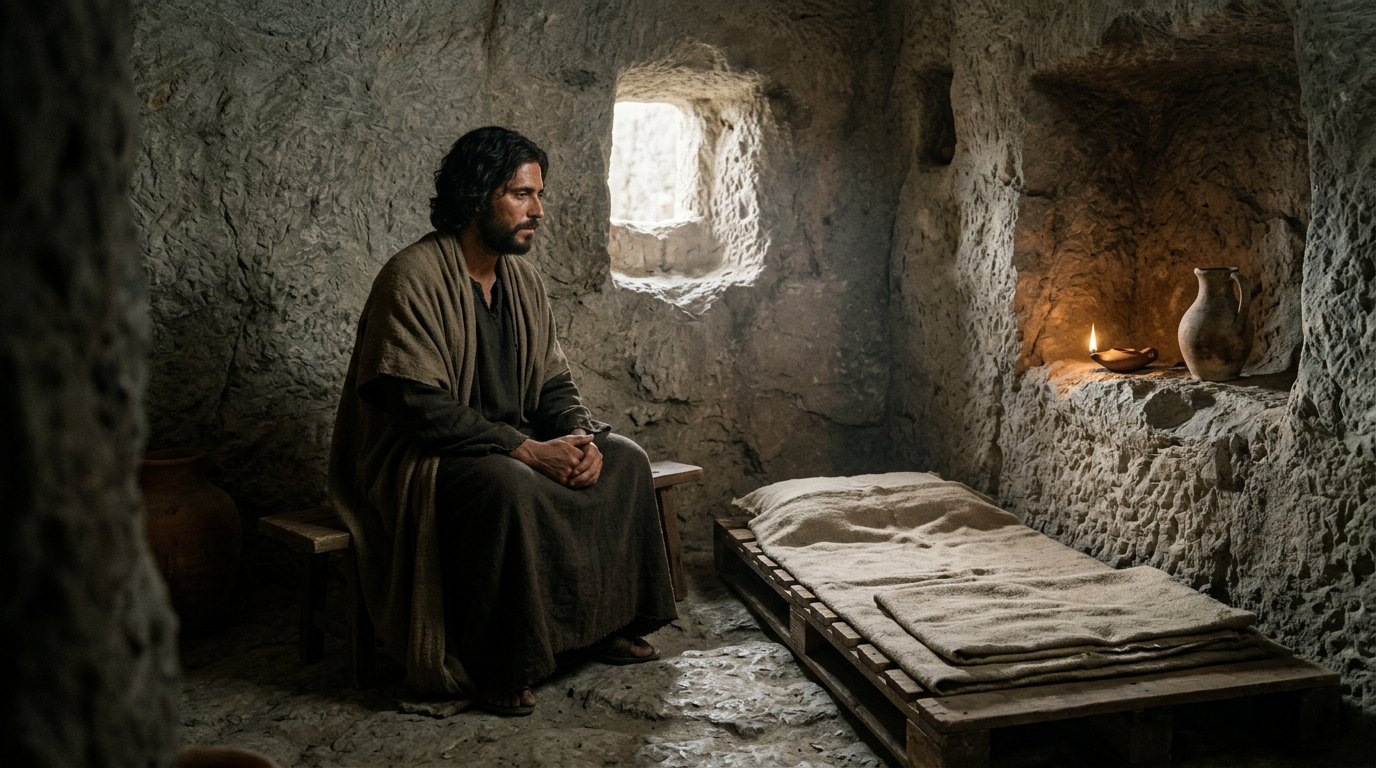
My flesh and my heart may fail, but God is the strength of my heart and my portion forever.
Psalms 73:26 (NIV)
Asaph captures the exact experience of bodily failure met by divine endurance.
When physical illness exhausts human resolve, the psalmist speaks with unflinching honesty in Psalm 73:26, confessing that my flesh and my heart may fail, but God is the strength of my heart and my portion forever. Asaph describes a condition familiar to anyone battling aggressive sickness: the body diminishes, natural endurance evaporates, and human courage falters. At that exact boundary of total exhaustion, the Lord presents Himself not as an idea, but as an unshakable refuge and eternal inheritance.
The prophet Isaiah proclaims this same divine character in Isaiah 40:29, declaring that the Lord gives power to the faint, and to him who has no might He increases strength. Even the natural vitality of youth falters under mortal strain, yet Isaiah 40:31 promises that those who wait for the Lord shall renew their strength, mounting up with wings like eagles, running without weariness, and walking through long trials without fainting.
This principle becomes intensely personal in Paul's struggle with his physical affliction. In 2 Corinthians 12:9, Christ answers his repeated prayers for relief with a decisive guarantee: My grace is sufficient for you, for my power is made perfect in weakness. Weakness is not an obstacle to divine fellowship, but the arena where Christ's sustaining power is visibly manifested, prompting Paul to rejoice in hardships for Christ's sake in 2 Corinthians 12:10.
God meets the bedridden with tender care. In Psalm 41:3, Scripture records that the Lord sustains him on his sickbed, transforming his languishing into rest. Furthermore, Psalm 34:18 assures the sufferer that the Lord is near to the brokenhearted and saves those crushed in spirit, never abandoning His children in the hour of bodily collapse.
| Passage | What it says |
|---|---|
| Psalms 73:26 | Confesses that even when physical flesh and heart fail, God remains the heart's enduring portion. |
| Isaiah 40:29 | Proclaims that the Lord gives power to the faint and strengthens those who lack might. |
| Isaiah 40:31 | Promises renewed strength like eagles' wings to those who patiently wait upon the Lord. |
| 2 Corinthians 12:9 | Records Christ assuring Paul that divine grace is sufficient and perfected in human weakness. |
| 2 Corinthians 12:10 | Demonstrates contentment in weakness, distress, and hardship so Christ's power may visibly rest upon us. |
| Psalms 41:3 | The Lord sustains the sick upon their bed of illness and restores them from languishing. |
| Psalms 34:18 | The Lord remains near to the brokenhearted and saves those crushed in spirit. |
Roots of Disease
Illness Exists in a Broken World, Not as Direct Punishment
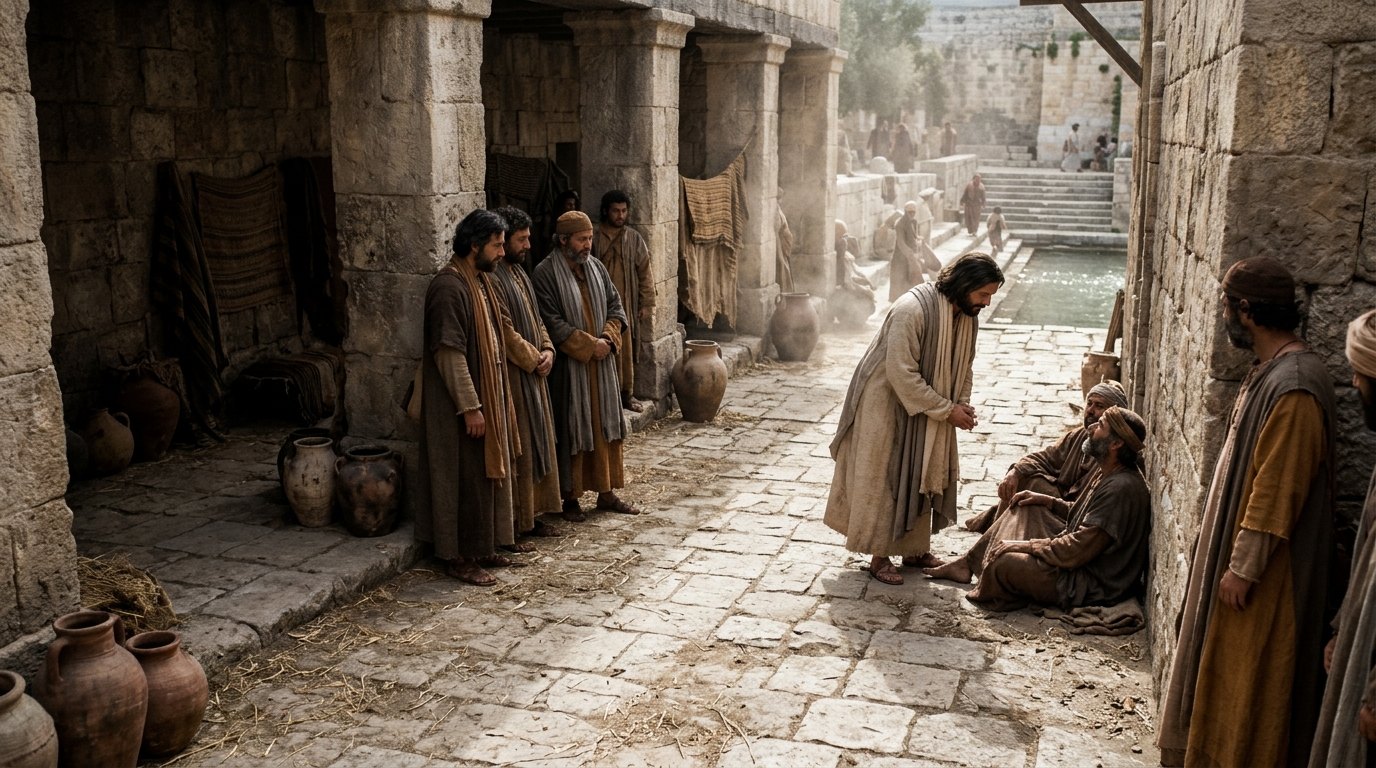
“Neither this man nor his parents sinned,” said Jesus, “but this happened so that the works of God might be displayed in him.
John 9:3 (NIV)
Jesus explicitly rejects the assumption that personal or parental sin caused a man's severe affliction.
A destructive error in times of grave illness is the assumption that severe sickness indicates personal guilt. Jesus utterly dismantles this premise in John 9:3, answering His disciples' inquiry about a man blind from birth with the clear verdict: It was not that this man sinned, or his parents, but that the works of God might be displayed in him. The disciples in John 9:1 had observed the man not with compassion, but as a moral puzzle, asking directly in John 9:2 whose transgression had earned this misery. Christ refuted their formula, establishing that catastrophic sickness does not track an individual's specific sins.
Jesus reinforced this principle in Luke 13:4 when referencing the sudden collapse of the tower in Siloam, asking whether those eighteen victims were worse offenders than all others in Jerusalem. In Luke 13:5, He stressed that while tragedy reminds every human of universal mortality, divine calamities are not targeted punishments for selected individuals. The historical record of Job 2:7 corroborates this: Satan struck righteous Job with loathsome sores from sole to crown, an affliction occurring precisely while Job remained blameless before God.
Even kings and apostles witnessed severe illness among the faithful. In 2 Kings 20:1, King Hezekiah became sick to the point of death, yet the prophet Isaiah in 2 Kings 20:7 prescribed an ordinary poultice of figs for his boil, joining prayer with practical means. Likewise, in Philippians 2:27, Paul's dear co-worker Epaphroditus fell ill near unto death, yet God showed mercy upon him. Scripture treats disease as a consequence of living in a fallen world, never as proof of divine abandonment.
| Passage | What it says |
|---|---|
| John 9:1 | Introduces a man blind from birth whom the disciples view as a theological riddle. |
| John 9:2 | Records the disciples asking whether the man or his parents sinned to cause his blindness. |
| John 9:3 | States clearly that neither sinned, but that the works of God might be displayed in him. |
| Luke 13:4 | Cites the collapse of the tower in Siloam as tragic disaster, not targeted divine vengeance. |
| Luke 13:5 | Warns hearers that suffering reminds every person of universal mortality and the shared need to repent. |
| Job 2:7 | Recounts Satan striking righteous Job with painful sores from sole to crown. |
| 2 Kings 20:1 | Hezekiah falls mortally ill with an incurable sickness, illustrating severe bodily affliction among God's faithful. |
| 2 Kings 20:7 | Isaiah instructs a poultice of figs to be applied to Hezekiah's severe boil for recovery. |
| Philippians 2:27 | Epaphroditus was ill near to death, yet God showed mercy on him and Paul. |
Honest Sorrow
Lament and Tears Are the Language of Faithful Sufferers
Jesus wept.
John 11:35 (NIV)
The shortest verse in Scripture demonstrates that God incarnate weeps in the face of death and disease.
Scripture never expects believers to face severe illness with stoic detachment; it provides the robust vocabulary of lament. At the grave of Lazarus, John 11:35 records the simplest and most staggering sentence: Jesus wept. Standing before the raw consequence of physical decay and grief, God the Son did not rebuke the weeping sisters or offer cold platitudes; He shared their tears openly, validating our sorrow when disease invades life.
The biblical writers poured out their grief without reservation. In Psalm 6:6, David writes of being weary with his moaning, flooding his bed every night with tears and drenching his couch with weeping. In Psalm 13:1, the psalmist cries out in raw petition: How long, O Lord? Will you forget me forever? How long will you hide your face from me? God preserves these honest questions within the sacred canon to teach His people that groaning in pain is an act of faith, not unbelief.
Even righteous Job, overwhelmed by staggering losses and physical misery, manifested this holy grief. In Job 1:20, Job arose, tore his robe, shaved his head, and fell on the ground and worshiped. Mourning and worship coexisted in his wounded heart. Finally, in the shadow of the cross, the Lord Jesus Himself modeled righteous anguish in Luke 22:42, kneeling in Gethsemane and praying that the cup might be removed, yet submitting fully to the Father's sovereign will. In the deepest valley of affliction, God invites His children to bring their sorrow directly to Him.
| Passage | What it says |
|---|---|
| John 11:35 | Shows Jesus weeping openly at the tomb of His beloved friend Lazarus. |
| Psalms 6:6 | Portrays David's profound grief, wearing himself out with groaning and soaking his bed with tears. |
| Psalms 13:1 | Cries out honestly to the Lord with the raw question of how long suffering must endure. |
| Luke 22:42 | Records Christ praying with deep agony in Gethsemane, submitting His suffering to the Father's will. |
| Job 1:20 | Shows Job tearing his robe and shaving his head in profound mourning before falling in worship. |
Care and Community
The Church Ministers through Prayer, Medicine, and Presence
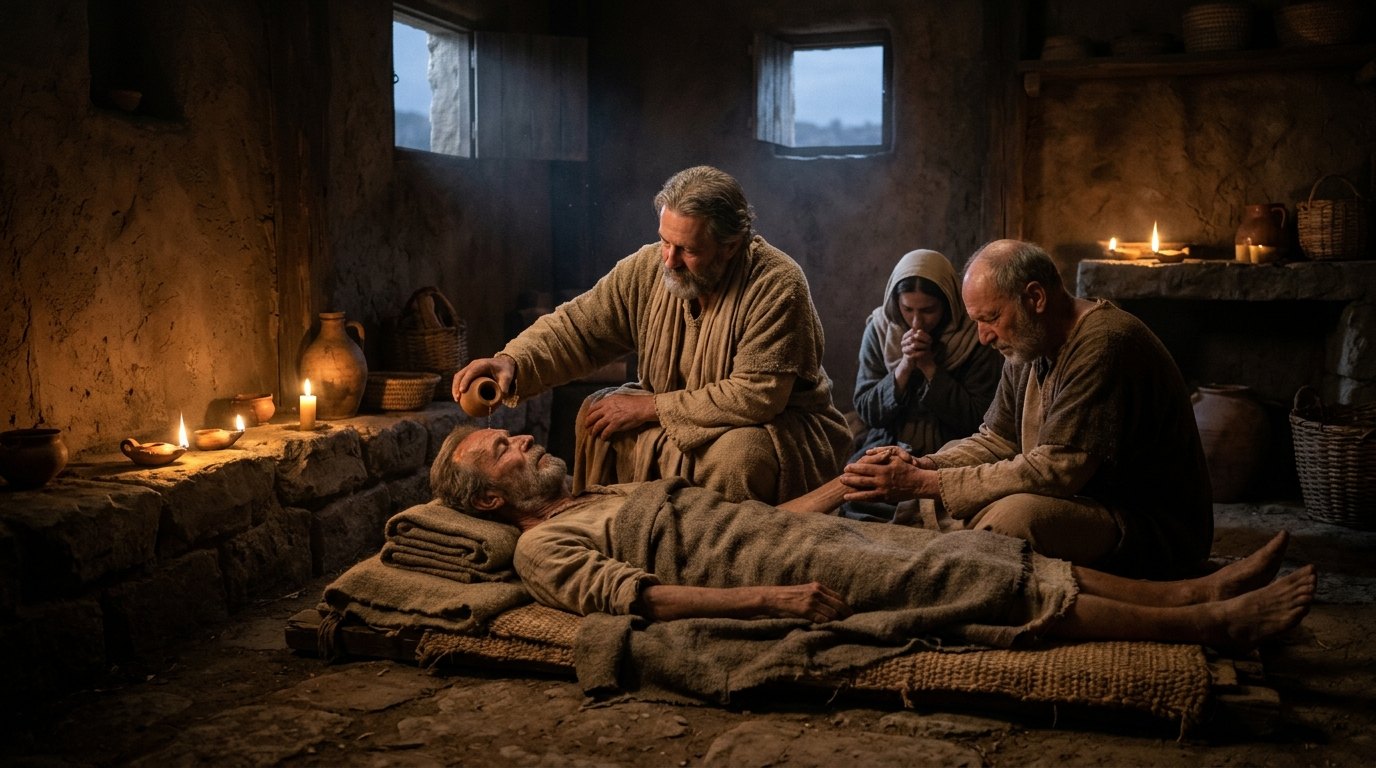
Is anyone among you sick? Let them call the elders of the church to pray over them and anoint them with oil in the name of the Lord.
James 5:14 (NIV)
James gives the local church an enduring pattern of communal prayer and care for the sick.
In James 5:14, the apostle establishes an enduring pattern for pastoral care in serious illness: "Is anyone among you sick? Let him call for the elders of the church, and let them pray over him, anointing him with oil in the name of the Lord." Scripture never treats sickness as an isolated trial to endure alone, but places it squarely within the loving intercession of the local church. James 5:15 assures that "the prayer of faith will save the one who is sick, and the Lord will raise him up," linking physical care with spiritual restoration and mutual confession.
Alongside corporate intercession, Scripture honors ordinary medical wisdom and practical relief. In 1 Timothy 5:23, Paul advises Timothy, "No longer drink only water, but use a little wine for the sake of your stomach and your frequent ailments," demonstrating that natural remedies are gifts to be received with thanksgiving rather than signs of weak faith. Similarly, Paul affectionately greets Luke the beloved physician in Colossians 4:14, recognizing his medical vocation as a noble labor in the service of the gospel. When aggressive illnesses like cancer strip away earthly strength, the body of Christ steps in to fulfill Galatians 6:2, which calls believers to "bear one another's burdens, and so fulfill the law of Christ." Through elder prayer, attentive medical treatment, and steady personal presence, God surrounds the afflicted with tangible mercy.
| Passage | What it says |
|---|---|
| James 5:14 | Instructs the sick person to call the elders to pray and anoint with oil. |
| James 5:15 | Promises that faithful prayer sustains the sick and brings restoration in God's mercy. |
| 1 Timothy 5:23 | Instructs Timothy to use practical medicinal remedies alongside spiritual oversight for frequent ailments. |
| Colossians 4:14 | Identifies Luke as the beloved physician, honoring the medical calling within the apostolic company. |
| Galatians 6:2 | Commands believers to bear one another's heavy burdens to fulfill the law of Christ. |
The Final Hope
Christ Destroys Death and Promises Imperishable Resurrection Bodies

‘He will wipe every tear from their eyes. There will be no more death’ or mourning or crying or pain, for the old order of things has passed away.”
Revelation 21:4 (NIV)
Scripture concludes with the absolute eradication of sickness, crying, pain, and death.
The definitive biblical answer to terminal illness and bodily breakdown rests in Revelation 21:4: "He will wipe away every tear from their eyes, and death shall be no more, neither shall there be mourning, nor crying, nor pain anymore, for the former things have passed away." Scripture looks straight at the devastation of progressive disease and promises not merely escape, but complete renewal through bodily resurrection.
In 1 Corinthians 15:42, Paul explains that the human frame is "sown in corruption; it is raised in incorruption." Sickness exposes our mortality, yet as 1 Corinthians 15:43 affirms, what is "sown in weakness; it is raised in power." Our current bodies break down under disease, but Philippians 3:21 assures that Christ "will transform our lowly body to be like his glorious body." In that day, 1 Corinthians 15:54 will reach its consummation, and "death is swallowed up in victory." Until then, believers facing severe illness rest in the unshakable certainty of Romans 8:38-39, knowing that neither death nor life, nor any present distress, can sever them from the love of God. The biblical story ends in Revelation 22:2, where the leaves of the tree of life bring enduring healing to the redeemed.
| Passage | What it says |
|---|---|
| Revelation 21:4 | Promises that God will wipe away every tear and that death, sorrow, and pain will cease. |
| 1 Corinthians 15:42 | Contrasts the mortal body sown in corruption with the resurrection body raised in incorruption. |
| 1 Corinthians 15:43 | Contrasts sowing in weakness and dishonor with raising in divine glory and power. |
| 1 Corinthians 15:54 | Proclaims the prophetic victory where death is permanently swallowed up in final resurrection life. |
| Philippians 3:21 | Assures that Christ will transform our lowly, humble bodies to match His glorious body. |
| Romans 8:38-39 | Neither death nor present distress can separate believers from God's love in Christ Jesus. |
| Revelation 22:2 | The leaves of the tree of life provide perpetual healing for the nations. |
Where in the Bible
| Book | Passages |
|---|---|
| 2 Kings | 2 · 2 Kings 20:1, 2 Kings 20:7 |
| Job | 2 · Job 2:7, Job 1:20 |
| Psalms | 5 · Psalms 73:26, Psalms 41:3, Psalms 34:18, Psalms 6:6, Psalms 13:1 |
| Isaiah | 2 · Isaiah 40:29, Isaiah 40:31 |
| Luke | 3 · Luke 13:4, Luke 13:5, Luke 22:42 |
| John | 4 · John 9:1, John 9:2, John 9:3, John 11:35 |
| Romans | 3 · Romans 8:22, Romans 8:23, Romans 8:38-39 |
| 1 Corinthians | 3 · 1 Corinthians 15:42, 1 Corinthians 15:43, 1 Corinthians 15:54 |
| 2 Corinthians | 6 · 2 Corinthians 4:16, 2 Corinthians 4:17, 2 Corinthians 4:18, 2 Corinthians 4:1, 2 Corinthians 12:9, 2 Corinthians 12:10 |
| Galatians | 1 · Galatians 6:2 |
| Philippians | 2 · Philippians 2:27, Philippians 3:21 |
| Colossians | 1 · Colossians 4:14 |
| 1 Timothy | 1 · 1 Timothy 5:23 |
| James | 2 · James 5:14, James 5:15 |
| Revelation | 2 · Revelation 21:4, Revelation 22:2 |
The story in order
- Job's suffering (c. 1800 BC) · Job 2:7 · Righteous suffering from Satan's attack.
- Hezekiah's illness (c. 700 BC) · 2 Kings 20:1 · Affliction among God's faithful.
- Psalms of lament (c. 1000 BC) · Psalms 6:6 · Expressing deep sorrow and tears.
- Isaiah's prophecy (c. 700 BC) · Isaiah 40:29 · God gives strength to the faint.
- Jesus weeps (c. AD 30) · John 11:35 · Jesus shows sorrow at death.
- Blind man healed (c. AD 30) · John 9:1 · Illness not due to sin.
- Jesus in Gethsemane (c. AD 30) · Luke 22:42 · Christ submits to suffering.
- Paul's weakness (c. AD 55) · 2 Corinthians 12:9 · God's grace is sufficient.
- Early church care (c. AD 45) · James 5:14 · Prayer and anointing for the sick.
- Resurrection hope (c. AD 55) · 1 Corinthians 15:42 · Mortal bodies transformed.
- New creation (c. AD 95) · Revelation 21:4 · End of death and pain.
Suffering and God's Sustaining Power
| Suffering | God's Sustaining Power | Passage |
|---|---|---|
| Flesh and heart fail | God is the heart's portion | Psalms 73:26 |
| Faint and lacking might | The Lord gives power | Isaiah 40:29 |
| Weakness, distress, hardship | Christ's power rests on us | 2 Corinthians 12:10 |
| Sick on bed of illness | The Lord sustains and restores | Psalms 41:3 |
| Brokenhearted, crushed in spirit | The Lord is near and saves | Psalms 34:18 |
Physical Decay vs. Eternal Renewal
| Physical Reality | Spiritual Reality | Passage |
|---|---|---|
| Outer person decays | Inner spirit renewed daily | 2 Corinthians 4:16 |
| Present afflictions | Eternal weight of glory | 2 Corinthians 4:17 |
| Visible, transient | Unseen and eternal | 2 Corinthians 4:18 |
| Groaning under corruption | Awaiting body's redemption | Romans 8:22-23 |
The Progression of Hope in Suffering
| Present State | Future Hope | Passage |
|---|---|---|
| Bodily frailty | Renewal of the inner person | 2 Corinthians 4:16 |
| Temporary afflictions | Eternal weight of glory | 2 Corinthians 4:17 |
| Groaning creation | Full redemption of bodies | Romans 8:22-23 |
| Mortal body sown in corruption | Resurrection body raised in incorruption | 1 Corinthians 15:42 |
| Lowly, humble bodies | Christ's glorious body | Philippians 3:21 |
| Death, sorrow, pain | God wipes away every tear | Revelation 21:4 |
Key words
- Frailty
- The condition of being weak and delicate, especially physically. · 2 Corinthians 4:16
- Suffering
- The state of undergoing pain, distress, or hardship. · 2 Corinthians 4:17
- Lament
- A passionate expression of grief or sorrow. · Psalms 6:6
- Hope
- A feeling of expectation and desire for a certain thing to happen. · Romans 8:38-39
- Redemption
- The action of saving or being saved from sin, error, or evil. · Romans 8:23
- Resurrection
- The act of rising from the dead. · 1 Corinthians 15:42
A serious diagnosis exposes human frailty, but it does not separate a believer from the sovereign love and presence of God. Scripture invites honest weeping, anchors the heart in Christ's sufficiency for each day, and promises the ultimate redemption of our mortal bodies.
39 passages, each cited once.
Scripture cited
- John 9:1-3
- James 5:14-16
- Romans 8:18-25
- Revelation 21:1-5
- 2 Corinthians 12:7-10
- Matthew 8:14-17
- Colossians 4:14
- Luke 10:33-35
- John 11:23-27
- John 11:32-36
- 2 Corinthians 1:3-5
- 1 Corinthians 15:20-26