What is Freemasonry, and can a Christian be a Mason?
2 Corinthians 6:14-18
14 Do not be yoked together with unbelievers. For what do righteousness and wickedness have in common? Or what fellowship can light have with darkness?
15 What harmony is there between Christ and Belial? Or what does a believer have in common with an unbeliever?
16 What agreement is there between the temple of God and idols? For we are the temple of the living God. As God has said: “I will live with them and walk among them, and I will be their God, and they will be my people.”
17 Therefore, “Come out from them and be separate, says the Lord. Touch no unclean thing, and I will receive you.”
18 And, “I will be a Father to you, and you will be my sons and daughters, says the Lord Almighty.”
New International Version (NIV)
The answer
No—a Christian must not join or remain in Freemasonry, because its interfaith religious fellowship and sworn obligations conflict with exclusive loyalty to Jesus Christ.
What Freemasonry is
Freemasonry is a fraternal organization meeting in local lodges. It draws on the traditions and imagery of stonemasons, uses building tools as moral symbols, conducts ceremonial degrees, and promotes friendship, moral character, and charitable service. The formation of the Grand Lodge of England in 1717 was an important milestone in its organized history.
Its own publications say that it is not a religion or a substitute for religion. Nevertheless, its practices include religious elements. Members are normally required to affirm belief in a Supreme Being; the United Grand Lodge of England explains that this wording is deliberately inclusive and requires no active practice of a particular religion. The Grand Lodge of Mississippi describes lodge prayers addressed under the nonsectarian title Great Architect of the Universe, an open Bible or another religion’s sacred book, and obligations sworn on that book.
Therefore, the biblical verdict does not depend on proving that Freemasonry calls itself a religion. Its common prayers, sacred-book ceremonies, and religious obligations must still be tested by Scripture.
Why lodge membership conflicts with Scripture
- Common worship cannot set Christ aside. Jesus says, “No one comes to the Father, except through me” (John 14:6). Acts 4:12 likewise declares that salvation is found in no one else. A Christian cannot join a standing religious fellowship whose common prayers deliberately accommodate incompatible beliefs about God while leaving the confession of Christ optional. Moral improvement, charitable work, and belief in a generic Supreme Being are not another way to the Father.
- Scripture forbids this unequal yoke. Paul commands, “Don’t be unequally yoked with unbelievers” (2 Corinthians 6:14), and asks, “What agreement does a temple of God have with idols?” (2 Corinthians 6:16). His conclusion is, “Come out from among them, and be separate” (2 Corinthians 6:17). This does not prohibit ordinary friendship, employment, business dealings, or kindness toward unbelievers. It does prohibit binding oneself to believers and unbelievers together in a religious fellowship and its ceremonies.
- Masonic oath-taking conflicts with Christ’s command. In Matthew 5:34-37, Jesus forbids swearing by heaven, earth, Jerusalem, or one’s own head and requires simple, truthful answers instead. James 5:12 repeats the prohibition against swearing by heaven, earth, or any other oath. Since Masonic sources themselves describe obligations sworn on a sacred book, a Christian should not undertake them. This conclusion concerns the oath itself; it need not rely on sensational claims about traditional Masonic penalties, which Masonic publications describe as symbolic.
Many men join Freemasonry sincerely, seeking friendship, discipline, or opportunities for charity. Those intentions do not make forbidden religious fellowship acceptable, and Scripture gives no grounds for treating individual Masons with hatred or making unsupported accusations about them.
A Christian already belonging to a lodge should repent, renounce its oath-bound religious fellowship, leave it, and take no further part in its degrees, prayers, or ceremonies. Forgiveness is found in Christ, not in good works or merely changing organizations: “If we confess our sins, he is faithful and righteous to forgive us the sins and to cleanse us from all unrighteousness” (1 John 1:9).
Answered from Scripture · reviewed November 12, 2026
Scripture calls believers to an undivided allegiance to Jesus Christ, who alone reveals the Father and provides salvation. While Freemasonry presents itself as a benevolent fraternity, its ritual oaths, generic deism, and religious fellowship with unbelievers directly conflict with the explicit commands of God's Word. A Christian cannot join or remain bound to an organization that sets aside the exclusive claims of the gospel.
Christ Alone
Jesus Is the Only Path to the Father
Jesus answered, “I am the way and the truth and the life. No one comes to the Father except through me.
John 14:6 (NIV)
Jesus declares Himself to be the exclusive way, truth, and life, leaving no room for syncretistic or multi-faith avenues to God.
In John 14:6, the Lord Jesus settles the foundation of Christian belief with absolute clarity: He is the exclusive way, the single truth, and the only life, and no one comes to the Father except through Him. Freemasonry, by contrast, operates on a broad deism that deliberately minimizes or omits the name of Jesus to unite men of disparate and contradictory faiths around a generic deity. Scripture allows no such compromise. As the apostle Peter boldly testified before the ruling council in Acts 4:12, there is salvation in no other name given under heaven. To set aside or veil Christ's name for the sake of fraternal fellowship is to deny the core of the Christian faith.
Paul reinforces this singular mediator in 1 Timothy 2:5, declaring that there is one God and one mediator between God and men, the man Christ Jesus. 1 John 2:23 warns that whoever rejects or dilutes the unique claims of the Son cannot have the Father, while confessing the Son secures the Father. God has highly exalted Jesus, ordaining in Philippians 2:9-11 that at His name alone every knee shall bow and every tongue confess His lordship. The God of Abraham, Isaac, and Jacob brooks no rival, commanding in Exodus 20:3 that His people have no other gods before Him. As Isaiah 42:8 proclaims, the Lord will never surrender His glory to another. A believer cannot confess Jesus as supreme Lord while participating in rituals that treat His divine uniqueness as merely one optional path among many.
| Passage | What it says |
|---|---|
| John 14:6 | Jesus states plainly that no one comes to the Father except through Him alone. |
| Acts 4:12 | Peter proclaims there is salvation in no one else and no other name under heaven given among men. |
| 1 Timothy 2:5 | Paul affirms there is only one God and one mediator between God and men, the man Christ Jesus. |
| 1 John 2:23 | John warns that whoever denies the Son does not have the Father, while confessing the Son secures the Father. |
| Philippians 2:9-11 | God exalted Jesus and gave Him the name above every name, before whom every knee must bow. |
| Exodus 20:3 | The first commandment forbids having any other gods before the Lord. |
| Isaiah 42:8 | The Lord declares He will not share His glory or praise with another or with carved idols. |
Separation and Fellowship
Believers Must Not Be Unequally Yoked
Do not be yoked together with unbelievers. For what do righteousness and wickedness have in common? Or what fellowship can light have with darkness?
2 Corinthians 6:14 (NIV)
Paul commands believers not to be mismatched with unbelievers in spiritual pacts or shared religious identity.
The apostle Paul delivers an unmistakable directive in 2 Corinthians 6:14: believers must not be unequally yoked with unbelievers. In Freemasonry, initiates enter into a sacred brotherhood, pledging mutual religious loyalty and shared spiritual titles with men who reject Christ. Paul dismantles this syncretism in 2 Corinthians 6:15, asking what harmony Christ can have with Belial, or what portion a believer shares with an unbeliever. The church is the temple of the living God, which can have no agreement with idols or counterfeit altars (2 Corinthians 6:16). Therefore, the Lord's mandate is unequivocal: come out from among them and be separate, touching nothing unclean (2 Corinthians 6:17). To those who obey, God gives the tender promise of 2 Corinthians 6:18, receiving them fully as His sons and daughters.
Scripture leaves no room for ambiguous spiritual alliances. Ephesians 5:11 commands Christians to take no part in unfruitful works, but rather expose them. Believers cannot drink the cup of the Lord and the cup of spiritual confusion, as Paul warns in 1 Corinthians 10:21. The psalmist modeled this holy integrity in Psalms 26:4-5, refusing to sit with deceivers or walk in intimate company with hypocrites. God's Word reminds us in 1 Corinthians 15:33 that bad company corrupts good morals, and the prophet asks in Amos 3:3 whether two can walk together unless they have agreed. A Christian cannot bind their spiritual life to an order that yokes believers to unbelievers in sacred rites.
| Passage | What it says |
|---|---|
| 2 Corinthians 6:14 | Scripture forbids being unequally yoked with unbelievers, contrasting righteousness with lawlessness and light with darkness. |
| 2 Corinthians 6:15 | Paul asks what harmony Christ has with Belial or what portion a believer shares with an unbeliever. |
| 2 Corinthians 6:16 | The temple of God cannot agree with idols, as believers are the dwelling place of the living God. |
| 2 Corinthians 6:17 | The Lord commands His people to come out from among them, be separate, and touch no unclean thing. |
| 2 Corinthians 6:18 | God promises to be a Father to those who separate from unholy unions, receiving them as sons and daughters. |
| Ephesians 5:11 | Believers are instructed to take no part in unfruitful works of darkness, but instead expose them. |
| 1 Corinthians 10:21 | Paul teaches that one cannot partake of the Lord's table and the table of demons. |
| Psalms 26:4-5 | David declares he does not sit with men of falsehood nor consort with hypocrites and evildoers. |
| 1 Corinthians 15:33 | Scripture warns that bad company ruins good morals, urging vigilance in partnerships. |
| Amos 3:3 | Two cannot walk together unless they have agreed to do so. |
Sworn Obligations
Christ Forbids Rash and Entangling Oaths
But I tell you, do not swear an oath at all: either by heaven, for it is God’s throne; or by the earth, for it is his footstool; or by Jerusalem, for it is the city of the Great King. And do not swear by your head, for you cannot make even one hair white or black. All you need to say is simply ‘Yes’ or ‘No’; anything beyond this comes from the evil one.
Matthew 5:34-37 (NIV)
Jesus explicitly commands His followers not to swear oaths by created things, requiring simple truthfulness instead.
In Matthew 5:34-37, Jesus speaks directly to the practice of taking binding oaths, commanding: do not swear at all, but let your yes be yes and your no be no. Anything beyond this comes from evil. Masonic initiation rites require candidates to swear solemn oaths—often accompanied by gruesome symbolic penalties regarding physical mutilation—before they even know the secrets or obligations they are swearing to uphold. Such pledges violate the explicit teaching of the Son of God, who demands that a disciple's simple word be entirely sufficient and uncompromised by dramatic oaths invoking sacred things.
The apostle James underscores this solemn prohibition in James 5:12, writing that above all else, believers must not swear by heaven, earth, or any other oath, lest they fall under condemnation. Long before the New Testament, the law of Moses exposed the danger of blind, thoughtless vows. In Leviticus 5:4-5, God declared that if anyone swears rashly with his lips to do good or evil, he is guilty the moment he realizes what he has done, and he is obligated to confess his sin and seek atonement. Forcing an initiate to take bloodcurdling oaths of secrecy before receiving knowledge is fundamentally incompatible with the righteousness Christ demands. Christians are called to simple honesty and must never pledge their lives or bodies to secret fraternal penalties.
| Passage | What it says |
|---|---|
| Matthew 5:34-37 | Jesus instructs His disciples not to swear at all, letting their 'yes' be 'yes' and 'no' be 'no'. |
| James 5:12 | James reiterates above all not to swear by heaven, earth, or any other oath, lest one fall under judgment. |
| Leviticus 5:4-5 | The law identifies taking a rash oath or swearing thoughtlessly to do evil or good as sin requiring confession. |
Light and Secrecy
Walk Openly as Children of the Light
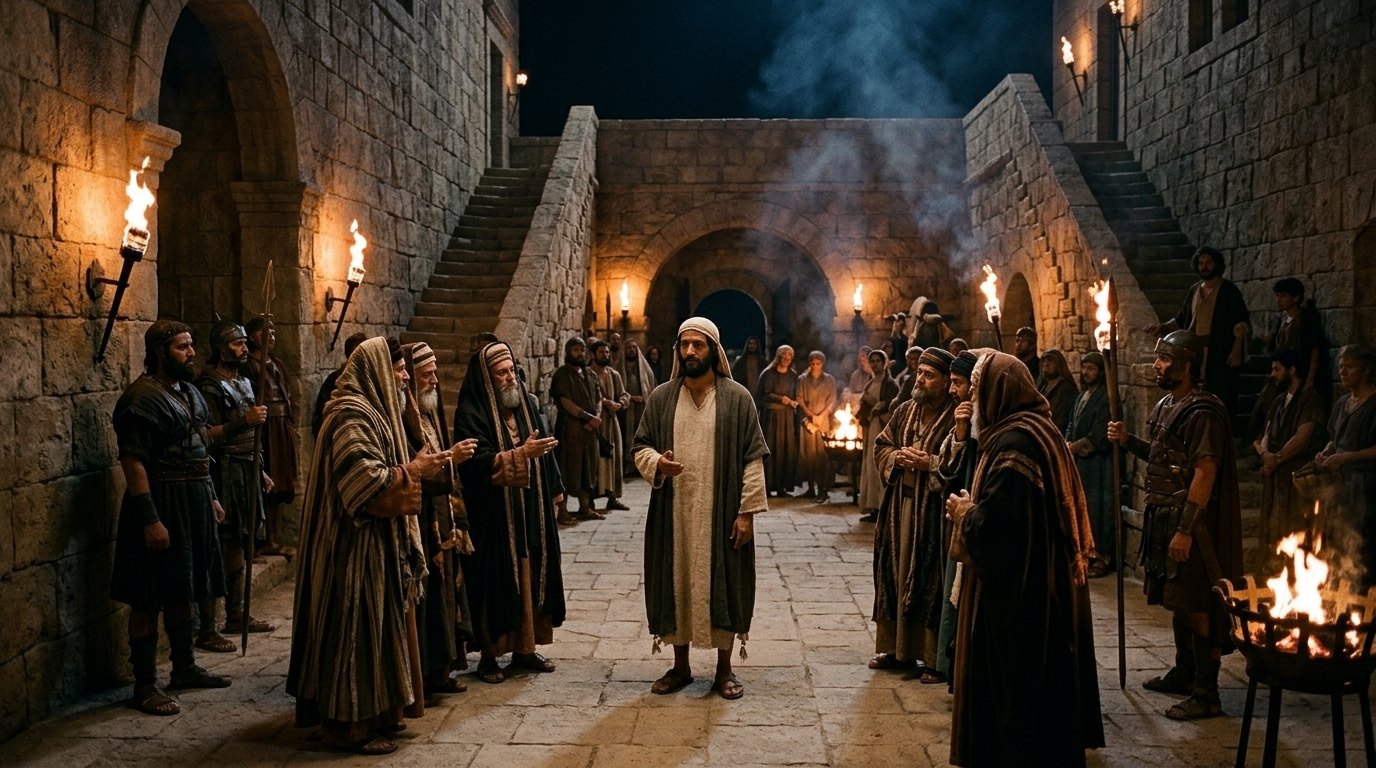
“I have spoken openly to the world,” Jesus replied. “I always taught in synagogues or at the temple, where all the Jews come together. I said nothing in secret.
John 18:20 (NIV)
Jesus modeled public, open proclamation of the truth, declaring He spoke nothing in secret.
When interrogated by the high priest regarding His doctrine, Jesus answered in John 18:20 with absolute transparency: I spoke openly to the world and said nothing in secret. Truth has nothing to hide. Freemasonry, by contrast, is defined by concealed knowledge, secret handshakes, closed lodge doors, and progressive revelations withheld from the uninitiated. A Christian's life must mirror the open candor of Christ. As Paul writes in Ephesians 5:8-9, believers were once darkness, but now they are light in the Lord, called to produce the fruit of the light in all goodness, righteousness, and truth.
God's Word rebukes rituals conducted under the cover of artificial secrecy. Paul observes in Ephesians 5:12 that it is shameful even to speak of the things done by the disobedient in hidden chambers. Jesus explicitly warns in Luke 12:2-3 that whatever is covered will be revealed, and whatever is whispered in dark rooms will be proclaimed from the housetops. The tragic mark of a fallen world is that men love darkness rather than light because their deeds are evil, but whoever lives by the truth comes unreservedly to the light (John 3:19-21). Because our Lord commanded His followers in Matthew 10:26-27 to declare in the daylight what He whispers to them, the follower of Jesus must reject shadow-cloaked fraternities and walk openly as a child of the day.
| Passage | What it says |
|---|---|
| John 18:20 | Jesus answers that He spoke openly to the world and said nothing in secret. |
| Ephesians 5:8-9 | Paul reminds Christians that though they once were darkness, they are now light in the Lord and must walk accordingly. |
| Ephesians 5:12 | Paul writes that it is shameful even to speak of the things done by the disobedient in secret. |
| Luke 12:2-3 | Jesus warns that nothing is covered up that will not be revealed, nor hidden that will not be known. |
| John 3:19-21 | Those who do evil love darkness rather than light, but whoever practices truth comes to the light. |
| Matthew 10:26-27 | Jesus instructs His disciples that what is spoken in the dark will be made known in the light. |
Grace Versus Moralism
Righteousness Comes by Faith, Not Fraternal Works
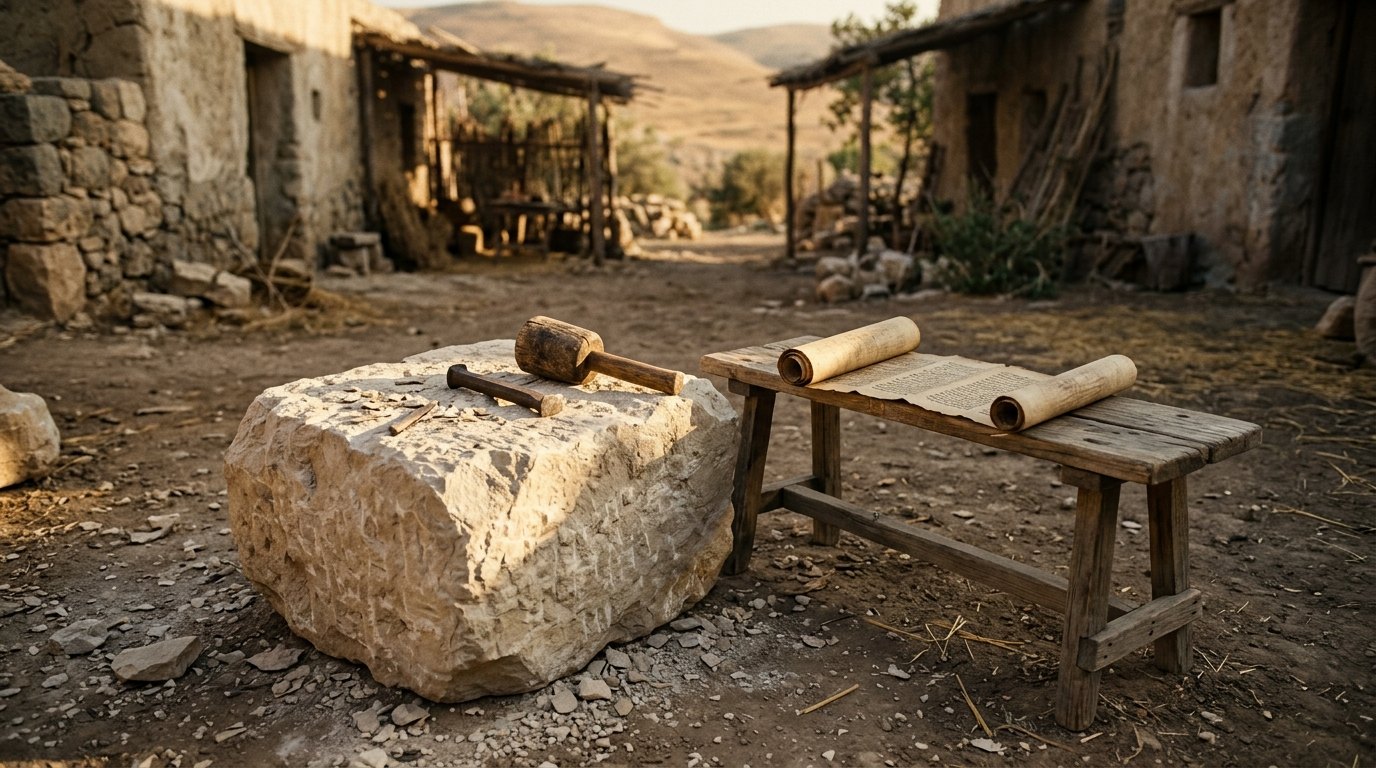
For it is by grace you have been saved, through faith—and this is not from yourselves, it is the gift of God— not by works, so that no one can boast.
Ephesians 2:8-9 (NIV)
It contrasts salvation as a pure gift of grace through faith against any system of human merit or moral striving.
The heartbeat of the Christian gospel is captured in Ephesians 2:8-9: salvation is an unearned gift of sovereign grace received through faith alone, entirely apart from human striving, so that no person may ever boast before God. Any religious society or fraternity that promises spiritual advancement, moral purification, or acceptance into an eternal heavenly lodge through ritual fidelity and personal virtue strikes directly at the cross of Christ. Scripture makes clear in Ephesians 2:10 that believers are God's workmanship, created anew in Christ Jesus for good works that flow out of a redeemed life, never as the ground of redemption itself.
God's Word leaves no room for human self-justification. As Paul reminds Titus in Titus 3:5, God saved us not by works of righteousness which we have done, but according to His abundant mercy through the washing of regeneration and renewing of the Holy Spirit. Striving to construct one's own righteousness through fraternal ceremonies or moral effort is futile, because Romans 3:20 declares that by the deeds of the law no flesh will be justified in His sight. External rectitude, benevolent deeds, and symbolic self-improvement cannot cleanse the conscience or reconcile a sinner to a holy God.
To substitute or supplement the finished work of Jesus Christ with any system of human merit is to embrace a false gospel. In Galatians 1:8-9, the apostle delivers an uncompromising warning: even if an angel from heaven should preach any other gospel contrary to the one proclaimed, let that one be accursed. Christ alone is our righteousness, and no ritual apron, secret grip, or human architecture can replace His shed blood.
| Passage | What it says |
|---|---|
| Ephesians 2:8-10 | Salvation is by grace through faith apart from works, creating believers anew for good works. |
| Titus 3:5 | God saves believers not by works of righteousness they have done, but according to His mercy. |
| Galatians 1:8-9 | Paul pronounces anathema upon anyone preaching any gospel other than the gospel of Christ. |
| Romans 3:20 | No human being will be justified in God's sight by works of the law. |
Where in the Bible
| Book | Passages |
|---|---|
| Exodus | 1 · Exodus 20:3 |
| Leviticus | 1 · Leviticus 5:4-5 |
| Psalms | 1 · Psalms 26:4-5 |
| Isaiah | 1 · Isaiah 42:8 |
| Amos | 1 · Amos 3:3 |
| Matthew | 2 · Matthew 5:34-37, Matthew 10:26-27 |
| Luke | 1 · Luke 12:2-3 |
| John | 3 · John 14:6, John 18:20, John 3:19-21 |
| Acts | 1 · Acts 4:12 |
| Romans | 1 · Romans 3:20 |
| 1 Corinthians | 2 · 1 Corinthians 10:21, 1 Corinthians 15:33 |
| 2 Corinthians | 5 · 2 Corinthians 6:14, 2 Corinthians 6:15, 2 Corinthians 6:16, 2 Corinthians 6:17, 2 Corinthians 6:18 |
| Galatians | 1 · Galatians 1:8-9 |
| Ephesians | 4 · Ephesians 5:11, Ephesians 5:8-9, Ephesians 5:12, Ephesians 2:8-10 |
| Philippians | 1 · Philippians 2:9-11 |
| 1 Timothy | 1 · 1 Timothy 2:5 |
| Titus | 1 · Titus 3:5 |
| James | 1 · James 5:12 |
| 1 John | 1 · 1 John 2:23 |
The story in order
- The First Commandment (c. 1446 BC) · Exodus 20:3 · God forbids having other gods before Him, establishing exclusive allegiance.
- The Law on Oaths (c. 1446 BC) · Leviticus 5:4-5 · Rash or thoughtless oaths are identified as sin requiring confession.
- David's Separation (c. 1000 BC) · Psalms 26:4-5 · David refuses to associate with the deceitful and wicked.
- Prophet's Warning (c. 750 BC) · Amos 3:3 · Two cannot walk together unless they agree, highlighting need for shared purpose.
- Lord Will Not Share Glory (c. 700 BC) · Isaiah 42:8 · God declares His glory is not shared with idols or others.
- Jesus' Teaching on Oaths (c. AD 30) · Matthew 5:34-37 · Jesus forbids swearing at all, urging simple truthfulness.
- Jesus: The Only Way (c. AD 30) · John 14:6 · Jesus states He is the only way to the Father.
- Peter's Proclamation (c. AD 33) · Acts 4:12 · Salvation is found in no one else but Jesus.
- Paul's Warning on Fellowship (c. AD 55) · 2 Corinthians 6:14 · Believers must not be unequally yoked with unbelievers.
- Paul on One Mediator (c. AD 65) · 1 Timothy 2:5 · There is one mediator, Christ Jesus.
- James on Oaths (c. AD 60) · James 5:12 · James reiterates not to swear, lest one fall under judgment.
- John on Denying the Son (c. AD 95) · 1 John 2:23 · Denying the Son means not having the Father.
Believers Must Separate from Unbelievers
| Command | Reason | Promise/Result | Passage |
|---|---|---|---|
| Do not be unequally yoked with unbelievers. | What fellowship can righteousness have with lawlessness? | Come out from among them and be separate. | |
| What harmony does Christ have with Belial? | Believers are the temple of the living God. | God will receive you as His sons and daughters. | |
| Do not take part in unfruitful works of darkness. | Light has no business with darkness. | Expose them. | Ephesians 5:11 |
| You cannot drink the cup of the Lord and the cup of demons. | You cannot partake of the table of the Lord and the table of demons. | Bad company ruins good morals. |
Jesus' Exclusivity
| Claim | Implication | Passage |
|---|---|---|
| No one comes to the Father except through Me alone. | Jesus is the exclusive path to God. | John 14:6 |
| There is salvation in no one else. | Jesus is the only source of salvation. | Acts 4:12 |
| There is one God and one mediator. | Jesus is the sole mediator between God and humanity. | 1 Timothy 2:5 |
| Whoever denies the Son does not have the Father. | Confessing the Son is necessary for having the Father. | 1 John 2:23 |
Oaths and Truthfulness
| Prohibition | Instruction | Consequence | Passage |
|---|---|---|---|
| Do not swear at all. | Let your 'yes' be 'yes' and your 'no' be 'no'. | Avoid falling under judgment. | |
| Taking a rash oath is sin. | Swearing thoughtlessly requires confession. | It is a sin that requires atonement. | Leviticus 5:4-5 |
Key words
- Unequally Yoked (heterozygeō, ἑτεροζυγέω)
- Forming a partnership or close association with those who do not share the same fundamental beliefs or values. · 2 Corinthians 6:14
- Mediator (mesitēs, μεσίτης)
- One who acts as a go-between or intermediary, especially between God and humanity. · 1 Timothy 2:5
- Oath (omnumi, ὄμνυμι)
- A solemn promise, often invoking a divine witness, made by a person to do or refrain from doing a particular thing. · Matthew 5:34
- Deism (N/A)
- Belief in a supreme being, or creator, who does not intervene in the universe.
- Fellowship (koinōnia, κοινωνία)
- Communion or association with others, sharing in common beliefs and practices. · 2 Corinthians 6:14
Following Christ requires turning away from any brotherhood or covenant that compromises His supremacy. Believers who find themselves entangled in the lodge are called to repent, sever unbiblical oaths, and rest entirely in the sufficiency of the cross. True fellowship, lasting brotherhood, and eternal purpose are found solely in the body of Christ.
30 passages, each cited once.
Scripture cited
- Matthew 5:33-37
- James 5:12
- John 14:6
- Acts 4:12
- 1 John 1:9