What is the difference between forgiveness and reconciliation?
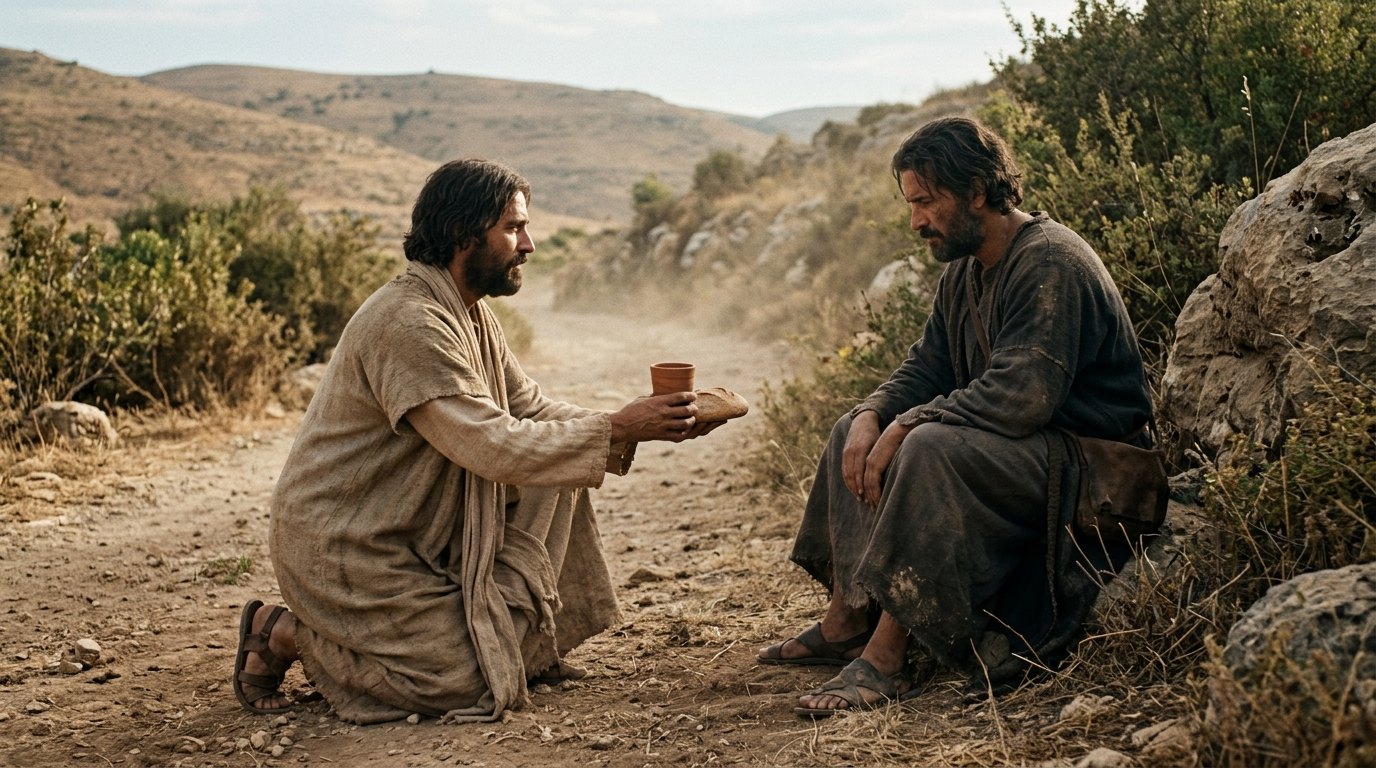
Romans 12:17-21
17 Do not repay anyone evil for evil. Be careful to do what is right in the eyes of everyone.
18 If it is possible, as far as it depends on you, live at peace with everyone.
19 Do not take revenge, my dear friends, but leave room for God’s wrath, for it is written: “It is mine to avenge; I will repay,” says the Lord.
20 On the contrary: “If your enemy is hungry, feed him; if he is thirsty, give him something to drink. In doing this, you will heap burning coals on his head.”
21 Do not be overcome by evil, but overcome evil with good.
New International Version (NIV)
The answer
Forgiveness is releasing personal vengeance and responding to wrong as God commands; reconciliation is the restoration of peace between estranged people. They overlap, but they are not identical: forgiving obedience is every believer’s duty, while reconciliation also depends on the other person’s response.
- Forgiveness — Reconciliation
- What changes? — The offended person refuses revenge, bitterness and repayment of evil. — The broken relationship moves toward restored peace and fellowship.
- Who must respond? — The believer must obey God rather than retaliate. — Both parties must respond; where sin caused the breach, it must be faced honestly.
- What does it not mean? — Approving evil, denying harm or saying justice does not matter. — Pretending nothing happened or automatically returning to the former relationship.
Forgiveness refuses personal revenge
Romans 12:17-21 commands believers not to repay evil for evil, but to entrust vengeance to God and overcome evil with good. God remains the righteous judge; forgiving does not require calling wrong right. Yet Romans 12:18 also says, “If it is possible, as much as it is up to you, be at peace with all men.” Peace must be pursued, but another person can refuse it.
Reconciliation addresses the breach
Jesus joins forgiveness to truth and repentance: “If your brother sins against you, rebuke him. If he repents, forgive him” (Luke 17:3). He then requires forgiveness repeatedly when the offender repeatedly returns in repentance (Luke 17:4). Reconciliation therefore does not mean silence about sin.
When someone refuses to listen, Matthew 18:15-17 provides a serious process for addressing the fault; persistent refusal cannot simply be treated as business as usual. Conversely, when you have caused the offense, Jesus makes reconciliation urgent: “First be reconciled to your brother, and then come and offer your gift” (Matthew 5:24). The innocent person must not retaliate, and the offending person must take responsibility.
The fullest picture is in Christ
God does not merely cancel punishment; He brings sinners back to Himself. Second Corinthians 5:18-21 says that God reconciled us to Himself through Jesus Christ, not reckoning our trespasses against us, and calls people, “be reconciled to God.” Christ bears sin’s guilt, making both divine forgiveness and restored fellowship with God possible.
Answered from Scripture · reviewed November 11, 2026
Forgiveness is what one person gives from the heart; reconciliation is what two people build when truth and repentance meet. Scripture commands believers to release the right of vengeance into God's hands, yet it recognizes that restoring a broken relationship requires mutual trust and cooperation.
Heart of Forgiveness
Forgiveness Relinquishes Vengeance and Surrenders Judgment to God

Do not take revenge, my dear friends, but leave room for God’s wrath, for it is written: “It is mine to avenge; I will repay,” says the Lord.
Romans 12:19 (NIV)
It defines forgiveness not as ignoring wrongdoing, but as stepping down from the judge's seat so God's wrath alone may govern justice.
The decisive command of Romans 12:19 establishes the foundation of biblical forgiveness: believers are forbidden from avenging themselves, stepping down entirely from the judgment seat to leave wrath to God alone. Forgiveness is fundamentally an interior act of release toward God, refusing to extract personal retaliation or nurse bitterness. As the Apostle Paul insists in Romans 12:17, disciples must never repay anyone evil for evil, but instead conduct themselves honourably before everyone. This principle anchors deep in the wisdom literature of ancient Israel; Proverbs 20:22 commands the faithful not to say, "I will repay evil," but rather to wait quietly for the Lord to vindicate them.
This release is neither passive nor optional; the New Testament treats it as an urgent duty within the covenant community. In 1 Thessalonians 5:15, Paul directs the church to see that no one renders harm for harm, but that each believer continually pursues what is good for fellow saints and for all people. The Apostle Peter reinforces this posture in 1 Peter 3:9, urging Christians not to return insult for insult or evil for evil, but to offer a blessing in their place so that they may inherit divine favor. Because forgiveness takes place in the heart before God, it is given freely and unilaterally without waiting for the offender's posture to change. Thus, in Mark 11:25, Jesus instructs his disciples that whenever they stand praying, they must let go of whatever grievance they hold against another person, so that their Father in heaven may forgive their trespasses.
Ultimately, Christian forgiveness mirrors the grace believers have already received at the cross. Paul writes in Colossians 3:13 that believers must bear with one another and forgive freely, extending the exact measure of unconditional pardon that the Lord extended to them. To guard the heart against persistent poison, Ephesians 4:31-32 commands the community to put away all bitterness, wrath, anger, clamour, and malice. Instead, saints are called to be kind and tenderhearted, granting full pardon just as God in Christ freely forgave them.
| Passage | What it says |
|---|---|
| Romans 12:17 | Prohibits repaying evil for evil and instructs believers to pursue what is honourable before everyone. |
| Romans 12:19 | Forbids personal vengeance, citing God's declaration that retribution belongs exclusively to Him. |
| Proverbs 20:22 | Warns against recompensing evil and directs the afflicted soul to wait on the Lord for deliverance. |
| 1 Thessalonians 5:15 | Instructs the church that no one should repay injury with injury, but always pursue good for all. |
| 1 Peter 3:9 | Calls disciples not to return insult for insult, but instead to bestow blessing to inherit a blessing. |
| Mark 11:25 | Jesus commands believers to forgive whoever has offended them whenever they stand praying, releasing personal resentment unilaterally before God. |
| Colossians 3:13 | Paul instructs the church to bear with one another and forgive grievances freely, mirroring the unconditional pardon received in Christ. |
| Ephesians 4:31-32 | Believers must put away all bitterness, anger, and slander, tenderheartedly forgiving one another just as God in Christ forgave them. |
Overcoming Evil
Unilateral Mercy Extends Tangible Kindness Even Toward Enemies
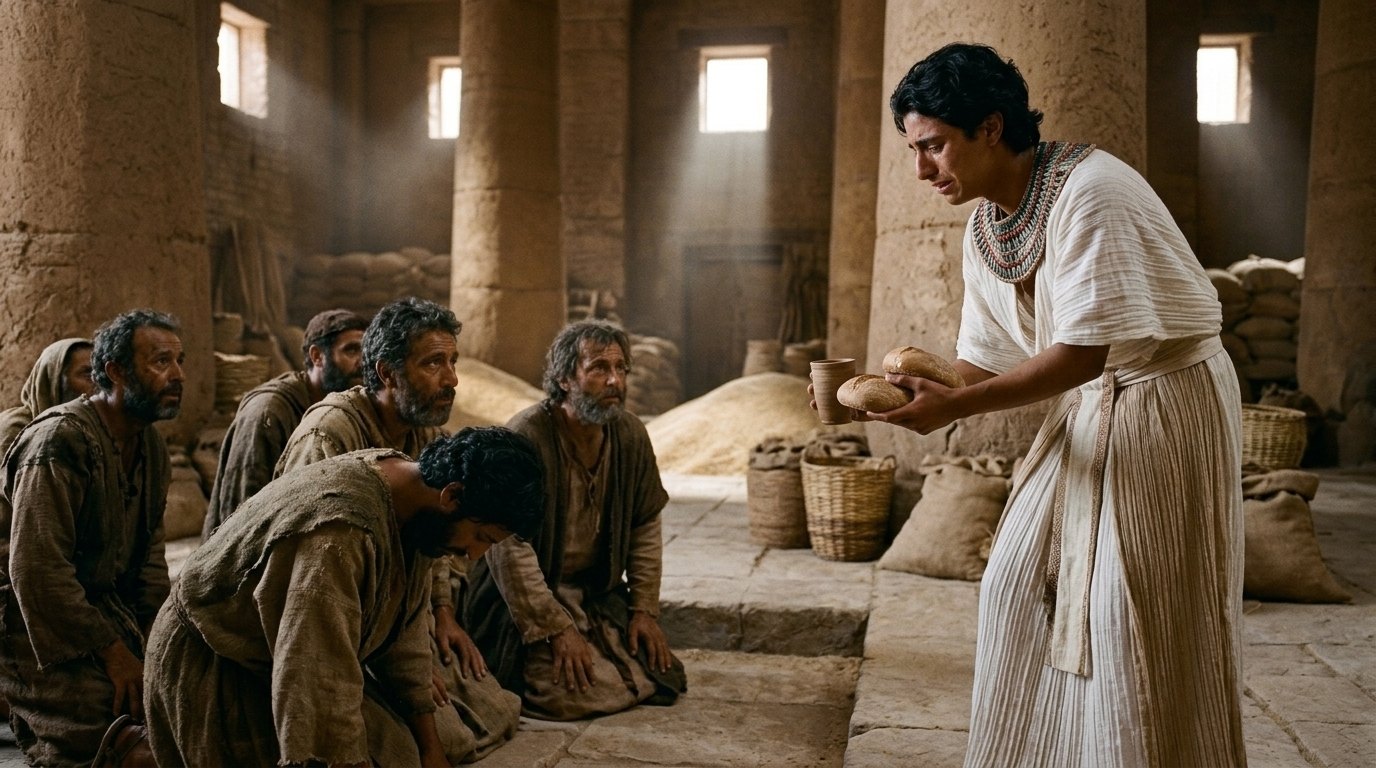
On the contrary: “If your enemy is hungry, feed him; if he is thirsty, give him something to drink. In doing this, you will heap burning coals on his head.”
Romans 12:20 (NIV)
It shows that forgiveness does not remain passive emotional neutrality, but actively ministers physical good to an enemy in need.
Scriptural forgiveness does not terminate in cold indifference; it actively spills over into concrete benevolence, as captured in Romans 12:20, where Paul commands believers to feed a hungry enemy and give water to a thirsty foe. By doing so, the believer heaps coals of fire upon their head, disarming animosity with divine mercy. The overarching moral mandate follows in Romans 12:21: disciples must refuse to be overcome by evil, choosing instead to overcome evil with good. This proactive posture fulfills the ancient covenant commands in Exodus 23:4-5, where God commanded an Israelite to return a straying ox belonging to an enemy, and to stop and help relieve an adversary's donkey collapsing under a heavy burden.
Such unearned kindness reaches its sharpest expression in the Sermon on the Mount, where Jesus teaches in Matthew 5:39 not to retaliate violently against an evil person, but to turn the other cheek. He expands this in Luke 6:27-28, issuing a radical call to love our enemies, do good to those who hate us, bless those who curse us, and pray earnestly for those who mistreat us. This ethic was practiced centuries earlier by the patriarch Joseph in Genesis 50:20, when he comforted the terrified brothers who had sold him into slavery, affirming that although they had intended evil against him, God had orchestrated their actions for saving good.
The Old Testament wisdom of Proverbs 25:21-22 similarly promises that offering bread and water to one's foe brings reward from the Lord while melting hardness of heart. This unyielding mercy was demonstrated supreme at Calvary in Luke 23:34, where Jesus hung upon the cross and prayed for the very soldiers driving nails into his flesh, declaring, "Father, forgive them, for they know not what they do." Forgiveness grants practical mercy even when an enemy remains utterly hostile.
| Passage | What it says |
|---|---|
| Romans 12:20 | Quotes Proverbs to urge feeding a hungry enemy and offering drink to a thirsty foe. |
| Romans 12:21 | Commands believers never to be conquered by evil, but rather to overcome evil with good. |
| Matthew 5:39 | Instructs disciples not to violently retaliate against an evil person, but to turn the other cheek. |
| Luke 23:34 | Records Jesus pleading for the pardon of His crucifiers because they did not know what they did. |
| Genesis 50:20 | Reveals Joseph comforting his brothers who wronged him, affirming that God turned their intentional harm into saving good. |
| Exodus 23:4-5 | The law commands returning a wandering ox or helping relieve the burdened donkey of an enemy, demonstrating active, practical kindness. |
| Proverbs 25:21-22 | Providing bread and water to an enemy heaps burning coals upon his head, prompting repentance while the Lord rewards the giver. |
| Luke 6:27-28 | Jesus commands loving enemies, doing good to haters, blessing cursers, and praying for those who mistreat his disciples. |
Restored Communion
Reconciliation Demands Mutual Repentance and Rebuilt Trust
If it is possible, as far as it depends on you, live at peace with everyone.
Romans 12:18 (NIV)
It establishes the boundary of individual responsibility, showing that living at peace is conditioned on what depends on you, not what others refuse.
While forgiveness depends entirely on the offended party releasing judgment, reconciliation requires two walking in truth, as Romans 12:18 establishes by qualifying that believers must live peaceably with all people only as far as it depends on you. The ancient prophetic principle of Amos 3:3 asks plainly whether two can walk together unless they have agreed. Full restoration of broken relationship demands mutual honesty and genuine repentance. Therefore, Jesus commands in Matthew 5:23-24 that if a worshipper remembers that a brother holds an unresolved offense against him, he must leave his gift before the altar, go immediately to be reconciled, and only then return to offer his worship before God.
Jesus outlines the structural path of restored communion in Matthew 18:15, directing believers to confront an offending brother privately in order to win him back. If the transgressor refuses personal appeals, Matthew 18:16-17 requires witnesses, and ultimately the judgment of the assembled congregation; if the individual persists in unrepentant rebellion, fellowship cannot continue, and they must be treated as an outsider. Jesus underscores this moral condition in Luke 17:3-4, commanding disciples to rebuke a sinning brother, but only extending the relational embrace of forgiveness when he repents. Genuine repentance produces tangible fruit, as shown by Zacchaeus in Luke 19:8, who demonstrated transformed faith by giving half his goods to the poor and restoring fourfold to anyone he had defrauded.
This balance between grace and accountability appears vividly in Philemon 1:10-18, where the Apostle Paul appeals on behalf of the runaway slave Onesimus, sending him back with a plea for Philemon to receive him as a beloved brother, while offering to repay any debt Onesimus caused. This ministry of restored communion reflects the grand redemptive work described in 2 Corinthians 5:18-20, where God reconciled the world to Himself through Jesus Christ and entrusted believers with the ministry of reconciliation, pleading with sinners to repent and be reconciled to God.
| Passage | What it says |
|---|---|
| Romans 12:18 | Directs believers to live peaceably with all people as far as it depends on them. |
| Matthew 5:23-24 | Urges leaving one's gift at the altar to first be reconciled to a brother who has a grievance. |
| Matthew 18:15 | Lays down the pathway of private confrontation so that if the offender listens, the brother is regained. |
| Luke 17:3-4 | Instructs disciples to rebuke an erring brother and forgive him when he repents. |
| 2 Corinthians 5:18-20 | Proclaims that God reconciled us through Christ and entrusted believers with the message begging sinners to be reconciled. |
| Matthew 18:16-17 | If an offender refuses to listen to personal and communal appeals, fellowship cannot be restored, resulting in church discipline. |
| Luke 19:8 | Zacchaeus demonstrates true repentance by offering half his goods to the poor and restoring fourfold to anyone defrauded. |
| Philemon 1:10-18 | Paul mediates between Philemon and Onesimus, demonstrating that full relational restoration rests upon repentance, restitution, and mutual love in Christ. |
| Amos 3:3 | The prophet rhetorical question affirms that two parties cannot walk together unless they have agreed to terms of harmony. |
Where in the Bible
| Book | Passages |
|---|---|
| Genesis | 1 · Genesis 50:20 |
| Exodus | 1 · Exodus 23:4-5 |
| Proverbs | 2 · Proverbs 20:22, Proverbs 25:21-22 |
| Amos | 1 · Amos 3:3 |
| Matthew | 4 · Matthew 5:39, Matthew 5:23-24, Matthew 18:15, Matthew 18:16-17 |
| Mark | 1 · Mark 11:25 |
| Luke | 4 · Luke 23:34, Luke 6:27-28, Luke 17:3-4, Luke 19:8 |
| Romans | 5 · Romans 12:17, Romans 12:19, Romans 12:20, Romans 12:21, Romans 12:18 |
| 2 Corinthians | 1 · 2 Corinthians 5:18-20 |
| Ephesians | 1 · Ephesians 4:31-32 |
| Colossians | 1 · Colossians 3:13 |
| 1 Thessalonians | 1 · 1 Thessalonians 5:15 |
| Philemon | 1 · Philemon 1:10-18 |
| 1 Peter | 1 · 1 Peter 3:9 |
The story in order
- God's creation and humanity's fall (c. 4000 BC) · Genesis 1:1 · Establishes the original perfect state before sin introduced broken relationships.
- Joseph's brothers wronged him (c. 1800 BC) · Genesis 50:20 · Shows God turning intentional harm into saving good, a precursor to forgiveness.
- The Law commands kindness to enemies (c. 1450 BC) · Exodus 23:4-5 · Demonstrates practical, active kindness even towards those who cause harm.
- Proverbs on dealing with enemies (c. 700 BC) · Proverbs 25:21-22 · Advises kindness to enemies to prompt repentance and earn divine reward.
- Jesus teaches on forgiveness and enemies (c. AD 30) · Matthew 5:39 · Instructs disciples to turn the other cheek, not retaliate.
- Jesus commands forgiveness when praying (c. AD 30) · Mark 11:25 · Unilateral release of resentment is required before God.
- Jesus is crucified (AD 30) · Luke 23:34 · Jesus models ultimate forgiveness by pleading for His crucifiers.
- Zacchaeus' repentance and restitution (c. AD 30) · Luke 19:8 · Demonstrates repentance through tangible acts of restoration.
- Paul's instruction on bearing with one another (c. AD 60) · Colossians 3:13 · Urges mutual forbearance and forgiveness, mirroring Christ's pardon.
- The ministry of reconciliation (c. AD 57) · 2 Corinthians 5:18-20 · Believers are entrusted with God's message to be reconciled.
- Paul mediates for Onesimus (c. AD 60) · Philemon 1:10-18 · Illustrates relational restoration requiring repentance and love.
- Peter on returning blessing (c. AD 60) · 1 Peter 3:9 · Calls believers to bestow blessing, not return insult.
Forgiveness: Unilateral Release vs. Mutual Restoration
| Forgiveness (Unilateral) | Reconciliation (Mutual) | Passage |
|---|---|---|
| Relinquishes personal vengeance. | Requires truth and repentance. | Romans 12:19 |
| Surrenders judgment to God. | Builds restored relationships. | Romans 12:19 |
| Extends mercy even to enemies. | Demands agreement and trust. | Romans 12:20 |
| Can be commanded by God. | Requires cooperation from both parties. | Mark 11:25 |
| A personal act of grace. | A communal act of rebuilding. | Ephesians 4:32 |
Overcoming Evil with Good
| Action Towards Enemy | Purpose/Result | Passage |
|---|---|---|
| Feed a hungry enemy. | Show mercy, prompt repentance. | Romans 12:20 |
| Give drink to a thirsty foe. | Demonstrate active kindness. | Romans 12:20 |
| Do not repay evil for evil. | Pursue what is honourable. | Romans 12:17 |
| Turn the other cheek. | Avoid violent retaliation. | Matthew 5:39 |
| Love enemies, bless cursers. | Overcome evil with good. | Luke 6:27-28 |
| Help an enemy's burdened donkey. | Practical kindness in law. | Exodus 23:4 |
The Path to Reconciliation
| Step | Action | Goal | Passage |
|---|---|---|---|
| Private Confrontation | Go and talk to your brother. | Regain the brother. | Matthew 18:15 |
| Rebuke and Forgive | Rebuke him, and if he repents, forgive him. | Restore the relationship. | Luke 17:3-4 |
| Prioritize Relationship | Leave gift, be reconciled first. | Restore communion with God and brother. | Matthew 5:23-24 |
| Restitution | Restore fourfold what was defrauded. | Demonstrate true repentance. | Luke 19:8 |
| Mutual Agreement | Walk together in harmony. | Maintain fellowship. | Amos 3:3 |
| Mediated Restoration | Paul's mediation for Onesimus. | Full relational restoration in Christ. | Philemon 1:10-18 |
Key words
- Forgiveness (aphiēmi (ἀφίημι))
- Releasing personal vengeance and resentment, surrendering judgment to God. · Mark 11:25
- Reconciliation (katallassō (καταλλάσσω))
- Restoring a broken relationship through mutual trust, repentance, and agreement. · 2 Corinthians 5:18
- Vengeance (ekdikēsis (ἐκδίκησις))
- Personal retribution or the right to punish an offender. · Romans 12:19
- Repentance (metanoia (μετάνοια))
- A change of mind and heart leading to a turning away from sin. · Luke 17:3
- Mercy (oiktirmos (οἰκτιρμός))
- Kindness or compassion shown towards someone, especially when it is within one's power to punish or harm. · Colossians 3:12
- Good (agathos (ἀγαθός))
- That which is morally right, beneficial, and pleasing to God. · Romans 12:21
You are called to release every debtor and bless every enemy, trusting God alone to execute righteous judgment. But you are not commanded to force communion where an offender remains unrepentant, for peace requires wisdom and restored fellowship takes two.
25 passages, each cited once.
Scripture cited
- Romans 12:17-21
- Matthew 5:23-26
- Luke 17:3-4
- 2 Corinthians 5:18-21
- Matthew 18:15-17