Why did God allow slavery in the Bible?

Philemon 1:15-16
15 Perhaps the reason he was separated from you for a little while was that you might have him back forever—
16 no longer as a slave, but better than a slave, as a dear brother. He is very dear to me but even dearer to you, both as a fellow man and as a brother in the Lord.
New International Version (NIV)
The answer
God permitted slavery within a fallen world, but permission is not approval. Scripture never excuses kidnapping, cruelty, racial supremacy, or treating a person as less than human. God restrained abuses, held masters accountable, overruled human evil for good, and, in Christ, commanded a relationship that strikes at the heart of slavery: Onesimus was to be received “no longer as a slave, but more than a slave, a beloved brother” (Philemon 1:16).
Permission does not make something righteous
Joseph’s brothers sold him into slavery, yet Joseph called their intention evil while affirming that God brought good from it: “ye thought evil against me; but God meant it unto good” (Genesis 50:20). God used their wicked action to preserve lives, but their responsibility and guilt were not erased (Genesis 45:5-8). Psalm 76:10 likewise teaches that God can turn human wrath toward his praise while restraining what he will not permit.
God therefore can govern an evil situation without approving the evil done within it. His patience toward sinful human institutions is not indifference, and his providence never makes oppression righteous.
Biblical slavery was not one uniform institution
The English word slavery covers several arrangements in Scripture, including service caused by poverty, household servitude, captivity, and hereditary foreign slavery. Leviticus 25:39-46 itself distinguishes the treatment of impoverished Israelites from that of slaves acquired from other nations. These realities should not be sanitized as ordinary modern employment, but neither should every occurrence be treated as identical to the race-based transatlantic slave trade.
Some things associated with later slave systems were explicitly forbidden. Kidnapping someone to sell them carried the death penalty under Moses’ law (Exodus 21:16). A trade founded on man-stealing therefore cannot be defended by appealing to biblical regulations concerning servitude.
Regulation restrained sin without declaring an ideal
Old Testament law required rest for servants and prohibited ruthless rule (Deuteronomy 5:14; Leviticus 25:43). Yet it also regulated arrangements involving real coercion. Its legislation must not be turned into approval of everything a master might do.
Jesus’ teaching about divorce establishes an important distinction: a Mosaic permission could address human hardness of heart without representing God’s original purpose (Matthew 19:4-8). That does not make divorce and slavery identical, but it shows why legally permitted cannot automatically be translated as God’s moral ideal. God’s creation design begins instead with every human being bearing his image (Genesis 1:27); no race or class was created as naturally inferior.
Christ changes the master–slave relationship
New Testament instructions to slaves do not declare their masters just. First Peter 2:18-20 expressly recognises that servants could suffer unjustly. Masters were also accountable to God, who shows no partiality (Ephesians 6:9).
Philemon shows more than a demand for better treatment. Paul writes that Onesimus was perhaps separated for a time so that Philemon might have him forever, as a beloved brother “both in the flesh and in the Lord” (Philemon 1:15-16). Their earthly relationship, not merely their private attitude, had to change. Paul’s word “perhaps” also avoids pretending to explain every detail of God’s providence.
In Christ, slave or free status cannot determine a person’s worth or standing before God (Galatians 3:28). The gospel consequently leaves no room for Christian participation in racial contempt, kidnapping, exploitation, or indifference to oppression. Those who have exploited others must repent and make things right; those who have suffered enslavement are not lesser persons in God’s sight.
Answered from Scripture · reviewed November 12, 2026
Scripture nowhere presents slavery as God's creation ideal, but rather as a reality of a fallen world that He severely regulated, restrained, and ultimately subverted in Christ. While God permitted forms of servitude within ancient Israel and the Greco-Roman world, permission is never divine endorsement: kidnapping carried the death penalty, masters were held strictly accountable, and the gospel transformed slaves into beloved brothers equal before the Lord. Tracing how God addresses slavery across both Testaments reveals His sovereign providence over human sin, His protection of human dignity, and the redeeming work of the cross that destroys all oppression.
Creation and Dignity
God Designed Humanity in His Image with Universal Dignity
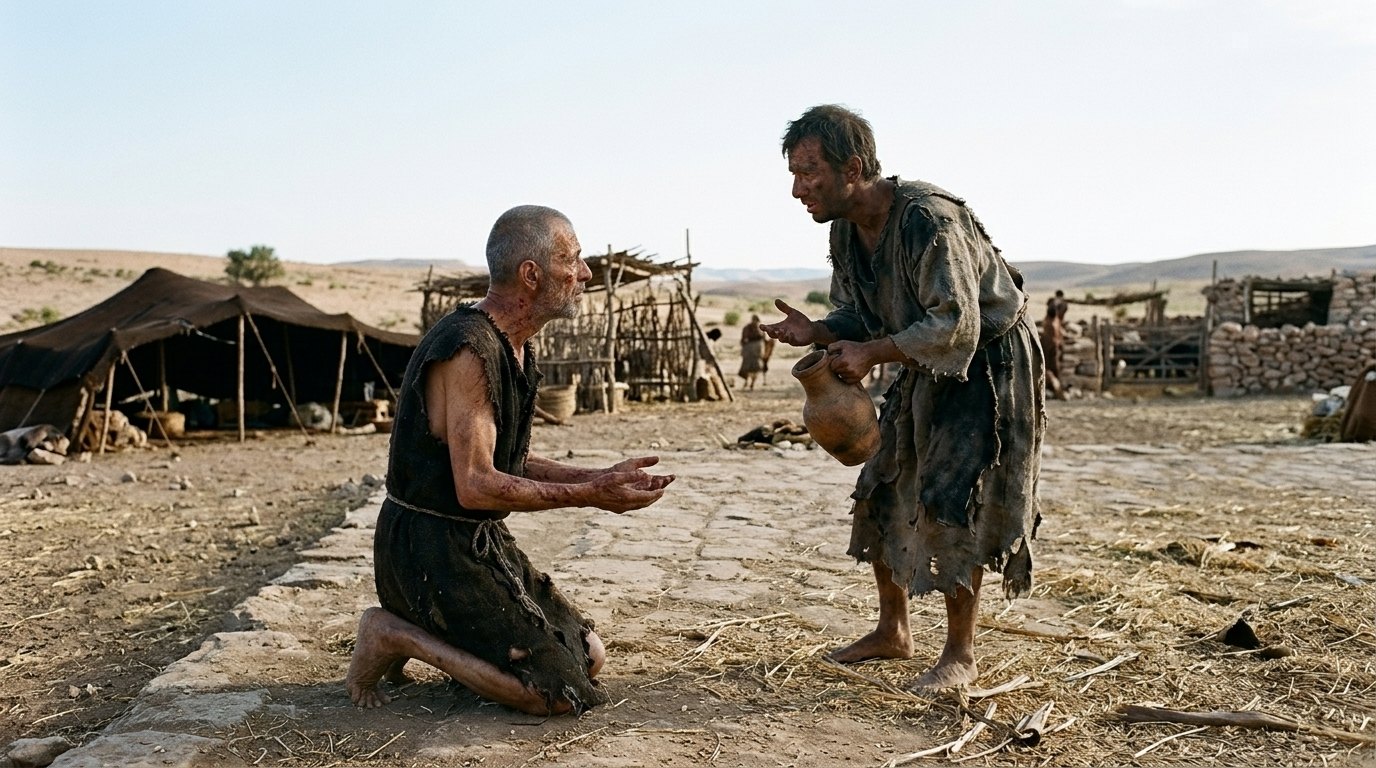
So God created mankind in his own image, in the image of God he created them; male and female he created them.
Genesis 1:27 (NIV)
It establishes every human being as an image-bearer of God, eliminating any concept of natural racial or human inferiority.
Genesis 1:27 establishes every human being as an image-bearer of God, destroying any theological pretext for human supremacy or inherent racial inferiority. In the opening chapter of Scripture, God vests humanity with joint vice-regency over the animal, plant, and mineral realms (Genesis 1:26), pointedly reserving dominion over fellow image-bearers unto Himself alone. The sacred character of human life rests squarely upon this divine imprint; hence, Noah is told that murder incurs capital retribution specifically because humanity bears the image of God (Genesis 9:6). Later, the Apostle Paul proclaims before the Areopagus that God fashioned from one single blood every tribe and nation of mankind (Acts 17:26), affirming absolute biological and spiritual unity across the human race.
This foundational dignity shatters the dehumanizing logic that ancient pagan empires used to reduce bondservants to mere commercial chattels. Patriarchal wisdom literature explicitly anchors the fair treatment of laborers in this shared creative origin. Job asks what he will answer when the Almighty rises up to judge, refusing to despise the legal grievance of his manservant or maidservant (Job 31:13). His conscience is restrained by divine truth: Job 31:15 insists that the very same Maker who fashioned the master formed the bondservant in the womb, and Job 31:14 poses the sobering question of how an abusive master can stand before God's tribunal.
Scripture's wisdom books consistently reiterate that an individual's economic or social standing does not diminish their divine worth. Proverbs 14:31 warns that mocking or oppressing the impoverished heaps direct contempt upon their Maker, whereas extending mercy to the poor is an act of reverent worship toward the Lord. Similarly, Proverbs 22:2 observes that the rich and the poor share a singular commonality: Jehovah is the Maker of them all. While sin fractured this pristine order, God's original creation design remains the unshakable moral baseline against which every form of human oppression is indicted and condemned.
| Passage | What it says |
|---|---|
| Genesis 1:26 | God gives humanity joint dominion over the created order, never dominion for one human over another human being. |
| Genesis 1:27 | God created mankind male and female in His own divine image, conferring equal spiritual status on all people. |
| Genesis 9:6 | Murder is forbidden and strictly punished on the absolute ground that mankind is made in the image of God. |
| Job 31:13 | Job insists that disregarding the legal complaint of his manservant or maidservant would be an offense against God. |
| Job 31:15 | Job recognizes that the same Creator formed both master and servant within their mothers' wombs. |
| Proverbs 14:31 | Oppressing the poor insults their Maker, while showing mercy to the needy honors God. |
| Acts 17:26 | God made from one blood every nation of mankind to dwell on all the face of the earth. |
| Job 31:14 | Job asks what he will do when God rises to judge his treatment of his male and female servants. |
| Proverbs 22:2 | The rich and poor meet together, for the Lord is the maker of them all. |
Sovereignty and Evil
God Governs Human Wickedness Without Ever Approving the Sin
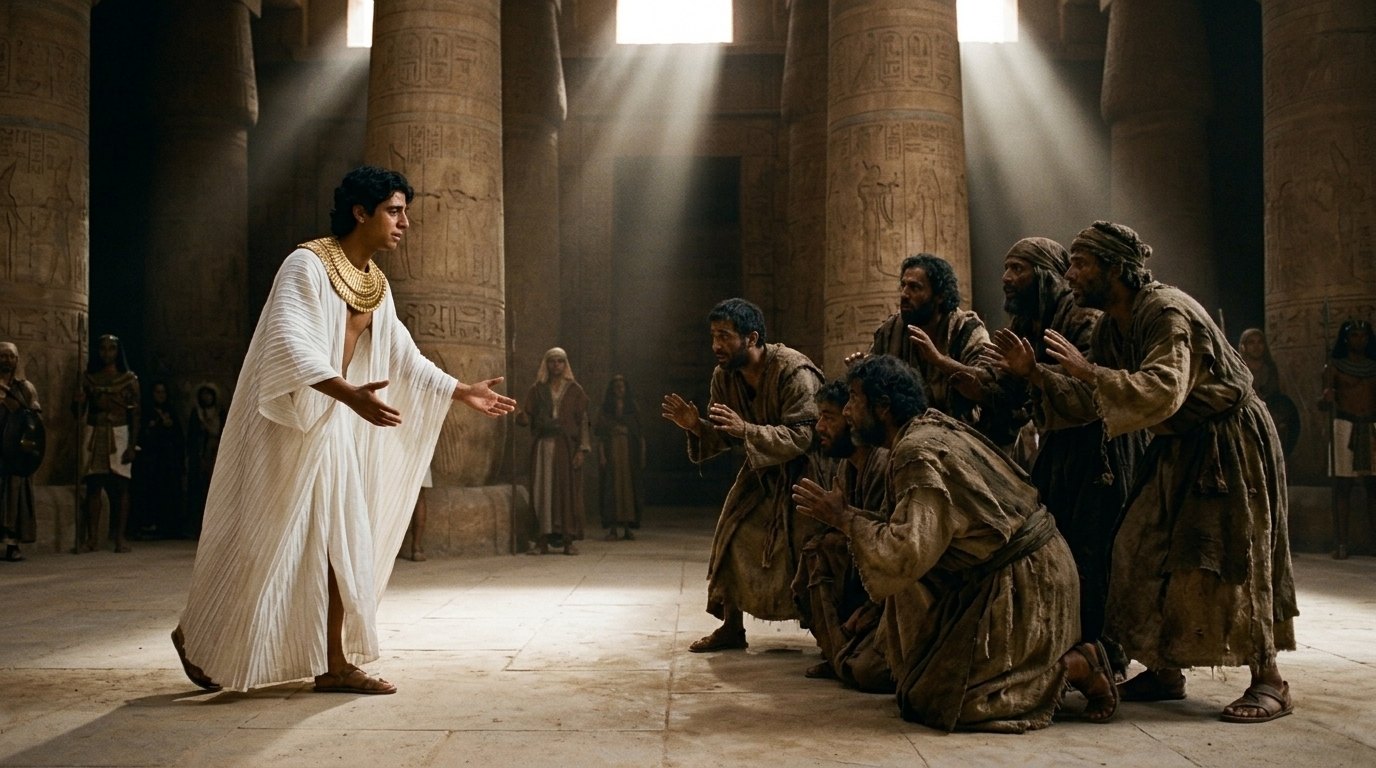
You intended to harm me, but God intended it for good to accomplish what is now being done, the saving of many lives.
Genesis 50:20 (NIV)
It shows that human perpetrators intend evil when trafficking people, yet God sovereignly overrules their sin for a greater saving purpose.
Genesis 50:20 captures God's absolute sovereignty over human wickedness, declaring that though traffickers intend evil against their victims, God overrules their malice to achieve His redemptive purposes. When Joseph's jealous brothers dragged him out of the pit and bartered him to Midianite merchants for twenty shekels of silver (Genesis 37:28), they committed a heinous act of human trafficking that stood entirely guilty under divine scrutiny. God neither commanded their wickedness nor approved their deceit; yet in His infinite providence, He was steering their criminal act to preserve the covenant lineage that would one day bring forth the Messiah.
Decades later, standing in royal Egyptian apparel before the brothers who sold him into bondage, Joseph could perceive the invisible hand of God guiding the dark events of his youth. In Genesis 45:5, he comforts his terrified siblings by explaining that God had sent him ahead of them into Egypt to preserve life during catastrophic famine. He reiterates this remarkable truth in Genesis 45:7, testifying that the Almighty orchestrated his descent into servitude to preserve a living remnant through a magnificent deliverance, and in Genesis 45:8 he plainly states that it was not merely their malice, but God's sovereign arrangement that brought him to authority.
This divine capacity to absorb human treason and twist it toward righteousness is a constant theme throughout Scripture. As Psalms 76:10 celebrates, even the unbridled wrath of fallen humanity will yield praise to God, while the remainder of that wrath is restrained by His sovereign power. The supreme demonstration of this reality occurred at Calvary, where wicked rulers and traitorous men conspired to arrest, flog, and crucify the Lord Jesus Christ (Acts 4:28), unwittingly executing precisely what God's hand and predeterminate counsel had decreed from the foundation of the world for the eternal salvation of sinners.
| Passage | What it says |
|---|---|
| Genesis 37:28 | Joseph's brothers sell him to Midianite traders for twenty pieces of silver, committing a wicked act of human trafficking. |
| Genesis 45:5 | Joseph reassures his brothers that God sent him ahead of them to Egypt to preserve life during famine. |
| Genesis 45:7 | God sent Joseph before his family to preserve a remnant on earth through a great deliverance. |
| Genesis 45:8 | Joseph explains that God's sovereign hand governed his arrival in Egypt rather than merely his brothers' malice. |
| Genesis 50:20 | Joseph tells his brothers that they meant evil against him, but God meant it for good to save many people. |
| Psalms 76:10 | The wrath of man shall praise God, while the remainder of wrath He restrains by His power. |
| Acts 4:28 | Wicked hands fulfilled exactly what God's sovereign hand and counsel determined beforehand to happen at the cross. |
Law and Restraint
Moses Regulated Servitude to Restrain Harm and Outlaw Kidnapping
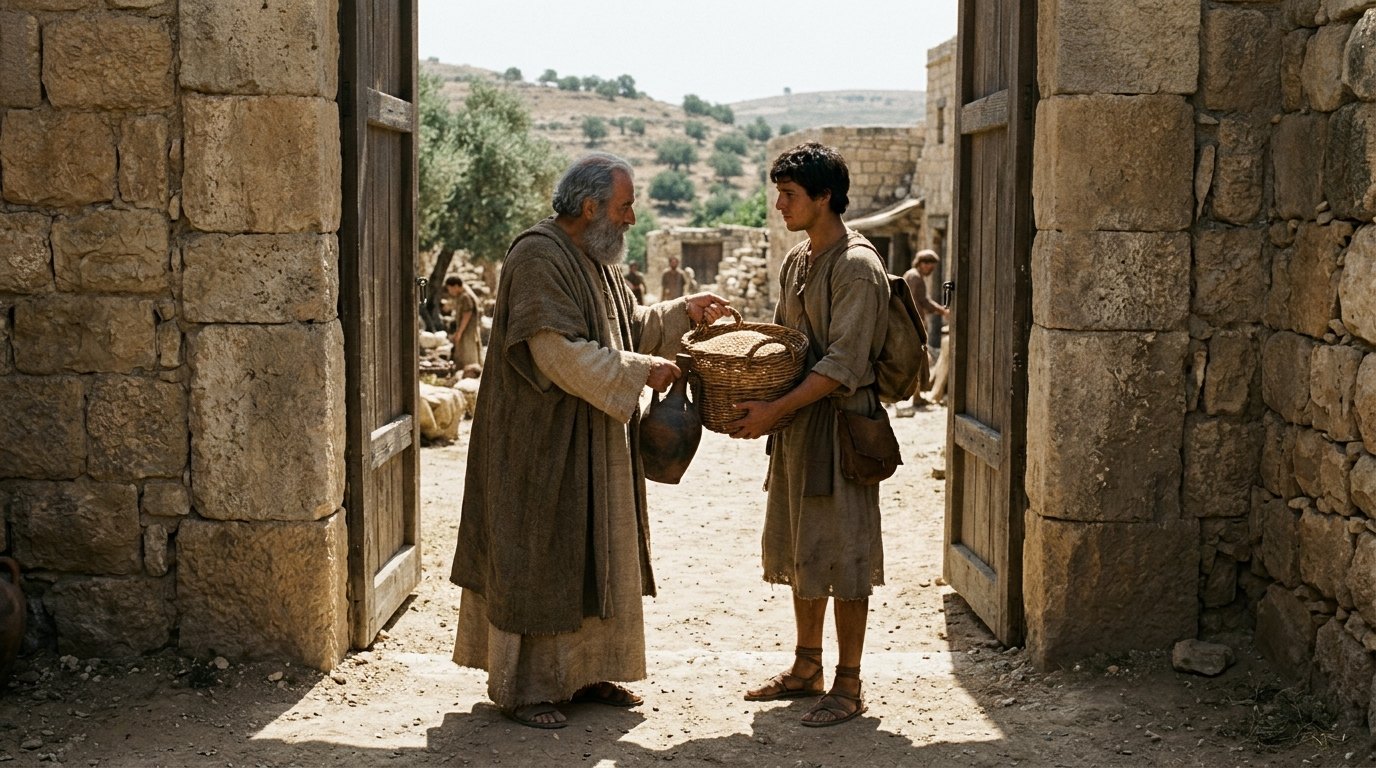
“Anyone who kidnaps someone is to be put to death, whether the victim has been sold or is still in the kidnapper’s possession.
Exodus 21:16 (NIV)
It mandates capital punishment for kidnapping and slave trading, striking down the foundation of coercive, chattel slave systems.
Exodus 21:16 strikes at the violent foundation of commercial chattel slavery, mandating capital punishment for anyone caught stealing, trafficking, or holding a human being against their will. Unlike surrounding ancient Near Eastern law codes that treated runaway slaves as stolen property to be returned under penalty of death, the Mosaic civil code dismantled the mechanisms of manstealing. Deuteronomy 24:7 reiterates this death sentence for anyone kidnapping a fellow countryman, establishing that non-consensual subjugation was a capital felony in Israel. The servitude practiced within Israel was largely an insolvency bankruptcy mechanism where impoverished citizens entered debt-agreements to repay liabilities rather than starve.
The Mosaic statutes severely restrained masters and conferred unprecedented legal rights upon bondservants. Hebrew laborers served a maximum of six years, stepping into complete freedom upon the sabbatical seventh year without paying any redemption price (Exodus 21:2; Deuteronomy 15:12). Furthermore, Deuteronomy 15:13 and Deuteronomy 15:14 commanded masters never to dismiss them empty-handed, but to supply them generously from the flock, threshing floor, and winepress, providing economic capital to prevent recurrent poverty. Physical cruelty was sharply curtailed: if a master struck an indentured servant causing the loss of an eye or even a tooth, the servant was immediately set entirely free as compensation (Exodus 21:26; Exodus 21:27). If an assault resulted in immediate death, the master faced judicial reckoning (Exodus 21:20), with Exodus 21:21 addressing cases where survival of a few days indicated lack of lethal premeditation.
Above all, servants were recognized as full covenant participants. Both Exodus 20:10 and Deuteronomy 5:14 ordered that male and female servants enjoy the weekly Sabbath rest alongside the family. Leviticus 25:10 instituted the grand Jubilee, proclaiming nationwide liberty to all inhabitants. An impoverished brother was never to be treated as a chattel slave (Leviticus 25:39), but as a hired worker (Leviticus 25:40) without ruthlessness (Leviticus 25:43), because Israelites belonged to the Lord who redeemed them out of Egyptian iron bondage (Leviticus 25:42; Leviticus 25:55). Even foreign slaves from surrounding pagan nations—though permitted to be inherited (Leviticus 25:46)—found sanctuary in Israel: Deuteronomy 23:15 and Deuteronomy 23:16 strictly forbade extraditing runaway foreign slaves, commanding that they dwell unmolested wherever they chose.
| Passage | What it says |
|---|---|
| Exodus 21:2 | A Hebrew servant who enters service must be set free in the seventh year without paying any redemption fee. |
| Exodus 21:16 | Whoever steals a person and sells them, or is found in possession of them, must be put to death. |
| Exodus 21:20 | If a master strikes his servant with a rod and the servant dies immediately, punishment must be executed. |
| Exodus 21:26 | A master who blinds the eye of his male or female servant must let them go completely free. |
| Exodus 21:27 | A master who knocks out a servant's tooth must grant full freedom in compensation for the permanent injury. |
| Leviticus 25:39 | An impoverished Israelite who sells himself as a servant must not be forced to work like a slave. |
| Leviticus 25:40 | An impoverished countryman serves as a hired worker or temporary resident until the year of Jubilee. |
| Leviticus 25:43 | Masters are explicitly commanded not to rule over their Hebrew servants with ruthlessness, but to fear God. |
| Leviticus 25:46 | Foreign servants could be retained as property, yet Israelites were forbidden to rule over their own brethren ruthlessly. |
| Deuteronomy 5:14 | The Sabbath commandment commands that male and female servants rest on the seventh day just like their masters. |
| Deuteronomy 15:12 | A Hebrew servant must be granted unconditional release in the seventh year of servitude. |
| Deuteronomy 15:13 | When a master releases a Hebrew servant, he is commanded not to send that servant away empty-handed. |
| Deuteronomy 15:14 | Masters must generously supply freed servants from their flock, threshing floor, and winepress as God has blessed them. |
| Deuteronomy 23:15 | Israelites were forbidden to return a runaway slave to a foreign master who had fled to them. |
| Deuteronomy 23:16 | Runaway foreign slaves were granted safe haven to live wherever they chose in Israel without oppression. |
| Deuteronomy 24:7 | Kidnapping a fellow Israelite to treat them as a slave or sell them incurs the death penalty. |
| Exodus 20:10 | The Sabbath commandment explicitly requires physical rest for male and female servants alongside the family. |
| Exodus 21:21 | Case law concerning punishment of a servant where surviving a day or two mitigates direct intent to murder. |
| Leviticus 25:10 | The Jubilee year proclaims liberty throughout all the land to all its inhabitants. |
| Leviticus 25:42 | Israelites belong to God as His redeemed servants and must not be sold as slaves. |
| Leviticus 25:55 | Affirms that the children of Israel are servants to God, whom He brought out of Egypt. |
Heart and Hardness
Permission in the Law Reflects Hardened Hearts, Not Moral Ideals
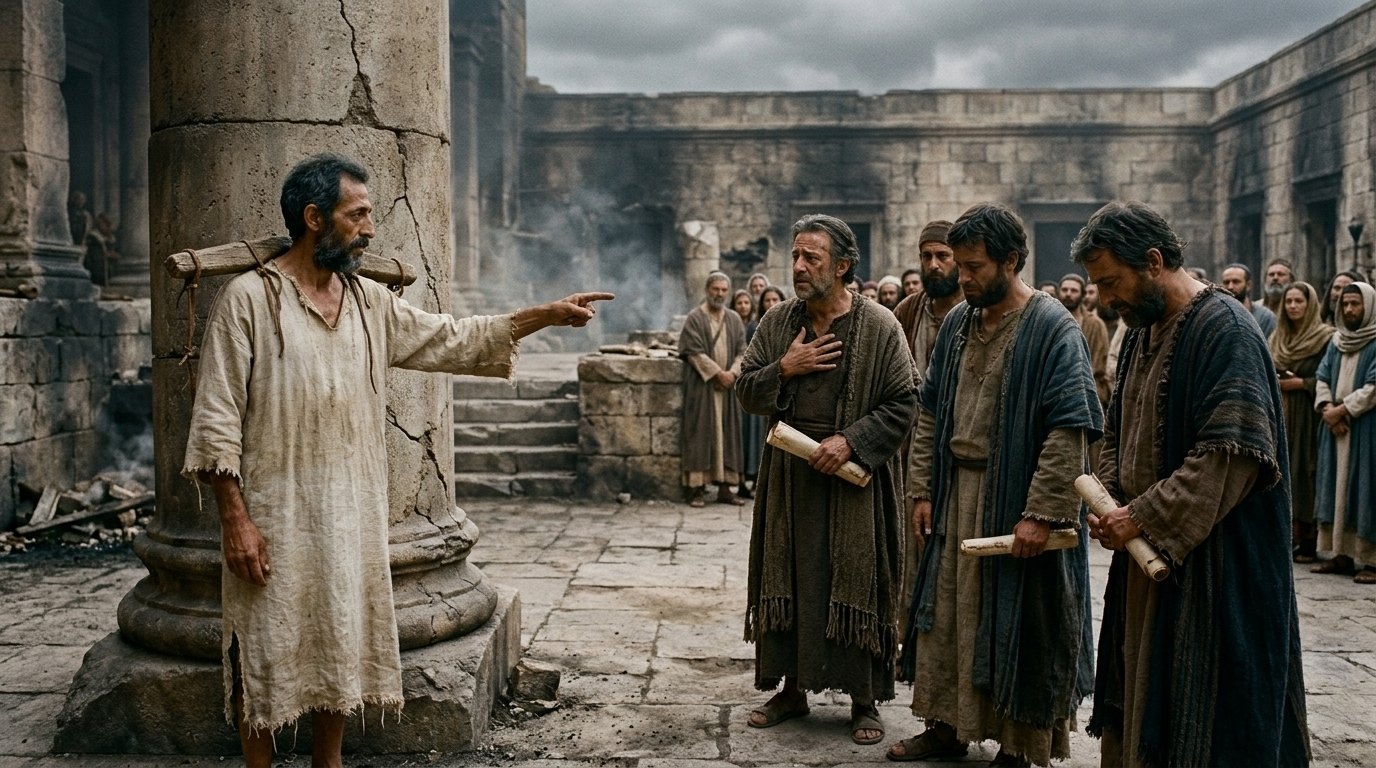
Jesus replied, “Moses permitted you to divorce your wives because your hearts were hard. But it was not this way from the beginning.
Matthew 19:8 (NIV)
Jesus explains that civil legal permissions under Moses accommodated hardened hearts rather than expressing God's original creation intention.
Matthew 19:8 provides the definitive interpretive key to understanding civil concessions in the Mosaic Law, showing that divine legal toleration does not equal moral approval. When the Pharisees interrogated the Lord Jesus regarding divorce, Christ appealed directly back to the unmarred standard of Genesis, reminding them that God made humanity male and female from the beginning (Matthew 19:4). He declared that Moses permitted men to put away their wives solely because of the hardness of their hearts, but that permission was never God's original creation intent (Matthew 19:8; Mark 10:5). In the same way, the Mosaic regulations concerning debt servitude and domestic bondservice were judicial firewalls constructed around a fallen, hard-hearted culture to curb brutality, rather than timeless moral ideals.
Whenever Israel drifted from God's holy heart into predatory greed, the covenant prophets brought devastating indictments against their exploitative practices. During the reconstruction era, Nehemiah was seized with righteous fury against the Jewish nobles who forced their debt-laden brethren into servitude, condemning them for exacting usury and compelling others to purchase their freedom (Nehemiah 5:8). Centuries prior, God spoke through Jeremiah to pronounce fierce covenant curses upon Judah for reneging on their oath to emancipate Hebrew servants after six years (Jeremiah 34:14). Because they forced their freed brethren back into bondage, the Lord proclaimed a horrific "liberty" unto them: liberation to the sword, pestilence, and famine (Jeremiah 34:17).
Similarly, the prophet Amos was dispatched to the Northern Kingdom to herald divine wrath upon a society that commodified vulnerable human souls. In Amos 2:6, God announces that Israel's cup of iniquity was full because corrupt elites sold the righteous for silver and the needy for a pair of sandals. He repeats this stinging accusation in Amos 8:6, castigating deceitful merchants who manipulated scales to purchase impoverished debtors for shoes. God never endorsed human subjugation; His law hemmed in hard-hearted men until the coming of Christ, who would break every yoke of sin.
| Passage | What it says |
|---|---|
| Matthew 19:4 | Jesus appeals back to creation, declaring that God made humanity male and female from the beginning. |
| Matthew 19:8 | Moses permitted divorce because of human hardness of heart, but it was not so from the beginning. |
| Mark 10:5 | Jesus states that Moses wrote a particular civil precept specifically because of the hardness of human hearts. |
| Nehemiah 5:8 | Nehemiah rebukes Jewish nobles for forcing their impoverished brethren into debt servitude while others redeem them. |
| Jeremiah 34:14 | The Lord reminds Judah of the covenant requirement to release Hebrew servants after six years of service. |
| Jeremiah 34:17 | God proclaims judgment against Jerusalem because the people reneged on emancipating their male and female servants. |
| Amos 2:6 | The Lord denounces Israel's judgment for selling the righteous for silver and the needy for a pair of sandals. |
| Amos 8:6 | God condemns the corrupt merchants who buy the poor for silver and the needy for sandals. |
Gospel and Equality
The New Testament Transforms Believers and Condemns Slave Traders
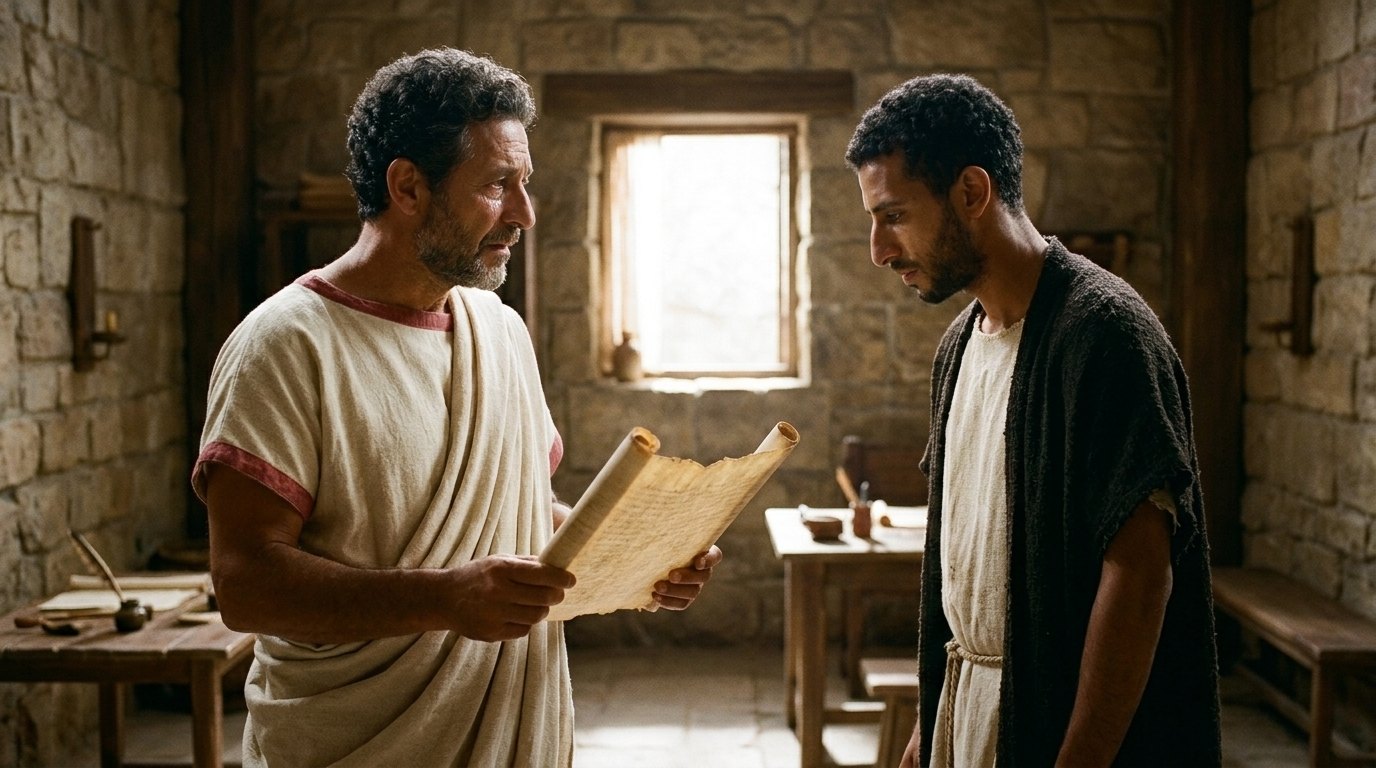
no longer as a slave, but better than a slave, as a dear brother. He is very dear to me but even dearer to you, both as a fellow man and as a brother in the Lord.
Philemon 1:16 (NIV)
Paul commands that an escaped slave be received back as a beloved brother in the Lord, fundamentally destroying the master-slave dynamic.
In Philemon 1:16, the apostle Paul articulates the radical transformation wrought by the cross: Onesimus is to be welcomed back no longer as a bondservant but more than a bondservant, as a beloved brother. This spiritual reality dismantled the ancient institution from within. While the Roman Empire rested upon brutal subjugation, the New Testament subverts human hierarchies by anchoring human worth in Christ. Paul counsels enslaved believers in 1 Corinthians 7:21 not to let their outward status distress them, yet explicitly adds that if they can gain their freedom, they should avail themselves of the opportunity. Spiritual identity redefines earthly position: the slave called in the Lord is Christ's freedman, while the free person called is Christ's bondservant (1 Corinthians 7:22). Because every believer was bought with a price at the cross, they must not become slaves of men (1 Corinthians 7:23). In Galatians 3:28, the dividing walls of human society collapse entirely: there is neither Jew nor Greek, slave nor free, male nor female, for all are one in Christ Jesus.
Where the institution still legally bound converts, the apostles commanded conduct that bore witness to the gospel. Servants were told to serve with sincere hearts as unto Christ rather than human masters (Ephesians 6:5; Colossians 3:22; Titus 2:9-10; 1 Peter 2:18), honoring masters so that God's name would not be reviled (1 Timothy 6:1-2). Simultaneously, Christian masters were stripped of coercive authority: Ephesians 6:9 orders them to cease threatening, and Colossians 4:1 commands them to treat servants justly and fairly, knowing their own Master is in heaven with no partiality. The Law of God openly classifies slave traders—enslavers and kidnappers—among murderers and ungodly sinners (1 Timothy 1:10), and the judgment of God in Revelation 18:13 falls on Babylon precisely for trafficking in the bodies and souls of human beings. Philemon 1:15-16 demonstrates that God's redemptive providence restores the oppressed, establishing an eternal fraternity that earthly bondage could never contain.
| Passage | What it says |
|---|---|
| 1 Corinthians 7:21 | Paul advises enslaved believers not to let servitude distress them, but to obtain freedom if given opportunity. |
| 1 Corinthians 7:22 | The slave called in the Lord is a freedman of Christ, and the free person called is Christ's slave. |
| 1 Corinthians 7:23 | Believers were bought with a price at the cross and must not become slaves of men. |
| Galatians 3:28 | In Christ Jesus there is neither Jew nor Greek, slave nor free, male nor female, for all are one. |
| Ephesians 6:5 | Bondservants are urged to obey earthly masters with sincere hearts as unto Christ, not by eye-service. |
| Ephesians 6:9 | Masters must stop threatening servants, remembering that their own Master is in heaven with no partiality. |
| Colossians 3:22 | Bondservants must serve faithfully in the fear of the Lord rather than merely to please human eyes. |
| Colossians 4:1 | Masters are commanded to treat bondservants justly and fairly, knowing they too have a Master in heaven. |
| 1 Timothy 1:10 | The moral law of God explicitly lists enslavers and kidnappers alongside murderers, adulterers, and liars. |
| 1 Timothy 6:1 | Slaves should honor their masters so that the name of God and His teaching may not be reviled. |
| 1 Timothy 6:2 | Slaves with believing masters must serve better because those who receive their service are beloved brethren. |
| Philemon 1:15 | Paul suggests Onesimus was separated from Philemon for a brief time that Philemon might receive him back forever. |
| Philemon 1:16 | Paul urges Philemon to receive Onesimus no longer as a slave, but as a beloved brother in Christ. |
| 1 Peter 2:18 | Servants are instructed to remain subject to masters with all respect, including those who are harsh. |
| Revelation 18:13 | Fallen Babylon faces divine condemnation for trafficking in human merchandise, listed specifically as the bodies and souls of men. |
| Titus 2:9 | Paul instructs bondservants to be submissive and well-pleasing, not argumentative. |
| Titus 2:10 | Servants are to show good faith so that they may adorn the doctrine of God their Savior. |
Where in the Bible
| Book | Passages |
|---|---|
| Genesis | 8 · Genesis 1:26, Genesis 1:27, Genesis 9:6, Genesis 37:28, Genesis 45:5, Genesis 45:7, Genesis 45:8, Genesis 50:20 |
| Exodus | 7 · Exodus 21:2, Exodus 21:16, Exodus 21:20, Exodus 21:26, Exodus 21:27, Exodus 20:10, Exodus 21:21 |
| Leviticus | 7 · Leviticus 25:39, Leviticus 25:40, Leviticus 25:43, Leviticus 25:46, Leviticus 25:10, Leviticus 25:42, Leviticus 25:55 |
| Deuteronomy | 7 · Deuteronomy 5:14, Deuteronomy 15:12, Deuteronomy 15:13, Deuteronomy 15:14, Deuteronomy 23:15, Deuteronomy 23:16, Deuteronomy 24:7 |
| Nehemiah | 1 · Nehemiah 5:8 |
| Job | 3 · Job 31:13, Job 31:15, Job 31:14 |
| Psalms | 1 · Psalms 76:10 |
| Proverbs | 2 · Proverbs 14:31, Proverbs 22:2 |
| Jeremiah | 2 · Jeremiah 34:14, Jeremiah 34:17 |
| Amos | 2 · Amos 2:6, Amos 8:6 |
| Matthew | 2 · Matthew 19:4, Matthew 19:8 |
| Mark | 1 · Mark 10:5 |
| Acts | 2 · Acts 17:26, Acts 4:28 |
| 1 Corinthians | 3 · 1 Corinthians 7:21, 1 Corinthians 7:22, 1 Corinthians 7:23 |
| Galatians | 1 · Galatians 3:28 |
| Ephesians | 2 · Ephesians 6:5, Ephesians 6:9 |
| Colossians | 2 · Colossians 3:22, Colossians 4:1 |
| 1 Timothy | 3 · 1 Timothy 1:10, 1 Timothy 6:1, 1 Timothy 6:2 |
| Titus | 2 · Titus 2:9, Titus 2:10 |
| Philemon | 2 · Philemon 1:15, Philemon 1:16 |
| 1 Peter | 1 · 1 Peter 2:18 |
| Revelation | 1 · Revelation 18:13 |
The story in order
- God creates humanity in His image (c. 4000 BC) · Genesis 1:27 · Establishes universal dignity and equal spiritual status for all people.
- Joseph sold into slavery (c. 1800 BC) · Genesis 37:28 · Illustrates human wickedness and God's sovereign governance over it.
- Exodus and the Law given (c. 1450 BC) · Exodus 21:2 · Regulated servitude, outlawed kidnapping, and protected servants.
- Jubilee year proclaimed (c. 1450 BC) · Leviticus 25:10 · A year of liberty for all inhabitants, including servants.
- Moses permits divorce due to hardness of heart (c. 30 AD) · Matthew 19:8 · Shows that legal permissions reflect human sin, not God's ideal.
- Nehemiah rebukes debt servitude (c. 445 BC) · Nehemiah 5:8 · Highlights the abuse of servitude among God's people.
- Jeremiah warns against reneging on emancipation (c. 588 BC) · Jeremiah 34:17 · God proclaims judgment for failing to free servants.
- Amos condemns selling the needy (c. 750 BC) · Amos 2:6 · Denounces Israel for selling the righteous and needy for profit.
- Paul's teaching on slavery in Christ (c. 55 AD) · 1 Corinthians 7:21 · Believers should not let servitude distress them; they are freedmen of Christ.
- Paul on equality in Christ (c. 49 AD) · Galatians 3:28 · In Christ, distinctions like slave and free are transcended.
- Paul on masters and servants (c. 60 AD) · Ephesians 6:5 · Bondservants obey as unto Christ; masters treat servants justly.
- Paul lists enslavers as lawbreakers · 1 Timothy 1:10 · The law lists enslavers alongside murderers and kidnappers.
- Paul urges Philemon to receive Onesimus as a brother (c. 60 AD) · Philemon 1:16 · The gospel transforms slave relationships into brotherhood.
- Revelation condemns trafficking (c. 95 AD) · Revelation 18:13 · Fallen Babylon is condemned for trafficking in human souls.
God's Sovereignty Over Human Sin
| Human Wickedness | God's Purpose | Outcome | Passage |
|---|---|---|---|
| Joseph's brothers sell him into slavery | God sent Joseph ahead to preserve life | Joseph saves his family from famine | |
| Brothers meant evil against Joseph | God meant it for good | To save many people alive | Genesis 50:20 |
| Wicked hands crucified Christ | God's sovereign hand and counsel determined it | To fulfill His plan of salvation | Acts 4:28 |
Servitude in the Law: Restraint and Dignity
| Regulation | Purpose | Outcome | Passage |
|---|---|---|---|
| Hebrew servants released in 7th year | Prevent exploitation | Freedom without cost | Exodus 21:2 |
| Kidnapping and selling people is death penalty | Protect human dignity | Outlaw human trafficking | Exodus 21:16 |
| Masters must not rule Hebrew servants ruthlessly | Fear God | Protect brethren from harsh treatment | Leviticus 25:43 |
| Servants rest on Sabbath | Follow God's command | Equal rest for all | Deuteronomy 5:14 |
| Runaway foreign slaves granted safe haven | Show mercy | Prevent oppression | Deuteronomy 23:16 |
The Gospel's Transformative Impact on Status
| Old Status | New Identity in Christ | Relationship | Passage |
|---|---|---|---|
| Slave | Freedman of Christ | Beloved brother | |
| Slave or Free | One in Christ Jesus | All are one | Galatians 3:28 |
| Bondservant | Obey as unto Christ | Serve believing masters better |
Key words
- Image of God (tsalmem, צַלְמֵם)
- The inherent dignity and spiritual status conferred on humanity by God. · Genesis 1:27
- Servitude (ʿebed, עֶבֶד)
- A state of service or submission, regulated by law in ancient Israel. · Exodus 21:2
- Hardness of Heart (qashut lev, קְשׁוּת לֵב)
- Human stubbornness and resistance to God's will, leading to legal concessions. · Matthew 19:8
- Freedman of Christ (eleútheros, ἐλεύθερος)
- One who, though enslaved, is liberated by Christ and belongs to Him. · 1 Corinthians 7:22
- Kidnapping (ganáb, גָּנָב)
- The unlawful taking and selling of a person into slavery. · Exodus 21:16
God met humanity in the mess of its fallen structures not to bless them, but to redeem people out of them and establish a new family in Jesus Christ. Where human systems saw property and cheap labor, God saw His image-bearers, commanding justice, holding masters accountable to the King of kings, and making slaves heirs of eternal glory. In Christ, every earthly hierarchy is leveled before the cross, calling believers to live as brothers and sisters in holiness, love, and true spiritual freedom.
62 passages, each cited once.
Scripture cited
- Philemon 1:15-16
- Genesis 50:20
- Genesis 45:5-8
- Psalms 76:10
- Exodus 21:16-27
- Leviticus 25:39-46
- Philemon 1:8-20
- Ephesians 6:5-9
- Galatians 3:26-29
- Genesis 1:26-27
- Exodus 21:1-11
- 1 Peter 2:18-25