What is the Trinity?

Matthew 28:19
19 Therefore go and make disciples of all nations, baptizing them in the name of the Father and of the Son and of the Holy Spirit,
New International Version (NIV)
The answer
The Trinity is the biblical truth that there is one God, eternally existing in three distinct persons: the Father, the Son, and the Holy Spirit. Each person is fully God, yet there are not three Gods. The Father is not the Son, the Son is not the Holy Spirit, and the Holy Spirit is not the Father. “Trinity” is simply shorthand for this teaching.
One God
Deuteronomy 6:4 declares, “Hear, Israel: Yahweh is our God. Yahweh is one.” Scripture therefore excludes the idea that Father, Son, and Spirit are three separate gods. God is one in being, not divided into three parts.
Three distinct persons
The three are personally distinct, not merely three titles, roles, or appearances of one person:
- Matthew 3:16-17 shows Jesus coming up from the water, the Spirit of God descending upon him, and the Father speaking from heaven: “This is my beloved Son, with whom I am well pleased.”
- John 14:16-17 records Jesus praying to the Father, who gives “another Counselor,” the Spirit of truth. The Son, Father, and Spirit act distinctly here.
- The Spirit is personal, not an impersonal force: he is the Counselor who lives with and in believers, and Acts 5:3-4 says Ananias lied to him.
Each person is fully God
John 1:1-3 says of the Son, “In the beginning was the Word, and the Word was with God, and the Word was God.” It also says everything was made through him, so the Son is not part of creation.
Acts 5:3-4 first says Ananias lied “to the Holy Spirit” and then concludes, “You haven’t lied to men, but to God.” Lying to the Spirit is lying to God.
Jesus brings all three together in Matthew 28:19, commanding baptism “in the name of the Father and of the Son and of the Holy Spirit.” The singular name belongs to all three, without confusing their persons.
This is not a contradiction: God is one in essence and three in person, not one and three in precisely the same respect. “Person” does not mean three human beings or three independent gods.
Why it matters
The Trinity belongs to the way God saves and gives himself to his people. Second Corinthians 13:14 joins the three in Christian blessing: “The grace of the Lord Jesus Christ, God’s love, and the fellowship of the Holy Spirit be with you all. Amen.” Christian worship, baptism, and salvation are therefore directed to the one true God—Father, Son, and Holy Spirit—not to a solitary Father who later acquired two assistants.
Answered from Scripture · reviewed November 11, 2026
The doctrine of the Trinity confesses that there is only one living and true God, eternally existing as three distinct Persons: Father, Son, and Holy Spirit. Though the specific word does not appear in the text, Scripture reveals this profound mystery from creation through consummation, displaying three co-equal, co-eternal Persons who share one undivided divine essence. Tracing the biblical witness grounds our faith in the very nature of the God who redeems us.
The One True God
Scripture uncompromisingly proclaims that God is one

Hear, O Israel: The LORD our God, the LORD is one.
Deuteronomy 6:4 (NIV)
This cornerstone declaration establishes strict biblical monotheism against every form of polytheism.
Deuteronomy 6:4 stands as the rock on which biblical faith rests: "Hear, O Israel: The LORD our God, the LORD is one." This Shema establishes strict, uncompromising monotheism across redemptive history. Long before Israel entered Canaan, God made plain through Moses that He shares His glory with no creature or idol. Deuteronomy 4:35 reinforces this truth, noting that the great signs in Egypt were displayed so that the people would know that the Lord alone is God, and there is none else beside Him.
The prophets echo this solitary majesty. Through the prophet Isaiah, the Lord delivers unmistakable declarations of His exclusivity. In Isaiah 44:6, He identifies Himself as the first and the last, asserting, "beside me there is no God." Isaiah 45:5 repeats this absolute claim: "I am the LORD, and there is none else, there is no God beside me." Again, in Isaiah 46:9, the Sovereign Creator demands that His people remember the former things of old, because He alone is God, and there is none like Him.
The New Testament writers never dilute this unyielding monotheism; rather, they ground their theology upon it. In Mark 12:29, Jesus Himself quotes Deuteronomy 6:4, affirming that the Shema is the first and greatest commandment. The apostle Paul vigorously maintains this foundation when addressing pagan idolatry in Corinth. In 1 Corinthians 8:4, he assures the church that "there is none other God but one." Writing to Timothy, Paul insists in 1 Timothy 2:5 that "there is one God, and one mediator between God and men," demonstrating that Christian redemption does not invent new deities. James 2:19 caps this testimony with stark solemnity: even the demons believe that there is one God, and they tremble. Biblical monotheism is absolute, clear, and immutable.
| Passage | What it says |
|---|---|
| Deuteronomy 6:4 | Proclaims that the Lord our God is one Lord. |
| Isaiah 44:6 | The Lord declares Himself the first and the last, beside whom there is no God. |
| Isaiah 45:5 | God insists that He is the Lord and there is none else beside Him. |
| Mark 12:29 | Jesus affirms the Shema as the first and greatest commandment. |
| 1 Corinthians 8:4 | Paul confirms that there is no other God but one. |
| 1 Timothy 2:5 | Affirms there is one God and one mediator between God and men. |
| James 2:19 | Notes that even the demons believe that there is one God and tremble. |
| Deuteronomy 4:35 | Unto Israel it was shown that the LORD He is God; there is none else beside Him. |
| Isaiah 46:9 | God declares that He alone is God, and there is none like Him. |
Shadows of Plurality
The Old Testament intimates divine plurality within divine unity
Then God said, “Let us make mankind in our image, in our likeness, so that they may rule over the fish in the sea and the birds in the sky, over the livestock and all the wild animals, and over all the creatures that move along the ground.”
Genesis 1:26 (NIV)
God speaks in the plural of His image before humanity exists, unveiling personal plurality within the divine being.
Genesis 1:26 breaks through with startling wonder at the creation of humanity: "And God said, Let us make man in our image, after our likeness." While God is singular in essence, Scripture immediately witnesses to divine plurality. At the very opening of the canon, Genesis 1:1 pairs the plural noun Elohim with a singular verb, immediately followed in Genesis 1:2 by the Spirit of God hovering over the face of the waters. Following humanity's fall, Genesis 3:22 records the Lord God saying, "man is become as one of us." At Babel in Genesis 11:7, the Lord declares, "Let us go down, and there confound their language." Even Genesis 19:24 displays distinct divine agency when the Lord on earth rained fire "from the LORD out of heaven."
The Psalms and Wisdom literature deepen this mysterious plurality. In Psalm 45:6–7, the psalmist addresses God whose throne endures forever, yet who is anointed by "God, thy God." In Psalm 110:1, David speaks of two divine persons: "The LORD said unto my Lord, Sit thou at my right hand." Agur wonders aloud in Proverbs 30:4 at the Creator's mystery: "What is his name, and what is his son's name, if thou canst tell?"
The prophets carry these intimations into direct personal interactions. In Isaiah 6:3, the seraphim cry a threefold declaration—"Holy, holy, holy"—before the Lord asks in Isaiah 6:8, "Who will go for us?" Isaiah 48:16 presents a divine speaker announcing, "the Lord GOD, and his Spirit, hath sent me." In Isaiah 63:9–10, the Lord, the angel of His presence, and His Holy Spirit move in sovereign salvation, noting that Israel grieved His Holy Spirit. Zechariah 2:10–11 captures the Lord of hosts declaring He was sent by the Lord of hosts, while Zechariah 12:10 presents God declaring that they shall look upon "me whom they have pierced," pouring out the Spirit of grace.
| Passage | What it says |
|---|---|
| Genesis 1:1 | God creates the heavens and the earth, using the plural noun Elohim with a singular verb. |
| Genesis 1:2 | The Spirit of God moves over the face of the waters at creation. |
| Genesis 1:26 | God says, 'Let us make man in our image, after our likeness.' |
| Genesis 3:22 | The Lord God states that man has become like one of Us. |
| Genesis 11:7 | The Lord says, 'Let us go down, and there confound their language.' |
| Psalms 45:6 | The psalmist addresses God whose throne is forever, anointed by God His God. |
| Psalms 110:1 | The Lord says to David's Lord to sit at His right hand. |
| Proverbs 30:4 | Asks what is God's name and what is His Son's name. |
| Isaiah 6:3 | The seraphim cry the threefold sanctus: 'Holy, holy, holy.' |
| Isaiah 6:8 | The Lord asks, 'Whom shall I send, and who will go for us?' |
| Isaiah 48:16 | The speaker declares that the Lord God and His Spirit have sent Him. |
| Isaiah 63:9 | Describes the Lord, the angel of His presence, and His Holy Spirit working together. |
| Genesis 19:24 | The LORD rained brimstone and fire from the LORD out of heaven, portraying distinct divine agency. |
| Zechariah 2:10-11 | The LORD of hosts declares He is sent by the LORD of hosts to dwell amid His people. |
| Zechariah 12:10 | God pours out the Spirit of grace, declaring they will look on Me whom they have pierced. |
| Isaiah 63:10 | Israel rebelled and grieved God's Holy Spirit, testifying to the Spirit's personal presence in redemptive history. |
The Eternal Father
The Father is fully God, the source of eternal purpose

Praise be to the God and Father of our Lord Jesus Christ, who has blessed us in the heavenly realms with every spiritual blessing in Christ.
Ephesians 1:3 (NIV)
Identifies the God and Father of Jesus Christ as the eternal source of every spiritual blessing.
Ephesians 1:3 directs our hearts to the origin of our salvation: "Blessed be the God and Father of our Lord Jesus Christ, who hath blessed us with all spiritual blessings in heavenly places in Christ." The Father is revealed throughout the New Testament as fully God, the eternal source of purpose and redemptive grace. In Matthew 6:9, the Lord Jesus instructs His disciples to address their prayers directly to this sovereign Person: "Our Father which art in heaven." This relationship is neither an earthly metaphor nor an afterthought; it is an eternal reality rooted in the divine life.
The Gospels showcase the Father's absolute divine authority. John 6:27 declares that God the Father has set His seal upon the Son of Man. In Matthew 11:27, Christ declares that all things are delivered to Him by His Father, and no one knows the Father except through the Son. When Christ calls God His own Father in John 5:17–18, His adversaries correctly perceive that He makes Himself equal with God, recognizing the Father's transcendent nature. John 17:1 captures the Son speaking to the Father on the eve of the cross, pleading to enter the glory they shared before the world was framed.
The epistles constantly ground Christian assurance in the Father's person. Paul begins his letters, as in Romans 1:7, with greetings of grace and peace from "God our Father." In 1 Corinthians 8:6, the apostle writes, "to us there is but one God, the Father, of whom are all things, and we in him." Galatians 1:1 points to the Father's sovereign power in raising Jesus Christ from the dead. In 1 Peter 1:2, Peter affirms that our very election rests in the "foreknowledge of God the Father." The Father reigns supreme in purpose, sending the Son and pouring out the Spirit to redeem His people.
| Passage | What it says |
|---|---|
| Matthew 6:9 | Jesus teaches disciples to pray directly to their Father in heaven. |
| John 6:27 | Affirms that God the Father has set His seal on the Son of Man. |
| John 17:1 | Jesus addresses the Father, asking to be glorified with the eternal glory they shared. |
| Romans 1:7 | Wishes grace and peace from God our Father and the Lord Jesus Christ. |
| 1 Corinthians 8:6 | Confesses one God, the Father, from whom are all things and for whom we exist. |
| Ephesians 1:3 | Praises the God and Father of our Lord Jesus Christ who blessed us in heavenly realms. |
| Galatians 1:1 | Names God the Father who raised Jesus Christ from the dead. |
| 1 Peter 1:2 | Speaks of believers chosen according to the foreknowledge of God the Father. |
| Matthew 11:27 | All things are delivered to the Son by the Father, and no one knows the Father except the Son. |
| John 5:17-18 | Jesus calls God His own Father, making Himself equal with God. |
The Divine Son
Jesus Christ is eternally God, distinct yet one with the Father
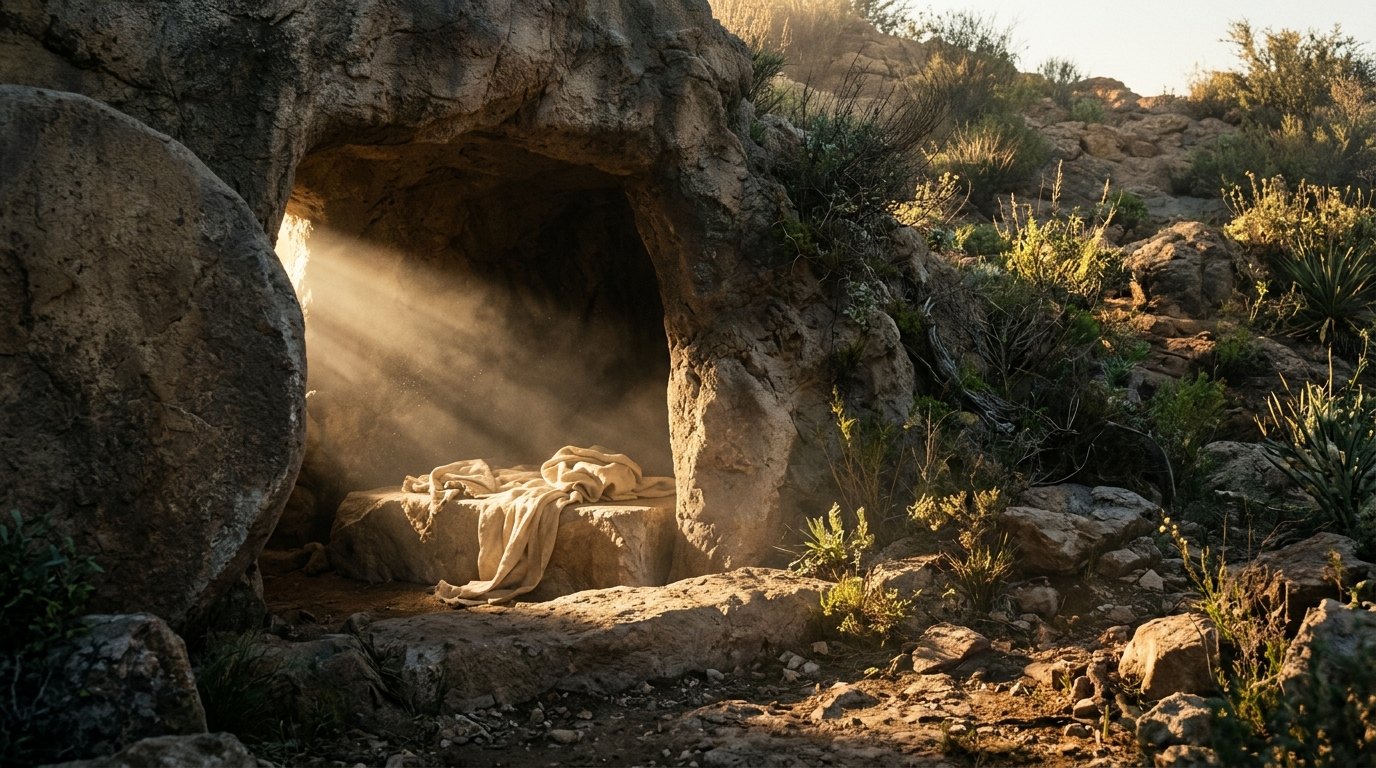
In the beginning was the Word, and the Word was with God, and the Word was God.
John 1:1 (NIV)
Establishes that the Word existed eternally with God and was simultaneously fully God.
John 1:1 delivers the classic, definitive confession of the Son's eternal deity: "In the beginning was the Word, and the Word was with God, and the Word was God." Jesus Christ is not a created being, but the eternal Son who was with the Father and was Himself truly God. John 1:14 records the miracle of the incarnation, when this Word became flesh and dwelt among us. In John 1:18, He is called the only begotten God, resting in the very bosom of the Father. During His earthly ministry, Christ claimed the divine name of Exodus when He declared in John 8:58, "Before Abraham was, I am." In John 10:30, He stated simply: "I and my Father are one."
The resurrection compelled undeniable worship. In John 20:28, Thomas fell before the risen Jesus, exclaiming, "My Lord and my God." Paul writes in Romans 9:5 that Christ is "over all, God blessed for ever." In Philippians 2:6, Christ is described as eternally subsisting in the form of God, counting it not robbery to be equal with God. Colossians 1:16 credits Him with creation itself, for all things were created by Him and for Him. Colossians 2:9 states that in Christ dwells all the fullness of the Godhead bodily.
The epistle to the Hebrews confirms this supreme identity. Hebrews 1:3 calls the Son the radiance of God's glory and the exact representation of His being, while in Hebrews 1:8, the Father Himself addresses the Son: "Thy throne, O God, is for ever and ever." John 17:5 recalls the uncreated glory Christ possessed with the Father before the world existed. Both Titus 2:13 and 2 Peter 1:1 designate Jesus as "our great God and Savior." Finally, 1 John 5:20 seals this witness, proclaiming that Jesus Christ is "the true God, and eternal life."
| Passage | What it says |
|---|---|
| John 1:1 | States the Word was in the beginning with God and was God. |
| John 1:14 | Declares that the Word became flesh and dwelt among us. |
| John 8:58 | Jesus claims divine eternal existence, saying, 'Before Abraham was, I am.' |
| John 10:30 | Jesus explicitly asserts, 'I and my Father are one.' |
| John 20:28 | Thomas worships the risen Jesus as 'My Lord and my God.' |
| Romans 9:5 | Refers to Christ as God over all, blessed forever. |
| Philippians 2:6 | States that Christ existed eternally in the form of God without robbery. |
| Colossians 1:16 | Affirms all things were created by Him and for Him in heaven and earth. |
| Colossians 2:9 | States that the entire fullness of Deity dwells bodily in Christ. |
| Titus 2:13 | Calls Jesus Christ our great God and Savior. |
| Hebrews 1:8 | The Father addresses the Son as God, whose throne is forever and ever. |
| 2 Peter 1:1 | Names Jesus Christ as our God and Savior. |
| John 1:18 | The only begotten God, who is in the bosom of the Father, has made Him known. |
| John 17:5 | Jesus petitions the Father to glorify Him with the glory He had with the Father before the world existed. |
| Hebrews 1:3 | The Son is the radiance of God's glory and the exact representation of His being. |
| 1 John 5:20 | Jesus Christ is declared to be the true God and eternal life. |
The Personal Spirit
The Holy Spirit is fully God and a distinct divine Person

Then Peter said, “Ananias, how is it that Satan has so filled your heart that you have lied to the Holy Spirit and have kept for yourself some of the money you received for the land?
Acts 5:3 (NIV)
Lying to the Holy Spirit is explicitly identified as lying directly unto God Himself.
The Holy Spirit is neither a cosmic energy nor an impersonal force; the Holy Spirit is fully God and a distinct divine Person, possessing every incommunicable attribute of deity alongside personal intellect, will, and affection. When Ananias conspired to deceive the apostolic church, Peter confronted him directly in Acts 5:3, asking why Satan had filled his heart to lie to the Holy Spirit. In the very next breath, Peter underscored the magnitude of the transgression in Acts 5:4: “You have not lied to man but to God.” To deceive the Holy Spirit is to deceive God Himself, establishing His absolute deity on the plainest terms.
Throughout the Upper Room Discourse, Jesus repeatedly unveiled the Spirit's distinct personhood, promising in John 14:16 that the Father would give believers “another Helper” (allon paraklēton, another of the same kind), who would abide forever. In John 14:26 and John 16:13, Christ described the Spirit as One who teaches, brings Christ's words to remembrance, guides into all truth, and speaks what He hears—activities that belong exclusively to a conscious personal agent. Paul likewise revealed the Spirit’s emotional and volitional life, noting in Romans 8:26 that the Spirit personally intercedes for the saints with groanings too deep for words, searching the deep things of God in 1 Corinthians 2:10, and distributing gifts according to His own sovereign will in 1 Corinthians 12:11. Because He is a living Person who loves His people, believers are commanded in Ephesians 4:30 not to grieve the Holy Spirit.
Furthermore, Scripture attributes to the Spirit qualities belonging solely to God. Hebrews 9:14 terms Him the “eternal Spirit,” while David in Psalm 139:7 marvels at His inescapable omnipresence: “Where shall I go from your Spirit? Or where shall I flee from your presence?” Finally, in 2 Corinthians 3:17-18, the Apostle Paul equates the Spirit with Yahweh, declaring that “the Lord is the Spirit” and that believers are being transformed from glory to glory by this same sovereign Lord.
| Passage | What it says |
|---|---|
| Acts 5:3 | Peter identifies lying to the Holy Spirit as lying directly to God. |
| Acts 5:4 | Confirms that the deception was committed not to men, but unto God. |
| John 14:16 | Jesus promises another Helper, the Spirit of truth, who will abide forever. |
| John 14:26 | The Holy Spirit is sent by the Father to teach and remind. |
| John 16:13 | Describes the Spirit guiding into truth and speaking only what He hears. |
| Romans 8:26 | The Spirit personally intercedes for the saints with groanings beyond words. |
| 1 Corinthians 2:10 | The Spirit searches all things, even the deep things of God. |
| 1 Corinthians 12:11 | The Spirit distributes spiritual gifts individually as He wills. |
| Ephesians 4:30 | Commands believers not to grieve the personal Holy Spirit of God. |
| Hebrews 9:14 | Refers to the Holy Spirit as the eternal Spirit. |
| Psalms 139:7 | David confesses the omnipresence of the Spirit, showing the Holy Spirit possesses divine attributes. |
| 2 Corinthians 3:17-18 | The Lord is the Spirit, and believers are being transformed into His image by the Lord, the Spirit. |
Triune Revelations
The three divine Persons act together in historical events

As soon as Jesus was baptized, he went up out of the water. At that moment heaven was opened, and he saw the Spirit of God descending like a dove and alighting on him.
Matthew 3:16 (NIV)
At the Jordan, the Son is baptized, the Spirit descends, and the Father speaks from heaven simultaneously.
While God is one in indivisible essence, the three divine Persons act simultaneously and distinctly across redemptive history, demonstrating their eternal, personal relations without confusion or division. This harmonious operation shines with unmatched clarity at the Jordan River. In Matthew 3:16, Jesus steps up out of the baptismal waters, and instantly the heavens are opened as the Spirit of God descends visibly like a dove to rest upon Him. Concurrently, in Matthew 3:17, the Father speaks from heaven, saying, “This is my beloved Son, with whom I am well pleased.” In a single historical moment, the Son is baptized, the Spirit descends, and the Father proclaims His paternal delight. Luke 3:21-22 confirms this exact scene as Jesus prays, showing all three Persons present, active, and distinct.
This triune concert is not confined to the inauguration of Christ’s public ministry; it frames the mystery of the Incarnation itself. In Luke 1:35, the angel Gabriel announced to Mary: “The Holy Spirit will come upon you, and the power of the Most High will overshadow you; therefore the child to be born will be called holy—the Son of God.” The entire Godhead orchestrated the entrance of the Word into human flesh: the Father sending, the Spirit overshadowing, and the Son assuming a true human nature.
Similarly, the ongoing mission of redemption displays this beautiful triune order. In John 15:26, Jesus declared, “When the Helper comes, whom I will send to you from the Father, the Spirit of truth, who proceeds from the Father, he will bear witness about me.” Peter affirmed the fulfillment of this promise at Pentecost in Acts 2:33, preaching that Christ, “being therefore exalted at the right hand of God, and having received from the Father the promise of the Holy Spirit, he has poured out this that you yourselves are seeing and hearing.”
| Passage | What it says |
|---|---|
| Luke 1:35 | The angel tells Mary that the Holy Spirit, the Most High, and the Son of God unite in the incarnation. |
| Matthew 3:16 | Jesus is baptized while the Spirit of God descends like a dove upon Him. |
| Matthew 3:17 | The Father's voice sounds from heaven, declaring Jesus His beloved Son. |
| Luke 3:21 | Records Jesus praying at baptism while heaven opens. |
| Luke 3:22 | The Holy Spirit descends bodily and the Father speaks His delight in the Son. |
| John 15:26 | Jesus promises to send the Spirit of truth who proceeds from the Father. |
| Acts 2:33 | The exalted Jesus receives the Holy Spirit from the Father and pours Him out. |
The Triune Name and Mission
The New Testament coordinates the three Persons in authority and blessing

Therefore go and make disciples of all nations, baptizing them in the name of the Father and of the Son and of the Holy Spirit,
Matthew 28:19 (NIV)
Jesus commands baptism into the singular 'name' shared equally by Father, Son, and Holy Spirit.
The apostolic church lived and worshipped in the light of the Trinity, consistently uniting Father, Son, and Holy Spirit in the administration of salvation, the life of worship, and apostolic benedictions. When the risen Christ issued the Great Commission in Matthew 28:19, He commanded His apostles to disciple the nations, “baptizing them in the name of the Father and of the Son and of the Holy Spirit.” Strikingly, Jesus used the singular “name” (onoma), not names, placing the three Persons on the exact same plane of sovereign authority and demonstrating their shared, undivided divine essence.
The Epistles perpetually reflect this triadic grammar of redemption. In Galatians 4:4-6, Paul outlines the architecture of salvation: God the Father sent forth His Son to redeem those under the law, and subsequently sent the Spirit of His Son into our hearts, crying, “Abba! Father!” Paul marshals the same triune foundation for pastoral entreaty in Romans 15:30, urging the church to strive in prayer “by our Lord Jesus Christ and by the love of the Spirit” to God. When describing the diverse spiritual gifts equipping the church in 1 Corinthians 12:4-6, Paul roots them directly in the Godhead: the same Spirit, the same Lord Jesus, and the same God the Father working all in all.
This triune blessing saturates apostolic prayer and hope. Paul closes his second letter to Corinth with the classic trinitarian benediction of 2 Corinthians 13:14: “The grace of the Lord Jesus Christ and the love of God and the fellowship of the Holy Spirit be with you all.” In Ephesians 4:4-6, unity is anchored in “one Spirit... one Lord... one God and Father of all.” Jude 1:20-21 urges believers to pray in the Holy Spirit, keep themselves in the love of God, and wait for the mercy of our Lord Jesus Christ. Finally, Revelation 1:4-5 greets the churches with grace and peace from the eternal Father, the sevenfold Holy Spirit, and Jesus Christ the faithful witness.
| Passage | What it says |
|---|---|
| Matthew 28:19 | Commands baptism into the singular name of Father, Son, and Holy Spirit. |
| Romans 15:30 | Paul appeals by our Lord Jesus Christ and by the love of the Spirit to pray to God. |
| 1 Corinthians 12:4 | Describes distinct gifts from the same Spirit, Lord, and God working all in all. |
| 1 Corinthians 12:5 | Identifies different ministries under the same Lord. |
| 1 Corinthians 12:6 | Notes the same God working all activities in everyone. |
| 2 Corinthians 13:14 | Invokes the grace of Christ, the love of God, and the fellowship of the Spirit. |
| Ephesians 4:4 | Proclaims one body and one Spirit, one hope of your calling. |
| Ephesians 4:5 | Confesses one Lord, one faith, and one baptism. |
| Ephesians 4:6 | Proclaims one God and Father of all, who is over all and through all. |
| Jude 1:20 | Exhorts building faith in the Holy Spirit, keeping in God's love, waiting for Christ's mercy. |
| Revelation 1:4 | Sends grace from Him who is, the seven Spirits, and Jesus Christ. |
| Revelation 1:5 | Continues blessing from Jesus Christ, the faithful witness and ruler of kings. |
| Galatians 4:4-6 | God sent forth His Son to redeem, and sent forth the Spirit of His Son into our hearts crying Abba. |
Where in the Bible
| Book | Passages |
|---|---|
| Genesis | 6 · Genesis 1:1, Genesis 1:2, Genesis 1:26, Genesis 3:22, Genesis 11:7, Genesis 19:24 |
| Deuteronomy | 2 · Deuteronomy 6:4, Deuteronomy 4:35 |
| Psalms | 3 · Psalms 45:6, Psalms 110:1, Psalms 139:7 |
| Proverbs | 1 · Proverbs 30:4 |
| Isaiah | 8 · Isaiah 44:6, Isaiah 45:5, Isaiah 46:9, Isaiah 6:3, Isaiah 6:8, Isaiah 48:16, Isaiah 63:9, Isaiah 63:10 |
| Zechariah | 2 · Zechariah 2:10-11, Zechariah 12:10 |
| Matthew | 5 · Matthew 6:9, Matthew 11:27, Matthew 3:16, Matthew 3:17, Matthew 28:19 |
| Mark | 1 · Mark 12:29 |
| Luke | 3 · Luke 1:35, Luke 3:21, Luke 3:22 |
| John | 14 · John 6:27, John 17:1, John 5:17-18, John 1:1, John 1:14, John 8:58, John 10:30, John 20:28, John 1:18, John 17:5, John 14:16, John 14:26, John 16:13, John 15:26 |
| Acts | 3 · Acts 5:3, Acts 5:4, Acts 2:33 |
| Romans | 4 · Romans 1:7, Romans 9:5, Romans 8:26, Romans 15:30 |
| 1 Corinthians | 7 · 1 Corinthians 8:4, 1 Corinthians 8:6, 1 Corinthians 2:10, 1 Corinthians 12:11, 1 Corinthians 12:4, 1 Corinthians 12:5, 1 Corinthians 12:6 |
| 2 Corinthians | 2 · 2 Corinthians 3:17-18, 2 Corinthians 13:14 |
| Galatians | 2 · Galatians 1:1, Galatians 4:4-6 |
| Ephesians | 5 · Ephesians 1:3, Ephesians 4:30, Ephesians 4:4, Ephesians 4:5, Ephesians 4:6 |
| Philippians | 1 · Philippians 2:6 |
| Colossians | 2 · Colossians 1:16, Colossians 2:9 |
| 1 Timothy | 1 · 1 Timothy 2:5 |
| Titus | 1 · Titus 2:13 |
| Hebrews | 3 · Hebrews 1:8, Hebrews 1:3, Hebrews 9:14 |
| James | 1 · James 2:19 |
| 1 Peter | 1 · 1 Peter 1:2 |
| 2 Peter | 1 · 2 Peter 1:1 |
| 1 John | 1 · 1 John 5:20 |
| Jude | 1 · Jude 1:20 |
| Revelation | 2 · Revelation 1:4, Revelation 1:5 |
The story in order
- Creation (c. 4000 BC) · Genesis 1:1 · God creates using plural language, hinting at plurality within unity.
- The Fall and Curse (c. 4000 BC) · Genesis 3:22 · God speaks of man becoming like 'one of Us'.
- Tower of Babel (c. 2300 BC) · Genesis 11:7 · God says, 'Let us go down and confuse their language.'
- Abrahamic Covenant (c. 2000 BC) · Genesis 1:26 · God's image in humanity implies plurality.
- Exodus and Law (c. 1450 BC) · Deuteronomy 6:4 · The Shema: 'The LORD our God, the LORD is one.'
- Davidic Kingdom (c. 1000 BC) · Psalms 110:1 · The Lord says to David's Lord: 'Sit at my right hand.'
- Isaiah's Commission (c. 740 BC) · Isaiah 6:3 · Seraphim cry 'Holy, holy, holy,' pointing to divine fullness.
- Prophetic Ministry (c. 740 BC) · Isaiah 48:16 · The Lord God and His Spirit have sent Him (the Messiah).
- Incarnation (c. 6 BC) · Luke 1:35 · The Holy Spirit and the power of the Most High conceive Jesus.
- Jesus' Baptism (AD 27) · Matthew 3:16-17 · The Spirit descends, the Father speaks, the Son is present.
- Jesus' Great Commission (AD 30) · Matthew 28:19 · Baptism in the name of the Father, Son, and Holy Spirit.
- Pentecost (AD 30) · Acts 2:33 · Jesus receives the Spirit from the Father and pours Him out.
- Apostolic Ministry (c. AD 55) · 2 Corinthians 13:14 · Benediction invoking Christ, God, and the Spirit.
Key words
- God (Elohim, אֱלֹהִים)
- The supreme, eternal, and self-existent Creator and Sustainer of all things. · Genesis 1:1
- Father (Abba, אַבָּא)
- The first Person of the Trinity, eternally begetting the Son and proceeding with the Spirit. · Mark 14:36
- Son (Logos, Λόγος)
- The second Person of the Trinity, eternally begotten of the Father, incarnate as Jesus Christ. · John 1:1
- Spirit (Ruach, רוּחַ)
- The third Person of the Trinity, eternally proceeding from the Father and the Son. · Genesis 1:2
- One (Echad, אֶחָד)
- Emphasizes the absolute unity and indivisibility of the divine essence. · Deuteronomy 6:4
- Image (Tselem, צֶלֶם)
- Likeness or representation, indicating humanity's unique relationship with God. · Genesis 1:26
- Trinity (Trias, Τριάς)
- The doctrine that God is one Being in three co-equal, co-eternal Persons: Father, Son, and Holy Spirit. · Matthew 28:19
To know the Trinity is not to master an abstract formula, but to be drawn into fellowship with the living God who purposed our redemption, accomplished it in the Son, and seals it by the Spirit. Resting in this truth transforms our worship, our prayer, and our assurance, knowing that the eternal love shared between Father, Son, and Holy Spirit has laid hold of us for all eternity.
83 passages, each cited once.
Scripture cited
- Matthew 28:19
- Deuteronomy 6:4
- John 1:1-3
- John 14:16-17
- Acts 5:3-4
- 2 Corinthians 13:14
- Matthew 3:16-17