What prophecies did Jesus fulfill?
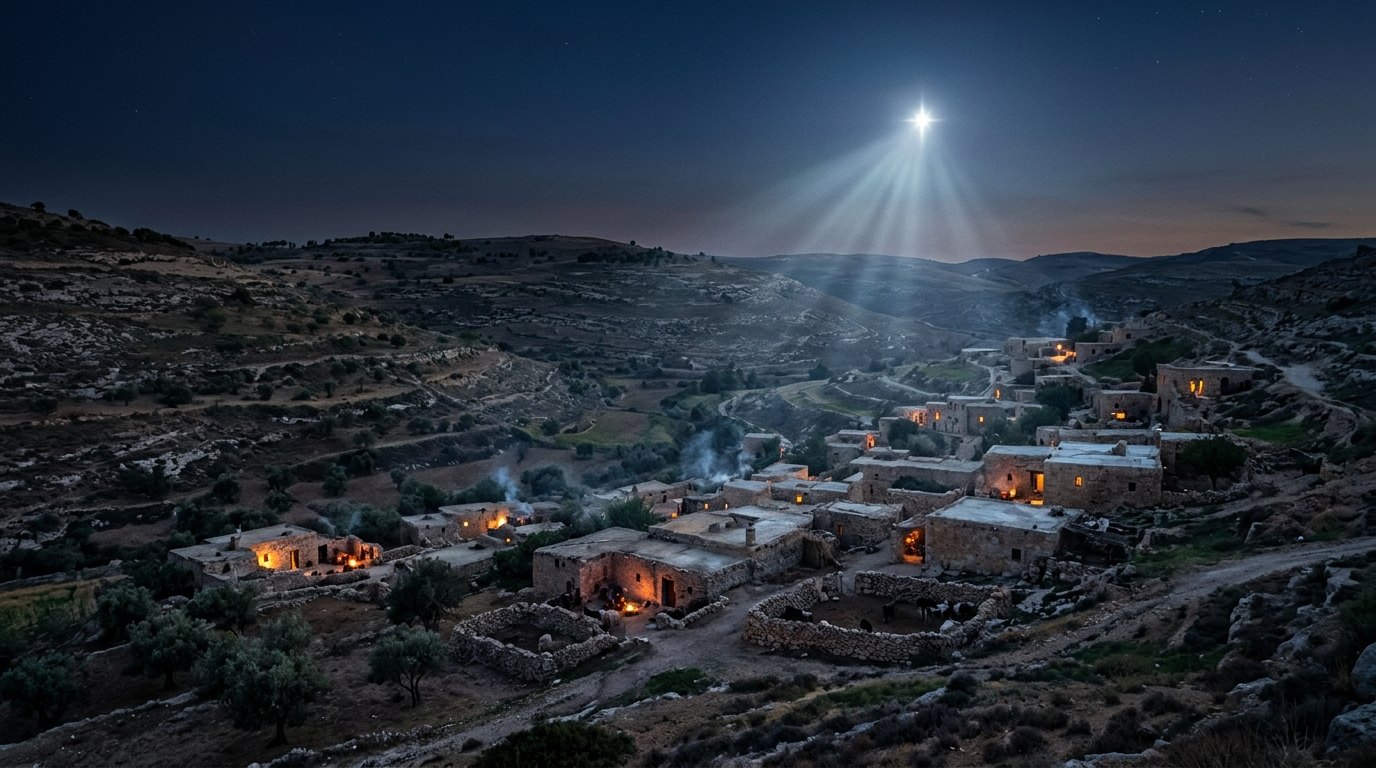
Micah 5:2
2 “But you, Bethlehem Ephrathah, though you are small among the clans of Judah, out of you will come for me one who will be ruler over Israel, whose origins are from of old, from ancient times.”
New International Version (NIV)
The answer
Scripture records dozens of prophecies — some written hundreds of years before — that Jesus Christ fulfilled in His first coming. The New Testament authors repeatedly point to these as proof that Jesus is the promised Messiah. Here are the major ones, grouped by the life they describe.
Step 1: Oldest promise — the Seed who crushes the serpent
God's first messianic word came in the garden after the Fall: the offspring of the woman would crush the serpent's head (Genesis 3:15). Every later prophecy builds on this one — a single Redeemer born into a broken world to undo the damage of sin.
Step 2: His birth and lineage
- Born of a virgin: "Behold, the virgin will conceive, and bear a son, and shall call his name Immanuel" (Isaiah 7:14). Fulfilled in Matthew 1:22-23 — Mary conceived by the Holy Spirit and bore Jesus, whose name means "God with us."
- Born in Bethlehem: "Out of you one will come out to me who is to be ruler in Israel" (Micah 5:2). Fulfilled when Jesus was born in Bethlehem of Judea (Matthew 2:1-6; John 7:42).
- From the tribe of Judah and the line of David: "The scepter shall not depart from Judah, nor a lawgiver from between his feet, until Shiloh come" (Genesis 49:10) and 2 Samuel 7:12-13. Jesus is identified in Matthew 1:1 as the Son of David, the Son of Abraham.
Step 3: His identity — God in the flesh
- Divine names and titles applied to the child: "His name shall be called Wonderful, Counselor, The mighty God, The everlasting Father, The Prince of Peace" (Isaiah 9:6-7).
- Eternal existence: "From everlasting to everlasting, thou art God" (Psalms 90:2), Cited at John 1:1-3 — the Word was with God and was God from the beginning.
Step 4: His triumphal entry
- "Behold, your King comes to you… lowly, and riding on a donkey" (Zechariah 9:9). Fulfilled in Matthew 21:1-11 when Jesus rode into Jerusalem on a donkey colt, hailed as the Son of David.
Step 5: His betrayal
- "They weighed for my wages thirty pieces of silver" (Zechariah 11:12-13). Fulfilled — Judas received thirty pieces of silver from the chief priests to betray Jesus (Matthew 26:15), the price later used to buy the potter's field.
Step 6: His crucifixion
- Pierced for us: "They will look to me whom they have pierced, and they shall mourn for him" (Zechariah 12:10). John 19:34-37 records the Roman soldier's spear piercing Jesus' side, and John calls this the fulfillment of that very prophecy.
- Suffering servant who bears our sins: Isaiah 53 is the spine of the cross. "He was pierced for our transgressions. He was crushed for our iniquities. The punishment that brought our peace was on him; and by his wounds we are healed" (Isaiah 53:5). "He was led as a lamb to the slaughter, and as a sheep… he didn't open his mouth" (Isaiah 53:7) — Jesus' silence before Pilate (Matthew 27:12-14). "They made his grave with the wicked, and with a rich man in his death" (Isaiah 53:9) — crucified between two thieves, buried in Joseph of Arimathea's new tomb.
- Forsaken by God: "My God, my God, why have you forsaken me?" (Psalms 22:1). Jesus cried these words from the cross (Matthew 27:46) — bearing the sin of the world and the judgment we deserved.
A verse to carry
John 5:39 — "You search the Scriptures, because you think that in them you have eternal life; and these are they which testify about me." Every prophecy listed above points to one person: Jesus Christ, crucified and risen.
How to keep going
Read Luke 24:27 next — after His resurrection, Jesus Himself "beginning from Moses and through all the prophets, explained to them the things written about himself in all the Scriptures." The Old Testament is not background to Jesus; it is the road map that leads directly to Him.
Answered from Scripture · reviewed November 7, 2026
From the opening chapters of Genesis to the closing oracles of the prophets, the Old Testament traces an intricate blueprint of the coming Messiah. Jesus Christ did not merely happen upon these patterns; He deliberately and exhaustively fulfilled dozens of specific prophecies spoken centuries prior. Tracing this prophetic catalogue demonstrates that the gospel story is the precise, sovereign design of God unfolded across history.
The Seed Promised
God announces the serpent crusher in Eden

And I will put enmity between you and the woman, and between your offspring and hers; he will crush your head, and you will strike his heel.”
Genesis 3:15 (NIV)
This foundational promise, known as the protoevangelium, foretells a human child born of woman who will decisively crush the serpent's head.
The foundational anchor of redemptive history appears in Genesis 3:15, where God pronounces judgment upon the serpent while delivering the initial promise of salvation known as the protoevangelium. In that dark garden moment, the Lord pledged that the seed of the woman would suffer a bruised heel while delivering an absolute, fatal blow to the serpent's head. Paul confirms this in Galatians 4:4, explaining that in the fullness of time, God sent forth His Son, born of a woman, while Hebrews 2:14 and 1 John 3:8 reveal that Jesus took on flesh precisely to destroy the works of the devil. The promised deliverer would arise from humanity to crush the ancient enemy. This covenant line narrows historically through Abraham in Genesis 12:3, wherein God declared that all families of the earth would be blessed through his name, an assurance Paul interprets in Galatians 3:8 as the gospel preached in advance to the Gentiles, and Peter proclaims in Acts 3:25. Binding the promise further, Genesis 22:18 specifies that through Abraham's seed all nations would find blessing, a singular noun that Galatians 3:16 explicitly identifies not as many individuals, but as Jesus Christ alone. The Lord reconfirmed this unbroken oath to Isaac in Genesis 26:4, establishing the lineage highlighted by Paul in Romans 9:7 to show that divine promise governs true heritage. Finally, the patriarch Jacob received the identical blessing in Genesis 28:14, ensuring that the covenant lineage marched forward through his household, verified when Luke 3:34 traces the genealogy of Jesus directly back through Jacob, Isaac, and Abraham.
| Passage | What it says | Fulfilled |
|---|---|---|
| Genesis 3:15 | The seed of the woman will bruise the head of the serpent while His heel is bruised. | Galatians 4:4, Hebrews 2:14, 1 John 3:8 |
| Genesis 12:3 | God promises Abram that all families of the earth will be blessed through him. | Galatians 3:8, Acts 3:25 |
| Genesis 22:18 | God covenants that through Abraham's seed all nations of the earth shall be blessed. | Galatians 3:16 |
| Genesis 26:4 | God repeats the covenant oath to Isaac that in his seed all nations will be blessed. | Romans 9:7 |
| Genesis 28:14 | God confirms to Jacob that in him and his offspring all families of the earth will be blessed. | Luke 3:34 |
Lineage and Birth
Prophets foretell the King's descent and birthplace

“But you, Bethlehem Ephrathah, though you are small among the clans of Judah, out of you will come for me one who will be ruler over Israel, whose origins are from of old, from ancient times.”
Micah 5:2 (NIV)
Micah pinpoints humble Bethlehem Ephrathah as the specific ancestral birthplace of the eternal ruler in Israel.
Centuries before the Roman census, the prophet in Micah 5:2 identified humble Bethlehem Ephrathah as the precise geographic origin of Israel's eternal ruler, whose goings forth are from old, from everlasting. Matthew 2:1-6 and Luke 2:4-7 record the literal realization of this prophecy when Joseph and Mary traveled to Bethlehem, fulfilling what John 7:42 notes was the longstanding Jewish expectation. God sovereignly ordered history to place His King in Bethlehem. This lineage had been safeguarded from the start, as Genesis 49:10 promised that the royal scepter would not depart from Judah until Shiloh came, a reality declared in Hebrews 7:14 and Revelation 5:5 where Jesus reigns as the Lion of Judah. In 2 Samuel 7:12-13, the Lord established that David's throne would endure forever, verified by Matthew 1:1 and Luke 1:32-33. Isaiah 7:14 prophesied that a virgin would conceive Immanuel, fulfilled in Mary through the overshadowing of the Holy Spirit in Matthew 1:22-23 and Luke 1:31-35. Balaam foresaw a star and scepter rising out of Jacob in Numbers 24:17, echoed by the star in Matthew 2:2 and Christ's title in Revelation 22:16. Furthermore, Isaiah 11:1 foretold a fruitful branch from Jesse's stump, matched in Romans 15:12 and Acts 13:22-23, while Jeremiah 23:5-6 declared David's righteous Branch, fulfilled in 1 Corinthians 1:30. Even the grief in Jeremiah 31:15 found voice when Herod slaughtered Bethlehem's children in Matthew 2:16-18, and Hosea 11:1 anticipated the holy family's flight and return from Egypt in Matthew 2:14-15.
| Passage | What it says | Fulfilled |
|---|---|---|
| Genesis 49:10 | The royal scepter shall not depart from the tribe of Judah until Shiloh comes. | Luke 3:33, Hebrews 7:14, Revelation 5:5 |
| 2 Samuel 7:12-13 | God covenants that David's royal offspring will establish an everlasting throne. | Matthew 1:1, Luke 1:32-33, Romans 1:3 |
| Isaiah 7:14 | A virgin will conceive and bear a son called Immanuel. | Matthew 1:22-23, Luke 1:31-35 |
| Micah 5:2 | The eternal ruler will originate from Bethlehem Ephrathah in Judah. | Matthew 2:1-6, Luke 2:4-7, John 7:42 |
| Numbers 24:17 | Balaam prophesies that a star shall come out of Jacob and a scepter out of Israel. | Matthew 2:2, Revelation 22:16 |
| Isaiah 11:1 | A shoot shall sprout from the stump of Jesse, and a branch from his roots shall bear fruit. | Romans 15:12, Acts 13:22-23 |
| Jeremiah 23:5-6 | The Lord will raise up for David a righteous Branch who will reign wisely as King. | Luke 1:32-33, 1 Corinthians 1:30 |
| Jeremiah 31:15 | Rachel weeps bitterly for her children, prefiguring the sorrow surrounding Bethlehem's slain infants. | Matthew 2:16-18 |
| Hosea 11:1 | God calls His son out of Egypt, prefiguring Christ's flight and return. | Matthew 2:14-15 |
Divine Identity
The coming child reveals eternal God in flesh

For to us a child is born, to us a son is given, and the government will be on his shoulders. And he will be called Wonderful Counselor, Mighty God, Everlasting Father, Prince of Peace. Of the greatness of his government and peace there will be no end. He will reign on David’s throne and over his kingdom, establishing and upholding it with justice and righteousness from that time on and forever. The zeal of the LORD Almighty will accomplish this.
Isaiah 9:6-7 (NIV)
The child born into human weakness bears absolute divine titles including Mighty God and Everlasting Father.
In Isaiah 9:6-7, the prophet combines human frailty and supreme deity into one revelation, declaring that a child is born and a son is given who bears the names Wonderful Counselor, Mighty God, Everlasting Father, and Prince of Peace. The New Testament recognizes this incarnate reality in Luke 1:32-33, in Thomas's worshipful cry in John 20:28, and in Titus 2:13, where Jesus is called our great God and Savior. The coming Messiah was never merely an earthly ruler, but God manifest in the flesh. This timeless nature matches Psalm 90:2, which extols God as existing from everlasting to everlasting, an attribute claimed by Jesus in John 8:58 and affirmed in John 1:1-3 and Colossians 1:17. In Psalm 2:7, the Father declares the eternal decree naming the King as His begotten Son, applied directly to Jesus' resurrection and exaltation in Acts 13:33 and Hebrews 1:5. Psalm 45:6-7 explicitly addresses the King as God whose throne is forever, which the author of Hebrews 1:8-9 quotes as spoken directly to the Son. Similarly, Psalm 102:25-27 lauds the unchangeable Creator who laid the foundations of the earth, a passage placed directly upon Christ in Hebrews 1:10-12. In Psalm 110:1, David calls his descendant his Lord, a dynamic Jesus uses in Matthew 22:42-45 and Peter proclaims in Acts 2:34-36. Finally, Daniel 7:13-14 witnesses the Son of Man receiving universal and unending dominion, an identity Jesus claimed before the high priest in Matthew 26:64 and Mark 14:62.
| Passage | What it says | Fulfilled |
|---|---|---|
| Psalms 90:2 | God's existence is from everlasting to everlasting without beginning or end. | John 1:1-3, John 8:58, Colossians 1:17 |
| Isaiah 9:6-7 | A child is born whose name is Wonderful Counselor, Mighty God, Everlasting Father, and Prince of Peace. | Luke 1:32-33, John 20:28, Titus 2:13 |
| Psalms 2:7 | The Lord declares the decree designating the King as His begotten Son. | Acts 13:33, Hebrews 1:5 |
| Psalms 45:6-7 | God's throne is declared eternal, and He is anointed above His companions. | Hebrews 1:8-9 |
| Psalms 102:25-27 | The unchangeable Lord laid the foundation of the earth and endures forever. | Hebrews 1:10-12 |
| Psalms 110:1 | The Lord said to David's Lord, Sit at my right hand until I make your enemies your footstool. | Matthew 22:42-45, Acts 2:34-36 |
| Daniel 7:13-14 | One like a Son of Man approaches the Ancient of Days and receives eternal dominion. | Matthew 26:64, Mark 14:62 |
Triumphal Entry
Zion's humble King arrives riding on a donkey
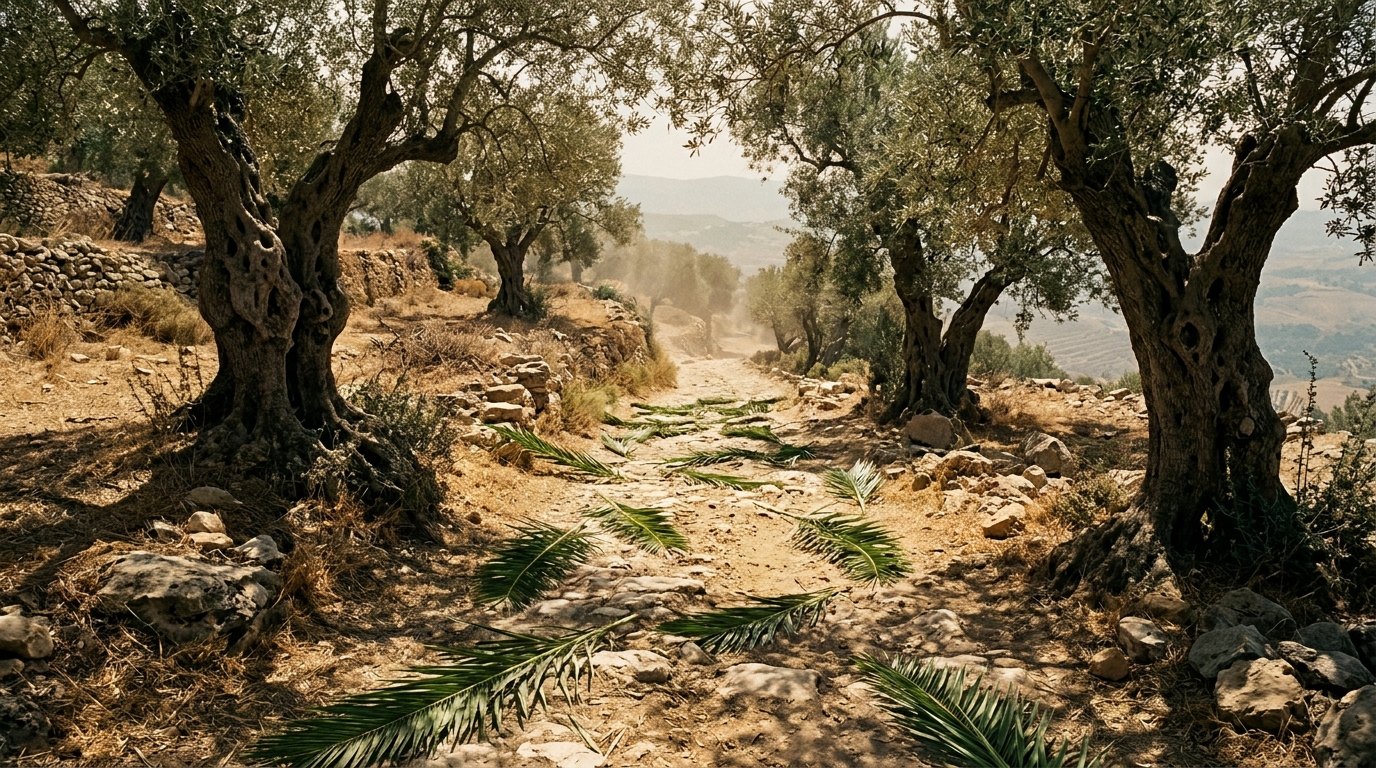
Rejoice greatly, Daughter Zion! Shout, Daughter Jerusalem! See, your king comes to you, righteous and victorious, lowly and riding on a donkey, on a colt, the foal of a donkey.
Zechariah 9:9 (NIV)
Zechariah explicitly portrays the coming King's humble character and lowly mount upon entering Jerusalem.
The prophet in Zechariah 9:9 commands the daughter of Zion to rejoice greatly because her King comes to her righteous and having salvation, riding gently upon the colt of a donkey. While worldly conquerors entered conquered capitals on warhorses surrounded by armed legions, Israel's true sovereign was marked by profound humility, spiritual victory, and peace. Matthew 21:1-11 and John 12:14-16 record the precise, public fulfillment of this oracle during the Passion week, as Jesus descended the Mount of Olives into Jerusalem amid crowds waving palm branches and shouting hosannas. The King arrived in gentleness to secure peace through His cross. The Gospel writers noted that the disciples did not understand the prophetic magnitude of these events at first, but after Jesus was glorified, they remembered that Zechariah had scripted this royal arrival centuries beforehand. By choosing an unridden colt, Jesus overtly presented Himself to Israel as the predicted Messianic King, affirming His royal identity while redefining earthly concepts of majesty and power.
| Passage | What it says | Fulfilled |
|---|---|---|
| Zechariah 9:9 | Zion's righteous and saved King comes riding gently on a donkey's colt. | Matthew 21:1-11, John 12:14-16 |
Betrayal Price
The Shepherd is valued at thirty silver coins
I told them, “If you think it best, give me my pay; but if not, keep it.” So they paid me thirty pieces of silver. And the LORD said to me, “Throw it to the potter”—the handsome price at which they valued me! So I took the thirty pieces of silver and threw them to the potter at the house of the LORD.
Zechariah 11:12-13 (NIV)
The prophetic drama exacts the exact valuation of thirty silver pieces cast to the potter in the temple.
In Zechariah 11:12-13, the prophet enacts a stunning transaction where the flock's true Shepherd is assigned a humiliating insult: thirty pieces of silver, the legal price of an injured slave, flung into the house of the Lord for the potter. Matthew records the chilling literal fulfillment when Judas Iscariot bartered Jesus for thirty pieces of silver (Matthew 26:14-15), later hurling the blood money across the temple pavement before it was used to purchase the potter's field (Matthew 27:3-10).
Centuries prior, David endured a shadow of this same treachery. In Psalm 41:9, the king lamented that his close friend who shared his table had lifted up his heel against him. Jesus explicitly cited this lament at the Last Supper, pointing to Judas dipping bread in the dish (John 13:18). Psalm 55:12-14 deepens the grief, describing an intimate companion with whom David once walked into the house of God, fulfilled when Judas led the arresting mob into Gethsemane and signaled the Messiah with a deceitful kiss (Matthew 26:48-50).
Even the consequence of this betrayal followed the divine plan. David imprecated the treacherous counselor in Psalm 109:8, declaring, "Let his days be few; may another take his office." Following the resurrection, Peter stood before the disciples and quoted this exact verse to affirm that the office left vacant by Judas's death had to be filled by a faithful witness to the resurrection (Acts 1:20). Every sorrow of betrayal was anticipated and redeemed.
| Passage | What it says | Fulfilled |
|---|---|---|
| Zechariah 11:12-13 | The wages of the shepherd are weighed at thirty pieces of silver and cast into the potter's field. | Matthew 26:14-15, Matthew 27:3-10 |
| Psalms 41:9 | A familiar friend who shared bread has lifted up his heel against him. | John 13:18 |
| Psalms 55:12-14 | An intimate companion and friend betrays fellowship enjoyed in God's house. | Matthew 26:48-50 |
| Psalms 109:8 | Let his days be few, and let another take his office. | Acts 1:20 |
The Cross and Tomb
The pierced Servant suffers silently for sinners' peace
But he was pierced for our transgressions, he was crushed for our iniquities; the punishment that brought us peace was on him, and by his wounds we are healed.
Isaiah 53:5 (NIV)
Isaiah captures the heart of penal substitution, showing Christ pierced and crushed to purchase our healing and peace.
Isaiah 53:5 unveils the burning center of the gospel: He was pierced for our transgressions, He was crushed for our iniquities; upon Him was the chastisement that brought us peace, and with His wounds we are healed. Paul and Peter declare this substitutionary atonement as the foundation of salvation (Romans 4:25; 1 Corinthians 15:3; 1 Peter 2:24). The Servant faced this ordeal without resistance; as Isaiah 53:7 foresaw, like a lamb led to slaughter He opened not His mouth, matching Christ's silence before Pilate (Matthew 27:12-14; Acts 8:32-35; 1 Peter 2:23). Though condemned alongside robbers, Isaiah 53:9 promised He would be "with a rich man in His death," perfectly answered when Joseph of Arimathea buried Jesus in his own newly carved tomb (Matthew 27:38, 57-60; John 19:38-42). Zechariah 12:10 promised Jerusalem would look upon the One they pierced, fulfilled when the Roman lance drew blood and water from His side (John 19:34-37; Revelation 1:7).
Psalm 22 offers an astonishing eyewitness preview of the crucifixion centuries before crucifixion was invented. Jesus adopted its agonizing opening cry from the cross: "My God, my God, why have you forsaken me?" (Psalm 22:1; Matthew 27:46). The surrounding crowd mocked Him with the precise words of Psalm 22:7-8, sneering that God should deliver Him (Matthew 27:39-43). The physical torment of crucifixion—thirst, dehydration, and dislocated joints—mirrors Psalm 22:14-15 and John 19:28. Evildoers pierced His hands and feet (Psalm 22:16; John 20:25; Luke 24:39-40), while soldiers divided His outer garments and gambled for His seamless tunic (Psalm 22:18; Matthew 27:35; John 19:23-24). Yet God preserved His body: Psalm 34:20 promised not one bone would be broken, sparing Him the crurifragium suffered by the thieves (John 19:36). When He thirsted, they offered Him sour wine mixed with gall (Psalm 69:21; Matthew 27:34; John 19:28-29).
The rest of Isaiah 53 details this sacred exchange. The Servant submitted His back to scourging and His cheeks to pluckers (Isaiah 50:6; Matthew 26:67; 27:26). Despised and rejected (Isaiah 53:3; John 1:11; Luke 23:18), He carried our griefs (Isaiah 53:4; Matthew 8:17). The Lord laid on Him our collective rebellion (Isaiah 53:6; 1 Peter 2:25), taking Him by oppressive judgment (Isaiah 53:8; Acts 8:32-33). It was the Lord's will to crush Him as a guilt offering (Isaiah 53:10; Romans 8:32; 2 Corinthians 5:21). Because of His soul's anguish, He makes many righteous (Isaiah 53:11; Romans 5:18-19). Numbered with transgressors, He interceded for them (Isaiah 53:12; Mark 15:27-28; Luke 22:37), fulfilling Zechariah 13:7 where the Shepherd was struck and the sheep scattered (Matthew 26:31).
| Passage | What it says | Fulfilled |
|---|---|---|
| Isaiah 53:5 | He was pierced for our transgressions and crushed for our iniquities. | Romans 4:25, 1 Corinthians 15:3, 1 Peter 2:24 |
| Isaiah 53:7 | He is led silent as a lamb to slaughter, refusing to open His mouth. | Matthew 27:12-14, Acts 8:32-35, 1 Peter 2:23 |
| Isaiah 53:9 | His grave was appointed with the wicked and with a rich man in His death. | Matthew 27:38, Matthew 27:57-60, John 19:38-42 |
| Zechariah 12:10 | They will look on Me whom they have pierced and mourn. | John 19:34-37, Revelation 1:7 |
| Psalms 22:1 | The forsaken sufferer cries out in anguish to God who seems distant. | Matthew 27:46, Mark 15:34 |
| Psalms 22:7-8 | Spectators shake their heads and mock, telling the sufferer to let God deliver him. | Matthew 27:39-43 |
| Psalms 22:14-15 | Bones are out of joint, the heart melts like wax, and the tongue clings to the jaws. | John 19:28 |
| Psalms 22:16 | A band of evildoers encompasses the sufferer, piercing hands and feet. | John 20:25, Luke 24:39-40 |
| Psalms 22:18 | They divide His garments among them, and for His clothing they cast lots. | Matthew 27:35, John 19:23-24 |
| Psalms 34:20 | He keeps all his bones; not one of them is broken. | John 19:36 |
| Psalms 69:21 | They gave poison for food, and for thirst they offered sour wine to drink. | Matthew 27:34, John 19:28-29 |
| Isaiah 50:6 | The Servant gives His back to those who strike, and His cheeks to those who pull out beard hair. | Matthew 26:67, Matthew 27:26 |
| Isaiah 53:3 | He is despised and rejected by men, a man of sorrows acquainted with grief. | John 1:11, Luke 23:18 |
| Isaiah 53:4 | Surely He has borne our griefs and carried our sorrows. | Matthew 8:17, 1 Peter 2:24 |
| Isaiah 53:6 | All we like sheep have gone astray, and the Lord laid on Him the iniquity of us all. | 1 Peter 2:25 |
| Isaiah 53:8 | By oppression and judgment He was taken away, stricken for the transgression of His people. | Acts 8:32-33 |
| Isaiah 53:10 | It was the will of the Lord to crush Him; He made His soul an offering for sin. | Romans 8:32, 2 Corinthians 5:21 |
| Isaiah 53:11 | Out of the anguish of His soul He shall see and be satisfied, making many accounted righteous. | Romans 5:18-19 |
| Isaiah 53:12 | He was numbered with the transgressors and made intercession for the transgressors. | Mark 15:27-28, Luke 22:37 |
| Zechariah 13:7 | Awake, O sword, against My Shepherd; strike the Shepherd, and the sheep will be scattered. | Matthew 26:31, Mark 14:27 |
Prophet and Priest
The Messiah Unites the Offices of Prophet, Priest, and King

The LORD your God will raise up for you a prophet like me from among you, from your fellow Israelites. You must listen to him.
Deuteronomy 18:15 (NIV)
Moses identifies the coming Redeemer as God's definitive prophetic voice to whom Israel must heed.
Before Israel entered Canaan, Moses delivered a foundational promise in Deuteronomy 18:15: The Lord your God will raise up for you a prophet like me from among you, from your brothers—it is to him you shall listen. This Prophet would not merely deliver occasional visions; He would mediate a covenant, speak with face-to-face intimacy, and rescue His people through mighty deliverance. Deuteronomy 18:18-19 warns that God would put His words in this Prophet's mouth, holding accountable all who refuse to hear Him. In Acts 3:22 and Acts 7:37, both Peter and Stephen identified Jesus as this prophet. Jesus Himself confirmed it, testifying in John 12:49 that He spoke nothing on His own authority, but only what the Father commanded Him to speak.
Yet Jesus was destined to be far more than a prophet; He was also designated an eternal high priest. In Psalm 110:4, God swore an unalterable oath: "You are a priest forever after the order of Melchizedek." The author of Hebrews relies heavily on this royal-priestly typology to demonstrate that Christ holds an unchangeable, eternal priesthood that surpasses the temporary Aaronic line (Hebrews 5:6; 7:17). Unlike mortal Levitical priests who needed daily sacrifices, Christ offered Himself once for all and ever lives to intercede for His people.
Zechariah 6:12-13 converges these offices in a singular figure known as the Branch. The prophet announced that this man would build the temple of the Lord, bear royal majesty, and sit and rule upon His throne, serving as "a priest on his throne" with peaceful counsel joining both offices. In Hebrews 3:3-4 and Hebrews 8:1, Christ is revealed as this kingly builder and High Priest who sat down at the right hand of the Majesty in heaven.
| Passage | What it says | Fulfilled |
|---|---|---|
| Deuteronomy 18:15 | The Lord your God will raise up for you a prophet like Moses from among your brothers. | Acts 3:22, John 6:14 |
| Deuteronomy 18:18-19 | God will put His words in the Prophet's mouth, and whoever does not listen will answer to God. | Acts 7:37, John 12:49 |
| Psalms 110:4 | The Lord has sworn and will not change His mind: You are a priest forever after Melchizedek. | Hebrews 5:6, Hebrews 7:17 |
| Zechariah 6:12-13 | The man named the Branch shall build the temple of the Lord and bear royal honor as priest. | Hebrews 3:3-4, Hebrews 8:1 |
The Herald
The Way Prepared by the Promised Herald

A voice of one calling: “In the wilderness prepare the way for the LORD; make straight in the desert a highway for our God.
Isaiah 40:3 (NIV)
The forerunner's wilderness ministry confirms the arrival of Yahweh in human history.
The arrival of the Messiah was not sudden and unannounced; ancient prophecy declared that a royal herald would first sound the alarm in the wasteland. Isaiah 40:3 commands the faithful to listen: A voice cries: "In the wilderness prepare the way of the Lord; make straight in the desert a highway for our God." When John the Baptist emerged from the Judean desert wearing camel's hair and preaching repentance, all four Gospels identified his ministry as the direct fulfillment of this oracle (Matthew 3:1-3; Luke 3:4-6). John was leveling the rugged ground of hardened human hearts so they could behold Yahweh in the flesh.
The final book of the Old Testament reiterated this divine pattern. In Malachi 3:1, God warned, "Behold, I send my messenger, and he will prepare the way before me. And the Lord whom you seek will suddenly come to his temple." Jesus cited this passage directly in Matthew 11:10 and Mark 1:2, confirming that John was the messenger sent ahead of His face to inaugurate the arrival of God's reign and to summon the covenant people to clean hands and pure hearts.
Malachi closed the prophetic canon with an even more explicit identification in Malachi 4:5-6: God promised to send "Elijah the prophet before the great and awesome day of the Lord comes" to turn the hearts of fathers to their children. Gabriel echoed this promise when announcing John's birth, stating he would go before the Lord in the spirit and power of Elijah (Luke 1:17). Jesus confirmed this fulfillment to His disciples descending the Mount of Transfiguration, explaining that Elijah had indeed come in John the Baptist, preparing the people for the suffering and glory of the Son of Man (Matthew 17:11-13).
| Passage | What it says | Fulfilled |
|---|---|---|
| Isaiah 40:3 | A voice cries in the wilderness to prepare the way of the Lord and make straight a highway. | Matthew 3:1-3, Luke 3:4-6 |
| Malachi 3:1 | God will send His messenger to prepare the way before the Lord, who will suddenly come to His temple. | Matthew 11:10, Mark 1:2 |
| Malachi 4:5-6 | God promises to send Elijah the prophet before the great and awesome day of the Lord arrives. | Matthew 17:11-13, Luke 1:17 |
His Earthly Ministry
Power and Grace Displayed in Public Ministry

The Spirit of the Sovereign LORD is on me, because the LORD has anointed me to proclaim good news to the poor. He has sent me to bind up the brokenhearted, to proclaim freedom for the captives and release from darkness for the prisoners, to proclaim the year of the LORD’s favor and the day of vengeance of our God, to comfort all who mourn,
Isaiah 61:1-2 (NIV)
Jesus Himself reads this scroll in Nazareth to declare His public ministry inaugurated and fulfilled.
When Jesus unrolled the scroll in the Nazareth synagogue, He announced the arrival of the promised kingdom by reading Isaiah 61:1-2: the Spirit of the Sovereign Lord had anointed Him to proclaim liberty to captives and good news to the poor, declaring in Luke 4:18-21 that this Scripture was fulfilled that day in their hearing. Centuries before His advent, the prophets mapped out the precise location, character, and supernatural power that would distinguish the Messiah's daily public ministry.
Isaiah 9:1-2 prophesied that light would dawn upon the dark frontier of Zebulun and Naphtali, a detail fulfilled in Matthew 4:13-16 when Jesus established His ministry base in Capernaum within Galilee of the Gentiles. His works verified His divine mission, fulfilling Isaiah 35:5-6 as blind eyes saw, lame legs leaped, and mute tongues sang, which Jesus highlighted to John’s disciples in Matthew 11:4-5 and Luke 7:22. Yet this immense power was carried with tender restraint: Matthew 12:17-21 reveals that Christ’s gentle refusal to crush bruised reeds or quench smoldering wicks fulfilled Isaiah 42:1-4.
Even His pedagogical methods and righteous demeanor followed the prophetic design. By clothing sacred mysteries in stories, Jesus fulfilled Psalm 78:2, opening His mouth in parables to proclaim secrets hidden from the foundation of the world, as noted in Matthew 13:34-35. Furthermore, when He cleansed the temple courts of dishonest gain, the disciples remembered that Psalm 69:9 foretold how consumed the Messiah would be with holy zeal for God’s house (John 2:17; Romans 15:3). Every step of Christ's public life validated the ancient promises with remarkable precision.
| Passage | What it says | Fulfilled |
|---|---|---|
| Isaiah 9:1-2 | The land of Zebulun and Naphtali sees a great light dawning in Galilee of the Gentiles. | Matthew 4:13-16 |
| Isaiah 35:5-6 | The eyes of the blind shall be opened, ears unstopped, the lame leap, and the mute sing. | Matthew 11:4-5, Luke 7:22 |
| Isaiah 42:1-4 | God's chosen Servant brings justice to the nations without breaking a bruised reed or snuffing a wick. | Matthew 12:17-21 |
| Isaiah 61:1-2 | The Spirit of the Lord anoints the Servant to preach good news to the poor and liberty to captives. | Luke 4:18-21 |
| Psalms 78:2 | I will open my mouth in parables; I will utter hidden things from of old. | Matthew 13:34-35 |
| Psalms 69:9 | Zeal for Your house has consumed me, and the reproaches of those who reproach You fell on me. | John 2:17, Romans 15:3 |
Resurrection and Ascension
The Defeat of the Grave and Exaltation to Glory

Therefore my heart is glad and my tongue rejoices; my body also will rest secure, because you will not abandon me to the realm of the dead, nor will you let your faithful one see decay.
Psalms 16:9-10 (NIV)
David anticipates that the Holy One will escape bodily decay through a bodily resurrection.
David looked beyond his own mortal horizon in Psalm 16:9-10, declaring with prophetic confidence that God would not abandon His Holy One to corruption in Sheol. On Pentecost, the apostle Peter underscored this text in Acts 2:27-31 (reiterated by Paul in Acts 13:35-37), demonstrating that because David died and saw bodily decomposition, his inspired song pointed directly to the bodily resurrection of Jesus Christ on the third day.
This triumph over physical death was embedded in the Old Testament through both explicit oracle and historical typology. In Jonah 1:17, the prophet’s three days and three nights in the depths of the sea formed the very sign Jesus offered to a skeptical generation (Matthew 12:40; Luke 11:30), previewing the exact duration His body would rest in the heart of the earth before bursting forth in triumphant life.
Resurrection was immediately crowned by exaltation. The builders of Israel discarded the stone, yet Psalm 118:22-23 promised that this very rejected block would be exalted as the cornerstone, a reality Jesus applied to Himself in Matthew 21:42 and Peter celebrated in 1 Peter 2:7-8. Finally, Psalm 68:18 anticipated the conqueror climbing the heights to lead captivity captive and pour out gifts among men, which Paul affirms in Ephesians 4:8-10 was realized when the risen Christ ascended into heaven to equip His church. Death could not hold Him, and the grave became the threshold of His eternal reign.
| Passage | What it says | Fulfilled |
|---|---|---|
| Psalms 16:9-10 | God will not abandon His holy one to Sheol, nor let Him see corruption in the grave. | Acts 2:27-31, Acts 13:35-37 |
| Psalms 68:18 | You ascended on high, leading a host of captives in your train and receiving gifts among men. | Ephesians 4:8-10 |
| Psalms 118:22-23 | The stone that the builders rejected has become the chief cornerstone. | Matthew 21:42, 1 Peter 2:7-8 |
| Jonah 1:17 | Jonah was in the belly of the fish three days and three nights, sign of Christ's resurrection. | Matthew 12:40, Luke 11:30 |
Where in the Bible
| Book | Passages |
|---|---|
| Genesis | 6 · Genesis 3:15, Genesis 12:3, Genesis 22:18, Genesis 26:4, Genesis 28:14, Genesis 49:10 |
| Numbers | 1 · Numbers 24:17 |
| Deuteronomy | 2 · Deuteronomy 18:15, Deuteronomy 18:18-19 |
| 2 Samuel | 1 · 2 Samuel 7:12-13 |
| Psalms | 21 · Psalms 90:2, Psalms 2:7, Psalms 45:6-7, Psalms 102:25-27, Psalms 110:1, Psalms 41:9, Psalms 55:12-14, Psalms 109:8, Psalms 22:1, Psalms 22:7-8, Psalms 22:14-15, Psalms 22:16, Psalms 22:18, Psalms 34:20, Psalms 69:21, Psalms 110:4, Psalms 78:2, Psalms 69:9, Psalms 16:9-10, Psalms 68:18, Psalms 118:22-23 |
| Isaiah | 19 · Isaiah 7:14, Isaiah 11:1, Isaiah 9:6-7, Isaiah 53:5, Isaiah 53:7, Isaiah 53:9, Isaiah 50:6, Isaiah 53:3, Isaiah 53:4, Isaiah 53:6, Isaiah 53:8, Isaiah 53:10, Isaiah 53:11, Isaiah 53:12, Isaiah 40:3, Isaiah 9:1-2, Isaiah 35:5-6, Isaiah 42:1-4, Isaiah 61:1-2 |
| Jeremiah | 2 · Jeremiah 23:5-6, Jeremiah 31:15 |
| Daniel | 1 · Daniel 7:13-14 |
| Hosea | 1 · Hosea 11:1 |
| Jonah | 1 · Jonah 1:17 |
| Micah | 1 · Micah 5:2 |
| Zechariah | 5 · Zechariah 9:9, Zechariah 11:12-13, Zechariah 12:10, Zechariah 13:7, Zechariah 6:12-13 |
| Malachi | 2 · Malachi 3:1, Malachi 4:5-6 |
The story in order
- The Seed Promised (c. 4000 BC) · Genesis 3:15 · God announces the coming redeemer in Eden.
- Covenant with Abraham (c. 2000 BC) · Genesis 12:3 · God promises blessing to all nations through Abraham's seed.
- Davidic Covenant (c. 1000 BC) · 2 Samuel 7:12-13 · God promises an everlasting throne to David's offspring.
- Prophecy of Immanuel (c. 740 BC) · Isaiah 7:14 · A virgin will conceive and bear a son named Immanuel.
- Prophecy of Bethlehem Birth (c. 700 BC) · Micah 5:2 · The eternal ruler will come from Bethlehem.
- Prophecy of Son of Man (c. 550 BC) · Daniel 7:13-14 · One like a Son of Man receives eternal dominion.
- Herald Announced (c. 700 BC) · Isaiah 40:3 · A voice cries in the wilderness to prepare the way.
- Triumphal Entry (c. 480 BC) · Zechariah 9:9 · Zion's King arrives humbly on a donkey's colt.
- Betrayal Price (c. 480 BC) · Zechariah 11:12-13 · The shepherd is valued at thirty silver coins.
- The Cross (c. 700 BC) · Isaiah 53:5 · He is pierced for our transgressions and crushed for our iniquities.
- Resurrection (c. 1000 BC) · Psalms 16:9-10 · God will not abandon His holy one to Sheol.
- Ascension (c. 1000 BC) · Psalms 68:18 · He ascended on high, leading captives in His train.
Key words
- Seed (zera, זֶרַע)
- Offspring, descendant, heir; referring to a future redeemer. · Genesis 3:15
- Shiloh (Shiloh, שִׁילֹה)
- He to whom it belongs; a title for the Messiah. · Genesis 49:10
- Immanuel (Immanuel, עִמָּנוּאֵל)
- God with us; a prophetic name for the Messiah. · Isaiah 7:14
- Branch (Netser, נֵצֶר)
- A shoot or offspring from a royal line, referring to the Messiah. · Isaiah 11:1
- Son of Man (bar 'enash, בַּר אֱנָשׁ)
- A title for the Messiah, emphasizing His humanity and divine commission. · Daniel 7:13-14
- Shepherd (ro'eh, רֹעֶה)
- A leader and protector, used for God, kings, and the Messiah. · Zechariah 11:12-13
- Servant (eved, עֶבֶד)
- One who serves, particularly God's chosen agent for salvation. · Isaiah 53:5
Seeing this exhaustive tapestry of fulfilled prophecy anchors our faith in the absolute trustworthiness of God's Word. The same sovereign Lord who brought about every intricate detail of Christ's first coming will unfailingly bring His final promises to pass. For every believer, the witness of the prophets invites joyful adoration of Jesus, the true Messiah and King.
63 passages, each cited once.
Scripture cited
- Micah 5:2
- Matthew 2:6
- John 7:42
- Isaiah 9:6-7
- Luke 1:31-33
- Genesis 49:10
- Psalms 90:2
- Psalms 22:1
- Matthew 27:46
- Matthew 26:15
- Isaiah 53
- Isaiah 7:14