Who was John the Baptist?

Matthew 3:1-12
1 In those days John the Baptist came, preaching in the wilderness of Judea
2 and saying, “Repent, for the kingdom of heaven has come near.”
3 This is he who was spoken of through the prophet Isaiah: “A voice of one calling in the wilderness, ‘Prepare the way for the Lord, make straight paths for him.’ ”
4 John’s clothes were made of camel’s hair, and he had a leather belt around his waist. His food was locusts and wild honey.
5 People went out to him from Jerusalem and all Judea and the whole region of the Jordan.
6 Confessing their sins, they were baptized by him in the Jordan River.
7 But when he saw many of the Pharisees and Sadducees coming to where he was baptizing, he said to them: “You brood of vipers! Who warned you to flee from the coming wrath?
8 Produce fruit in keeping with repentance.
9 And do not think you can say to yourselves, ‘We have Abraham as our father.’ I tell you that out of these stones God can raise up children for Abraham.
10 The ax is already at the root of the trees, and every tree that does not produce good fruit will be cut down and thrown into the fire.
11 “I baptize you with water for repentance. But after me comes one who is more powerful than I, whose sandals I am not worthy to carry. He will baptize you with the Holy Spirit and fire.
12 His winnowing fork is in his hand, and he will clear his threshing floor, gathering his wheat into the barn and burning up the chaff with unquenchable fire.”
New International Version (NIV)
The answer
John the Baptist was the prophet God sent to prepare the way for Jesus Christ. He stands at the hinge of the Old and New Testaments — the last of the Old Testament prophets and the one who pointed Israel directly to the Messiah.
His birth and background
- Priestly family: He was the son of Zacharias, a priest of the division of Abijah, and Elizabeth, who was called "of the daughters of Aaron" (Luke 1:5-7). Both were "righteous before God, walking blamelessly in all the commandments and ordinances of the Lord" (Luke 1:6).
- Miraculous conception: Elizabeth was barren and both parents were old, but the angel Gabriel announced to Zacharias that she would bear a son to be named John (Luke 1:13). Zacharias was struck mute for doubting and regained his speech when he wrote the name John at the child's circumcision (Luke 1:20-64).
- Set apart from the womb: Gabriel said he "will be filled with the Holy Spirit, even from his mother's womb," would drink no wine or strong drink (a Nazirite from birth), and "will go before him in the spirit and power of Elijah" (Luke 1:15-17).
His mission
- Fulfillment of prophecy: He is the "voice of one crying in the wilderness" of Isaiah 40:3, the Elijah promised in Malachi 4:5-6 to turn the hearts of fathers and children before the great day of the Lord.
- Prophet of the Most High: Zacharias prophesied over him, "You, child, will be called a prophet of the Most High, for you will go before the face of the Lord to prepare his ways, to give knowledge of salvation to his people by the remission of their sins" (Luke 1:76-77).
- Wilderness preacher: He grew up in the desert until his public appearance (Luke 1:80) and came "preaching in the wilderness of Judea, saying, 'Repent, for the Kingdom of Heaven is at hand!'" (Matthew 3:1-2).
His manner of life
- Appearance: He wore camel's hair with a leather belt — the same dress as Elijah — and ate locusts and wild honey (Matthew 3:4; cf. 2 Kings 1:8).
- Baptizer: Crowds from Jerusalem, Judea, and the Jordan region came to be "baptized by him in the Jordan, confessing their sins" (Matthew 3:5-6).
His message
- Repentance and fruit: He called the crowds to "produce fruit worthy of repentance" and refused to let anyone rest on mere descent from Abraham: "God is able to raise up children to Abraham from these stones" (Matthew 3:8-9).
- Warning to the religious: To the Pharisees and Sadducees he said, "You offspring of vipers, who warned you to flee from the wrath to come?" and warned that the axe already lay at the root of the trees (Matthew 3:7, 10).
- Pointing to Christ: "He who comes after me is mightier than I… He will baptize you in the Holy Spirit" — and he pictured Christ as the One with the winnowing fork, gathering wheat and burning chaff with unquenchable fire (Matthew 3:11-12).
His place in Christ's own judgment
Jesus said of him, "Among those born of women there has not risen a greater than John the Baptist; notwithstanding, he who is least in the kingdom of heaven is greater than he" — the greatest under the old covenant, and yet surpassed by the smallest under the new (Matthew 11:11).
So John is the prophet of the Highest, the forerunner, the voice in the wilderness, the baptizer with water whose whole work was to point Israel to the One who baptizes with the Holy Spirit.
Answered from Scripture · reviewed November 7, 2026
John the Baptist stands at the pivotal threshold of redemptive history as the prophet ordained to prepare Israel for the arrival of Jesus Christ. Born miraculously to a priestly family and filled with the Holy Spirit from the womb, he broke four centuries of prophetic silence by calling a nation to repentance. Scripture presents John not as the light, but as the burning witness whose entire existence was consumed with pointing sinners to the Lamb of God.
Miraculous Origins
God prepares a forerunner through a priestly household
for he will be great in the sight of the Lord. He is never to take wine or other fermented drink, and he will be filled with the Holy Spirit even before he is born. He will bring back many of the people of Israel to the Lord their God. And he will go on before the Lord, in the spirit and power of Elijah, to turn the hearts of the parents to their children and the disobedient to the wisdom of the righteous—to make ready a people prepared for the Lord.”
Luke 1:15-17 (NIV)
Gabriel outlines John's lifelong Nazirite consecration, Spirit-filling from the womb, and ministry in the spirit and power of Elijah.
Before John drew his first breath, divine purpose marked his steps, as revealed in Luke 1:15-17 where the angel Gabriel announced that he would be great in the sight of the Lord, filled with the Holy Spirit even from his mother's womb, and sent in the spirit and power of Elijah to turn hearts back to God. His parents, Zacharias and Elizabeth, were upright descendants of Aaron who had remained barren into old age (Luke 1:5-7). While Zacharias burned incense in the temple sanctuary, Gabriel appeared beside the altar of incense, promising a son named John who would become a joy to many (Luke 1:11-14). When Zacharias questioned the promise, he was struck mute until the appointed day (Luke 1:18-20).
The prophetic mantle stirred even before his birth: when Mary visited her pregnant relative, the unborn infant leaped in Elizabeth's womb, responding to the presence of the incarnate Lord (Luke 1:39-45). Following his birth, when Elizabeth insisted on the name John and Zacharias wrote it upon a tablet, the priest's tongue was immediately loosened in praise (Luke 1:57-66). Filled with the Holy Spirit, Zacharias proclaimed that this child would be called the prophet of the Most High, going before the Lord to give knowledge of salvation to His people (Luke 1:67-79). Rather than seeking prestige in the temple courts, John grew strong in spirit and made his home in the Judean wilderness until his public unveiling (Luke 1:80).
| Passage | What it says |
|---|---|
| Luke 1:5-7 | Zacharias and Elizabeth are introduced as righteous Aaronite descendants who were barren and advanced in years. |
| Luke 1:11-14 | An angel appears beside the altar of incense promising a son named John who would bring joy to many. |
| Luke 1:18-20 | Zacharias asks for a sign and is struck mute until the day Gabriel's words are fulfilled. |
| Luke 1:39-45 | The unborn John leaps in Elizabeth's womb upon hearing Mary's greeting, filled with the Holy Spirit. |
| Luke 1:57-66 | Elizabeth gives birth, Zacharias confirms the name John in writing, and his speech is immediately restored. |
| Luke 1:67-79 | Zacharias prophesies that his infant son will be called prophet of the Most High to prepare the Lord's ways. |
| Luke 1:80 | John grows strong in spirit and resides in the deserts until the day of his public manifestation. |
| Luke 1:15-17 | Gabriel outlines John's lifelong Nazarite-like consecration, filling with the Holy Spirit from the womb, and ministry in Elijah's power. |
Prophetic Calling
Ancient scriptures foretell the wilderness herald of God
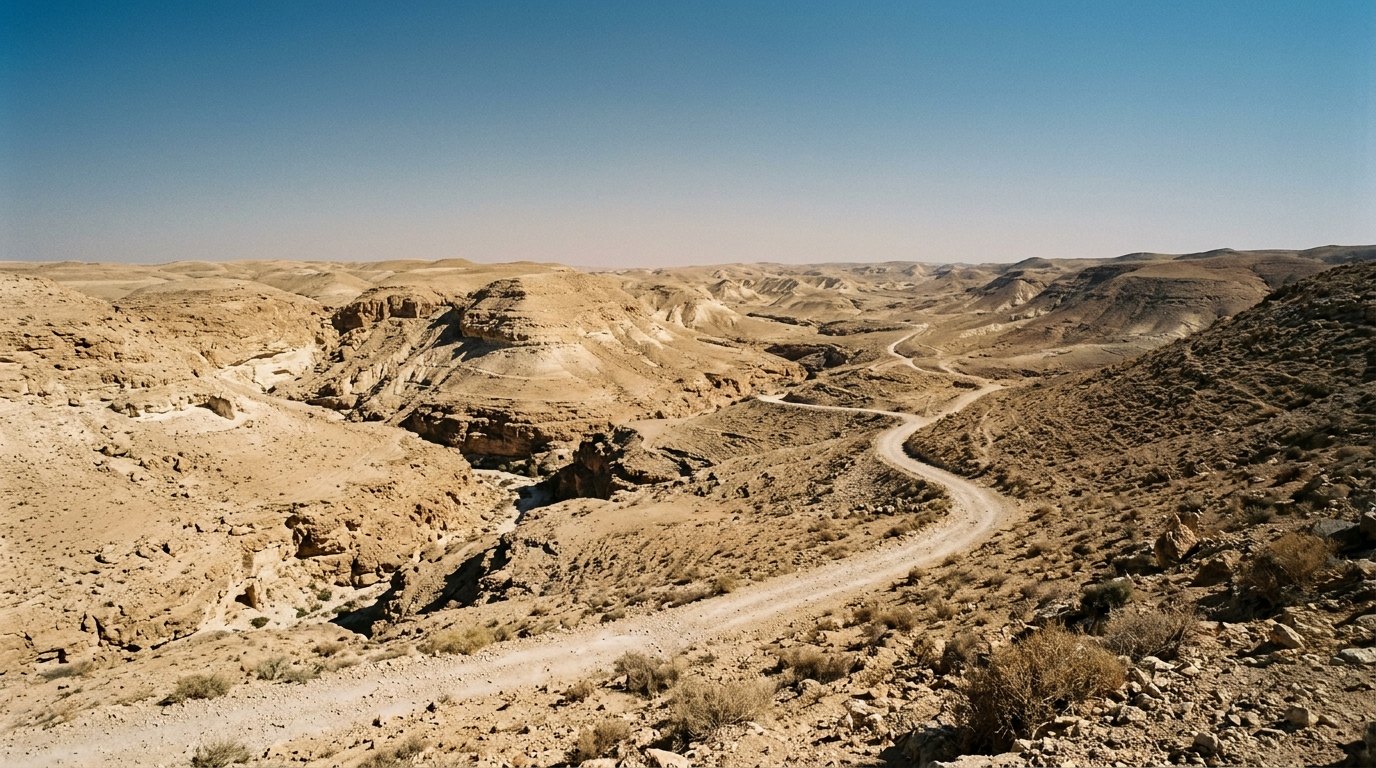
A voice of one calling: “In the wilderness prepare the way for the LORD; make straight in the desert a highway for our God. Every valley shall be raised up, every mountain and hill made low; the rough ground shall become level, the rugged places a plain. And the glory of the LORD will be revealed, and all people will see it together. For the mouth of the LORD has spoken.”
Isaiah 40:3-5 (NIV)
The prophet reveals the divine assignment of the wilderness voice leveling mountains and valleys to reveal the Lord's glory.
The ministry of John the Baptist was not an impromptu movement but the precise fulfilment of centuries of Hebrew prophecy, as encapsulated in Isaiah 40:3-5, where the prophet foresaw a herald crying in the desert to clear a straight highway for God's glory to be revealed. Matthew, Mark, Luke, and John all identify this ancient cry with John's wilderness preaching (Matthew 3:3; Mark 1:2-3; Luke 3:4-6; John 1:23). Centuries before the Roman Empire extended its roads across Palestine, Isaiah had announced that every mountain would be made low and every valley raised to make way for the King.
The final voices of the Old Testament canon foretold this exact herald. In Malachi 3:1, Yahweh promised, "Behold, I send My messenger, and he will prepare the way before Me," a prophecy that Jesus explicitly applied to John the Baptist (Matthew 11:10; Mark 1:2; Luke 7:27). The closing sentences of the Old Testament further declared that God would send Elijah the prophet before the coming of the great and dreadful day of the Lord, to turn the hearts of fathers to their children (Malachi 4:5-6). Christ confirmed that John was indeed the Elijah who was to come, breaking four centuries of prophetic silence to awaken Israel (Matthew 11:14; Matthew 17:10-13; Luke 1:17).
| Passage | What it says | Fulfilled |
|---|---|---|
| Isaiah 40:3-5 | Isaiah announces a voice crying in the wilderness to prepare the highway for the Lord's coming. | Matthew 3:3, Mark 1:2-3, Luke 3:4-6, John 1:23 |
| Malachi 3:1 | The Lord promises to send his messenger before his face to prepare the way before him. | Matthew 11:10, Mark 1:2, Luke 7:27 |
| Malachi 4:5-6 | God promises to send Elijah the prophet before the great and dreadful day of the Lord arrives. | Matthew 11:14, Matthew 17:10-13, Luke 1:17 |
Wilderness Ministry
A radical herald summons Israel to deep repentance
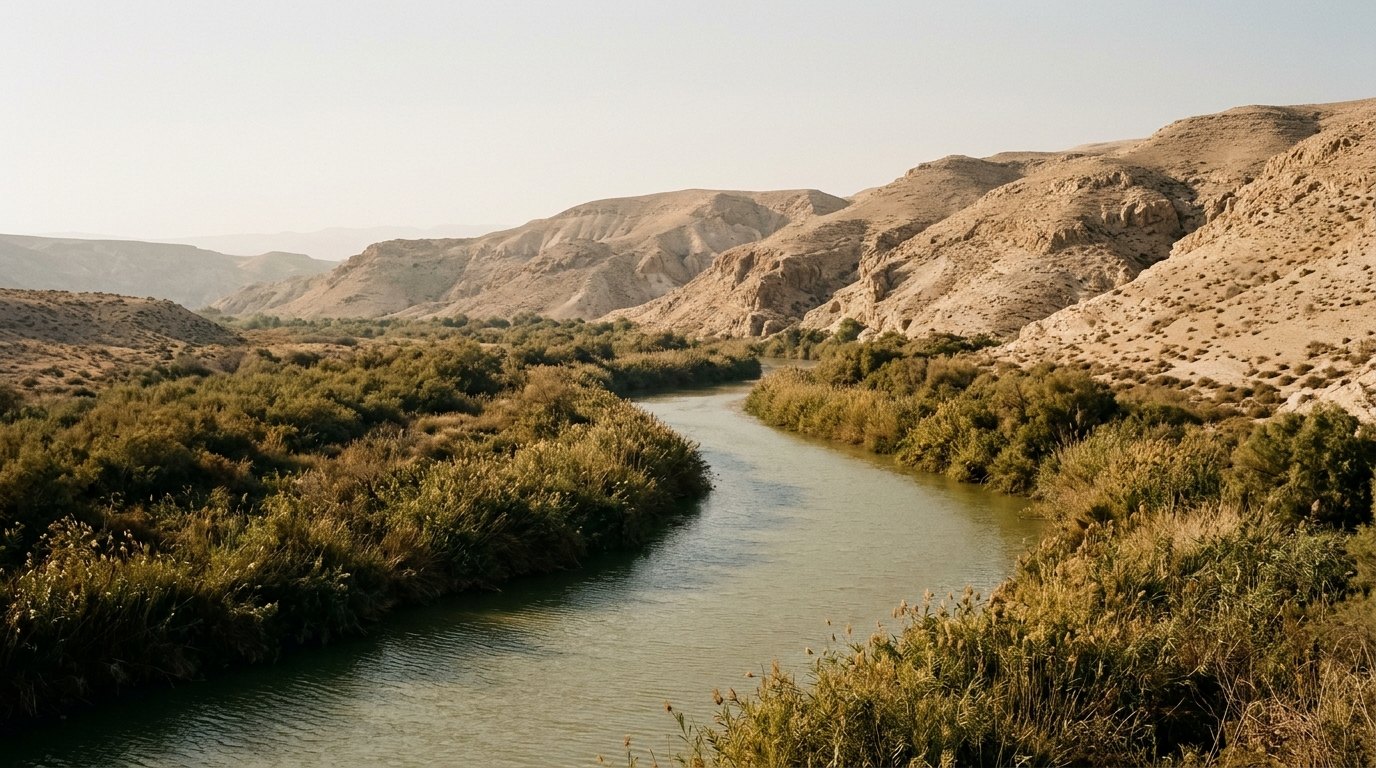
In those days John the Baptist came, preaching in the wilderness of Judea and saying, “Repent, for the kingdom of heaven has come near.” This is he who was spoken of through the prophet Isaiah: “A voice of one calling in the wilderness, ‘Prepare the way for the Lord, make straight paths for him.’ ”
Matthew 3:1-3 (NIV)
John opens his public ministry in the Judean wilderness proclaiming that the kingdom of heaven is at hand.
When John stepped onto the public stage, he did not enter the royal courts of Jerusalem but cried out in the desolate badlands, fulfilling Matthew 3:1-3 by preaching, "Repent, for the kingdom of heaven is at hand!" Clothed in rough garments of camel's hair with a leather belt around his waist, he fed upon wild honey and locusts, physically embodying the ascetic authority of the ancient prophets (Mark 1:4-6). Luke notes with historical precision that the word of the Lord came to this son of Zacharias in the wilderness during the fifteenth year of Tiberius Caesar (Luke 3:1-3).
Conviction rippled across the nation. Crowds from Jerusalem, Judea, and the surrounding region streamed to the Jordan River to confess their sins and undergo immersion in its waters (Matthew 3:4-6; Mark 1:1-3). Yet John spared no worldly pretension; when religious elites gathered at the water's edge, he branded them a "brood of vipers," warning that ancestry from Abraham could not protect them from the divine axe already laid to the root of unfruitful trees (Matthew 3:7-10). When the repentant asked how to live, John demanded concrete righteousness: sharing clothing and food, refusing to extort funds, and remaining content with one's wages (Luke 3:7-14).
| Passage | What it says |
|---|---|
| Mark 1:4-6 | John preaches a baptism of repentance for sins, clad in camel's hair with a leather belt and eating locusts. |
| Matthew 3:4-6 | Crowds from Jerusalem and Judea stream to the Jordan River, confessing their sins and receiving baptism. |
| Luke 3:1-3 | The Word of God comes to John son of Zacharias in the wilderness during the reign of Tiberius Caesar. |
| Matthew 3:7-10 | John confronts Pharisees and Sadducees, demanding fruit worthy of repentance and warning of the root-cleaving axe. |
| Luke 3:7-14 | John gives concrete moral instructions to the crowds, tax collectors, and soldiers seeking righteousness. |
| Matthew 3:1-3 | John begins preaching repentance in Judea because the kingdom of heaven is at hand, fulfilling Isaiah's prophecy. |
| Mark 1:1-3 | Mark opens his gospel identifying John as the messenger sent ahead of the Lord according to the prophets. |
Messianic Testimony
John exalts the coming One above himself

The next day John saw Jesus coming toward him and said, “Look, the Lamb of God, who takes away the sin of the world! This is the one I meant when I said, ‘A man who comes after me has surpassed me because he was before me.’ I myself did not know him, but the reason I came baptizing with water was that he might be revealed to Israel.” Then John gave this testimony: “I saw the Spirit come down from heaven as a dove and remain on him. And I myself did not know him, but the one who sent me to baptize with water told me, ‘The man on whom you see the Spirit come down and remain is the one who will baptize with the Holy Spirit.’ I have seen and I testify that this is God’s Chosen One.”
John 1:29-34 (NIV)
John publicly identifies Jesus as the Lamb of God and bears witness that the Holy Spirit remained on Him.
John's supreme assignment was to magnify another, a calling that culminated in John 1:29-34 when he looked upon Jesus and proclaimed, "Behold! The Lamb of God who takes away the sin of the world!" testifying that he saw the Holy Spirit descend from heaven like a dove and remain upon Him. John never allowed the crowds to confuse him with the Messiah; he insisted he was not even worthy to stoop down and untie Jesus' sandals, contrasting his own baptism in water with Christ's baptism in the Holy Spirit and unquenchable fire (Matthew 3:11-12; Mark 1:7-8; Luke 3:15-18).
The apostle John clarifies that the Baptist was not the Light, but a sent witness whose purpose was that all might believe through Him (John 1:6-8). When questioned by an official delegation from Jerusalem, John firmly denied being the Christ, Elijah reincarnated, or the Prophet, claiming only to be a voice crying in the wilderness (John 1:19-28). He bore witness that Jesus preceded him in rank and existence (John 1:15). When his own disciples noticed the multitudes migrating toward Christ, John pointed them straight to the Savior (John 1:35-37), defining his entire joy in the enduring words of John 3:25-30: "He must increase, but I must decrease."
| Passage | What it says |
|---|---|
| Matthew 3:11-12 | John declares he is unworthy to carry Christ's sandals, contrasting water baptism with Holy Spirit and fire. |
| Mark 1:7-8 | John preaches the arrival of One mightier than he who will baptize believers with the Holy Spirit. |
| Luke 3:15-18 | John dispels thoughts that he might be the Christ, picturing Jesus with a winnowing fork cleansing his threshing floor. |
| John 1:6-8 | John the apostle writes that John the Baptist came solely as a witness to testify concerning the Light. |
| John 1:19-28 | John confesses to the Jerusalem delegation that he is neither the Christ, Elijah, nor the Prophet, but a voice. |
| John 1:35-37 | John directs his own disciples to follow Jesus upon identifying Him as the Lamb of God. |
| John 3:25-30 | John rejoices as the friend of the bridegroom, declaring that Jesus must increase while he must decrease. |
| John 1:15 | John bears witness that Jesus ranks before him because He existed before him. |
| John 1:29-34 | John identifies Jesus as the Lamb of God and testifies that the Spirit descended and remained on Him. |
Baptizing Christ
The forerunner baptizes the King to fulfill righteousness
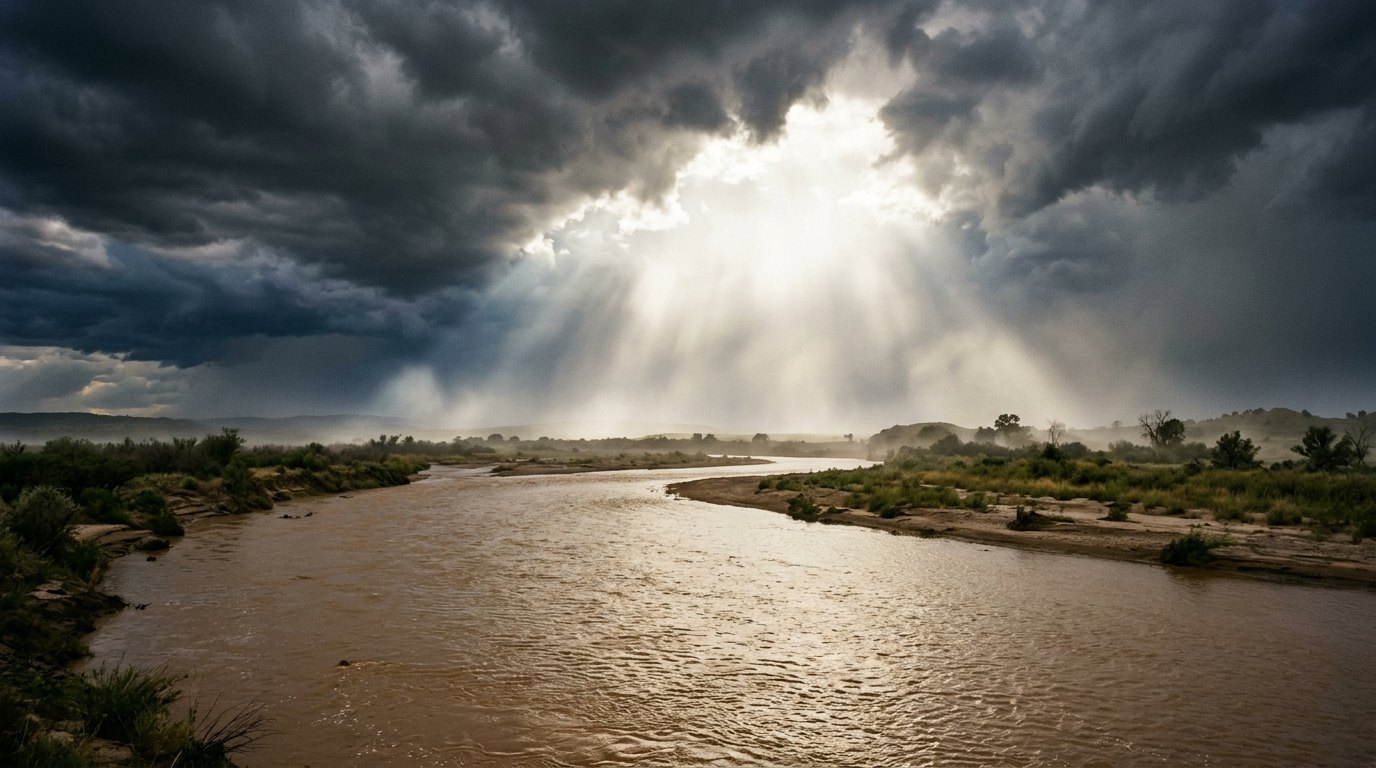
Then Jesus came from Galilee to the Jordan to be baptized by John. But John tried to deter him, saying, “I need to be baptized by you, and do you come to me?” Jesus replied, “Let it be so now; it is proper for us to do this to fulfill all righteousness.” Then John consented. As soon as Jesus was baptized, he went up out of the water. At that moment heaven was opened, and he saw the Spirit of God descending like a dove and alighting on him. And a voice from heaven said, “This is my Son, whom I love; with him I am well pleased.”
Matthew 3:13-17 (NIV)
Jesus insists on baptism to fulfill all righteousness, followed by the Spirit descending as a dove and the Father's voice.
The high moment of John's ministry occurred when the Lord Jesus walked from Galilee down to the Jordan to be baptized by him, recorded in Matthew 3:13-17. John shrank back from the prospect, recognizing that the Sinless One had no personal iniquities to confess or wash away. Yet Jesus answered that it was fitting for them to fulfill all righteousness, inaugurating His public messianic consecration by identifying fully with repentant sinners. As Christ emerged from the waters, the heavens were torn open, and the Holy Spirit descended in visible form like a dove, resting upon Him while the Father's voice resounded in eternal pleasure: this was His beloved Son. Mark's account in Mark 1:9-11 underscores the immediacy of that celestial rupture, highlighting the divine confirmation that accompanied Jesus beneath John's hands. Luke adds in Luke 3:21-22 that heaven opened specifically while Jesus was praying following His baptism, displaying the perfect trinitarian unity at the onset of Christ's earthly mission. In this single act, John's preparatory task achieved its summit: he had publicly consecrated Israel's true Priest, King, and sacrifice.
| Passage | What it says |
|---|---|
| Mark 1:9-11 | Jesus is baptized by John in the Jordan, the heavens tear open, and the Father proclaims His beloved Son. |
| Luke 3:21-22 | As Jesus prays following baptism, heaven opens and the Holy Spirit descends in bodily form like a dove. |
| Matthew 3:13-17 | Jesus comes to John to be baptized to fulfill all righteousness, followed by the Spirit descending and the Father speaking. |
Christ's Verdict
Jesus pronounces John the greatest born of women
As John’s disciples were leaving, Jesus began to speak to the crowd about John: “What did you go out into the wilderness to see? A reed swayed by the wind? If not, what did you go out to see? A man dressed in fine clothes? No, those who wear fine clothes are in kings’ palaces. Then what did you go out to see? A prophet? Yes, I tell you, and more than a prophet. This is the one about whom it is written: “ ‘I will send my messenger ahead of you, who will prepare your way before you.’ Truly I tell you, among those born of women there has not risen anyone greater than John the Baptist; yet whoever is least in the kingdom of heaven is greater than he. From the days of John the Baptist until now,…
Matthew 11:7-15 (NIV)
Jesus praises John's unwavering boldness, identifies him as the Elijah who was to come, and extols his unmatched greatness.
No higher commendation was ever spoken of a mortal man than our Lord's verdict in Matthew 11:7-15, where Jesus declared that none born of women has arisen greater than John the Baptist. Even when John languished in Herod's fortress and sent disciples to verify Jesus' identity in Matthew 11:2-6 and Luke 7:18-28, Jesus answered not with rebuke, but with the confirming miracles prophesied in Isaiah, reassuring His forerunner before extolling his resolute character to the listening crowd. Jesus reminded the throngs that John was no fragile reed shaken by the wind, but the long-expected Elijah whose ministry had prepared the way of the Lord. As noted in Luke 7:29-35, everyday sinners and tax collectors justified God by accepting John's baptism, whereas proud religious leaders spurned God's purpose for themselves. Following the Transfiguration, Jesus reaffirmed in Matthew 17:10-13 and Mark 9:11-13 that Elijah had indeed come in John, enduring the violent opposition foretold by the prophets. Later, when the chief priests challenged Christ's authority in the temple, He silenced them in Matthew 21:23-27, Mark 11:27-33, and Luke 20:1-8 by asking whether John's baptism was from heaven or from men, a dilemma the hypocrites could not answer without condemning themselves. As Jesus testified in John 5:33-36, John was a burning and shining lamp whose witness was entirely verified, an assessment later echoed by ordinary pilgrims in John 10:40-42, who remembered that although John performed no signs, everything John said about this man was true.
| Passage | What it says |
|---|---|
| Matthew 11:2-6 | Imprisoned John sends disciples to ask Jesus if He is the Coming One; Jesus cites messianic signs in reply. |
| Luke 7:18-28 | Jesus affirms John as more than a prophet, declaring none born of women is greater than him. |
| Luke 7:29-35 | Jesus contrasts the tax collectors who accepted John's baptism with Pharisees and lawyers who rejected God's purpose. |
| Matthew 17:10-13 | After the Transfiguration, Jesus explains that Elijah has already come, and the disciples understand he meant John. |
| Matthew 21:23-27 | Jesus challenges the chief priests regarding the baptism of John: was it from heaven or from men. |
| John 5:33-36 | Jesus calls John a burning and shining lamp in whose light the Jewish leaders were willing to rejoice. |
| John 10:40-42 | Crowds across the Jordan observe that though John did no sign, everything he said about Jesus was true. |
| Matthew 11:7-15 | Jesus affirms John as more than a prophet, the greatest born among women, and the Elijah who was to come. |
| Mark 9:11-13 | Jesus explains to the disciples that Elijah has indeed already come and suffered as Scripture foretold. |
| Mark 11:27-33 | Jesus questions the religious leaders whether John's baptism was from heaven or from men. |
| Luke 20:1-8 | The chief priests cannot answer whether John's baptism was divine, exposing their unbelief. |
Faithful Martyrdom
Unflinching righteousness costs the prophet his life
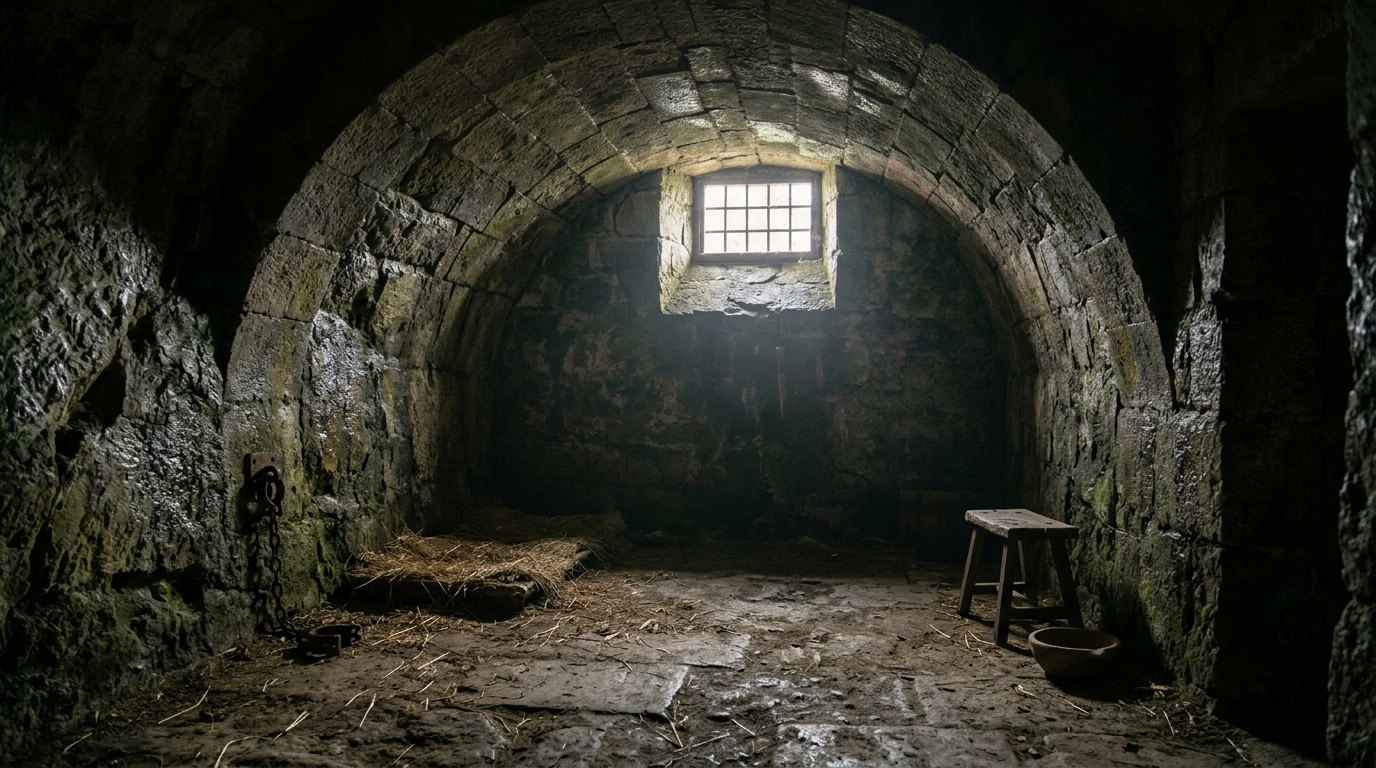
For Herod himself had given orders to have John arrested, and he had him bound and put in prison. He did this because of Herodias, his brother Philip’s wife, whom he had married. For John had been saying to Herod, “It is not lawful for you to have your brother’s wife.” So Herodias nursed a grudge against John and wanted to kill him. But she was not able to, because Herod feared John and protected him, knowing him to be a righteous and holy man. When Herod heard John, he was greatly puzzled; yet he liked to listen to him.
Mark 6:17-20 (NIV)
Herod imprisons John for rebuking his unlawful marriage to Herodias, yet fears John knowing he was a righteous and holy man.
John's unflinching fidelity to the moral law of God brought him to a martyr's grave, beginning when he confronted Herod Antipas for taking his brother Philip's wife, Herodias, as recounted in Mark 6:17-20 and Luke 3:19-20. Herod feared John, recognizing him as a holy man, yet his conscience was overridden by pride, lust, and fear of men during a decadent banquet described in Matthew 14:1-12 and Mark 6:21-29, where John was beheaded in prison. John's disciples reverently took his corpse, laid it in a tomb, and went straight to Jesus with their grief. Yet the impact of John's proclamation was indelible throughout the early church. When the apostles sought a successor to Judas in Acts 1:21-22, Peter insisted that the candidate must have accompanied them from the baptism of John until the ascension, establishing John's ministry as the foundational boundary of the apostolic testimony. Preaching to the household of Cornelius in Acts 10:37, Peter again noted that the gospel word spread across Judea beginning from the baptism John preached. In Pisidian Antioch, Paul declared in Acts 13:24-25 that John had faithfully proclaimed repentance to all Israel, disowning messianic titles while finishing his course. Even far abroad in Ephesus, believers such as Apollos in Acts 18:24-26 and disciples in Acts 19:1-7 had been shaped by John's preparatory message before being brought into the full light and power of the Spirit in the name of Jesus Christ.
| Passage | What it says |
|---|---|
| Luke 3:19-20 | Herod the tetrarch shuts John up in prison after being reproved regarding Herodias and all evil deeds. |
| Matthew 14:1-12 | Herod beheads John at the request of Herodias's daughter; John's disciples bury the body and report to Jesus. |
| Mark 6:21-29 | At a birthday banquet, Herod delivers John's head on a platter to satisfy Herodias's murderous grudge. |
| Acts 13:24-25 | Paul recounts in Antioch how John proclaimed repentance to Israel and disclaimed messianic identity before finishing his course. |
| Acts 18:24-26 | Apollos initially ministers in Ephesus knowing only the baptism of John before receiving fuller instruction. |
| Acts 19:1-7 | Paul encounters disciples in Ephesus baptized into John's baptism and baptizes them into the name of Jesus. |
| Mark 6:14-20 | Herod fears John, knowing he is righteous and holy, but imprisons him for rebuking Herodias's unlawful marriage. |
| Acts 1:21-22 | Peter stipulates that an apostle must have companied with them from John's baptism until Jesus' ascension. |
| Acts 10:37 | Peter preaches to Cornelius that the gospel began throughout Judea following the baptism John proclaimed. |
Where in the Bible
| Book | Passages |
|---|---|
| Isaiah | 1 · Isaiah 40:3-5 |
| Malachi | 2 · Malachi 3:1, Malachi 4:5-6 |
| Matthew | 10 · Matthew 3:4-6, Matthew 3:7-10, Matthew 3:1-3, Matthew 3:11-12, Matthew 3:13-17, Matthew 11:2-6, Matthew 17:10-13, Matthew 21:23-27, Matthew 11:7-15, Matthew 14:1-12 |
| Mark | 8 · Mark 1:4-6, Mark 1:1-3, Mark 1:7-8, Mark 1:9-11, Mark 9:11-13, Mark 11:27-33, Mark 6:21-29, Mark 6:14-20 |
| Luke | 16 · Luke 1:5-7, Luke 1:11-14, Luke 1:18-20, Luke 1:39-45, Luke 1:57-66, Luke 1:67-79, Luke 1:80, Luke 1:15-17, Luke 3:1-3, Luke 3:7-14, Luke 3:15-18, Luke 3:21-22, Luke 7:18-28, Luke 7:29-35, Luke 20:1-8, Luke 3:19-20 |
| John | 8 · John 1:6-8, John 1:19-28, John 1:35-37, John 3:25-30, John 1:15, John 1:29-34, John 5:33-36, John 10:40-42 |
| Acts | 5 · Acts 13:24-25, Acts 18:24-26, Acts 19:1-7, Acts 1:21-22, Acts 10:37 |
The story in order
- John's miraculous birth and prophecy (c. 5 BC) · Luke 1:5-79 · God prepares a forerunner through a righteous, barren, elderly priestly couple.
- John grows in the wilderness (c. 5 BC - AD 27) · Luke 1:80 · He lived in the desert until his public ministry began.
- Prophetic announcement of a herald (c. 700 BC) · Isaiah 40:3-5 · Isaiah foretells a voice crying in the wilderness to prepare the way for the Lord.
- Promise of Elijah's return (c. 400 BC) · Malachi 4:5-6 · God promises to send Elijah before the great day of the Lord.
- John begins wilderness ministry (AD 27) · Matthew 3:1-3 · He preached repentance in Judea as the kingdom of heaven was at hand.
- John baptizes crowds (AD 27) · Matthew 3:4-6 · People from Jerusalem and Judea confessed sins and were baptized in the Jordan.
- John testifies about Jesus (AD 27) · John 1:29-34 · John identifies Jesus as the Lamb of God, on whom the Spirit descended.
- Jesus is baptized by John (AD 27) · Matthew 3:13-17 · Jesus is baptized to fulfill all righteousness; the Father and Spirit affirm Him.
- John imprisoned by Herod (AD 28-30) · Luke 3:19-20 · John reproved Herod Antipas for his unlawful marriage and was imprisoned.
- John's martyrdom (AD 30-32) · Matthew 14:1-12 · Herod beheaded John to satisfy Herodias's grudge after a banquet.
- Jesus affirms John's greatness (AD 30-32) · Luke 7:18-28 · Jesus declared John the greatest born of women and more than a prophet.
- Apostles recall John's ministry (AD 30-33) · Acts 1:21-22 · John's baptism marked the beginning of the gospel ministry Jesus entered.
Key words
- Repentance (metanoia, μετάνοια)
- A change of mind and heart leading to a change of direction and actions. · Mark 1:4
- Prophet (prophētēs, προφήτης)
- One who speaks for God, often foretelling future events or calling people to righteousness. · Luke 1:76
- Lamb of God (amnos tou theou, ἀμνὸς τοῦ θεοῦ)
- A title for Jesus, signifying His sacrificial role in taking away the sins of the world. · John 1:29
- Kingdom of Heaven (basileia tōn ouranōn, βασιλεία τῶν οὐρανῶν)
- The reign and rule of God, inaugurated by Jesus Christ. · Matthew 3:2
- Righteousness (dikaiosynē, δικαιοσύνη)
- Conformity to God's moral law; living in right relationship with God. · Matthew 3:15
John the Baptist's life demonstrates the absolute pinnacle of prophetic humility: to direct all human devotion away from oneself and onto the Son of God. His call to repentance and fruitfulness remains urgent for every generation awaiting the Lord's return. As believers look to his witness, they are reminded that true greatness in the kingdom consists in decreasing so that Christ may increase.
50 passages, each cited once.
Scripture cited
- Isaiah 40:3-6
- John 1:6-8
- Luke 1:13-17
- Luke 1:76
- Matthew 11:11
- Luke 3:1-20
- Luke 1:5-25
- Luke 1:57-80
- Malachi 4:5-6