Why does God let children suffer?
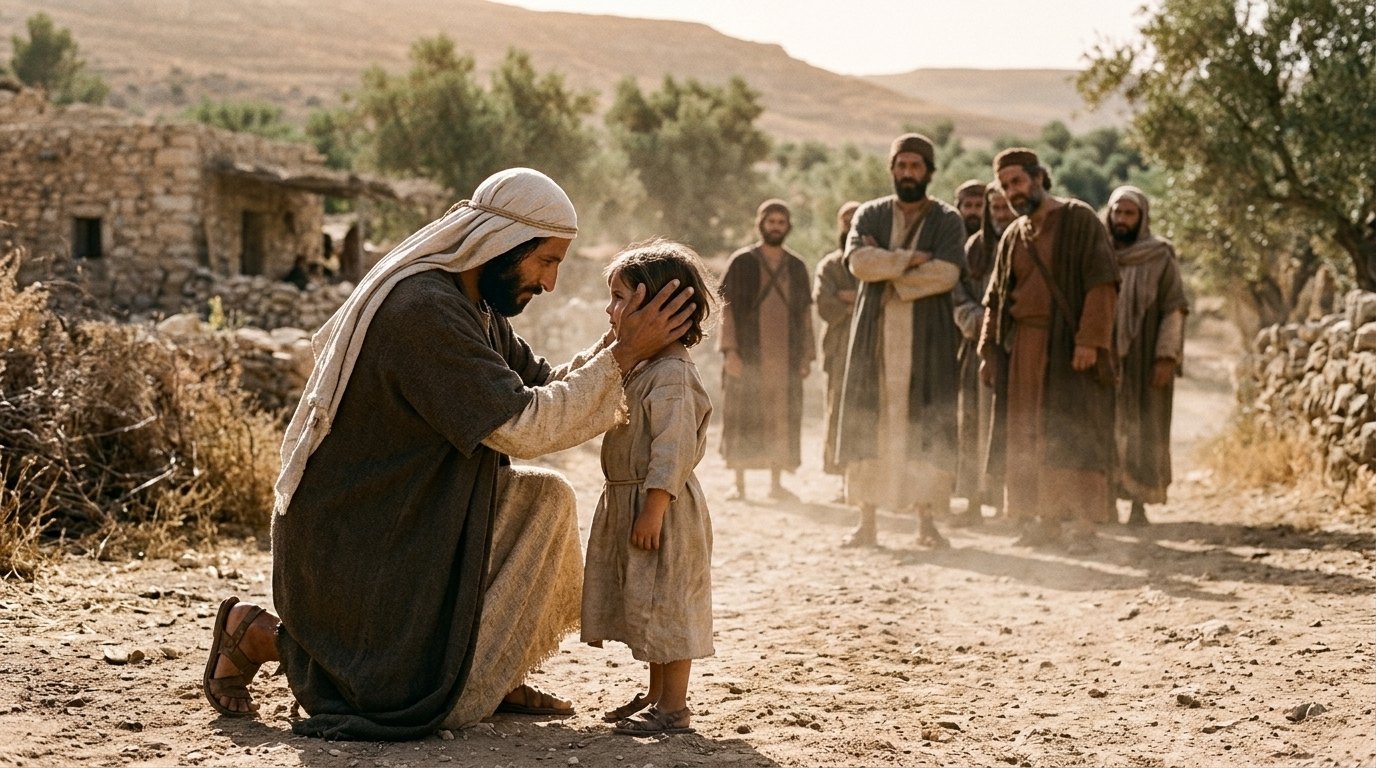
Matthew 19:13-15
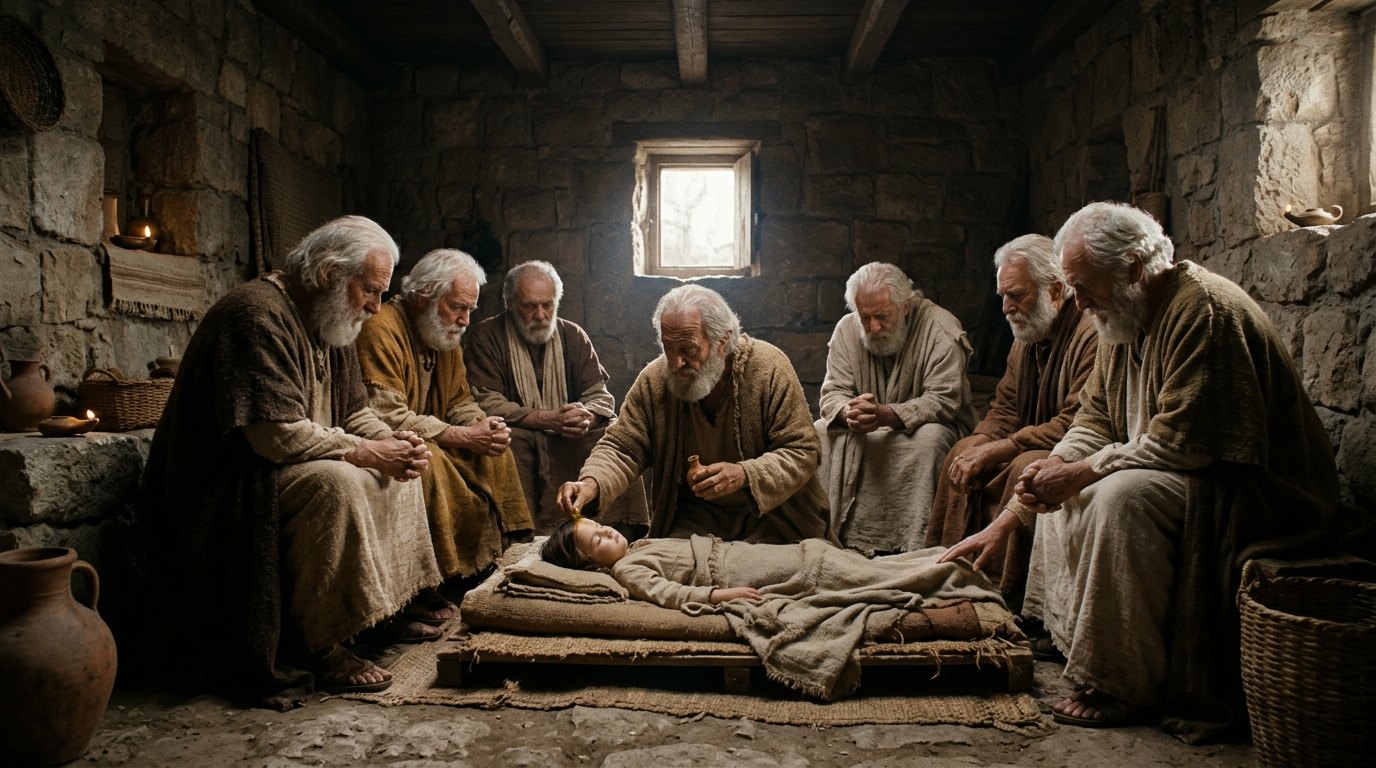
13 Then people brought little children to Jesus for him to place his hands on them and pray for them. But the disciples rebuked them.
14 Jesus said, “Let the little children come to me, and do not hinder them, for the kingdom of heaven belongs to such as these.”
15 When he had placed his hands on them, he went on from there.
New International Version (NIV)
The answer
God does not permit children to suffer because He delights in pain, and suffering is not proof that a child is being punished for a particular sin. Children live in a creation damaged by Adam’s sin, where disease, decay and human wickedness afflict even those who did nothing to cause their suffering. God has not yet brought this world to its promised renewal, and He often does not disclose His reason for permitting a particular sorrow. He has disclosed His compassion, His hatred of evil, His nearness in Christ and His promise to end suffering.
The world is under a curse
After Adam sinned, God told him, “the ground is cursed for your sake,” and human life came under toil, decay and death (Genesis 3:17-19). Romans 8:20-22 says creation was subjected to futility and remains in bondage to decay, so that “the whole creation groans and travails in pain together until now.” Children share the conditions of this wounded world.
Other suffering is directly inflicted by people through cruelty, abuse, neglect or war. God’s permission is not His approval. Jesus pronounces terrifying judgment on anyone who causes one of His little ones to stumble: it would be better for that person to be sunk in the sea with a millstone around his neck (Matthew 18:6). Human evil carries real guilt, and God will judge it.
Do not answer suffering with blame
When the disciples saw a man blind from birth, they assumed someone’s sin must explain it. Jesus answered, “This man didn’t sin, nor did his parents, but that the works of God might be revealed in him” (John 9:1-3). In that case, Jesus identified a purpose without accepting their accusation.
That passage does not authorize anyone to invent a hidden explanation for every child’s pain. It does forbid the glib assumption that suffering identifies an especially guilty child or family.
God is compassionate, not indifferent
Lamentations speaks honestly about grief while affirming God’s character: “though he causes grief, yet he will have compassion according to the multitude of his loving kindnesses,” and “he does not afflict willingly” (Lamentations 3:32-33). Affliction is not something He takes pleasure in.
Jesus showed His regard for children when His disciples tried to turn them away. He said, “Allow the little children, and don’t forbid them to come to me,” then laid His hands on them (Matthew 19:13-15). Receiving a child in His name is receiving Him, while harming or misleading His little ones brings judgment (Matthew 18:5-6). Children’s pain must therefore never be treated as insignificant.
Nor is God distant from human weakness. The Son is a high priest who can be “touched with the feeling of our infirmities,” so suffering people are invited to draw near for mercy and grace (Hebrews 4:15-16). The fitting response is prayer, protection, compassionate care and opposition to the sins that harm children—not indifference or speculation.
Pain will not have the last word
Present suffering is real, but it is not worthy to be compared with the glory God will reveal (Romans 8:18). In the new creation, where God dwells with His people, “He will wipe away every tear from their eyes. Death will be no more; neither will there be mourning, nor crying, nor pain any more” (Revelation 21:4).
Until that day, Romans 8:24-25 calls for hope and patient waiting. That hope does not pretend suffering is good; it trusts that God will keep His promise to judge evil, redeem His people and make all things new.
Answered from Scripture · reviewed November 11, 2026
Scripture does not offer a simplistic formula explaining every instance of childhood affliction, yet it speaks with unwavering truth about God's heart toward the vulnerable and the brokenness of our present world. Through His words and deeds, Jesus reveals that children are deeply valued in the Kingdom of God, while the broader testimony of the Bible traces the reality of pain to a fallen creation awaiting ultimate redemption.
Welcoming the Weak
Christ Declares the Value of Children
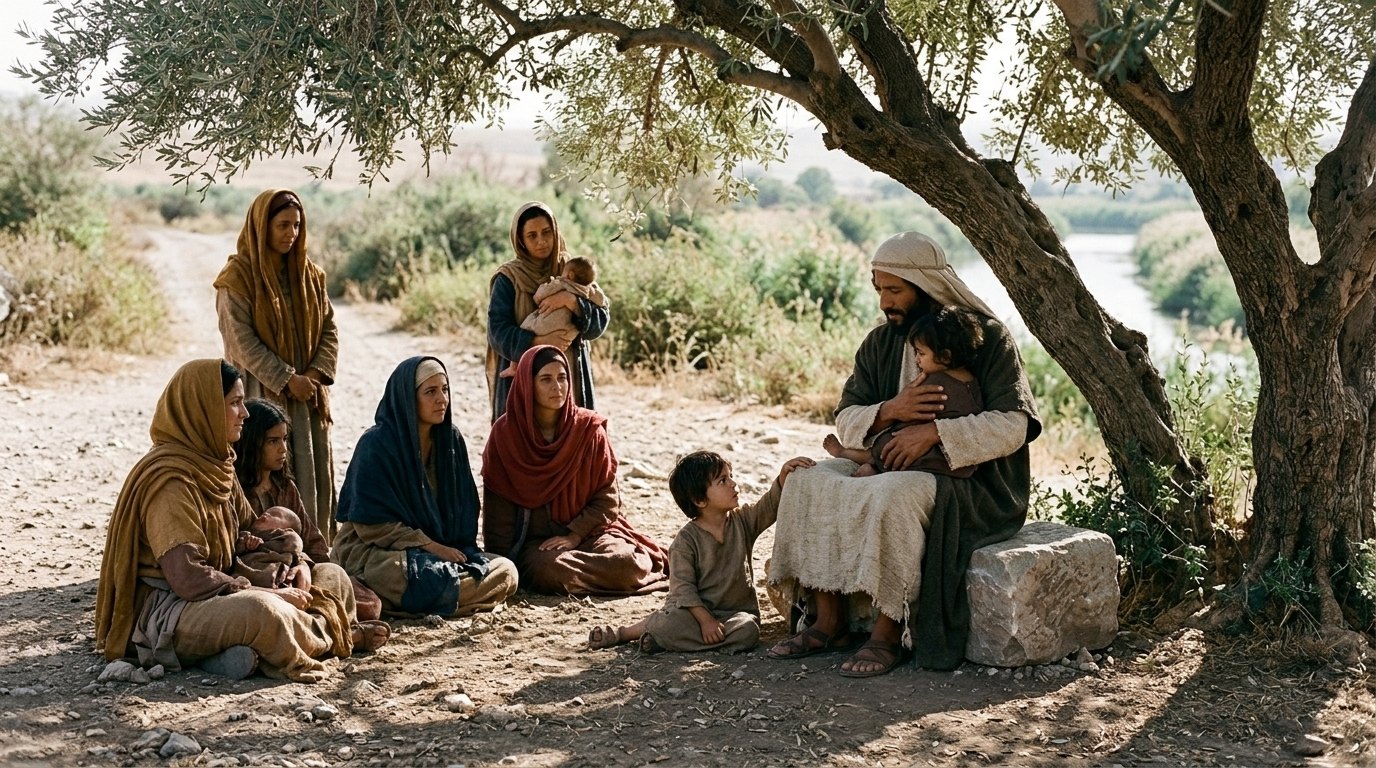
Jesus said, “Let the little children come to me, and do not hinder them, for the kingdom of heaven belongs to such as these.”
Matthew 19:14 (NIV)
Jesus explicitly counters the disciples' rebukes, asserting that the kingdom of heaven belongs to little children.
In Matthew 19:14, the Lord Jesus issues an emphatic directive when His disciples attempt to shield Him from the young: the kingdom of heaven belongs to such as these. While the culture of the ancient world frequently dismissed the weak and dependent, the incarnate Son of God establishes their singular standing before God. Matthew 19:13 records that when parents brought their little ones to Christ for prayer, His disciples rebuked them, viewing children as an unwelcome distraction from greater matters. Instead, Matthew 19:15 demonstrates His tender regard as He lays His hands upon them and departs only after blessing them.
The parallel accounts deepen this revelation of Christ’s heart. In Mark 10:13–16, Jesus is moved with righteous indignation at His disciples' conduct; He takes the children up into His arms, puts His hands upon them, and blesses them with deep affection. In Luke 18:15–17, people bring even newborn infants to Jesus, prompting the Savior to declare that whoever does not receive the kingdom of God as a little child will never enter it. True faith mirrors the utter dependence of a child.
Earlier in His ministry, Matthew 18:2–5 reveals Jesus placing a small child in the center of the disciples' ambitious disputes over greatness. He warns that unless a person turns and becomes humble like a child, they cannot enter the kingdom, adding that whoever receives one such child in His name receives Christ Himself. Furthermore, Matthew 18:10 provides a sobering command: believers must never despise or disregard even one of these little ones, because their angels in heaven continually behold the face of the Father. Far from being forgotten or unvalued by God, children occupy an honored place under His watchful care.
| Passage | What it says |
|---|---|
| Matthew 19:13 | People bring children to Jesus for prayer, but the disciples sharply rebuke those who bring them. |
| Matthew 19:14 | Jesus commands that children be permitted to come to Him, affirming that the Kingdom belongs to them. |
| Matthew 19:15 | Jesus lays His hands on the children and blesses them before departing from the area. |
| Mark 10:13-16 | Jesus becomes indignant at the disciples, embraces the young children, and blesses them warmly. |
| Luke 18:15-17 | Infants are brought to Jesus, and He teaches that kingdom reception requires childlike faith. |
| Matthew 18:2-5 | Jesus places a child in the disciples' midst, equating the welcoming of a child to welcoming Himself. |
| Matthew 18:10 | Jesus warns against despising little ones, noting their angels always see the Father's face. |
A Groaning World
Creation Labors Under Sin and Mortality
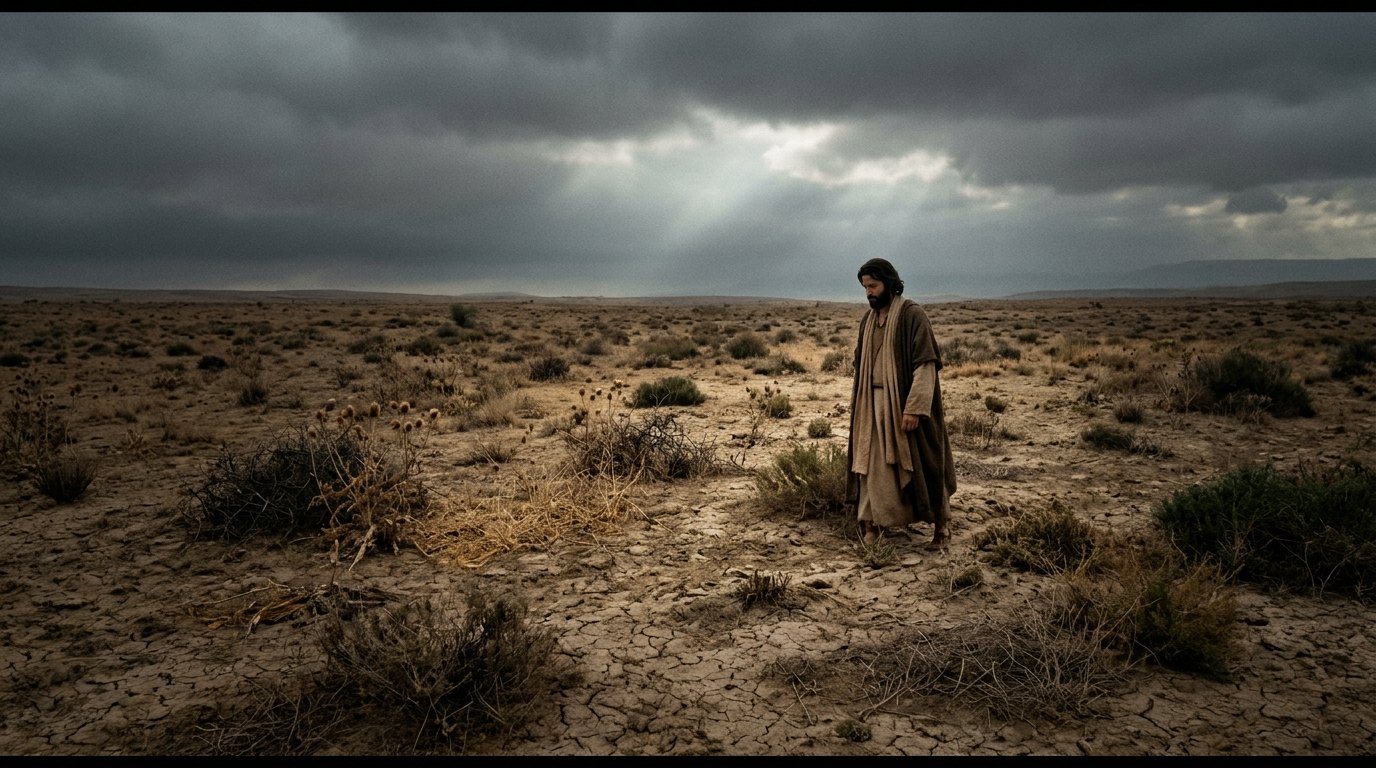
We know that the whole creation has been groaning as in the pains of childbirth right up to the present time.
Romans 8:22 (NIV)
Paul reveals that creation itself is subjected to vanity and travails in labor pains until the resurrection.
In Romans 8:22, the Apostle Paul uncovers the structural reality behind all earthly affliction: the whole creation groans and labors with birth pangs together until now. Physical pain, congenital disease, and childhood mortality are not divine errors, nor are they arbitrary malice; they are the pervasive consequence of a world subjected to vanity and bondage following the historic fall of man. When Adam rebelled in Genesis 3:16–19, death entered human history, bringing sorrow, physical decay, and universal mortality into the human fabric. As Romans 5:12 states plainly, sin entered the world through one man, and death through sin, passing upon all because all sinned under Adam's federal headship.
This corrupting curse extends to our mortal bodies. In Romans 8:20–23, Paul explains that creation was subjected to frustration not willingly, and believers ourselves groan inwardly as we eagerly await the final redemption of our bodies. Physical death claims the young and old alike because all are born into Adam’s fallen lineage, as 1 Corinthians 15:21–22 teaches that in Adam all die. Yet Scripture guards against cruel, simplistic conclusions regarding why an individual child suffers. In Luke 13:1–5, Jesus forcefully dismantles the idea that those who suffer sudden calamity or death are worse sinners than others. Likewise, in John 9:1–3, when asked whether a man was born blind due to his own sin or his parents' guilt, Jesus refutes both assumptions entirely, declaring instead that the works of God might be displayed in him. Genesis 8:21 reminds us that the imagination of man's heart remains broken from youth. In this groaning world, sickness and death are universal afflictions stemming from original sin, awaiting the decisive victory of Christ.
| Passage | What it says |
|---|---|
| Genesis 3:16-19 | Adam's rebellion introduces pain, physical toil, and the universal reality of death into the human condition. |
| Romans 8:20-23 | The whole creation groans under corruption while believers groan awaiting the redemption of their bodies. |
| Luke 13:1-5 | Jesus clarifies that sudden disaster or tragedy is not a measure of individual guilt. |
| John 9:1-3 | Jesus rejects the assumption that a man's blindness from birth was caused by parental sin. |
| 1 Corinthians 15:21-22 | Death entered the world through Adam, affecting all humanity until Christ's resurrection. |
| Romans 5:12 | Sin entered the world through one man, and death through sin, passing upon all mankind. |
| Genesis 8:21 | The intention of man's heart is evil from his youth, in a fallen world under divine curse. |
Grief in Scripture
Godly Saints Endured Childish Affliction
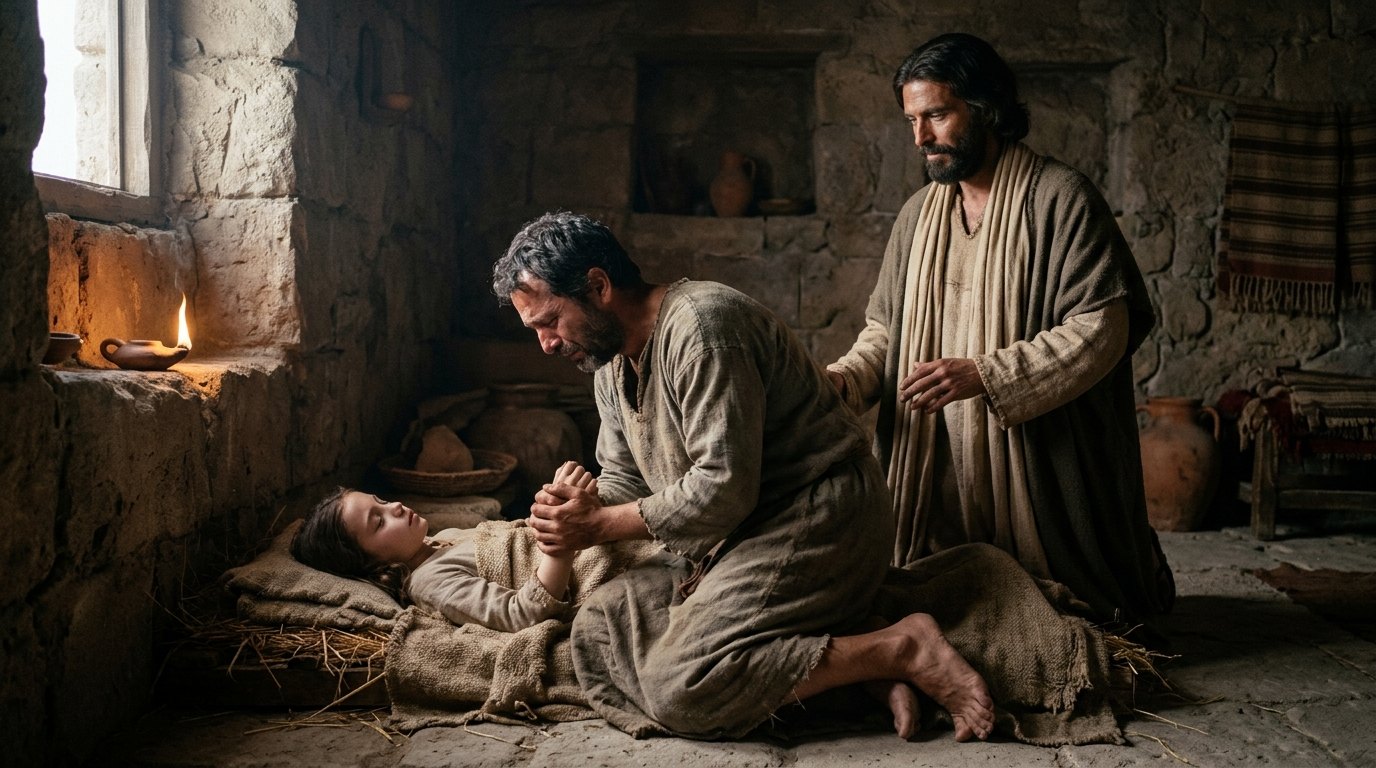
David pleaded with God for the child. He fasted and spent the nights lying in sackcloth on the ground.
2 Samuel 12:16 (NIV)
David's agonizing intercession for his critically ill child demonstrates real godly grief in the face of suffering.
In 2 Samuel 12:16, King David collapses to the ground in desperate supplication: David pleaded with God for the child, and David fasted and went in and lay all night on the ground. Scripture never sanitizes the agony of childhood affliction or the piercing sorrow felt by faithful parents. The biblical record contains unflinching accounts of righteous men and women crying out in grief over their dying or dead children. In Genesis 21:15–17, Hagar places Ishmael under a bush and sits far off weeping so she will not watch the boy die, yet God hears the boy's voice and provides water. In 1 Kings 17:17–24, the widow of Zarephath experiences the bitter death of her son until Elijah stretches himself over the boy and God restores his breath. Similarly, in 2 Kings 4:18–20, the Shunammite woman holds her young boy on her lap until he expires from a sudden injury, holding fast to faith until Elisha arrives.
David’s agonizing vigil in 2 Samuel 12:15–23 ends with the child’s death, yet his response anchors biblical grief in hope: David cleanses himself, worships God, and declares that though the child cannot return to him, he will one day go to the child. The Bible does not hide horrific losses: Job 1:18–19 recounts the sudden death of Job's ten children in a violent storm, while Jeremiah 31:15 captures Rachel weeping inconsolably for her lost children, a prophecy fulfilled in Matthew 2:16–18 when Herod ruthlessly slaughters the infants of Bethlehem. Lamentations 2:11–12 laments the starvation of nursing babies in siege warfare. Yet in the Gospels, parents bring their torment directly to Christ: Jairus in Mark 5:22–23 falls at Jesus’ feet for his dying daughter, the distressed father in Mark 9:20–22 pleads for his convulsing son, and the Syrophoenician mother in Mark 7:25–30 begs mercy for her afflicted daughter. In each case, Christ meets their grief with power and divine compassion.
| Passage | What it says |
|---|---|
| Genesis 21:15-17 | Hagar weeps over Ishmael's impending demise in the wilderness, and God hears the boy's voice. |
| 1 Kings 17:17-24 | The widow of Zarephath mourns the fatal illness of her son before Elijah prays for life. |
| 2 Kings 4:18-20 | The Shunammite woman's young child suffers a sudden head injury and dies upon her lap. |
| 2 Samuel 12:15-23 | David fasts and weeps for his dying child, expressing ultimate hope of reuniting after death. |
| Job 1:18-19 | Job's sons and daughters are killed in a sudden catastrophe during a fierce storm. |
| Mark 5:22-23 | Jairus falls at Jesus' feet pleading desperately for his twelve-year-old daughter at death's door. |
| Mark 9:20-22 | A father laments his son's severe torment from childhood, begging Christ for compassion and help. |
| Jeremiah 31:15 | Rachel weeps bitterly for her children and refuses comfort because they are no more. |
| Matthew 2:16-18 | Herod slaughters infant boys in Bethlehem, fulfilling the prophecy of inconsolable weeping. |
| Lamentations 2:11-12 | Jeremiah weeps as infants and babes faint in the streets of the besieged city. |
| Mark 7:25-30 | A Syrophoenician mother pleads urgently with Jesus for her suffering daughter possessed by an unclean spirit. |
Covenant and Care
God Preserves and Defends the Helpless
A father to the fatherless, a defender of widows, is God in his holy dwelling.
Psalms 68:5 (NIV)
God reveals His enduring character as a father to the fatherless and a defender of the defenseless.
In Psalms 68:5, God reveals His royal and unchanging name: a father of the fatherless, a defender of widows, is God in His holy habitation. The Lord declares Himself the protector of the most vulnerable, setting fierce warnings against anyone who would harm them. Psalms 10:14 reminds the afflicted that God observes grief and distress to take it into His own hands, being the helper of the orphan. In Deuteronomy 10:18, He administers justice for the fatherless, while Exodus 22:22–24 contains God’s fierce warning that His wrath will burn against anyone who mistreats a child without a father. Psalms 146:9 confirms that the Lord relieves the fatherless and the widow, upholding them in righteousness.
Every child’s life is intimately crafted by God. In Psalms 139:13–16, David confesses that God formed his inward parts, knitting him together in his mother’s womb; every day ordained for him was written in God’s book before one of them existed. God’s tender mercy toward children even stays judgment: in Jonah 4:11, the Lord rebukes Jonah’s calloused heart by pointing to Nineveh's more than one hundred twenty thousand young children who cannot discern their right hand from their left. In the New Testament, God's covenantal care enfolds the families of believers. In Acts 2:39, Peter proclaims at Pentecost that the promise of the Holy Spirit is for believers and their children, while 1 Corinthians 7:14 explains that the children of a believing parent are set apart and sanctified. When illness strikes, the community of faith does not despair; James 5:14–16 instructs the elders to pray over the sick, anointing them with oil, trusting the ultimate power of the Lord to heal and forgive.
| Passage | What it says |
|---|---|
| Psalms 10:14 | God observes grief and spite to requite it, acting as the helper of the fatherless. |
| Psalms 68:5 | A father of the fatherless and a judge of widows is God in His holy habitation. |
| Psalms 139:13-16 | God forms every person intricately in the womb, having ordaining all their days. |
| Acts 2:39 | Peter proclaims that the covenant promise extends to believers, their children, and all called afar. |
| 1 Corinthians 7:14 | Children within a household sanctified by a believing parent are declared holy before God. |
| James 5:14-16 | The elders of the church are commanded to pray over the sick, anointing them with oil. |
| Deuteronomy 10:18 | The Lord executes justice for the fatherless and the widow, loving the vulnerable. |
| Exodus 22:22-24 | God warns that His wrath burns hot against anyone who afflicts an orphan or widow. |
| Psalms 146:9 | The Lord watches over sojourners and upholds the fatherless and widow. |
| Jonah 4:11 | God expresses pity for Nineveh's more than one hundred twenty thousand infants who cannot discern left from right. |
Hope of Renewal
The Final Overcoming of Sorrow
‘He will wipe every tear from their eyes. There will be no more death’ or mourning or crying or pain, for the old order of things has passed away.”
Revelation 21:4 (NIV)
God promises the complete wiping away of tears, sorrow, and pain in the restored creation.
In Revelation 21:4, God gives the ultimate answer to every tear shed in this broken world: He will wipe away every tear from their eyes, and death, sorrow, crying, and pain will be no more. This is not an abstract sentiment, but the certain promise of the God who cannot lie. The suffering of the innocent, particularly of children, cuts deepest into the human heart, but Scripture assures us that this present groaning will not have the final word.
Long before the New Testament was written, the prophets foresaw this divine reversal. In Isaiah 25:8, the Lord God declared He would swallow up death in victory and wipe tears away from all faces, removing the reproach of His people. The prophetic horizon expands in Isaiah 65:19-20, picturing a renewed world where no infant lives merely a few days, and where weeping is heard no more. God sees every short and fragile life, and His redemptive plan culminates in total restoration.
Even in the depths of agony, Christ paved the way of ultimate trust. As He hung upon the cross, bearing our griefs and the curse of sin, He cried out, "Father, into your hands I commit my spirit" (Luke 23:46). Because Jesus endured death and rose victorious, believers can commit every suffering child into those same sovereign, compassionate hands. The final vision in Revelation 21:3-4 confirms that God Himself will dwell with humanity, banishing mourning forever. There, as shown in Revelation 22:1-3, the pure river of the water of life flows from the throne, and there will be no more curse.
Therefore, Paul writes in Romans 8:18 that our present sufferings are not worthy to be compared with the coming glory. While the pain of this age is profound, 2 Corinthians 4:17-18 anchors us in truth: our light and momentary affliction prepares an eternal weight of glory far beyond all comparison, as we fix our eyes on the eternal.
| Passage | What it says |
|---|---|
| Isaiah 25:8 | The Lord God will swallow up death in victory and wipe tears away from all faces. |
| Isaiah 65:19-20 | In the new creation, sorrow ceases and infants will no longer live only a few days. |
| Luke 23:46 | Jesus entrusts His spirit into the Father's hands during His suffering on the cross. |
| Revelation 21:3-4 | God will dwell with men, removing all mourning, crying, and pain permanently. |
| Revelation 22:1-3 | The river of the water of life flows from the throne, and there shall be no curse. |
| Romans 8:18 | Present sufferings are not worthy to be compared with the glory that will be revealed in us. |
| 2 Corinthians 4:17-18 | Light momentary affliction produces an eternal weight of glory beyond all comparison. |
Where in the Bible
| Book | Passages |
|---|---|
| Genesis | 3 · Genesis 3:16-19, Genesis 8:21, Genesis 21:15-17 |
| Exodus | 1 · Exodus 22:22-24 |
| Deuteronomy | 1 · Deuteronomy 10:18 |
| 2 Samuel | 1 · 2 Samuel 12:15-23 |
| 1 Kings | 1 · 1 Kings 17:17-24 |
| 2 Kings | 1 · 2 Kings 4:18-20 |
| Job | 1 · Job 1:18-19 |
| Psalms | 4 · Psalms 10:14, Psalms 68:5, Psalms 139:13-16, Psalms 146:9 |
| Isaiah | 2 · Isaiah 25:8, Isaiah 65:19-20 |
| Jeremiah | 1 · Jeremiah 31:15 |
| Lamentations | 1 · Lamentations 2:11-12 |
| Jonah | 1 · Jonah 4:11 |
| Matthew | 6 · Matthew 19:13, Matthew 19:14, Matthew 19:15, Matthew 18:2-5, Matthew 18:10, Matthew 2:16-18 |
| Mark | 4 · Mark 10:13-16, Mark 5:22-23, Mark 9:20-22, Mark 7:25-30 |
| Luke | 3 · Luke 18:15-17, Luke 13:1-5, Luke 23:46 |
| John | 1 · John 9:1-3 |
| Acts | 1 · Acts 2:39 |
| Romans | 3 · Romans 8:20-23, Romans 5:12, Romans 8:18 |
| 1 Corinthians | 2 · 1 Corinthians 15:21-22, 1 Corinthians 7:14 |
| 2 Corinthians | 1 · 2 Corinthians 4:17-18 |
| James | 1 · James 5:14-16 |
| Revelation | 2 · Revelation 21:3-4, Revelation 22:1-3 |
The story in order
- Creation marred by sin (c. 4000 BC) · Genesis 3:16-19 · Introduced pain, toil, and death into the human condition.
- God forms children in the womb (c. 1000 BC) · Psalms 139:13-16 · God intricately forms and ordains all days for every person.
- Hagar weeps for Ishmael (c. 2000 BC) · Genesis 21:15-17 · God hears the boy's voice and intervenes in distress.
- Widow's son revived (c. 870 BC) · 1 Kings 17:17-24 · Elijah prays for life, showing God's power over death.
- Shunammite woman's son dies (c. 850 BC) · 2 Kings 4:18-20 · A child's sudden death is met with divine intervention.
- David mourns his infant son (c. 980 BC) · 2 Samuel 12:15-23 · David expresses hope of reunion after death.
- Job's children killed (c. 2000 BC) · Job 1:18-19 · Catastrophe strikes Job's family, testing his faith.
- Jesus values children (AD 30) · Matthew 19:14 · The Kingdom of God belongs to those who are like children.
- Jesus heals the sick (AD 30) · Mark 5:22-23 · Jairus pleads for his dying daughter.
- Jesus rejects cause of affliction (AD 30) · John 9:1-3 · Rejects assumption that suffering is always due to sin.
- Peter proclaims covenant promise (AD 33) · Acts 2:39 · The promise extends to children and all called by God.
- Creation groans for redemption (AD 55) · Romans 8:20-23 · All creation awaits final redemption from corruption.
- New creation promises no sorrow (c. 700 BC) · Isaiah 65:19-20 · In the new creation, sorrow ceases and life is long.
- God wipes away all tears (c. AD 95) · Revelation 21:4 · Mourning, crying, and pain are removed forever.
Sin's Entry and Death's Reign
| The Cause | The Effect | The Scope | Passage |
|---|---|---|---|
| Adam's rebellion | Sin and death entered the world | All humanity | Genesis 3:16-19 |
| One man's sin | Death passed upon all mankind | All mankind | Romans 5:12 |
| Adam's disobedience | Death entered the world | All humanity | 1 Corinthians 15:21-22 |
God's Care for the Vulnerable
| The Vulnerable | God's Action | The Principle | Passage |
|---|---|---|---|
| Fatherless | Acts as helper and judge | God is their defender | Psalms 10:14 |
| Fatherless, Widows | Executes justice, loves them | God defends the helpless | Deuteronomy 10:18 |
| Orphans, Widows | Wrath burns against afflicters | God protects the vulnerable | Exodus 22:22-24 |
| Fatherless, Widows | Watches over and upholds | God sustains the weak | Psalms 146:9 |
| Infants (Nineveh) | God pities them | God values all lives | Jonah 4:11 |
Jesus's Embrace of Children
| The Action | Jesus's Response | The Meaning | Passage |
|---|---|---|---|
| Children brought to Jesus | Disciples rebuke them | Obstacles to approaching Christ | Matthew 19:13 |
| Children brought to Jesus | Jesus commands they be permitted | The Kingdom belongs to them | Matthew 19:14 |
| Children brought to Jesus | Jesus embraces and blesses them | Jesus values and cherishes children | Mark 10:13-16 |
| A child placed in midst | Jesus equates welcoming child to welcoming Him | Children represent Christ | Matthew 18:2-5 |
| Little ones | Do not despise them | Their angels see God's face | Matthew 18:10 |
Key words
- Affliction
- Distress, suffering, or pain. · Job 1:18-19
- Groaning (στενάζω (stenazō))
- A deep sound expressing pain or grief; creation's suffering. · Romans 8:22
- Fallen (πτωχός (ptōchos))
- Having sinned and corrupted nature; subject to death. · Genesis 8:21
- Redemption (λυτρωσις (lutrōsis))
- The action of being saved from sin, error, or evil. · Romans 8:23
- Fatherless (יָתוֹם (yatōm))
- An orphan; one without a father. · Psalms 10:14
- Widow (אַלְמָנָה (almanah))
- A woman whose spouse has died. · Psalms 68:5
While human minds cannot fathom every reason God permits grief to touch the youngest among us, His Word anchors our faith in His perfect compassion, justice, and final victory over death. Believers are summoned not to speculate proudly, but to run to Christ, contending for the suffering in prayer and resting in His enduring promise to wipe away every tear.
42 passages, each cited once.
Scripture cited
- Matthew 19:13-15
- Genesis 3:16-19
- Romans 8:18-25
- John 9:1-3
- Lamentations 3:31-33
- Matthew 18:1-6
- Hebrews 4:14-16
- Revelation 21:1-5