Why does God seem angry in the Old Testament?

Exodus 34:6-7
6 And he passed in front of Moses, proclaiming, “The LORD, the LORD, the compassionate and gracious God, slow to anger, abounding in love and faithfulness,
7 maintaining love to thousands, and forgiving wickedness, rebellion and sin. Yet he does not leave the guilty unpunished; he punishes the children and their children for the sin of the parents to the third and fourth generation.”
New International Version (NIV)
The answer
God is genuinely angry at sin in the Old Testament, but He is not capricious, cruel, or different from the God of the New Testament. His wrath is His holy, just opposition to evil. The impression of an especially angry God grows when vivid judgments are separated from the rebellion that occasions them and the patience, warnings and mercy surrounding them.
God’s own description of Himself is the starting point. He is “a merciful and gracious God, slow to anger, and abundant in loving kindness and truth” in Exodus 34:6, while Exodus 34:7 also says He “will by no means clear the guilty.” He neither refuses forgiveness nor treats evil as harmless.
His anger responds to real evil
After God delivered Israel from Egypt, the people made a golden calf and credited it with their deliverance in Exodus 32:4. God describes their idolatry as corruption and a rapid turning from His command; His wrath burns against it in Exodus 32:7-10. This is not wounded divine pride or an arbitrary outburst: idolatry rejects the Creator and corrupts His people. A holy God cannot be indifferent to evil.
Nahum holds God’s patience and justice together: He is “slow to anger” and yet “will by no means leave the guilty unpunished” in Nahum 1:3. The same chapter calls Him good, a stronghold who knows those who take refuge in Him, in Nahum 1:7. Wrath against evil and goodness toward the needy are not opposites.
His patience and mercy are everywhere
The description in Exodus becomes a refrain throughout the Old Testament. Nehemiah 9:17 recalls people who refused to obey and hardened their necks, yet describes God as ready to pardon, gracious and merciful, and says He did not forsake them. Jonah 4:2 even records Jonah complaining because he knew God was gracious, merciful and slow to anger—Jonah expected mercy for Nineveh and resented it.
God’s severe warnings are also calls to life. In Ezekiel 33:11 He swears, “I have no pleasure in the death of the wicked, but that the wicked turn from his way and live,” then pleads with Israel to turn. Judgment is real, but destruction is not what He delights in.
The New Testament reveals the same God
The New Testament does not replace an angry God with a gentle one. Jesus looks around “with anger” at hardened hearts while also being grieved by them in Mark 3:5. Romans 2:5 warns of “the day of wrath” and God’s righteous judgment. Second Peter 3:9-10 joins patience—not wishing anyone to perish, but that all should repent—with the certainty that the day of the Lord will come.
The cross reveals how God’s love deals with His righteous wrath. Romans 5:8 says, “while we were yet sinners, Christ died for us,” and Romans 5:9 promises salvation from God’s wrath through Him. God does not simply overlook guilt; His own love provides the way for sinners to be justified and reconciled.
Joel 2:13 gives the fitting response: rend the heart, turn to the Lord, and trust His gracious and merciful character. Through Christ, even former enemies of God receive reconciliation, according to Romans 5:10-11.
Answered from Scripture · reviewed November 12, 2026
The conviction that God is uniquely or capriciously angry in the Old Testament dissolves when His character is examined on His own terms. Scripture reveals that God's wrath is neither temperamental nor contrary to His mercy, but His holy, settled opposition to sin and oppression. Across both Testaments, the Lord reveals Himself as fundamentally patient, gracious, and just, executing righteous judgment only after persistent rebellion and offering full redemption in Christ.
Divine Nature
God defines His own heart as merciful and slow to anger

And he passed in front of Moses, proclaiming, “The LORD, the LORD, the compassionate and gracious God, slow to anger, abounding in love and faithfulness,
Exodus 34:6 (NIV)
This foundational revelation of Yahweh's character establishes that mercy, grace, and patience precede and frame His righteous justice.
When God Himself descends in the cloud on Mount Sinai to declare His essential nature, He does not define Himself by fury, but by boundless grace. In Exodus 34:6, the Lord proclaims His covenant name, revealing that Yahweh is merciful, gracious, longsuffering, and abundant in goodness and truth. This foundational creed of the Old Testament establishes that God's default orientation toward humanity is steadfast love, with justice operating within that holy character rather than overpowering it. In Exodus 34:7, He confirms that He forgives iniquity and transgression, even while maintaining the moral integrity of the universe by refusing to clear the willfully guilty without atonement. Moses leans entirely upon this self-revelation in Numbers 14:18, pleading for the preservation of a rebellious nation precisely because God's steadfast love is vast and His patience deep.
Israel’s psalmists repeatedly anchored their worship in this exact description. David cries out in Psalms 86:15 to a Lord full of compassion, and sings in Psalms 103:8 and Psalms 145:8 that God is fundamentally slow to anger. Rather than picturing a deity poised to strike, David discovers in Psalms 30:5 that His anger lasts but a moment, while His favour lasts for a lifetime. Wrath is never an eternal attribute in tension with His essence; it is His temporary, holy reaction to moral rebellion. The prophet Micah closes his book with the same wondering praise in Micah 7:18, asking who is like God, who pardons iniquity and does not retain His anger forever because He delights in steadfast mercy. The text leaves no doubt: grace is the rhythm of God's heart.
| Passage | What it says |
|---|---|
| Exodus 34:6 | Yahweh proclaims His name as merciful, gracious, longsuffering, and abundant in goodness and truth. |
| Exodus 34:7 | God declares that He forgives iniquity and rebellion, yet will by no means leave unrepentant guilt unpunished. |
| Psalms 86:15 | David confesses the Lord as a God full of compassion, gracious, longsuffering, and plenteous in mercy. |
| Psalms 103:8 | The psalmist repeats the divine formula that the Lord is merciful, gracious, slow to anger, and abounding in mercy. |
| Psalms 145:8 | David praises the Lord's goodness, affirming His graciousness, compassion, and slowness to anger. |
| Numbers 14:18 | Moses recites God's enduring declaration that He is slow to anger and abundant in steadfast love. |
| Psalms 30:5 | David contrasts God's anger, which lasts for a moment, with His favour, which endures for a lifetime. |
| Micah 7:18 | Micah declares that God does not retain His anger forever because He delights in steadfast mercy. |
Holy Provocation
Anger is God's just response to destructive evil and idolatry

Then the LORD said to Moses, “Go down, because your people, whom you brought up out of Egypt, have become corrupt.
Exodus 32:7 (NIV)
The burning of divine anger at the golden calf highlights that wrath is awakened by covenant betrayal and destructive idolatry, not caprice.
The wrath of God in the Old Testament is never an erratic outburst of temper; it is His settled, righteous opposition to evil and destructive rebellion. In Exodus 32:7, while Moses was on the mountain receiving the law of life, the Lord observed that the people had immediately corrupted themselves. Just days after witnessing the deliverance from Egypt, Israel constructed a molten calf in Exodus 32:4, bowing to metal and attributing their salvation to an idol. Divine indignation was aroused in Exodus 32:10 because covenant treason brings immediate spiritual ruin. Moses later reminds Israel in Deuteronomy 9:7 that their history was marked by continuous provocation, testing the patience of their Redeemer.
Scripture makes plain that God's jealousy is the protective anger of love, burning against practices that destroy His creatures. In Deuteronomy 32:16, Israel provoked Him with abominable things, sacrificing to demons and abandoning the Rock who bore them. Through Jeremiah 7:18-19, God asks whether their idolatrous offerings actually harm Him, or rather bring shame and ruin upon themselves. When the northern kingdom fell in 2 Kings 17:18, the catastrophic judgment arrived only after centuries of unheeded prophetic warnings and violent apostasy. Nahum captures this necessary reality: in Nahum 1:3, the Lord is slow to anger but will not leave wicked oppressors unpunished, while Nahum 1:7 simultaneously affirms that the Lord is good, a stronghold in the day of trouble. Holy wrath is the indispensable defender of goodness.
| Passage | What it says |
|---|---|
| Exodus 32:4 | Israel casts a molten calf and attributes their deliverance from Egypt to a handmade idol. |
| Exodus 32:7 | The Lord tells Moses the people have corrupted themselves by quickly turning aside from His commands. |
| Exodus 32:10 | God's wrath burns against Israel's obstinate rebellion after witnessing His direct deliverance and covenant promises. |
| Deuteronomy 9:7 | Moses reminds Israel of their continuous provocation and rebellion against God from the day they left Egypt. |
| Nahum 1:3 | Nahum explains that while God is slow to anger, His justice ensures He will not acquit unrepentant oppressors. |
| Nahum 1:7 | The prophet affirms that the Lord is fundamentally good, serving as a stronghold for all who trust Him. |
| Deuteronomy 32:16 | Israel provoked God to jealousy and righteous anger by turning to strange gods and abominable practices. |
| 2 Kings 17:18 | The Lord's wrath fell upon the northern kingdom after centuries of persistent idolatry and refusal to repent. |
| Jeremiah 7:18-19 | God explains that their persistent idolatry provokes Him to anger while actually bringing ruin upon themselves. |
Enduring Patience
Prophets and histories celebrate divine forbearance over centuries of rebellion
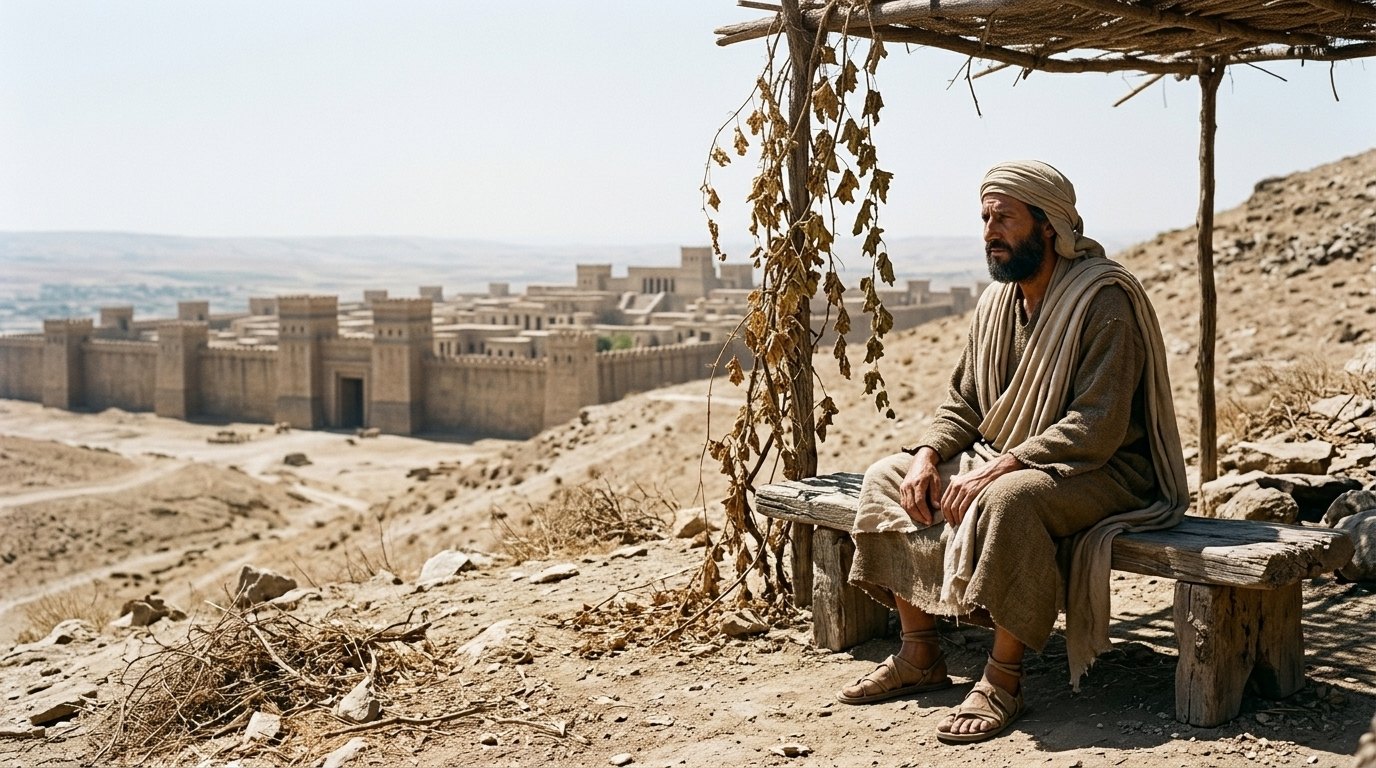
They refused to listen and failed to remember the miracles you performed among them. They became stiff-necked and in their rebellion appointed a leader in order to return to their slavery. But you are a forgiving God, gracious and compassionate, slow to anger and abounding in love. Therefore you did not desert them,
Nehemiah 9:17 (NIV)
Nehemiah recalls that even when Israel hardened their necks and appointed leaders to return to Egypt, God remained ready to pardon.
Far from displaying a quick-tempered deity, the Old Testament historical record documents breathtaking divine forbearance sustained across generations of provocation. In Nehemiah 9:17, the Levites recount Israel's wilderness wanderings, marveling that even when the people hardened their necks and sought to return to Egyptian slavery, God was ready to pardon, gracious and merciful, slow to anger, and did not forsake them. The narrative of the Old Testament is not a ledger of swift retribution, but of centuries during which God repeatedly withheld deserved judgment. As the chronicler records in 2 Chronicles 36:15, the Lord persistently sent warnings by His messengers because He had compassion on His people and His dwelling place.
David observes this miraculous restraint in Psalms 78:38, noting that God, being full of compassion, atoned for iniquity, did not destroy them, and many times turned His anger away. Through the prophets, Yahweh lays bare His interior motive: in Ezekiel 33:11, He swears by His own life that He takes no pleasure in the death of the wicked, but longs that the wicked turn from their way and live. Even in the face of persistent northern apostasy, God cries out in Hosea 11:8-9 that His heart recoils within Him, refusing to unleash His fierce wrath because He is God and not man. For His own name's sake, as affirmed in Isaiah 48:9, He deferred His anger. Joel’s call in Joel 2:13 to rend hearts rather than garments relies entirely on this reality: God relents from calamity. Jonah knew this so intimately that he fled his mission, confessing in Jonah 4:2 that he knew Yahweh was too gracious to consume Nineveh upon their repentance.
| Passage | What it says |
|---|---|
| Nehemiah 9:17 | Israel refused to obey God's wonders, yet the Lord proved ready to pardon, gracious, merciful, and slow to anger. |
| Jonah 4:2 | Jonah complains because he knew God would relent from disaster toward Nineveh due to His abundant mercy. |
| Joel 2:13 | The prophet urges Israel to rend their hearts and return because the Lord is gracious, merciful, and relents from calamity. |
| Ezekiel 33:11 | Yahweh swears by His life that He takes no pleasure in the wicked's death, but that they turn and live. |
| 2 Chronicles 36:15 | God sent persistent warnings through His messengers because He had compassion on His people and dwelling place. |
| Psalms 78:38 | God was compassionate, atoned for their iniquity, did not destroy them, and frequently restrained His wrath. |
| Isaiah 48:9 | The Lord deferred His anger and restrained His fury for His own name's sake rather than cutting Israel off. |
| Hosea 11:8-9 | God's heart recoils within Him, promising not to execute His fierce wrath because He is God and not man. |
One Testament to Another
The New Testament reveals the identical balance of wrath and mercy

But God demonstrates his own love for us in this: While we were still sinners, Christ died for us.
Romans 5:8 (NIV)
The cross demonstrates that God's wrath against sin is satisfied not by discarding justice, but by God bearing it Himself in Christ.
The common assumption that the God of the Old Testament is wrathful while Jesus reveals a deity devoid of anger is thoroughly dismantled by the New Testament text. Jesus Himself exhibits holy indignation in Mark 3:5, looking around at religious hypocrites with anger, being deeply grieved by the hardness of their hearts. The Apostle Paul explains in Romans 1:18 that the wrath of God is revealed from heaven against all ungodliness, and warns in Romans 2:5 that an unrepentant heart stores up wrath for the day of righteous judgment. The Apostle John echoes this sobering truth in John 3:36, declaring that whoever disobeys the Son will not see life, but the wrath of God remains on him, an ultimate reality depicted in Revelation 6:16-17 as the terrible wrath of the Lamb from which rulers flee.
The unity of Scripture shines brightest in the solution God provides for His own wrath. In Ephesians 2:3-5, Paul acknowledges that all people were formerly children of wrath by nature, but God, rich in mercy, made believers alive together with Christ. The apex of this divine harmony is articulated in Romans 5:8, where God proves His love toward us in that while we were yet sinners, Christ died for us. Rather than abandoning His justice or casting off His holiness, God bore the full weight of His own holy judgment on the cross. Through Romans 5:9, we are justified by His blood and saved from wrath through Him. In 2 Peter 3:9, Peter reminds the church that the delay of ultimate judgment is not divine weakness, but patient mercy, not willing that any should perish.
| Passage | What it says |
|---|---|
| Mark 3:5 | Jesus looks upon the Pharisees with anger, deeply grieved by the hardness of their hearts toward suffering. |
| Romans 1:18 | Paul reveals that God's wrath is actively unveiled against all ungodliness and unrighteousness of those suppressing the truth. |
| Romans 2:5 | Unrepentant hearts store up wrath against themselves for the day of God's righteous judgment. |
| Romans 5:8 | God demonstrates His love for us in that Christ died for our sins while we were still sinners. |
| Romans 5:9 | Believers are justified by Christ's blood and saved from the wrath of God through Him. |
| 2 Peter 3:9 | The Lord is not slow concerning His promise, but is patient, desiring that all come to repentance. |
| John 3:36 | Whoever rejects the Son will not see life, but the wrath of God remains upon him. |
| Ephesians 2:3-5 | Believers were formerly children of wrath, but God being rich in mercy made them alive together with Christ. |
| Revelation 6:16-17 | The unrepentant kings and peoples of the earth hide in terror from the wrath of the Lamb on His great day. |
Where in the Bible
| Book | Passages |
|---|---|
| Exodus | 5 · Exodus 34:6, Exodus 34:7, Exodus 32:4, Exodus 32:7, Exodus 32:10 |
| Numbers | 1 · Numbers 14:18 |
| Deuteronomy | 2 · Deuteronomy 9:7, Deuteronomy 32:16 |
| 2 Kings | 1 · 2 Kings 17:18 |
| 2 Chronicles | 1 · 2 Chronicles 36:15 |
| Nehemiah | 1 · Nehemiah 9:17 |
| Psalms | 5 · Psalms 86:15, Psalms 103:8, Psalms 145:8, Psalms 30:5, Psalms 78:38 |
| Isaiah | 1 · Isaiah 48:9 |
| Jeremiah | 1 · Jeremiah 7:18-19 |
| Ezekiel | 1 · Ezekiel 33:11 |
| Hosea | 1 · Hosea 11:8-9 |
| Joel | 1 · Joel 2:13 |
| Jonah | 1 · Jonah 4:2 |
| Micah | 1 · Micah 7:18 |
| Nahum | 2 · Nahum 1:3, Nahum 1:7 |
| Mark | 1 · Mark 3:5 |
| John | 1 · John 3:36 |
| Romans | 4 · Romans 1:18, Romans 2:5, Romans 5:8, Romans 5:9 |
| Ephesians | 1 · Ephesians 2:3-5 |
| 2 Peter | 1 · 2 Peter 3:9 |
| Revelation | 1 · Revelation 6:16-17 |
The story in order
- Israel rebels with a golden calf (c. 1450 BC) · Exodus 32:4 · God's wrath burns against obstinate rebellion after deliverance.
- Israel provokes God with idolatry (c. 1400 BC) · Deuteronomy 32:16 · Turning to strange gods provokes God's righteous anger.
- Northern Kingdom falls to Assyria (c. 722 BC) · 2 Kings 17:18 · God's wrath falls after centuries of persistent idolatry.
- Jeremiah warns of God's anger (c. 600 BC) · Jeremiah 7:18-19 · Idolatry provokes God's anger, bringing ruin.
- Jonah complains of God's mercy (c. 750 BC) · Jonah 4:2 · God relents from disaster due to His abundant mercy.
- Joel calls for repentance (c. 800 BC) · Joel 2:13 · Lord is gracious, merciful, and relents from calamity.
- Isaiah explains deferred anger · Isaiah 48:9 · The Lord deferred His anger for His own name's sake.
- Hosea recounts God's reluctance (c. 750 BC) · Hosea 11:8-9 · God's heart recoils; He will not execute fierce wrath.
- Jesus shows anger at hardness of heart (AD 30) · Mark 3:5 · Jesus looks with anger, grieved by hardness of hearts.
- Paul explains God's wrath unveiled (AD 55) · Romans 1:18 · God's wrath is unveiled against ungodliness and unrighteousness.
- Paul explains salvation from wrath (AD 55) · Romans 5:9 · Believers are saved from God's wrath through Christ.
- Peter on God's patience (AD 65) · 2 Peter 3:9 · The Lord is patient, desiring all to repent.
- Revelation depicts wrath of the Lamb (c. AD 95) · Revelation 6:16-17 · Unrepentant hide in terror from the wrath of the Lamb.
God's Patience and Judgment
| God's Character | Human Action | Divine Response | Passage |
|---|---|---|---|
| Merciful, gracious, slow to anger, abundant in mercy | Persistent rebellion and iniquity | Forgives iniquity, yet punishes unrepentant guilt | Exodus 34:6-7 |
| Slow to anger, abundant in steadfast love | Continuous provocation and rebellion | Will not acquit unrepentant oppressors | |
| Ready to pardon, gracious, merciful, slow to anger | Refused to obey God's wonders | God's wrath falls after centuries of idolatry | |
| Takes no pleasure in the wicked's death | Persistent idolatry and refusal to repent | God defers anger for His name's sake | |
| Patient, desiring all to repent | Ungodliness and unrighteousness | Wrath is actively unveiled against sinners |
Mercy and Wrath: Two Sides of God's Character
| Mercy and Patience | Wrath and Judgment | Passage |
|---|---|---|
| Merciful, gracious, slow to anger, abounding in mercy | God's anger burns against obstinate rebellion | Exodus 34:6-10 |
| Delights in steadfast mercy | Will by no means leave unrepentant guilt unpunished | |
| Compassionate, gracious, merciful, slow to anger | God's wrath fell upon the northern kingdom | |
| God is compassionate and frequently restrained His wrath | God's wrath is actively unveiled against ungodliness | |
| Christ died for us while sinners; God made us alive with Christ | Believers are justified by His blood and saved from wrath | Romans 5:8-9 |
Key words
- Longsuffering (ʼerek ʼappayim, אֶרֶךְ אַפַּיִם)
- Patient endurance of provocation and delay in punishment. · Exodus 34:6
- Mercy (ḥesed, חֶסֶד)
- Compassionate or forgiving treatment of someone. · Exodus 34:6
- Wrath (ʼēqev, עֵקֶב)
- God's settled opposition to sin and oppression. · Romans 1:18
- Repentance (metanoia, μετάνοια)
- A change of mind and heart leading to a change of direction. · 2 Peter 3:9
Recognizing that God's holy wrath is tethered to His unchanging justice and enduring mercy transforms how we read the whole Bible. Rather than dreading an arbitrary deity, we meet a holy Father who hates the sin that destroys His creation and who went to the cross Himself to rescue us from it. Turning to Him in repentance, we discover that His enduring posture toward the humble is boundless grace.
34 passages, each cited once.
Scripture cited
- Joel 2:13
- Nehemiah 9:17
- Jonah 4:2
- Exodus 32:1-14
- Ezekiel 33:10-11
- Nahum 1:2-8
- Romans 5:6-11
- Mark 3:1-6
- Romans 2:4-5
- 2 Peter 3:8-10