Are babies and children who die saved?

2 Samuel 12:22-23
22 He answered, “While the child was still alive, I fasted and wept. I thought, ‘Who knows? The LORD may be gracious to me and let the child live.’
23 But now that he is dead, why should I go on fasting? Can I bring him back again? I will go to him, but he will not return to me.”
New International Version (NIV)
The answer
Yes, there are strong biblical grounds to believe that babies who die are saved by God’s grace through Christ; Scripture does not, however, give a blanket promise that every older child is saved merely because of youth. Children are not saved because they are sinless, and death itself saves no one. Jesus says, “No one comes to the Father, except through me” (John 14:6).
The hope for babies and very young children
The clearest glimpse comes after the death of David’s infant son. David worshiped God and then said, “I will go to him, but he will not return to me” (2 Samuel 12:20-23). David’s comfort was the expectation of going to his child, giving grieving parents substantial grounds for hope. This statement is not, by itself, a formal declaration concerning every child.
Other passages support that hope without turning it into an automatic rule:
- God recognizes limited moral understanding. In Deuteronomy 1:39, God distinguishes children who “today have no knowledge of good or evil” from the adults who knowingly rebelled. Entering Canaan was not itself eternal salvation, so this verse does not prove the whole case; it does show that capacity matters in God’s dealings.
- Jesus receives little children. He says, “Allow the little children, and don’t forbid them to come to me; for the Kingdom of Heaven belongs to ones like these” (Matthew 19:14). This does not declare every child converted, but it plainly shows Jesus’ gracious welcome toward them.
- God is not limited by an infant’s inability to make a verbal confession. New birth is the Spirit’s work, and Jesus compares the Spirit to wind that “blows where it wants to” (John 3:8). Scripture does not fully explain how God applies Christ’s saving work to those incapable of understanding the gospel.
Two safeguards
First, children need grace too. David says, “I was born in iniquity. My mother conceived me in sin” (Psalm 51:5), and Romans 5:12,18 describes humanity’s fall and condemnation in Adam. The basis for hope is therefore God’s mercy in Christ, not a claim that babies have no fallen nature.
Second, Scripture names no “age of accountability.” A child who can understand sin and the gospel is called to respond personally: “if you will confess with your mouth that Jesus is Lord and believe in your heart that God raised him from the dead, you will be saved” (Romans 10:9). No arbitrary birthday should be used either to presume salvation or to deny God’s mercy.
Where the details remain unrevealed, God’s character is certain. Genesis 18:25 asks, “Shouldn’t the Judge of all the earth do right?” Babies and young children who die can be entrusted to the God who is perfectly just and merciful, with real encouragement from David’s hope and Jesus’ welcome.
Answered from Scripture · reviewed November 11, 2026
Scripture brings profound comfort to grieving parents by revealing that infants and young children who die are gathered into the arms of God. While born under the fallen shadow of Adam's race, these little ones are redeemed not by their own native innocence, but through the boundless, sovereign grace of Jesus Christ. From David's confident hope of eternal reunion to Jesus welcoming toddlers into His presence, the Bible presents a God whose mercy covers the helpless.
David's Grief and Confidence
David expects to be reunited with his deceased infant
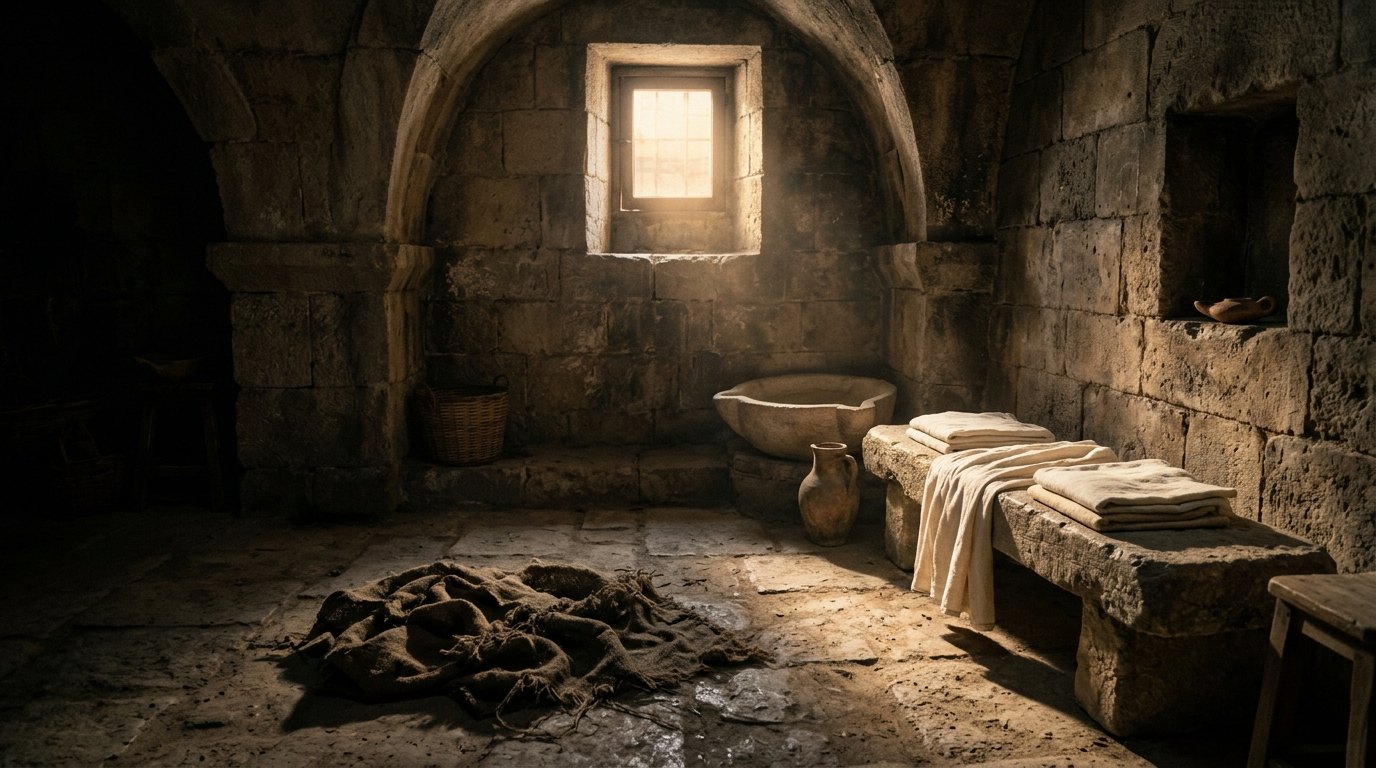
But now that he is dead, why should I go on fasting? Can I bring him back again? I will go to him, but he will not return to me.”
2 Samuel 12:23 (NIV)
David grounds his peace after intense bereavement in the absolute certainty that he will be reunited with his child in the presence of God.
When David’s newborn son is struck with a fatal illness in 2 Samuel 12:15, the king plunges into bitter mourning, prostrating himself on the ground in continuous fasting (2 Samuel 12:16-17). Yet the moment word arrives that the boy has died, David does something that astonishes his court: he washes, anoints himself, enters the house of the Lord to worship, and asks for food (2 Samuel 12:18-20). In 2 Samuel 12:21-22, he explains that his fasting was an appeal while life remained, pleading that the Lord might be gracious and spare the infant. Then comes the pinnacle of his confession in 2 Samuel 12:23: “I shall go to him, but he will not return to me.” David does not mean merely that he too will one day die and descend into the grave; such a grim inevitability could never inspire worship, joy, or an end to fasting. Instead, David rests his soul in the certainty of conscious, everlasting reunion. He knows the character of his covenant God, confident that his helpless child has been welcomed into the presence of the Lord, where the father will eventually follow.
| Passage | What it says |
|---|---|
| 2 Samuel 12:16-17 | David pleads with God and fasts on the ground while the newborn child is mortally stricken. |
| 2 Samuel 12:18-20 | Upon hearing the child has died, David washes, anoints himself, changes apparel, and worships the Lord. |
| 2 Samuel 12:21-22 | David explains that fasting during the child's illness was an appeal to God's gracious will to preserve life. |
| 2 Samuel 12:23 | David declares that while the dead child cannot return to him, he will go to the child. |
| 2 Samuel 12:15 | The Lord strikes the child born to David and Bathsheba with a severe sickness. |
Original Sin and Grace
Salvation comes through Christ alone, not innate human innocence

Consequently, just as one trespass resulted in condemnation for all people, so also one righteous act resulted in justification and life for all people. For just as through the disobedience of the one man the many were made sinners, so also through the obedience of the one man the many will be made righteous.
Romans 5:18-19 (NIV)
Paul shows that Christ's obedience and free gift abundantly overcome the inherited condemnation that entered humanity through Adam.
Scripture never bases the salvation of deceased infants upon native moral purity. Job asks plainly who can bring a clean thing out of an unclean person (Job 14:4), Genesis 8:21 affirms that the intention of man's heart is evil from youth, and David laments in Psalm 51:5 and Psalm 58:3 that humanity is shaped in iniquity and alienated from the womb. Romans 3:23 and Romans 5:12 declare that all have sinned and that death entered the world through Adam's initial transgression, leaving all people by nature children of wrath (Ephesians 2:3). Infants inherit this fallen condition, yet their salvation is grounded in something far greater than human weakness: the sovereign, redeeming obedience of Jesus Christ on behalf of the helpless. As Romans 5:18-19 reveals, just as one trespass brought condemnation to all, so one righteous act brings justification and life, for as in Adam all die, so in Christ shall all be made alive (1 Corinthians 15:22). God's saving grace has appeared for all people (Titus 2:11), applying the blood of the cross to infants who could never exercise conscious faith.
| Passage | What it says |
|---|---|
| Genesis 8:21 | God declares that the imagination and inclination of man's heart is evil from his youth. |
| Psalms 51:5 | David confesses that he was brought forth in iniquity and conceived in sin. |
| Romans 3:23 | Scripture establishes that all have sinned and fallen short of the glory of God. |
| Romans 5:12 | Sin entered the human world through one man, Adam, and death spread to all humanity. |
| Romans 5:18-19 | Just as one trespass led to condemnation, one act of righteousness brings justification and life. |
| 1 Corinthians 15:22 | As in Adam all die, so also in Christ all shall be made alive. |
| Titus 2:11 | The saving grace of God has appeared, bringing salvation to all men. |
| Job 14:4 | Job asks who can bring a clean thing out of an unclean person. |
| Psalms 58:3 | The wicked go astray from the womb, speaking lies from birth. |
| Ephesians 2:3 | All humanity were by nature children of wrath, like the rest of mankind. |
Christ Embraces the Helpless
Jesus claims little children as citizens of His kingdom

Jesus said, “Let the little children come to me, and do not hinder them, for the kingdom of heaven belongs to such as these.”
Matthew 19:14 (NIV)
Jesus explicitly commands His disciples not to hinder the little ones, identifying the kingdom of heaven as belonging to such as these.
In Matthew 19:14, the Lord Jesus gives one of His most emphatic commands concerning little ones: “Let the little children come to me and do not hinder them, for to such belongs the kingdom of heaven.” When disciples rebuke parents bringing infants to Him, Christ reacts with holy indignation, taking the babies into His arms and pronouncing God's tender blessing over them (Mark 10:13-16; Luke 18:15-17). He presents little children as living emblems of how anyone must enter His kingdom, pointing to their utter dependence and humility (Matthew 18:1-4). Receiving a child in His name is counted as receiving Christ Himself, accompanied by stern warnings against causing such little ones to stumble (Matthew 18:5-6). Furthermore, the Savior pulls back the veil of heaven in Matthew 18:10, declaring that their angels continually behold the face of His Father, and seals His shepherd-heart in Matthew 18:14 with the promise that it is not the will of the heavenly Father that a single one of these little ones should ever perish.
| Passage | What it says |
|---|---|
| Matthew 18:1-4 | Jesus places a little child in the midst of disciples as the model of kingdom humility. |
| Matthew 18:10 | Jesus warns against despising little ones, whose angels always behold the Father's face in heaven. |
| Matthew 18:14 | The Father in heaven is not willing that one of these little ones should perish. |
| Matthew 19:13-15 | Jesus lays His hands on infants to bless them after rebuking the disciples who turned them away. |
| Mark 10:13-16 | Jesus is indignant at the disciples, embraces young children, and pronounces God's blessing on them. |
| Luke 18:15-17 | People bring nursing infants to Jesus, and He proclaims that anyone entering the kingdom must receive it as a child. |
| Matthew 18:5-6 | Receiving a child in Christ's name receives Him, and warning against offending little ones. |
Fashioned in the Womb
God knows, values, and preserves the unborn and newly born

For you created my inmost being; you knit me together in my mother’s womb. I praise you because I am fearfully and wonderfully made; your works are wonderful, I know that full well. My frame was not hidden from you when I was made in the secret place, when I was woven together in the depths of the earth. Your eyes saw my unformed body; all the days ordained for me were written in your book before one of them came to be.
Psalms 139:13-16 (NIV)
The psalmist marvels at God's direct, intimate involvement in forming every human frame before birth and recording every day ordained for it.
The Lord's sovereign care does not begin at birth; it encompasses human life from its earliest hidden beginnings. In Psalm 139:13-16, David marvels that God intricately wove his frame in secret, asserting that all the days ordained for him were written in God's book before one of them came to be. Job similarly testifies that God's hands fashioned him like clay, granting life, steadfast love, and watchful preservation (Job 10:8-12), and observes that stillborn infants find peaceful rest beyond the afflictions of this present world (Job 3:11-19). God consecrated Jeremiah before He formed him in the belly (Jeremiah 1:5), and Psalm 22:9-10 alongside Psalm 71:5-6 declares that the Lord was the psalmist's trust from his mother’s womb. Most vividly, Luke 1:15 and Luke 1:41-44 show John the Baptist filled with the Holy Spirit while still unborn, leaping for joy within Elizabeth at the presence of the unborn Messiah. God knows, claims, and sanctifies His smallest creatures long before they can speak.
| Passage | What it says |
|---|---|
| Job 10:8-12 | Job acknowledges that God fashioned him intricately and bestowed life, steadfast love, and watchful care. |
| Job 3:11-19 | Job describes stillborn infants resting peacefully and free from suffering in the realm beyond death. |
| Psalms 139:13-16 | The Lord knits the child together in the mother's womb and ordains all their days before they exist. |
| Jeremiah 1:5 | God consecrates and knows Jeremiah before forming him in his mother's womb. |
| Luke 1:41-44 | John the Baptist leaps with holy joy in Elizabeth's womb at the presence of the unborn Lord. |
| Psalms 22:9-10 | God brought the psalmist from the womb and caused him to trust at his mother's breasts. |
| Psalms 71:5-6 | The psalmist declares God has been his trust and reliance from the womb. |
| Luke 1:15 | John the Baptist is filled with the Holy Spirit while still inside his mother's womb. |
Moral Capacity and Divine Justice
God holds accountable those who consciously choose rebellion

And the little ones that you said would be taken captive, your children who do not yet know good from bad—they will enter the land. I will give it to them and they will take possession of it.
Deuteronomy 1:39 (NIV)
God explicitly distinguishes young children who have no knowledge of good and evil from the accountable adults who rebelled.
In Deuteronomy 1:39, God offers a remarkable revelation of how His justice interacts with human development: "your little ones... who today have no knowledge of good or evil, they shall go in there." While their parents faced the consequences of willful unbelief, God explicitly exempted those who lacked the moral capacity to comprehend rebellion. Scripture maintains this developmental distinction consistently. Isaiah 7:15-16 speaks of a developmental span before an infant possesses the understanding to refuse evil and choose good. Similarly, when the Lord expresses pity over Nineveh in Jonah 4:11, He singles out the more than one hundred and twenty thousand persons who could not discern between their right hand and their left. The Lord of heaven accounts for the limitations of the helpless.
This principle carries directly into the New Testament's doctrine of accountability. Jesus explained to the Pharisees in John 9:41 that if they were truly blind, they would not be guilty of sin, but because they claimed sight, their guilt remained. Divine condemnation universally addresses the willful suppression of known truth. As Romans 1:18-20 demonstrates, God’s wrath is poured out against those who suppress the truth revealed in creation, rendering them without excuse because they perceived it and yet rebelled. Infants and young children have never exercised that capacity to perceive, suppress, and reject God's revelation. Paul reflects in Romans 7:9 on being alive once apart from the law's conscious awakening of sin. Furthermore, when the biblical authors depict final judgment, as in 2 Corinthians 5:10 and Revelation 20:12-13, the standard is explicitly defined as the deeds done in the body recorded in the books. Little children who pass away have committed no conscious, deliberate deeds of wickedness against their Creator. We stand confident in Genesis 18:25, resting our hope in the unwavering truth that the Judge of all the earth will do right.
| Passage | What it says |
|---|---|
| Deuteronomy 1:39 | The little ones who had no knowledge of good or evil enter the promised inheritance spared from judgment. |
| Isaiah 7:15-16 | The prophet marks an age before which a young child does not know to refuse evil and choose good. |
| Jonah 4:11 | The Lord expresses compassion for Nineveh's more than sixscore thousand who cannot discern their right hand from their left. |
| John 9:41 | Jesus tells the Pharisees that if they were truly blind they would not have guilt, but their sight confirms their sin. |
| Romans 1:18-20 | God's wrath falls upon those who suppress the truth they perceive through creation, leaving them without excuse. |
| Romans 7:9 | Paul recounts being alive once without the conscious knowledge and activation of the law before commandment revived sin. |
| Genesis 18:25 | Abraham affirms that the Judge of all the earth will certainly do what is right. |
| 2 Corinthians 5:10 | Judgment before the judgment seat of Christ is based on deeds done in the body. |
| Revelation 20:12-13 | The dead are judged each according to what they had done, recorded in the books. |
The Innocent Slain
God Claims the Little Ones Lost to Evil

You slaughtered my children and sacrificed them to the idols.
Ezekiel 16:21 (NIV)
God explicitly calls the slaughtered infants 'my children,' showing His personal ownership and care over helpless little ones.
When Judah succumbed to the atrocities of pagan worship, the Lord leveled an accusation through Ezekiel that exposes His tender claim over the vulnerable: "You slaughtered my children and delivered them up as an offering by fire to them" (Ezekiel 16:21). In the midst of denouncing horrific apostasy, God did not view those sacrificed babies as mere casualties of earthly parents; He claimed them as His own. Ezekiel 16:20-21 underscores that those murdered before idol shrines belonged by covenant and divine tenderness to Yahweh Himself. The Lord repeatedly defends the defenseless, explicitly condemning the slaughter of little ones in Jeremiah 19:4-5 as the shedding of the blood of the innocent.
God's special care for dying children shines even in grim chapters of biblical history. In 1 Kings 14:12-13, when judgment swept over the house of Jeroboam, God took the life of his young son so that he might receive an honorable burial, noting that in this child alone something good toward the Lord God of Israel was found. Even the deep grief of bereavement is met with sovereign promise. Jeremiah 31:15-17 portrays Rachel weeping inconsolably for her children, yet the Lord commands her to restrain her voice from weeping and her eyes from tears, assuring her: "there is hope for your future... and your children shall come back to their own country." This prophecy found an immediate, agonizing shadow when Herod massacred the infants of Bethlehem in Matthew 2:16-18. Even in the face of brutal earthly tyranny, God’s promise stands unbroken: the little ones wrenched from life by the world's wickedness are not lost into oblivion, but gathered forever into the sovereign custody of their Father in heaven.
| Passage | What it says |
|---|---|
| 1 Kings 14:12-13 | Jeroboam's child dies and is mourned because something pleasing to the Lord was found in him. |
| Ezekiel 16:20-21 | The Lord calls the children slain in pagan sacrifice 'my children' whom they slaughtered. |
| Jeremiah 19:4-5 | God refers to the infants sacrificed to Baal as the blood of the innocent. |
| Jeremiah 31:15-17 | Rachel weeps for her children, but God promises hope that they shall return from death's land. |
| Matthew 2:16-18 | Herod slaughters the infants in Bethlehem, fulfilling the mourning spoken of by Jeremiah. |
Where in the Bible
| Book | Passages |
|---|---|
| Genesis | 2 · Genesis 8:21, Genesis 18:25 |
| Deuteronomy | 1 · Deuteronomy 1:39 |
| 2 Samuel | 5 · 2 Samuel 12:16-17, 2 Samuel 12:18-20, 2 Samuel 12:21-22, 2 Samuel 12:23, 2 Samuel 12:15 |
| 1 Kings | 1 · 1 Kings 14:12-13 |
| Job | 3 · Job 14:4, Job 10:8-12, Job 3:11-19 |
| Psalms | 5 · Psalms 51:5, Psalms 58:3, Psalms 139:13-16, Psalms 22:9-10, Psalms 71:5-6 |
| Isaiah | 1 · Isaiah 7:15-16 |
| Jeremiah | 3 · Jeremiah 1:5, Jeremiah 19:4-5, Jeremiah 31:15-17 |
| Ezekiel | 1 · Ezekiel 16:20-21 |
| Jonah | 1 · Jonah 4:11 |
| Matthew | 6 · Matthew 18:1-4, Matthew 18:10, Matthew 18:14, Matthew 19:13-15, Matthew 18:5-6, Matthew 2:16-18 |
| Mark | 1 · Mark 10:13-16 |
| Luke | 3 · Luke 18:15-17, Luke 1:41-44, Luke 1:15 |
| John | 1 · John 9:41 |
| Romans | 5 · Romans 3:23, Romans 5:12, Romans 5:18-19, Romans 1:18-20, Romans 7:9 |
| 1 Corinthians | 1 · 1 Corinthians 15:22 |
| 2 Corinthians | 1 · 2 Corinthians 5:10 |
| Ephesians | 1 · Ephesians 2:3 |
| Titus | 1 · Titus 2:11 |
| Revelation | 1 · Revelation 20:12-13 |
The story in order
- God forms us in the womb (c. 1000 BC) · Psalms 139:13-16 · God knows and plans our days before we exist.
- David's infant dies (c. 1000 BC) · 2 Samuel 12:15 · David grieves but trusts God's will.
- Job questions life and death (c. 1000 BC) · Job 3:11-19 · Job describes peaceful rest for stillborn infants.
- Man's heart is evil from youth (c. 2300 BC) · Genesis 8:21 · Innate human inclination is not innocent.
- Adam's sin brings death (c. AD 60) · Romans 5:12 · Sin and death spread to all humanity.
- Jesus welcomes little children (c. AD 30) · Matthew 19:13-15 · Jesus blesses infants and claims them for His kingdom.
- Angels of little ones see God (c. AD 30) · Matthew 18:10 · God's care extends to the smallest believers.
- Herod slaughters Bethlehem's infants (c. 4 BC) · Matthew 2:16-18 · Innocent children are victims of evil.
- God's grace saves all (c. AD 65) · Titus 2:11 · God's saving grace is available to all.
- Judgment for deeds done (c. AD 95) · Revelation 20:12-13 · All are judged according to their actions.
Key words
- Iniquity (עָוֹן (ʿāwōn))
- Wickedness, sinfulness, or moral corruption. · Psalms 51:5
- Grace (χάρις (charis))
- God's unmerited favor and kindness towards humanity. · Titus 2:11
- Righteousness (δικαιοσύνη (dikaiosynē))
- The quality of being morally right or justifiable; God's perfect standard. · Romans 5:18-19
- Wrath (ὀργή (orgē))
- Divine anger or retribution against sin and ungodliness. · Ephesians 2:3
- Perish (ἀπόλλυμι (apollymi))
- To suffer complete destruction or ruin; to die. · Matthew 18:14
Believers who mourn the loss of an infant or young child do not grieve as those who have no hope. You can rest in the unchanging mercy of a heavenly Father whose sovereign grace in Jesus Christ reaches to the smallest and weakest among us. The day approaches when every sorrow will be wiped away, and parents who love the Lord will see their little ones rejoicing before His throne.
44 passages, each cited once.
How the major Christian traditions read this
All major Christian traditions confess that infants inherit a fallen nature through Adam and can only be saved through the grace and redeeming blood of Jesus Christ, who welcomed little children into His kingdom (Psalm 51:5; Romans 5:12; Matthew 19:14).
Catholic
We hold that every child is born sharing in original sin and in need of redemption (Psalm 51:5; Romans 5:12). In the Church's sacrament of baptism, that guilt is washed away, regenerating the infant into the life of grace (John 3:5). For babies who die before baptism can be administered, the Church does not dogmatically define their state but entrusts them with earnest hope to the boundless mercy of God. Because God desires all people to be saved (1 Timothy 2:4) and Christ tenderly welcomed little children (Mark 10:14), we have strong grounds to hope that divine mercy provides a way of salvation beyond the visible sacraments.
Scripture: Psalms 51:5, Romans 5:12, John 3:5, 1 Timothy 2:4, Mark 10:14
Orthodox
We teach that infants inherit mortality and the fallen condition of ancestral sin, which is why holy baptism and chrismation are administered to them to grant new life in Christ (John 3:5; Romans 5:12). For those infants who depart this earthly life unbaptized, we do not presume to limit the unsearchable compassion of the Holy Trinity. Because Christ took on human nature to heal it and declared that the kingdom belongs to such as these (Matthew 19:14), we commit departed little ones directly to God's tender mercy and love, praying for their souls with trust in His boundless goodness and justice.
Scripture: John 3:5, Romans 5:12, Matthew 19:14
Lutheran
We confess that all human beings are conceived in sin and under condemnation (Psalm 51:5). Baptism is an ordinary means of grace instituted by Christ through which He grants regeneration and faith even to infants (Augsburg Confession 9; Matthew 28:19). Yet while God binds us to His sacraments, He is not Himself bound by them. When an infant dies without baptism, Christian parents take comfort in the prayers of faith and the promise of a gracious Savior who embraced the little ones (Mark 10:14). We rest on David’s confident hope regarding his deceased child: 'I will go to him, but he will not return to me' (2 Samuel 12:23).
Scripture: Psalms 51:5, Matthew 28:19, Mark 10:14, 2 Samuel 12:23
Reformed & Presbyterian
We confess that infants are fallen in Adam, needing the sovereign grace of Christ (Romans 5:18). Salvation belongs entirely to God’s free election. As our historic confessions express, elect infants dying in infancy are regenerated and saved by Christ through the Spirit, who works when, where, and how He pleases (John 3:8). The children of believers are born within the covenant of grace and are holy unto the Lord (1 Corinthians 7:14; Genesis 17:7). Believing parents rest on God's covenant promises and David's assurance that he would see his departed infant again (2 Samuel 12:23), trusting the righteous Judge of all the earth to do right.
Scripture: Romans 5:18, John 3:8, 1 Corinthians 7:14, Genesis 17:7, 2 Samuel 12:23
Anglican & Episcopal
We teach that every child is born with original fault and corruption (Article 9; Psalm 51:5), which makes Christ’s redemptive work necessary for every soul. In baptism, infants are received into Christ's flock and given the sign and seal of new birth. When infants die before receiving baptism, our liturgy and pastoral care commit them into the hands of a faithful Creator and most merciful Savior. Relying on Scripture alone for doctrine (Article 6), we cling to the words of Jesus, who received the little children (Matthew 19:14), and David’s hopeful peace (2 Samuel 12:23), confident that God's mercy surpasses human weakness.
Scripture: Psalms 51:5, Matthew 19:14, 2 Samuel 12:23
Baptist
We hold that all infants are conceived with an inherited sin nature from Adam (Psalm 51:5; Romans 5:12). However, Scripture shows that God does not hold infants accountable for willful transgression before they possess moral awareness to choose between good and evil (Deuteronomy 1:39; Romans 1:20). While baptism is reserved solely for conscious believers upon profession of faith, infants who die are covered by the atonement of Christ. David knew his deceased infant was with the Lord when he declared, 'I will go to him' (2 Samuel 12:23). Jesus also affirmed that 'the Kingdom of Heaven belongs to ones like these' (Matthew 19:14).
Scripture: Psalms 51:5, Romans 5:12, Deuteronomy 1:39, Romans 1:20, 2 Samuel 12:23
Methodist & Wesleyan
We teach that while original sin affects all humanity (Romans 5:12), the universal atonement of Jesus Christ applies immediately to infants and young children who lack the capacity to respond to the gospel. Through Christ's prevenient grace, the condemnation inherited from Adam is removed for all dying in infancy (Romans 5:18). They are preserved in grace until they reach a stage of moral accountability where they can consciously choose faith or rebellion. We point to Jesus' warm welcome of little children (Luke 18:16) and David's confident hope in reunion with his lost child (2 Samuel 12:23) as evidence of God's abundant saving love.
Scripture: Romans 5:12, Romans 5:18, Luke 18:16, 2 Samuel 12:23
Pentecostal & Charismatic
We believe that the blood of Jesus Christ provides full redemption for all who perish in infancy. Although born with the stain of the fall (Psalm 51:5), young children cannot understand the gospel, repent, or believe (Mark 16:16). Until a child reaches the ability to discern right from wrong and knowingly sin against God (Deuteronomy 1:39), they are kept by God’s marvelous grace. Jesus laid His hands on the children and declared that the kingdom of God belongs to them (Matthew 19:14). We hold total confidence that deceased infants are carried straight into the presence of the Lord (2 Samuel 12:23).
Scripture: Psalms 51:5, Mark 16:16, Deuteronomy 1:39, Matthew 19:14, 2 Samuel 12:23
Non-denominational & Evangelical
We teach that no infant is saved by their own innocence, for all inherit fallenness in Adam (Romans 3:23; 5:12). Rather, babies who die are saved exclusively by the sovereign grace and finished work of Jesus Christ. Scripture distinguishes those who lack knowledge of good and evil (Deuteronomy 1:39) and emphasizes that eternal judgment is based on deeds done in the body and light rejected (Romans 1:20; 2 Corinthians 5:10). Since babies cannot consciously accept or reject Christ, we trust David's inspired assurance that he would see his child again in the presence of God (2 Samuel 12:23; Matthew 19:14).
Scripture: Romans 3:23, Romans 5:12, Deuteronomy 1:39, Romans 1:20, 2 Samuel 12:23
Where they differ
The role of baptism in salvation
- Catholic
- Baptism is the normative means of washing away original sin for salvation.
- Orthodox
- Baptism is the ordained mystery initiating infants into new divine life.
- Lutheran
- Baptism is God's ordinary means of regeneration, though God remains unconstrained.
- Reformed & Presbyterian
- Baptism seals the covenant; election, not the rite, determines ultimate salvation.
- Anglican & Episcopal
- Baptism brings infants into grace, yet unbaptized infants are commended to mercy.
- Baptist
- Baptism is solely for believers; it plays no part in infant salvation.
- Methodist & Wesleyan
- Baptism marks covenant entry, but Christ's universal grace preserves all dying infants.
- Pentecostal & Charismatic
- Baptism requires personal faith; dying infants are saved directly by Christ's blood.
- Non-denominational & Evangelical
- Baptism is an outward symbol; salvation rests entirely on Christ's direct atonement.
Scripture: John 3:5, Titus 3:5, 1 Peter 3:21
Basis for assurance of infant salvation
- Catholic
- Entrusted to God's extraordinary mercy beyond the regular means of baptism.
- Orthodox
- Left to the compassionate love and unsearchable mercy of the Holy Trinity.
- Lutheran
- Grounded in God's fatherly promise and Christ's gracious invitation to little children.
- Reformed & Presbyterian
- Grounded in God's sovereign electing grace and covenant promises to faithful families.
- Anglican & Episcopal
- Grounded in Christ's pastoral welcome of children and His all-sufficient sacrifice.
- Baptist
- Grounded in the lack of conscious moral rebellion and Christ's finished atonement.
- Methodist & Wesleyan
- Grounded in prevenient grace canceling Adam's condemnation until moral accountability begins.
- Pentecostal & Charismatic
- Grounded in the direct application of Jesus' blood prior to willful transgression.
- Non-denominational & Evangelical
- Grounded in God's justice, Christ's atonement, and the absence of light rejected.
Scripture: 2 Samuel 12:23, Deuteronomy 1:39, Romans 5:18, Matthew 19:14
Your pastor can tell you where your church stands.
Scripture cited
- 2 Samuel 12:13-23
- Deuteronomy 1:34-39
- Matthew 19:13-15
- Psalms 51:1-5
- Romans 5:12-19
- Genesis 18:25
- John 14:6
- Romans 10:9-14
- John 3:3-8