Can a Christian get a tattoo?
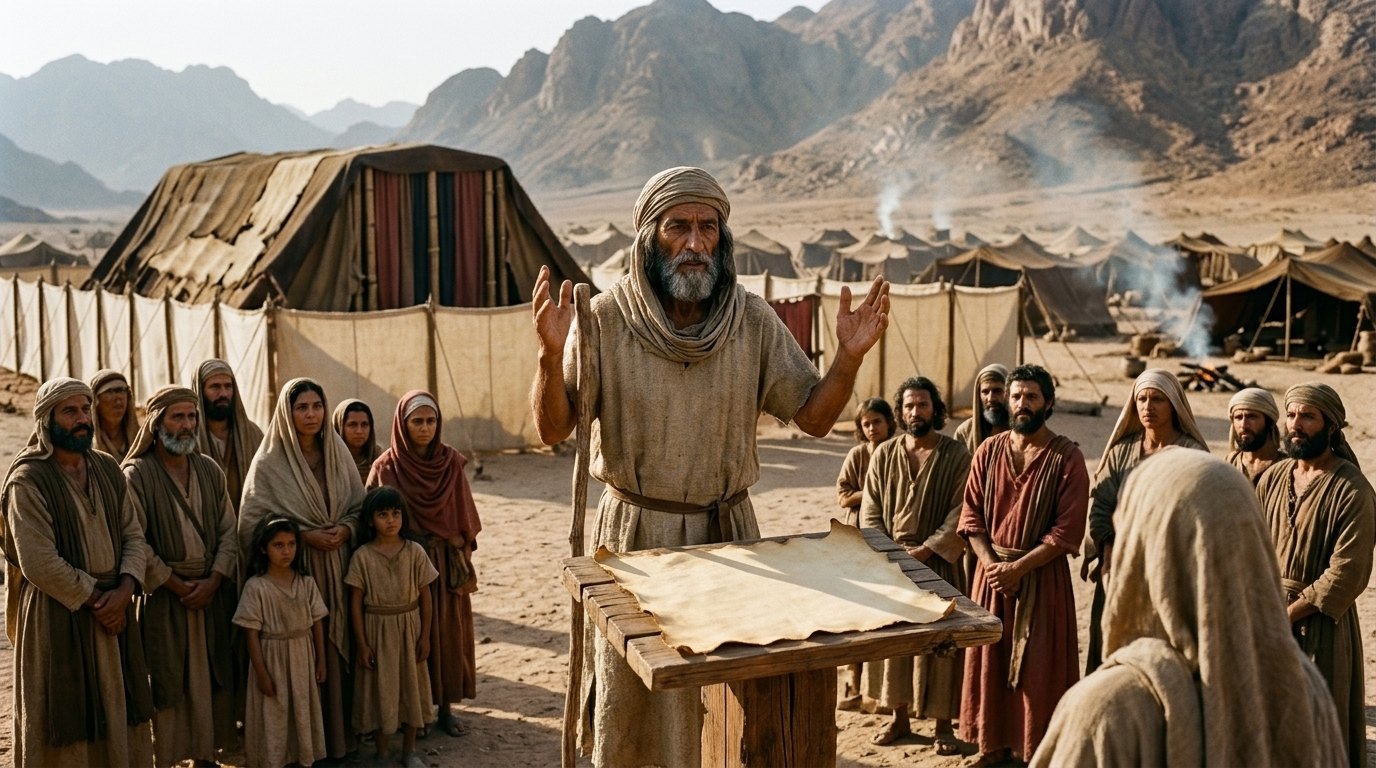
Leviticus 19:28
28 “ ‘Do not cut your bodies for the dead or put tattoo marks on yourselves. I am the LORD.
New International Version (NIV)
The answer
Yes—a Christian may get a tattoo. Scripture does not give Christians a blanket prohibition. A tattoo is sinful when it belongs to idolatrous, occult, or pagan mourning practice, or when its design or purpose dishonours God. Otherwise, it is a personal decision to make before the Lord, remembering that the body belongs to Him.
What Leviticus 19:28 forbids
Leviticus 19:28 says: “You shall not make any cuttings in your flesh for the dead, nor tattoo any marks on you. I am Yahweh.” This command was given to Israel within its holiness law, and its setting concerns pagan mourning and religious practices.
Related passages confirm that setting: Deuteronomy 14:1 and Jeremiah 16:6 connect cutting the body with mourning for the dead, while 1 Kings 18:28 describes Baal’s prophets cutting themselves in idolatrous worship. The verse therefore plainly condemns markings used in such practices; it should not be detached from that setting and turned into an unconditional ban on every modern tattoo.
How a Christian should decide
A command from the Mosaic law does not automatically bind Christians in the same form; the New Testament establishes what governs Christian conduct, and it gives no general prohibition of tattoos. The permanent moral boundary remains: God’s people must not participate in idolatry or use their bodies in the service of false gods.
1 Corinthians 6:19-20 teaches that the Christian’s body is a temple of the Holy Spirit and belongs to God, so the deciding question is whether the tattoo glorifies Him. Its image, words, purpose, and associations must not involve idolatry, occultism, blasphemy, obscenity, or anything else Scripture condemns. A morally neutral or honourable design is not sinful simply because it is a tattoo.
Where God leaves a matter open, Romans 14:5-6 calls each believer to be fully convinced and act for the Lord, and Romans 14:12 says each person will give an account to God. Christians should therefore neither condemn one another over what Scripture does not condemn nor act carelessly: the design, motives, associations, cost, and effect on others should all be weighed honestly before God.
Answered from Scripture · reviewed November 12, 2026
Scripture does not issue an absolute prohibition against tattoos for believers under the New Covenant. The Mosaic law specifically outlawed ritual cuttings and marks tied to pagan mourning rites and idol worship, whereas Christian liberty calls believers to weigh their motives, conscience, and bodily stewardship under Christ. The governing principle for any permanent mark on the skin is whether it honors God as Lord of the body.
The Old Covenant Prohibition
God Forbids Pagan Mourning Rituals and Marks
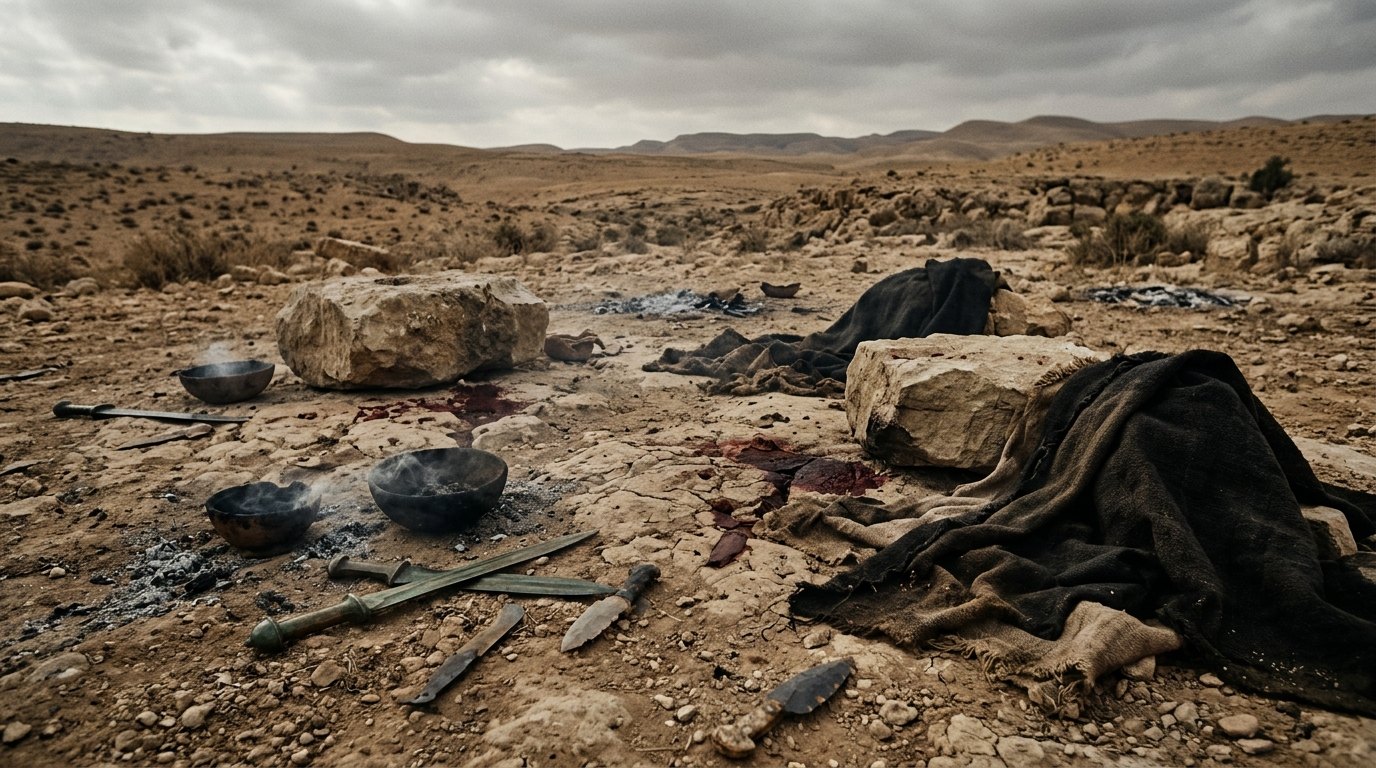
“ ‘Do not cut your bodies for the dead or put tattoo marks on yourselves. I am the LORD.
Leviticus 19:28 (NIV)
It directly forbids cuttings for the dead and indelible marks, setting Israel apart from pagan funeral customs.
In Leviticus 19:28, the Lord gives a direct command to Israel: "You shall not make any cuts on your body for the dead or tattoo yourselves: I am the Lord." This prohibition sat squarely within the ceremonial and moral landscape of the ancient Near East, where surrounding nations practiced ritual self-mutilation and permanent body markings to placate ancestral spirits, mourn the deceased, and identify with territorial deities. God separated His covenant people from such practices, asserting His sovereign authority over their flesh with the concluding phrase, "I am the Lord." The Levitical priesthood received an identical charge in Leviticus 21:5, which forbade priests from shaving bald spots on their heads or making gashes in their flesh. In Deuteronomy 14:1, Moses reiterated this boundary to the entire congregation, reminding them that as children of the Lord their God, they were not to gash themselves or shave their foreheads on behalf of the dead.
Scripture repeatedly links ritual flesh-cutting with pagan devotion and spiritual darkness. During the showdown on Mount Carmel, the false prophets frantically pleaded with their deity, and as recorded in 1 Kings 18:28, "they cried aloud and cut themselves after their custom with swords and lances until the blood gushed out upon them." These cuttings were intended to awaken and appease a false god. Later prophetic texts reveal how deeply ingrained these mourning customs remained in the region. Jeremiah 16:6 warns of Judah's coming exile, noting that bereavement would be so widespread that customary funeral gashes would cease. In Jeremiah 48:37, judgment falls upon Moab, leaving mourners weeping with shaved heads and slashed hands, while Jeremiah 41:5 records grieving men arriving from northern cities with torn garments and self-inflicted wounds. The Old Covenant prohibition addressed idolatrous, superstitious, and morbid uses of the body, establishing that God's people must never mimic the pagan rituals of death and false worship.
| Passage | What it says |
|---|---|
| Leviticus 19:28 | Forbids cutting the flesh for the dead or imprinting any tattoo marks, concluding with the declaration of God's authority. |
| Leviticus 21:5 | Commands priests not to shave bald spots on their heads, trim their beard edges, or make cuttings in their flesh. |
| Deuteronomy 14:1 | Forbids the children of Israel from cutting themselves or shaving their foreheads in mourning for the dead. |
| 1 Kings 18:28 | Records the prophets of Baal cutting themselves with swords and lances to invoke their false deity. |
| Jeremiah 16:6 | Describes a devastating judgment in Judah where customary funeral cuttings and baldness would cease among the dead. |
| Jeremiah 48:37 | Depicts judgment on Moab where mourners shave their heads, cut their beards, and make cuttings on their hands. |
| Jeremiah 41:5 | Men from Shechem, Shiloh, and Samaria arrive with shaved beards, torn clothes, and mourning gashes on their bodies. |
The Temple of God
The Body Belongs Completely to the Lord
Do you not know that your bodies are temples of the Holy Spirit, who is in you, whom you have received from God? You are not your own; you were bought at a price. Therefore honor God with your bodies.
1 Corinthians 6:19-20 (NIV)
It defines the believer's physical body as the Holy Spirit's sanctuary, purchased by God at great cost.
The Apostle Paul addresses the believer's physical body in 1 Corinthians 6:19-20 with a decisive foundation: "Or do you not know that your body is a temple of the Holy Spirit within you, whom you have from God? You are not your own, for you were bought with a price. So glorify God in your body." For the Christian, physical existence is never trivial or disconnected from spiritual life. Christ did not purchase a disembodied soul; He redeemed the whole person by His blood on the cross. Therefore, the skin, bones, and breath of the believer are consecrated space, inhabited by God's Spirit. Any decision to mark, alter, or adorn the flesh must begin with this governing truth: the body belongs wholly to its Creator and Redeemer.
Because the body is consecrated to God, Paul urges in Romans 12:1 that believers "present your bodies as a living sacrifice, holy and acceptable to God, which is your spiritual worship." This dedication shapes every practical choice. In 1 Corinthians 10:31, Scripture establishes the universal standard for Christian behavior: "So, whether you eat or drink, or whatever you do, do all to the glory of God." When considering a tattoo, the Christian must examine whether the image, motive, and placement magnify the Lord or draw attention to self and fleshly vanity. Paul captured this posture in Philippians 1:20, expressing his eager longing that "Christ will be honored in my body, whether by life or by death." Sanctification encompasses the entirety of our created being. As Paul prays in 1 Thessalonians 5:23, "May the God of peace himself sanctify you completely, and may your whole spirit and soul and body be kept blameless at the coming of our Lord Jesus Christ." Our bodies are intended to be living instruments of His holiness.
| Passage | What it says |
|---|---|
| 1 Corinthians 6:19-20 | Declares that the believer's body is the Holy Spirit's temple, bought with a price to glorify God. |
| Romans 12:1 | Exhorts believers to present their bodies as living, holy sacrifices acceptable to God as spiritual worship. |
| 1 Corinthians 10:31 | Commands that whatever believers eat, drink, or do must be done entirely for God's glory. |
| Philippians 1:20 | Expresses Paul's earnest expectation that Christ will always be magnified and honored in his physical body. |
| 1 Thessalonians 5:23 | Paul prays that God sanctify believers completely—spirit, soul, and body kept blameless at Christ's coming. |
Conscience and Liberty
Weighing Freedom, Offense, and Personal Faith

One person considers one day more sacred than another; another considers every day alike. Each of them should be fully convinced in their own mind.
Romans 14:5 (NIV)
It establishes that where Scripture does not explicitly bind, each believer must be fully convinced in conscience.
In Romans 14:5, the Apostle Paul provides a clear standard for areas where the New Covenant does not issue an explicit moral command: "One person esteems one day as better than another, while another esteems all days alike. Each one should be fully convinced in his own mind." The New Testament does not repeat the ceremonial prohibitions of the Mosaic law regarding indelible marks, freeing Christians from Old Covenant civic and ceremonial codes that foreshadowed Christ. As Colossians 2:16-17 teaches, believers must not let others judge them regarding shadows when the substance belongs to Christ. Where Scripture leaves a matter free, a Christian must act from settled, prayerful conviction before God rather than unthinking cultural conformity.
Yet Christian liberty is never an excuse for self-indulgence or spiritual carelessness. Paul cautions in Romans 14:12 that "each of us will give an account of himself to God." If an individual harbors doubts about whether a tattoo pleases the Lord, proceeding with it violates the conscience. As Romans 14:23 warns, "Whoever has doubts is condemned if he eats, because the eating is not from faith. For whatever does not proceed from faith is sin." Moreover, true Christian freedom is always governed by love for others. In 1 Corinthians 8:9, Paul writes, "Take care that this right of yours does not somehow become a stumbling block to the weak." A believer must weigh how their decisions affect fellow believers and their public witness for the gospel. In 1 Corinthians 10:23-24, Paul reminds the church that "all things are lawful, but not all things build up. Let no one seek his own good, but the good of his neighbor." Liberty must always bow to love, holiness, and mutual edification.
| Passage | What it says |
|---|---|
| Romans 14:5 | Teaches that each believer must be fully convinced in their own mind on matters left open. |
| Romans 14:12 | Reminds believers that every individual will give an account of themselves directly before God. |
| Romans 14:23 | Warns that anyone who acts with doubt stands condemned, because whatever does not proceed from faith is sin. |
| 1 Corinthians 8:9 | Cautions believers to ensure that their personal freedom does not become a stumbling block to the weak. |
| Colossians 2:16-17 | Forbids letting others pass judgment regarding ceremonial shadows that find their ultimate substance in Jesus Christ. |
| 1 Corinthians 10:23 | Paul notes that while all things are lawful, not all things build up or are advantageous. |
| 1 Corinthians 10:24 | Believers are instructed to seek the good of their neighbor rather than merely their own personal preference. |
Metaphorical Inscriptions
Scripture's Use of Inscriptions and Markings

Some will say, ‘I belong to the LORD’; others will call themselves by the name of Jacob; still others will write on their hand, ‘The LORD’s,’ and will take the name Israel.
Isaiah 44:5 (NIV)
It prophesies believers voluntarily writing on their hands that they belong entirely to Yahweh.
In Isaiah 44:5, Scripture paints a remarkable prophetic picture of radical consecration to the Lord: "This one will say, 'I am the Lord's,' another will call on the name of Jacob, and another will write on his hand, 'The Lord's,' and name himself by the name of Israel." Rather than using skin markings for pagan mourning rites or demonic allegiance, the prophet envisions a day when God's redeemed people openly, joyfully declare their total devotion to Yahweh, metaphorically writing His holy name upon their very hands. The mark serves as an unashamed badge of belonging to the one true God, pointing forward to the deep commitment found in covenant fellowship.
Scripture uses the imagery of inscriptions to describe God's unwavering faithfulness and sovereignty. In Isaiah 49:16, the Lord comforts His distressed people by declaring, "Behold, I have engraved you on the palms of my hands; your walls are continually before me." This profound image conveys permanent, unbreakable remembrance. In the book of Revelation, bodily inscription illustrates supreme majesty and triumphant rule. Revelation 19:16 reveals the exalted Christ returning in glory: "On his robe and on his thigh he has a name written, King of kings and Lord of lords." The mark represents His sovereign identity, undeniable to all creation. Finally, in Galatians 6:17, Paul writes of physical evidence of his devotion, declaring, "From now on let no one cause me trouble, for I bear on my body the marks of Jesus." While Paul referred to the physical scars of persecution endured for preaching the gospel, his language demonstrates that the physical body can outwardly reflect steadfast loyalty to the crucified and risen Christ.
| Passage | What it says |
|---|---|
| Isaiah 44:5 | Prophesies that one will write on his hand, 'Belonging to Yahweh,' taking the name of Israel. |
| Isaiah 49:16 | Declares that the Lord has engraved His people on the palms of His hands, with walls continually before Him. |
| Revelation 19:16 | Describes Christ having written on His robe and on His thigh the title 'King of kings and Lord of lords.' |
| Galatians 6:17 | Speaks of Paul bearing in his physical body the marks of the Lord Jesus Christ. |
Heart and Adornment
True Adornment Is Rooted in Godly Character and Modesty
Your beauty should not come from outward adornment, such as elaborate hairstyles and the wearing of gold jewelry or fine clothes. Rather, it should be that of your inner self, the unfading beauty of a gentle and quiet spirit, which is of great worth in God’s sight.
1 Peter 3:3-4 (NIV)
It defines the heart of biblical beauty as inner godliness before God rather than external adornment.
In 1 Peter 3:3-4, Peter directs our eyes beyond external decoration to the hidden person of the heart, declaring that an imperishable, gentle, and quiet spirit possesses immense worth before God. Any inquiry concerning body art must confront this apostolic priority: what a disciple wears, displays, or imprints upon the body reveals the treasures of the inner soul. The New Testament does not ban personal aesthetics outright, but it consistently warns against using outward display as a substitute for or distraction from genuine spiritual holiness.
Writing to Timothy, Paul reinforces this perspective when he commands that adornment be characterized by modesty, sobriety, and good deeds rather than elaborate extravagance (1 Timothy 2:9-10). The governing biblical question is never simply 'Am I allowed to do this?' but 'What motivates my desire for this display?' If a mark upon the flesh is pursued to conform to worldly trends, project personal pride, draw provocative attention, or claim an identity distinct from Jesus Christ, it conflicts with the call to modesty and self-control. Every choice touching outward appearance must be brought into submission to the cross.
Ultimately, Scripture warns against equating superficial decoration with real spiritual substance. As the Lord instructed the prophet in 1 Samuel 16:7, man looks on the outward appearance, but the Lord looks upon the heart. When a believer considers marking their skin, they must examine their deepest motives under the searching light of God's Word. If the desire springs from vanity or self-glorification, it falls short of Christian maturity. True beauty and lasting honor in the kingdom of God are not stamped on the skin with needle and ink, but are forged within by the Holy Spirit through a life marked by repentance, righteousness, and humble devotion to Jesus Christ.
| Passage | What it says |
|---|---|
| 1 Timothy 2:9-10 | Paul exhorts women to adorn themselves with modesty, self-control, and good works rather than outward display. |
| 1 Peter 3:3-4 | Peter teaches that true beauty is not external decoration but the hidden person of a gentle, quiet spirit. |
| 1 Samuel 16:7 | The Lord reminds Samuel that humans look on outward appearance, but God looks at the heart. |
Where in the Bible
| Book | Passages |
|---|---|
| Leviticus | 2 · Leviticus 19:28, Leviticus 21:5 |
| Deuteronomy | 1 · Deuteronomy 14:1 |
| 1 Samuel | 1 · 1 Samuel 16:7 |
| 1 Kings | 1 · 1 Kings 18:28 |
| Isaiah | 2 · Isaiah 44:5, Isaiah 49:16 |
| Jeremiah | 3 · Jeremiah 16:6, Jeremiah 48:37, Jeremiah 41:5 |
| Romans | 4 · Romans 12:1, Romans 14:5, Romans 14:12, Romans 14:23 |
| 1 Corinthians | 5 · 1 Corinthians 6:19-20, 1 Corinthians 10:31, 1 Corinthians 8:9, 1 Corinthians 10:23, 1 Corinthians 10:24 |
| Galatians | 1 · Galatians 6:17 |
| Philippians | 1 · Philippians 1:20 |
| Colossians | 1 · Colossians 2:16-17 |
| 1 Thessalonians | 1 · 1 Thessalonians 5:23 |
| 1 Timothy | 1 · 1 Timothy 2:9-10 |
| 1 Peter | 1 · 1 Peter 3:3-4 |
| Revelation | 1 · Revelation 19:16 |
The story in order
- God forbids pagan mourning rituals (c. 1450 BC) · Leviticus 19:28 · Prohibits cutting flesh or imprinting tattoos for the dead.
- Prophets of Baal self-mutilate (c. 870 BC) · 1 Kings 18:28 · Illustrates pagan practices forbidden by God.
- Judgment on Moab's mourning practices (c. 590 BC) · Jeremiah 48:37 · Describes pagan mourning rites including cuttings.
- Israel to be God's own (c. 710 BC) · Isaiah 44:5 · Metaphorical inscription of belonging to Yahweh.
- God engraves His people (c. 710 BC) · Isaiah 49:16 · God's people are permanently marked on His hands.
- Present bodies as living sacrifices (c. AD 57) · Romans 12:1 · Believers' bodies are for God's worship.
- Body is the temple of the Spirit (c. AD 55) · 1 Corinthians 6:19-20 · Believers' bodies belong to God and are bought with a price.
- Paul bears Christ's marks (c. AD 53) · Galatians 6:17 · Paul's suffering for Christ is a spiritual inscription.
- Christ has a title written on Him (c. AD 95) · Revelation 19:16 · Jesus is identified as 'King of kings'.
The body as belonging to God
| Believer's Body | God's Claim and Purpose | Passage |
|---|---|---|
| Temple of the Holy Spirit. | Bought with a price to glorify God. | 1 Corinthians 6:19-20 |
| Living sacrifice. | Holy and acceptable to God as spiritual worship. | Romans 12:1 |
| Vessel for Christ's magnification. | Christ to be honored in the body. | Philippians 1:20 |
| To be kept blameless. | Sanctified completely by God. | 1 Thessalonians 5:23 |
Metaphorical inscriptions of belonging
| Who is marked | What is marked | Meaning | Passage |
|---|---|---|---|
| Israel | His hand | Belonging to Yahweh. | Isaiah 44:5 |
| The Lord's people | Palms of His hands | Permanently engraved and remembered. | Isaiah 49:16 |
| Christ | Robe and thigh | His supreme authority as King of kings. | Revelation 19:16 |
| Paul | His body | Suffering and devotion to the Lord Jesus. | Galatians 6:17 |
Key words
- tattoo
- A permanent mark or design made on the skin by inserting pigment. · Leviticus 19:28
- cuttings
- Gashes or incisions made in the flesh, often in mourning. · Leviticus 19:28
- temple of the Holy Spirit
- The believer's body as the dwelling place of God's Spirit. · 1 Corinthians 6:19
- living sacrifice
- Presenting one's body to God for His service and worship. · Romans 12:1
- conscience
- The inner sense of right and wrong, guided by faith. · Romans 14:5
- stumbling block
- An action that causes a weaker believer to sin. · 1 Corinthians 8:9
Rather than reducing tattoo decisions to rigid legalism or careless personal expression, Scripture directs believers to examine their hearts before God. Because your body was bought at an infinite price, every choice regarding it belongs to Christ. When approached with faith, modesty, clear conscience, and a desire to glorify God, getting a tattoo remains a matter of Christian liberty.
26 passages, each cited once.
Scripture cited
- Leviticus 19:28
- Deuteronomy 14:1
- 1 Kings 18:28
- Jeremiah 16:6
- 1 Corinthians 6:19-20
- Romans 14:1-12