Can someone be saved without going to church?

Hebrews 10:24-25
24 And let us consider how we may spur one another on toward love and good deeds,
25 not giving up meeting together, as some are in the habit of doing, but encouraging one another—and all the more as you see the Day approaching.
New International Version (NIV)
The answer
Yes—a person can be saved without attending church, because church attendance does not save; God saves by grace through faith in Jesus Christ. But deliberately abandoning fellowship with other believers is disobedience and harmful to Christian growth.
Ephesians 2:8-9 says, “for by grace you have been saved through faith, and that not of yourselves; it is the gift of God, not of works, that no one would boast.” Going to church is therefore not a payment or good work that earns salvation. Romans 10:9-10 likewise locates salvation in believing in the risen Christ and confessing Him as Lord. Someone who becomes a Christian in prison, during severe illness, under persecution, or shortly before death may have no opportunity to attend a gathering, yet Christ is able to save that person fully.
That does not make church unimportant. Hebrews 10:24-25 commands believers to encourage one another toward love and good works and not to forsake “our own assembling together.” Gathering is not how people earn salvation; it is one of the ways saved people obey Christ, receive teaching and encouragement, and serve others. First Thessalonians 5:11 calls believers to comfort and edify one another, while Galatians 5:13 calls them to serve one another in love.
So the distinction is:
- Salvation: received through faith in Christ, not earned by attendance.
- Normal Christian obedience: includes active participation in a faithful local church whenever possible.
- Habitual, knowing refusal: cannot be excused by claiming that church is optional; it rejects God's command and cuts a believer off from encouragement, correction, worship, and service.
A church building or attendance record cannot save anyone. Christ saves sinners, and those He saves are called to live as members of His people rather than as isolated Christians.
Answered from Scripture · reviewed November 11, 2026
Scripture is clear that salvation is an unearned gift of grace received through faith in Jesus Christ alone, not a reward for church attendance. Yet the same Lord who redeems individuals immediately unites them to His spiritual body, making life among His assembled people the natural fruit and biblical norm of saving faith. While an isolated believer can be truly saved, Scripture knows nothing of an intentional, persistent refusal to gather with the saints.
Grace Alone
Salvation Is Received by Faith, Never Earned by Attendance

For it is by grace you have been saved, through faith—and this is not from yourselves, it is the gift of God— not by works, so that no one can boast.
Ephesians 2:8-9 (NIV)
This cornerstone text declares that salvation is an unearned gift through faith alone, entirely eliminating religious performance or attendance as the ground of redemption.
The bedrock declaration of the gospel is found in Ephesians 2:8-9, where Scripture establishes that salvation is received by grace through faith alone, not earned through human performance, religious rituals, or church attendance. Abram established this eternal pattern centuries before when he believed the promise of God, and the Lord credited his faith as righteousness (Genesis 15:6). In Romans 4:3-5, Paul underscores that righteousness is granted specifically to the one who does not work, but instead trusts in the God who justifies the ungodly through faith.
This means that no amount of church activity or outward obedience can contribute to a believer's redemption. God rescued us solely according to His mercy, completely apart from any deeds of righteousness we might perform (Titus 3:5). The historical reality of the dying thief on the cross in Luke 23:39-43 demonstrates this truth unmistakably: without baptism, without good works, and without ever stepping into a Christian assembly, he looked to Jesus in faith and received the sovereign assurance of entering paradise that very day.
God's promise remains unwavering throughout the New Testament witness. Jesus Himself announced in John 3:16 that eternal life belongs to everyone who believes in Him. This reality is confirmed in Romans 10:9-10, which declares that if anyone confesses Jesus as Lord and believes in their heart that God raised Him from the dead, they will be saved. When the desperate Philippian jailer asked what he must do to be saved, the apostolic answer did not involve joining an organization or fulfilling a set of ecclesiastical duties; it was simply to believe in the Lord Jesus Christ (Acts 16:30-31). Salvation is the sovereign, unmerited gift of God, possessed the very instant an individual trusts in the crucified and risen Christ.
| Passage | What it says |
|---|---|
| Genesis 15:6 | Abram believed the Lord's promise, and God credited his faith to him as righteousness. |
| Romans 4:3-5 | Justification belongs to the one who does not work but trusts God who justifies the ungodly. |
| Titus 3:5 | God saved us not by works of righteousness we did, but according to His own mercy. |
| Luke 23:39-43 | The dying thief on the cross receives the promise of paradise through faith without ever attending church. |
| Ephesians 2:8-9 | Salvation comes by grace through faith apart from works, preventing anyone from boasting. |
| John 3:16 | Eternal life is given to everyone who believes in God's only Son. |
| Romans 10:9-10 | Confessing Jesus as Lord and believing God raised Him from the dead results in salvation. |
| Acts 16:30-31 | Paul tells the Philippian jailer that believing in the Lord Jesus brings salvation. |
The Gathered Body
The New Testament Commands Believers to Assemble Together Steadfastly

And let us consider how we may spur one another on toward love and good deeds, not giving up meeting together, as some are in the habit of doing, but encouraging one another—and all the more as you see the Day approaching.
Hebrews 10:24-25 (NIV)
The author strictly forbids abandoning the Christian assembly and explains corporate gathering as the God-ordained means to encourage love and perseverance.
While salvation is never purchased by attending an assembly, the New Testament knows nothing of a Christian life deliberately lived apart from the local church, commanding believers in Hebrews 10:24-25 not to neglect meeting together as is the habit of some. The gathering of the saints is not an optional human custom; it is the God-ordained means by which believers provoke one another to love and good deeds while keeping watch as the Day draws near. From the very inception of the church, the early converts in Acts 2:42 devoted themselves continually to corporate life, steadfast in the apostles' teaching, the fellowship, the breaking of bread, and shared prayer.
This corporate rhythm defined the New Testament pattern of worship. In Acts 20:7, the disciples gathered regularly on the first day of the week to break bread and hear the proclamation of God's Word. When Paul addressed the believers in Corinth, he spoke of their routine reality of assembling together as a localized body (1 Corinthians 11:18-20). To treat the gathering as indifferent is spiritual folly, as the author of Hebrews follows his command with an urgent warning against willfully turning away from the truth and despising the Spirit of grace (Hebrews 10:26-31).
Christ delights to meet with His gathered people in a distinct and powerful way, assuring His disciples in Matthew 18:20 that where two or three are gathered in His name, He is there among them. The earliest believers lived out this corporate reality with glad and sincere hearts, meeting together day by day, sharing meals, and praising God in radiant unity (Acts 2:44-47). A person may be saved apart from the church, but the newborn heart will necessarily seek communion with the family of God.
| Passage | What it says |
|---|---|
| Acts 2:42 | The earliest converts continually devoted themselves to the apostles' teaching, fellowship, breaking bread, and corporate prayer. |
| Acts 20:7 | The disciples established a regular practice of gathering on the first day of the week to break bread and hear God's Word. |
| 1 Corinthians 11:18-20 | Paul addresses the routine reality of the whole congregation coming together as an assembled church. |
| Hebrews 10:26-31 | Willful neglect of the assembly is framed alongside severe warnings against falling away and insulting the Spirit of grace. |
| Hebrews 10:24-25 | Believers are directly commanded not to neglect meeting together, encouraging one another. |
| Matthew 18:20 | Christ promises His special presence where two or three gather in His name. |
| Acts 2:44-47 | The earliest believers gathered daily in unity, praising God and sharing life together. |
Mutual Care
Christian Growth Requires Mutual Edification and One-Another Service

Now you are the body of Christ, and each one of you is a part of it.
1 Corinthians 12:27 (NIV)
Paul defines believers not as autonomous agents, but as interdependent members of Christ's singular corporate body who need one another.
Scripture insists in 1 Corinthians 12:27 that believers are the corporate body of Christ, and individually members of it, meaning that solitary Christianity is a profound contradiction of God's design. The Christian life is filled with commands that can only be obeyed within an assembled community. Believers are instructed to encourage and build up one another continually (1 Thessalonians 5:11) and to use their spiritual freedom to serve one another through selfless love (Galatians 5:13). Personal growth cannot happen in isolation, because Christians are charged in Colossians 3:16 to teach and admonish one another through corporate singing and shared wisdom.
True faith expresses itself in tangible action toward our brothers and sisters in Christ, loving not merely in word or talk but in deed and in truth (1 John 3:18). Brotherly love is commanded to continue as a persistent reality (Hebrews 13:1), prompting God's people to devote themselves to works that are good and profitable to the wider body (Titus 3:8). As Paul explains in 1 Corinthians 12:12-26, the eye cannot say to the hand, 'I have no need of you,' nor can the head say to the feet, 'I have no need of you.' Every member is sovereignly placed and indispensable.
We belong to one another in an inseparable spiritual union (Romans 12:4-5). God supplies apostles, prophets, evangelists, shepherds, and teachers so that the entire body is equipped, joined, and held together, growing in love toward full maturity in Christ (Ephesians 4:11-16). It is in this regular gathering of broken saints that we fulfill the law of Christ by bearing one another's heavy burdens (Galatians 6:2), an obedience that is impossible for those who separate themselves from the flock.
| Passage | What it says |
|---|---|
| 1 Thessalonians 5:11 | Believers are commanded to comfort one another and build each other up continually. |
| Galatians 5:13 | Christian freedom is given so that believers may serve one another through love. |
| Colossians 3:16 | Christians are instructed to teach and admonish one another corporate singing and shared spiritual wisdom. |
| 1 John 3:18 | True children of God demonstrate their faith not merely in speech, but by practical, active love toward their brethren. |
| Hebrews 13:1 | The community is commanded to let brotherly love remain constant and active. |
| Titus 3:8 | Those who have believed in God must be careful to devote themselves to good and profitable works among people. |
| 1 Corinthians 12:12-27 | Believers are diverse members of one body, mutually interdependent and unable to say 'I have no need of you.' |
| Romans 12:4-5 | Believers form one single body in Christ and are individually members one of another. |
| Ephesians 4:11-16 | Ministry gifts build up the gathered body into maturity, stability, and mutual love. |
| Galatians 6:2 | Believers fulfill the law of Christ by bearing one another's burdens. |
Shepherds and Discipline
Believers Live Under Pastors and Corporate Accountability

Have confidence in your leaders and submit to their authority, because they keep watch over you as those who must give an account. Do this so that their work will be a joy, not a burden, for that would be of no benefit to you.
Hebrews 13:17 (NIV)
It shows that every Christian needs identifiable shepherds who keep watch over their spiritual life.
The New Testament nowhere envisions an unaccountable believer living outside spiritual leadership, issuing a direct charge in Hebrews 13:17 to obey and submit to leaders who keep watch over your souls as those who must give an account. God has instituted spiritual authority for the protection and flourishing of His flock. Believers are called to respect, honor, and highly esteem those who labor diligently among them in the Lord and instruct them in righteousness (1 Thessalonians 5:12-13). To live apart from a local church is to refuse the very oversight that God designed to safeguard a believer's walk.
These undershepherds do not choose themselves; they are appointed by the Holy Spirit to pay careful attention to the entire flock, shepherding the church of God which He bought with His own blood (Acts 20:28). Elders are commanded to exercise oversight willingly and eagerly, serving as humble examples to the flock rather than domineering over those entrusted to their charge (1 Peter 5:1-3). An isolated individual intentionally cuts themselves off from the spiritual care, doctrine, and protection of the elders God has provided.
Furthermore, the local assembly provides the framework for redemptive accountability and church discipline. In Matthew 18:15-17, the Lord Jesus outlines how unrepentant sin must eventually be brought before the local church, demonstrating that every believer is accountable to an identifiable congregation. The Apostle Paul reiterates this boundary in 1 Corinthians 5:12-13, reminding the church that they are called to judge those who are inside the fellowship, purging the evil from their midst. Without belonging to a visible church, a believer lives outside biblical accountability, outside pastoral care, and outside the corporate order Christ established for His people.
| Passage | What it says |
|---|---|
| Hebrews 13:17 | Believers are charged to obey and submit to spiritual leaders who watch over their souls. |
| 1 Thessalonians 5:12-13 | Christians are instructed to respect and highly esteem those who labor among them in leadership. |
| Acts 20:28 | Elders are appointed by the Holy Spirit to shepherd the church of God. |
| 1 Peter 5:1-3 | Elders are called to shepherd God's flock eagerly as examples rather than domineering. |
| Matthew 18:15-17 | Unrepentant sin is brought before the local church as the final court of accountability. |
| 1 Corinthians 5:12-13 | The church is commanded to exercise discipline and judge those who are inside the fellowship. |
Baptism and Communion
Christ Ordained Corporate Ordinances for His People
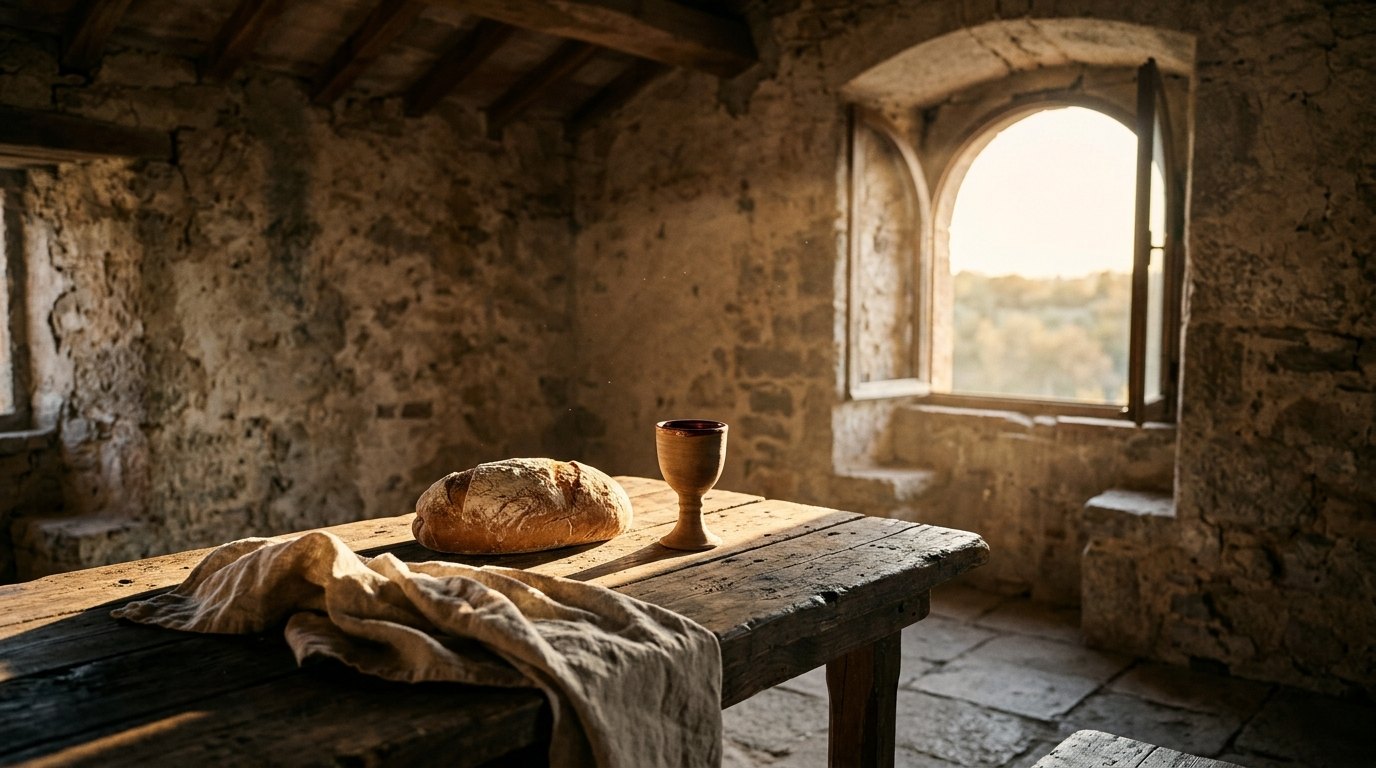
Is not the cup of thanksgiving for which we give thanks a participation in the blood of Christ? And is not the bread that we break a participation in the body of Christ? Because there is one loaf, we, who are many, are one body, for we all share the one loaf.
1 Corinthians 10:16-17 (NIV)
It reveals that the Lord's Supper is a shared, visible act of communion within the local body of Christ.
In 1 Corinthians 10:16-17, the Apostle Paul asks whether the cup of blessing and the broken bread are not a genuine participation in the blood and body of Christ: because there is one bread, we who are many are one body, for we all partake of the one bread. By its very nature, the Lord's Supper cannot be celebrated in solitary isolation; it is a corporate feast of communion that binds many believers visibly into one body around the crucified and risen Christ.
The same communal reality governs Christian baptism. When the risen Lord commissioned the apostles in Matthew 28:19, He directed them to make disciples of all nations by baptizing them in the name of the Father and of the Son and of the Holy Spirit. Baptism serves as the initiatory rite of identification with Christ and His visible household. At Pentecost, those who gladly received Peter's message were baptized, and Luke records that on that day about three thousand souls were added to their number (Acts 2:38-41). Faith immediately led to water, and water led directly into the fellowship of the gathered church.
Whenever the local church gathers to celebrate the Lord's Table, they bear public witness to the redemption that anchors their hope. In 1 Corinthians 11:23-26, Paul recounts the institution of the meal, explaining that as often as you eat this bread and drink the cup, you proclaim the Lord's death until he comes. While these ordinances do not earn justification, Christ instituted them to nourish and unify His gathered people. An intentional, lifelong rejection of the assembly means living in ongoing neglect of the explicit ordinances Christ commanded His followers to share.
| Passage | What it says |
|---|---|
| Matthew 28:19 | Disciples are commanded to baptize converts in the name of the Father, Son, and Holy Spirit. |
| 1 Corinthians 10:16-17 | Sharing one loaf at the Lord's Table demonstrates that believers form one body. |
| 1 Corinthians 11:23-26 | Believers proclaim the Lord's death until He comes by regularly partaking of the bread and cup. |
| Acts 2:38-41 | Those who received Peter's word were baptized and added to the visible church community. |
Where in the Bible
| Book | Passages |
|---|---|
| Genesis | 1 · Genesis 15:6 |
| Matthew | 3 · Matthew 18:20, Matthew 18:15-17, Matthew 28:19 |
| Luke | 1 · Luke 23:39-43 |
| John | 1 · John 3:16 |
| Acts | 6 · Acts 16:30-31, Acts 2:42, Acts 20:7, Acts 2:44-47, Acts 20:28, Acts 2:38-41 |
| Romans | 3 · Romans 4:3-5, Romans 10:9-10, Romans 12:4-5 |
| 1 Corinthians | 5 · 1 Corinthians 11:18-20, 1 Corinthians 12:12-27, 1 Corinthians 5:12-13, 1 Corinthians 10:16-17, 1 Corinthians 11:23-26 |
| Galatians | 2 · Galatians 5:13, Galatians 6:2 |
| Ephesians | 2 · Ephesians 2:8-9, Ephesians 4:11-16 |
| Colossians | 1 · Colossians 3:16 |
| 1 Thessalonians | 2 · 1 Thessalonians 5:11, 1 Thessalonians 5:12-13 |
| Titus | 2 · Titus 3:5, Titus 3:8 |
| Hebrews | 4 · Hebrews 10:26-31, Hebrews 10:24-25, Hebrews 13:1, Hebrews 13:17 |
| 1 Peter | 1 · 1 Peter 5:1-3 |
| 1 John | 1 · 1 John 3:18 |
The story in order
- Abram believes God (c. 2000 BC) · Genesis 15:6 · Faith is credited as righteousness.
- Jesus commands baptism (c. AD 30) · Matthew 28:19 · Disciples are to be baptized.
- The early church gathers (c. AD 30) · Acts 2:42 · Devoted to teaching, fellowship, and prayer.
- The church gathers weekly (c. AD 55) · Acts 20:7 · Regular practice of meeting for worship.
- Paul addresses the church (c. AD 55) · 1 Corinthians 11:18-20 · The congregation meets as a church.
- Body of Christ metaphor (c. AD 55) · 1 Corinthians 12:12-27 · Believers are interdependent members.
- Serve one another in love (c. AD 49) · Galatians 5:13 · Freedom used for mutual service.
- Build up the body (c. AD 60) · Ephesians 4:11-16 · Gifts equip for mutual edification.
- Do not neglect meeting (c. AD 65) · Hebrews 10:25 · Command to assemble and encourage.
- Obey spiritual leaders (c. AD 65) · Hebrews 13:17 · Submit to those who watch over souls.
- Discipline the unrepentant (c. AD 30) · Matthew 18:15-17 · Church is the final court of appeal.
Key words
- Grace (charis, χάρις)
- God's unmerited favor, the basis of salvation. · Titus 3:5
- Faith (pistis, πίστις)
- Trust and belief in God and His promises. · Romans 4:3-5
- Works (erga, ἔργα)
- Human actions or deeds, insufficient for salvation. · Ephesians 2:8-9
- Gathering (episynagoge, ἐπισυναγωγή)
- The assembly of believers for worship and fellowship. · Hebrews 10:25
- Body of Christ (soma Christou, σῶμα Χριστοῦ)
- The church, a unified spiritual entity with Christ as head. · 1 Corinthians 12:12-27
- Edification (oikodomē, οἰκοδομή)
- Building up or strengthening believers in faith. · Ephesians 4:11-16
Salvation rests entirely on the finished work of Christ, so your standing before God is never purchased by entering a church door. Yet because Jesus purchased a people for His own possession, genuine faith inevitably seeks the fellowship, accountability, and worship of His body. If you belong to Christ, seek out His people, provoke them to love, and let them walk beside you until the Day dawns.
35 passages, each cited once.
How the major Christian traditions read this
All major traditions affirm that salvation is a gift of God received through Jesus Christ, so that extraordinary circumstances like deathbed repentance or imprisonment do not prevent God from saving a person without church attendance (Luke 23:42-43; Ephesians 2:8-9). Yet all agree that Christ calls His followers into the corporate life of His body, making willful separation from His assembly spiritually perilous and contrary to His commands (Hebrews 10:24-25; 1 Corinthians 12:12-27).
Catholic
We teach that the Church is the mystical body of Christ and the ordinary minister of His saving grace through the sacraments (1 Timothy 3:15). God is not bound by His sacraments and can extend mercy to those invincibly ignorant or unable to attend, as with the thief on the cross (Luke 23:42-43). Yet the historic truth remains that outside the Church there is no salvation, because Christ united Himself to her as His bride. For anyone who knows the Catholic Church was founded by God through Christ and refuses to enter or remain in her, salvation is impossible. Participating in the Sunday Eucharist is a grave obligation of love and obedience (Hebrews 10:25).
Scripture: 1 Timothy 3:15, Luke 23:42-43, Hebrews 10:25
Orthodox
In Holy Orthodoxy, salvation is not merely a legal verdict but theosis—living communion with the Triune God, which is realized within the life and sacramental mysteries of the Church (2 Peter 1:4). The Church is the ark of salvation and Christ's living body (Ephesians 1:22-23). We leave the judgment of those outside the Church's visible boundaries to the infinite mercy of God, knowing He desires all men to be saved (1 Timothy 2:4). However, one cannot deliberately sever oneself from the Eucharistic assembly and expect spiritual health, for to cut oneself off from the body is to cut oneself off from the life of the Head (John 6:53).
Scripture: 2 Peter 1:4, Ephesians 1:22-23, 1 Timothy 2:4, John 6:53
Lutheran
We confess that a person is justified by grace alone through faith alone in Jesus Christ, apart from any works or church attendance (Romans 3:28; Ephesians 2:8-9). Therefore, faith saves even if a believer is isolated on a desert island. Nevertheless, faith is ordinarily created and preserved through the means of grace—the Word preached and the holy sacraments administered—which Christ placed within the gathering of believers (Romans 10:17; Augsburg Confession 5). While attendance itself does not earn righteousness, despising God's Word and refusing to gather where Christ gives His gifts places one's faith in grave danger (Hebrews 10:25).
Scripture: Romans 3:28, Ephesians 2:8-9, Romans 10:17, Hebrews 10:25
Reformed & Presbyterian
We maintain that election and justification are rooted entirely in the free grace of God in Christ, received by faith alone (Ephesians 1:4-5; Romans 8:30). An elect person can certainly be regenerated and saved apart from formal church attendance if providence hinders them, as the thief on the cross proves (Luke 23:42-43). Yet the Westminster Confession reminds us that to the visible church Christ has given the ministry, oracles, and ordinances of God, and outside of it there is no ordinary possibility of salvation. Willfully neglecting the communion of saints despises the means God appointed to nurture saving faith (Hebrews 10:24-25; Acts 2:42).
Scripture: Ephesians 1:4-5, Romans 8:30, Luke 23:42-43, Hebrews 10:24-25, Acts 2:42
Anglican & Episcopal
We uphold the biblical teaching that Holy Scripture contains all things necessary for salvation, which is received by faith in Jesus Christ alone (Article 6; Romans 1:16-17). Church attendance is not a work that buys God's favor. However, the visible Church of Christ is a congregation of faithful people where the pure Word of God is preached and the sacraments duly ministered (Article 19). Because Christ commanded His followers to share in common worship, hear His Word, and break bread together, a believer naturally seeks the fellowship of the body, heedful of the command not to neglect meeting together (Acts 2:42; Hebrews 10:25).
Scripture: Romans 1:16-17, Acts 2:42, Hebrews 10:25
Baptist
We believe firmly that salvation is entirely by personal faith in the Lord Jesus Christ, who justifies everyone who repents and believes the gospel (Romans 10:9-10; Ephesians 2:8-9). Physical attendance at a church service has no power to wash away sins or justify anyone before God. A person who trusts Christ in isolation is genuinely saved. Nevertheless, the New Testament knows nothing of an unchurched Christian by choice. A truly regenerate person has a new nature that desires baptism, obedience, and the fellowship of a local body of believers to serve and be held accountable (Acts 2:41-42; 1 John 3:14).
Scripture: Romans 10:9-10, Ephesians 2:8-9, Acts 2:41-42, 1 John 3:14
Methodist & Wesleyan
We preach that justification is by faith alone in the atonement of Jesus Christ, freely available to all who respond to God's grace (Romans 5:1-2). Going to church does not earn salvation or make a person righteous. Yet John Wesley famously declared that the Bible knows nothing of solitary religion. Christian holiness is social holiness—love to God and love to our neighbor worked out in community (Hebrews 10:24-25). While an isolated believer can be saved, staying away from the means of grace—such as corporate prayer, preaching, and the Lord's Table—withers our spiritual vitality and resists sanctifying grace (1 Thessalonians 5:11).
Scripture: Romans 5:1-2, Hebrews 10:24-25, 1 Thessalonians 5:11
Pentecostal & Charismatic
We emphasize that salvation is a direct, personal encounter with Jesus Christ through the regenerating power of the Holy Spirit (Titus 3:5; John 3:3). No building, institution, or attendance record can save a soul; only the blood of Jesus cleanses from sin (1 John 1:7). Therefore, someone can be saved anywhere the gospel is believed. At the same time, the Holy Spirit empowers believers to be active members of the body of Christ, exercising spiritual gifts for the building up of the church (1 Corinthians 12:7; 14:12). Refusing to assemble with other believers resists the Spirit's work and dulls spiritual power (Hebrews 10:25).
Scripture: Titus 3:5, John 3:3, 1 John 1:7, 1 Corinthians 12:7, Hebrews 10:25
Non-denominational & Evangelical
We teach that salvation is purely by grace through faith in Jesus Christ as personal Lord and Savior (Ephesians 2:8-9; John 14:6). You are not saved by sitting in a church building or joining a religious roster. A dying criminal, a soldier on the battlefield, or someone alone in their room can call on the name of the Lord and be completely saved (Romans 10:13). However, following Jesus means living as part of His family. While attendance does not save, deliberate refusal to participate in a local church contradicts the direct instruction of Scripture to gather, encourage one another, and grow together (Hebrews 10:24-25).
Scripture: Ephesians 2:8-9, John 14:6, Romans 10:13, Hebrews 10:24-25
Where they differ
The church's role in salvation
- Catholic
- The Church is the necessary sacrament of salvation containing the full means of grace.
- Orthodox
- The Church is the living body where salvation as theosis is actively realized.
- Lutheran
- The church is the assembly where the Word and sacraments create saving faith.
- Reformed & Presbyterian
- The visible church holds the ordinary means of grace for preserving the elect.
- Anglican & Episcopal
- The church faithfully ministers the Word and sacraments that nurture saving faith.
- Baptist
- The church is a voluntary fellowship of believers; salvation is strictly individual.
- Methodist & Wesleyan
- The church provides the means of grace necessary for sanctification and communal holiness.
- Pentecostal & Charismatic
- The church gathers Spirit-filled believers but salvation occurs through individual faith.
- Non-denominational & Evangelical
- The local church is a fellowship for growth, not an agent of salvation.
Scripture: 1 Timothy 3:15, Ephesians 1:22-23, Acts 2:42, Romans 10:14-17
Necessity of sacramental attendance
- Catholic
- Attending Mass and receiving sacraments is an obligatory duty under grave sin.
- Orthodox
- Participating in the Divine Liturgy is essential for remaining united to Christ's body.
- Lutheran
- Believers must not despise preaching and the Lord's Supper where forgiveness is given.
- Reformed & Presbyterian
- Neglecting the preaching and sacraments despises Christ's appointed means of spiritual life.
- Anglican & Episcopal
- Regular communal worship and sacraments are bounden duties of the Christian life.
- Baptist
- Ordinances obey Christ and edify the church, but attendance does not confer grace.
- Methodist & Wesleyan
- Attending worship is a commanded means of grace that prevents falling away.
- Pentecostal & Charismatic
- Gathering facilitates corporate worship and spiritual gifts, though rituals do not save.
- Non-denominational & Evangelical
- Attendance is an act of obedience and discipleship, possessing no saving efficacy.
Scripture: John 6:53-56, Hebrews 10:25, 1 Corinthians 11:23-26
Your pastor can tell you where your church stands.
Scripture cited
- Hebrews 10:24-25
- 1 Thessalonians 5:11
- Galatians 5:13
- Ephesians 2:8-10
- Romans 10:9-10