How do I find joy in hard times?

James 1:2-4
2 Consider it pure joy, my brothers and sisters, whenever you face trials of many kinds,
3 because you know that the testing of your faith produces perseverance.
4 Let perseverance finish its work so that you may be mature and complete, not lacking anything.
New International Version (NIV)
The answer
Joy in hard times is not a feeling that comes to you; it is a verdict you lead your mind toward, because the trial is doing something in you that nothing else can. James 1:2-4 walks through exactly how.
Step 1: Count it joy — before you feel it
"Count it all joy, my brethren, when ye fall into divers temptations" (James 1:2).
- Lead, don't drift: the Greek verb (hegeomai) means to lead, to consider, to deliberately weigh. Joy here is the mind's verdict, not a surge of emotion.
- Don't deny the pain: 1 Peter 1:6-8 pairs the same two things: "ye greatly rejoice, though now for a season… ye are in heaviness through manifold temptations." Grief and joy sit together.
Step 2: Know what the test is producing
"Knowing this, that the trying of your faith worketh patience" (James 1:3).
- Endurance is the product: the trial is the forge; steadfastness is what comes out. Nothing else builds that muscle.
- Weakness is the doorway: 2 Corinthians 12:9-10 — "My grace is sufficient for thee: for my strength is made perfect in weakness." Your pain is the very place His power shows up.
Step 3: Let the work finish
"But let patience have her perfect work, that ye may be perfect and entire, wanting nothing" (James 1:4).
- Don't cut the trial short: you grow complete by staying in it, not by escaping it.
- The crown at the end: James 1:12 — "Blessed is the man that endureth temptation: for when he is tried, he shall receive the crown of life, which the Lord hath promised to them that love him."
What carries you through it
The trial is not punishment — it is stewardship. Philippians 1:29: "unto you it is given in the behalf of Christ, not only to believe on him, but also to suffer for his sake." Matthew 5:10-12 puts the persecuted inside the Beatitudes: theirs is the kingdom of heaven. And God Himself stays in the trial with you — refuge (Psalm 46:5,7), comforter (2 Corinthians 1:4-5), and the One who uses affliction to turn your heart back to Him (Deuteronomy 4:30,31; Psalm 119:71).
A verse to carry: James 1:2-4. Joy is not the absence of the trial; it is the mind's verdict about what God is doing through it, and the trust that He will finish the work.
Answered from Scripture · reviewed November 7, 2026
Joy in hard times is never an involuntary surge of emotion or the denial of genuine grief; it is a deliberate verdict of faith that evaluates the trial by what God produces through it. Scripture commands believers to anchor their joy in God's sovereign refining work, His enduring presence, and the eternal weight of glory promised to all who endure. When we understand how God uses suffering, our deepest trials become the very ground where His sustaining power and steadfast hope are most clearly known.
The Mind's Verdict
Joy Begins When Faith Decides How to Count the Trial

Consider it pure joy, my brothers and sisters, whenever you face trials of many kinds,
James 1:2 (NIV)
James commands an active accounting of the mind rather than a passive emotional reaction when trials surround the believer.
Joy in the furnace of affliction begins not as an emotional impulse, but as a reasoned assessment of faith. In James 1:2, the apostle issues a startling imperative: count it all joy whenever you encounter trials of various kinds. The word translated 'count' belongs to the language of deliberate reckoning and financial accounting. James does not ask believers to pretend that grief is absent or pain unreal, but to make a conscious determination that the sovereign God will turn present distress into eternal good.
This accounting is precisely how the New Testament balances sorrow and rejoicing. In 1 Peter 1:6, Peter acknowledges that believers may be grieved by various trials for a little while, yet in the very same breath he declares that they greatly rejoice in an incorruptible inheritance. The suffering is real, but the evaluation is higher. That tested faith, as 1 Peter 1:7 explains, is far more precious than gold that perishes, destined to result in praise, honor, and glory when Jesus Christ appears. Even without seeing Him, 1 Peter 1:8 testifies that believers love Him and rejoice with an inexpressible, glorified joy, because their gaze rests on a living Savior rather than their turbulent surroundings.
The Old Testament models this identical posture. When Habakkuk surveyed an absolute collapse of agriculture and sustenance—the fig tree not blossoming, no fruit on the vines, the olive crop failing, and the folds empty—he made a radical vow in Habakkuk 3:17-18: 'yet I will rejoice in the Lord; I will take joy in the God of my salvation.' Joy did not depend on the harvest; it rested entirely on God. Nehemiah 8:10 reminded a weeping remnant that the joy of the Lord is their strength, an objective bulwark rather than a shifting feeling. Because God never changes, the apostolic charge in Philippians 4:4 remains absolute and achievable for the weary saint: 'Rejoice in the Lord always; again I will say, rejoice.'
| Passage | What it says |
|---|---|
| James 1:2 | Believers are commanded to count it all joy whenever they fall into various multifaceted trials and testing. |
| 1 Peter 1:6 | Believers greatly rejoice in their living hope even while experiencing genuine sorrow through manifold temptations for a season. |
| 1 Peter 1:7 | Tested faith proves more precious than perishable gold, resulting in praise, honor, and glory at the revelation of Christ. |
| 1 Peter 1:8 | Though not seeing Christ now, believers love Him and rejoice with inexpressible joy filled with heavenly glory. |
| Habakkuk 3:17-18 | Even when crops fail and fields yield no food, the prophet deliberately chooses to rejoice in the Lord of his salvation. |
| Nehemiah 8:10 | Declares that the joy of the Lord is the believers' strength when facing grief and hardship. |
| Philippians 4:4 | Commands believers to rejoice in the Lord always, regardless of present external circumstances. |
The Forge of Character
Endurance and Maturity Are Forged Exclusively in Affliction
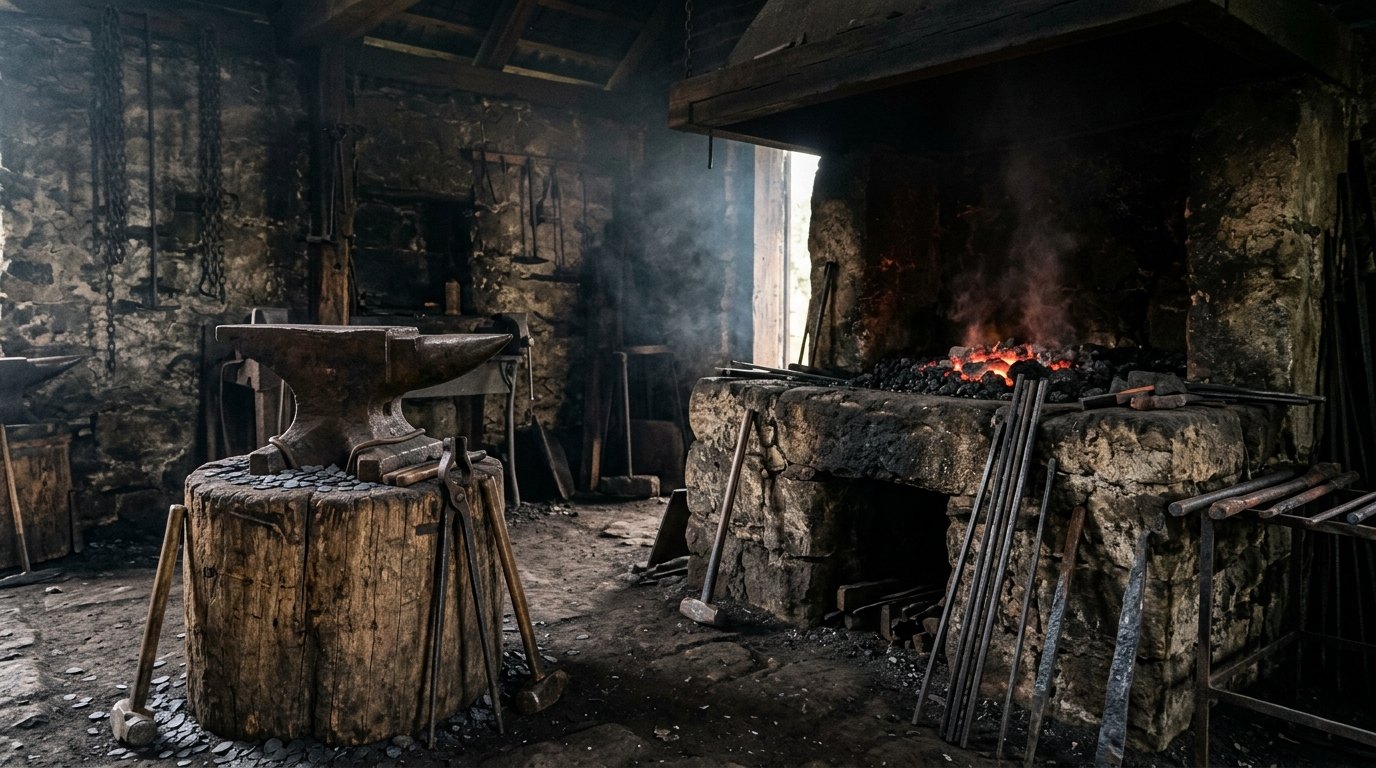
because you know that the testing of your faith produces perseverance. Let perseverance finish its work so that you may be mature and complete, not lacking anything.
James 1:3-4 (NIV)
Testing is revealed as the specific instrument that builds steadfastness and brings the believer to complete spiritual maturity.
Affliction in the hands of a sovereign Father is never purposeless; it is the appointed furnace wherein Christian maturity is formed. James 1:3-4 shows why faith can count trials as joy: the testing of your faith produces steadfastness, and that steadfastness must have its full effect so that you may be 'perfect and complete, lacking in nothing.' God does not waste suffering. He employs it as a chisel to strip away self-reliance and build an enduring, unshakeable stamina that peaceful ease could never produce.
The apostle Paul outlines this identical chain of spiritual production in Romans 5:3, declaring that believers actively glory in tribulations because suffering produces steadfast endurance. Far from crushing our assurance, Romans 5:4-5 traces how this endurance produces proven character, and proven character produces an invincible hope that never puts us to shame, because God's love has been poured out into our hearts through the Holy Spirit. Spiritual depth is never bought cheaply; it is hammered out in the crucible of real pressure.
This is why the psalmist could write in Psalm 119:71, 'It is good for me that I was afflicted, that I might learn your statutes.' Prior to affliction, our hearts easily wander into complacency, but the rod of trial drives us back into the text of Scripture and the promises of God. Hebrews 12:11 acknowledges frankly that no discipline seems pleasant at the moment, but painful; nevertheless, it later yields the peaceful fruit of righteousness to those who have been trained by it. And 1 Peter 5:10 fixes our eyes on the final outcome: after we have suffered a little while, the God of all grace Himself will restore, confirm, strengthen, and establish us forever.
| Passage | What it says |
|---|---|
| James 1:3 | The testing of faith purposefully works and produces steadfast endurance within the life of the believer. |
| James 1:4 | Believers must let endurance finish its work so they may be mature, complete, and lacking in nothing. |
| Romans 5:3 | Believers glory in tribulations, knowing that suffering produces steadfast endurance in their spiritual walk. |
| Romans 5:4-5 | Endurance produces proven character, character produces hope, and this hope never puts the believer to shame. |
| Psalms 119:71 | The psalmist confesses it was good to be afflicted so that he might learn and obey God's statutes. |
| Hebrews 12:11 | Explains that painful discipline later yields the peaceful fruit of righteousness to those trained by it. |
| 1 Peter 5:10 | Promises that after suffering a little while, God Himself will restore, confirm, strengthen, and establish believers. |
Sufficient Grace
Christ's Power Rests Most Fully on Human Weakness

But he said to me, “My grace is sufficient for you, for my power is made perfect in weakness.” Therefore I will boast all the more gladly about my weaknesses, so that Christ’s power may rest on me.
2 Corinthians 12:9 (NIV)
Christ reveals that divine strength achieves its full manifestation not in human capability, but in human vulnerability and weakness.
Joy in suffering is not stoic willpower; it is the direct consequence of leaning entirely upon an all-sufficient Savior. When Paul pled three times for his agonizing thorn in the flesh to be removed, Christ answered him in 2 Corinthians 12:9 with words that remain the bedrock of Christian endurance: 'My grace is sufficient for you, for my power is made perfect in weakness.' Divine strength is not an auxiliary boost added to our native capability; it is a supernatural power that achieves its highest, clearest visibility precisely when human capacity is entirely spent.
Once Paul understood this principle, his posture toward hardship shifted completely. In 2 Corinthians 12:10, he declared that he was content with weaknesses, insults, hardships, persecutions, and calamities for Christ's sake, concluding with that magnificent paradox: 'For when I am weak, then I am strong.' Our trials do not disqualify us from usefulness; they prepare us to become conduits of divine mercy. As 2 Corinthians 1:3-4 explains, the Father of mercies comforts us in all our tribulation specifically so that we may comfort those who are in any affliction with the very comfort we have received from God. When Christ's sufferings abound in us, 2 Corinthians 1:5 promises that our comfort abounds through Him in equal measure.
This sustained sufficiency enabled Paul to testify from prison in Philippians 4:11-13 that he had learned the secret of facing plenty and hunger, abundance and need: 'I can do all things through him who strengthens me.' In 2 Corinthians 6:10, he described the daily reality of apostolic ministry as 'sorrowful, yet always rejoicing; poor, yet making many rich.' Even amid deep distress, 2 Corinthians 7:4 records his triumphant confession that he was overflowing with comfort and joy in all affliction.
| Passage | What it says |
|---|---|
| 2 Corinthians 12:9 | Christ promises His grace is sufficient, as divine power is made completely perfect in human weakness. |
| 2 Corinthians 12:10 | Paul takes pleasure in weaknesses, insults, hardships, and persecutions, because when he is weak, then he is strong. |
| 2 Corinthians 1:3-4 | The Father of mercies comforts believers in all tribulation so they can comfort others with the comfort they received. |
| 2 Corinthians 1:5 | Just as the sufferings of Christ abound in believers, so their encouragement and consolation abound through Christ. |
| Philippians 4:11-13 | Paul learns contentment in every circumstance, doing all things through Christ who infuses him with strength. |
| 2 Corinthians 6:10 | Describes the paradox of Christian discipleship as sorrowful, yet always rejoicing; poor, yet making many rich. |
| 2 Corinthians 7:4 | Expresses overflowing joy and immense comfort in the midst of all affliction. |
God's Abiding Presence
The Lord Remains Our Refuge and Sustainer in the Storm

God is our refuge and strength, an ever-present help in trouble.
Psalms 46:1 (NIV)
God is declared to be an immediate, proven help right inside distress, not merely a spectator observing from afar.
The deepest foundation of Christian joy is not an abstract theology of suffering, but the personal, unwavering presence of God Himself. Psalm 46:1 sets the anchor: God is our refuge and strength, a very present help in trouble. The psalmist does not say that God stands on the shore shouting instructions to a drowning soul, but that He is an immediate, proven help right inside the storm. Even if the earth gives way and the mountains plunge into the heart of the sea, the believer's footing remains secure because God remains near.
Psalm 46:5 guarantees that God is in the midst of His holy city and she shall not be moved, coming to her aid at the break of dawn, while Psalm 46:7 repeats the steadfast refrain: 'The Lord of hosts is with us; the God of Jacob is our fortress.' This covenantal pledge runs throughout all of redemptive history. In Isaiah 43:2, the Lord does not promise that we will bypass the river or the furnace, but He pledges: 'When you pass through the waters, I will be with you; and through the rivers, they shall not overwhelm you; when you walk through fire you shall not be burned, and the flame shall not consume you.'
Long before, Deuteronomy 4:30-31 reminded Israel that even when tribulation overtook them, the Lord God is merciful and will neither abandon nor destroy them. David could walk into the darkest canyon without panic, confessing in Psalm 23:4, 'I will fear no evil, for you are with me; your rod and your staff, they comfort me.' Weeping may tarry for the night, as Psalm 30:5 assures us, but joy comes with the morning. In God's presence, as Psalm 16:11 concludes, there is fullness of joy, and at His right hand are pleasures forevermore.
| Passage | What it says |
|---|---|
| Psalms 46:1 | God is our refuge, our strength, and a very present help readily found in times of trouble. |
| Psalms 46:5 | God is in the midst of His city; she shall not be moved, for God will help her at break of dawn. |
| Psalms 46:7 | The Lord of hosts is with His people; the God of Jacob is an unassailable fortress for us. |
| Isaiah 43:2 | God promises to be with His people through deep waters and guarantees the fire will not consume them. |
| Deuteronomy 4:30-31 | When in tribulation in latter days, the merciful Lord will not forsake or destroy those who turn to Him. |
| Psalms 23:4 | Comforts the believer walking through the darkest valley because the Lord is directly present. |
| Psalms 30:5 | Assures that weeping may tarry for the night, but joy comes with the morning. |
| Psalms 16:11 | Affirms that fullness of joy and eternal pleasures are found in God's presence. |
Fellowship in Suffering
Suffering for Christ Is a Granted Privilege and Eternal Reward
“Blessed are you when people insult you, persecute you and falsely say all kinds of evil against you because of me. Rejoice and be glad, because great is your reward in heaven, for in the same way they persecuted the prophets who were before you.
Matthew 5:11-12 (NIV)
Jesus commands extraordinary rejoicing under persecution because of the great reward secured in heaven.
In Matthew 5:11-12, the Lord Jesus commands an astonishing response to mistreatment: rejoice and be exceedingly glad, for great is your reward in heaven. Persecution for righteousness’ sake is not a tragic defeat or an accident outside of God's design; rather, as Jesus teaches in Matthew 5:10, those who endure hostility for His name inherit the very kingdom of heaven. Luke 6:22-23 sharpens this divine summons, instructing believers to leap for joy when excluded and reviled on account of the Son of Man, knowing that the prophets who went before them bore identical scars for identical fidelity.
Scripture frames opposition not merely as a cross to bear, but as a divine gift of grace. Paul writes in Philippians 1:29 that it has been granted to believers on behalf of Christ not only to believe in Him, but also to suffer for His sake. This perspective explains the astonishing scene in Acts 5:41, where the apostles left the Sanhedrin rejoicing because they were counted worthy to suffer dishonor for the Name. Physical brutality could not extinguish this joy; thus, in Acts 16:25, Paul and Silas spent midnight praying and singing hymns of praise to God while locked deep in a Philippian jail. In 1 Peter 4:12-13, Peter warns against viewing fiery trials as strange occurrences; instead, believers are to rejoice insofar as they share Christ's sufferings, that they may also rejoice with exceeding gladness when His glory is revealed. Paul echoes this deep fellowship in Colossians 1:24, finding true joy in his afflictions as he ministers to the body of Christ.
| Passage | What it says |
|---|---|
| Matthew 5:10 | Blessed are those persecuted for righteousness' sake, for the kingdom of heaven belongs to them. |
| Matthew 5:11-12 | Disciples are told to rejoice and be exceedingly glad when reviled, for great is their heavenly reward. |
| Luke 6:22-23 | Jesus commands believers to leap for joy when hated for His sake, because their heavenly reward is great. |
| Philippians 1:29 | It is graciously granted to believers on behalf of Christ not only to believe on Him, but also to suffer. |
| Acts 5:41 | The apostles departed from the council rejoicing that they were counted worthy to suffer dishonor for the Name. |
| 1 Peter 4:12-13 | Instructs believers to rejoice when sharing Christ's sufferings so they may be overjoyed at His revelation. |
| Acts 16:25 | Shows Paul and Silas praying and singing hymns of praise to God while imprisoned in stocks. |
| Colossians 1:24 | Speaks of rejoicing in sufferings for the sake of Christ's body, the church. |
The Eternal Horizon
Present Afflictions Pale Before the Unfading Crown of Life

Blessed is the one who perseveres under trial because, having stood the test, that person will receive the crown of life that the Lord has promised to those who love him.
James 1:12 (NIV)
God attaches the eternal crown of life to the faithful endurance of temporal trials for those who love Him.
James 1:12 sets before the suffering saint the prize of steadfastness: blessed is the man who remains steadfast under trial, for when he has stood the test he will receive the crown of life, which God has promised to those who love Him. The joy that endures heartbreak is anchored in an unshakeable eternal horizon. In Romans 8:18, Paul measures temporal pain against the ultimate outcome, judging that the sufferings of this present time are not worthy of comparison with the glory that will be revealed in us.
This heavenly math recalibrates every affliction. According to 2 Corinthians 4:16-17, our afflictions, however severe, remain light and momentary compared to the eternal weight of glory they are preparing for us beyond all proportion. Therefore, 2 Corinthians 4:18 urges us not to look at the visible, transient trials of this world, but to gaze upon eternal, unseen realities. We look to Christ, who, as Hebrews 12:2 records, endured the cross and despised its shame for the joy set before Him, taking His seat at the right hand of the throne of God. We know with certainty from Romans 8:28 that God works all things together for the good of those who love Him, empowering the command of Romans 12:12 to rejoice in hope, be patient in tribulation, and be constant in prayer. As Jesus comforted His disciples in John 16:20-22, present grief will transform into a permanent joy that no adversary can steal. The culmination of this hope arrives in Revelation 21:4, when God Himself wipes away every tear from their eyes, and death, mourning, crying, and pain shall be no more.
| Passage | What it says |
|---|---|
| James 1:12 | Blessed is the one who endures trial, for having stood the test they will receive the crown of life. |
| Romans 8:18 | Paul considers the sufferings of this present time not worthy of comparison with the coming glory. |
| 2 Corinthians 4:16-17 | Light and momentary afflictions prepare for believers an eternal weight of glory far beyond all comparison. |
| 2 Corinthians 4:18 | Believers look not to transient visible things, but fix their gaze on eternal, unseen realities. |
| Hebrews 12:2 | Jesus endured the cross and despised its shame for the joy set before Him, sitting at God's throne. |
| Romans 8:28 | Promises that God works all things together for good to those who love Him. |
| Romans 12:12 | Directs believers to rejoice in hope, be patient in tribulation, and be constant in prayer. |
| John 16:20-22 | Assures that sorrow will turn into lasting joy that no one can take away. |
| Revelation 21:4 | Promises that God will wipe away every tear, ending sorrow, crying, pain, and death. |
Where in the Bible
| Book | Passages |
|---|---|
| Deuteronomy | 1 · Deuteronomy 4:30-31 |
| Nehemiah | 1 · Nehemiah 8:10 |
| Psalms | 7 · Psalms 119:71, Psalms 46:1, Psalms 46:5, Psalms 46:7, Psalms 23:4, Psalms 30:5, Psalms 16:11 |
| Isaiah | 1 · Isaiah 43:2 |
| Habakkuk | 1 · Habakkuk 3:17-18 |
| Matthew | 2 · Matthew 5:10, Matthew 5:11-12 |
| Luke | 1 · Luke 6:22-23 |
| John | 1 · John 16:20-22 |
| Acts | 2 · Acts 5:41, Acts 16:25 |
| Romans | 5 · Romans 5:3, Romans 5:4-5, Romans 8:18, Romans 8:28, Romans 12:12 |
| 2 Corinthians | 8 · 2 Corinthians 12:9, 2 Corinthians 12:10, 2 Corinthians 1:3-4, 2 Corinthians 1:5, 2 Corinthians 6:10, 2 Corinthians 7:4, 2 Corinthians 4:16-17, 2 Corinthians 4:18 |
| Philippians | 3 · Philippians 4:4, Philippians 4:11-13, Philippians 1:29 |
| Colossians | 1 · Colossians 1:24 |
| Hebrews | 2 · Hebrews 12:11, Hebrews 12:2 |
| James | 4 · James 1:2, James 1:3, James 1:4, James 1:12 |
| 1 Peter | 5 · 1 Peter 1:6, 1 Peter 1:7, 1 Peter 1:8, 1 Peter 5:10, 1 Peter 4:12-13 |
| Revelation | 1 · Revelation 21:4 |
The story in order
- God's creation and fall (c. 4000 BC) · Genesis 1:1 · Establishes God as sovereign creator, the source of all good.
- Abraham's calling and covenant (c. 2000 BC) · Genesis 12:1-3 · God's faithfulness to His promises begins to unfold.
- Exodus and Law given (c. 1450 BC) · Exodus 20:1 · God delivers His people and establishes His covenant law.
- Davidic Kingdom established (c. 1000 BC) · 2 Samuel 7:12-16 · God promises an enduring dynasty through David.
- Prophetic warnings and hope (c. 700 BC) · Isaiah 43:2 · God promises His presence even in exile.
- Habakkuk's lament and trust (c. 600 BC) · Habakkuk 3:17-18 · Choosing joy in the Lord amidst devastation.
- Exile and return (c. 450 BC) · Nehemiah 8:10 · The joy of the Lord is strength for His people.
- Jesus' ministry and teaching (AD 30) · Matthew 5:10-12 · Blessed are those persecuted for righteousness' sake.
- Jesus' death and resurrection (AD 30) · John 16:20-22 · Sorrow will turn to lasting joy.
- The early church's suffering (AD 50) · Acts 5:41 · Rejoicing in suffering dishonor for Christ's name.
- Apostolic teaching on endurance (AD 50-60) · James 1:2-4 · Trials produce endurance, leading to maturity.
- Paul's ministry and suffering (AD 55) · 2 Corinthians 12:9-10 · Christ's power is perfected in weakness.
- Revelation of future glory (c. AD 95) · Revelation 21:4 · God will wipe away all tears and end suffering.
Key words
- Joy (chara, χαρά)
- A deep, abiding delight and satisfaction in God, independent of circumstances. · Philippians 4:4
- Trials (peirasmos, πειρασμός)
- Tests or afflictions designed to prove and strengthen faith. · James 1:2
- Endurance (hypomonē, ὑπομονή)
- The ability to persevere through hardship with steadfastness and patience. · Romans 5:3
- Character (dokimion, δοκίμιον)
- The result of tested endurance, producing a proven and trustworthy spiritual nature. · Romans 5:4
- Grace (charis, χάρις)
- God's unmerited favor and divine power, especially evident in human weakness. · 2 Corinthians 12:9
- Suffering (pathēma, πάθημα)
- Experiencing hardship, pain, or persecution for the sake of Christ. · Colossians 1:24
- Glory (doxa, δόξα)
- The surpassing radiance and honor of God, revealed fully in the future. · Romans 8:18
You do not need to wait for your circumstances to improve before tasting the joy of the Lord. Joy begins the moment you settle the verdict of faith, trusting that God wastes none of your tears and remains present in the midst of the furnace. Cling to His promises today, let patience finish its perfecting work, and rest in the assurance of the crown that awaits you.
46 passages, each cited once.
Scripture cited
- James 1:2-4
- 1 Peter 1:6-8
- James 1:12
- 2 Corinthians 12:9-10
- Matthew 5:10-12
- Philippians 1:29