Is faith blind?

Hebrews 11:1-3
1 Now faith is confidence in what we hope for and assurance about what we do not see.
2 This is what the ancients were commended for.
3 By faith we understand that the universe was formed at God’s command, so that what is seen was not made out of what was visible.
New International Version (NIV)
The answer
No—biblical faith is not blind credulity, although it does not depend on physical sight. Hebrews 11:1 defines it: “Now faith is assurance of things hoped for, proof of things not seen.” Faith is confidence in what God has said, even when its fulfilment is not yet visible.
Faith is not irrational. Hebrews 11:3 says, “By faith we understand that the universe has been framed by the word of God.” Faith receives God's word as true rather than treating visible observation as the only way to know reality. Noah illustrates this: when God warned him about “things not seen as yet,” he believed the warning and built the ark (Hebrews 11:7). His faith had a firm basis—God's word—and it produced obedient action.
Therefore, “we walk by faith, not by sight” (2 Corinthians 5:7) does not mean shutting our eyes and believing without reason. It means refusing to let present appearances overturn God's word, while recognizing that visible things are temporary and unseen realities are eternal (2 Corinthians 4:18). Biblical faith is trust grounded in God's word, and that trust acts.
Answered from Scripture · reviewed November 11, 2026
Scripture never depicts biblical faith as an irrational leap into the dark or the suspension of reason. Instead, the Word of God defines faith as substantial conviction and objective proof grounded directly in God's revealed truth and historical acts. To walk by faith is not to wander blindly, but to perceive eternal realities with absolute clarity by the light of divine revelation.
The Nature of Faith
Faith Rests on Substantial Assurance and Tangible Proof

Now faith is confidence in what we hope for and assurance about what we do not see.
Hebrews 11:1 (NIV)
This verse directly defines faith as the firm reality of hoped-for promises and the convincing proof of unseen truths.
The inspired definition of faith in Hebrews 11:1 utterly dismantles the secular notion that belief is a baseless leap into the dark: "Now faith is the assurance of things hoped for, the conviction of things not seen." Far from promoting credulity, the author uses legal and philosophical terms of absolute certainty—faith is hypostasis, the actual ground or substance under our feet, and elegchos, the undeniable proof that convicts the mind. Hebrews 11:2 confirms that the patriarchs won God's enduring commendation not by gullible speculation, but by anchoring their lives to His proven character and speech. True biblical confidence therefore never bypasses the intellect or demands self-delusion; rather, it invites the soul into steadfast certitude. Under the new covenant, Hebrews 10:22 urges us to draw near with a sincere heart in the full assurance of faith, knowing our conscience has been cleansed by Christ's blood. This living trust is intensely rational because it rests upon the immutable character of the Creator Himself. As Hebrews 11:6 declares, anyone who approaches God must believe that He exists and that He actively rewards those who seek Him. Scripture consistently condemns blind belief; Proverbs 14:15 cautions that the simple believes every passing word, whereas the prudent carefully considers his steps. Biblical faith is this very prudence elevated by divine revelation.
| Passage | What it says |
|---|---|
| Hebrews 11:1 | Defines faith as the substance or assurance of things hoped for and the evidence or conviction of things not seen. |
| Hebrews 11:2 | Declares that the Old Testament elders gained divine approval and witness precisely through this demonstrated faith. |
| Hebrews 10:22 | Exhorts believers to draw near to God with a true heart in full assurance and confidence of faith. |
| Hebrews 11:6 | Coming to God requires believing that He exists and that He rewards those who diligently seek Him. |
| Proverbs 14:15 | The simple believes everything, but the prudent gives thought to his steps. |
Faith and Reason
Belief Produces Genuine Understanding Rather Than Mindless Credulity

By faith we understand that the universe was formed at God’s command, so that what is seen was not made out of what was visible.
Hebrews 11:3 (NIV)
The writer specifically connects faith with cognitive understanding, showing that true knowledge originates in trusting God's creative word.
Rather than demanding the suicide of the intellect, biblical faith generates genuine perception. In Hebrews 11:3, the author explicitly joins faith to cognitive comprehension: by faith we understand that the universe was created by the word of God, demonstrating that an accurate cosmology begins with trusting divine revelation rather than trusting autonomous human speculation. Faith does not fabricate its own reality; it is generated externally as Romans 10:17 explains, coming by hearing the preached word of Christ. Scripture never demands uncritical submission to human whims. In Isaiah 1:18, the Lord Himself invites His covenant people to present their case: "Come now, let us reason together." The New Testament reinforces this disciplined discernment. The apostle commands believers in 1 Peter 3:15 to always stand ready to present an apologia—a reasoned, logical defense—to anyone asking for the reason behind their living hope. Far from rebuking analytical inquiry, Scripture commends it; Acts 17:11 celebrates the Bereans as noble because they rigorously examined the Scriptures every day to verify whether Paul’s apostolic teaching matched God’s written Word. Christians are commanded in 1 Thessalonians 5:21 to test everything and hold fast to what is good, while 1 John 4:1 warns believers never to believe every spirit, but to examine them against the standard of revealed truth.
| Passage | What it says |
|---|---|
| Hebrews 11:3 | Affirms that by faith we understand the universe was framed by God's word, originating from things invisible. |
| Romans 10:17 | States that faith comes by hearing, and hearing through the proclamation of the word of God. |
| 1 Peter 3:15 | Commands believers to always be prepared to offer a reasoned defense for the hope that is within them. |
| Isaiah 1:18 | The Lord invites His people to reason together with Him concerning sin and forgiveness. |
| Acts 17:11 | The Bereans examined the Scriptures daily to see whether Paul's teachings were true. |
| 1 Thessalonians 5:21 | Believers are instructed to test everything and hold fast to what is good. |
| 1 John 4:1 | Christians are warned not to believe every spirit, but to test spirits against God's revelation. |
Unseen Realities
Walking by Faith Means Looking Toward Eternal Things

So we fix our eyes not on what is seen, but on what is unseen, since what is seen is temporary, but what is unseen is eternal.
2 Corinthians 4:18 (NIV)
Paul contrasts visible, transient worldly things with the unseen, everlasting realities that command the believer's focus.
The biblical contrast between sight and faith is not a division between reason and unreason, but between temporal appearances and eternal reality. In 2 Corinthians 4:18, Paul directs our gaze away from transient distractions: we look not to the things that are seen but to the things that are unseen, for visible things are fleeting, but the unseen things are eternal. Physical sight is inherently limited; it can only measure the decaying surfaces of a fallen creation. Walking by faith, as Paul defines in 2 Corinthians 5:7, means ordering our daily conduct according to the comprehensive reality that God has revealed, rather than trusting the deceptive, shifting evidence of our fallen senses. This unseen reality is the anchor of genuine Christian hope. As Romans 8:24-25 points out, hope that is seen is no hope at all, for who hopes for what he already sees? But when we hope for what God has promised yet not fully displayed, we wait for it with steadfast patience and resolve. This profound spiritual vision transforms the believer's affections. As Peter beautifully records in 1 Peter 1:8, although you have not seen Christ with physical eyes, you love Him, and though you do not see Him now, you believe in Him and rejoice with an inexpressible and glorious joy.
| Passage | What it says |
|---|---|
| 2 Corinthians 4:18 | Teaches believers to look not at visible, temporal things, but at the eternal things that remain unseen. |
| 2 Corinthians 5:7 | States that believers walk by faith rather than relying on natural, physical sight. |
| Romans 8:24-25 | Explains that hope targets what is yet unseen, producing patient and steadfast endurance in the believer. |
| 1 Peter 1:8 | Describes loving and trusting Jesus Christ despite not having seen Him with physical eyes. |
Faith in Action
Obedience Heeds God's Clear Warnings and Historical Revelation

By faith Noah, when warned about things not yet seen, in holy fear built an ark to save his family. By his faith he condemned the world and became heir of the righteousness that is in keeping with faith.
Hebrews 11:7 (NIV)
Noah's obedience to build the ark shows that biblical faith acts rationally upon explicit divine instruction concerning future realities.
Biblical faith always operates as a reasoned, obedient response to God's historical intervention and dependable promises. In Hebrews 11:7, the writer spotlights Noah, who, being warned by God concerning events as yet unseen, in reverent fear constructed an ark for the saving of his household. Noah was not acting on a superstitious hunch or an irrational impulse; he acted upon the explicit, intelligible word of the living Creator, moving forward in holy obedience even though the coming flood was invisible to mortal eyes. True faith endures external scrutiny and fire because it is forged upon divine integrity. As 1 Peter 1:7 teaches, our faith is tested through diverse trials so that its tested genuineness—far more precious than perishable gold refined by fire—may redound to praise and glory at the revelation of Jesus Christ. This principle culminated after Christ's resurrection, when Thomas insisted upon empirical touch before believing. In John 20:29, Jesus told him, "Have you believed because you have seen me? Blessed are those who have not seen and yet have believed." Christ did not commend irrational credulity, but pronounced His blessing upon all who receive the trustworthy, eyewitness testimony of the apostles preserved in the inerrant Scriptures, stepping out in obedient confidence upon the unshakable rock of God's Word.
| Passage | What it says |
|---|---|
| Hebrews 11:7 | Records that Noah, warned by God about unseen events, faithfully built the ark to preserve his household. |
| 1 Peter 1:7 | Affirms that faith undergoes genuine trials and testing to be proved more precious than refined gold. |
| John 20:29 | Pronounces a blessing upon those who have not seen physically and yet have believed upon God's witness. |
Evidence and Testimony
Faith Grounds Itself on Historical Signs and Eyewitness Testimony
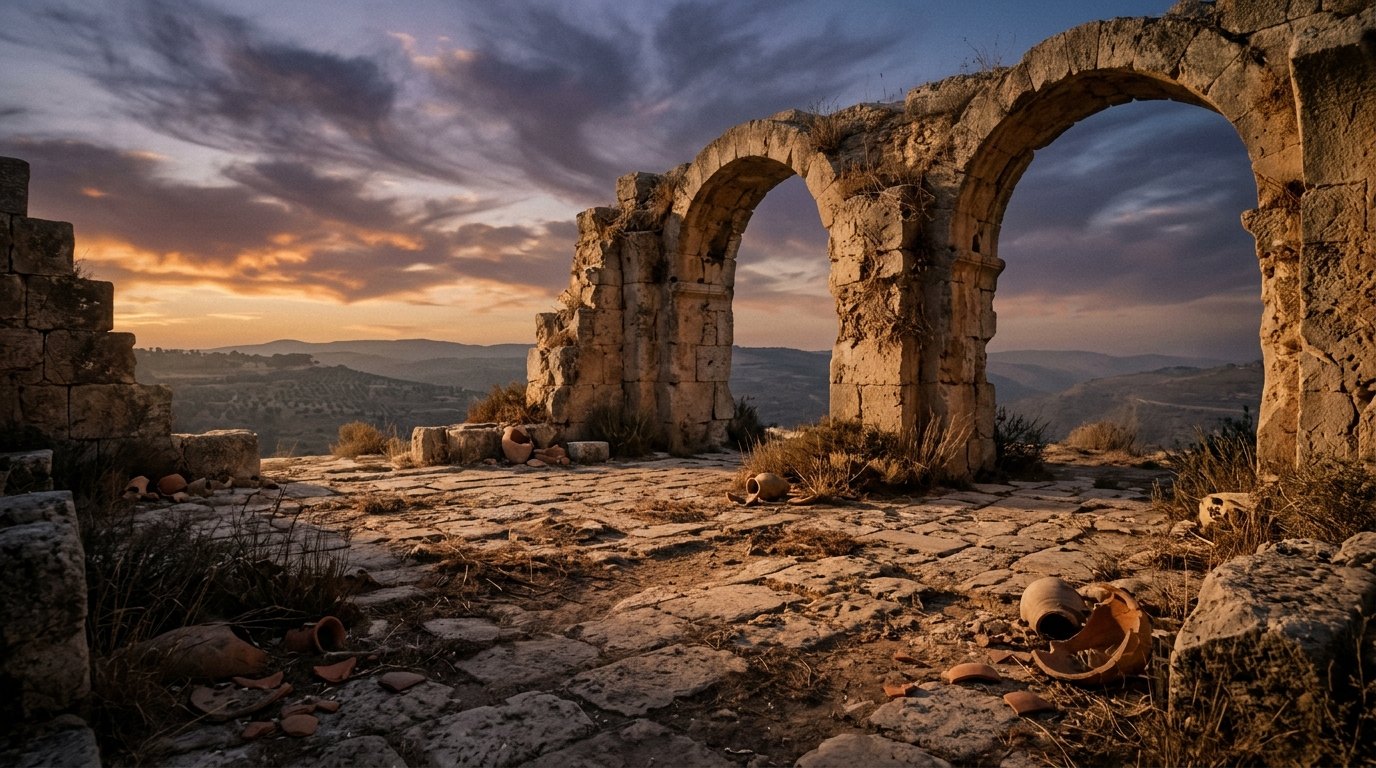
After his suffering, he presented himself to them and gave many convincing proofs that he was alive. He appeared to them over a period of forty days and spoke about the kingdom of God.
Acts 1:3 (NIV)
It shows that biblical faith is rooted in demonstrable, historical events that God verified through infallible proofs.
Biblical faith does not ask us to close our eyes, but to examine what God has demonstrably done in space and time. In Acts 1:3, Luke declares that after Jesus suffered, He presented Himself alive by many convincing proofs, appearing to His disciples over forty days and speaking about the kingdom of God. Biblical trust is not rooted in emotional speculation or private mysticism; it rests upon concrete, verifiable historical events that were publicly demonstrated and corroborated.
From the outset, the New Testament authors intentionally framed their message around rigorous historical testimony. In Luke 1:1-4, Luke explains that he conducted a meticulous investigation of the events handed down by original eyewitnesses, writing an orderly account specifically so that Theophilus could possess rock-solid certainty regarding the things he had been taught. Similarly, John emphasizes that the miracles recorded in his Gospel are not literary embellishments, but carefully chosen empirical signs: "these are written so that you may believe that Jesus is the Christ, the Son of God" (John 20:30-31).
When the apostles proclaimed the core of the gospel, they anchored their message to the physical resurrection of Christ. In 1 Corinthians 15:3-8, Paul enumerates the historical appearances of the risen Lord, citing Peter, the twelve disciples, and more than five hundred brethren at once, most of whom were still alive to confirm the fact. Peter reinforces this standard in 2 Peter 1:16, affirming that the apostles did not follow cleverly devised fables, but were firsthand eyewitnesses of His majesty. John seals this testimony in 1 John 1:1-3, declaring that they proclaimed that which they had heard, seen with their own eyes, looked upon, and touched with their hands. Scripture never demands a blind leap, but an honest response to overwhelming eyewitness testimony.
| Passage | What it says |
|---|---|
| Luke 1:1-4 | Luke compiles eyewitness accounts so Theophilus may know the certainty of what he was taught. |
| John 20:30-31 | Signs are recorded so that readers may believe Jesus is the Christ and have life. |
| Acts 1:3 | Jesus presented Himself alive after His suffering by many convincing and infallible proofs. |
| 1 Corinthians 15:3-8 | Paul grounds faith in the bodily resurrection witnessed by hundreds of named and living eyewitnesses. |
| 2 Peter 1:16 | The apostles did not follow cleverly devised myths but were eyewitnesses of Christ's majesty. |
| 1 John 1:1-3 | Apostolic testimony rests on what was heard, seen with eyes, and touched with hands. |
God's Faithfulness
Trust Rests on God's Proven Character and Natural Revelation

That is why I am suffering as I am. Yet this is no cause for shame, because I know whom I have believed, and am convinced that he is able to guard what I have entrusted to him until that day.
2 Timothy 1:12 (NIV)
It shows Christian confidence is personal trust based on intimately knowing the trustworthy character of God.
Far from being a reckless gamble, biblical faith is an unwavering confidence anchored in the proven character of God and the unmistakable evidence of His created order. Writing from a Roman prison cell in the face of impending death, the apostle Paul declares the bedrock of Christian assurance in 2 Timothy 1:12: "for I know whom I have believed and am convinced that He is able to guard until that day what has been entrusted to me." Paul’s faith was neither naive nor blind; it was an intimate, tested reliance upon a God whose integrity and supreme power he personally and thoroughly knew.
This principle runs throughout the entire testimony of the Scriptures. In Psalm 9:10, David proclaims that "those who know Your name put their trust in You, for You, O Lord, have not forsaken those who seek You." Biblical trust deepens as one comes to understand God’s name—His revealed nature, covenant fidelity, and past deeds of redemption. The Lord has established an unblemished track record of keeping every promise He has ever uttered.
Furthermore, God has surrounded humanity with abundant, observable evidence of His reality. In Psalm 19:1-2, the psalmist explains that the heavens perpetually declare the glory of God, pouring forth speech and displaying knowledge day after day without utterance. Paul echoes this universal revelation in Romans 1:19-20, explaining that God’s invisible attributes—His eternal power and divine nature—are clearly seen and understood through the things that are made. Because God has made His reality plain through the cosmos and His reliability certain through His covenant faithfulness, stepping forward in faith is the most rational and grounded act a person can undertake.
| Passage | What it says |
|---|---|
| Psalms 9:10 | Those who know God's name put their trust in Him because He never forsakes those who seek Him. |
| Psalms 19:1-2 | The heavens continually declare the glory of God, pouring forth visible knowledge day and night. |
| Romans 1:19-20 | God's invisible attributes are clearly seen through what has been made, leaving men without excuse. |
| 2 Timothy 1:12 | Paul is not ashamed because he knows whom he has believed and is persuaded of His faithfulness. |
Where in the Bible
| Book | Passages |
|---|---|
| Psalms | 2 · Psalms 9:10, Psalms 19:1-2 |
| Proverbs | 1 · Proverbs 14:15 |
| Isaiah | 1 · Isaiah 1:18 |
| Luke | 1 · Luke 1:1-4 |
| John | 2 · John 20:29, John 20:30-31 |
| Acts | 2 · Acts 17:11, Acts 1:3 |
| Romans | 3 · Romans 10:17, Romans 8:24-25, Romans 1:19-20 |
| 1 Corinthians | 1 · 1 Corinthians 15:3-8 |
| 2 Corinthians | 2 · 2 Corinthians 4:18, 2 Corinthians 5:7 |
| 1 Thessalonians | 1 · 1 Thessalonians 5:21 |
| 2 Timothy | 1 · 2 Timothy 1:12 |
| Hebrews | 6 · Hebrews 11:1, Hebrews 11:2, Hebrews 10:22, Hebrews 11:6, Hebrews 11:3, Hebrews 11:7 |
| 1 Peter | 3 · 1 Peter 3:15, 1 Peter 1:8, 1 Peter 1:7 |
| 2 Peter | 1 · 2 Peter 1:16 |
| 1 John | 2 · 1 John 4:1, 1 John 1:1-3 |
The story in order
- Creation by God's Word (c. 4000 BC) · Hebrews 11:3 · Faith understands the universe's origin from invisible things by God's word.
- Noah builds the ark (c. 2400 BC) · Hebrews 11:7 · Faith responds to God's warnings about unseen events with obedience.
- The Law given at Sinai (c. 1450 BC) · Isaiah 1:18 · God invites His people to reason with Him about His commands.
- David trusts in God's name (c. 1000 BC) · Psalms 9:10 · Knowing God's name leads to trust because He is faithful.
- Wisdom from observation (c. 900 BC) · Proverbs 14:15 · Prudent people think carefully about their steps, unlike the simple.
- Nature declares God's glory (c. 1000 BC) · Psalms 19:1-2 · The created order reveals God's glory and knowledge.
- God's invisible attributes revealed (c. AD 50) · Romans 1:19-20 · Creation makes God's eternal power and divine nature evident.
- Jesus' resurrection witnessed (AD 30-33) · 1 Corinthians 15:3-8 · Faith is grounded in the eyewitness testimony of Jesus' resurrection.
- Apostolic testimony (c. AD 90) · 1 John 1:1-3 · The apostles share what they saw, heard, and touched of Christ.
- Luke compiles eyewitness accounts (c. AD 60) · Luke 1:1-4 · Historical accounts provide certainty about Christian teaching.
- Bereans examine the Scriptures (c. AD 50) · Acts 17:11 · Faith involves diligently examining God's word for truth.
- Believers walk by faith (c. AD 55) · 2 Corinthians 5:7 · Faith means trusting God rather than relying on sight.
Faith is grounded in evidence
| Faith's Basis | Biblical Support | Passage |
|---|---|---|
| Substantial assurance and conviction | Evidence of things not seen | Hebrews 11:1 |
| God's existence and His rewarding nature | Believing God exists and rewards seekers | Hebrews 11:6 |
| Understanding God's creative word | Framed by God's word from invisible things | Hebrews 11:3 |
| Eyewitness testimony of Christ | Apostles saw, heard, and touched Christ | 1 John 1:1-3 |
| Historical proofs of Jesus' resurrection | Jesus presented Himself alive by many proofs | Acts 1:3 |
| God's faithfulness and character | Knowing whom we have believed | 2 Timothy 1:12 |
| Natural revelation | Creation declares God's glory and attributes |
Faith requires reasoned defense and testing
| Command/Instruction | Purpose/Result | Passage |
|---|---|---|
| Always be prepared to give a reasoned defense for your hope | To explain the hope within | 1 Peter 3:15 |
| Test everything; hold fast to what is good | Discern truth from falsehood | 1 Thessalonians 5:21 |
| Test the spirits | Not believe every spirit, but discern if they are from God | 1 John 4:1 |
| Examine the Scriptures daily | To see if the teachings are true | Acts 17:11 |
| Reason together with the Lord | Concerning sin and forgiveness | Isaiah 1:18 |
Key words
- Faith (pistis, πίστις)
- Substantial assurance of things hoped for and conviction of things not seen. · Hebrews 11:1
- Substance (hypostasis, ὑπόστασις)
- The assurance or foundation of something. · Hebrews 11:1
- Evidence (elenchos, ἔλεγχος)
- The conviction or proof of something. · Hebrews 11:1
- Understand (noeo, νοέω)
- To perceive or comprehend by faith. · Hebrews 11:3
- Hear (akoe, ἀκοή)
- To come to faith through the proclamation of God's word. · Romans 10:17
- Defense (apologia, ἀπολογία)
- A reasoned explanation or justification. · 1 Peter 3:15
- Walk by faith (peripateo, περιπατέω)
- To live by trusting in God's revelation rather than by sight. · 2 Corinthians 5:7
Believers do not abandon evidence to embrace Christ; they lay hold of the surest anchor available, anchored to God's own unbreakable word. When you walk by faith, your sight is not extinguished, but elevated to perceive the unseen, eternal promises of the living God.
29 passages, each cited once.
Scripture cited
- Hebrews 11:1-3
- 2 Corinthians 5:7
- 2 Corinthians 4:18
- Hebrews 11:7