Is it a sin to doubt?
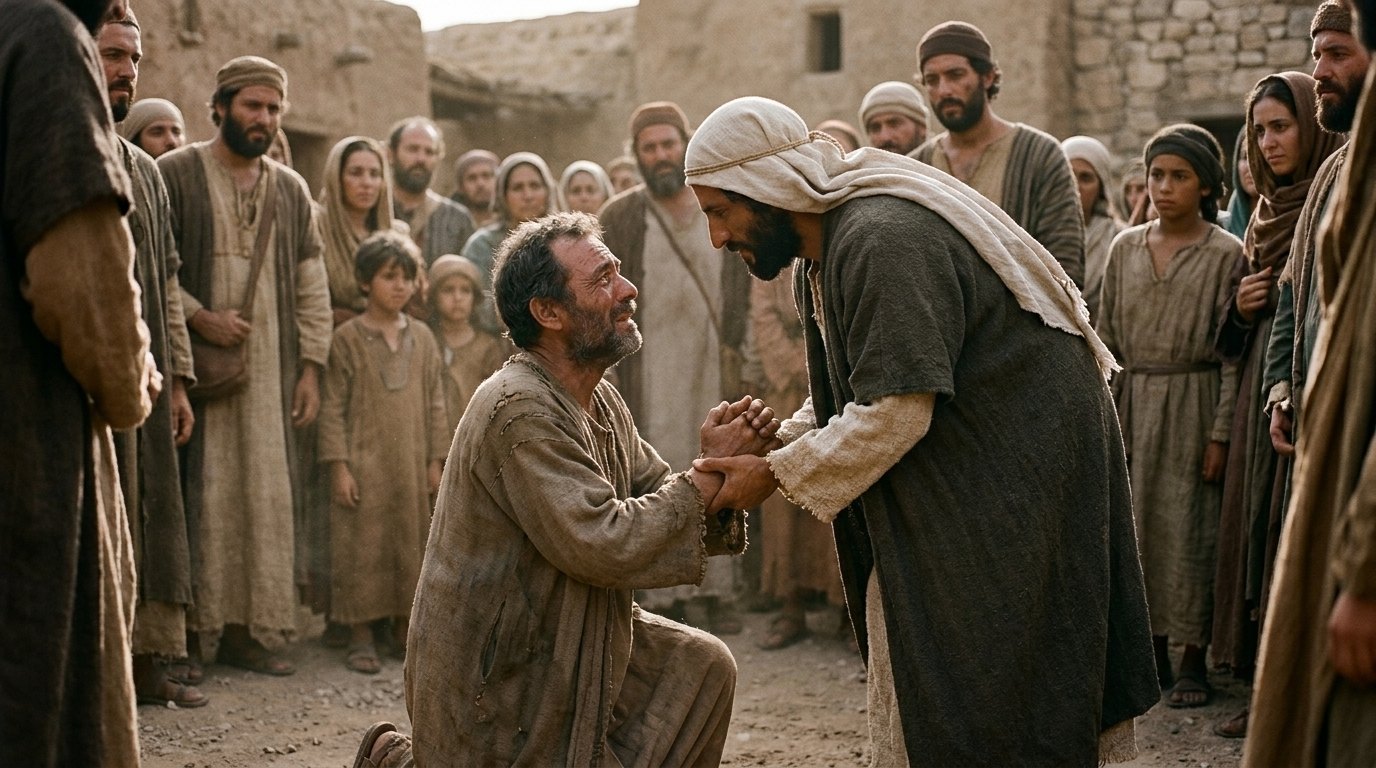
Mark 9:23-24
23 “ ‘If you can’?” said Jesus. “Everything is possible for one who believes.”
24 Immediately the boy’s father exclaimed, “I do believe; help me overcome my unbelief!”
New International Version (NIV)
The answer
Doubt is sin when it becomes unbelief—a refusal to trust God—but an honest struggle with weak faith is not something to hide or despair over. Bring that struggle to Christ, ask Him to strengthen your faith, and turn away from any deliberate refusal to believe Him.
God requires faith. Hebrews 11:6 says, “But without faith it is impossible to please him,” and adds that the person coming to God must believe that He exists and rewards those who diligently seek Him. James 1:6-8 warns against asking God while doubting, describing the doubter as driven and tossed like a wave and concluding, “He is a double-minded man, unstable in all his ways.” Cherished distrust of God is therefore not spiritually harmless.
Yet weak faith brought honestly to Jesus meets compassion. In Mark 9:24, the father of a suffering child cries out with tears, “I believe. Help my unbelief!” He does not pretend his faith is stronger than it is, nor does he defend his unbelief. He confesses both his faith and his weakness to Christ. Jesus then delivers the boy in Mark 9:25-27. A fearful, conflicted heart coming to Jesus is very different from a heart refusing to come.
Thomas illustrates the refusal that must be forsaken. In John 20:25 he insists that he will not believe unless he sees and touches Jesus’ wounds. Jesus answers him directly: “Don’t be unbelieving, but believing” (John 20:27). Christ exposes the unbelief, but He also comes near and calls Thomas to faith.
So the response to doubt is neither to excuse settled unbelief nor to condemn yourself for every fearful thought or honest question. Confess distrust where it has taken root, and ask God for help, just as the father did. God invites those who lack wisdom to ask Him, promising that He gives generously and without reproach in James 1:5. Where doubt has been cherished as unbelief, confess it as sin: “If we confess our sins, he is faithful and righteous to forgive us the sins and to cleanse us from all unrighteousness” (1 John 1:9). Hope rests in Christ’s grace, not in flawless confidence: “while we were yet sinners, Christ died for us” (Romans 5:8).
Answered from Scripture · reviewed November 11, 2026
Scripture makes a vital distinction between honest, struggling faith that asks for help and hardened unbelief that refuses God's word. Doubt is not inherently sin when it drives the soul toward Christ in weakness, but cultivating a divided heart or rejecting God's promises leads directly into transgression. Examining what the Bible says about wrestling believers, hardened skeptics, and the mercy of Jesus reveals how God truly regards our questions and frailty.
Struggling Faith
Jesus meets trembling faith with compassion
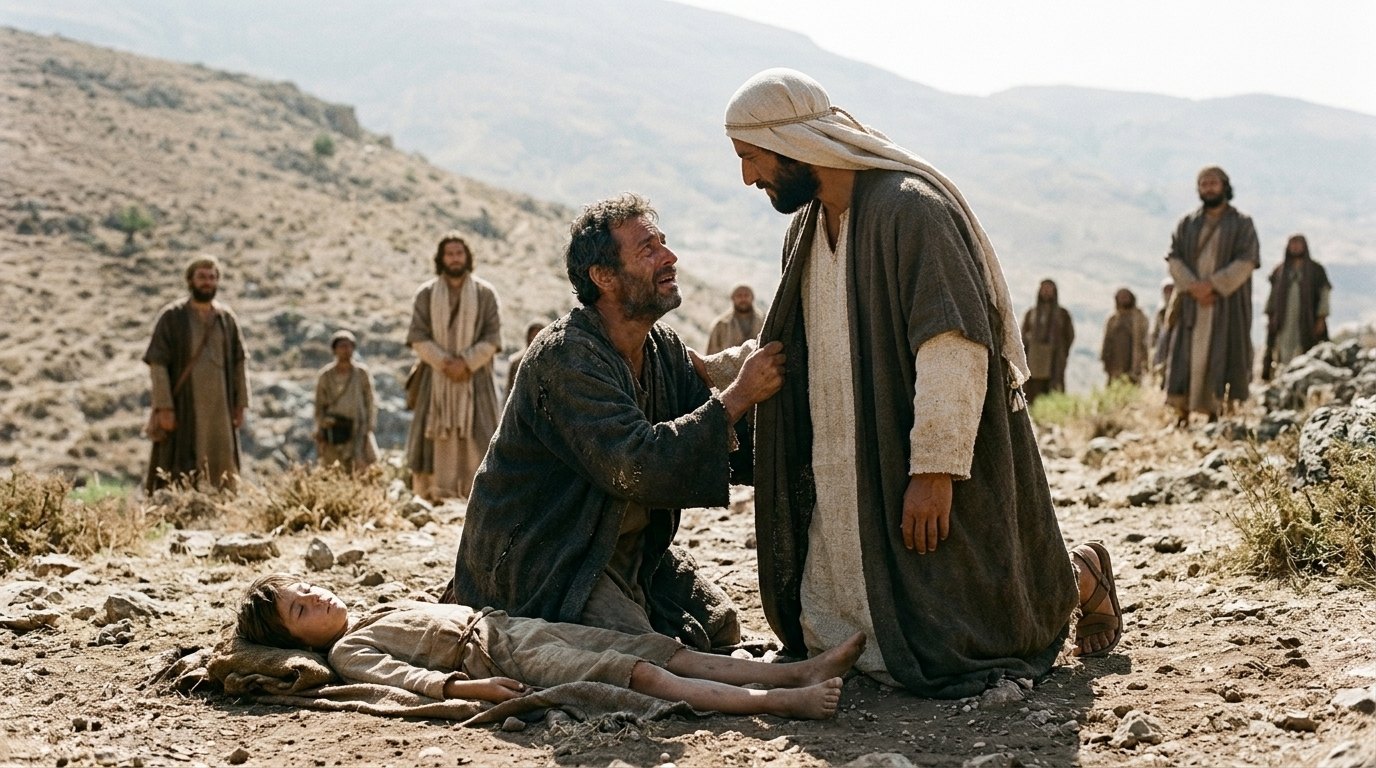
Immediately the boy’s father exclaimed, “I do believe; help me overcome my unbelief!”
Mark 9:24 (NIV)
A desperate father confesses both his genuine faith and his weakness, receiving immediate deliverance rather than rebuke.
When a frantic father brings his afflicted son to Jesus, his desperate cry captures the heart of struggling faith: "I believe; help my unbelief!" (Mark 9:24). Jesus had just reminded him that all things are possible to the one who believes (Mark 9:23), yet rather than turning away because of the man’s mixed conviction, the Lord grants his plea and heals the child immediately. True faith often lives in the same chest alongside human frailty. Jesus does not demand monumental, self-generated strength; a mustard seed of faith can move mountains (Matthew 17:20; Luke 17:6), which is why the disciples themselves openly pray, "Increase our faith!" (Luke 17:5).
The Old Testament saints similarly wrestled through deep perplexity without being cast out of the covenant family. In Psalm 73:2, Asaph admits his feet had almost slipped when he struggled to reconcile God’s goodness with the prosperity of the wicked. His troubled reasoning felt wearying and heavy (Psalm 73:16) until he entered the sanctuary of God, where holy worship reframed his understanding of the end of the ungodly (Psalm 73:17). Later, in Psalm 77:7–8, Asaph voices the agonizing question of whether God's steadfast love has ceased forever. His turning point is not cynical departure, but deliberate remembrance: he resolves to meditate on the Lord’s ancient wonders and mighty deeds (Psalm 77:11). When struggling believers bring their frailties to God in prayer, their questions become the very doorway to deeper dependence on His unchanging faithfulness.
| Passage | What it says |
|---|---|
| Mark 9:23 | Jesus declares that all things are possible to the one who believes. |
| Mark 9:24 | A father cries out with tears asking Jesus to help his unbelief. |
| Matthew 17:20 | Faith as small as a grain of mustard seed can move mountains. |
| Luke 17:5 | The apostles ask the Lord directly to increase their faith. |
| Luke 17:6 | Jesus affirms that even tiny faith exerts true spiritual power. |
| Psalms 73:2 | Asaph confesses his feet had almost slipped when he struggled to reconcile God's goodness with prosperity. |
| Psalms 73:16 | The psalmist admits his troubled thoughts were wearisome until he entered the sanctuary of God. |
| Psalms 73:17 | Sanctuary worship reframed Asaph's doubts by showing him the eternal destiny of the ungodly. |
| Psalms 77:7 | Asaph openly asks whether the Lord will cast off forever and show favor no more. |
| Psalms 77:8 | A troubled believer questions whether God's steadfast love has ceased forever. |
| Psalms 77:11 | The remedy to despairing doubts is remembering the Lord's mighty wonders of old. |
The Doubting Heart
Wavering between two minds hinders prayer
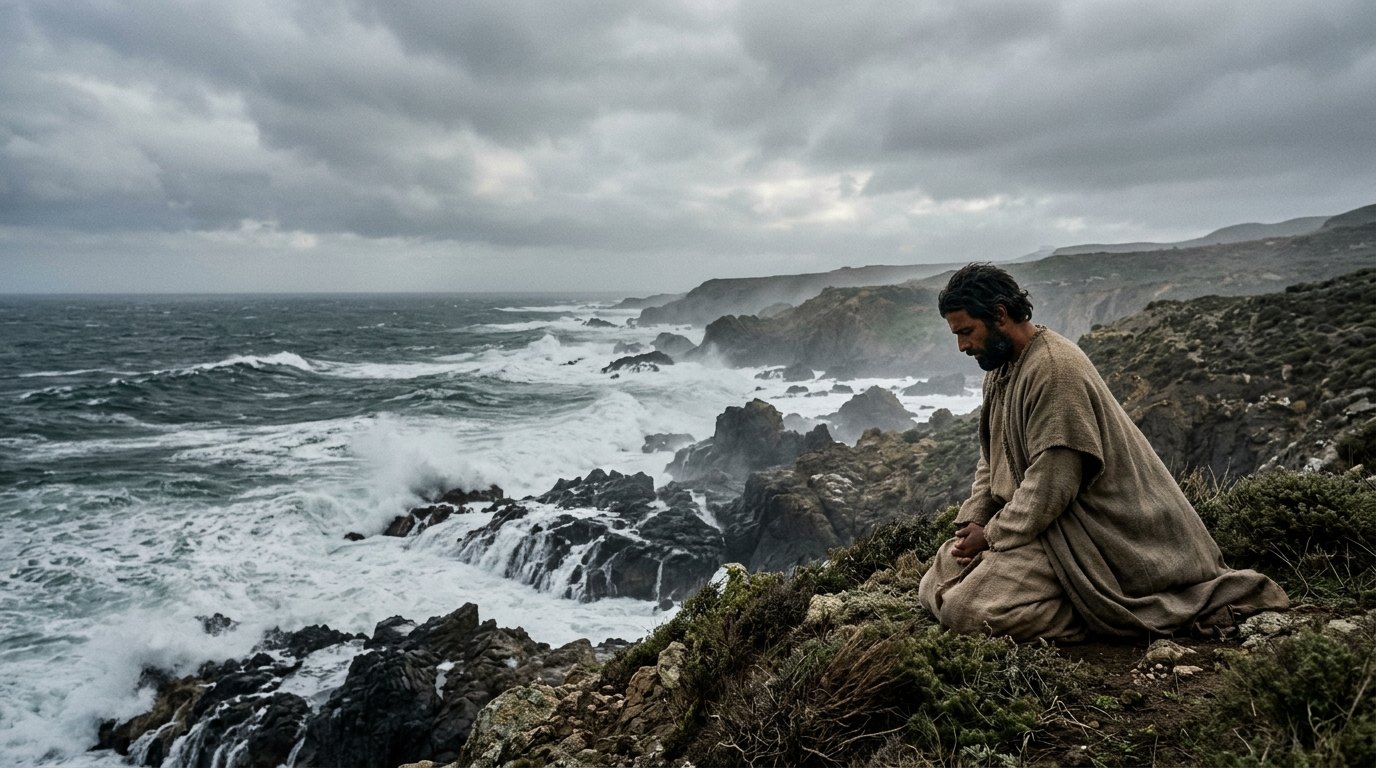
But when you ask, you must believe and not doubt, because the one who doubts is like a wave of the sea, blown and tossed by the wind.
James 1:6 (NIV)
Scripture warns that one who asks God while wavering is unstable like a wave tossed by the sea.
While Jesus meets honest trembling with tenderness, Scripture warns soberly against cultivating a divided loyalty toward God. James writes that whoever asks of God must ask in faith, for the one who doubts is like a wave of the sea that is driven and tossed by the wind (James 1:6). This wavering is not a momentary question, but a heart split between trusting God and leaning on self or the world. Such an individual is "double-minded" and thoroughly unstable (James 1:8), and should not suppose he will receive anything from the Lord (James 1:7).
Jesus presses the exact same truth regarding our prayers and obedience. He declares that if His followers have faith and do not doubt in their heart, they can command even an immovable mountain to be cast into the sea, and it will be done (Matthew 21:21–22; Mark 11:23). Paul echoes this standard for public worship when he commands men everywhere to pray lifting holy hands, free from anger and doubting (1 Timothy 2:8). The ultimate pattern is Abraham, who faced his own physical deadness and Sarah's barrenness yet "did not waver through unbelief regarding the promise of God, but was strengthened in faith" (Romans 4:20). Wavering becomes sinful when we treat God's sworn character as unreliable, hesitating between His truth and our autonomous doubts.
| Passage | What it says |
|---|---|
| James 1:6 | Petitioners must ask in faith without doubting or wavering. |
| James 1:7 | A wavering person should not expect to receive anything from the Lord. |
| James 1:8 | A double-minded man is unstable in all his ways. |
| Matthew 21:21 | Jesus promises that if believers have faith and do not doubt, mountains will move. |
| Matthew 21:22 | Whatever is asked in prayer believing shall be received. |
| Mark 11:23 | Whoever commands a mountain to move without doubting in their heart will receive it. |
| 1 Timothy 2:8 | Paul instructs believers to pray lifting holy hands without anger or doubting. |
| Romans 4:20 | Abraham did not waver through unbelief regarding God's promise, but grew strong in faith. |
Honest Questions
God answers the sincere search for assurance
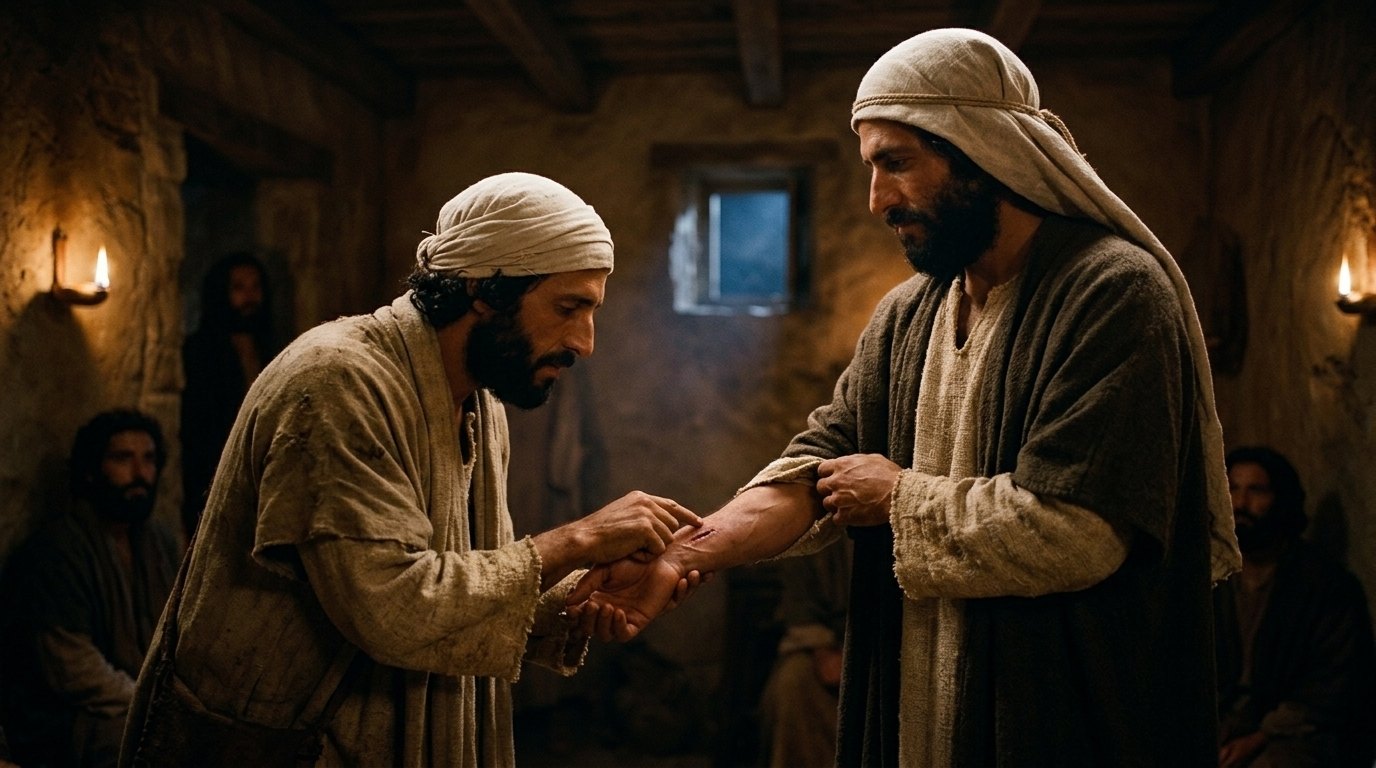
Then he said to Thomas, “Put your finger here; see my hands. Reach out your hand and put it into my side. Stop doubting and believe.”
John 20:27 (NIV)
Jesus accommodates Thomas's demand for physical evidence, offering his wounds to lead him from doubt to belief.
When honest questions arise from sincere searchers, God responds with patience rather than hasty rejection. After the resurrection, Thomas declared he would not believe unless he saw the nail marks and placed his hand into Christ's pierced side (John 20:25). Meeting him behind locked doors, Jesus extends His wounded hands and bids Thomas reach out and touch Him (John 20:27), turning hesitation into joyful worship: "My Lord and my God!" (John 20:28). Even when John the Baptist languished in prison and sent messengers to ask whether Jesus was indeed the Coming One (Matthew 11:2–3), Jesus did not censure him, but pointed to fulfilled prophetic signs of healing and sight (Matthew 11:4). When Peter began sinking into the sea, Jesus caught him instantly, even while asking, "Why did you doubt?" (Matthew 14:31).
This divine patience runs throughout redemptive history. Moses repeatedly voiced his inadequacy and fears of rejection at the burning bush (Exodus 3:11; Exodus 4:1), and God provided confirming signs. Gideon sought validation through a threshing-floor fleece twice (Judges 6:36–39) following his cry over Israel’s suffering (Judges 6:13). Habakkuk cried out regarding divine justice (Habakkuk 1:2, Habakkuk 1:13) and climbed his watchtower to hear God's reply (Habakkuk 2:1). Though Zechariah received muteness for demanding proof after Gabriel’s word (Luke 1:18, Luke 1:20), Mary’s humble inquiry about the virgin birth received angelic explanation (Luke 1:34). Even after the resurrection, when disciples struggled to believe for sheer joy and wonder (Luke 24:38–39; Matthew 28:17), the Lord patiently proved His bodily reality.
| Passage | What it says |
|---|---|
| John 20:25 | Thomas insists he will not believe without touching Christ's wounds. |
| John 20:27 | Jesus invites Thomas to see and feel his hands and side. |
| John 20:28 | Thomas confesses Jesus as his Lord and his God. |
| Matthew 11:2 | John the Baptist sends disciples from prison to ask if Jesus is the Messiah. |
| Matthew 11:3 | John asks whether Jesus is the Coming One or if they should look elsewhere. |
| Matthew 11:4 | Jesus directs John's disciples back to his miracles and fulfilled prophecies. |
| Matthew 14:31 | Jesus catches sinking Peter and asks why he doubted. |
| Exodus 3:11 | Moses voices his perceived inadequacy when called to lead Israel out of Egypt. |
| Exodus 4:1 | Moses asks what will happen if Israel will not believe or listen to him. |
| Judges 6:13 | Gideon asks why disaster has fallen on Israel if the Lord is truly with them. |
| Judges 6:36 | Gideon asks God for a sign with the fleece to confirm His deliverance. |
| Judges 6:39 | Gideon seeks further confirmation from the Lord without receiving divine rebuke. |
| Habakkuk 1:2 | The prophet Habakkuk cries out asking how long he must call for help. |
| Habakkuk 1:13 | Habakkuk respectfully asks why pure eyes tolerate the treacherous swallowing the righteous. |
| Habakkuk 2:1 | The prophet stations himself on the rampart to await God's answer to his complaint. |
| Luke 1:18 | Zechariah asks how he can be sure of the angel's promise in his old age. |
| Luke 1:20 | Zechariah is disciplined with muteness because he did not believe Gabriel's words. |
| Luke 1:34 | Mary asks how the virgin birth will happen given she is a virgin. |
| Luke 24:38 | Jesus asks His disciples why they are troubled and why doubts arise in their hearts. |
| Luke 24:39 | The risen Lord invites touch and visual proof to calm his disciples' questioning hearts. |
| Matthew 28:17 | The disciples worshiped the risen Christ on the mountain, though some still doubted. |
Hardened Unbelief
Willful rejection of God invites severe judgment
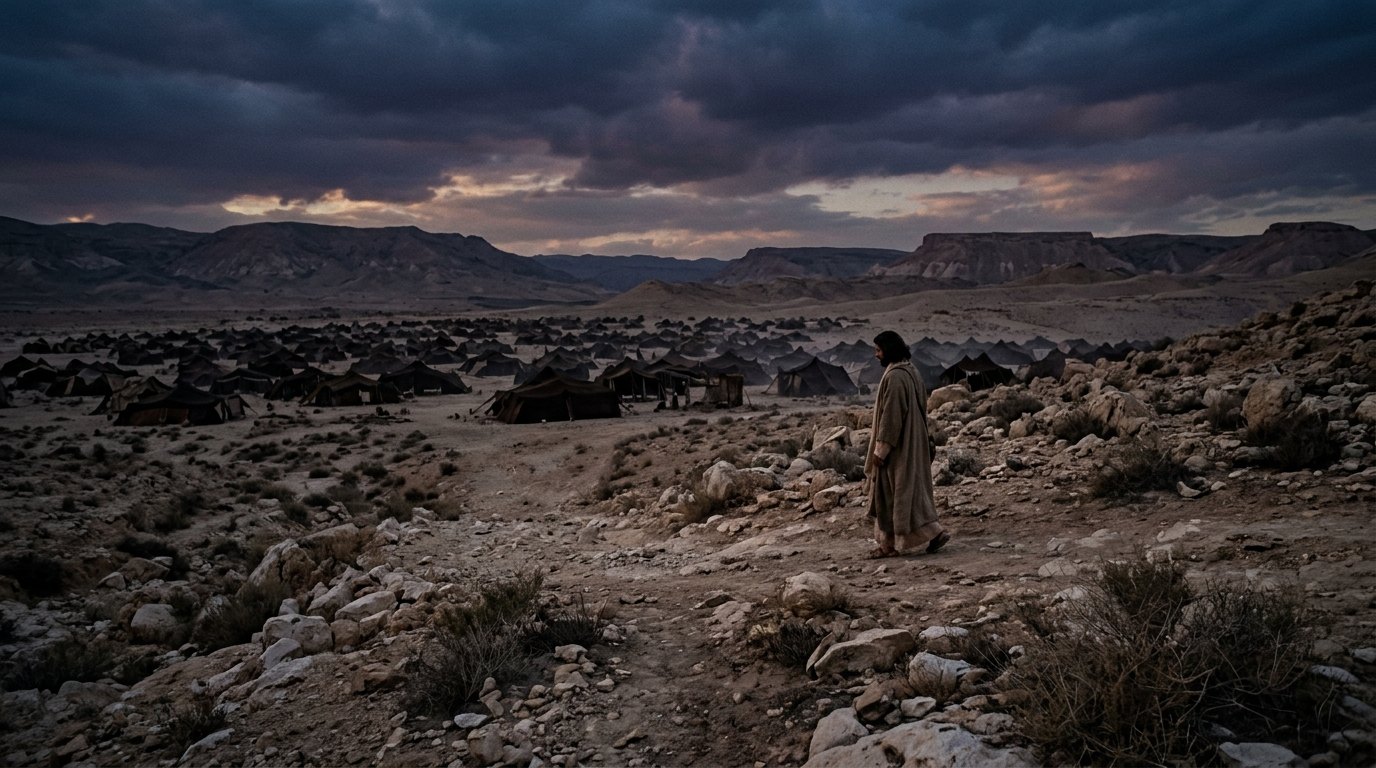
See to it, brothers and sisters, that none of you has a sinful, unbelieving heart that turns away from the living God.
Hebrews 3:12 (NIV)
The author identifies persistent unbelief as an evil heart that departs from the living God.
Scripture draws an uncompromising line between the honest questions of weak faith and the hardened, stubborn rejection of truth. The author of Hebrews issues an urgent plea: "Take care, brothers, lest there be in any of you an evil, unbelieving heart, leading you to fall away from the living God" (Hebrews 3:12). This posture is not an innocent intellectual puzzle; it is active hostility that departs from the Creator. Israel perished in the wilderness because they refused to believe God's promises despite witnessing His miraculous wonders firsthand (Numbers 14:11; Hebrews 3:19). God warned them through the psalmist never to harden their hearts as at Meribah, where they put the Lord to the test (Psalm 95:8–9), for the word heard cannot profit anyone unless it is united with faith (Hebrews 4:2).
Without faith, the Bible states plainly, it is impossible to please God (Hebrews 11:6). Unbelief treats the God of truth as a liar, and Jesus warns that whoever refuses to believe stands condemned already (John 3:18). Even the risen Christ severely rebuked His closest followers when they displayed a stubborn hardness of heart by refusing the eyewitness testimony of His resurrection (Mark 16:14). Paul reminds us that whatever does not proceed from faith is sin (Romans 14:23). Yet in our interaction with one another in the church, Jude offers the pastor's balance: we must "have mercy on those who doubt" (Jude 1:22), snatching wavering souls from danger while guarding against willful apostasy.
| Passage | What it says |
|---|---|
| Hebrews 3:12 | Believers are warned against having an evil, unbelieving heart that falls away. |
| Hebrews 3:19 | Israel could not enter the promised rest because of unbelief. |
| Hebrews 11:6 | Without faith it is impossible to please God. |
| John 3:18 | Whoever does not believe is condemned already for rejecting God's Son. |
| Romans 14:23 | Whatever does not proceed from faith is sin. |
| Jude 1:22 | The church is instructed to show mercy to those who doubt. |
| Numbers 14:11 | The Lord rebukes Israel for refusing to believe in Him despite all the signs. |
| Psalms 95:8 | Israel is warned not to harden their hearts as in the rebellion at Meribah. |
| Psalms 95:9 | The wilderness generation put God to the test even though they saw His works. |
| Mark 16:14 | Jesus rebukes the Eleven for their unbelief and hardness of heart regarding His resurrection. |
| Hebrews 4:2 | The message heard did not benefit them because it was not combined with faith. |
Where in the Bible
| Book | Passages |
|---|---|
| Exodus | 2 · Exodus 3:11, Exodus 4:1 |
| Numbers | 1 · Numbers 14:11 |
| Judges | 3 · Judges 6:13, Judges 6:36, Judges 6:39 |
| Psalms | 8 · Psalms 73:2, Psalms 73:16, Psalms 73:17, Psalms 77:7, Psalms 77:8, Psalms 77:11, Psalms 95:8, Psalms 95:9 |
| Habakkuk | 3 · Habakkuk 1:2, Habakkuk 1:13, Habakkuk 2:1 |
| Matthew | 8 · Matthew 17:20, Matthew 21:21, Matthew 21:22, Matthew 11:2, Matthew 11:3, Matthew 11:4, Matthew 14:31, Matthew 28:17 |
| Mark | 4 · Mark 9:23, Mark 9:24, Mark 11:23, Mark 16:14 |
| Luke | 7 · Luke 17:5, Luke 17:6, Luke 1:18, Luke 1:20, Luke 1:34, Luke 24:38, Luke 24:39 |
| John | 4 · John 20:25, John 20:27, John 20:28, John 3:18 |
| Romans | 2 · Romans 4:20, Romans 14:23 |
| 1 Timothy | 1 · 1 Timothy 2:8 |
| Hebrews | 4 · Hebrews 3:12, Hebrews 3:19, Hebrews 11:6, Hebrews 4:2 |
| James | 3 · James 1:6, James 1:7, James 1:8 |
| Jude | 1 · Jude 1:22 |
The story in order
- Creation and Fall (c. 4000 BC) · Genesis 1:1 · God's perfect creation marred by disobedience.
- The Flood (c. 2350 BC) · Genesis 7:1 · Judgment on widespread human wickedness.
- Abraham's Call (c. 2090 BC) · Genesis 12:1 · Faith tested through promises and trials.
- Exodus from Egypt (c. 1446 BC) · Exodus 12:31-42 · God's deliverance despite Israel's wavering.
- Wilderness Wandering (c. 1406 BC) · Numbers 14:11 · Rebellion and unbelief barred entry to the land.
- Gideon's Call (c. 1160 BC) · Judges 6:13 · Doubt and questions about God's presence.
- Asaph's Struggle (c. 950 BC) · Psalms 73:2 · Troubled by prosperity of wicked, questions God's goodness.
- Habakkuk's Complaint (c. 610 BC) · Habakkuk 1:2 · Prophet questions God's justice in judgment.
- John the Baptist's Question (c. AD 28) · Matthew 11:2 · Doubt from prison about Jesus' identity.
- Thomas's Doubt (AD 30) · John 20:25 · Refusal to believe without physical evidence.
- Peter's Sinking (AD 30) · Matthew 14:31 · Jesus rebukes Peter for doubting while walking on water.
- The Resurrection Appearances (AD 30) · Matthew 28:17 · Disciples worship, though some still doubted.
- Apostolic Teaching (c. AD 65) · Hebrews 3:12 · Warning against unbelief and falling away.
Honest Questions and God's Response
| Questioner | Question/Doubt | God's Response | Passage |
|---|---|---|---|
| Father of the demon-possessed boy | Help my unbelief. | Jesus casts out the demon (Mark 9:25-27). | Mark 9:24 |
| John the Baptist | Are you the Messiah? | Jesus points to miracles and fulfilled prophecy (Matthew 11:4-5). | Matthew 11:2-3 |
| Thomas | I will not believe without touching Christ's wounds. | Jesus invites Thomas to see and feel His wounds (John 20:27). | John 20:25-28 |
| Moses | What if they do not believe me? | God demonstrates His power through signs (Exodus 4:1-9). | |
| Gideon | Show me a sign with the fleece. | God grants signs to confirm His deliverance (Judges 6:36-40). | |
| Habakkuk | Why do you tolerate evil? | God promises judgment and vindication (Habakkuk 2:1-4). | |
| Mary | How will this be, since I am a virgin? | The angel confirms the Holy Spirit's power (Luke 1:35). | Luke 1:34-35 |
| Zechariah | How can I be sure? | Zechariah is struck mute for disbelief (Luke 1:18-20). | Luke 1:18-20 |
Key words
- Belief (pistis, πίστις)
- Trust and confidence in God and His promises. · Mark 9:23
- Unbelief (apistia, ἀπιστία)
- Rejection of God's truth, promises, or person. · Mark 9:24
- Doubt (diakrinō, διακρίνω)
- Hesitation or uncertainty, often leading to wavering. · James 1:6
- Faithfulness (apistia, ἀπιστία (used positively in Romans 4:20))
- Steadfast trust and commitment, even amid trials. · Romans 4:20
- Hardness of heart (sklērokardia, σκληροκαρδία)
- Willful resistance to God's word and Spirit. · Mark 16:14
God does not cast off those whose faith is trembling, bruised, or seeking confirmation amid trial. When honest doubts arise, bringing them directly to Christ in prayer turns weakness into an avenue for his strengthening grace. The danger lies only in letting doubt harden into deliberate refusal, but humble reliance upon God's unchanging word will always find a faithful Savior ready to help.
51 passages, each cited once.
Scripture cited
- Hebrews 11:6
- James 1:5-8
- Mark 9:14-29
- John 20:24-29
- 1 John 1:9
- Romans 5:8