What is the kingdom of God Jesus preached?

Mark 1:14-15
14 After John was put in prison, Jesus went into Galilee, proclaiming the good news of God.
15 “The time has come,” he said. “The kingdom of God has come near. Repent and believe the good news!”
New International Version (NIV)
The answer
The kingdom of God Jesus preached is God’s saving reign through Jesus, His promised King. It is not primarily a territory or a human political system. It is God actively ruling to rescue sinners, overcome evil, and accomplish His will on earth. That reign arrived with Jesus, is advancing now, and will be openly and finally established when Christ returns in glory.
God’s promised reign has come in Jesus
Mark 1:14-15 summarizes Jesus’ message: “The time is fulfilled, and God’s Kingdom is at hand!” The time appointed in God’s promises had arrived.
Isaiah 61:1-3 foretold the Lord’s anointed servant bringing good news, binding up the brokenhearted, and proclaiming liberty to captives. In Luke 4:18-21, Jesus read that promise and declared, “Today, this Scripture has been fulfilled in your hearing.” The kingdom announcement therefore centers on Jesus Himself: God’s anointed King had come to bring salvation. Matthew 4:23 shows Him proclaiming the gospel of the kingdom while healing sickness and disease—His words and works together displaying God’s restoring rule.
Its power is not worldly, but its reach is universal
Before Pilate, Jesus said, “My Kingdom is not of this world,” explaining that His servants did not fight to prevent His arrest (John 18:36). His kingdom comes from God and is not established through worldly violence or political coercion.
That does not mean it concerns only heaven or private religious feelings. Jesus taught His disciples to pray, “Let your Kingdom come. Let your will be done on earth as it is in heaven” (Matthew 6:10). Romans 14:17 likewise describes its present character: not eating and drinking, but “righteousness, peace, and joy in the Holy Spirit.” Wherever God reigns, His righteousness transforms how people live.
It is already present and still coming
In Matthew 13:31-33, Jesus compared the kingdom to a tiny mustard seed that becomes a tree and to yeast that gradually permeates the whole batch. His reign may begin inconspicuously and work quietly, but it grows toward its full result.
Present growth is not yet final completion. Matthew 25:31-34 teaches that the Son of Man will come in glory, sit on His throne, gather all nations, and separate people from one another. The King will then welcome the blessed to inherit “the Kingdom prepared for you from the foundation of the world.” The kingdom will therefore be publicly consummated with judgment, Christ’s glorious reign, and the inheritance of His people.
The doorway is repentance and faith
In Mark 1:15, Jesus joined the announcement with the command: “Repent, and believe in the Good News.” Repentance means turning from sin and self-rule to God; believing the good news means trusting the King He has sent.
Colossians 1:13-14 describes this rescue as deliverance from the power of darkness and transfer into the kingdom of God’s Son, in whom there is redemption and forgiveness of sins. Belonging to the kingdom therefore means coming under Christ’s gracious reign now—receiving His forgiveness, obeying Him as King, and awaiting His return.
Answered from Scripture · reviewed November 11, 2026
When Jesus began His public ministry, His first proclamation was that the Kingdom of God had drawn near in His own person and work. It is not an earthly political territory, but the sovereign, saving reign of God breaking into human history to deliver sinners from darkness into life. Grasping this central theme of Christ's preaching reveals both the present reality of His lordship and the glorious future that awaits all who believe.
The Arrival
The long-awaited reign of God arrives in Christ.
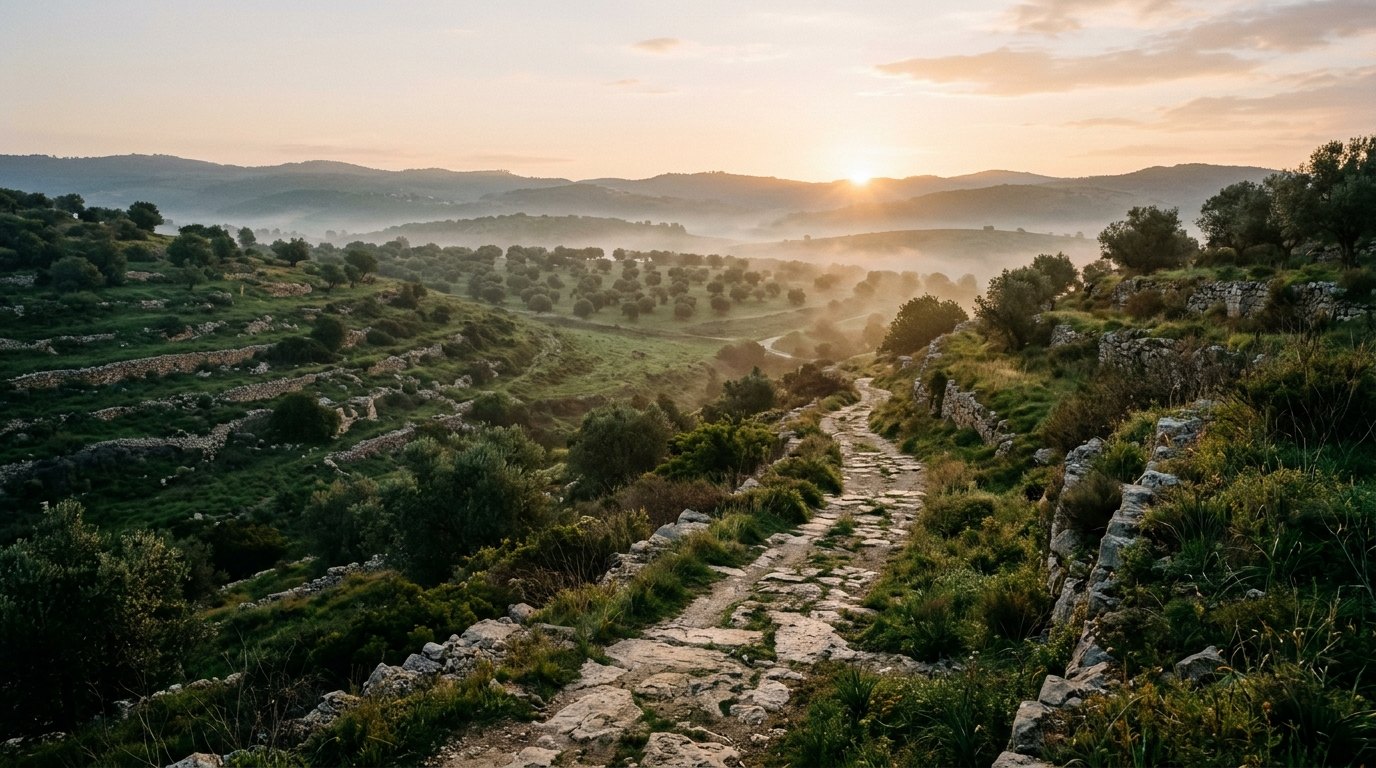
“The time has come,” he said. “The kingdom of God has come near. Repent and believe the good news!”
Mark 1:15 (NIV)
It defines Jesus' core announcement that history has reached its turning point and God's sovereign rule is immediately at hand.
In Mark 1:15, Jesus announces that the time is fulfilled, and the kingdom of God is at hand, demanding repentance and belief in the gospel. This decisive declaration forms the core of Christ's earliest ministry. Matthew 3:1-2 shows that John the Baptist prepared this exact way in the wilderness, preaching repentance before the King appeared. When John was imprisoned, Jesus departed into Galilee as recorded in Matthew 4:12 and Mark 1:14, taking up the message with divine authority. In Matthew 4:17, He reiterates that heaven's rule has drawn near. Galatians 4:4 confirms that this arrival was not accidental; God sent His Son precisely in the fullness of time. Matthew 4:23 and Matthew 9:35 demonstrate that Christ did not merely speak of this realm; He authenticated His proclamation by healing every disease and affliction among the people. As He explained in Luke 4:43, preaching the good news of the kingdom was the very purpose for which He was sent, a mission He continued through every town alongside His disciples in Luke 8:1. Luke 16:16 marks this great turning point in redemptive history: the Law and the Prophets held sway until John, but since then, the kingdom of God is actively proclaimed. Christ then commissioned others to herald this same arrival, sending out the seventy-two in Luke 10:9-11 to declare to every receptive city that the reign of God had come near.
| Passage | What it says |
|---|---|
| Mark 1:14 | Jesus begins His Galilean ministry proclaiming the good news of the Kingdom of God after John's arrest. |
| Mark 1:15 | Jesus declares the time fulfilled, the Kingdom at hand, and commands repentance and faith. |
| Matthew 4:12 | Jesus departs into Galilee following the imprisonment of John the Baptist. |
| Matthew 4:17 | Jesus begins to preach repentance because the Kingdom of Heaven is at hand. |
| Matthew 4:23 | Jesus travels throughout Galilee teaching, proclaiming the gospel of the Kingdom, and healing disease. |
| Matthew 9:35 | Jesus ministers through all cities and villages, preaching the Kingdom and healing all sickness. |
| Luke 4:43 | Jesus states that preaching the good news of the Kingdom of God is the purpose for which He was sent. |
| Luke 8:1 | Jesus goes through every city and village proclaiming the glad tidings of the Kingdom with the twelve. |
| Galatians 4:4 | God sent His Son in the fullness of time, born of a woman under the law. |
| Matthew 3:1-2 | John the Baptist announces in the wilderness that the kingdom of heaven is at hand. |
| Luke 10:9-11 | The seventy-two proclaim to towns that the kingdom of God has come near them. |
| Luke 16:16 | The Law and the Prophets were until John; since then the kingdom is preached. |
The Promise
Prophets foretold an everlasting divine kingdom.
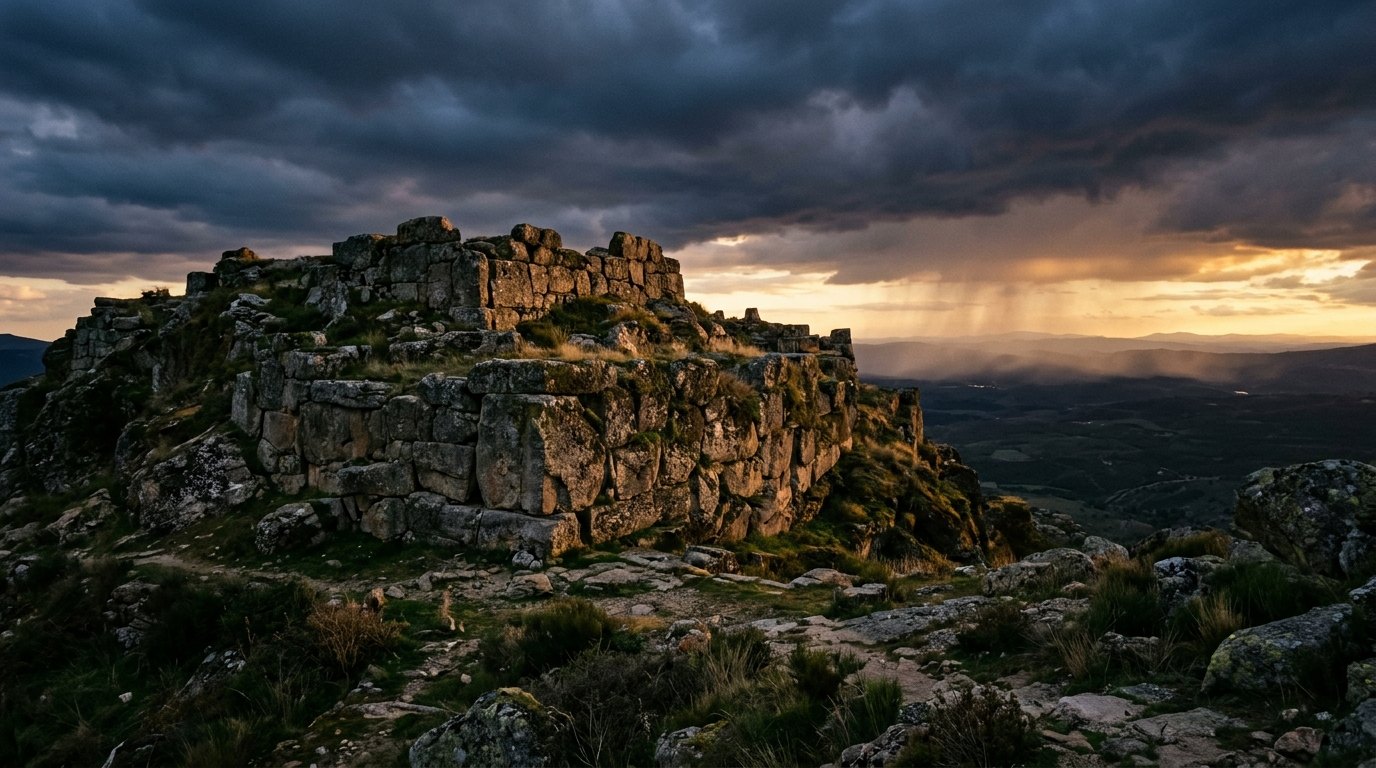
“In the time of those kings, the God of heaven will set up a kingdom that will never be destroyed, nor will it be left to another people. It will crush all those kingdoms and bring them to an end, but it will itself endure forever.
Daniel 2:44 (NIV)
It foretells a kingdom established by God that will never be destroyed and will consume all earthly powers.
The prophet Daniel looked down the corridor of time to declare in Daniel 2:44 that the God of heaven will set up a kingdom that shall never be destroyed, a promise fulfilled when the angel announced in Luke 1:33 that Christ's reign will have no end, as celebrated in Revelation 11:15. This royal hope was grounded in 2 Samuel 7:12-16, where God swore an eternal covenant to establish David's royal line forever. Psalms 103:19 anchors this in heaven's absolute sovereignty over all creation, while Psalms 2:6-8 reveals the installation of the Lord's anointed King on Zion, granting Him the nations as an inheritance. Daniel 7:13 then portrays one like the Son of Man ascending to the Ancient of Days on heavenly clouds, fulfilled in Matthew 24:30 and Matthew 26:64. In Daniel 7:14, this Son receives universal dominion, fulfilled in Matthew 28:18 when Christ claims all authority and in Revelation 5:9-10 where saints from every tribe reign. Isaiah 9:6 foretold the royal child called Mighty God, realized in Luke 1:31-32 and Luke 2:11; Isaiah 9:7 declared His endless government on David's throne, confirmed in Luke 1:32-33. Isaiah 61:1 prophesied the Spirit's anointing to preach good news to the poor, which Jesus read and fulfilled in Luke 4:18-21. The comfort of Isaiah 61:2-3 meets its fulfilment in Matthew 5:4 and John 16:20. As Micah 4:7-8 and Psalms 145:13 praise an everlasting dominion, 2 Peter 1:11 assures believers of entrance into this eternal kingdom.
| Passage | What it says | Fulfilled |
|---|---|---|
| Daniel 2:44 | God promises to set up an indestructible kingdom that shall stand forever. | Luke 1:33, Revelation 11:15 |
| Daniel 7:13 | One like the Son of Man approaches the Ancient of Days with the clouds of heaven. | Matthew 24:30, Matthew 26:64 |
| Daniel 7:14 | The Son of Man is given everlasting dominion, glory, and an indestructible kingdom over all peoples. | Matthew 28:18, Revelation 5:9-10 |
| Isaiah 9:6 | A child is born whose name is Wonderful Counselor, Mighty God, Everlasting Father, Prince of Peace. | Luke 1:31-32, Luke 2:11 |
| Isaiah 9:7 | The increase of His government and peace on David's throne will have no end. | Luke 1:32-33 |
| Isaiah 61:1 | The Spirit anoints the Servant to bring good news to the poor and liberty to captives. | Luke 4:18-21 |
| Isaiah 61:2 | The Servant proclaims the acceptable year of the Lord and comfort for all who mourn. | Luke 4:19, Luke 4:21 |
| Isaiah 61:3 | Mourners receive beauty for ashes and the garment of praise to display the Lord's glory. | Matthew 5:4, John 16:20 |
| Psalms 145:13 | The Lord's kingdom is an everlasting kingdom enduring throughout all generations. | 2 Peter 1:11 |
| 2 Samuel 7:12-16 | God covenants with David to establish his royal house and throne forever. | |
| Psalms 2:6-8 | The Lord installs His anointed King on Zion, giving Him the nations as an inheritance. | |
| Psalms 103:19 | The Lord has established His throne in the heavens, and His sovereignty rules over all. | |
| Micah 4:7-8 | The Lord will reign over His people in Mount Zion from that time and forever. |
The Nature
A spiritual reign present within transformed human hearts.
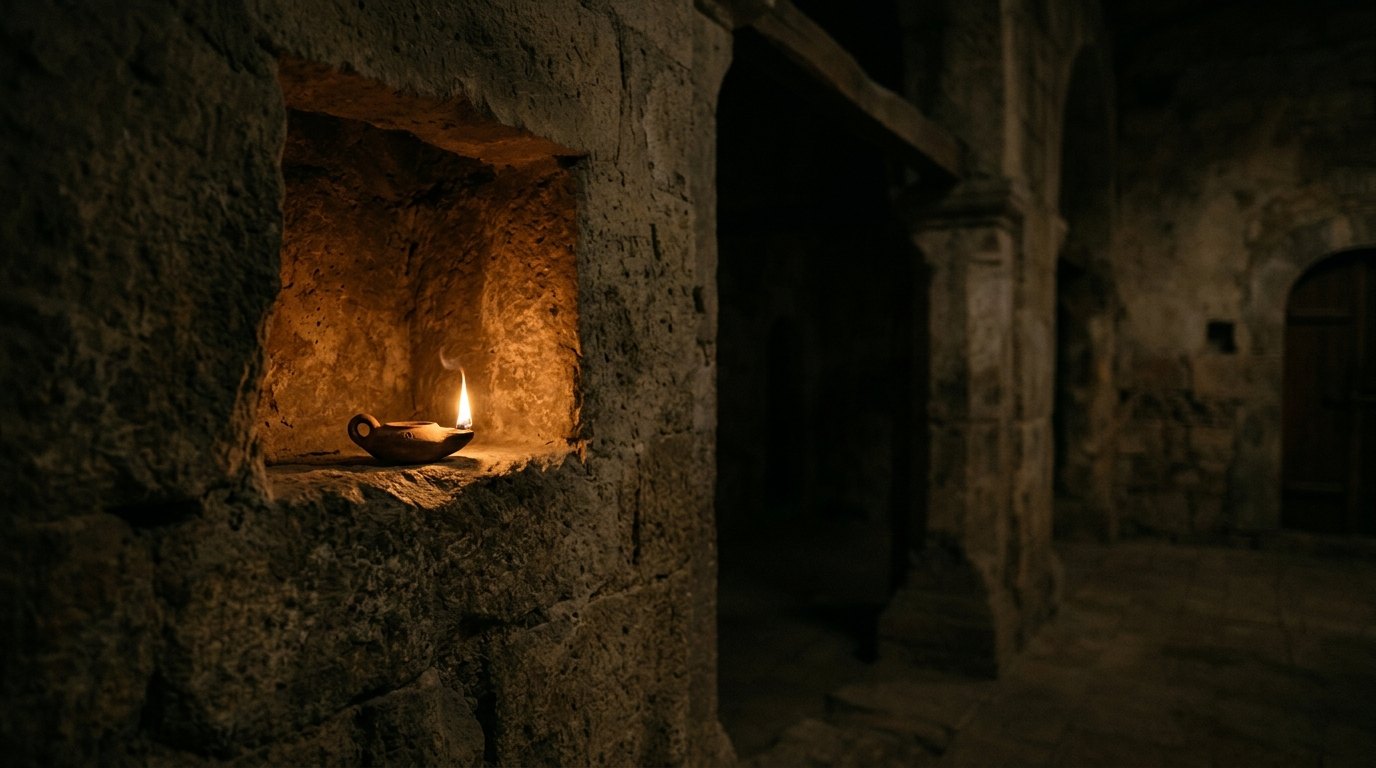
nor will people say, ‘Here it is,’ or ‘There it is,’ because the kingdom of God is in your midst.”
Luke 17:21 (NIV)
It corrects political misconceptions by stating that God's Kingdom is not an external spectacle but within people.
When interrogated by religious leaders regarding when God's rule would visibly appear, Jesus declared in Luke 17:21 that the kingdom of God is in the midst of you, overturning every earthly, militaristic expectation. Luke 17:20 warns that this sovereign reign does not arrive with outward observation or spectacle. As Jesus testified before the Roman governor in John 18:36, His kingdom is not of this world; if it were, His servants would fight with physical weapons. Mark 11:10 shows the crowds expecting the immediate earthly restoration of David's realm, yet Christ's mission operated on a far deeper spiritual plane, preaching peace to those near and far as Ephesians 2:17 reflects. The arrival of this rule is demonstrated by spiritual conquest: in Matthew 12:28 and Luke 11:20, Jesus explains that casting out demons by the Spirit and the finger of God proves the kingdom has already overtaken Satan's domain. In Matthew 11:12, Christ notes how this heavenly realm advances forcefully despite worldly opposition. In 1 Corinthians 4:20, Paul underscores that God's kingdom does not consist in mere talk, but in divine power. Romans 14:17 defines its true substance: not dietary laws of food and drink, but righteousness, peace, and joy in the Holy Spirit. Through Christ's redemption, Colossians 1:13 declares that the Father has delivered believers from the domain of darkness and transferred them into the beloved Son's reign, freeing them to seek first His kingdom and righteousness in Matthew 6:33.
| Passage | What it says |
|---|---|
| Luke 17:20 | Jesus answers the Pharisees that the Kingdom of God does not come with observable signs. |
| Luke 17:21 | Jesus affirms that the Kingdom of God is in the midst of or within people. |
| John 18:36 | Jesus testifies to Pilate that His Kingdom is not of this world. |
| Matthew 12:28 | Jesus casting out demons by the Spirit proves the Kingdom of God has come upon them. |
| Romans 14:17 | The Kingdom of God is not food and drink, but righteousness, peace, and joy in the Holy Spirit. |
| Colossians 1:13 | The Father has delivered believers from darkness and transferred them into the Kingdom of His Son. |
| Mark 11:10 | The crowds bless the coming Kingdom of their father David during Jesus' triumphal entry. |
| Ephesians 2:17 | Christ came and preached peace to those far off and to those near. |
| Matthew 6:33 | Believers are commanded to seek first the kingdom of God and His righteousness. |
| Matthew 11:12 | From the days of John until now, the kingdom of heaven suffers violence or advances forcefully. |
| Luke 11:20 | Jesus drives out demons by the finger of God, showing the kingdom has arrived upon them. |
| 1 Corinthians 4:20 | The kingdom of God does not consist in mere talk, but in divine power. |
The Entrance
Repentance and childlike faith are required to enter.

Truly I tell you, anyone who will not receive the kingdom of God like a little child will never enter it.”
Mark 10:15 (NIV)
It establishes that anyone who does not receive God's Kingdom like a child cannot enter it.
Mark 10:15 establishes the non-negotiable requirement of the gospel: whoever does not receive the kingdom of God like a child shall not enter it. In Mark 10:14 and Luke 18:16-17, Christ rebuked His disciples for turning away the weak and dependent, insisting that the kingdom belongs precisely to those who approach God without self-reliance or pretense. Matthew 18:3-4 reinforces that one must turn and become humble like little children to enter heaven's realm. This humility begins with regeneration; in John 3:3 and John 3:5, Jesus told Nicodemus that unless one is born again of water and the Spirit, he can neither see nor enter God's kingdom. External morality is insufficient: Matthew 5:19-20 warns that our righteousness must exceed that of the scribes and Pharisees, while Matthew 5:3 promises the kingdom only to the poor in spirit who recognize their bankruptcy before God. Worldly pride and material security stand as fatal barriers, as Matthew 19:23-24 cautions that it is easier for a camel to pass through a needle's eye than for a rich man to enter God's reign. True entrance requires obedience to the Father's will rather than mere verbal profession, according to Matthew 7:21. Paul and the apostles preached this same narrow way, urging repentance toward God and faith in Jesus Christ in Acts 20:21, and strengthening believers in Acts 14:22 by reminding them that through many tribulations we must enter the kingdom of God.
| Passage | What it says |
|---|---|
| Mark 10:14 | Jesus commands that children come to Him because the Kingdom of God belongs to such as these. |
| Mark 10:15 | Jesus insists that the Kingdom must be received as a child to be entered. |
| Luke 18:16 | Jesus welcomes infants, stating the Kingdom of God belongs to those like them. |
| Luke 18:17 | Jesus warns that whoever does not receive the Kingdom as a child will not enter. |
| John 3:3 | Jesus teaches Nicodemus that one must be born again to see the Kingdom of God. |
| John 3:5 | Jesus states that unless one is born of water and the Spirit, he cannot enter God's Kingdom. |
| Matthew 5:3 | The poor in spirit are blessed because theirs is the Kingdom of Heaven. |
| Matthew 7:21 | Only those who do the will of the Father will enter the Kingdom of Heaven. |
| Acts 20:21 | Paul summarizes his testimony as repentance toward God and faith in Jesus Christ. |
| Matthew 5:19-20 | Entering the kingdom requires a righteousness that surpasses that of the scribes and Pharisees. |
| Matthew 18:3-4 | Unless one turns and becomes humble like children, one cannot enter the kingdom of heaven. |
| Matthew 19:23-24 | Jesus warns that it is exceedingly difficult for a rich person to enter God's kingdom. |
| Acts 14:22 | Through many tribulations believers must enter the kingdom of God. |
The Growth
Small beginnings expand into an all-encompassing reality.
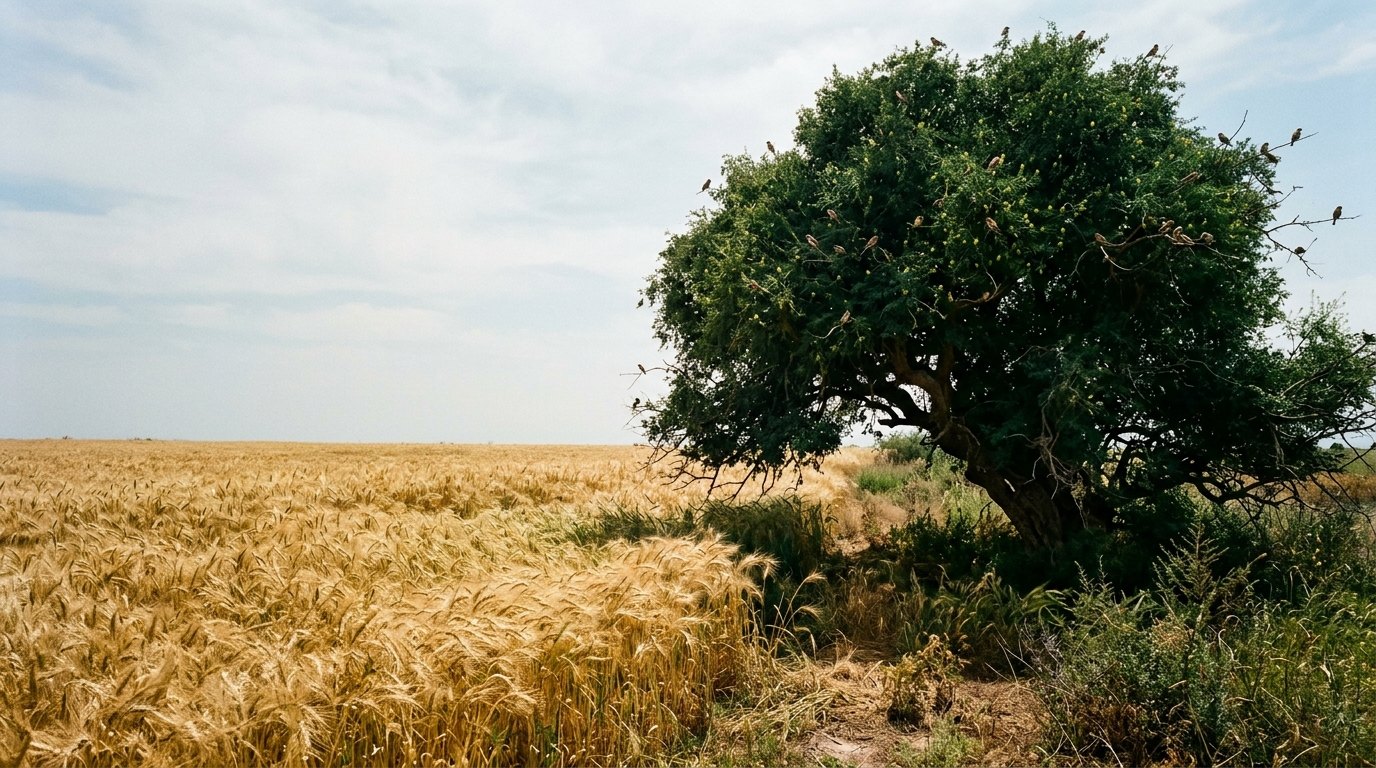
He told them another parable: “The kingdom of heaven is like a mustard seed, which a man took and planted in his field.
Matthew 13:31 (NIV)
It uses the mustard seed to illustrate how the Kingdom begins small and hidden yet grows abundantly.
In Matthew 13:31, Jesus compares the Kingdom of heaven to a tiny mustard seed planted in a field. Worldly empires establish themselves through military conquest and sweeping political force, but God’s reign enters human history with profound humility. As Matthew 13:32 explains, that smallest of garden seeds grows into a substantial tree where birds find rest in its branches, demonstrating how God's saving power quietly expands until it offers shelter to nations across the earth. In the very next breath, Matthew 13:33 likens the Kingdom to leaven hidden inside three measures of flour, steadily transforming the entire mass from within.
This unseen yet relentless growth is mirrored in the agricultural parables of the Gospel of Mark. According to Mark 4:26 and Mark 4:27, a man scatters seed upon the ground, and day or night, whether he sleeps or wakes, the seed sprouts and matures without his comprehension. Human striving does not manufacture the reign of God; as Mark 4:28 and Mark 4:29 declare, the earth yields fruit by divine design—first the blade, then the ear, then the full grain—until the sickle is brought out at the appointed harvest.
Because the Kingdom possesses supreme, incomparable worth, encountering it demands total devotion. It is like the hidden treasure uncovered in a field in Matthew 13:44, which prompts a man to sell all he has with joy to purchase that parcel. It is the exquisite pearl in Matthew 13:45 and Matthew 13:46, for which a merchant surrenders every lesser possession. Yet this present expansion occurs amid opposition. In Matthew 13:24-30, wheat and tares grow side by side until the end of the age, and Matthew 13:47-50 describes a wide dragnet gathering fish of every sort before the final sorting. God’s Kingdom moves forward inexorably, bearing fruit in hidden places while awaiting the ultimate day of harvest.
| Passage | What it says |
|---|---|
| Matthew 13:31 | The Kingdom of Heaven is compared to a mustard seed planted in a field. |
| Matthew 13:32 | The smallest seed grows into a tree where birds find rest in its branches. |
| Matthew 13:33 | The Kingdom is compared to leaven hidden in meal until the whole is leavened. |
| Mark 4:26 | The Kingdom of God is like a man scattering seed upon the ground. |
| Mark 4:27 | The seed sprouts and grows secretly day and night without the sower knowing how. |
| Mark 4:28 | The earth yields crop on its own, first blade, then ear, then full grain. |
| Mark 4:29 | When the grain is ripe, the sickle is applied because harvest has arrived. |
| Matthew 13:44 | The Kingdom is hidden treasure found in a field, bought with joy by selling all. |
| Matthew 13:45 | The Kingdom is compared to a merchant seeking fine pearls. |
| Matthew 13:46 | Finding one pearl of great price, the merchant sells everything to buy it. |
| Matthew 13:24-30 | The parable of the wheat and tares depicts kingdom growth alongside enemies until harvest. |
| Matthew 13:47-50 | The dragnet gathers fish of every kind, separated only at the close of the age. |
The Consummation
The coming day of full and final triumph.

The seventh angel sounded his trumpet, and there were loud voices in heaven, which said: “The kingdom of the world has become the kingdom of our Lord and of his Messiah, and he will reign for ever and ever.”
Revelation 11:15 (NIV)
It announces the final cosmic moment when all kingdoms of the world become Christ's forever.
The definitive turning point of cosmic history comes into view in Revelation 11:15, when loud heavenly voices proclaim that the kingdoms of this world have become the Kingdom of our Lord and of His Christ, and He shall reign forever and ever. While God's reign is already active in the hearts of believers, Scripture points forward to its glorious consummation. According to 1 Corinthians 15:24, the final end arrives when Christ abolishes all earthly rule, authority, and power, delivering the Kingdom over to the Father. He must continue His reign until all adversaries are subdued beneath His feet, as 1 Corinthians 15:25 affirms, culminating in 1 Corinthians 15:26 with the total destruction of death itself.
That victorious culmination ushers the redeemed into their eternal home. In Matthew 25:34, the King welcomes His people to inherit the Kingdom prepared for them from the foundation of the world. Then Revelation 12:10 resounds with triumphant praise because salvation, strength, and Christ’s royal authority have decisively overcome the accuser. When the heavens open in Revelation 19:16, the exalted Lord rides forth bearing the unassailable title King of kings and Lord of lords. Within the New Jerusalem, Revelation 22:3 and Revelation 22:5 reveal that the throne of God and of the Lamb will stand forever, where His servants walk in divine light and reign with Him for eternity.
This ultimate reality fulfills Christ's sacred promises to His disciples. In Matthew 8:11-12, He envisions redeemed souls gathered from east and west to recline at the banquet table with Abraham, Isaac, and Jacob. During the Last Supper, Matthew 26:29 and Luke 22:29-30 anticipate the day Jesus drinks the fruit of the vine anew with His followers and seats His apostles upon thrones of fellowship and judgment. As 2 Peter 1:11 assures the faithful, God supplies a rich entrance into the everlasting kingdom of our Lord and Savior Jesus Christ.
| Passage | What it says |
|---|---|
| 1 Corinthians 15:24 | The end comes when Christ delivers the Kingdom to the Father after destroying every rule and authority. |
| 1 Corinthians 15:25 | Christ must reign until He puts all enemies under His feet. |
| 1 Corinthians 15:26 | The final enemy to be destroyed by Christ is death. |
| Matthew 25:34 | The King invites the blessed into the Kingdom prepared from the foundation of the world. |
| Revelation 11:15 | Loud voices proclaim that worldly kingdoms have become the Kingdom of our Lord and His Christ. |
| Revelation 12:10 | A loud voice in heaven proclaims the arrival of salvation, power, God's Kingdom, and Christ's authority. |
| Revelation 19:16 | The triumphant Rider carries the name King of kings and Lord of lords. |
| Revelation 22:3 | The throne of God and of the Lamb will be in the city, and His servants will worship Him. |
| Revelation 22:5 | The Lord God will illuminate His servants, and they will reign forever and ever. |
| Matthew 8:11-12 | Gentiles from east and west will recline at table with patriarchs in the kingdom. |
| Matthew 26:29 | Jesus pledges not to drink wine again until He drinks it new in His Father's kingdom. |
| Luke 22:29-30 | Christ assigns a kingdom to His apostles that they may eat and sit on thrones judging. |
| 2 Peter 1:11 | Believers are supplied an abundant entrance into the eternal kingdom of Jesus Christ. |
The Mission
The apostolic church carried Jesus' message of the kingdom worldwide.

He proclaimed the kingdom of God and taught about the Lord Jesus Christ—with all boldness and without hindrance!
Acts 28:31 (NIV)
It shows that the proclamation of God's sovereign reign and Christ's lordship remained the unbroken mission of the apostles.
The book of Acts concludes in Acts 28:31 with the apostle Paul under house arrest in Rome, boldly preaching the Kingdom of God and teaching about the Lord Jesus Christ without hindrance. This final verse shows that the message of the Kingdom was never replaced or set aside after Christ's ascension; rather, it formed the continuous, beating heart of the church's worldwide mission. The proclamation that began along the shores of Galilee was carried by the apostles to the very center of the ancient world.
This evangelistic focus was established directly by the risen Savior. As Acts 1:3 records, during the forty days following His resurrection, Jesus appeared repeatedly to the disciples, speaking specifically of the things pertaining to the Kingdom of God. Equipped by the Holy Spirit, the early church proclaimed this royal message wherever they scattered. When persecution drove the believers out of Jerusalem, Acts 8:12 shows Philip in Samaria preaching the good news of the Kingdom of God and the name of Jesus Christ, leading many men and women to faith and baptism.
The apostle Paul maintained this exact focus throughout his extensive missionary journeys. In Acts 19:8, he entered the synagogue in Ephesus and spoke boldly for three months, reasoning and persuading his hearers concerning the Kingdom of God. Later, while awaiting trial in Rome, Acts 28:23 describes how he gathered local Jewish leaders from morning until evening, earnestly testifying to the Kingdom and seeking to convince them about Jesus from the Law of Moses and the Prophets. Then Acts 28:30-31 seals the historical narrative with Paul welcoming all who visited his rented quarters, faithfully heralding God's sovereign rule. From the earliest days in Jerusalem to the imperial capital, the apostolic church declared that in Jesus Christ, the long-awaited reign of God had arrived.
| Passage | What it says |
|---|---|
| Acts 1:3 | The risen Lord spent forty days speaking to His apostles about the kingdom of God. |
| Acts 8:12 | Philip preaches good news about the kingdom of God and the name of Jesus Christ. |
| Acts 19:8 | Paul reasons persuasively in the Ephesus synagogue for three months concerning God's kingdom. |
| Acts 28:23 | From morning till evening Paul testifies to the kingdom of God using Moses and prophets. |
| Acts 28:30-31 | Paul spends two full years in Rome boldly proclaiming the kingdom of God without hindrance. |
Where in the Bible
| Book | Passages |
|---|---|
| 2 Samuel | 1 · 2 Samuel 7:12-16 |
| Psalms | 3 · Psalms 145:13, Psalms 2:6-8, Psalms 103:19 |
| Isaiah | 5 · Isaiah 9:6, Isaiah 9:7, Isaiah 61:1, Isaiah 61:2, Isaiah 61:3 |
| Daniel | 3 · Daniel 2:44, Daniel 7:13, Daniel 7:14 |
| Micah | 1 · Micah 4:7-8 |
| Matthew | 24 · Matthew 4:12, Matthew 4:17, Matthew 4:23, Matthew 9:35, Matthew 3:1-2, Matthew 12:28, Matthew 6:33, Matthew 11:12, Matthew 5:3, Matthew 7:21, Matthew 5:19-20, Matthew 18:3-4, Matthew 19:23-24, Matthew 13:31, Matthew 13:32, Matthew 13:33, Matthew 13:44, Matthew 13:45, Matthew 13:46, Matthew 13:24-30, Matthew 13:47-50, Matthew 25:34, Matthew 8:11-12, Matthew 26:29 |
| Mark | 9 · Mark 1:14, Mark 1:15, Mark 11:10, Mark 10:14, Mark 10:15, Mark 4:26, Mark 4:27, Mark 4:28, Mark 4:29 |
| Luke | 10 · Luke 4:43, Luke 8:1, Luke 10:9-11, Luke 16:16, Luke 17:20, Luke 17:21, Luke 11:20, Luke 18:16, Luke 18:17, Luke 22:29-30 |
| John | 3 · John 18:36, John 3:3, John 3:5 |
| Acts | 7 · Acts 20:21, Acts 14:22, Acts 1:3, Acts 8:12, Acts 19:8, Acts 28:23, Acts 28:30-31 |
| Romans | 1 · Romans 14:17 |
| 1 Corinthians | 4 · 1 Corinthians 4:20, 1 Corinthians 15:24, 1 Corinthians 15:25, 1 Corinthians 15:26 |
| Galatians | 1 · Galatians 4:4 |
| Ephesians | 1 · Ephesians 2:17 |
| Colossians | 1 · Colossians 1:13 |
| 2 Peter | 1 · 2 Peter 1:11 |
| Revelation | 5 · Revelation 11:15, Revelation 12:10, Revelation 19:16, Revelation 22:3, Revelation 22:5 |
The story in order
- Prophets foretold an everlasting kingdom (c. 600 BC) · Daniel 2:44 · God promised an indestructible kingdom to stand forever.
- John the Baptist announces the kingdom (c. AD 28) · Matthew 3:1-2 · The kingdom of heaven is at hand; repent!
- Jesus begins His ministry and proclaims the kingdom (c. AD 28) · Mark 1:14-15 · The time is fulfilled; the Kingdom of God is near.
- Jesus teaches the kingdom's nature (c. AD 30) · Luke 17:20-21 · The Kingdom is not observable but within people.
- Jesus teaches entrance requirements (c. AD 30) · Mark 10:14-15 · Receive the Kingdom as a little child.
- Jesus speaks parables of kingdom growth (c. AD 30) · Matthew 13:31-33 · Small seeds grow into large realities.
- Jesus' triumphal entry (AD 30) · Mark 11:10 · The coming Kingdom of David is blessed.
- Jesus' resurrection and post-resurrection teaching (AD 30) · Acts 1:3 · Jesus spoke about the kingdom of God for forty days.
- The early church preaches the kingdom (c. AD 33) · Acts 8:12 · Philip preached the good news of the kingdom.
- Paul reasons about the kingdom (c. AD 55) · Acts 19:8 · Paul spoke persuasively about God's kingdom.
- Paul proclaims the kingdom in Rome (c. AD 60-62) · Acts 28:30-31 · Paul boldly proclaimed the kingdom without hindrance.
- The kingdom is delivered to the Father (c. AD 55) · 1 Corinthians 15:24 · Christ reigns until all enemies are destroyed.
- The eternal kingdom is entered (c. AD 65) · 2 Peter 1:11 · An abundant entrance into the eternal kingdom.
- The final triumph of God's kingdom (c. AD 95) · Revelation 11:15 · Worldly kingdoms become the Kingdom of Christ.
Kingdom Entrance: Childlike Faith
| Jesus' Teaching | Requirement for Entrance | Passage |
|---|---|---|
| The Kingdom of God belongs to such as these (children). | Whoever does not receive the Kingdom as a child will not enter. | |
| Unless one turns and becomes humble like children. | One cannot enter the kingdom of heaven. | Matthew 18:3-4 |
| One must be born again. | One cannot see or enter God's Kingdom. | John 3:3-5 |
| The poor in spirit are blessed. | Theirs is the Kingdom of Heaven. | Matthew 5:3 |
| Do the will of the Father. | Only then will you enter the Kingdom of Heaven. | Matthew 7:21 |
Kingdom Growth: Small to Large
| Parable | Illustration | Meaning | Passage |
|---|---|---|---|
| Mustard Seed | Smallest seed grows into a large tree. | The Kingdom starts small but grows immensely. | Matthew 13:31-32 |
| Leaven | Leaven hidden in meal leavens the whole. | The Kingdom permeates and transforms. | Matthew 13:33 |
| Hidden Treasure | Found in a field, bought with joy. | The Kingdom is valuable and worth sacrificing for. | Matthew 13:44 |
| Fine Pearl | Merchant sells all to buy one pearl. | The Kingdom's value demands total commitment. | Matthew 13:45-46 |
| Wheat and Tares | Grows together until the harvest. | Good and evil coexist until the final judgment. | Matthew 13:24-30 |
| Dragnet | Gathers fish of every kind. | Separation of the righteous and wicked occurs at the end. | Matthew 13:47-50 |
Key words
- Kingdom of God (basileia theou, βασιλεία θεοῦ)
- The sovereign, saving reign of God breaking into human history. · Mark 1:14
- Kingdom of Heaven (basileia tōn ouranōn, βασιλεία τῶν οὐρανῶν)
- The reign of God, often used in Matthew to refer to His kingdom. · Matthew 3:2
- Repentance (metanoia, μετάνοια)
- A change of mind and heart leading to a change of direction. · Mark 1:15
- Faith (pistis, πίστις)
- Trust and belief in God and His promises. · Mark 1:15
- Born again (gennēthē anothen, γεννηθῇ ἄνωθεν)
- A spiritual regeneration enabling one to enter or see God's Kingdom. · John 3:3
- Righteousness (dikaiosynē, δικαιοσύνη)
- Living in right relationship with God and others. · Matthew 5:20
- Eternal Kingdom (aiōnios basileia, αἰώνιος βασιλεία)
- The everlasting reign of God that believers will inherit. · 2 Peter 1:11
The Kingdom of God is not an abstract theory or an unattainable dream, but the living rule of Christ that invites your personal surrender today. He calls you to turn from sin, trust His finished work, and live under His gracious authority as you await His return in glory. Receive the King now with childlike faith, and you will enter into the life and inheritance of His everlasting reign.
80 passages, each cited once.
Scripture cited
- Mark 1:14-15
- Matthew 4:23
- Isaiah 61:1-3
- Luke 4:16-21
- John 18:33-37
- Matthew 6:9-10
- Matthew 13:31-33
- Matthew 25:31-34
- Romans 14:17
- Colossians 1:13-14