Is there life after death?

John 11:25-26
25 Jesus said to her, “I am the resurrection and the life. The one who believes in me will live, even though they die;
26 and whoever lives by believing in me will never die. Do you believe this?”
New International Version (NIV)
The answer
Yes. Physical death is not the end, and eternal life is God’s gift in Jesus Christ. Jesus declared, “I am the resurrection and the life. He who believes in me will still live, even if he dies” (John 11:25). He added, “Whoever lives and believes in me will never die” (John 11:26).
- Death cannot end the believer’s life in Christ. Jesus plainly acknowledges that believers still die bodily. His promise is that bodily death cannot destroy the life he gives or separate them from his resurrection power.
- Christ’s resurrection secures the future of his people. Because Jesus died and rose again, God will bring with him those who “sleep in Jesus” (1 Thessalonians 4:14). Their hope is not wishful thinking but rests on the finished fact of Jesus’ resurrection.
- Eternal life is found in the Son. “And this is the record, that God hath given to us eternal life, and this life is in his Son” (1 John 5:11-12). It is God’s gift, received through faith in Christ, not something human beings possess independently of him.
Scripture also gives a solemn warning: “He that believeth on the Son hath everlasting life: and he that believeth not the Son shall not see life; but the wrath of God abideth on him” (John 3:36). Life beyond death is therefore not a promise of blessing for everyone regardless of their response to Christ. Those who believe have everlasting life; those who reject the Son remain under God’s wrath. Jesus’ question is the decisive one: “Do you believe this?” (John 11:26).
Answered from Scripture · reviewed November 11, 2026
Scripture gives an emphatic and unwavering yes to the reality of life after death, centering every hope entirely on the person and resurrection of Jesus Christ. Man does not cease to exist when physical breath departs, for God created the soul for eternity and has appointed a bodily resurrection for all people. For those who belong to Christ by faith, physical death is merely the threshold to everlasting life in His presence, while those apart from Him face enduring judgment.
The Living Word
Jesus Christ is the resurrection and the life
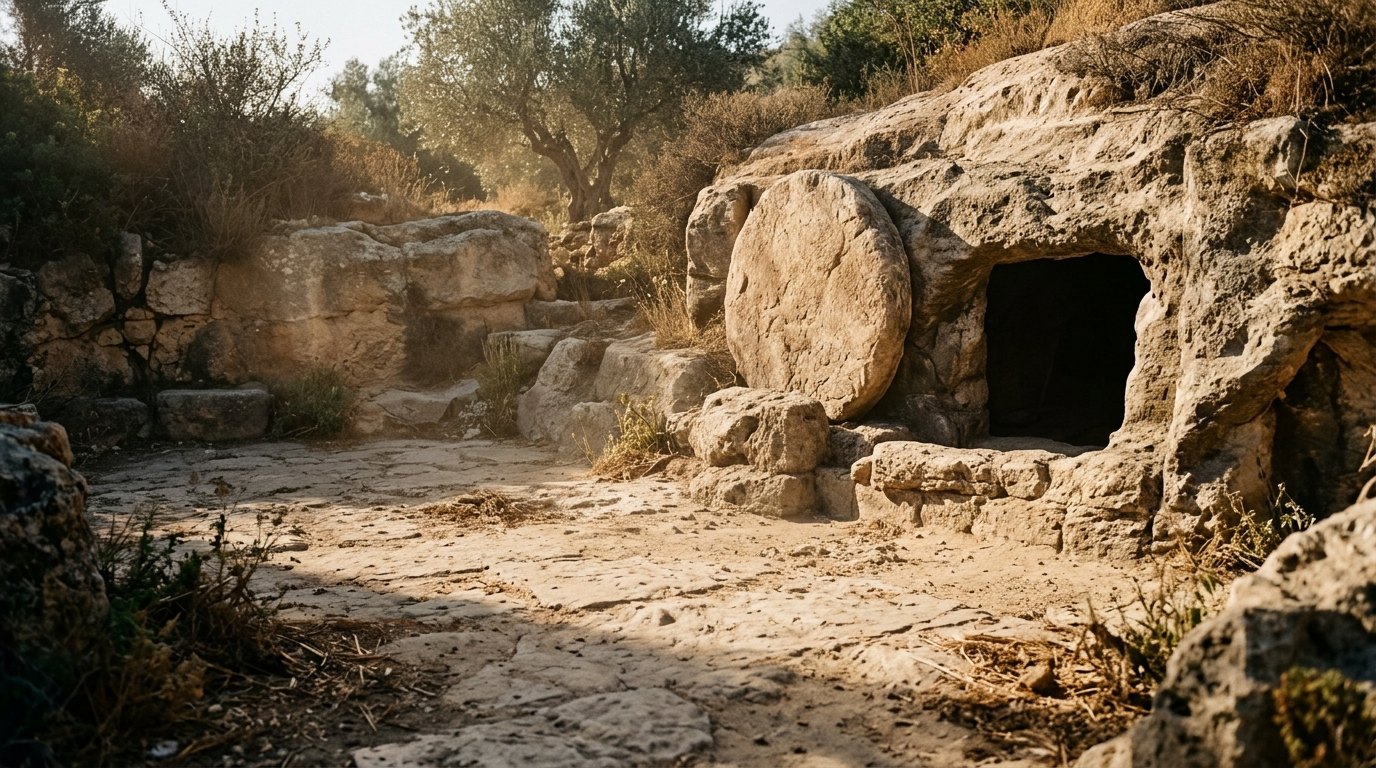
Jesus said to her, “I am the resurrection and the life. The one who believes in me will live, even though they die;
John 11:25 (NIV)
Jesus defines eternal life not as an abstract principle or future event, but as belonging directly to His own person.
Standing before a grieving family at the tomb of Lazarus, Jesus defines eternal life not as an abstract concept or a distant horizon, but as bound up entirely in His own person. In John 11:25, the Lord proclaims, "I am the resurrection and the life. Whoever believes in me, though he die, yet shall he live." He immediately adds in John 11:26 that everyone who lives and believes in Him shall never die, pressing the urgent question directly to the heart: "Do you believe this?" Life has always belonged inherently to the eternal Son. As the Apostle John opens his Gospel, he affirms of the divine Word that "in him was life, and the life was the light of men" (John 1:4). Because of who He is, Jesus exercises sovereign authority over life and death: "For as the Father raises the dead and gives them life, so also the Son gives life to whom he will" (John 5:21).
This reality frames salvation itself. Eternal existence in fellowship with God is not an innate human achievement, but an unearned gift inextricably united to Christ. The Apostle John summarizes this divine testimony plainly: "God gave us eternal life, and this life is in his Son" (1 John 5:11). The dividing line could not be clearer: "Whoever has the Son has life; whoever does not have the Son of God does not have life" (1 John 5:12). For those who are united to Him, death cannot sever that communion. Jesus comforted His disciples on the eve of the cross with the steadfast promise that in His Father's house are many rooms, assuring them, "I go to prepare a place for you" (John 14:2). He pledged unequivocally to return: "I will come again and will take you to myself, that where I am you may be also" (John 14:3). His flock rests in absolute security, for He gives them eternal life, and "they will never perish, and no one will snatch them out of my hand" (John 10:28).
| Passage | What it says |
|---|---|
| John 11:25 | Jesus declares Himself to be the resurrection and the life, guaranteeing life beyond physical dying. |
| John 11:26 | Whoever lives and believes in Christ will never truly die, grounding eternal safety in personal faith. |
| John 1:4 | Life resided eternally in the Word, shining forth as the true light given to mankind. |
| John 5:21 | Just as the Father raises the dead, the Son gives life to whomever He wills. |
| 1 John 5:11 | God has testified that He has given us eternal life, and this life is in His Son. |
| 1 John 5:12 | Whoever has the Son has life, and whoever does not have the Son of God does not have life. |
| John 14:2 | Jesus promises that in His Father's house are many rooms and that He goes to prepare a place for believers. |
| John 14:3 | Christ pledges to return and take His people to Himself, that where He is, they may also be. |
| John 10:28 | Jesus gives eternal life to His sheep, declaring they will never perish and no one will snatch them. |
The Intermediate State
The soul remains conscious immediately after death

I am torn between the two: I desire to depart and be with Christ, which is better by far;
Philippians 1:23 (NIV)
Paul shows that departure from the physical body leads immediately into conscious fellowship with Christ.
When a human being dies, the soul does not enter an unconscious void or slip into nonexistence, for departure from the mortal body ushers the believer immediately into conscious fellowship with Jesus Christ. Writing from Roman imprisonment, the Apostle Paul weighed his earthly labor against physical martyrdom, confessing his deep "desire to depart and be with Christ, for that is far better" (Philippians 1:23). If death brought mere slumber or annihilation, it could never be called far better than fruitful ministry on earth. Paul confirms this blessed reality in 2 Corinthians 5:8, affirming that believers are of good courage and "would prefer to be away from the body and at home with the Lord." The Lord Jesus gave the very same certainty to the dying criminal who cried out to Him from a neighboring cross: "Truly, I say to you, today you will be with me in paradise" (Luke 23:43).
Scripture consistently portrays the intermediate state as one of acute consciousness. In Luke 16:22, when the impoverished beggar Lazarus died, he was carried by angels directly to Abraham's side in consolation. Conversely, the self-righteous rich man died, was buried, and immediately found himself in conscious agony and clear remembrance in Hades (Luke 16:23). In the heavenly realm, the Apostle John saw under the altar the conscious souls of those slain for the word of God, actively crying out to the Lord with a loud voice (Revelation 6:9). This agrees with the ancient wisdom of Ecclesiastes 12:7, which teaches that at death "the dust returns to the earth as it was, and the spirit returns to God who gave it." Jesus refuted the Sadducees by declaring that God "is not God of the dead, but of the living, for all live to him" (Luke 20:38). Thus, as the stones fell upon the martyr Stephen, he could pray with unshakable confidence, "Lord Jesus, receive my spirit" (Acts 7:59).
| Passage | What it says |
|---|---|
| Philippians 1:23 | Paul desires to depart and be with Christ, identifying this intermediate state as far better. |
| 2 Corinthians 5:8 | To be absent from the mortal body is to be present at home with the Lord. |
| Luke 23:43 | Jesus promises the repentant thief that on that very day he would be with Him in paradise. |
| Luke 16:22 | The beggar died and was carried immediately by angels into Abraham's bosom in comfort. |
| Luke 16:23 | The rich man died and immediately experienced conscious torment and memory in Hades. |
| Revelation 6:9 | John sees the souls of the slain martyrs alive and crying out beneath the altar in heaven. |
| Ecclesiastes 12:7 | At physical death the dust returns to the earth, and the spirit returns to God who gave it. |
| Luke 20:38 | God is not God of the dead but of the living, for all live to Him. |
| Acts 7:59 | Stephen prays as he is stoned, asking the Lord Jesus to receive his spirit. |
Bodily Resurrection
Our mortal bodies will be raised incorruptible

But Christ has indeed been raised from the dead, the firstfruits of those who have fallen asleep.
1 Corinthians 15:20 (NIV)
Christ's resurrection is described as the firstfruits, proving the guaranteed harvest of bodily resurrection for His saints.
God's ultimate design for redemption does not abandon the physical realm, because Christ's historical resurrection serves as the guaranteed firstfruits of an imperishable bodily harvest for all His people. The Apostle Paul anchors our future hope in history: "But in fact Christ has been raised from the dead, the firstfruits of those who have fallen asleep" (1 Corinthians 15:20). Just as the first sheaf of the harvest guaranteed the remainder of the crop, Christ's bodily victory guarantees that our bodies will not remain in the grave. At the appointed culmination of the age, "the trumpet will sound, and the dead will be raised imperishable, and we shall be changed" (1 Corinthians 15:52). Although the earthly body suffers decay due to the curse of sin, "the Spirit is life because of righteousness" (Romans 8:10), and "he who raised Christ Jesus from the dead will also give life to your mortal bodies through his Spirit who dwells in you" (Romans 8:11).
This glorious truth sustains the church in bereavement. Because we believe that Jesus died and rose again, "even so, through Jesus, God will bring with him those who have fallen asleep" (1 Thessalonians 4:14). When the Lord descends from heaven with a cry of command and the archangel's call, "the dead in Christ will rise first" (1 Thessalonians 4:16). This hope is ancient, running back through the oldest pages of Scripture. Amid profound suffering, Job triumphantly confessed, "For I know that my Redeemer lives, and at the last he will stand upon the earth" (Job 19:25), rejoicing that "after my skin has been thus destroyed, yet in my flesh I shall see God" (Job 19:26). Isaiah similarly prophesied, "Your dead shall live; their bodies shall rise" (Isaiah 26:19). As heavenly citizens awaiting our Savior (Philippians 3:20), we look forward to the day He "will transform our lowly body to be like his glorious body" (Philippians 3:21).
| Passage | What it says |
|---|---|
| 1 Corinthians 15:20 | Christ is risen from the dead and has become the firstfruits of those who have fallen asleep. |
| 1 Corinthians 15:52 | At the last trumpet the dead will be raised imperishable and the living will be changed. |
| Romans 8:10 | Though the mortal body is dead because of sin, the Spirit gives life because of righteousness. |
| Romans 8:11 | The Spirit who raised Jesus from the dead will also give life to mortal bodies. |
| 1 Thessalonians 4:14 | Because Jesus died and rose again, God will bring with Jesus those who have fallen asleep. |
| 1 Thessalonians 4:16 | The Lord Himself will descend from heaven with a shout, and the dead in Christ will rise first. |
| Job 19:25 | Job confesses his Redeemer lives, and that at the last He will stand upon the earth. |
| Job 19:26 | Job affirms that even after his skin is destroyed, in his flesh he shall see God. |
| Isaiah 26:19 | The prophet proclaims that God's dead shall live and their bodies shall rise from the dust. |
| Philippians 3:20 | Believers are citizens of heaven, awaiting from there a Savior, the Lord Jesus Christ. |
| Philippians 3:21 | Christ will transform our lowly bodies to be like His glorious body by His divine power. |
The Two Destinies
Resurrection leads either to life or judgment
“Do not be amazed at this, for a time is coming when all who are in their graves will hear his voice
John 5:28 (NIV)
Jesus reveals that every single human being without exception will hear His voice and come forth from the tomb.
Scripture warns that eternity contains no third option, for every single human being will hear the voice of the Son of God and emerge from the grave to an unalterable destiny. In John 5:28, the Lord Jesus issues a sobering revelation: "Do not marvel at this, for an hour is coming when all who are in the tombs will hear his voice." In the verse that follows, He sets forth the two divergent paths: "and come out, those who have done good to the resurrection of life, and those who have done evil to the resurrection of judgment" (John 5:29). This universal awakening was shown to the prophet Daniel centuries earlier: "And many of those who sleep in the dust of the earth shall awake, some to everlasting life, and some to shame and everlasting contempt" (Daniel 12:2). The line of separation is determined by one's posture toward the Son: "Whoever believes in the Son has eternal life; whoever does not obey the Son shall not see life, but the wrath of God remains on him" (John 3:36).
Physical death brings human probation to an end, for "it is appointed for man to die once, and after that comes judgment" (Hebrews 9:27). When the King divides the nations, "these will go away into eternal punishment, but the righteous into eternal life" (Matthew 25:46). The Apostle John beheld this final reckoning, seeing the dead, both great and small, standing before God's throne while the books were opened (Revelation 20:12). No grave can keep its occupants: "the sea gave up the dead who were in it, Death and Hades gave up the dead who were in them, and they were judged, each one of them, according to what they had done" (Revelation 20:13). Death itself is cast into the lake of fire, which is the second death (Revelation 20:14). And tragically, "if anyone's name was not found written in the book of life, he was thrown into the lake of fire" (Revelation 20:15).
| Passage | What it says |
|---|---|
| John 5:28 | An hour is coming when all who are in their graves will hear the voice of the Son. |
| John 5:29 | Those who have done good rise to life, and those who have done evil rise to judgment. |
| Daniel 12:2 | Multitudes sleeping in the dust awake, some to everlasting life and others to shame and everlasting contempt. |
| John 3:36 | Believers possess eternal life, but those rejecting the Son shall not see life; God's wrath abides on them. |
| Hebrews 9:27 | It is appointed for man once to die, and after death comes the judgment. |
| Matthew 25:46 | The unrighteous depart into eternal punishment, but the righteous enter into eternal life. |
| Revelation 20:12 | The dead, great and small, stand before God's throne as the books are opened for judgment. |
| Revelation 20:13 | The sea, Death, and Hades surrender their dead, each person judged according to their deeds. |
| Revelation 20:14 | Death and Hades are thrown into the lake of fire, which is the second death. |
| Revelation 20:15 | Anyone whose name is not found written in the book of life is thrown into the lake. |
The World to Come
God prepares an everlasting home for His people

‘He will wipe every tear from their eyes. There will be no more death’ or mourning or crying or pain, for the old order of things has passed away.”
Revelation 21:4 (NIV)
It portrays the total eradication of death and suffering in the eternal presence of God.
The biblical vision of the world to come reaches its supreme climax in Revelation 21:4, where God will wipe away every tear from their eyes, and death shall be no more. Sorrow, weeping, and suffering are not merely comforted; they are permanently abolished in the presence of the living Lord. Scripture does not depict eternity as a disembodied vapor, but as a renewed cosmos where righteousness dwells.
John witnesses this magnificent renewal in Revelation 21:1, observing a new heaven and a new earth after the former order passes away. In Revelation 21:3, the grand aim of redemption arrives at full maturity: God establishes His personal tabernacle with redeemed humanity, dwelling directly among His people as their God. The ancient curse that fractured Eden is utterly eradicated in Revelation 22:3, leaving the throne of God and of the Lamb standing in unhindered majesty at the heart of the holy city. Darkness and shadow are vanquished forever, as Revelation 22:5 declares that night will cease entirely, for the uncreated glory of the Lord God will bathe His people in eternal light as they reign forever.
This future reality is not a vague longing, but a secure inheritance. Peter affirms in 1 Peter 1:3 that God has caused us to be born again to a living hope through the resurrection of Jesus Christ. Because Jesus stepped out of the tomb in historical space and time, the believer's final destination is settled. This promised life, as 1 Peter 1:4 guarantees, is an inheritance that is imperishable, undefiled, and unfading, reserved securely in heaven. Physical death is stripped of its finality, standing only as the gateway into the boundless life of God's newly inaugurated world.
| Passage | What it says |
|---|---|
| Revelation 21:1 | John sees a new heaven and a new earth, for the first heaven and earth had passed away. |
| Revelation 21:3 | A voice declares God's dwelling place is now with man, and He will dwell with them. |
| Revelation 21:4 | God will wipe away every tear; death, mourning, crying, and pain will be no more. |
| Revelation 22:3 | No longer will there be any curse; the throne of God and of the Lamb will be in it. |
| Revelation 22:5 | Night will be no more, for the Lord God will be their light, reigning forever and ever. |
| 1 Peter 1:3 | God has caused believers to be born again to a living hope through Christ's resurrection. |
| 1 Peter 1:4 | An inheritance imperishable, undefiled, and unfading is kept in heaven for believers. |
Where in the Bible
| Book | Passages |
|---|---|
| Job | 2 · Job 19:25, Job 19:26 |
| Ecclesiastes | 1 · Ecclesiastes 12:7 |
| Isaiah | 1 · Isaiah 26:19 |
| Daniel | 1 · Daniel 12:2 |
| Matthew | 1 · Matthew 25:46 |
| Luke | 4 · Luke 23:43, Luke 16:22, Luke 16:23, Luke 20:38 |
| John | 10 · John 11:25, John 11:26, John 1:4, John 5:21, John 14:2, John 14:3, John 10:28, John 5:28, John 5:29, John 3:36 |
| Acts | 1 · Acts 7:59 |
| Romans | 2 · Romans 8:10, Romans 8:11 |
| 1 Corinthians | 2 · 1 Corinthians 15:20, 1 Corinthians 15:52 |
| 2 Corinthians | 1 · 2 Corinthians 5:8 |
| Philippians | 3 · Philippians 1:23, Philippians 3:20, Philippians 3:21 |
| 1 Thessalonians | 2 · 1 Thessalonians 4:14, 1 Thessalonians 4:16 |
| Hebrews | 1 · Hebrews 9:27 |
| 1 Peter | 2 · 1 Peter 1:3, 1 Peter 1:4 |
| 1 John | 2 · 1 John 5:11, 1 John 5:12 |
| Revelation | 10 · Revelation 6:9, Revelation 20:12, Revelation 20:13, Revelation 20:14, Revelation 20:15, Revelation 21:1, Revelation 21:3, Revelation 21:4, Revelation 22:3, Revelation 22:5 |
The story in order
- Creation and Fall (c. 4000 BC) · Genesis 1:27-28 · God created mankind in His image, male and female, for fellowship and dominion.
- Abrahamic Covenant (c. 2000 BC) · Genesis 12:1-3 · God promises Abraham descendants, land, and blessing to all nations through him.
- Exodus and Law (c. 1446 BC) · Exodus 20:1-17 · God delivers Israel from slavery and gives them His law, establishing His covenant people.
- Davidic Kingdom (c. 1000 BC) · 2 Samuel 7:12-16 · God promises David an everlasting dynasty and kingdom through his descendant.
- Prophetic Warnings (c. 740 BC) · Isaiah 5:1-7 · Prophets warn Israel of judgment for disobedience, yet speak of future restoration.
- Babylonian Exile (c. 597-539 BC) · Daniel 9:1-19 · Daniel prays for his people during exile, acknowledging sin and seeking God's mercy.
- Jesus' Ministry (c. AD 28-30) · John 1:14 · The Word became flesh, dwelling among us, full of grace and truth.
- Jesus' Resurrection (AD 30) · 1 Corinthians 15:20 · Christ is risen, the firstfruits of those who have fallen asleep.
- Ascension and Pentecost (AD 30-33) · Acts 1:9-11 · Jesus ascends to heaven, promising His return; the Holy Spirit empowers the church.
- Apostolic Teaching (c. AD 50-52) · 1 Thessalonians 4:13-18 · The apostles teach about the resurrection of believers and Christ's return.
- John's Revelation (c. AD 95) · Revelation 21:1-4 · John sees a new heaven and new earth, where God dwells with His people.
The Resurrection of the Dead
| Christ's Resurrection | Believers' Resurrection | Passage |
|---|---|---|
| Christ is risen from the dead, the firstfruits of those who have fallen asleep. | The dead in Christ will rise first. | |
| The Spirit who raised Jesus will give life to mortal bodies. | The Spirit who raised Jesus will give life to mortal bodies. | Romans 8:11 |
| Christ will transform our lowly bodies to be like His glorious body. | Christ will transform our lowly bodies to be like His glorious body. | Philippians 3:21 |
| Because Jesus died and rose again, God will bring with Him those who have fallen asleep. | Because Jesus died and rose again, God will bring with Him those who have fallen asleep. | 1 Thessalonians 4:14 |
| At the last trumpet the dead will be raised imperishable. | At the last trumpet the dead will be raised imperishable. | 1 Corinthians 15:52 |
Two Destinies After Death
| Resurrection to Life | Resurrection to Judgment | Passage |
|---|---|---|
| Those who have done good rise to life. | Those who have done evil rise to judgment. | John 5:29 |
| Multitudes awake to everlasting life. | Multitudes awake to shame and everlasting contempt. | Daniel 12:2 |
| Believers possess eternal life. | Those rejecting the Son shall not see life; God's wrath abides on them. | John 3:36 |
| The righteous enter into eternal life. | The unrighteous depart into eternal punishment. | Matthew 25:46 |
| Anyone whose name is written in the book of life. | Anyone whose name is not found written in the book of life is thrown into the lake. | Revelation 20:15 |
Key words
- Eternal Life (zōē aiōnios (ζωὴ αἰώνιος))
- Life with God, beginning now and continuing forever, centered in Christ. · 1 John 5:11
- Resurrection (anastasis (ἀνάστασις))
- The act of God raising the dead to life, both spiritually and physically. · 1 Corinthians 15:20
- Spirit (pneuma (πνεῦμα))
- The divine, immaterial part of a human being, or the Holy Spirit. · Ecclesiastes 12:7
- Judgment (krisis (κρίσις))
- God's righteous evaluation of all deeds, leading to reward or condemnation. · Hebrews 9:27
- Paradise (paradeisos (παράδεισος))
- A place of blessedness and comfort, specifically God's presence after death. · Luke 23:43
- Second Death (thanatos deuteros (θάνατος δεύτερος))
- The final, eternal condemnation in the lake of fire for the unredeemed. · Revelation 20:14
Death is not an ultimate mystery or a blind leap into the dark, but a settled reality answered by the risen Lord. Christ puts the question directly to every heart: 'Do you believe this?' In Him alone is the conqueror of the grave, transforming what was once the terror of judgment into the certain entrance of unending joy.
46 passages, each cited once.
Scripture cited
- 1 Thessalonians 4:14
- John 3:36
- 1 John 5:11-12