What are the sacraments?

Romans 6:3-4
3 Or don’t you know that all of us who were baptized into Christ Jesus were baptized into his death?
4 We were therefore buried with him through baptism into death in order that, just as Christ was raised from the dead through the glory of the Father, we too may live a new life.
New International Version (NIV)
The answer
The sacraments are visible signs of God’s grace in Christ, instituted by Him for His church. “Sacrament” is a theological term rather than a word used in Scripture itself. Christ expressly gave His church two continuing observances: baptism and the Lord’s Supper. Many Protestants call these ordinances, emphasizing that Christ commanded them.
The two Christ commanded
- Baptism: Jesus commissioned His disciples to go and make disciples, “baptizing them in the name of the Father and of the Son and of the Holy Spirit” (Matthew 28:19). Romans 6:3-4 explains its meaning: baptism identifies believers with Christ’s death, burial and resurrection, so that they might “walk in newness of life.” Those baptized into Christ have “put on Christ” (Galatians 3:27). It is therefore not merely a washing with water; it signifies union with Christ and belonging to His people.
- The Lord’s Supper: Jesus gave His disciples bread and the cup, identifying them with His body and blood and commanding their continued observance (1 Corinthians 11:24-25). “For as often as you eat this bread and drink this cup, you proclaim the Lord’s death until he comes” (1 Corinthians 11:26). The Supper looks back to Christ’s atoning death and forward to His return. It also involves sharing in Christ and expresses the unity of His people: “Because there is one loaf of bread, we, who are many, are one body” (1 Corinthians 10:16-17).
Why some churches count seven
- Tradition — Sacraments recognized
- Roman Catholic — Seven: baptism, confirmation, Eucharist, penance, anointing of the sick, holy orders and matrimony. Creed of Trent 4 lists these and teaches that they confer grace.
- Eastern Orthodox — Seven Holy Mysteries. Confession of Dositheus 15 explicitly teaches this number, including baptism, chrismation and the Eucharist.
- Lutheran, Anglican, Methodist and Reformed — Two gospel sacraments: baptism and the Lord’s Supper. Westminster Confession 27.4 and Thirty-Nine Articles 25 state this directly; other Protestants often call the same two observances ordinances.
Churches also differ over infant baptism and the nature of Christ’s presence in the Supper. Those questions concern how the observances are understood and practised, not whether Christ instituted them.
What the sacraments are not
Neither baptism nor the Lord’s Supper earns salvation. “For by grace you have been saved through faith … not of works, that no one would boast” (Ephesians 2:8-9). They are not magical ceremonies, nor substitutes for repentance, personal faith and a new life of obedience. Their purpose is to direct faith to Jesus Christ Himself—His death, resurrection and promised return, not to give anyone confidence in a ritual.
Answered from Scripture · reviewed November 11, 2026
Scripture reveals the sacraments as holy visible signs and seals instituted directly by Jesus Christ to present and confirm the promises of the gospel to His people. While Christian traditions count either two Gospel ordinances or seven historic rites, God's Word roots the perpetual practices of the church in the washing of Baptism and the communion of the Lord's Supper.
Signs and Seals
Covenant Promises Made Visible in Physical Elements

And he received circumcision as a sign, a seal of the righteousness that he had by faith while he was still uncircumcised. So then, he is the father of all who believe but have not been circumcised, in order that righteousness might be credited to them.
Romans 4:11 (NIV)
It defines a covenant sign as a visible seal of the righteousness that comes through faith.
In Romans 4:11, the Apostle Paul provides the foundational biblical definition of a sacrament when he explains that Abraham received the sign of circumcision, a seal of the righteousness that he had by faith while he was still uncircumcised. Across the canon, God attaches visible pledges to His gracious covenant promises, meeting our embodied frailty with tangible tokens. Long before Sinai, God set His rainbow in the clouds in Genesis 9:12-13, not as an empty symbol, but as an enduring covenant sign guaranteeing His mercy to all the earth. In Genesis 17:10-11, this covenantal framework entered human flesh through circumcision, sealing the promise that the Lord would be God to Abraham and his offspring.
Israel experienced this same principle during the Exodus. In Exodus 12:13-14, the sprinkled blood of the Passover lamb marked the doorposts as an outward sign of divine deliverance, instituted as an ongoing memorial feast throughout their generations. In Exodus 31:13, the Lord established the Sabbath rest as a recurring physical sign between Himself and Israel, demonstrating that He alone sanctifies His people.
When Christ inaugurated the new covenant in His blood, these outward shadows found their lasting substance. Paul makes this vital connection in Colossians 2:11-12, declaring that believers have undergone a spiritual circumcision not made with hands, having been buried with Christ in baptism and raised with Him through faith. The outward physical tokens of the old covenant find their complete theological trajectory in Christ, confirming that God's covenant signs are never bare ceremonies, but true divine seals.
| Passage | What it says |
|---|---|
| Genesis 17:10-11 | God establishes circumcision in Abraham's flesh as the sign of His everlasting covenant. |
| Exodus 12:13-14 | The Passover blood and memorial feast serve as perpetual signs of redemption for Israel. |
| Romans 4:11 | Abraham received the outward sign of circumcision as a seal of righteousness by faith. |
| Colossians 2:11-12 | Christian baptism is identified as spiritual circumcision through burial and resurrection with Christ. |
| Genesis 9:12-13 | God sets the rainbow in the clouds as an outward sign of His enduring covenant with every living creature. |
| Exodus 31:13 | The Sabbath is instituted as a physical sign between the Lord and Israel that they may know He sanctifies them. |
Holy Baptism
Buried and Raised With Christ in Washing

Or don’t you know that all of us who were baptized into Christ Jesus were baptized into his death? We were therefore buried with him through baptism into death in order that, just as Christ was raised from the dead through the glory of the Father, we too may live a new life.
Romans 6:3-4 (NIV)
It demonstrates how water baptism visibly portrays union with Christ in His death and resurrection.
Romans 6:3-4 shows how holy baptism physically pictures the believer's living union with Christ, asking, Do you not know that all of us who have been baptized into Christ Jesus were baptized into his death? We were buried therefore with him by baptism into death, in order that, just as Christ was raised from the dead by the glory of the Father, we too might walk in newness of life. Baptism is no mere human dedication; it is an ordinance commanded directly by the resurrected Lord in Matthew 28:19-20, where He charges His church to make disciples of all nations, baptizing them in the singular name of the Father, the Son, and the Holy Spirit. In Mark 16:16, belief and baptism stand together at the threshold of life in Christ's kingdom.
On the day of Pentecost, Peter proclaimed the necessity of this water in Acts 2:38-39, commanding the crowd to repent and be baptized for the remission of sins. Saul heard the identical apostolic command in Acts 22:16 when Ananias told him to rise, be baptized, and wash away his sins, calling on Jesus' name. This outward washing reflects the inward reality described in John 3:5, where Jesus insists that one must be born of water and the Spirit. The early church practiced this immediately upon faith: the Ethiopian eunuch went down into the water in Acts 8:36-38, and the Philippian jailer was baptized with his whole household that very night in Acts 16:33.
Paul explains the profound spiritual reality behind the rite: in Galatians 3:27, those baptized into Christ have put on Christ, while 1 Corinthians 12:13 reveals that by one Spirit all believers are baptized into one body. Ephesians 4:4-6 underscores its unique unity by confessing one Lord, one faith, one baptism. Ephesians 5:25-26 affirms that Christ cleanses His bride by the washing of water with the word, a truth echoed in Titus 3:5 through the washing of regeneration. Finally, 1 Peter 3:21 compares baptism to the waters of Noah, noting that it saves not by removing physical dirt, but as an appeal to God for a good conscience through Christ's resurrection, inviting believers in Hebrews 10:22 to draw near with washed bodies and cleansed hearts.
| Passage | What it says |
|---|---|
| Matthew 28:19-20 | Jesus commissions His apostles to disciple the nations, baptizing in the Triune name. |
| Mark 16:16 | Christ links belief and baptism to salvation in His kingdom commission. |
| Acts 2:38-39 | Peter commands baptism for the remission of sins and reception of the Spirit. |
| Acts 22:16 | Ananias commands Saul to rise, be baptized, and wash away his sins. |
| Romans 6:3-4 | Baptism unites the believer into Christ's burial and resurrection for newness of life. |
| 1 Corinthians 12:13 | By one Spirit all believers are baptized into one body and drink of one Spirit. |
| Galatians 3:27 | Those who have been baptized into Christ have clothed themselves with Christ. |
| Titus 3:5 | God saves believers according to mercy through the washing of regeneration and renewal. |
| 1 Peter 3:21 | Baptism corresponds to Noah's deliverance, being an appeal to God for a good conscience. |
| John 3:5 | Jesus declares that unless one is born of water and the Spirit, he cannot enter the kingdom of God. |
| Acts 8:36-38 | Philip baptizes the Ethiopian eunuch in water upon his profession of faith in Jesus Christ. |
| Acts 16:33 | The Philippian jailer and all his household are baptized immediately in the night after believing. |
| Ephesians 4:4-6 | Paul lists one baptism alongside one Lord, one faith, and one God and Father of all. |
| Ephesians 5:25-26 | Christ gave Himself up for the church to sanctify and cleanse her by the washing of water with the word. |
| Hebrews 10:22 | Believers draw near with bodies washed with pure water and hearts sprinkled clean from an evil conscience. |
The Lord's Supper
Proclaiming Christ's Death in Bread and Cup
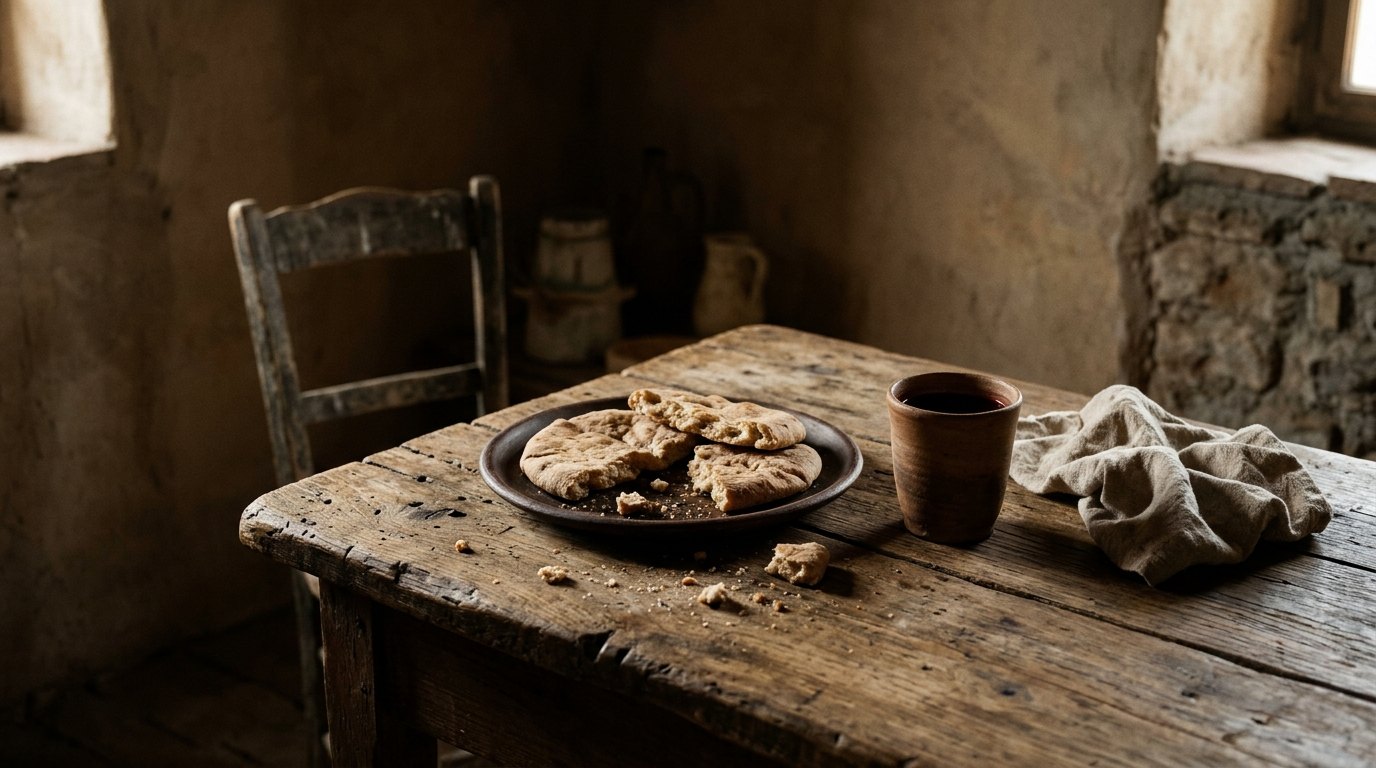
For I received from the Lord what I also passed on to you: The Lord Jesus, on the night he was betrayed, took bread, and when he had given thanks, he broke it and said, “This is my body, which is for you; do this in remembrance of me.” In the same way, after supper he took the cup, saying, “This cup is the new covenant in my blood; do this, whenever you drink it, in remembrance of me.” For whenever you eat this bread and drink this cup, you proclaim the Lord’s death until he comes.
1 Corinthians 11:23-26 (NIV)
It details Christ's institution and commands perpetual remembrance until His second coming.
In 1 Corinthians 11:23-26, Paul delivers the words of institution that he received directly from the Lord Jesus Himself: For as often as you eat this bread and drink the cup, you proclaim the Lord's death until he comes. The Lord's Supper stands as the perpetual communion of the new covenant, instituted in the upper room on the night Christ was betrayed. In Matthew 26:26-28, Mark 14:22-24, and Luke 22:19-20, Jesus took bread, blessed and broke it, saying, 'This is my body,' and poured out the cup, naming it His blood of the covenant shed for the forgiveness of sins, commanding, 'Do this in remembrance of me.'
This table was anticipated in the profound teaching of John 6:53-56, where Jesus declared that whoever feeds on His flesh and drinks His blood abides in Him and has eternal life. Following Pentecost, the apostolic church embraced this practice as a core pillar of life; Acts 2:42 records that the disciples devoted themselves steadfastly to the apostles' teaching, fellowship, the breaking of bread, and prayers. In Acts 20:7, this corporate gathering occurred faithfully on the first day of the week, anchored around the shared table.
Paul expounds the deep communion this feast creates in 1 Corinthians 10:16-17, teaching that the cup of blessing is a participation in the blood of Christ and the bread is a participation in the body of Christ, making the many one body. Because this feast is holy, 1 Corinthians 10:21 warns that one cannot drink the cup of the Lord and the cup of demons, while 1 Corinthians 11:27-29 urges believers to examine themselves carefully so they do not eat the bread or drink the cup in an unworthy manner, discerning the Lord's body in reverent faith.
| Passage | What it says |
|---|---|
| Matthew 26:26-28 | Jesus gives the bread as His body and the cup as new covenant blood. |
| Mark 14:22-24 | Jesus distributes bread and wine as His body and blood poured out for many. |
| Luke 22:19-20 | Christ commands the breaking of bread in His remembrance, inaugurating the new covenant. |
| John 6:53-56 | Jesus proclaims that feeding upon His flesh and blood brings eternal life. |
| Acts 2:42 | The early church devotes itself steadfastly to apostolic teaching, fellowship, prayer, and breaking bread. |
| 1 Corinthians 10:16-17 | The cup and loaf are participation in Christ's blood and body, uniting believers as one. |
| 1 Corinthians 11:23-26 | Paul recounts receiving the Lord's instruction to proclaim Christ's death through the Supper. |
| 1 Corinthians 11:27-29 | Believers are instructed to examine themselves before partaking to avoid eating in an unworthy manner. |
| Acts 20:7 | The disciples gather together on the first day of the week specifically to break bread. |
| 1 Corinthians 10:21 | Paul contrasts drinking the cup of the Lord and partaking of the Lord's table with the table of demons. |
Ecclesial Rites
Historical Differences Regarding the Additional Five Rites

When the apostles in Jerusalem heard that Samaria had accepted the word of God, they sent Peter and John to Samaria. When they arrived, they prayed for the new believers there that they might receive the Holy Spirit, because the Holy Spirit had not yet come on any of them; they had simply been baptized in the name of the Lord Jesus. Then Peter and John placed their hands on them, and they received the Holy Spirit.
Acts 8:14-17 (NIV)
It shows apostolic laying on of hands, which historic churches later categorized alongside sacramental actions.
Acts 8:14-17 documents Peter and John laying hands on baptized believers in Samaria so that they might receive the Holy Spirit, highlighting a sacred apostolic practice that historically prompted deep theological reflection across the church. While all Christians recognize Baptism and the Lord's Supper as directly ordained by Christ for the whole church, historic traditions differ on whether five additional pastoral rites—Confirmation, Holy Orders, Holy Matrimony, Penance, and Anointing of the Sick—are properly called sacraments. Scripture undeniably models these sacred practices as instruments of God's grace and order in the life of His people.
For example, James 5:14-15 commands the sick to call for the elders of the church to pray over them and anoint them with oil in the name of the Lord, assuring that the prayer of faith will heal the sick and bring forgiveness, continuing the ministry begun by the twelve in Mark 6:13. Regarding the care of penitent souls, Matthew 18:18 and John 20:22-23 record Jesus breathing upon the apostles and giving them authority to declare sins forgiven or retained in His name. Holy Matrimony, established in Genesis 2:24 where a man and woman become one flesh, is unveiled in Ephesians 5:31-32 as a great mystery that points directly to the eternal union between Christ and the church.
Finally, the laying on of hands remains central to Christian ministry: in Acts 6:6 the apostles pray and lay hands on the seven, in 1 Timothy 4:14 Paul charges Timothy not to neglect the gift imparted to him through the presbytery, and in 2 Timothy 1:6 he urges him to fan into flame the gift received through his hands. Whether viewed as five sacramental rites or as biblical pastoral ordinances, these actions demonstrate God's loving care across every stage of life in the church.
| Passage | What it says |
|---|---|
| Acts 8:14-17 | Peter and John lay hands on baptized Samaritans so they receive the Holy Spirit. |
| James 5:14-15 | Elders pray over the sick, anointing them with oil for healing and forgiveness. |
| John 20:22-23 | Jesus breathes on His disciples, imparting the Holy Spirit to forgive or retain sins. |
| Ephesians 5:31-32 | Paul calls Christian marriage a mystery that points to Christ and the church. |
| 2 Timothy 1:6 | Paul urges Timothy to rekindle the gift of God given through the laying on of hands. |
| Acts 6:6 | The apostles pray and lay hands on the seven chosen men to set them apart for ministry. |
| 1 Timothy 4:14 | Timothy is exhorted not to neglect the spiritual gift given him through prophecy with the laying on of hands. |
| Matthew 18:18 | Jesus grants the apostles authority that whatever they bind or loose on earth shall be bound or loosed in heaven. |
| Genesis 2:24 | A man leaves father and mother to hold fast to his wife, becoming one flesh in the covenant of marriage. |
| Mark 6:13 | The twelve cast out demons and anoint many sick people with oil and heal them. |
Where in the Bible
| Book | Passages |
|---|---|
| Genesis | 3 · Genesis 17:10-11, Genesis 9:12-13, Genesis 2:24 |
| Exodus | 2 · Exodus 12:13-14, Exodus 31:13 |
| Matthew | 3 · Matthew 28:19-20, Matthew 26:26-28, Matthew 18:18 |
| Mark | 3 · Mark 16:16, Mark 14:22-24, Mark 6:13 |
| Luke | 1 · Luke 22:19-20 |
| John | 3 · John 3:5, John 6:53-56, John 20:22-23 |
| Acts | 8 · Acts 2:38-39, Acts 22:16, Acts 8:36-38, Acts 16:33, Acts 2:42, Acts 20:7, Acts 8:14-17, Acts 6:6 |
| Romans | 2 · Romans 4:11, Romans 6:3-4 |
| 1 Corinthians | 5 · 1 Corinthians 12:13, 1 Corinthians 10:16-17, 1 Corinthians 11:23-26, 1 Corinthians 11:27-29, 1 Corinthians 10:21 |
| Galatians | 1 · Galatians 3:27 |
| Ephesians | 3 · Ephesians 4:4-6, Ephesians 5:25-26, Ephesians 5:31-32 |
| Colossians | 1 · Colossians 2:11-12 |
| 1 Timothy | 1 · 1 Timothy 4:14 |
| 2 Timothy | 1 · 2 Timothy 1:6 |
| Titus | 1 · Titus 3:5 |
| Hebrews | 1 · Hebrews 10:22 |
| James | 1 · James 5:14-15 |
| 1 Peter | 1 · 1 Peter 3:21 |
The story in order
- God's covenant sign in Abraham's flesh (c. 2000 BC) · Genesis 17:10-11 · Circumcision as a physical sign of God's everlasting covenant.
- Passover blood and memorial feast (c. 1446 BC) · Exodus 12:13-14 · Perpetual signs of redemption for Israel.
- Sabbath as a sign of sanctification (c. 1446 BC) · Exodus 31:13 · A physical sign between the Lord and Israel.
- Jesus commissions baptism (c. AD 30) · Matthew 28:19-20 · Disciples to be made by baptizing in the Triune name.
- Jesus institutes the Lord's Supper (c. AD 30) · Matthew 26:26-28 · Bread as His body, cup as new covenant blood.
- Baptism unites believers with Christ (c. AD 55) · Romans 6:3-4 · Into Christ's burial and resurrection for new life.
- The church devoted to breaking bread (c. AD 33) · Acts 2:42 · Early church fellowship included the Lord's Supper.
- Paul recounts Lord's Supper institution (c. AD 55) · 1 Corinthians 11:23-26 · Instruction to proclaim Christ's death through the Supper.
- Baptism as spiritual circumcision (c. AD 60) · Colossians 2:11-12 · Identified with Christ's burial and resurrection.
- Baptism as washing of regeneration (c. AD 65) · Titus 3:5 · Salvation through washing of regeneration and renewal.
- Baptism corresponds to Noah's deliverance (c. AD 65) · 1 Peter 3:21 · An appeal to God for a good conscience.
- Marriage as a mystery pointing to Christ (c. AD 60) · Ephesians 5:31-32 · Paul calls marriage a mystery pointing to Christ and the church.
Key words
- Sacrament
- A holy visible sign and seal instituted by Christ to present and confirm the promises of the gospel.
- Baptism (baptizō, βαπτίζω)
- A sacrament of initiation, signifying spiritual cleansing, union with Christ's death and resurrection, and membership in the body of Christ. · Romans 6:3-4
- Lord's Supper (kyriakon deipnon, κυριακὸν δεῖπνον)
- A sacrament commemorating Christ's atoning sacrifice, signifying spiritual nourishment and union with Christ and His people. · 1 Corinthians 11:20
- Covenant (berith, בְּרִית)
- A solemn agreement between God and His people, often marked by visible signs. · Genesis 17:10-11
- Sign (sēmeion, σημεῖον)
- An outward and visible representation of an inward and spiritual reality. · Genesis 9:12-13
- Seal (sphragis, σφραγίς)
- That which authenticates or confirms a covenant promise. · Romans 4:11
Through simple water, bread, and wine, the Lord Jesus meets His church with tangible tokens of His atoning death, resurrection power, and promised return. Receiving these holy signs in faith anchors believers to Christ's finished work and strengthens His unified body until He drinks new wine with us in His Father's kingdom.
41 passages, each cited once.
How the major Christian traditions read this
All major Christian traditions confess that our Lord Jesus Christ instituted baptism and the Holy Supper as sacred outward signs appointed for His church, visibly uniting believers to His death and resurrection (Matthew 28:19; 1 Corinthians 11:23-26).
Catholic
We profess seven sacraments instituted by Christ: Baptism, Confirmation, the Eucharist, Penance, Anointing of the Sick, Holy Orders, and Matrimony (Creed of Trent 4). They are efficacious signs that confer the grace they signify by the work of Christ (ex opere operato). In Baptism, we are truly reborn and cleansed from sin (John 3:5; Romans 6:3-4). In the Eucharist, Christ is truly, really, and substantially present—His body, blood, soul, and divinity—under the forms of bread and wine (Matthew 26:26-28; 1 Corinthians 10:16). These holy rites nourish, heal, and order our lives in Christ's mystical body.
Scripture: Matthew 26:26-28, Matthew 28:19, John 3:5, Romans 6:3-4, 1 Corinthians 10:16
Orthodox
We revere the holy mysteries through which God imparts uncreated grace to His Church. The Church recognizes seven principal mysteries: Baptism, Chrismation, the Eucharist, Repentance, Holy Orders, Marriage, and Holy Unction (Confession of Dositheus 15). We do not reduce the mysteries to legal definitions; they are sacred encounters with the living God. In Baptism and Chrismation, a person dies with Christ and receives the seal of the Holy Spirit (Romans 6:4; 2 Corinthians 1:21-22). In the Holy Eucharist, the bread and wine truly become the very body and blood of Christ, uniting us intimately to His divine life (John 6:53-56).
Scripture: John 6:53-56, Romans 6:4, 2 Corinthians 1:21-22, James 5:14-15
Lutheran
We teach that sacraments are rites commanded by God with an attached physical element and the divine promise of grace (Augsburg Confession 13). Properly speaking, there are two: Holy Baptism and the Sacrament of the Altar. Sacraments are means of grace through which the Holy Spirit creates and strengthens saving faith. In Baptism, God truly works forgiveness of sins, delivers from death, and grants eternal salvation to all who believe His promise (Mark 16:16; Titus 3:5). In the Supper, Christ’s true body and blood are given in, with, and under the bread and wine for the forgiveness of sins (Matthew 26:26-28; 1 Corinthians 11:24-25).
Scripture: Matthew 26:26-28, Mark 16:16, 1 Corinthians 11:24-25, Titus 3:5
Reformed & Presbyterian
We confess two sacraments of the New Testament instituted by Christ: Baptism and the Lord's Supper (Westminster Confession 27.1, 27.4). Sacraments are holy signs and seals of the covenant of grace, setting believers apart from the world and confirming our interest in Christ. They do not confer grace automatically by the outward act; rather, the Holy Spirit works effectively through them in those who receive them by faith. Baptism marks our covenantal inclusion and union with Christ (Romans 6:3-4; Colossians 2:11-12). In the Lord's Supper, believers spiritually and truly feed upon Christ crucified through faith, nourished by His body and blood (1 Corinthians 10:16; 11:26).
Scripture: Romans 6:3-4, 1 Corinthians 10:16, 1 Corinthians 11:26, Colossians 2:11-12
Anglican & Episcopal
We hold that our Lord ordained two sacraments in the Gospel: Baptism and the Supper of the Lord (Thirty-Nine Articles 25). They are not merely badges of Christian profession, but certain sure witnesses and effectual signs of grace by which God works invisibly in us, quickening and confirming our faith. The other five rites commonly called sacraments (Confirmation, Penance, Orders, Matrimony, and Extreme Unction) lack a visible sign ordained directly by God in the Gospel. Through Baptism we are grafted into the Church (Galatians 3:27), and through the Eucharist we spiritually partake of the body and blood of Christ by faith (1 Corinthians 10:16).
Scripture: Matthew 28:19, 1 Corinthians 10:16, 1 Corinthians 11:23-26, Galatians 3:27
Baptist
We typically refer to baptism and the Lord's Supper as ordinances rather than sacraments, emphasizing that they are commands instituted by Christ for His church rather than channels of saving grace (Matthew 28:19; 1 Corinthians 11:23-26). Baptism is administered only to those who have personally repented and professed faith in Christ, by immersion in water, portraying the believer's burial and resurrection with Him (Romans 6:3-5; Acts 8:36-38). The Lord's Supper is a memorial feast wherein believers partake of the bread and the cup in remembrance of Christ's finished sacrifice, proclaiming His death until He returns (1 Corinthians 11:24-26).
Scripture: Acts 8:36-38, Matthew 28:19, Romans 6:3-5, 1 Corinthians 11:23-26, 1 Corinthians 11:24-26
Methodist & Wesleyan
We recognize two sacraments ordained of Christ in the Gospel: Baptism and the Supper of the Lord (Methodist Articles 16). Sacraments are outward signs of inward grace and means through which God conveys His converting, justifying, and sanctifying grace. Baptism signifies the washing of regeneration and marks our entrance into the household of God (Titus 3:5; Acts 2:38-39). The Lord's Supper is an ongoing means of grace wherein Christ meets us at His table; all who seek His mercy are welcome to come, receive spiritual nourishment, and commune with the risen Lord in faith (1 Corinthians 10:16; 11:26).
Scripture: Acts 2:38-39, 1 Corinthians 10:16, 1 Corinthians 11:26, Titus 3:5
Pentecostal & Charismatic
We observe baptism and the Lord's Supper as holy ordinances commanded directly by the Lord Jesus (Matthew 28:19; 1 Corinthians 11:24-25). Water baptism by immersion is an outward testimony of inward regeneration, identifying the believer publicly with the death, burial, and resurrection of Christ (Romans 6:3-4). The Lord's Supper is a sacred memorial feast where the Holy Spirit actively ministers to us as we remember the Lord's broken body and shed blood (1 Corinthians 11:26). While these ordinances do not impart salvation on their own, the Spirit enlivens them as times of deep communion, renewal, and expectation of Christ's return.
Scripture: Matthew 28:19, Romans 6:3-4, 1 Corinthians 11:24-26, 1 Corinthians 11:24-25, 1 Corinthians 11:26
Non-denominational & Evangelical
We look directly to Scripture and observe the two ordinances Christ explicitly commanded: believer's baptism and the Lord's Supper (Matthew 28:19-20; 1 Corinthians 11:23-26). We generally avoid the word sacrament to prevent the misunderstanding that these ceremonies confer salvation or grace apart from personal faith. Salvation is by grace alone through faith alone in Christ alone (Ephesians 2:8-9). Baptism acts as a public declaration of a believer's new life in Christ (Romans 6:4). The Lord's Supper is an act of loving remembrance and obedience, proclaiming Christ's atoning death until He comes again (1 Corinthians 11:26).
Scripture: Matthew 28:19-20, Romans 6:4, 1 Corinthians 11:23-26, Ephesians 2:8-9, 1 Corinthians 11:26
Where they differ
The number of sacraments
- Catholic
- Recognizes seven sacraments instituted by Christ to confer grace.
- Orthodox
- Recognizes seven principal holy mysteries conveying divine life to believers.
- Lutheran
- Recognizes only two gospel sacraments: Baptism and the Lord's Supper.
- Reformed & Presbyterian
- Recognizes only two sacraments instituted by Christ under the new covenant.
- Anglican & Episcopal
- Counts two gospel sacraments, viewing five others as pastoral sacramental rites.
- Baptist
- Rejects the sevenfold system, holding only two ordinances commanded by Christ.
- Methodist & Wesleyan
- Recognizes only two gospel sacraments: Baptism and the Lord's Supper.
- Pentecostal & Charismatic
- Observes only two ordinances commanded by Jesus for the local church.
- Non-denominational & Evangelical
- Observes only two ordinances based on explicit New Testament commands.
Scripture: Matthew 28:19, 1 Corinthians 11:23-26, James 5:14
How grace is conveyed
- Catholic
- Sacraments confer sanctifying grace *ex opere operato* through the performed rite.
- Orthodox
- Mysteries truly impart uncreated divine energies to believers in the Church.
- Lutheran
- Means of grace that create, offer, and confirm faith through God's promise.
- Reformed & Presbyterian
- Signs and seals that nourish grace spiritually, effective only through faith.
- Anglican & Episcopal
- Effectual signs through which God works invisibly, received fruitfully by faith.
- Baptist
- Symbolic acts of obedience; grace is received directly through personal faith.
- Methodist & Wesleyan
- Outward channels through which God actively communicates his prevenient and sanctifying grace.
- Pentecostal & Charismatic
- Outward symbols where the Holy Spirit blesses believers as they obey.
- Non-denominational & Evangelical
- Memorial symbols that illustrate grace rather than acting as channels of it.
Scripture: Romans 4:11, 1 Corinthians 10:16, Titus 3:5, 1 Peter 3:21
Your pastor can tell you where your church stands.
Scripture cited
- Romans 6:3-4
- Galatians 3:27
- Matthew 28:18-20
- 1 Corinthians 11:23-26
- Ephesians 2:8-9
- 1 Corinthians 10:16-17