What does 1 Peter 5:7 mean?
1 Peter 5:6-11
6 Humble yourselves, therefore, under God’s mighty hand, that he may lift you up in due time.
7 Cast all your anxiety on him because he cares for you.
8 Be alert and of sober mind. Your enemy the devil prowls around like a roaring lion looking for someone to devour.
9 Resist him, standing firm in the faith, because you know that the family of believers throughout the world is undergoing the same kind of sufferings.
10 And the God of all grace, who called you to his eternal glory in Christ, after you have suffered a little while, will himself restore you and make you strong, firm and steadfast.
11 To him be the power for ever and ever. Amen.
New International Version (NIV)
The answer
1 Peter 5:7 means that believers should entrust every anxiety to God rather than carrying it alone, because He personally cares for them. It is a call to humble, trusting dependence—not a promise that every problem will immediately disappear.
The verse says, “casting all your worries on him, because he cares for you.” Each part matters:
- “Casting” means deliberately entrusting. The command comes just after “Humble yourselves therefore under the mighty hand of God” (1 Peter 5:6). Bringing our worries to God is an expression of humility: we acknowledge our need and rely on Him rather than on our own strength.
- “All your worries” means no concern is excluded. God’s care is not limited to obviously spiritual matters; believers can bring Him their needs, fears, uncertainties and burdens.
- “Because he cares for you” gives the reason. Prayer rests on God’s personal, active concern for His people, not on an attempt to persuade an unwilling God to notice them.
This does not mean Christians will escape suffering. Peter immediately warns about the devil and speaks of believers undergoing sufferings (1 Peter 5:8-10). God’s care sustains His people through trouble, and 1 Peter 5:10 promises that, after they have suffered, He will “perfect, establish, strengthen, and settle” them.
In practice, casting worries on God means turning them into honest prayer with thanksgiving, as Philippians 4:6 teaches, while remaining watchful and steadfast in faith. Psalm 55:22 gives the same assurance: “Cast thy burden upon the LORD, and he shall sustain thee: he shall never suffer the righteous to be moved.”
Answered from Scripture · reviewed November 11, 2026
In 1 Peter 5:7, believers receive both a direct imperative and a comforting guarantee: to fling the full weight of their anxieties onto God because He exercises tender, watchful care over them. Far from encouraging passive resignation or pretending pain does not exist, the apostle commands weary Christians to intentionally transfer their burdens to the only shoulders strong enough to bear them.
The Context of Humility
Casting Anxieties Follows True Humility Under God
Cast all your anxiety on him because he cares for you.
1 Peter 5:7 (NIV)
This verse connects the act of humbling oneself under God's hand to the deliberate releasing of all anxieties into His personal care.
In 1 Peter 5:7, Peter sets the relief of the human heart directly inside the discipline of Christian humility. The command to cast every anxiety onto God does not stand alone; in the grammar of the passage, it qualifies the imperative just before it in 1 Peter 5:6, where believers are summoned to humble themselves under the mighty hand of God. Anxious fretting often stems from the subtle pride of believing that we must manage our own destinies, orchestrate outcomes, and bear the sovereign weight of the future. Peter dismantled this illusion among scattered believers who were navigating severe societal alienation. He knew their pain was real, having already noted in 1 Peter 1:6 that they were grieved by manifold trials, and cautioning them in 1 Peter 4:12 never to be astonished by fiery ordeals as if something strange were befalling them. The pathway through such affliction is neither denial nor panic, but active entrustment; as 1 Peter 4:19 charges, those who suffer according to God's purpose must entrust their souls to a faithful Creator while continuing to do good.
Relinquishing anxiety is also an essential posture of spiritual warfare. In 1 Peter 5:8, the apostle warns that the adversary prowls like a roaring lion seeking someone to devour; a distracted, self-reliant heart burdened by uncast worries is fertile ground for despair and compromise. True resistance, as commanded in 1 Peter 5:9, requires standing firm in the faith alongside brothers and sisters enduring the identical crucible throughout the world. The guarantee that secures this endurance appears in 1 Peter 5:10, where God is named the God of all grace. Affliction is measured and brief—only a little while—after which the Lord himself will personally restore, confirm, strengthen, and establish those who have laid their heavy burdens at his feet.
| Passage | What it says |
|---|---|
| 1 Peter 5:6 | Believers are commanded to humble themselves under God's mighty hand so He may exalt them in due time. |
| 1 Peter 5:7 | Christians are instructed to cast all their anxieties upon God because He personally cares for them. |
| 1 Peter 1:6 | Peter acknowledges the genuine grief caused by manifold trials while pointing to the believer's living hope. |
| 1 Peter 4:12 | Believers are warned not to be surprised by fiery trials, recognizing suffering as part of Christian life. |
| 1 Peter 4:19 | Those who suffer according to God's will are told to entrust their souls to a faithful Creator while doing good. |
| 1 Peter 5:8 | Peter warns that the adversary prowls like a roaring lion, linking vigilance against spiritual attack with anxiety and sober-mindedness. |
| 1 Peter 5:9 | Believers are commanded to resist the enemy, firm in the faith, knowing others share the same suffering worldwide. |
| 1 Peter 5:10 | The God of all grace promises to restore, confirm, strengthen, and establish believers after they have suffered a little while. |
Old Testament Foundations
David's Songs Reveal the Pattern of Committal
Cast your cares on the LORD and he will sustain you; he will never let the righteous be shaken.
Psalms 55:22 (NIV)
David provides the direct conceptual anchor for Peter's instruction, promising that God sustains the righteous when their burden is cast on Him.
When Peter penned his exhortation, the language of the Greek translation of Psalms 55:22 was running through his mind. David had sung, cast your burden on the LORD, and he will sustain you; he will never permit the righteous to be moved. David wrote those words not from an ivory tower of theoretical safety, but under the bitter treachery of companions and the mortal terror of an armed rebellion. The underlying Hebrew root expresses a decisive roll or fling—a deliberate transfer of weight from fragile human shoulders to the immovable strength of the Almighty. Far from a passive wish, casting a burden is an intentional spiritual act that acknowledges human weakness and exalts divine sufficiency.
This deliberate act of committal is a continuous theme across David's life in the wilderness. In Psalms 37:5, he directs the faithful to commit their way entirely to the Lord, trusting that God will act on their behalf when human resources are spent. In Psalms 56:3, David confronts the immediate reality of panic, declaring that whenever he is afraid, he will deliberately resolve to place his trust in God. He follows this resolve in Psalms 56:4 with praise for God's revealed word, asking with holy defiance what mere flesh can do to him. The Psalms teach the church that fear is not conquered by willpower or stoic silence, but by flinging every dread and sorrow onto the living God, who faithfully sustains those who lean upon him.
| Passage | What it says |
|---|---|
| Psalms 55:22 | The psalmist commands casting burdens upon the LORD, who promises never to let the righteous be moved. |
| Psalms 37:5 | God's people are instructed to commit their way entirely to the LORD and trust Him to act. |
| Psalms 56:3 | David declares his resolve to place his trust in God at the very moment fear strikes. |
| Psalms 56:4 | Praising God's word, the psalmist expresses confidence in God, refusing to fear what flesh can do. |
The Teaching of Jesus
Christ Forbids Anxious Living and Assures Care
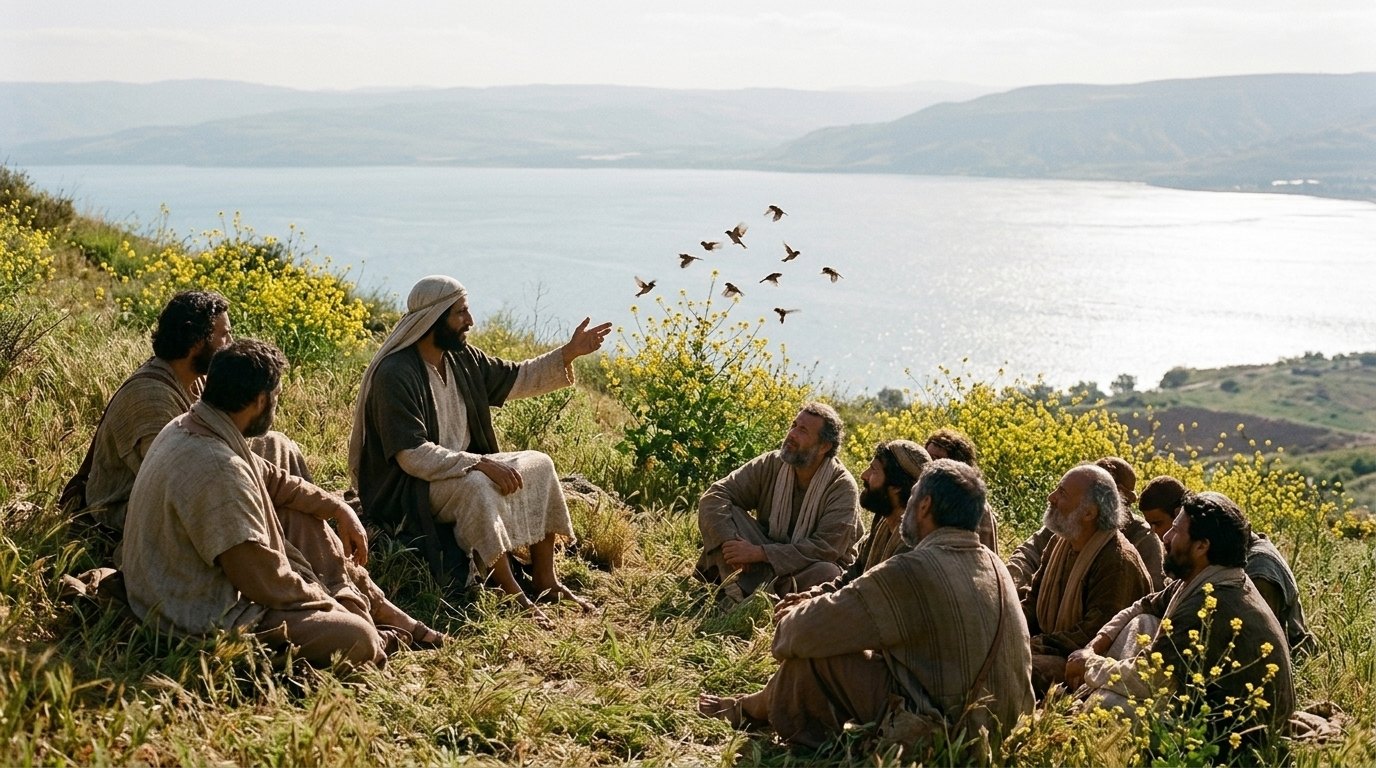
Look at the birds of the air; they do not sow or reap or store away in barns, and yet your heavenly Father feeds them. Are you not much more valuable than they?
Matthew 6:26 (NIV)
Jesus points to the Father's unceasing provision for the birds of the air to demonstrate the far greater worth of His children.
The apostolic command to cast away anxiety echoes the earthly preaching of the Lord Jesus Christ, who repeatedly commanded his disciples to lay down their debilitating worries. In Matthew 6:26, Jesus draws the eyes of his listeners upward to the sky, reminding them that the heavenly Father feeds the birds of the air, and his children are of far greater value than they. In Matthew 6:25, Jesus laid the foundation for this comfort by forbidding anxiety concerning basic survival—food, drink, and the clothes on one's back. He exposed worry as an irrational mistrust of the Creator's fatherly benevolence. Instead of living like the Gentiles who chase endlessly after material security, disciples are commanded in Matthew 6:33 to seek first God's kingdom and his righteousness, resting in the unshakable promise that all necessary earthly provision will be added to them. In Matthew 6:34, Christ points out the folly of borrowing trouble from the future, since each day carries sufficient burden of its own.
Luke records this identical discourse given to the disciples in Luke 12:22, where Jesus reiterates that life is more than sustenance and the body more than clothing. In Luke 12:24, he singles out the ravens—unclean, scavenger birds that neither store grain nor plant fields—yet God provides their daily portion without fail. The pinnacle of this assurance arrives in Luke 12:32, where Christ addresses his followers as a tiny, vulnerable flock. He tells them plainly not to fear, because it is the Father's sovereign good pleasure to grant them the eternal kingdom, a gift that renders every temporal anxiety small by comparison.
| Passage | What it says |
|---|---|
| Matthew 6:25 | Jesus commands disciples not to be anxious about their life, food, or bodily clothing. |
| Matthew 6:26 | Christ highlights how the heavenly Father feeds the birds, asking if believers are not of far greater value. |
| Matthew 6:33 | Disciples are commanded to seek first God's kingdom and righteousness, trusting all physical necessities will be provided. |
| Matthew 6:34 | Jesus forbids worrying about tomorrow, noting each day possesses sufficient trouble of its own. |
| Luke 12:22 | Jesus tells his disciples not to be anxious about life, what they will eat, or the body, what they will wear. |
| Luke 12:24 | Jesus points to the ravens who neither sow nor reap, yet God feeds them, showing believers are of much more value. |
| Luke 12:32 | Jesus reassures his little flock that it is the Father's good pleasure to give them the kingdom. |
Prayer and Peace
Apostolic Guidance for Exchanging Worry for Peace
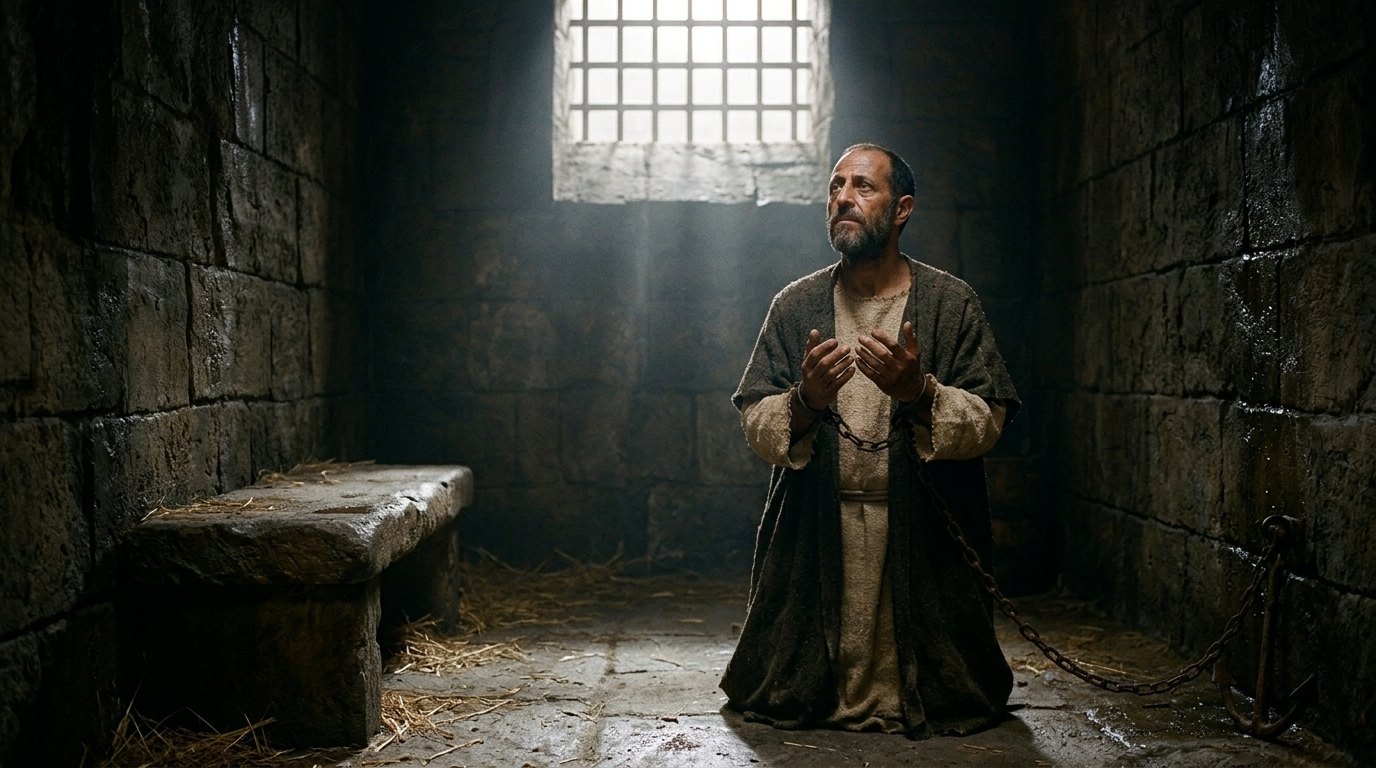
Do not be anxious about anything, but in every situation, by prayer and petition, with thanksgiving, present your requests to God.
Philippians 4:6 (NIV)
Paul shows that the practical mechanism for releasing worry is specific prayer and thanksgiving made known to God.
The apostle Paul details the exact mechanics of casting anxiety into the hands of God in Philippians 4:6, writing from Roman imprisonment: do not be anxious about anything, but in everything by prayer and supplication with thanksgiving let your requests be made known to God. Paul allows no exceptions for worry; the scope is absolute, covering every conceivable trial. The antidote to anxiety is not empty meditation or mental distraction, but articulate, specific communication with God. Supplication names the precise pressure point of the trial, while thanksgiving anchors the praying heart in the past faithfulness and goodness of the Lord, preventing prayer from degenerating into panic.
The consequence of this prayerful transaction is outlined in Philippians 4:7, where God promises not necessarily an instant change of circumstance, but an impartation of supernatural rest. The peace of God, which surpasses all human understanding, will mount guard over the hearts and minds of believers in Christ Jesus. Paul uses a vivid military metaphor drawn from Roman garrisons that guarded frontier cities: God's peace functions as an alert sentinel stationed at the doorway of the inner person, turning back intrusive dread, terror, and despair. When the believer casts anxieties onto God through specific, thankful prayer, the peace that belongs to God himself assumes the burden and guards the soul.
| Passage | What it says |
|---|---|
| Philippians 4:6 | Paul exhorts believers to be anxious for nothing, bringing every request to God through prayer, supplication, and thanksgiving. |
| Philippians 4:7 | God's surpassing peace is promised to guard the hearts and minds of believers in Christ Jesus. |
Where in the Bible
| Book | Passages |
|---|---|
| Psalms | 4 · Psalms 55:22, Psalms 37:5, Psalms 56:3, Psalms 56:4 |
| Matthew | 4 · Matthew 6:25, Matthew 6:26, Matthew 6:33, Matthew 6:34 |
| Luke | 3 · Luke 12:22, Luke 12:24, Luke 12:32 |
| Philippians | 2 · Philippians 4:6, Philippians 4:7 |
| 1 Peter | 8 · 1 Peter 5:6, 1 Peter 5:7, 1 Peter 1:6, 1 Peter 4:12, 1 Peter 4:19, 1 Peter 5:8, 1 Peter 5:9, 1 Peter 5:10 |
The story in order
- David trusts God in fear (c. 1000 BC) · Psalms 56:3 · Shows trusting God when fear strikes.
- David commits his way to God (c. 1000 BC) · Psalms 37:5 · Shows committing one's path to God.
- David casts burdens on the LORD (c. 1000 BC) · Psalms 55:22 · Shows casting burdens and God's provision.
- Jesus forbids anxiety about life (c. AD 30) · Matthew 6:25 · Jesus teaches against anxious living.
- Jesus points to God feeding birds (c. AD 30) · Matthew 6:26 · Shows God's care for creation.
- Jesus commands seeking God's kingdom (c. AD 30) · Matthew 6:33 · Trust God for provision when seeking His kingdom.
- Jesus forbids worrying about tomorrow (c. AD 30) · Matthew 6:34 · Each day's troubles are sufficient.
- Jesus reassures his little flock (c. AD 30) · Luke 12:32 · God delights to give believers the kingdom.
- Peter warns of fiery trials (c. AD 60) · 1 Peter 4:12 · Suffering is not to be a surprise.
- Peter tells to entrust souls to God (c. AD 60) · 1 Peter 4:19 · Entrust souls to God while doing good.
- Believers humble themselves under God (c. AD 60) · 1 Peter 5:6 · Humility precedes God's exaltation.
- Believers cast anxieties on God (c. AD 60) · 1 Peter 5:7 · Cast anxieties on God because He cares.
- Peter warns of the adversary (c. AD 60) · 1 Peter 5:8 · Be vigilant against the devil's attacks.
- God restores, confirms, strengthens (c. AD 60) · 1 Peter 5:10 · God's grace after suffering.
Casting Burdens and Anxieties on God
| Action | Object of Action | God's Promise/Result | Passage |
|---|---|---|---|
| Cast burdens | The LORD | He will never let the righteous be moved. | Psalms 55:22 |
| Commit your way | The LORD | Trust Him to act. | Psalms 37:5 |
| Trust | God | Refuse to fear what flesh can do. | Psalms 56:3 |
| Do not be anxious | Your life | Seek first God's kingdom and He will provide. | |
| Do not be anxious | Life, food, clothing | You are of far greater value than birds. | |
| Cast anxieties | God | He personally cares for you. | 1 Peter 5:7 |
| Entrust souls | Faithful Creator | While doing good. | 1 Peter 4:19 |
| Be anxious for nothing | Requests to God | God's peace will guard your heart and mind. | Philippians 4:6-7 |
Suffering and God's Care
| Situation | Instruction | God's Action/Promise | Passage |
|---|---|---|---|
| Fiery trials | Do not be surprised | Suffering is part of Christian life. | 1 Peter 4:12 |
| Suffer according to God's will | Entrust your souls to a faithful Creator | While doing good. | 1 Peter 4:19 |
| Trials causing grief | Humble yourselves under God's mighty hand | He may exalt you in due time. | 1 Peter 5:6 |
| Anxieties | Cast them upon God | He personally cares for you. | 1 Peter 5:7 |
| After suffering a little while | Resist the enemy, firm in faith | God of all grace will restore, confirm, strengthen, establish you. | 1 Peter 5:9-10 |
Key words
- Anxieties (merimna, μεριμνα)
- Distress or uneasiness of the mind caused by fear of danger or misfortune; excessive worry. · 1 Peter 5:7
- Cast (epiripto, ἐπιριπτω)
- To throw or hurl with force; to transfer the weight or burden of something. · 1 Peter 5:7
- Cares (meleō, μελέω)
- Concern, attention, or consideration for someone or something; watchful protection. · 1 Peter 5:7
- Humble (tapeinoō, ταπεινόω)
- To lower oneself in status or importance; to be modest and submissive. · 1 Peter 5:6
- Entrust (paradidōmi, παραδίδωμι)
- To commit something to someone with a sense of responsibility and trust. · 1 Peter 4:19
- Peace (eirēnē, εἰρήνη)
- A state of tranquility or quiet; freedom from disturbance; divine well-being. · Philippians 4:7
Casting your care on God is neither denial nor passivity, but an active, daily act of faith in a Father who knows your needs and sustains your soul. When you take your specific anxieties and lay them at His feet, His enduring peace guards your heart and frees you to walk in quiet trust.
21 passages, each cited once.
Scripture cited
- 1 Peter 5:7
- Psalms 55:22
- Philippians 4:6
- 1 Peter 5:6-11