What does 'amen' mean?

Revelation 22:20-21
20 He who testifies to these things says, “Yes, I am coming soon.” Amen. Come, Lord Jesus.
21 The grace of the Lord Jesus be with God’s people. Amen.
New International Version (NIV)
The answer
“Amen” means “surely” or “so be it.” The word comes from Hebrew and carries the idea of what is firm and trustworthy. At the end of a prayer or statement, it expresses sincere agreement: “Yes, let this be so.” It is more than a religious full stop.
Scripture shows several connected uses:
- Affirming God’s promises: 2 Corinthians 1:20 says, “For however many are the promises of God, in him is the ‘Yes.’ Therefore also through him is the ‘Amen’, to the glory of God through us.” God’s promises are certain in Christ, and His people respond with Amen.
- Agreeing in prayer: In Revelation 22:20, Jesus promises, “Yes, I am coming soon,” and John answers, “Amen! Yes, come, Lord Jesus!” Amen voices believing agreement and longing.
- Sealing worship and blessing: The Bible’s final verse, Revelation 22:21, concludes, “The grace of the Lord Jesus Christ be with all the saints. Amen.”
- Describing Christ Himself: Revelation 3:14 calls Jesus “The Amen, the Faithful and True Witness.” He is completely faithful and true, and God’s promises are sure in Him.
Answered from Scripture · reviewed November 11, 2026
Far from being a mere ritual conclusion to prayer, 'amen' is an ancient declaration of steadfast truth, unshakeable certainty, and heartfelt assent. Rooted in a Hebrew word meaning firm, reliable, and trustworthy, it resounds throughout Scripture as the believer's resolute 'so be it' to the promises and person of God.
Covenant Assent
Israel binds its heart to the truth of God
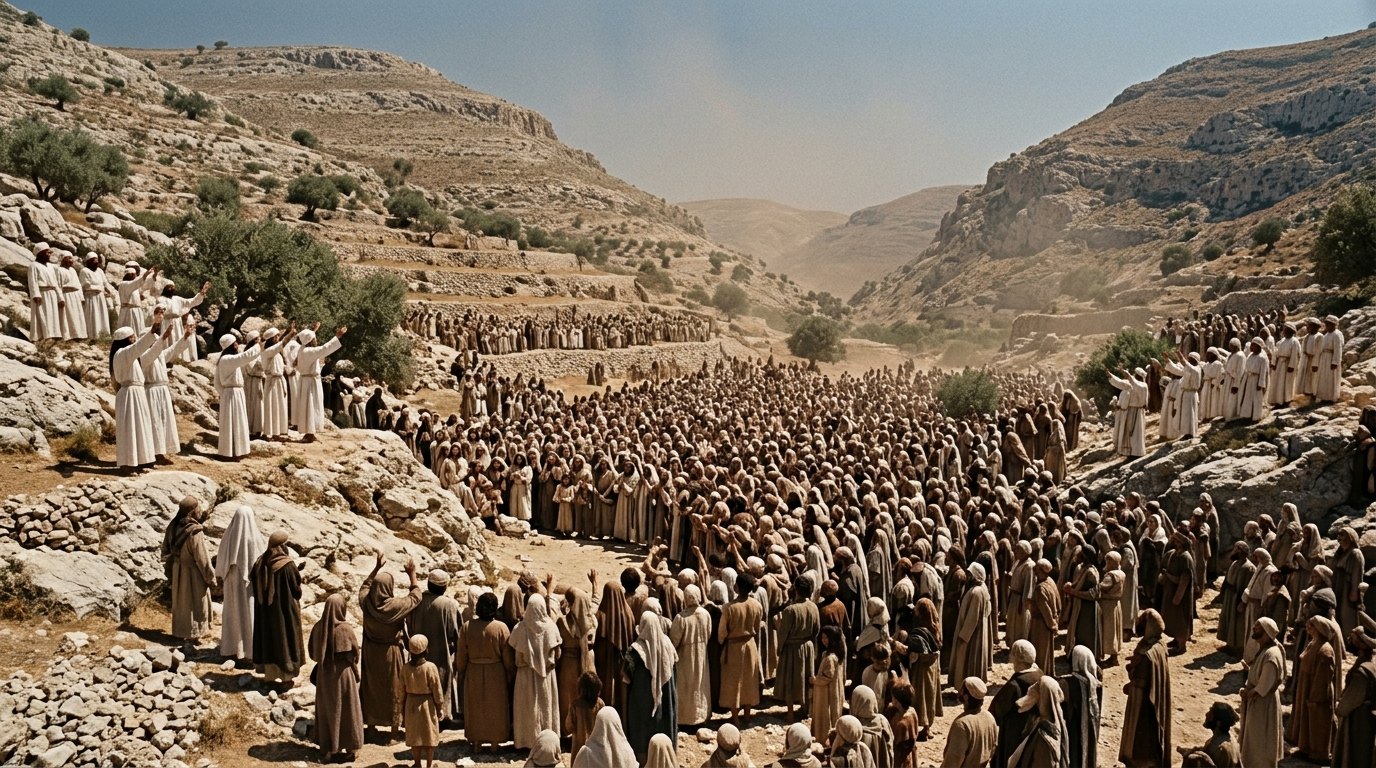
“Cursed is anyone who does not uphold the words of this law by carrying them out.” Then all the people shall say, “Amen!”
Deuteronomy 27:26 (NIV)
It shows the entire assembly audibly taking personal ownership of God's righteous law with a solemn corporate Amen.
In Deuteronomy 27:26, the entire assembly of Israel stood between the crags of Gerizim and Ebal to take audible, personal ownership of God's holy standard: "Cursed is anyone who does not uphold the words of this law by carrying them out. And all the people shall say, 'Amen!'" To utter this word was not to make a polite wish, but to stake one's life on the absolute trustworthiness and binding authority of God's declaration.
Scripture uses this solemn assent across legal, royal, and prophetic oaths. In Numbers 5:22, an accused wife answered a sobering divine test with a doubled "Amen, Amen," yielding wholly to God's righteous judgment and truth. Standing before the assembled tribes, the Levites pronounced twelve solemn curses against secret transgressions, from hidden idolatry (Deuteronomy 27:15) to corrupt injustice, and each time the corporate congregation shouted "Amen!" to ratify their accountability. When King David commanded the anointing of Solomon to the throne, Benaiah son of Jehoiada confirmed the royal commission by proclaiming, "Amen! May the Lord, the God of my lord the king, so declare it" (1 Kings 1:36), rooting his allegiance in divine confirmation.
Centuries later, when Nehemiah confronted the nobles who had exploited their poor brethren, he shook out the fold of his garment in warning, and the whole assembly said "Amen" and praised the Lord as they fulfilled their pledge to forgive debts (Nehemiah 5:13). The prophets shared this identical posture before divine decrees. When the Lord reiterated the terms of His holy covenant to Jeremiah, the prophet replied, "Amen, Lord" (Jeremiah 11:5), yielding his full consent to the divine will. Even when Hananiah spoke a false prophecy of immediate rescue, Jeremiah responded, "Amen! May the Lord do so!" (Jeremiah 28:6), distinguishing between his personal longing for relief and God's unwavering, sovereign decree.
| Passage | What it says |
|---|---|
| Numbers 5:22 | A double amen spoken to submit to divine judgment and verify the truth of a solemn oath. |
| Deuteronomy 27:15 | The congregation responds with amen, agreeing to the curse pronounced against secret idolatry. |
| Deuteronomy 27:26 | The whole people say amen to affirm the entire body of the covenant law. |
| Nehemiah 5:13 | The assembly says amen and praises the Lord to confirm their pledge to release debts. |
| 1 Kings 1:36 | Benaiah responds with amen to King David's decree, praying that the Lord God confirms it likewise. |
| Jeremiah 11:5 | Jeremiah answers the terms of the Lord's covenant with an explicit amen, assenting to God's oath. |
| Jeremiah 28:6 | Jeremiah responds amen to Hananiah's prophecy, expressing the desire that God would indeed confirm the words. |
Corporate Praise
Worshippers seal their praise with joyful certainty
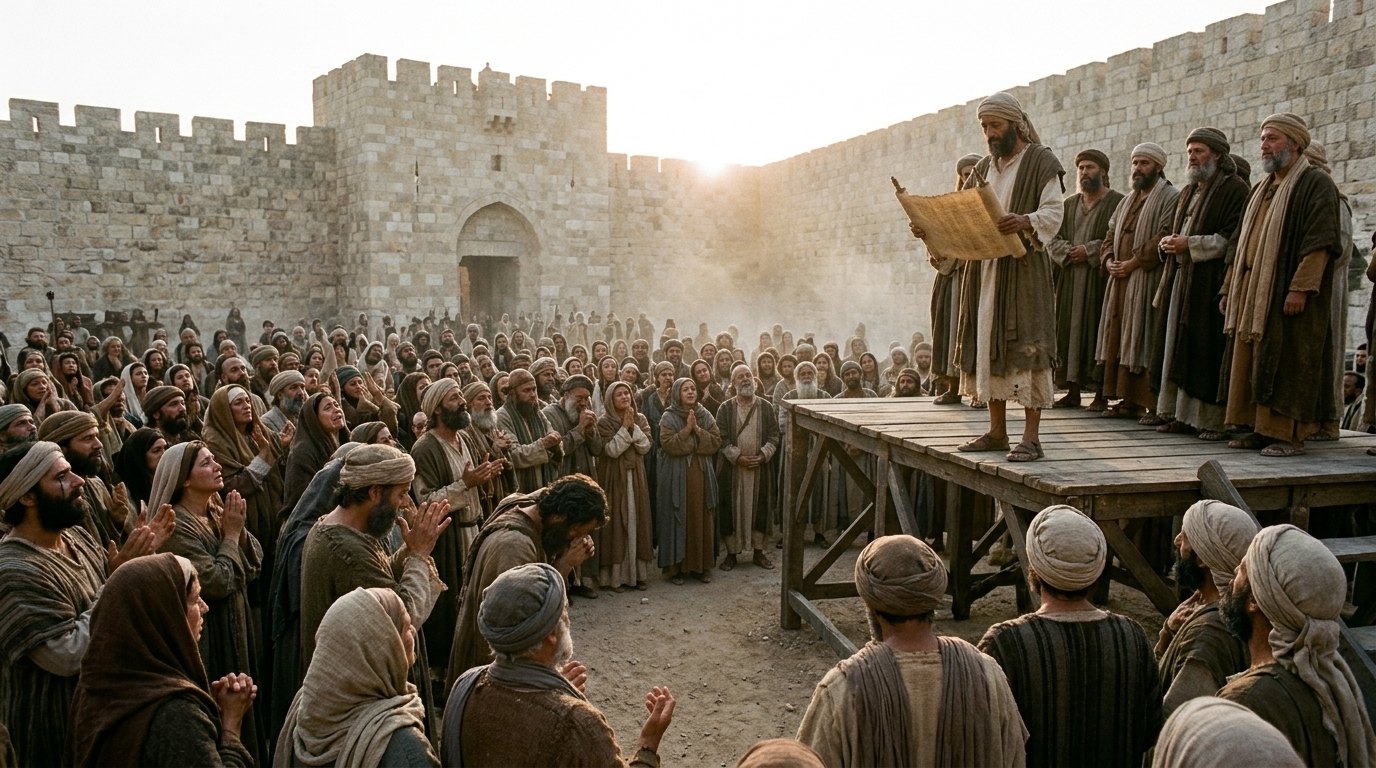
Praise be to the LORD, the God of Israel, from everlasting to everlasting. Let all the people say, “Amen!” Praise the LORD.
Psalms 106:48 (NIV)
It closes the fourth book of the Psalter by summoning all God's people to join the perpetual Amen.
The fourth book of the Psalter culminates in Psalms 106:48 with a glorious mandate: "Praise be to the Lord, the God of Israel, from everlasting to everlasting. Let all the people say, 'Amen!' Praise the Lord." In the life of biblical worship, the word was the joyful anchor that bound the hearts of the worshippers to the eternal perfection and character of God.
When the ark of the covenant was brought into Jerusalem, David delivered a psalm of thanksgiving, and at its conclusion "all the people said 'Amen!' and praised the Lord" (1 Chronicles 16:36). This was an active, vocal embrace of the Lord's enduring mercy. This same vibrant practice revived the broken remnants of Jerusalem after the Babylonian exile: Ezra blessed the Lord, the great God, and all the people answered, "Amen! Amen!" with their hands lifted up toward heaven, bowing their heads in heartfelt worship (Nehemiah 8:6).
Across the inspired arrangement of the Psalms, this corporate seal marks the conclusion of its major books with resounding finality. The first book closes with "Amen and Amen" in Psalms 41:13, blessing the Lord God of Israel from everlasting to everlasting. The second book terminates upon David's prayers in Psalms 72:19, crying out that His glorious name be praised forever and the whole earth filled with His majesty: "Amen and Amen." The third book similarly seals its remembrance of God's enduring covenant in Psalms 89:52 with "Praise be to the Lord forever! Amen and Amen." Worship in the biblical canon is never an internal, passive spectatorship; it is an eruptive certainty that crowns God's majesty with the unwavering affirmation of His gathered saints.
| Passage | What it says |
|---|---|
| 1 Chronicles 16:36 | All the people say amen and praise the Lord upon the ark's arrival in Jerusalem. |
| Nehemiah 8:6 | The returned exiles answer Ezra's blessing with Amen, Amen, lifting up their hands. |
| Psalms 41:13 | The first book of Psalms concludes with a double amen of eternal praise to Israel's God. |
| Psalms 72:19 | The second book closes affirming God's glory filling the earth with Amen and Amen. |
| Psalms 89:52 | The third book seals its blessing of the Lord forever with Amen and Amen. |
| Psalms 106:48 | The assembly is commanded to crown the everlasting praise of the Lord with Amen. |
The True Witness
Jesus speaks absolute truth and embodies God's promises
For no matter how many promises God has made, they are “Yes” in Christ. And so through him the “Amen” is spoken by us to the glory of God.
2 Corinthians 1:20 (NIV)
It reveals that every divine promise finds its decisive Yes and corporate Amen exclusively through Jesus Christ.
In 2 Corinthians 1:20, the apostle Paul unveils the ultimate grounding of all biblical truth: "For no matter how many promises God has made, they are 'Yes' in Christ. And so through him the 'Amen' is spoken by us to the glory of God." The ancient Hebrew root aman speaks of that which is solid, certain, and immovable. When the prophet Isaiah foretold the new creation, he pointedly called the Almighty "the God of the Amen" (rendered "the God of truth" in Isaiah 65:16), setting divine unchangeability against all worldly vanity.
Because Jesus Christ is God incarnate, He adopted this title as His personal signature. While rabbis appealed to traditions, Jesus continually inaugurated His profound revelations with the unprecedented formula, "Truly, truly, I say to you"—literally, "Amen, amen, I say to you" (John 3:3; Matthew 5:18). He did not place the Amen at the end of a petition to express a hope; He placed it at the beginning of His speech to proclaim that His word is absolute, sovereign reality. In Matthew 5:18, He warned that not the smallest letter or stroke of a pen would pass from the Law until all was fulfilled.
This authority culminates in the heavenly vision of Revelation 3:14, where the risen Christ commands John to write to the church in Laodicea: "These are the words of the Amen, the faithful and true witness, the ruler of God's creation." Jesus does not merely verify truth; He is its personification. Every shadow, pledge, and covenant established in the Old Testament finds its permanent, rock-solid realization in His cross, His empty tomb, and His eternal reign.
| Passage | What it says |
|---|---|
| John 3:3 | Jesus introduces foundational divine truth using the authoritative formula, Truly, truly, or Amen, amen. |
| 2 Corinthians 1:20 | All of God's promises find their Yes in Christ, leading believers to voice their Amen. |
| Revelation 3:14 | Jesus reveals Himself by the divine title, The Amen, the faithful and true witness. |
| Isaiah 65:16 | Isaiah names the Lord the God of Amen (truth), showing the root meaning of faithfulness and unshakeable veracity. |
| Matthew 5:18 | Jesus introduces His absolute authority over the Law using amen (verily), asserting that nothing from Scripture will fail. |
Apostolic Doxology
The early church worships with unified conviction
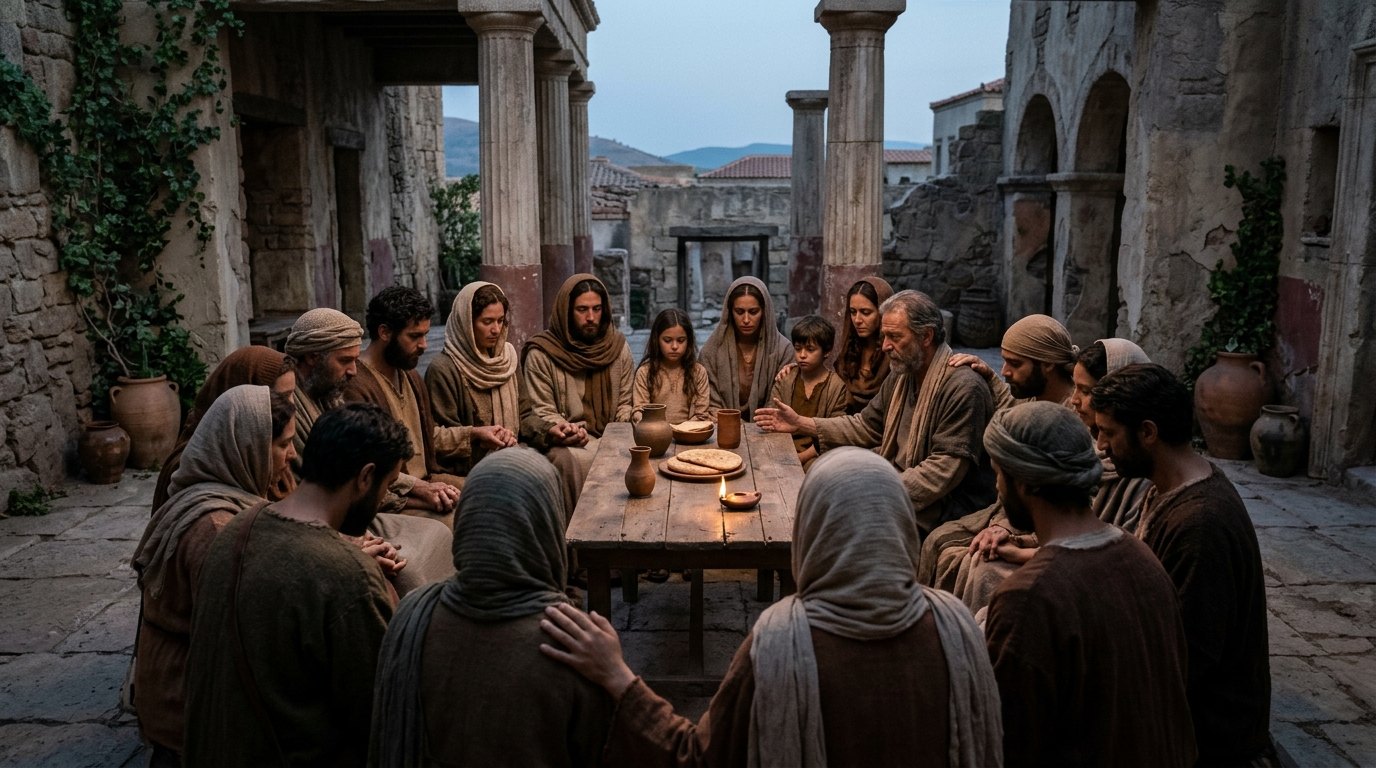
Otherwise when you are praising God in the Spirit, how can someone else, who is now put in the position of an inquirer, say “Amen” to your thanksgiving, since they do not know what you are saying?
1 Corinthians 14:16 (NIV)
It establishes that public prayers require understandable speech so the congregation can actively add their corporate Amen.
The early church carried this heritage directly into their gatherings, as Paul highlights in 1 Corinthians 14:16: "Otherwise, if you praise God with your spirit, how can anyone in the position of an outsider say 'Amen' to your thanksgiving, since they do not know what you are saying?" Paul’s pastoral instruction presumes that every single prayer in the Christian assembly was normally sealed by an intelligent, audible "Amen" from the entire congregation, uniting their voices in one shared confidence.
Throughout the New Testament epistles, whenever apostolic thought ascends into the contemplation of God's character, it bursts spontaneously into doxology crowned with this sacred assent. Confronting the rebellion of human idolatry, Paul stops to bless "the Creator—who is forever praised. Amen" (Romans 1:25). Contemplating Christ's lineage according to the flesh, he proclaims Him to be "God over all, forever praised! Amen" (Romans 9:5). At the climax of his treatment of God's sovereign wisdom, he erupts: "For from him and through him and for him are all things. To him be the glory forever! Amen" (Romans 11:36; see also Romans 16:27; Galatians 6:18; Ephesians 3:21).
The rest of the apostles maintained this exact language of triumph. The author of Hebrews closes his glorious benediction of eternal peace through the blood of the everlasting covenant with an "Amen" (Hebrews 13:21). Peter urges the saints to serve so that in all things God may be praised through Jesus Christ, adding, "To him be the glory and the power for ever and ever. Amen" (1 Peter 4:11; 1 Peter 5:11). Jude concludes his epistle with a breathless tribute to the only God our Savior, ascribing to Him "glory, majesty, dominion and authority... now and forevermore. Amen" (Jude 1:25). For the apostles, to utter Amen was to plant one's feet upon the unshakable rock of God's sovereign glory.
| Passage | What it says |
|---|---|
| Romans 1:25 | Paul crowns his acknowledgment of the Creator who is blessed forever with an Amen. |
| Romans 11:36 | A doxology declaring all things are from, through, and to God concludes with Amen. |
| 1 Corinthians 14:16 | A reminder that understandable giving of thanks enables an outsider to say Amen. |
| Ephesians 3:21 | Praise to God for glory in the church and in Christ Jesus ends with Amen. |
| Jude 1:25 | Ascription of glory, majesty, dominion, and power to the only God concludes with Amen. |
| Romans 9:5 | Paul concludes his declaration of Christ being God over all, blessed forever, with an amen. |
| Romans 16:27 | The epistle to the Romans concludes with praise to the only wise God through Jesus Christ forever, sealed with amen. |
| Galatians 6:18 | Paul seals his benediction of the grace of Jesus Christ to the Galatian believers with amen. |
| Hebrews 13:21 | The author of Hebrews concludes his prayer of equipping and doxology to Jesus Christ with amen. |
| 1 Peter 4:11 | Peter directs that God be glorified in all things through Jesus Christ, ending with glory, dominion, and amen. |
| 1 Peter 5:11 | Peter attributes eternal dominion to God, concluding the epistle's doxological exhortation with amen. |
Heavenly Consummation
The canon closes with an eternal longing fulfilled

He who testifies to these things says, “Yes, I am coming soon.” Amen. Come, Lord Jesus.
Revelation 22:20 (NIV)
It records the church's eager, final response of unreserved agreement to Christ's promise of His swift return.
In Revelation 22:20, Scripture brings its grand redemptive narrative to a close on a single, urgent confession: "Amen. Even so, come, Lord Jesus." Here the word is not a polite closing phrase or an afterthought; it is the church's passionate, undivided assent to the triumphant promise of her King. Throughout the Apocalypse, this ancient word anchors every disclosure of divine victory, sovereignty, and judgment, testifying that God's purpose cannot fail.
From the book's opening vision, Christ's glorious arrival in judgment and majesty is sealed with holy certainty. In Revelation 1:7, John announces that every eye will behold Him, even those who pierced Him, declaring with unshakable conviction: "Even so, Amen." Heavenly worship resounds with the same confession. When the Lamb takes the scroll, all creation falls in adoration, and in Revelation 5:14, the four living creatures voice creation's total surrender with a thunderous "Amen." In Revelation 7:12, the angels, elders, and living creatures surround the throne, framing a sevenfold doxology of blessing, glory, wisdom, and might between an opening and closing "Amen."
When Babylon falls and God vindicates His people, the heavenly council falls prostrate before the throne in Revelation 19:4, crying out, "Amen; Alleluia!" as true and righteous judgments are executed. Finally, the revelation reaches its culmination at the end of the canon. Following John's passionate plea in Revelation 22:20, the entire testimony of Holy Scripture concludes in Revelation 22:21 with an apostolic benediction: "The grace of our Lord Jesus Christ be with you all. Amen." Across eternity, the word remains the consummate signature of faith, affirming that every promise of God finds its absolute fulfillment in Jesus Christ.
| Passage | What it says |
|---|---|
| Revelation 1:7 | The declaration that every eye will see Christ's coming is sealed with Even so, Amen. |
| Revelation 5:14 | The four living creatures say Amen as all creation falls down to worship the Lamb. |
| Revelation 7:12 | Angels, elders, and living creatures surround the throne, framing their sevenfold praise with Amen. |
| Revelation 19:4 | The heavenly council falls down worshiping God and crying Amen, Hallelujah over His judgments. |
| Revelation 22:20 | John replies to Jesus' promise of His quick return with Amen. Even so, come, Lord Jesus. |
| Revelation 22:21 | The entire biblical canon concludes with a blessing of Christ's grace upon the saints, sealed with Amen. |
Where in the Bible
| Book | Passages |
|---|---|
| Numbers | 1 · Numbers 5:22 |
| Deuteronomy | 2 · Deuteronomy 27:15, Deuteronomy 27:26 |
| 1 Kings | 1 · 1 Kings 1:36 |
| 1 Chronicles | 1 · 1 Chronicles 16:36 |
| Nehemiah | 2 · Nehemiah 5:13, Nehemiah 8:6 |
| Psalms | 4 · Psalms 41:13, Psalms 72:19, Psalms 89:52, Psalms 106:48 |
| Isaiah | 1 · Isaiah 65:16 |
| Jeremiah | 2 · Jeremiah 11:5, Jeremiah 28:6 |
| Matthew | 1 · Matthew 5:18 |
| John | 1 · John 3:3 |
| Romans | 4 · Romans 1:25, Romans 11:36, Romans 9:5, Romans 16:27 |
| 1 Corinthians | 1 · 1 Corinthians 14:16 |
| 2 Corinthians | 1 · 2 Corinthians 1:20 |
| Galatians | 1 · Galatians 6:18 |
| Ephesians | 1 · Ephesians 3:21 |
| Hebrews | 1 · Hebrews 13:21 |
| 1 Peter | 2 · 1 Peter 4:11, 1 Peter 5:11 |
| Jude | 1 · Jude 1:25 |
| Revelation | 7 · Revelation 3:14, Revelation 1:7, Revelation 5:14, Revelation 7:12, Revelation 19:4, Revelation 22:20, Revelation 22:21 |
The story in order
- Israel affirms the covenant law (c. 1400 BC) · Deuteronomy 27:26 · The people's 'amen' signifies their binding agreement to God's commands.
- David's decree confirmed (c. 970 BC) · 1 Kings 1:36 · Benaiah's 'amen' expresses assent and a prayer for divine confirmation.
- Exiles affirm Ezra's blessing (c. 445 BC) · Nehemiah 8:6 · A double 'amen' signifies joyful and wholehearted agreement with God's word.
- Jeremiah assents to God's covenant (c. 620 BC) · Jeremiah 11:5 · Jeremiah's 'amen' confirms his submission to the terms of God's oath.
- Jesus introduces divine truth (c. AD 30) · John 3:3 · Jesus uses 'Amen, amen' to introduce foundational truths with absolute authority.
- Paul affirms God's promises in Christ (c. AD 55) · 2 Corinthians 1:20 · Believers' 'amen' responds to the certainty of God's promises fulfilled in Christ.
- Early church worships God (c. AD 57) · Romans 11:36 · Doxologies conclude with 'amen', sealing praise to God's eternal glory.
- Revelation's heavenly worship (c. AD 95) · Revelation 7:12 · Heavenly beings frame their praise with 'amen', signifying eternal certainty.
- John's final plea (c. AD 95) · Revelation 22:20 · The Bible closes with 'Amen. Even so, come, Lord Jesus,' expressing ultimate hope.
Key words
- Amen (ʼāmēn, אָמֵן)
- So be it; truly; faithfully; certainly. · Deuteronomy 27:15
- Truly (amēn, ἀμήν)
- Used by Jesus to introduce authoritative statements, signifying absolute truth. · John 3:3
- Faithful witness (ho amēn, ὁ ἀμήν)
- A title for Jesus, signifying His absolute trustworthiness and truth. · Revelation 3:14
- God of Amen (ʼĕlōhê ʼāmēn, אֱלֹהֵי אָמֵן)
- The Lord is the God of truth, faithfulness, and unshakeable veracity. · Isaiah 65:16
Whenever we speak 'amen', we are not simply signing off, but joining our voices to the enduring faithfulness of God revealed in Scripture. In Christ, God has given His ultimate 'Yes', and through our 'Amen' we rest our lives securely upon His unfailing word.
35 passages, each cited once.
Scripture cited
- Revelation 22:20-21
- Revelation 3:14
- 2 Corinthians 1:20