What does Deuteronomy 31:6 mean?
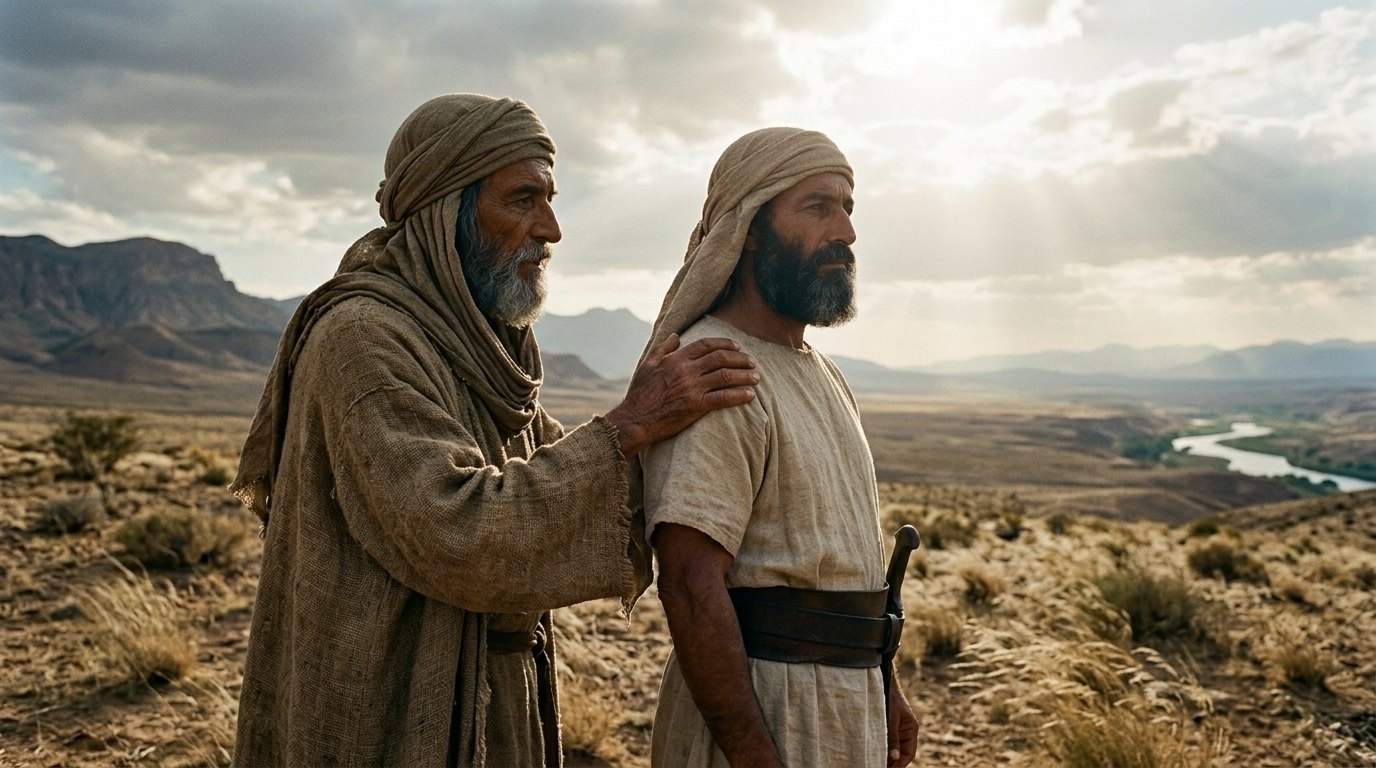
Deuteronomy 31:6-8
6 Be strong and courageous. Do not be afraid or terrified because of them, for the LORD your God goes with you; he will never leave you nor forsake you.”
7 Then Moses summoned Joshua and said to him in the presence of all Israel, “Be strong and courageous, for you must go with this people into the land that the LORD swore to their ancestors to give them, and you must divide it among them as their inheritance.
8 The LORD himself goes before you and will be with you; he will never leave you nor forsake you. Do not be afraid; do not be discouraged.”
New International Version (NIV)
The answer
Deuteronomy 31:6 calls God’s people to courage grounded in God’s presence and faithfulness, not in their own strength. They face genuine danger, but they need not be controlled by fear because God himself goes with them and will not abandon them.
What it meant for Israel
Deuteronomy 31:1-8 places these words at a major transition. Moses is about to die, Joshua is about to lead, and Israel must cross the Jordan and dispossess powerful nations. Moses has already said that God will go before Israel and defeat these nations, as He previously defeated Sihon and Og.
Each part of the verse builds on that setting:
- “Be strong and courageous” is a command to obey and advance despite frightening circumstances. It does not deny the danger or trust in military strength.
- “Don’t be afraid or scared of them” forbids the fear that would cause Israel to shrink back from what God had commanded.
- “Yahweh your God himself is who goes with you” supplies the reason for courage: God is personally and actively present with His people.
- “He will not fail you nor forsake you” assures Israel that God will not withdraw His help, abandon His people, or leave His purpose unfinished.
Moses gives Joshua nearly the same charge in Deuteronomy 31:7-8, and God repeats it in Joshua 1:9. The leader changes and the battle remains, but God’s presence and faithfulness do not change.
What it means now
This was first a concrete promise concerning Israel’s God-commanded conquest. It is not a blanket guarantee that every personal plan will succeed or that believers will never suffer. Its enduring principle is that obedience should rest on God’s presence rather than favorable circumstances.
Hebrews 13:5-6 directly applies this promise to believers: “I will in no way leave you, neither will I in any way forsake you.” There, God’s unfailing presence produces contentment instead of love of money and courage instead of fear of people. The application is therefore not “nothing frightening will happen,” but fear need not have the final word when obedience is costly. Strength is found “in the Lord, and in the power of his might” (Ephesians 6:10).
Answered from Scripture · reviewed November 11, 2026
Deuteronomy 31:6 teaches that biblical courage is not the absence of dread or the strength of human resolve, but active obedience grounded in the personal presence of God. Spoken by Moses on the plains of Moab as Israel faced fortified nations and the death of their founding leader, the command anchors bravery directly in God's sworn promise never to abandon His people. Across the Old and New Testaments, this assurance sustains believers facing daunting transitions, spiritual warfare, and material need.
The Plain of Moab
Moses prepares a new generation to cross the Jordan.
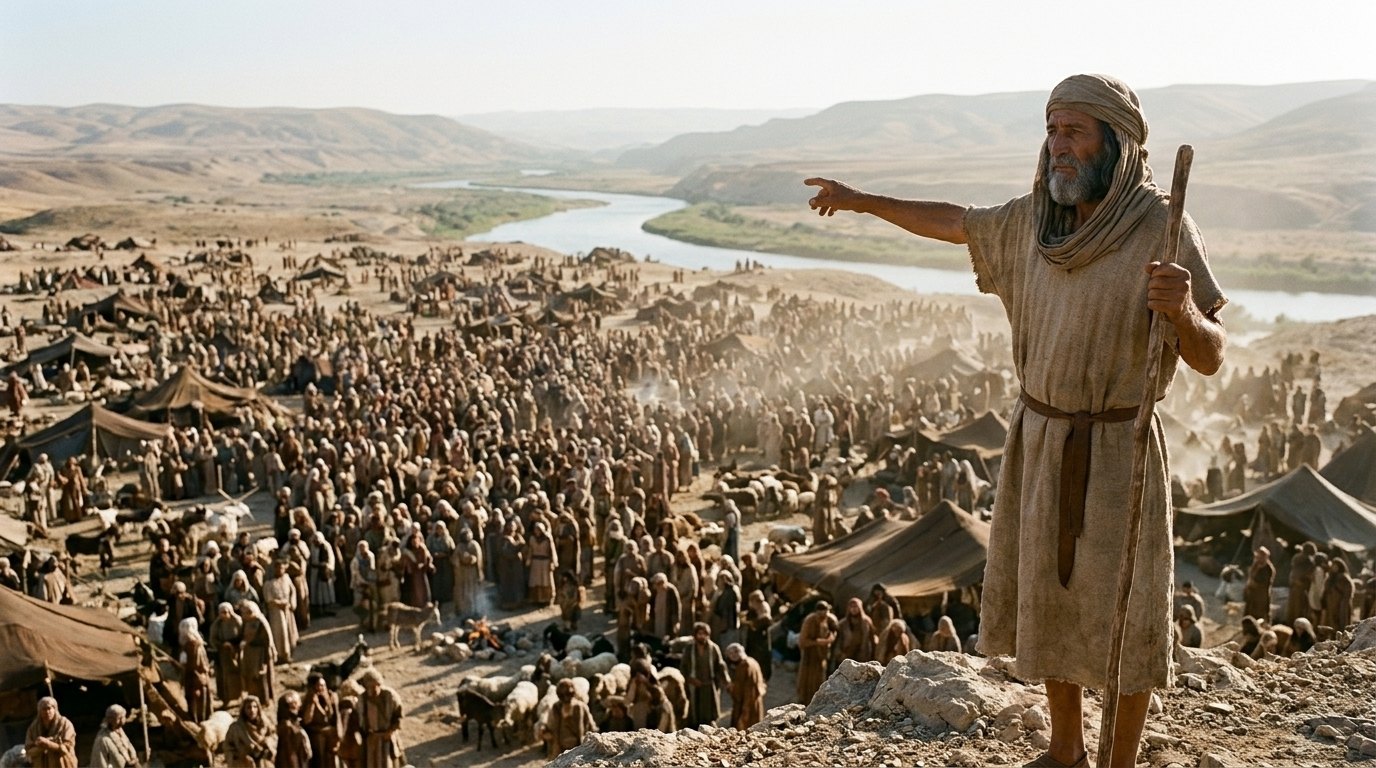
Be strong and courageous. Do not be afraid or terrified because of them, for the LORD your God goes with you; he will never leave you nor forsake you.”
Deuteronomy 31:6 (NIV)
Moses commands Israel to be strong and fearless because the Lord Himself goes before them and will never fail nor forsake them.
In Deuteronomy 31:6, Moses delivers a pivotal charge to an anxious nation poised on the eastern bank of the Jordan: "Be strong and of a good courage, fear not, nor be afraid of them: for the Lord thy God, he it is that doth go with thee; he will not fail thee, nor forsake thee." Biblical courage is never rooted in human self-confidence or natural stoicism. Instead, courage is direct obedience resting entirely upon the enduring presence of God. Moses had gathered the people to deliver his farewell address (Deuteronomy 31:1), reminding them that at one hundred and twenty years old, he could no longer lead them, nor had the Lord permitted him to cross over the river (Deuteronomy 31:2). This departure represented a massive leadership crisis for a generation that had known only Moses as their prophet and intercessor.
Yet Moses redirected Israel's gaze away from human leadership toward the Lord Himself. He declared that God would cross over ahead of them to destroy their adversaries, naming Joshua as His appointed instrument (Deuteronomy 31:3). To assure their hearts against the formidable Canaanite nations, Moses reminded them of historical evidence: God had already crushed Sihon and Og, the mighty kings of the Amorites, along with their lands (Deuteronomy 31:4). Victory was not contingent on military superiority, but on Israel carrying out the Lord's commandments against Canaanite idolatry without compromise (Deuteronomy 31:5). Because the sovereign God who subdued the Amorites marches with them, Israel had no cause for panic or retreat.
| Passage | What it says |
|---|---|
| Deuteronomy 31:1 | Moses speaks his final words of exhortation to all Israel before his death. |
| Deuteronomy 31:2 | Moses acknowledges his advanced age and explains that God has forbidden him from crossing the Jordan. |
| Deuteronomy 31:3 | Moses declares that the Lord God will cross over before Israel to destroy the nations, with Joshua leading. |
| Deuteronomy 31:4 | The Lord will destroy Canaanite adversaries just as He destroyed Sihon, Og, and the Amorite kings. |
| Deuteronomy 31:5 | Israel is instructed to execute judgment upon the nations strictly according to God's commandments. |
| Deuteronomy 31:6 | Israel is charged to be strong and courageous, confident that God goes with them and will not leave them. |
Passing the Mantle
Joshua receives the charge to conquer the land.
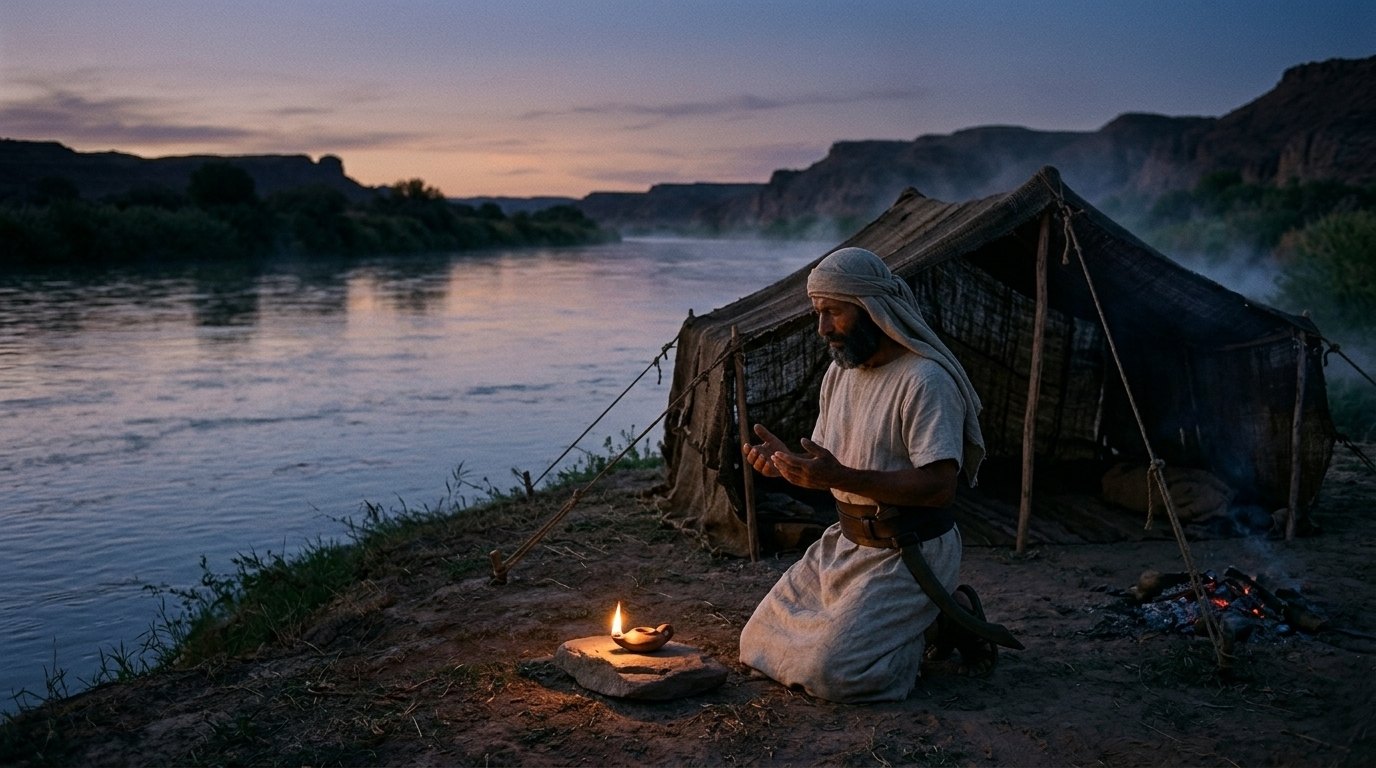
Have I not commanded you? Be strong and courageous. Do not be afraid; do not be discouraged, for the LORD your God will be with you wherever you go.”
Joshua 1:9 (NIV)
God personally charges Joshua with the identical command given through Moses, grounding his courage in divine presence wherever he walks.
In Joshua 1:9, God personally ratifies the exact mandate Moses had spoken, commanding Joshua: "Have not I commanded thee? Be strong and of a good courage; be not afraid, neither be thou dismayed: for the Lord thy God is with thee whithersoever thou goest." The transfer of authority was formalized publicly when Moses summoned Joshua in the sight of all Israel, repeating that he would lead the people into their inheritance under divine guidance (Deuteronomy 31:7). Moses reiterated that the Lord Himself marches ahead and will never leave or forsake His chosen servant (Deuteronomy 31:8).
Following the death of Moses, the Lord directly renewed this solemn covenant with Joshua on the banks of the Jordan. God pledged that no enemy would be able to stand against Joshua, promising, "as I was with Moses, so I will be with thee: I will not fail thee, nor forsake thee" (Joshua 1:5). The charge to "be strong and of a good courage" was repeated three times within this commissioning (Joshua 1:6). Critically, God revealed that genuine strength is inseparable from moral and spiritual fidelity: Joshua was commanded to mediate his courage through strict adherence to the Law, never veering to the right or to the left (Joshua 1:7). The divine presence was not a guarantee of effortless ease, but the sure anchor that banished dismay.
| Passage | What it says |
|---|---|
| Deuteronomy 31:7 | Moses summons Joshua before Israel, commanding him to be strong and lead the people into their inheritance. |
| Deuteronomy 31:8 | Moses reminds Joshua that the Lord marches ahead, will remain with him, and will neither fail nor forsake him. |
| Joshua 1:5 | The Lord assures Joshua that no man will stand before him, repeating the promise never to leave or forsake him. |
| Joshua 1:6 | Joshua is commanded to be strong and courageous to divide the promised land among the tribes. |
| Joshua 1:7 | The Lord commands Joshua to remain firmly obedient to the Law of Moses without turning left or right. |
| Joshua 1:9 | God commands Joshua not to fear or be dismayed, for the Lord is with him wherever he goes. |
Covenant Promises to Leaders
Israel's kings and prophets echo the call to divine courage.
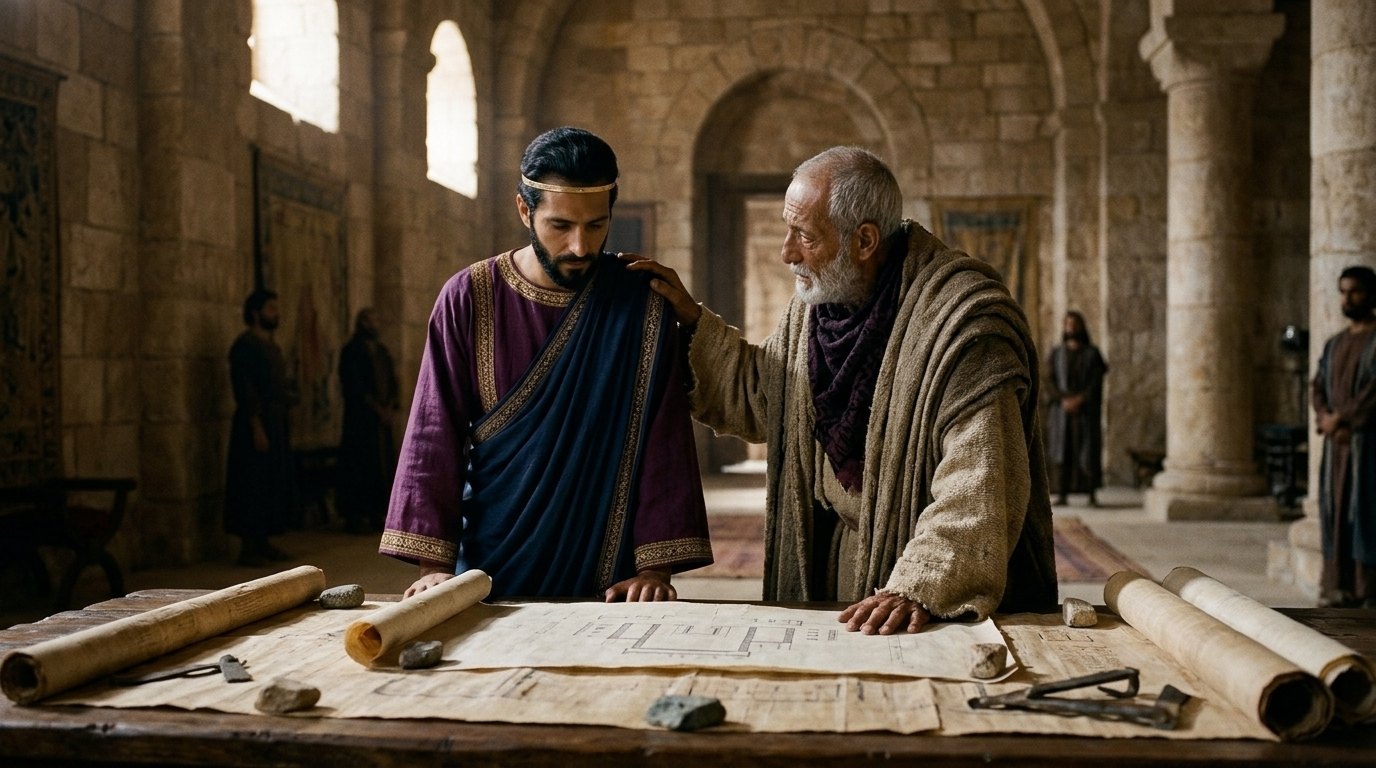
David also said to Solomon his son, “Be strong and courageous, and do the work. Do not be afraid or discouraged, for the LORD God, my God, is with you. He will not fail you or forsake you until all the work for the service of the temple of the LORD is finished.
1 Chronicles 28:20 (NIV)
David uses Moses' exact vocabulary to charge Solomon to build the temple without fear, trusting God's unwavering presence.
Centuries later, King David drew directly upon Moses' language to prepare his young successor, as recorded in 1 Chronicles 28:20: "Be strong and of good courage, and do it: fear not, nor be dismayed: for the Lord God, even my God, will be with thee; he will not fail thee, nor forsake thee, until thou hast finished all the work for the service of the house of the Lord." David had previously commanded Solomon to take courage and obey the statutes of the Lord while building the temple (1 Chronicles 22:13). By passing down the exact phrasing of Deuteronomy 31:6, David demonstrated that the promise of God's presence applies to every great work undertaken for His glory.
This same covenant assurance steadied Judah during catastrophic foreign invasions. When an immense coalition of Moabites and Ammonites marched against Jerusalem, the Spirit of the Lord came upon the prophet Jahaziel, who proclaimed to King Jehoshaphat and the people: "Be not afraid nor dismayed by reason of this great multitude; for the battle is not yours, but God's" (2 Chronicles 20:15). Generations later, when the brutal Assyrian army besieged Jerusalem, King Hezekiah rallied the trembling citizens with the same theology, urging them to be strong and courageous because an imperial monarch relies only on "an arm of flesh," whereas Judah possesses the Lord their God to fight for them (2 Chronicles 32:7-8).
| Passage | What it says |
|---|---|
| 1 Chronicles 22:13 | David charges young Solomon to take courage and not fear as he prepares to obey God's statutes. |
| 1 Chronicles 28:20 | David urges Solomon to be strong and finish the temple, assuring him God will not fail or forsake him. |
| 2 Chronicles 20:15 | Jahaziel tells King Jehoshaphat not to fear a vast invading army because the battle belongs to God. |
| 2 Chronicles 32:7 | Hezekiah strengthens Judah against Sennacherib by proclaiming that a greater power is with them than with Assyria. |
| 2 Chronicles 32:8 | Hezekiah declares that Assyria relies on an arm of flesh, while Judah has the Lord God to fight for them. |
Songs and Prophecies
The psalmists and prophets anchor peace in God's presence.
So do not fear, for I am with you; do not be dismayed, for I am your God. I will strengthen you and help you; I will uphold you with my righteous right hand.
Isaiah 41:10 (NIV)
The prophet Isaiah delivers God's direct personal promise to strengthen, help, and uphold His people in their distress.
The language of Deuteronomy 31:6 echoes through the worship and prophecy of Israel, finding sublime expression in Isaiah 41:10: "Fear thou not; for I am with thee: be not dismayed; for I am thy God: I will strengthen thee; yea, I will help thee; yea, I will uphold thee with the right hand of my righteousness." God does not merely counsel calm from afar; His personal nearness dispels the dread of suffering, isolation, and defeat. David echoed this certainty in the Psalms, singing, "The Lord is my light and my salvation; whom shall I fear?" (Psalms 27:1), before concluding that waiting patiently on the Lord is what renews true inward strength (Psalms 27:14).
The sons of Korah articulated the ultimate security of this divine shelter, celebrating God as an ever-present refuge even if the earth itself should give way and the mountains be cast into the midst of the sea (Psalms 46:1-2). Isaiah continued this theme to Judah during periods of profound vulnerability, reminding them that the Creator who redeemed Jacob and called him by name forbids fear (Isaiah 43:1). The Lord promises that when His people pass through deep waters or walk through scorching fire, the flames will not consume them, because He Himself is walking beside them (Isaiah 43:2).
| Passage | What it says |
|---|---|
| Psalms 27:1 | David proclaims that because the Lord is his light and salvation, he has no reason to fear any foe. |
| Psalms 27:14 | The psalmist instructs believers to wait on the Lord and take courage, trusting Him to strengthen their hearts. |
| Psalms 46:1 | The sons of Korah celebrate God as their refuge, strength, and an ever-present help in trouble. |
| Psalms 46:2 | The faithful resolve not to fear, even should the earth give way and the mountains fall into the sea. |
| Isaiah 41:10 | God commands His servant Israel not to fear or be dismayed, promising His personal presence and righteous right hand. |
| Isaiah 43:1 | The Lord tells Jacob not to fear because He has redeemed him and called him by name. |
| Isaiah 43:2 | God promises to accompany His people through deep waters and unconsuming fires. |
The Words of Christ
Jesus reassures His disciples against terror and worry.
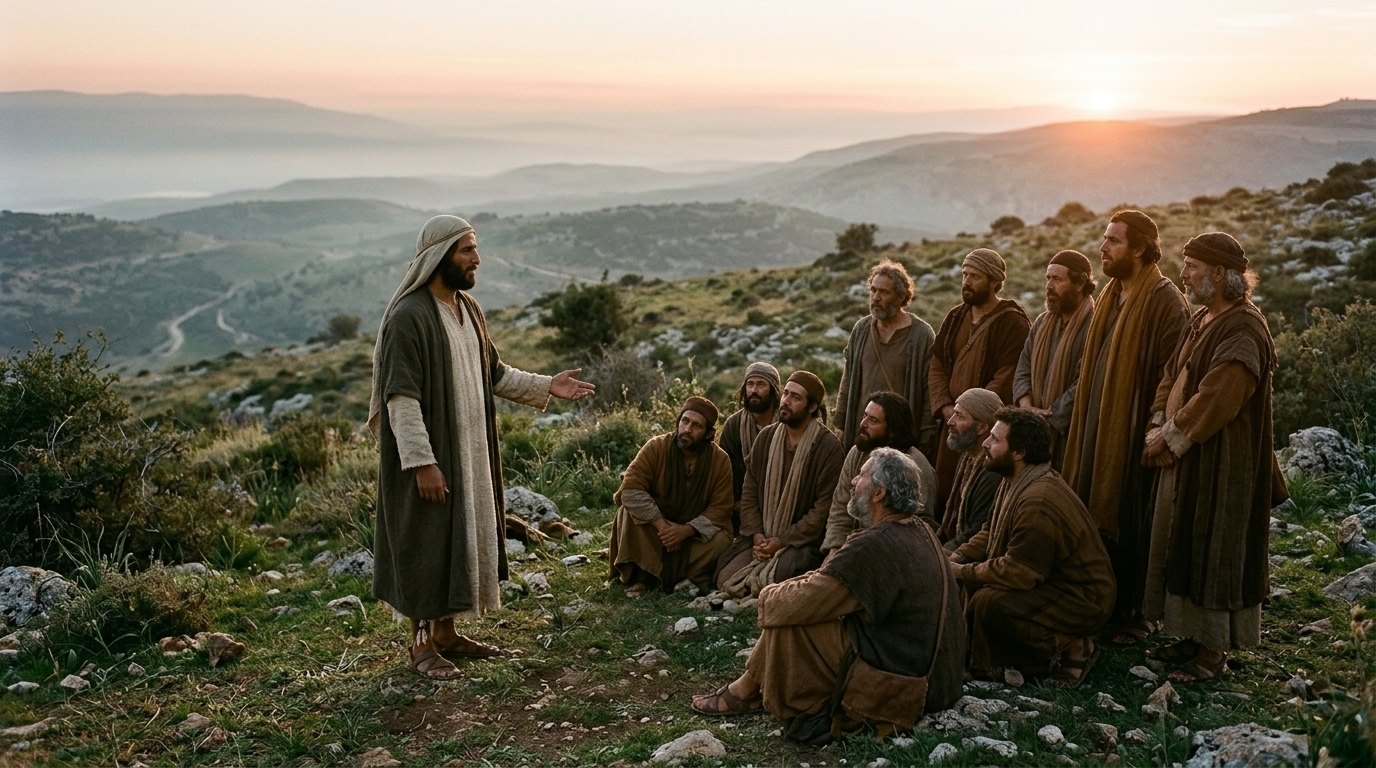
and teaching them to obey everything I have commanded you. And surely I am with you always, to the very end of the age.”
Matthew 28:20 (NIV)
The risen Christ gives the Great Commission with the definitive promise of His perpetual presence to the end of the age.
In Matthew 28:20, the risen Christ concludes His global commission with the definitive anchor of Christian courage: "And behold, I am with you always, to the end of the age." Just as God promised to cross the Jordan ahead of Israel, Jesus assures His followers that their mission is sustained by His perpetual, unbroken presence.
This divine companionship dismantles the root causes of dread. When sending out the twelve into a hostile world, Jesus confronts the fear of violent persecution directly in Matthew 10:28, commanding them never to fear those who can only kill the body but are powerless against the soul. True reverence belongs exclusively to God. Furthermore, Christ tenderly disarms the anxious instinct toward self-preservation in Luke 12:32, declaring to His "little flock" that their Father takes genuine pleasure in giving them the kingdom. They need not live as spiritual orphans scrabbling for security.
On the night of His betrayal, Jesus bequeathed an inward peace entirely distinct from the brittle truces of the world. In John 14:27, He charges His disciples, "Let not your hearts be troubled, neither let them be afraid," offering His own steadfast composure as their shelter. He leaves no room for naive optimism regarding earthly circumstances; rather, in John 16:33, He speaks with total realism: "In the world you will have tribulation." Yet the final word is unwavering triumph: "But take heart; I have overcome the world." The fortitude Moses demanded on the plains of Moab finds its living source in the Son of God, whose presence outlasts every threat.
| Passage | What it says |
|---|---|
| Matthew 10:28 | Jesus commands His disciples not to fear those who kill the body but cannot destroy the soul. |
| Matthew 28:20 | Jesus promises His disciples that He is with them always, even to the end of the age. |
| Luke 12:32 | Jesus comforts His little flock not to fear, for the Father delights to give them the kingdom. |
| John 14:27 | Jesus gives His own supernatural peace to the disciples, urging their hearts neither to be troubled nor afraid. |
| John 16:33 | Jesus tells His followers they will experience tribulation in the world, but commands them to take heart because He has overcome it. |
The Apostolic Church
The New Testament applies the ancient promise to everyday faith.
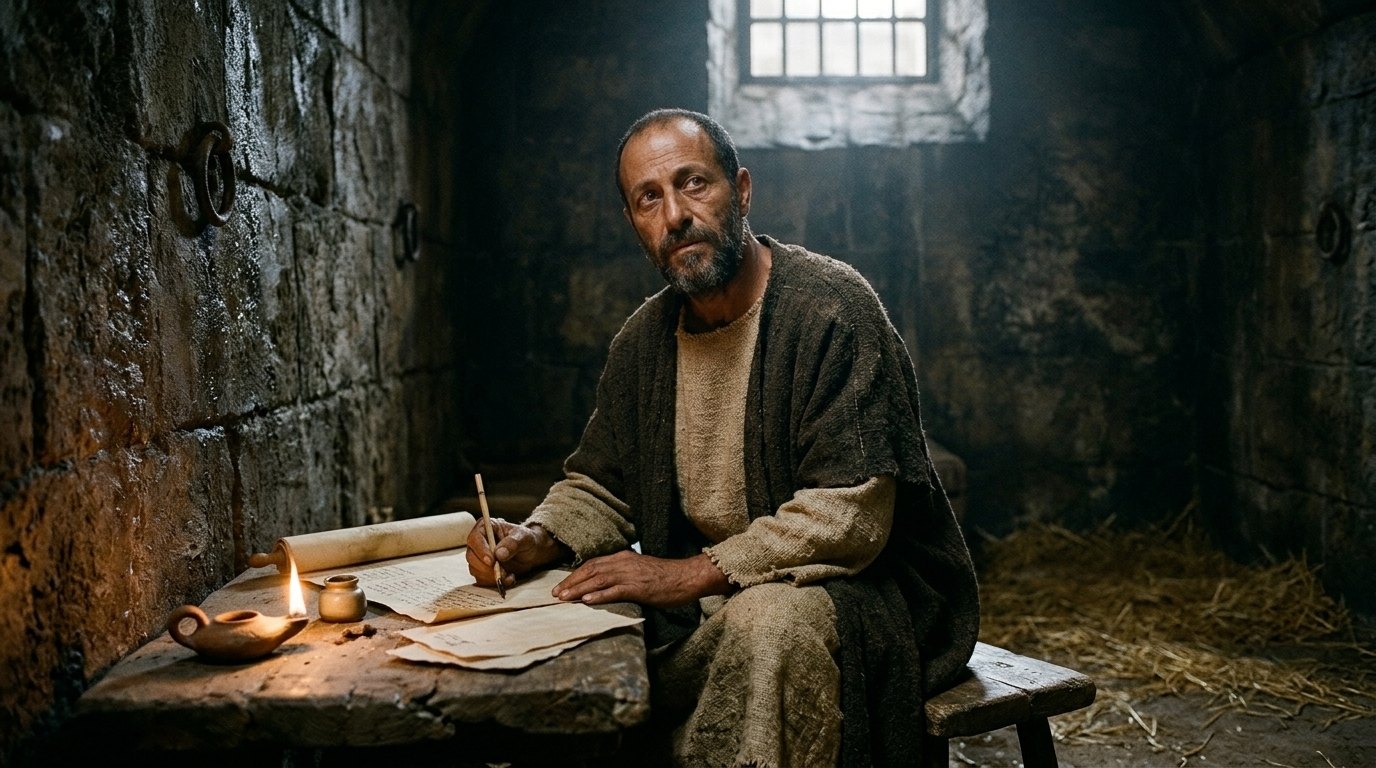
Keep your lives free from the love of money and be content with what you have, because God has said, “Never will I leave you; never will I forsake you.”
Hebrews 13:5 (NIV)
The author quotes Deuteronomy 31:6 word-for-word to ground Christian contentment and freedom from the love of money.
The apostolic church recognized that the promise of Deuteronomy 31:6 was not an obsolete relic of ancient military campaigns, but an enduring guarantee for daily Christian life. In Hebrews 13:5, the author quotes the verse verbatim to address the quiet tyranny of financial anxiety: "Keep your life free from love of money, and be content with what you have, for he has said, 'I will never leave you nor forsake you.'" Contentment is not stoic willpower; it is absolute confidence that God's presence provides everything necessary. The immediate result, proclaimed in Hebrews 13:6, is bold defiance against human intimidation: "The Lord is my helper; I will not fear; what can man do to me?"
This ancient assurance echoes through the epistles whenever believers confront persecution, inner weakness, or spiritual opposition. In Romans 8:31, Paul draws the inescapable logic of the covenant: "If God is for us, who can be against us?" No created power can overturn the believer's eternal standing. Consequently, the call to courage requires laying down self-reliance. In Ephesians 6:10, Christians are commanded to "be strong in the Lord and in the strength of his might," suiting up in spiritual armor provided entirely by Him.
Such strength reshapes our inner emotional life. In Philippians 4:6, the apostle commands believers to "do not be anxious about anything," replacing panic with prayerful petitions seasoned with thanksgiving. As Paul reassures Timothy in 2 Timothy 1:7, God has not given His people a spirit of cowardice or fear, but of supernatural power, love, and sound judgment. The God who marched before Joshua stands beside every believer today.
| Passage | What it says |
|---|---|
| Romans 8:31 | Paul concludes that if God is for His people, no opposing force can ultimately prevail against them. |
| Ephesians 6:10 | Believers are instructed to be strong in the Lord and in the power of His mighty strength. |
| Philippians 4:6 | Paul directs Christians to be anxious for nothing, turning every concern into prayer with thanksgiving. |
| 2 Timothy 1:7 | Paul reminds Timothy that God gave believers a spirit not of fear, but of power, love, and self-control. |
| Hebrews 13:5 | Believers are told to keep their lives free from the love of money because God promised never to leave or forsake them. |
| Hebrews 13:6 | Because God is their helper, believers can say with confidence that they will not fear what man can do. |
Where in the Bible
| Book | Passages |
|---|---|
| Deuteronomy | 8 · Deuteronomy 31:1, Deuteronomy 31:2, Deuteronomy 31:3, Deuteronomy 31:4, Deuteronomy 31:5, Deuteronomy 31:6, Deuteronomy 31:7, Deuteronomy 31:8 |
| Joshua | 4 · Joshua 1:5, Joshua 1:6, Joshua 1:7, Joshua 1:9 |
| 1 Chronicles | 2 · 1 Chronicles 22:13, 1 Chronicles 28:20 |
| 2 Chronicles | 3 · 2 Chronicles 20:15, 2 Chronicles 32:7, 2 Chronicles 32:8 |
| Psalms | 4 · Psalms 27:1, Psalms 27:14, Psalms 46:1, Psalms 46:2 |
| Isaiah | 3 · Isaiah 41:10, Isaiah 43:1, Isaiah 43:2 |
| Matthew | 2 · Matthew 10:28, Matthew 28:20 |
| Luke | 1 · Luke 12:32 |
| John | 2 · John 14:27, John 16:33 |
| Romans | 1 · Romans 8:31 |
| Ephesians | 1 · Ephesians 6:10 |
| Philippians | 1 · Philippians 4:6 |
| 2 Timothy | 1 · 2 Timothy 1:7 |
| Hebrews | 2 · Hebrews 13:5, Hebrews 13:6 |
The story in order
- Moses exhorts Israel before his death (c. 1406 BC) · Deuteronomy 31:1 · Israel faces a daunting transition with a new leader.
- Moses commissions Joshua (c. 1406 BC) · Deuteronomy 31:7 · Joshua is charged to lead Israel into the promised land.
- The Lord assures Joshua (c. 1406 BC) · Joshua 1:5 · God promises His unfailing presence to the new leader.
- David charges Solomon (c. 970 BC) · 1 Chronicles 22:13 · A king is encouraged to be strong and courageous for God's work.
- Jehoshaphat faces an army (c. 875 BC) · 2 Chronicles 20:15 · Courage comes from knowing the battle belongs to God.
- Hezekiah strengthens Judah (c. 701 BC) · 2 Chronicles 32:7 · Trusting God's power is greater than human might.
- David finds refuge in God (c. 1000 BC) · Psalms 27:1 · God's presence eliminates fear of any foe.
- Isaiah prophesies God's presence (c. 740 BC) · Isaiah 41:10 · God promises personal presence and help to the fearful.
- Jesus comforts His disciples (AD 30) · John 14:27 · Jesus gives His peace, urging hearts not to be troubled.
- Jesus promises His presence (AD 30) · Matthew 28:20 · Christ assures His followers of His constant presence.
- Paul encourages believers (c. AD 60) · Ephesians 6:10 · Strength and courage come from the Lord's power.
- Paul reminds Timothy (c. AD 67) · 2 Timothy 1:7 · God gives a spirit of power, not fear.
- Hebrews assures believers (c. AD 67) · Hebrews 13:5 · God's promise not to leave or forsake removes fear.
God's Promise to Never Leave or Forsake
| Promise | Context | Speaker | Passage |
|---|---|---|---|
| The Lord will cross over before you... he will not fail you or forsake you. | Leading Israel into the promised land | Moses | |
| The Lord himself goes before you and will be with you; he will never leave you nor forsake you. Do not be afraid; do not be discouraged. | Conquering the land of Canaan | God | Joshua 1:5-6 |
| God will not fail you or forsake you. | Building the temple | David | 1 Chronicles 28:20 |
| He will be with you; he will never leave you nor forsake you. Do not display fear or be discouraged. | Leading Israel | God | Joshua 1:5 |
| The Lord is with you as a mighty warrior. | Facing an invading army | God | Jeremiah 20:11 |
| I am with you and will save you. | Facing exile | God | Jeremiah 30:11 |
| I am with you and will save you. | Facing exile | God | Jeremiah 46:28 |
| Do not be afraid... for I am with you. | Facing opposition | God | Isaiah 41:10 |
| When you pass through the waters, I will be with you; and when you pass through the rivers, they will not sweep over you. | Facing trials | God | Isaiah 43:2 |
| I will be with you always, to the very end of the age. | Discipleship and mission | Jesus | Matthew 28:20 |
Courage Rooted in God's Presence
| Command to be Courageous | Reason for Courage | Speaker | Passage |
|---|---|---|---|
| Be strong and courageous. Do not be afraid or discouraged, because the Lord your God will be with you wherever you go. | God goes with you | Moses | Deuteronomy 31:6 |
| Be strong and courageous. | The Lord marches ahead and will be with you. | Moses | Deuteronomy 31:8 |
| Be strong and courageous. | The Lord is with you wherever you go. | God | Joshua 1:9 |
| Be strong and courageous. Do not be afraid; do not be discouraged. | The Lord your God will be with you wherever you go. | Joshua | Joshua 1:9 |
| Be strong and courageous and do the work. | God will not fail or forsake you. | David | 1 Chronicles 28:20 |
| Do not be afraid or discouraged. | The battle belongs to God. | Jahaziel | 2 Chronicles 20:15 |
| Be strong and courageous. Do not be afraid or terrified because of them, for the Lord your God goes before you. | The Lord your God goes before you. | Moses | Deuteronomy 31:6 |
| Do not be afraid or dismayed. | The Lord is with you wherever you go. | God | Joshua 1:9 |
| Do not be afraid or dismayed. | The Lord is with you wherever you go. | God | Joshua 1:9 |
| Do not be afraid or dismayed. | The Lord is with you wherever you go. | God | Joshua 1:9 |
Key words
- Courage (עוּז (ʿûz))
- Active obedience and confidence grounded in God's presence and promises, not the absence of fear. · Deuteronomy 31:6
- Strong (חָזַק (ḥāzaq))
- Possessing inner strength and fortitude derived from God's power and presence. · Deuteronomy 31:6
- Fear (פָּחַד (pāḥaḏ))
- An emotional response to perceived danger or threat, which believers are called to overcome through trust in God. · Deuteronomy 31:6
- Presence (עִם (ʿim))
- The personal, abiding nearness and companionship of God with His people. · Deuteronomy 31:6
- Forsake (עָזַב (ʿāzaḇ))
- To abandon, desert, or leave someone behind; God's promise not to do this is a foundation for courage. · Deuteronomy 31:6
- Discouraged (חַת (ḥaṯ))
- Lacking courage or confidence; disheartened. Believers are commanded not to be. · Deuteronomy 31:6
Deuteronomy 31:6 invites every believer to step forward in obedience rather than surrender to paralysis or fear. Because the living God marches with His people and will never leave them destitute, courageous faithfulness is the only reasonable response to life's most formidable trials.
35 passages, each cited once.
Scripture cited
- Deuteronomy 31:6
- Joshua 1:9
- Ephesians 6:10
- Deuteronomy 31:1-8
- Hebrews 13:5-6
- Joshua 1:1-9