What does Hebrews 4:12 mean?
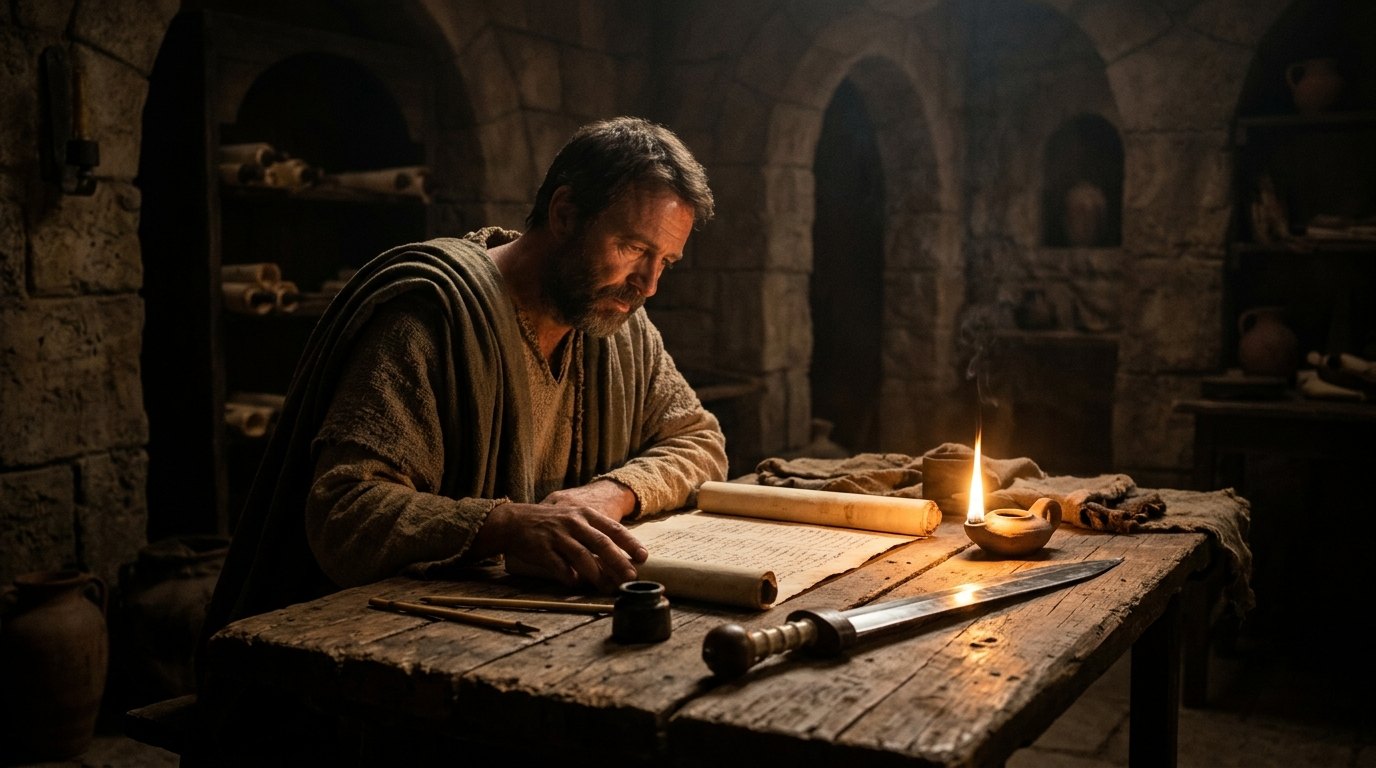
Hebrews 4:12-13
12 For the word of God is alive and active. Sharper than any double-edged sword, it penetrates even to dividing soul and spirit, joints and marrow; it judges the thoughts and attitudes of the heart.
13 Nothing in all creation is hidden from God’s sight. Everything is uncovered and laid bare before the eyes of him to whom we must give account.
New International Version (NIV)
The answer
Hebrews 4:12 says that God’s Word is not passive or powerless: it is living, active, and penetrating. It reaches beyond outward appearances into a person’s deepest thoughts and motives, exposing what is hidden before God.
The verse comes through a warning: God’s Word both enables faith and exposes the heart. In Hebrews 4:2, the good news had been preached but did not profit some hearers because it was not received with faith. In Hebrews 4:11–12, the writer urges believers to enter God’s rest, then reminds them that the same Word has the power to reveal what lies within.
What the imagery means
- “Living and active” describes God’s Word as effective and powerful, not merely information on a page. Isaiah 55:11 says that the word going forth from God’s mouth will accomplish what He pleases and succeed in its purpose.
- “Sharper than any two-edged sword” portrays Scripture’s penetrating power. A sword can wound the body, but God’s Word exposes the inner person.
- “Piercing … soul and spirit … joints and marrow” reaches into the deepest levels of human existence. The point is not that every line of Scripture automatically feels penetrating in the moment, but that no person remains beyond its reach.
- “Discerning the thoughts and intentions of the heart” means that God’s Word exposes both our conscious reasoning and our underlying motives—what we think, intend, and try to conceal.
- Hebrews 4:13 confirms the purpose: nothing is hidden from God, and everything is “naked and laid open” before Him. Every person must give account.
How to apply it
Let Scripture correct your self-image. You may tell yourself one story, but God’s Word can reveal motives you have not acknowledged.
Do not hide behind selected words. The passage gives no encouragement to use Scripture selectively to avoid conviction.
Receive it with faith, not resistance. The same Word that brings correction also gives light and understanding (Psalms 119:130). It remains “living and abideth for ever” (1 Peter 1:23).
So Hebrews 4:12 is both a promise and a warning: God’s Word has power to sustain those who trust it and to lay bare everyone who tries to hide from it.
Answered from Scripture · reviewed November 10, 2026
Hebrews 4:12 declares that God's word is living, active, and sharper than any two-edged sword, penetrating into the deepest recesses of the human heart. Far from a dead text or passive doctrine, Scripture possesses divine vitality that discerns our hidden motives and uncovers every thought before God. Understanding this passage shows how the Word both convicts the conscience and anchors true faith in the living Lord.
Context and Exhortation
Entering God's Rest and Hearing His Voice

Let us, therefore, make every effort to enter that rest, so that no one will perish by following their example of disobedience.
Hebrews 4:11 (NIV)
It shows that the surgical description of God's word directly follows a solemn warning against falling into unbelief and disobedience.
The sobering portrait of God's word in Hebrews 4:12 does not appear in a vacuum; it stands as the climax of an urgent pastoral plea. In Hebrews 4:11, the author issues a solemn summons: believers must strive with diligence to enter God's rest so that no one collapses through the identical pattern of disobedience that ruined Israel in the wilderness. The chapter begins with an unsettling warning in Hebrews 4:1 that although the divine promise remains open, casual neglect risks falling short of it. The good news was proclaimed to ancient Israel just as to us, but Hebrews 4:2 observes that the message brought them no lasting benefit because it was never wedded to genuine faith in those who heard it.
This call looks backward to the warning sounded in Hebrews 3:7-8, where Psalm 95 is quoted as the immediate voice of the Holy Spirit: today, whenever His voice is sounded, hearts must not harden in bitter rebellion. An insidious danger lurks within unexamined religious life, prompting the severe caution of Hebrews 3:12-13 to guard against an evil, unbelieving heart that departs from the living God, lest sin's deceitfulness harden the soul. By contrast, Hebrews 4:3 affirms that true faith immediately ushers the believer into that promised spiritual repose. God still establishes a fixed boundary, crying out in Hebrews 4:6-7 that "Today" remains the decisive hour of response. Therefore, as Hebrews 4:9-10 concludes, a true Sabbath rest endures for the household of faith—a rest in which the believer ceases from dead self-reliance just as God rested from His creative work. It is precisely because entry into this rest demands undivided sincerity that the author introduces the penetrating scrutiny of Scripture.
| Passage | What it says |
|---|---|
| Hebrews 4:1 | Cautions believers that the promise of entering God's rest remains open, urging none to fall short. |
| Hebrews 4:2 | Affirms that hearing the good news must be united with active faith to bring spiritual profit. |
| Hebrews 4:11 | Exhorts believers to strive to enter that rest so no one falls through the same disobedience. |
| Hebrews 3:7-8 | Urges hearers not to harden their hearts when hearing the Spirit's voice in Scripture. |
| Hebrews 3:12-13 | Warns against an evil, unbelieving heart turning away from the living God. |
| Hebrews 4:3 | Affirms that those who have believed enter into God's promised rest. |
| Hebrews 4:6-7 | Emphasizes that God again appoints a day, calling hearers today to not harden their hearts. |
| Hebrews 4:9-10 | Declares that a Sabbath rest remains for the people of God who cease from their own works. |
Vital Power
A Living Word That Never Returns Empty

For the word of God is alive and active. Sharper than any double-edged sword, it penetrates even to dividing soul and spirit, joints and marrow; it judges the thoughts and attitudes of the heart.
Hebrews 4:12 (NIV)
It defines the nature of divine revelation as inherently energetic, living, and capable of penetrating human consciousness.
Opening with startling vitality, Hebrews 4:12 defines the word of God not as static ink on parchment, but as inherently living and energetic, sharper than any two-edged blade. The Greek term energes signals dynamic divine power at work; Scripture carries within itself the supernatural life of its Author. Long before the epistle was written, the Lord proclaimed through Isaiah 55:11 that His spoken decree never returns void or barren, but invariably prospers in the exact assignment for which He sent it. Jeremiah 23:29 reinforces this raw force, asking whether God's word is not like a raging fire and like a heavy hammer that pulverizes the hardest granite. The word does not merely inform; it shatters human pride and kindles holy repentance.
This same living virtue is what brings spiritually dead sinners into new life. In 1 Peter 1:23, the apostle rejoices that believers are born anew not of perishable seed, but through the enduring and living word of God that stands forever. The gospel proclaimed by the apostles is no weak moral philosophy; Paul insists in Romans 1:16 that it is the very power of God unto salvation for everyone who puts their trust in it. When the Thessalonians received the apostolic message, 1 Thessalonians 2:13 commends them for accepting it not as human speculation, but for what it truly is: God's genuine word effectively working inside those who believe. Because 2 Timothy 3:16-17 declares all Scripture to be directly breathed out by God, it remains completely sufficient to instruct, convict, correct, and equip the believer for every good work.
| Passage | What it says |
|---|---|
| Hebrews 4:12 | Declares that the word of God is living, active, sharper than any two-edged sword, and discerning. |
| Isaiah 55:11 | Promises that God's spoken word never returns void but always accomplishes His desired purpose. |
| Jeremiah 23:29 | Compares God's word to a shattering hammer and a consuming fire that breaks hard hearts. |
| 1 Peter 1:23 | Identifies the word of God as the incorruptible, enduring seed by which believers are born again. |
| Romans 1:16 | Describes the gospel message as the power of God for salvation to everyone who believes. |
| 1 Thessalonians 2:13 | Identifies God's word as effectively at work within those who believe. |
| 2 Timothy 3:16-17 | States that all Scripture is God-breathed, profitable for teaching, reproof, correction, and training in righteousness. |
Piercing Discernment
The Sword That Divides Soul and Spirit
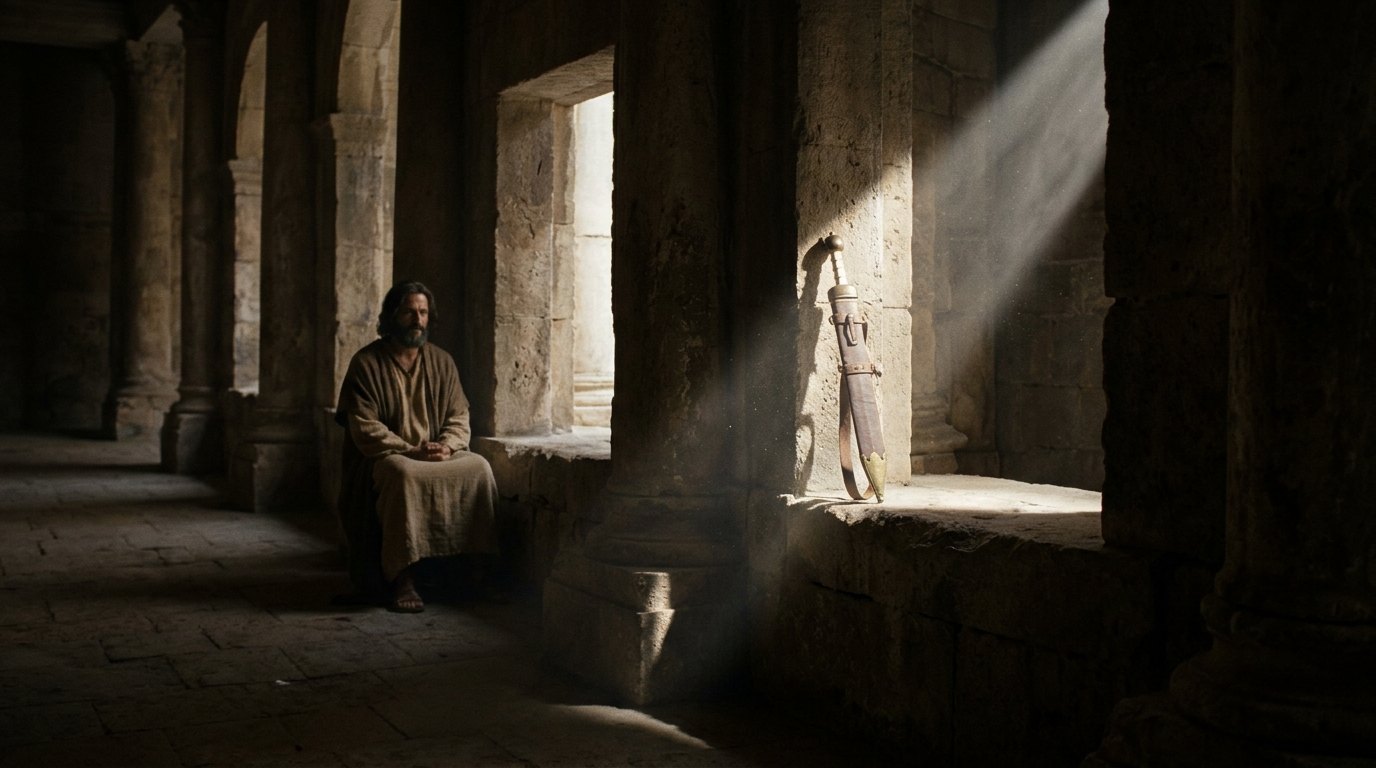
Take the helmet of salvation and the sword of the Spirit, which is the word of God.
Ephesians 6:17 (NIV)
It names the word of God as the sharp sword given by the Holy Spirit for spiritual battle.
When Scripture depicts the word of God as a weapon, it highlights its surgical, dissecting accuracy. Paul commands the church in Ephesians 6:17 to take up "the sword of the Spirit, which is the word of God," the sole offensive instrument in the Christian's armor. Centuries earlier, Isaiah 49:2 prophesied that the Messiah's mouth would be fashioned like a sharp sword, concealed under the protective shadow of the Father's hand. This blade brings profound spiritual clarity, for as Psalm 119:130 declares, the unfolding and entrance of God's words impart illumination and understanding even to the simplest minds. Yet the edge can also cut down self-righteous complacency; Hosea 6:5 recalls how God hewed His rebellious covenant people through prophetic warnings and slew their pretenses by the words of His mouth.
In the New Testament assembly, this piercing faculty operates in public proclamation. First Corinthians 14:24-25 illustrates that when prophetic truth is declared, the unbeliever is convicted by all, the hidden secrets of his heart are exposed, and he falls prostrate before God, confessing His genuine presence. In the vision of the apocalypse, this blade belongs supremely to the triumphant Christ. Revelation 1:16 and Revelation 2:12 portray the risen Lord with a sharp, double-edged sword issuing directly from His mouth, demonstrating that His bare utterance executes righteous judgment. Finally, Revelation 19:13 and Revelation 19:15 unveil the returning King named the Word of God, striking down the rebellious nations with the sharp sword of His mouth. His word divides truth from error, piercing down to the boundary of soul and spirit.
| Passage | What it says |
|---|---|
| Isaiah 49:2 | Prophesies of the Servant whose mouth is made like a polished, sharp sword hidden in God's hand. |
| Ephesians 6:17 | Commands believers to take up the sword of the Spirit, which is explicitly the word of God. |
| Psalms 119:130 | Notes that the unfolding of God's words gives understanding and light to the simple. |
| Hosea 6:5 | Speaks of God hewing His people by the prophets and slaying them by the words of His mouth. |
| 1 Corinthians 14:24-25 | Shows God's word exposing the secrets of an unbeliever's heart so they fall down and worship. |
| Revelation 1:16 | Pictures the exalted Christ with a sharp two-edged sword coming out of His mouth. |
| Revelation 2:12 | Identifies the risen Christ as the One who wields the sharp two-edged sword. |
| Revelation 19:13 | Names Christ as the Word of God arrayed in victory. |
| Revelation 19:15 | Depicts a sharp sword coming from Christ's mouth to strike down the nations. |
Total Exposure
All Things Laid Bare Before Him
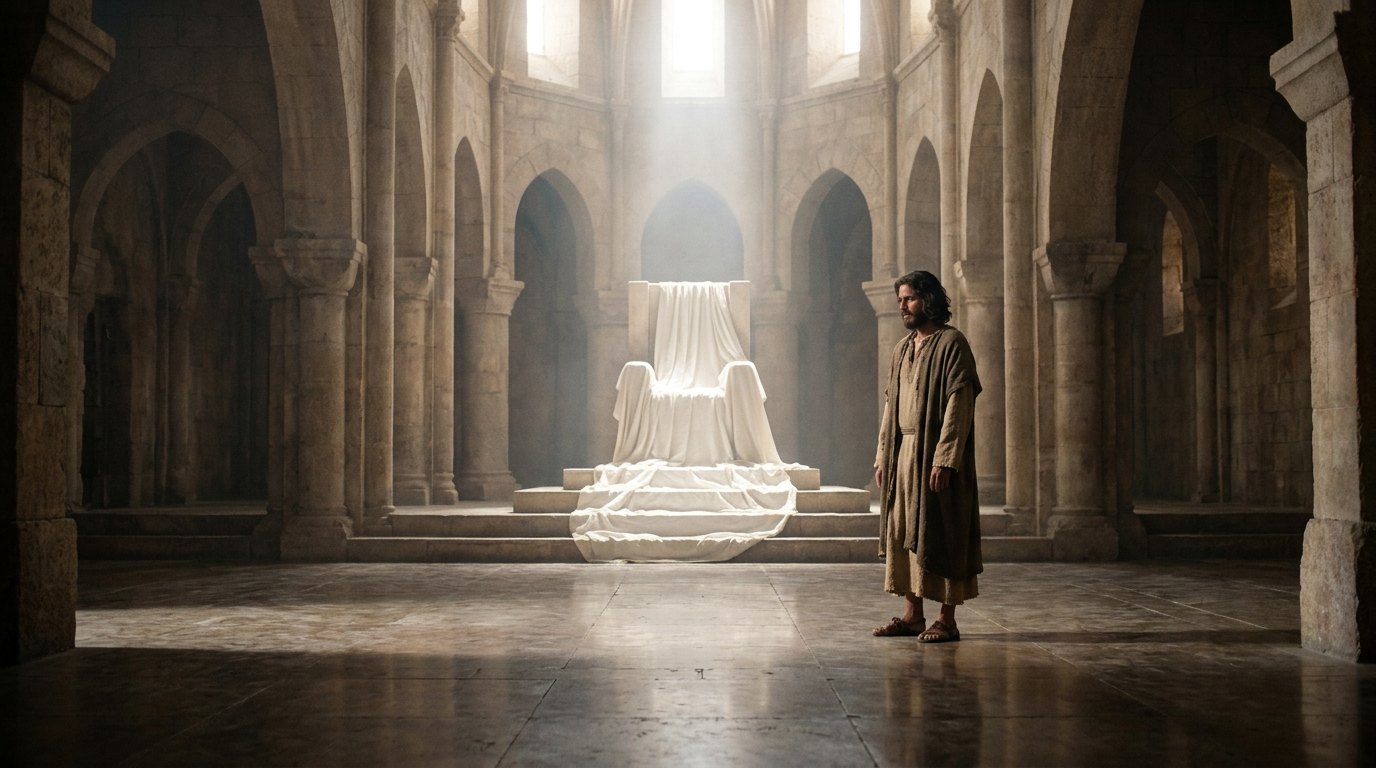
Nothing in all creation is hidden from God’s sight. Everything is uncovered and laid bare before the eyes of him to whom we must give account.
Hebrews 4:13 (NIV)
It provides the ultimate rationale for the Word's sharpness: no creature is hidden before the eyes of God.
The piercing work of Scripture culminates in total transparency before the Creator. In Hebrews 4:13, the text explains why the Word cuts so deeply: no creature remains hidden from His sight, but every soul is stripped bare and laid completely exposed before the eyes of the One to whom we must render account. The vivid term conveys an animal's neck pulled backward, fully vulnerable to the sacrificial blade. Human masks and pious excuses dissolve instantly before God's gaze. As 1 Samuel 16:7 reminds us, whereas mortals judge by outward appearance, the Lord looks directly upon the heart. David urged Solomon in 1 Chronicles 28:9 to remember that God searches all hearts and perceives every intention of the thoughts, while Psalm 139:1-4 marvels that before a single word forms on the tongue, the Lord already knows it completely. Jeremiah 17:10 similarly proclaims that the Lord tests the mind and searches the heart to repay each according to his ways.
Yet this absolute exposure is not meant to drive the believer to despair. The passage immediately pivots to comforting gospel hope. Hebrews 4:14 directs our gaze upward to Jesus, the great High Priest who has traversed the heavens, urging us to hold fast our confession. He does not gaze upon our exposed weaknesses with cold detachment; Hebrews 4:15 assures us that our High Priest sympathizes with our infirmities, having been tempted in all points just as we are, yet without sin. Therefore, Hebrews 4:16 bids us come boldly to the throne of grace, where the exposed sinner finds abundant mercy.
| Passage | What it says |
|---|---|
| Hebrews 4:13 | States that no creature is hidden from His sight, but all things are naked and exposed before Him. |
| Hebrews 4:14 | Points exposed sinners to Jesus the great High Priest who passed through the heavens. |
| Hebrews 4:16 | Invites believers to draw near with confidence to the throne of grace to receive timely mercy. |
| 1 Samuel 16:7 | Teaches that the Lord looks directly upon the heart rather than outward appearance. |
| 1 Chronicles 28:9 | Reminds that the Lord searches every heart and understands every plan and thought. |
| Psalms 139:1-4 | Confesses God's total knowledge of every word, path, thought, and habit before spoken. |
| Jeremiah 17:10 | Declares the Lord searches the heart and tests the mind to reward each according to his ways. |
| Hebrews 4:15 | Points to Christ as the sympathetic High Priest tempted in all respects yet without sin. |
Where in the Bible
| Book | Passages |
|---|---|
| 1 Samuel | 1 · 1 Samuel 16:7 |
| 1 Chronicles | 1 · 1 Chronicles 28:9 |
| Psalms | 2 · Psalms 119:130, Psalms 139:1-4 |
| Isaiah | 2 · Isaiah 55:11, Isaiah 49:2 |
| Jeremiah | 2 · Jeremiah 23:29, Jeremiah 17:10 |
| Hosea | 1 · Hosea 6:5 |
| Romans | 1 · Romans 1:16 |
| 1 Corinthians | 1 · 1 Corinthians 14:24-25 |
| Ephesians | 1 · Ephesians 6:17 |
| 1 Thessalonians | 1 · 1 Thessalonians 2:13 |
| 2 Timothy | 1 · 2 Timothy 3:16-17 |
| Hebrews | 13 · Hebrews 4:1, Hebrews 4:2, Hebrews 4:11, Hebrews 3:7-8, Hebrews 3:12-13, Hebrews 4:3, Hebrews 4:6-7, Hebrews 4:9-10, Hebrews 4:12, Hebrews 4:13, Hebrews 4:14, Hebrews 4:16, Hebrews 4:15 |
| 1 Peter | 1 · 1 Peter 1:23 |
| Revelation | 4 · Revelation 1:16, Revelation 2:12, Revelation 19:13, Revelation 19:15 |
The story in order
- God's Word is Living and Active (AD 60s) · Hebrews 4:12 · Scripture's divine vitality discerns motives and uncovers thoughts.
- God's Word Accomplishes His Purpose (c. 700 BC) · Isaiah 55:11 · The spoken word never returns void but fulfills God's will.
- God's Word as Hammer and Fire (c. 600 BC) · Jeremiah 23:29 · God's word shatters hard hearts and consumes sin.
- God's Word as Enduring Seed (c. AD 60) · 1 Peter 1:23 · Believers are born again by the incorruptible word.
- Gospel is Power of God (c. AD 57) · Romans 1:16 · The gospel is God's power for salvation to believers.
- Word Works in Believers (c. AD 50) · 1 Thessalonians 2:13 · God's word effectively works within those who believe.
- All Scripture is God-Breathed (c. AD 67) · 2 Timothy 3:16-17 · Scripture is profitable for all aspects of righteous living.
- Prophet's Mouth Like a Sword (c. 700 BC) · Isaiah 49:2 · The Servant's words are sharp, hidden, and powerful.
- Sword of the Spirit (c. AD 60) · Ephesians 6:17 · The word of God is the Spirit's offensive weapon.
- Unfolding of God's Words (c. 1000-500 BC) · Psalms 119:130 · God's word gives understanding and light.
- God's Word Smites and Slays (c. 750 BC) · Hosea 6:5 · God uses His words to judge and expose His people.
- Word Exposes the Heart (c. AD 55) · 1 Corinthians 14:24-25 · God's word reveals hidden motives, leading to worship.
- Christ's Mouth a Sharp Sword (c. AD 95) · Revelation 1:16 · The exalted Christ wields a sharp sword from His mouth.
- Christ the Word Strikes Nations (c. AD 95) · Revelation 19:15 · Christ, the Word, will strike down His enemies.
Key words
- Living and Active (ζῶν καὶ ἐνεργής (zōn kai energēs))
- Possessing divine vitality, energetic and effective. · Hebrews 4:12
- Sharper than any two-edged sword (τομώτερος ὑπὲρ πᾶσαν μάχαιραν δίστομον (tomōteros hyper…)
- Able to penetrate deeply and divide precisely. · Hebrews 4:12
- Discerning (κριτικός (kritikos))
- Able to distinguish and judge the deepest thoughts and intentions. · Hebrews 4:12
- Soul and Spirit (ψυχῆς καὶ πνεύματος (psychēs kai pneumatos))
- The immaterial parts of a human being, the inner self. · Hebrews 4:12
- Joints and Marrow (ἁρμῶν καὶ μυελῶν (harmōn kai myelōn))
- The deepest parts of a person, both physical and inner. · Hebrews 4:12
- Thoughts and intentions (ἐνθυμήσεων καὶ ἐννοιῶν (enthymēseōn kai ennoion))
- The hidden motives and purposes of the heart. · Hebrews 4:12
- Naked and exposed (γυμνὰ καὶ τετραχηλισμένα (gymna kai tetrachelismena))
- Completely open and visible, with nothing hidden. · Hebrews 4:13
Approaching Scripture means opening oneself to its holy, surgical inspection. While its sharp edge exposes our self-deception and hidden sin, that same living Word directs us to our compassionate High Priest who grants mercy and grace. Believers can rest with great assurance, knowing that the God who sees every secret intention is the One who redeems and sustains us completely.
32 passages, each cited once.
Scripture cited
- Hebrews 4:12
- Isaiah 55:11
- Psalms 119:130
- 1 Peter 1:23
- Hebrews 4:11-13
- Hebrews 4:1-3