What does it mean to be born again?

John 3:1-8
1 Now there was a Pharisee, a man named Nicodemus who was a member of the Jewish ruling council.
2 He came to Jesus at night and said, “Rabbi, we know that you are a teacher who has come from God. For no one could perform the signs you are doing if God were not with him.”
3 Jesus replied, “Very truly I tell you, no one can see the kingdom of God unless they are born again.”
4 “How can someone be born when they are old?” Nicodemus asked. “Surely they cannot enter a second time into their mother’s womb to be born!”
5 Jesus answered, “Very truly I tell you, no one can enter the kingdom of God unless they are born of water and the Spirit.
6 Flesh gives birth to flesh, but the Spirit gives birth to spirit.
7 You should not be surprised at my saying, ‘You must be born again.’
8 The wind blows wherever it pleases. You hear its sound, but you cannot tell where it comes from or where it is going. So it is with everyone born of the Spirit.”
New International Version (NIV)
The answer
To be born again is to be given new spiritual life by God the Holy Spirit—a cleansing and renewing work that makes a sinner new in Christ and is necessary for entering God’s kingdom. This is not an optional experience for especially religious people. Jesus says in John 3:7, “You must all be born anew,” and John 3:3 states that without this birth no one can see God’s kingdom.
A birth from above, not self-improvement
The Greek word translated “anew” in John 3:3 is anōthen, meaning “from above” and also “again.” Nicodemus thinks of physically entering his mother’s womb a second time in John 3:4, but Jesus explains in John 3:6 that flesh produces flesh, while the Spirit produces spiritual life. Natural birth cannot accomplish this new birth.
John 1:12-13 says that those who receive Christ and believe in his name are born “not of blood, nor of the will of the flesh, nor of the will of man, but of God.” Ancestry, human determination, and religious effort therefore cannot produce it. Ephesians 2:1-5 explains why it is necessary: people are dead in transgressions and sins until God, in his mercy and grace, makes them alive with Christ. Titus 3:5 similarly says that salvation is “not by works of righteousness which we did ourselves,” but through “the washing of regeneration and renewing by the Holy Spirit.”
What “water and Spirit” means
Jesus says in John 3:5, “unless one is born of water and Spirit, he can’t enter into God’s Kingdom.” An important background is Ezekiel 36:25-27, where God promises clean water, cleansing from filthiness and idols, a new heart instead of a stony heart, and his Spirit within his people so that they walk in his ways. Jesus’ question to Israel’s teacher in John 3:10 indicates that Nicodemus should have understood these promised realities.
Christians have understood the precise reference of “water” in several ways:
- God’s promised cleansing: Water recalls the cleansing promised in Ezekiel 36:25-27, while the Spirit gives the new heart.
- Christian baptism: Water points to baptism, which Romans 6:3-4 connects with dying and rising with Christ and walking in newness of life.
- Natural birth: Water describes physical birth, so that Jesus requires spiritual birth in addition to a person’s first birth, reflecting the flesh-Spirit contrast in John 3:6.
These readings differ over the image of water, not over whether the Spirit’s work is indispensable. John 3:6 makes clear that neither physical descent nor an outward ceremony by itself can produce spiritual life.
New birth and faith in Christ
Jesus immediately connects this teaching with his own saving work. In John 3:14-16, he says that the Son of Man must be lifted up so that “whoever believes in him should not perish, but have eternal life.” Likewise, 1 John 5:1 states, “Whoever believes that Jesus is the Christ has been born of God.” The new birth is therefore God’s gracious work, not a reward for religious achievement, and it is inseparably connected with faith in Jesus Christ.
The Spirit’s work remains sovereign and mysterious. Jesus compares it to wind in John 3:8: its sound is heard, but its movements cannot be controlled or fully traced. Its effects, however, are real.
The life that follows
This renewal changes the person, not merely the person’s religious label. Second Corinthians 5:17 declares, “Therefore if anyone is in Christ, he is a new creation. The old things have passed away. Behold, all things have become new.”
The evidence is not a particular personality or a dramatic story, but the fruit Scripture names: faith in Jesus and love for God and his children in 1 John 5:1, together with the new heart and Spirit-produced obedience promised in Ezekiel 36:25-27.
Answered from Scripture · reviewed November 11, 2026
To be born again is the sovereign work of God by which He imparts spiritual life to a dead soul, remaking the sinner from within so that they may see and enter His kingdom. Jesus presented this not as a moral improvement or religious refinement, but as an absolute necessity that human effort can never produce. Tracing the new birth through the Scriptures reveals how God cleanses the heart, imparts His Spirit through the gospel, and brings forth enduring faith and holiness.
The Absolute Necessity
You Must Be Born Anew to Enter God's Kingdom
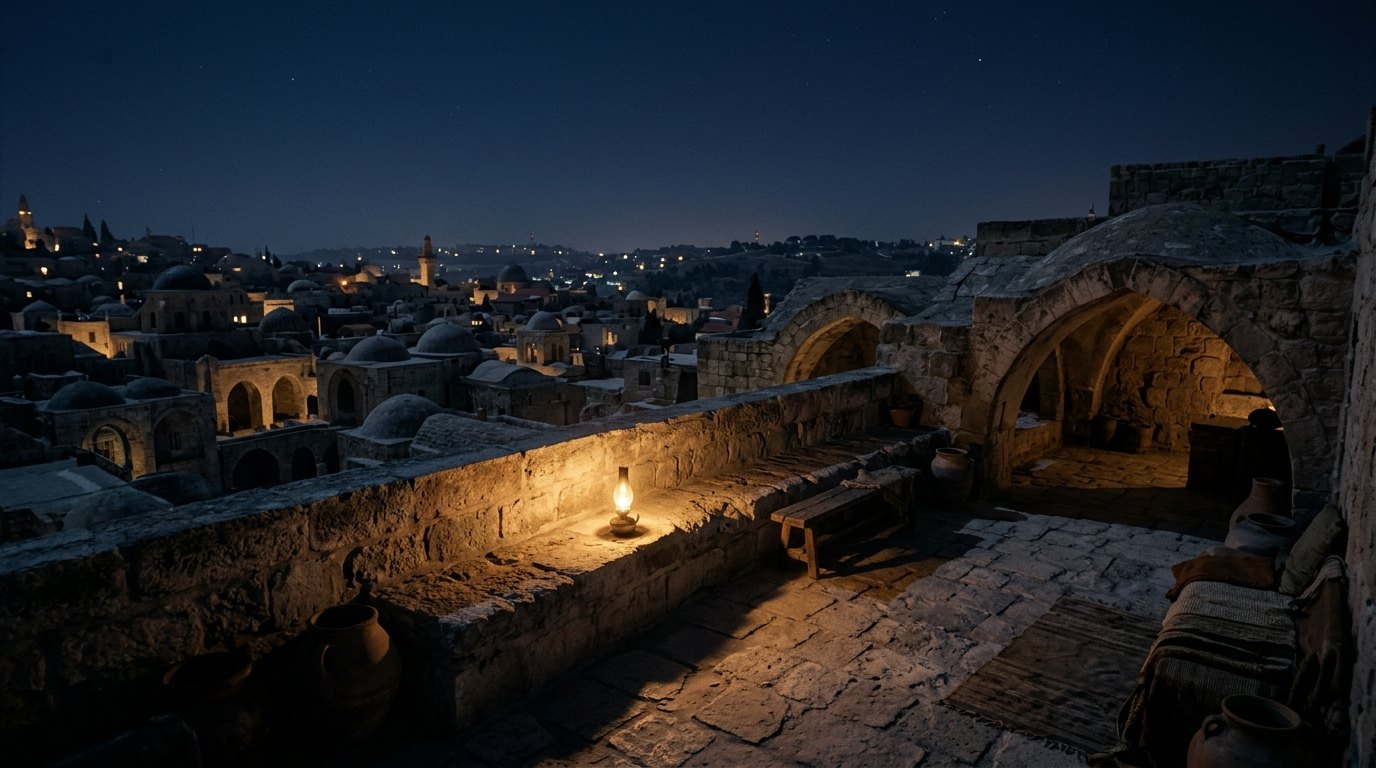
Jesus replied, “Very truly I tell you, no one can see the kingdom of God unless they are born again.”
John 3:3 (NIV)
Jesus establishes that without a radical spiritual rebirth from above, seeing or entering the kingdom of God is completely impossible.
In John 3:3, Jesus establishes the absolute baseline of salvation: unless one is born again, he cannot see or enter the kingdom of God. Nicodemus, a respected teacher of Israel and member of the Sanhedrin, sought Jesus under the cover of night (John 3:1-2), politely acknowledging Him as a rabbi sent with signs. Christ immediately stripped away any notion that religious pedigree, rigorous morality, or intellectual admiration could suffice. When Nicodemus asked in genuine perplexity how an aged man could physically enter a mother's womb a second time (John 3:4), Jesus cut through the literalism to expose a profound spiritual crisis. Entry into God's presence demands a radical origin from above: being born of water and the Spirit (John 3:5).
Human nature cannot transcend its own limits. That which is born of the flesh is flesh, and that which is born of the Spirit is spirit (John 3:6). Fallen flesh produces only corruptible flesh; it cannot generate spiritual life or bridge the chasm caused by sin. For this reason, Jesus firmly commanded Nicodemus not to marvel at this non-negotiable decree (John 3:7). When the renowned scholar still struggled with the concept (John 3:9-10), Jesus rebuked his ignorance, reminding him that earthly understanding cannot grasp heavenly realities without divine illumination (John 3:11-12). True entrance requires the total stripping away of self-reliance, turning until one becomes as helpless as a young child (Matthew 18:3). Rebirth is not moral reformation; it is the miraculous impartation of spiritual life where there was only spiritual death.
| Passage | What it says |
|---|---|
| John 3:1-2 | Nicodemus comes to Jesus by night, acknowledging Him as a teacher from God due to His signs. |
| John 3:3 | Jesus declares that unless one is born anew from above, he cannot see the kingdom of God. |
| John 3:4 | Nicodemus questions how an old man can re-enter his mother's womb to be born a second time. |
| John 3:5 | Jesus states that entrance into God's kingdom requires being born of water and the Spirit. |
| John 3:6 | Flesh yields only flesh, while only the Holy Spirit can generate spiritual life in a person. |
| John 3:7 | Jesus commands Nicodemus not to marvel at the universal necessity of being born again. |
| John 3:9-10 | Jesus rebukes Nicodemus, a teacher of Israel, for failing to understand the spiritual reality of rebirth. |
| John 3:11-12 | Jesus affirms heavenly testimony of spiritual rebirth to earthly understanding. |
| Matthew 18:3 | Entering the kingdom requires turning and becoming like small children. |
The Source and Agent
A Sovereign Work of God, Not Human Will

children born not of natural descent, nor of human decision or a husband’s will, but born of God.
John 1:13 (NIV)
This verse excludes all human lineage, physical desire, and human decision as the origin of the new birth, crediting God alone.
The origin of the new birth lies entirely outside human autonomy, as John 1:13 makes undeniably clear: those who receive Christ are born not of blood, nor of the will of the flesh, nor of the will of man, but of God. Heritage cannot confer it, bodily longing cannot achieve it, and human decision cannot author it. God alone is the source of spiritual generation, adopting those who believe in His Son (John 1:12-13). Jesus compared this divine agency to the sovereign mystery of the atmosphere: the wind blows where it wishes, and you hear its sound, but you do not know where it comes from or where it goes (John 3:8). One cannot steer or summon the wind, yet its life-altering effects are unmistakable wherever it moves.
Salvation is therefore entirely stripped of human self-righteousness. God rescued us not because of righteous deeds we performed, but according to His own boundless mercy, through the washing of regeneration and renewal by the Holy Spirit (Titus 3:5). James affirms that of His own sovereign will He brought us forth by the word of truth (James 1:18). It does not depend on human desire or physical exertion, but on God who shows mercy (Romans 9:16). Left to himself, the natural man cannot accept or comprehend the things of the Spirit of God, for they are spiritually discerned (1 Corinthians 2:14). Spiritual life must be granted from heaven, initiated and completed by the sovereign grace of God alone.
| Passage | What it says |
|---|---|
| John 1:12-13 | Those who receive Christ are born of God, not of natural descent, physical will, or human intention. |
| John 3:8 | The Spirit moves sovereignly like the wind, unseen in source and destination but evident in power. |
| Titus 3:5 | God saves believers not by works of righteousness, but by the washing of regeneration and renewing Holy Spirit. |
| James 1:18 | God brought believers forth by the word of truth according to His sovereign divine will. |
| Romans 9:16 | Salvation depends not on human exertion but God's sovereign mercy. |
| 1 Corinthians 2:14 | The natural man cannot understand spiritual things without divine spiritual renewal. |
The Old Testament Promise
A New Heart and Spirit Foretold by Prophets

I will sprinkle clean water on you, and you will be clean; I will cleanse you from all your impurities and from all your idols. I will give you a new heart and put a new spirit in you; I will remove from you your heart of stone and give you a heart of flesh. And I will put my Spirit in you and move you to follow my decrees and be careful to keep my laws.
Ezekiel 36:25-27 (NIV)
God explicitly promises the clean water, new heart, and indwelling Spirit that Jesus references when speaking to Nicodemus.
The new birth was not an unprecedented idea when Jesus spoke to Nicodemus; it was the climactic fulfillment of ancient prophetic promises, epitomized in Ezekiel 36:25-27. There, the Lord foretold a day when He would sprinkle clean water upon His people to wash away their defilement, remove their stubborn heart of stone, and place His own Spirit within them to cause them to walk in His statutes. This ancient pledge of spiritual purification and inward renewal found its reality in Christ's teaching on water and the Spirit (John 3:5) and the purifying washing of the Holy Spirit (Titus 3:5).
Centuries before, Moses looked beyond external ceremonies to the internal work of God, foretelling that the Lord would circumcise the heart of His people so they might genuinely love Him and live (Deuteronomy 30:6), a promise realized in the spiritual circumcision of Christ, which strips away the sinful body of the flesh (Colossians 2:11-13). Jeremiah promised a new covenant in which God would write His law directly upon inward parts and hearts (Jeremiah 31:33), fulfilled in the new covenant mediated by Jesus (Hebrews 8:10-12). The stony heart is traded for a responsive heart of flesh (Ezekiel 11:19-20), inscribed not with ink on stone tablets but by the Spirit on human hearts (2 Corinthians 3:3). God promised to give His people a heart to know Him (Jeremiah 24:7), an everlasting covenant with a unified heart to fear Him (Jeremiah 32:39-40), and His very breath to raise dry, dead bones to life (Ezekiel 37:14).
| Passage | What it says | Fulfilled |
|---|---|---|
| Deuteronomy 30:6 | The Lord promises to circumcise the heart of His people so they may love Him and live. | Colossians 2:11-13 |
| Jeremiah 31:33 | The Lord declares He will write His law upon their inward parts and hearts in a new covenant. | Hebrews 8:10-12 |
| Ezekiel 11:19-20 | God promises to take away the stony heart and grant an obedient heart of flesh. | 2 Corinthians 3:3 |
| Ezekiel 36:25-27 | God promises sprinkling with clean water, a new spirit within, and His indwelling Spirit causing obedience. | John 3:5, Titus 3:5 |
| Jeremiah 24:7 | The Lord promises to give His people hearts to know Him. | |
| Jeremiah 32:39-40 | God gives one heart to fear Him in an everlasting covenant. | |
| Ezekiel 37:14 | God promises to put His Spirit within the dead to live. |
The Incorruptible Seed
Born of the Living Word and Resurrection Hope
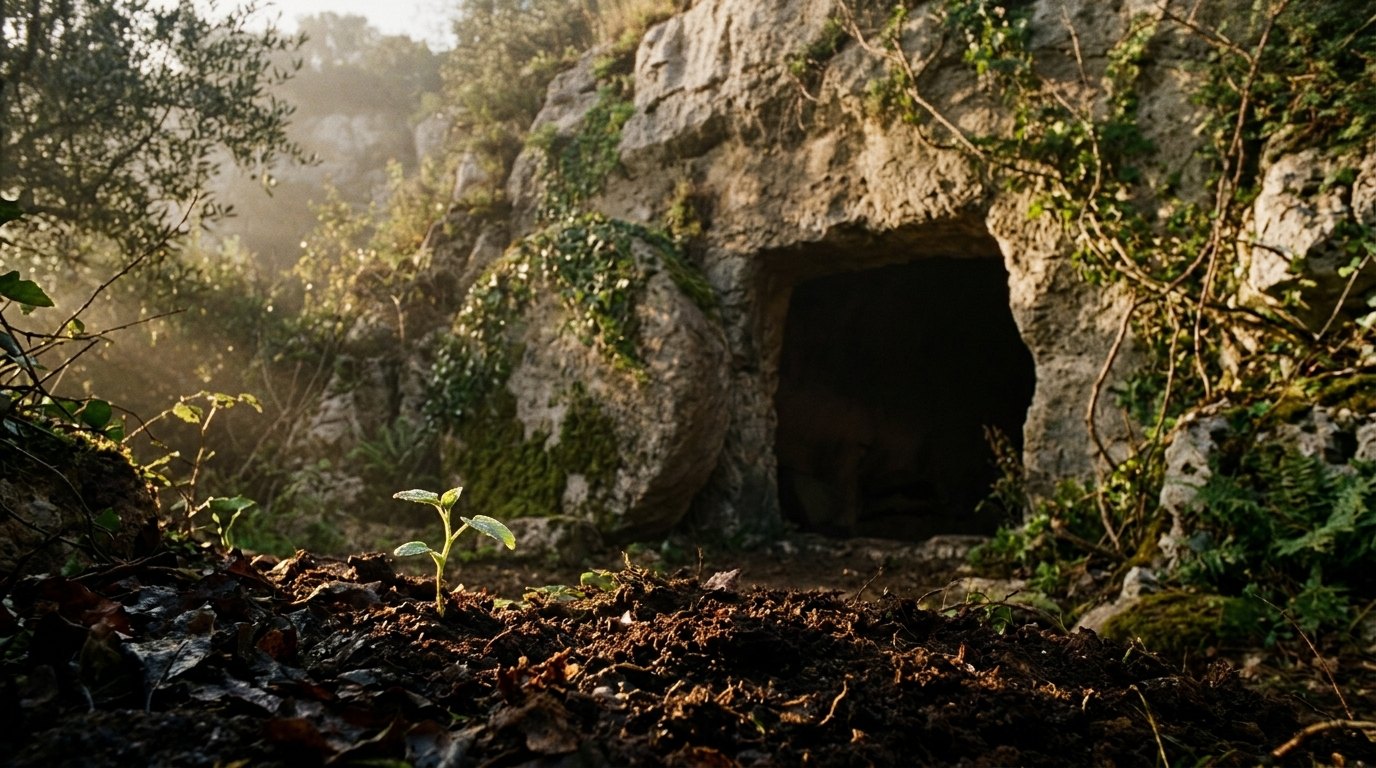
For you have been born again, not of perishable seed, but of imperishable, through the living and enduring word of God.
1 Peter 1:23 (NIV)
Peter defines the instrument of rebirth as the living and enduring word of God, contrasting it with corruptible seed.
In 1 Peter 1:23, the apostle anchors our regeneration to an unfailing divine instrument: we have been born anew not of corruptible seed, but of incorruptible, through the living and abiding word of God. Natural birth relies on fragile, decaying physical life, but spiritual rebirth stems from an eternal seed that can never perish. Peter rejoices that God, in His abundant mercy, has begotten us anew to a living hope through the bodily resurrection of Jesus Christ from the dead (1 Peter 1:3). This enduring, transformative seed is specifically identified as the gospel proclamation that was preached to us (1 Peter 1:25).
When this word takes root by the Spirit, the believer undergoes an absolute transformation. If anyone is in Christ, he is a new creation; the old has passed away; behold, the new has come (2 Corinthians 5:17). We were once entirely dead in our trespasses and sins (Ephesians 2:1), helpless corpses spiritually. But God, being rich in boundless mercy, made us alive together with Christ even while we were dead (Ephesians 2:4-5; Colossians 2:13). United to Jesus, we were buried with Him through baptism into death so that we might walk in newness of life (Romans 6:4-5). Outward ceremonies like circumcision count for nothing; what matters before God is this entirely new creation (Galatians 6:15). We are His newly fashioned workmanship, raised from the grave of sin to walk in good works that He prepared for us (Ephesians 2:10).
| Passage | What it says |
|---|---|
| 1 Peter 1:3 | God has begotten believers anew to a living hope through the resurrection of Jesus from the dead. |
| 1 Peter 1:23 | Believers are born anew not of perishable seed, but through the living, abiding word of God. |
| 1 Peter 1:25 | The enduring word that regenerates is identified specifically as the good news preached to them. |
| 2 Corinthians 5:17 | Anyone who is united to Christ is a new creation whose old life has completely passed away. |
| Ephesians 2:4-5 | God, being rich in mercy, made dead sinners alive together with Christ entirely by grace. |
| Romans 6:4-5 | Believers are buried with Christ to walk in newness of life. |
| Galatians 6:15 | Neither circumcision nor uncircumcision matters, but only being a new creation. |
| Ephesians 2:1 | God made alive those who were dead in trespasses and sins. |
| Ephesians 2:10 | Believers are God's workmanship created anew in Christ Jesus for good works. |
| Colossians 2:13 | God made believers alive together with Christ, forgiving all our trespasses. |
The Fruit of Rebirth
Living Faith, Genuine Love, and Practical Holiness
Everyone who believes that Jesus is the Christ is born of God, and everyone who loves the father loves his child as well.
1 John 5:1 (NIV)
John identifies saving belief in Jesus as the Christ as the unmistakable proof that someone is born of God.
In 1 John 5:1, the Apostle John declares, "Everyone who believes that Jesus is the Christ has been born of God." Saving faith is not the preliminary work of human effort trying to earn life, but the direct fruit and immediate evidence of divine regeneration. When the Spirit imparts new life, the renewed soul turns freely, joyfully, and dependently toward Christ in faith. Regeneration is the hidden cause; enduring belief, sacrificial love, and genuine obedience are its outward, visible realities.
John provides unmistakable diagnostic marks throughout his epistle to test whether one is truly born of God. In 1 John 2:29, he writes that everyone who practices righteousness has been born of Him, demonstrating that new birth unfailingly alters a person's relationship to sin. This truth is underscored in 1 John 3:9 and 1 John 5:18: because God's seed abides within, the believer cannot remain comfortably in an unbroken pattern of habitual rebellion. Christ keeps the regenerated soul secure, breaking the tyrannical grip of the evil one. Furthermore, this internal transformation manifests as self-giving fellowship. As 1 John 3:14 and 1 John 4:7 state, love for the brethren proves we have passed from death to life, for love originates in God, and everyone who loves is born of God and knows Him.
This new life fundamentally reshapes identity and inheritance. John marvels at the astonishing privilege of divine adoption in 1 John 3:1–2: "See what kind of love the Father has given to us, that we should be called children of God; and so we are." The Apostle Paul corroborates this profound reality in Romans 8:14–16 and Galatians 4:6, explaining that God sends the Spirit of His Son into our hearts, crying "Abba! Father!" as the Spirit Himself bears witness with our spirit that we are His children. Empowered by the Holy Spirit, the believer bears the supernatural fruit described in Galatians 5:22–23—love, joy, peace, patience, kindness, goodness, faithfulness, gentleness, and self-control. Through this sovereign rebirth, as 1 John 5:4 promises, "everyone who has been born of God overcomes the world," sustained in daily victory by a living faith.
| Passage | What it says |
|---|---|
| 1 John 2:29 | Everyone who practices righteousness gives clear evidence that he has been born of God. |
| 1 John 3:9 | Those born of God do not make a practice of sin, because God's seed remains in them. |
| 1 John 4:7 | Everyone who loves with godly love has been born of God and knows God intimately. |
| 1 John 5:1 | Whoever believes that Jesus is the Christ has been born of God and loves the Father's children. |
| 1 John 5:4 | Whatever is born of God overcomes the world through the victory of saving faith. |
| 1 John 5:18 | The one born of God does not abide in sin, and Christ keeps him secure from the evil one. |
| Romans 8:14-16 | The Spirit of adoption bears witness that believers are children of God. |
| Galatians 4:6 | God sent His Son's Spirit into hearts crying Abba Father. |
| Galatians 5:22-23 | The fruit produced by the Holy Spirit demonstrates the transformed inner nature. |
| 1 John 3:1-2 | The Father's great love has made believers children of God right now. |
| 1 John 3:14 | Passing from spiritual death to life is evidenced by loving Christian brothers. |
Where in the Bible
| Book | Passages |
|---|---|
| Deuteronomy | 1 · Deuteronomy 30:6 |
| Jeremiah | 3 · Jeremiah 31:33, Jeremiah 24:7, Jeremiah 32:39-40 |
| Ezekiel | 3 · Ezekiel 11:19-20, Ezekiel 36:25-27, Ezekiel 37:14 |
| Matthew | 1 · Matthew 18:3 |
| John | 10 · John 3:1-2, John 3:3, John 3:4, John 3:5, John 3:6, John 3:7, John 3:9-10, John 3:11-12, John 1:12-13, John 3:8 |
| Romans | 3 · Romans 9:16, Romans 6:4-5, Romans 8:14-16 |
| 1 Corinthians | 1 · 1 Corinthians 2:14 |
| 2 Corinthians | 1 · 2 Corinthians 5:17 |
| Galatians | 3 · Galatians 6:15, Galatians 4:6, Galatians 5:22-23 |
| Ephesians | 3 · Ephesians 2:4-5, Ephesians 2:1, Ephesians 2:10 |
| Colossians | 1 · Colossians 2:13 |
| Titus | 1 · Titus 3:5 |
| James | 1 · James 1:18 |
| 1 Peter | 3 · 1 Peter 1:3, 1 Peter 1:23, 1 Peter 1:25 |
| 1 John | 8 · 1 John 2:29, 1 John 3:9, 1 John 4:7, 1 John 5:1, 1 John 5:4, 1 John 5:18, 1 John 3:1-2, 1 John 3:14 |
The story in order
- God promises a new heart (c. 1400 BC) · Deuteronomy 30:6 · Foreshadows internal transformation and love for God.
- New covenant promised (c. 600 BC) · Jeremiah 31:33 · Prophecy of God's law written on hearts.
- New spirit promised (c. 570 BC) · Ezekiel 36:25-27 · Promise of cleansing and God's Spirit within.
- Jesus explains rebirth (c. AD 30) · John 3:3 · Necessity of being born anew to see God's kingdom.
- Born of water and Spirit (c. AD 30) · John 3:5 · Spiritual birth is a divine work, not human.
- Born of God, not will (c. AD 30) · John 1:12-13 · Receiving Christ results in being born of God.
- Spirit moves sovereignly (c. AD 30) · John 3:8 · The Spirit's work is unseen but powerful.
- Regeneration by the Spirit (c. AD 65) · Titus 3:5 · God saves by the Spirit's renewing work.
- Born of the Word (c. AD 65) · 1 Peter 1:23 · Rebirth comes through God's living, abiding word.
- New creation in Christ (c. AD 56) · 2 Corinthians 5:17 · Union with Christ makes one a new creation.
- Children of God (c. AD 90) · 1 John 3:1 · Believers are children of God through His love.
- Overcoming the world (c. AD 90) · 1 John 5:4 · Faith from God overcomes the world.
The Source of Rebirth
| Not by Human Will | By God's Sovereign Will | Passage |
|---|---|---|
| Not of natural descent, or of the will of the flesh | Born of God | John 1:13 |
| Not of the will of man | Born of God | John 1:13 |
| Not by works of righteousness | Washing of regeneration and renewing of the Holy Spirit | Titus 3:5 |
| Not of him who wills | But of God who shows mercy | Romans 9:16 |
| Not of human will | God brought us forth by the word of truth | James 1:18 |
The Fruit of the New Birth
| Evidence of Rebirth | Source of Evidence | Passage |
|---|---|---|
| Practices righteousness | Born of God | 1 John 2:29 |
| Does not practice sin | God's seed remains in them | 1 John 3:9 |
| Practices godly love | Born of God | 1 John 4:7 |
| Believes Jesus is the Christ | Born of God | 1 John 5:1 |
| Overcomes the world | Faith that is born of God | 1 John 5:4 |
| Loves fellow believers | Passed from death to life | 1 John 3:14 |
Key words
- Born again (anothen (ἄνωθεν))
- A sovereign work of God imparting spiritual life to a dead soul, remaking the sinner from within. · John 3:3
- Kingdom of God (basileia tou theou (βασιλεία τοῦ θεοῦ))
- The realm where God reigns, entered by those born anew. · John 3:3
- Born of water and the Spirit (ek tou hydatos kai tou pneumatos (ἐκ τοῦ ὕδατος καὶ τοῦ…)
- Spiritual birth involving cleansing (water) and regeneration by the Holy Spirit. · John 3:5
- Flesh (sarx (σάρξ))
- Human nature, inherently sinful and incapable of producing spiritual life. · John 3:6
- Spirit (pneuma (πνεῦμα))
- The Holy Spirit, the divine agent who regenerates and gives spiritual life. · John 3:8
- New creation (ktisis kainē (κτίσις καινή))
- A radical transformation of a person's life through union with Christ. · 2 Corinthians 5:17
- Living hope (elpida zōsan (ἐλπίδα ζῶσαν))
- A confident expectation of future glory based on Christ's resurrection. · 1 Peter 1:3
- Saving faith (pistis (πίστις))
- Trust in Christ that results in spiritual life and overcomes the world. · 1 John 5:4
Being born again is neither a prize won by human striving nor a badge of pedigree, but the free gift of God who alone raises the dead to life. If you have believed in Christ, loved His people, and turned your heart toward His ways, rejoice that His incorruptible seed dwells in you. Rest in the mercy of the Father who has given you a living hope through the resurrection of Jesus Christ.
43 passages, each cited once.
How the major Christian traditions read this
All Christians confess that to be born again is to receive sovereign spiritual life from the Holy Spirit, without which no one can enter the kingdom of God (John 3:3-5; Titus 3:5).
Catholic
In Catholic teaching, being born again refers to spiritual regeneration objectively conferred through the sacrament of Baptism. When the Lord declares that one must be born of 'water and Spirit' (John 3:5), the Church understands water literally as the sacramental bath. Baptism washes away original sin and personal guilt, infuses justifying grace, and makes the recipient a child of God and an incorporated member of Christ's body (Titus 3:5; 1 Peter 3:21). This initial rebirth is not mere intellectual assent or human decision; it is an indelible spiritual seal that begins the Christian life, which must then be lived out in faith, charity, and obedience.
Scripture: John 3:5, Titus 3:5, 1 Peter 3:21
Orthodox
In Orthodox theology, the new birth is the real entry into the life of the Trinity through Holy Baptism and Chrismation. As the Lord teaches Nicodemus, one must be born of water and the Spirit to enter God's kingdom (John 3:5). In the baptismal font, we die to the old Adam and are raised to new life in Christ (Romans 6:3-4). The new birth is the sacramental beginning of theosis—becoming partakers of the divine nature (2 Peter 1:4). It is neither a mere legal declaration nor an isolated emotional experience, but the organic grafting of the soul into Christ's mystical body, sustained through the life of the Church.
Scripture: John 3:5, Romans 6:3-4, 2 Peter 1:4
Lutheran
We confess that natural humanity is dead in trespasses and unable to turn to God by its own powers (Ephesians 2:1-5). Therefore, being born again is entirely the work of the Holy Spirit through the Means of Grace—specifically Holy Baptism and the spoken Gospel. When Christ speaks of being born of 'water and Spirit' (John 3:5), we understand that Baptism is no mere symbol, but 'the washing of regeneration and renewing by the Holy Spirit' (Titus 3:5). Through the water united to God's promise, the Spirit creates saving faith in Christ, forgives sins, and clothes the sinner in Christ's righteousness.
Scripture: John 3:5, Ephesians 2:1-5, Titus 3:5
Reformed & Presbyterian
In Reformed and Presbyterian doctrine, regeneration is the sovereign, monergistic work of the Holy Spirit who quickens the elect soul who is spiritually dead (Ephesians 2:4-5). Because man is dead in sin, regeneration must precede saving faith: the Spirit replaces the heart of stone with a heart of flesh (Ezekiel 36:26), granting the spiritual ability to repent and believe the Gospel (John 1:12-13; John 6:44). While baptism is a holy sign and seal of this inward reality, the Spirit blows where He wills (John 3:8), sovereignly applying Christ's redemption to His people through the Word (1 Peter 1:23).
Scripture: John 1:12-13, John 3:8, Ezekiel 36:26, Ephesians 2:4-5, 1 Peter 1:23
Anglican & Episcopal
Anglican tradition affirms that being born again is fundamentally tied to the Sacrament of Holy Baptism, where the Spirit works through outward water to confer inward spiritual grace. In the liturgy, we give thanks that the baptized person is regenerate and grafted into the body of Christ's Church, fulfilling our Lord's words regarding water and the Spirit (John 3:5; Titus 3:5). At the same time, this sacramental rebirth calls for a living, active faith; as the Thirty-Nine Articles observe, even those born again in Christ still struggle with sin and must continually walk in repentance and obedience (1 John 1:8-9).
Scripture: John 3:5, Titus 3:5, 1 John 1:8-9
Baptist
In Baptist conviction, being born again is an immediate, supernatural transformation of the heart wrought by the Holy Spirit when a sinner repents and places personal faith in Jesus Christ (John 3:3; 2 Corinthians 5:17). Physical baptism with water does not regenerate the soul; rather, it is the outward symbol and testimony of an inward rebirth that has already occurred through faith (Romans 6:3-4). We hold that 'water' in John 3:5 points to spiritual cleansing or the Word of God, since one is born again through the living Word received by faith (1 Peter 1:23), not by ritual immersion.
Scripture: John 3:3, 2 Corinthians 5:17, Romans 6:3-4, 1 Peter 1:23, John 3:5
Methodist & Wesleyan
In the Wesleyan understanding, the new birth is that great change which God works in the soul when He brings it into life—restoring the moral image of God lost in the Fall. Enabled by prevenient grace, a person responds in faith to Christ and is simultaneously justified and regenerated (Romans 5:1; Titus 3:5). While baptism is a sacred means of grace, the new birth itself is an inward, experiential renewal whereby the love of God is poured out in our hearts (Romans 5:5), enabling the believer to walk in victory over intentional sin and grow toward entire sanctification (1 John 3:9).
Scripture: Romans 5:1, Romans 5:5, Titus 3:5, 1 John 3:9
Pentecostal & Charismatic
We believe being born again occurs the moment a person turns to Christ in repentance and faith, receiving forgiveness and being made an entirely new creation (2 Corinthians 5:17). The Spirit convicts the sinner, imparts spiritual life, and adopts them into the family of God (Romans 8:15-16). Pentecostals carefully distinguish this foundational work of regeneration—which every genuine believer possesses—from the subsequent baptism in the Holy Spirit, which is an enduement with power for witness and ministry accompanied by the manifestation of spiritual gifts (Acts 1:8; Acts 2:4).
Scripture: John 3:3-7, 2 Corinthians 5:17, Romans 8:15-16, Acts 1:8, Acts 2:4
Non-denominational & Evangelical
In broadly evangelical and non-denominational teaching, being born again is the personal, inward conversion that occurs when an individual trusts in Jesus Christ as Lord and Savior (John 1:12; John 3:16). Scripture teaches that man is spiritually dead and unable to save himself (Ephesians 2:8-9). When a person hears the Gospel and believes, the Holy Spirit immediately indwells them, giving them eternal life and wiping away their sin. Water baptism is not the cause of regeneration, but an important outward act of obedience showing that one has already been born of God.
Scripture: John 1:12, John 3:16, Ephesians 2:8-9
Where they differ
The role of water baptism
- Catholic
- Baptism is the instrumental cause that confers new birth.
- Orthodox
- Baptism is the actual mystery through which regeneration occurs.
- Lutheran
- Baptism is God's ordained Means of Grace working regeneration.
- Reformed & Presbyterian
- Baptism is the outward sign and seal of regeneration.
- Anglican & Episcopal
- Baptism is the sacramental means conveying the new birth.
- Baptist
- Baptism is an outward symbol following prior inward rebirth.
- Methodist & Wesleyan
- Baptism is a means of grace distinct from new birth.
- Pentecostal & Charismatic
- Baptism is an outward testimony of an internal conversion.
- Non-denominational & Evangelical
- Baptism is a symbolic public step of obedience after faith.
Scripture: John 3:5, Titus 3:5, 1 Peter 3:21
The timing relative to faith
- Catholic
- Regeneration is infused in baptism, initiating theological faith.
- Orthodox
- Regeneration begins in baptism, initiating the journey of faith.
- Lutheran
- The Spirit works faith through baptism or hearing the Word.
- Reformed & Presbyterian
- Regeneration sovereignly precedes and enables saving faith.
- Anglican & Episcopal
- Sacramental regeneration and conscious personal faith are intertwined.
- Baptist
- Personal repentance and faith coincide with the new birth.
- Methodist & Wesleyan
- Faith enabled by prevenient grace brings instantaneous regeneration.
- Pentecostal & Charismatic
- Regeneration occurs instantly upon personal repentance and faith.
- Non-denominational & Evangelical
- Personal decision to trust Christ produces immediate new birth.
Scripture: John 1:12-13, Ephesians 2:4-8
Your pastor can tell you where your church stands.
Scripture cited
- John 3:10
- John 3:9-21
- Ezekiel 36:25-27
- Titus 3:4-7
- 2 Corinthians 5:17
- John 1:12-13
- 1 John 5:1
- Ephesians 2:1-5
- Romans 6:3-4