What does it mean to walk by the Spirit?

Galatians 5:16-25
16 So I say, walk by the Spirit, and you will not gratify the desires of the flesh.
17 For the flesh desires what is contrary to the Spirit, and the Spirit what is contrary to the flesh. They are in conflict with each other, so that you are not to do whatever you want.
18 But if you are led by the Spirit, you are not under the law.
19 The acts of the flesh are obvious: sexual immorality, impurity and debauchery;
20 idolatry and witchcraft; hatred, discord, jealousy, fits of rage, selfish ambition, dissensions, factions
21 and envy; drunkenness, orgies, and the like. I warn you, as I did before, that those who live like this will not inherit the kingdom of God.
22 But the fruit of the Spirit is love, joy, peace, forbearance, kindness, goodness, faithfulness,
23 gentleness and self-control. Against such things there is no law.
24 Those who belong to Christ Jesus have crucified the flesh with its passions and desires.
25 Since we live by the Spirit, let us keep in step with the Spirit.
New International Version (NIV)
The answer
Walking by the Spirit means living each step of your life under the Spirit's direction and power, so that the desires of your fallen nature no longer run the show.
Paul puts the contrast plainly in Galatians 5:17: "the flesh lusts against the Spirit, and the Spirit against the flesh; and these are contrary to one another, that you may not do the things that you desire." To "walk by the Spirit" is to side with the Spirit in that conflict, instead of yielding to the flesh.
What it looks like
- A path, not a switch. Paul uses present-tense commands ("walk," v. 16; "live... let us also walk," v. 25). Walking is steady, habitual direction — one step after another, not a single dramatic moment.
- Led, not driven. Galatians 5:18: "if you are led by the Spirit, you are not under the law." The Spirit guides from within; the law only commands from without. Walking by the Spirit is a relationship of following, not a system of earning.
- Fruit, not feelings. Galatians 5:22-23 names what the Spirit produces when He leads: "love, joy, peace, patience, kindness, goodness, faith, gentleness, self-control." Walking by the Spirit is measured by character, not by mood or experience.
- A crucified self. Galatians 5:24: "Those who belong to Christ have crucified the flesh with its passions and lusts." The flesh isn't denied its desires — it's been put to death, because you belong to Christ.
What it is not
- It is not license to sin. Galatians 5:16 says walking by the Spirit is precisely what stops you from "fulfilling the lust of the flesh."
- It is not a list of outward rules. Galatians 5:18 sets being led by the Spirit over against being under the law.
- It is not occasional. Galatians 5:25: "If we live by the Spirit, let us also walk by the Spirit" — the daily walk matches the new life we've been given.
A verse to carry
Romans 8:4-5: "the righteousness of the law might be fulfilled in us, who walk not after the flesh, but after the Spirit. For they that are after the flesh do mind the things of the flesh; but they that are after the Spirit the things of the Spirit." Walking by the Spirit is the new mind-set the Spirit gives, set on His things, and it is what produces the life the law always pointed to.
Answered from Scripture · reviewed November 7, 2026
To walk by the Spirit is to conduct your daily life under the direction, governance, and empowering presence of the Holy Spirit so that the fallen desires of the flesh no longer hold sway. Scripture presents this walk not as an instantaneous spiritual plateau, but as a continuous, deliberate step-by-step obedience rooted in our union with Jesus Christ.
The Daily Step
Walking By The Spirit Overcomes Sinful Desires

So I say, walk by the Spirit, and you will not gratify the desires of the flesh.
Galatians 5:16 (NIV)
It gives the definitive apostolic promise that living in step with the Spirit directly prevents the fulfillment of sinful cravings.
The apostolic command in Galatians 5:16 provides a direct divine promise: walk by the Spirit, and you will not gratify the desires of the flesh. This walking is not a motionless state of mind, but a conscious, rhythmic movement that aligns everyday conduct with the Holy Spirit. Paul reinforces this in Galatians 5:25, showing that because the Spirit has granted us resurrection life, our daily footsteps must keep in line with His direction. This walk produces tangible moral transformation. Romans 8:4 affirms that the righteous requirement of God's holy law is genuinely fulfilled in those who walk according to the Spirit rather than according to the flesh. Those who belong to Christ no longer live beneath the dominion of sin; as Romans 8:1 declares, there is no condemnation for those whose life is found in Christ Jesus, walking after the Spirit.
This continuous journey begins within the disposition of the mind. Romans 8:5 explains that those who live according to the Spirit actively set their minds on the things of the Spirit, directing their affections toward God's Word and will. This mindset yields an inward harvest; Romans 8:6 contrasts the spiritual ruin of the flesh with the life and peace that flow from the Holy Spirit. Indwelling presence marks true discipleship, for Romans 8:9 plainly teaches that anyone who does not possess the Spirit of Christ does not belong to Him at all. Though the physical body remains mortal because of the presence of sin in the fallen world (Romans 8:10), the Spirit is life because of Christ's righteousness. Furthermore, Romans 8:11 assures believers that the very Spirit who raised Jesus from the dead will give life to their mortal bodies. Disregarding this holy calling carries severe weight, as 1 Thessalonians 4:8 warns that disregarding a life of sanctification is not rejecting mere human instruction, but God Himself, who graciously gives His Holy Spirit to His people.
| Passage | What it says |
|---|---|
| Galatians 5:16 | Commands believers to walk by the Spirit, promising that doing so prevents fulfilling the desires of the flesh. |
| Galatians 5:25 | Exhorts that since believers have received life by the Spirit, they must also walk in line with the Spirit. |
| Romans 8:4 | States the righteous requirement of the law is fulfilled in those who walk according to the Spirit, not the flesh. |
| Romans 8:5 | Explains that those living according to the Spirit set their minds on the things of the Spirit. |
| Romans 8:1 | Affirms there is no condemnation for those in Christ who walk according to the Spirit. |
| Romans 8:6 | Contrasts the death of the mind set on the flesh with life and peace from the Spirit. |
| Romans 8:9 | States that whoever does not have the Spirit of Christ does not belong to Him. |
| Romans 8:10 | Shows that although the body faces physical death because of sin, the spirit is alive because of righteousness. |
| Romans 8:11 | Promises that the indwelling Spirit who raised Jesus from the dead will give life to mortal bodies. |
| 1 Thessalonians 4:8 | Warns that rejecting holy living rejects God, who gives His Holy Spirit to believers. |
The Inner Conflict
The Flesh And The Spirit War Within

For the flesh desires what is contrary to the Spirit, and the Spirit what is contrary to the flesh. They are in conflict with each other, so that you are not to do whatever you want.
Galatians 5:17 (NIV)
It diagnoses the daily battle every Christian feels between the remnant sinful nature and the indwelling Holy Spirit.
The Christian life is marked by an immediate and fierce battleground, diagnosed precisely in Galatians 5:17: the desires of the flesh are against the Spirit, and the desires of the Spirit are against the flesh. These two principles stand in complete, irreconcilable opposition, preventing the believer from living in unthinking compliance with natural impulses. Yet this inner tension does not mean the believer is helpless. Romans 8:12 asserts that we are debtors not to the fallen flesh, to live according to its dictates, while Romans 8:13 issues both a warning and an empowering remedy: if you live according to the flesh you will die, but if by the Spirit you put to death the deeds of the body, you will live. Daily life is a constant seedtime, and Galatians 6:8 warns that sowing to the flesh reaps corruption, whereas sowing to the Spirit reaps everlasting life.
This conflict exposes the complete insufficiency of natural human willpower. In Romans 7:18, Paul confesses that nothing good dwells within his fallen flesh, noting that the desire to do good is present, but the capacity to produce it by self-effort is lacking. A relentless dynamic asserts itself, described in Romans 7:21, where evil sits close at hand even when one resolves to do right. While the inner person genuinely delights in the holy law of God (Romans 7:22), another principle wages constant war in the body's members (Romans 7:23), prompting the desperate cry of Romans 7:24: “Wretched man that I am! Who will deliver me from this body of death?” The decisive answer rings out in Romans 7:25 with thanksgiving to God through Jesus Christ our Lord, who delivers us from bondage. Until that final redemption, 1 Peter 2:11 urges believers as aliens and exiles to abstain from the sinful passions that actively wage war against the human soul.
| Passage | What it says |
|---|---|
| Galatians 5:17 | Describes the irreconcilable war between the flesh and the Spirit, keeping believers from doing whatever they please unchecked. |
| Romans 8:12 | Declares that believers have no obligation or debt to live according to the fallen flesh. |
| Romans 8:13 | Warns of death for following the flesh, but promises life to those putting its deeds to death by the Spirit. |
| Galatians 6:8 | Contrasts sowing to the flesh, which reaps corruption, with sowing to the Spirit, which reaps eternal life. |
| Romans 7:18 | Acknowledges that nothing good dwells in the flesh, showing the inability of self-effort to carry out good. |
| Romans 7:21 | Identifies the persistent principle that evil lies close at hand even when intending to do right. |
| Romans 7:22 | Expresses inner delight in God's law according to the inner person. |
| Romans 7:23 | Describes the law in bodily members waging war against the mind and holding one captive. |
| Romans 7:24 | Cries out for deliverance from this body of death. |
| Romans 7:25 | Thanks God through Jesus Christ while distinguishing service of the mind to God from the flesh to sin. |
| 1 Peter 2:11 | Urges sojourners to abstain from bodily passions that wage war against the soul. |
Freedom From Legalism
The Spirit Leads Rather Than Drives

But if you are led by the Spirit, you are not under the law.
Galatians 5:18 (NIV)
It shows that following the personal guidance of the Spirit liberates the believer from the external condemnation of the law.
To walk by the Spirit is to enter the liberating power of the new covenant, where Galatians 5:18 announces: if you are led by the Spirit, you are not under the law. The believer is no longer trapped under the condemning scrutiny of external statutes, driven by fear of punishment. Instead, the Spirit leads from within. Romans 8:14 reveals that all who are continually led by the Spirit of God are the genuine sons and daughters of God. This establishes a completely transformed mode of obedience; as Romans 7:6 explains, believers are released from the ancient letter of the written code to serve in the living freshness of the Holy Spirit. Romans 8:2 proclaims that the law of the Spirit of life has set us entirely free in Christ Jesus from the reign of sin and death.
This freedom completely removes the paralyzing dread of servile religion. Romans 8:15 reminds believers that they have not received a spirit of slavery falling back into fear, but the Spirit of adoption as sons, by whom we cry, 'Abba! Father!' The Holy Spirit Himself bears inward witness with our human spirit that we are children of God (Romans 8:16). Paul contrasts the covenants in 2 Corinthians 3:6, teaching that the outward letter kills, but the Spirit imparts life, leading to the glorious proclamation of 2 Corinthians 3:17: where the Spirit of the Lord is, there is liberty. To abandon this vibrant reality for human rule-keeping is spiritual folly. Galatians 3:3 rebukes the Galatians for imagining that what began by the sovereign Spirit could ever be perfected by the weak efforts of human flesh, and Galatians 5:1 commands every believer to stand firm in Christ's hard-won freedom and refuse to submit again to a yoke of legalistic slavery.
| Passage | What it says |
|---|---|
| Galatians 5:18 | Affirms that whoever is led by the Spirit is no longer kept under the bondage of the law. |
| Romans 8:14 | Identifies all who are led by the Spirit of God as the true children of God. |
| Romans 7:6 | Explains that believers serve in the new way of the Spirit, released from the old written code. |
| Romans 8:2 | Declares that the law of the Spirit of life has set believers free from the law of sin and death. |
| Romans 8:15 | Contrasts a spirit of slavery bringing fear with the Spirit of adoption crying Abba Father. |
| Romans 8:16 | Confirms the Spirit bears witness with our spirit that we are children of God. |
| 2 Corinthians 3:6 | States that the letter kills but the Spirit gives life under the new covenant. |
| 2 Corinthians 3:17 | Proclaims that where the Spirit of the Lord is, there is freedom. |
| Galatians 3:3 | Rebukes starting in the Spirit and attempting to reach maturity through the flesh. |
| Galatians 5:1 | Exhorts believers to stand firm in the freedom of Christ and avoid the yoke of slavery. |
The Observable Works
The Works Of The Flesh Are Obvious

The acts of the flesh are obvious: sexual immorality, impurity and debauchery;
Galatians 5:19 (NIV)
It opens the solemn catalog of destructive behaviors that inevitably follow when life is ruled by the fallen nature.
The difference between living by the Spirit and succumbing to the flesh is neither vague nor concealed. Galatians 5:19 declares plainly that the works of the flesh are evident, beginning with sins of sexual brokenness such as sexual immorality, impurity, and sensuality. The apostolic list broadens in Galatians 5:20 to expose false worship and relational destruction: idolatry, sorcery, enmities, strife, jealousy, outbursts of anger, rivalries, dissensions, and factions. In Galatians 5:21, after warning against envy and drunkenness, Paul issues an unhedged pastoral reality: those who make a settled practice of such things will not inherit the kingdom of God. Colossians 3:5 therefore commands believers to decisively put to death whatever belongs to the earthly nature, including sexual immorality, depraved passion, and covetousness, which amounts to idolatry.
These destructive works flow out of a fallen mind in active rebellion against its Creator. Romans 8:7 explains that the mind governed by the flesh is hostile to God, unable and unwilling to submit to His divine law, while Romans 8:8 settles the matter: those trapped in the realm of the flesh cannot please God. Even within the gathered church, 1 Corinthians 3:3 shows that jealousy and bitter rivalry demonstrate that believers are acting in a carnal, merely human manner. Ephesians 5:3 directs that sexual sin and greed should not even be named among the saints, and Ephesians 5:4 replaces coarse, foolish speech with the sacrifice of thanksgiving. Ephesians 5:5 warns once more that the sexually immoral, impure, or covetous person has no inheritance in Christ's kingdom, compelling believers in Ephesians 5:11 to refuse partnership with the unfruitful works of darkness and instead bring them into the light.
| Passage | What it says |
|---|---|
| Galatians 5:19 | Names explicit sexual sins as obvious manifestations of the fallen human flesh. |
| Galatians 5:20 | Lists religious and interpersonal sins including idolatry, sorcery, strife, factions, and uncontrolled anger. |
| Galatians 5:21 | Warns soberly that those who make a practice of such sins will not inherit God's kingdom. |
| Colossians 3:5 | Commands believers to put to death earthly practices such as fornication, evil concupiscence, and covetousness. |
| Romans 8:7 | Explains that the mind set on the flesh is hostile to God and cannot submit to His law. |
| Romans 8:8 | States plainly that those who are in the realm of the flesh cannot please God. |
| 1 Corinthians 3:3 | Points to jealousy and strife among believers as evidence of behaving according to the flesh. |
| Ephesians 5:3 | Instructs that sexual immorality and greed should not even be named among the saints. |
| Ephesians 5:4 | Replaces filthiness, foolish talk, and crude joking with thanksgiving. |
| Ephesians 5:5 | Reminds that immoral, impure, or covetous idolaters have no inheritance in Christ's kingdom. |
| Ephesians 5:11 | Commands believers to take no part in unfruitful works of darkness but instead expose them. |
The True Character
The Fruit The Holy Spirit Cultivates

But the fruit of the Spirit is love, joy, peace, forbearance, kindness, goodness, faithfulness,
Galatians 5:22 (NIV)
It defines the authentic, cohesive character traits produced by the Holy Spirit's active presence in the believer.
The singular harvest named in Galatians 5:22 reveals that the Spirit produces a unified character rather than disconnected virtues. When Paul lists love, joy, peace, patience, kindness, goodness, and faithfulness, he is not presenting an à la carte selection of moral ideals. He describes the organic, indivisible life of Christ formed within the believer. Galatians 5:23 rounds out this glorious cluster with gentleness and self-control, concluding with the triumph that against such things there is no law, for the law's righteous demands are answered in those who abide in the Spirit. This interior reality shapes the community of faith, where Colossians 3:12 commands us as God's chosen, holy, and beloved saints to put on compassionate hearts, kindness, humility, meekness, and patience.
This heavenly character reflects the very climate of the kingdom of God, which Romans 14:17 defines not as food and drink, but as righteousness, peace, and joy in the Holy Spirit. In Ephesians 5:9, this is affirmed as the fruit of light found in all that is good, right, and true. To manifest this character, Ephesians 5:18 commands us not to be drunk with wine, which leads to debauchery, but to be continually filled with the Spirit. This filling naturally overflows into corporate worship and personal gratitude, as Ephesians 5:19 depicts the church addressing one another in psalms, hymns, and spiritual songs, while Ephesians 5:20 calls for giving thanks always and for everything in the name of the Lord Jesus Christ. Philippians 1:11 confirms that this entire harvest constitutes the fruit of righteousness that comes through Jesus Christ to the glory and praise of God.
Such spiritual vitality calls for active diligence. In 2 Peter 1:5, believers are charged to make every effort to supplement faith with virtue and knowledge. This progressive growth continues in 2 Peter 1:6 through self-control, steadfastness, and godliness, which expands in 2 Peter 1:7 into brotherly affection and Christian love. Finally, 2 Peter 1:8 assures us that when these qualities belong to us and are increasing, they keep us from being ineffective or unfruitful in the knowledge of our Lord.
| Passage | What it says |
|---|---|
| Galatians 5:22 | Specifies love, joy, peace, patience, kindness, goodness, and faith as the singular harvest of the Spirit. |
| Galatians 5:23 | Adds gentleness and self-control, concluding that no righteous law stands against such holy virtues. |
| Colossians 3:12 | Exhorts God's chosen saints to put on hearts of compassion, kindness, humility, gentleness, and patience. |
| Romans 14:17 | Defines the kingdom of God as righteousness, peace, and joy in the Holy Spirit. |
| Ephesians 5:9 | Describes the fruit of light as consisting in all that is good, right, and true. |
| Ephesians 5:18 | Commands believers not to get drunk with wine but to be continually filled with the Spirit. |
| Ephesians 5:19 | Shows the Spirit-filled life overflowing in psalms, hymns, and spiritual songs to the Lord. |
| Ephesians 5:20 | Calls for giving thanks always and for everything in the name of Jesus Christ. |
| Philippians 1:11 | Speaks of being filled with the fruit of righteousness that comes through Jesus Christ. |
| 2 Peter 1:5 | Urges adding virtue to faith, and knowledge to virtue. |
| 2 Peter 1:6 | Calls for adding self-control to knowledge, steadfastness to self-control, and godliness to steadfastness. |
| 2 Peter 1:7 | Exhorts supplementing godliness with brotherly affection, and brotherly affection with love. |
| 2 Peter 1:8 | Assures that these growing qualities keep the believer from being ineffective or unfruitful. |
The Crucified Life
Belonging To Christ Means Flesh Crucified

Those who belong to Christ Jesus have crucified the flesh with its passions and desires.
Galatians 5:24 (NIV)
It establishes that walking in the Spirit is grounded in our decisive positional death to the flesh in Christ.
Galatians 5:24 anchors the Spirit-led life in a completed historical reality: those who belong to Christ Jesus have crucified the flesh with its passions and desires. Walking by the Spirit is not an attempt to subdue an untamed beast by human willpower; it is living from the triumph of the cross. Paul echoes this profound reality in Galatians 2:20, confessing that he has been crucified with Christ, so that he no longer lives, but Christ lives in him by faith. Romans 6:6 declares that our old self was crucified with Him so that the body of sin might be brought to nothing and we would no longer be enslaved. Consequently, Colossians 3:9 forbids lying because we have decisively stripped off the old self with its practices, and Colossians 3:10 commands us to put on the new self being renewed in true knowledge after the image of its Creator.
This definitive break with sin frames the entire logic of Romans 6. Paul asks in Romans 6:2 how those who died to sin could possibly live in it any longer, reminding us in Romans 6:3 that baptism into Christ Jesus is baptism into His death. Buried with Him by baptism into death, Romans 6:4 announces that we are raised to walk in newness of life. Therefore, Romans 6:11 commands believers to consider themselves dead to sin and alive to God in Christ Jesus. Romans 6:12 insists that sin must not reign in our mortal bodies to make us obey its passions, and Romans 6:13 charges us not to present our members as instruments for unrighteousness, but as instruments for righteousness to God. Galatians 6:14 crowns this boasting solely in the cross, by which the world has been crucified to us and we to the world.
Paul returns to this clothing metaphor in Ephesians 4:22, urging us to put off the old self corrupted by deceitful desires. We are commanded in Ephesians 4:23 to be renewed in the spirit of our minds and in Ephesians 4:24 to put on the new self created after the likeness of God. Colossians 2:11–12 explains that this spiritual circumcision and burial in baptism raise us through faith in the working of God. Because we are raised with Christ, Colossians 3:1–3 directs our hearts and minds to the things above where Christ is seated, resting in the unshakable truth that we have died and our life is hidden with Christ in God.
| Passage | What it says |
|---|---|
| Galatians 5:24 | States that those who belong to Christ have decisively crucified the flesh along with its passions. |
| Galatians 2:20 | Testifies to being crucified with Christ while now living by faith in the Son of God. |
| Romans 6:6 | Declares the old self was crucified with Christ so we would no longer be enslaved to sin. |
| Colossians 3:9 | Commands truthfulness because believers have already taken off the old self with its wicked practices. |
| Colossians 3:10 | Instructs believers to put on the new self, being renewed in knowledge after its Creator's image. |
| Romans 6:2 | Asks how those who died to sin can still live in it. |
| Romans 6:3 | Reminds that all baptized into Christ Jesus were baptized into His death. |
| Romans 6:4 | States believers are buried with Him by baptism into death to walk in newness of life. |
| Romans 6:11 | Commands believers to consider themselves dead to sin and alive to God in Christ Jesus. |
| Romans 6:12 | Exhorts that sin must not reign in mortal bodies to make one obey its passions. |
| Romans 6:13 | Instructs not to present members to sin but to present oneself to God as alive from death. |
| Galatians 6:14 | Boasts only in the cross, by which the world has been crucified to Paul and Paul to the world. |
| Ephesians 4:22 | Directs believers to put off the old self, which belongs to former corrupt deceitful desires. |
| Ephesians 4:23 | Commands being renewed in the spirit of your minds. |
| Ephesians 4:24 | Calls believers to put on the new self created after the likeness of God in true righteousness. |
| Colossians 2:11 | Points to spiritual circumcision in putting off the body of the flesh in Christ. |
| Colossians 2:12 | Affirms burial and resurrection with Christ through faith in God's powerful working. |
| Colossians 3:1 | Exhorts those raised with Christ to seek the things that are above where Christ is seated. |
| Colossians 3:2 | Directs believers to set their minds on things above, not on things that are on earth. |
| Colossians 3:3 | Declares that believers have died and their life is hidden with Christ in God. |
The Old Testament Promise
God Promises His Spirit To Direct Human Steps

And I will put my Spirit in you and move you to follow my decrees and be careful to keep my laws.
Ezekiel 36:27 (NIV)
This foundational prophecy explicitly connects the inward gift of God's Spirit with an empowered daily walk in His statutes.
Ezekiel 36:27 stands as the ancient fountainhead of the Spirit-filled walk: God promised to put His Spirit within His people to cause them to walk in His statutes. Under the old administration, the law confronted man from stone tablets, commanding obedience from an unregenerate heart incapable of fulfilling it. But in Ezekiel 36:26, the Lord pledged a total internal recreation, promising to remove the obstinate heart of stone and replace it with a living, responsive heart of flesh. The indwelling Holy Spirit is not given merely to impart ecstatic moments, but to supply the internal desire and power necessary to observe God's righteous rules carefully.
The prophet reiterates this transformative covenant in Ezekiel 11:19, declaring that God will give them one heart and put a new spirit within them, taking away their stony obstinacy. The immediate outcome of this supernatural surgery appears in Ezekiel 11:20: that they may walk in His statutes, keep His ordinances, and obey them, dwelling securely as His covenant people. This matches the glorious promise of Jeremiah 31:33, where the Lord announces the new covenant in which His law is no longer an external mandate, but written directly on the inward mind and inscribed upon the human heart. Walking by the Spirit is nothing less than the dynamic fulfillment of these prophetic promises, providing the divine enablement to love and follow the living God from within.
| Passage | What it says |
|---|---|
| Ezekiel 36:26 | Promises a new heart and a new spirit, removing heart of stone and giving heart of flesh. |
| Ezekiel 36:27 | Promises God will put His Spirit within His people to cause them to walk in His statutes. |
| Ezekiel 11:19 | Promises one heart and a new spirit to replace stony obstinacy with responsiveness. |
| Ezekiel 11:20 | States the indwelling transformation enables obedience to statutes and ordinances as God's people. |
| Jeremiah 31:33 | Foreshadows the new covenant where God writes His law directly on human hearts. |
Guarding the Spirit's Voice
Walking By The Spirit Heeds His Gentle Guidance
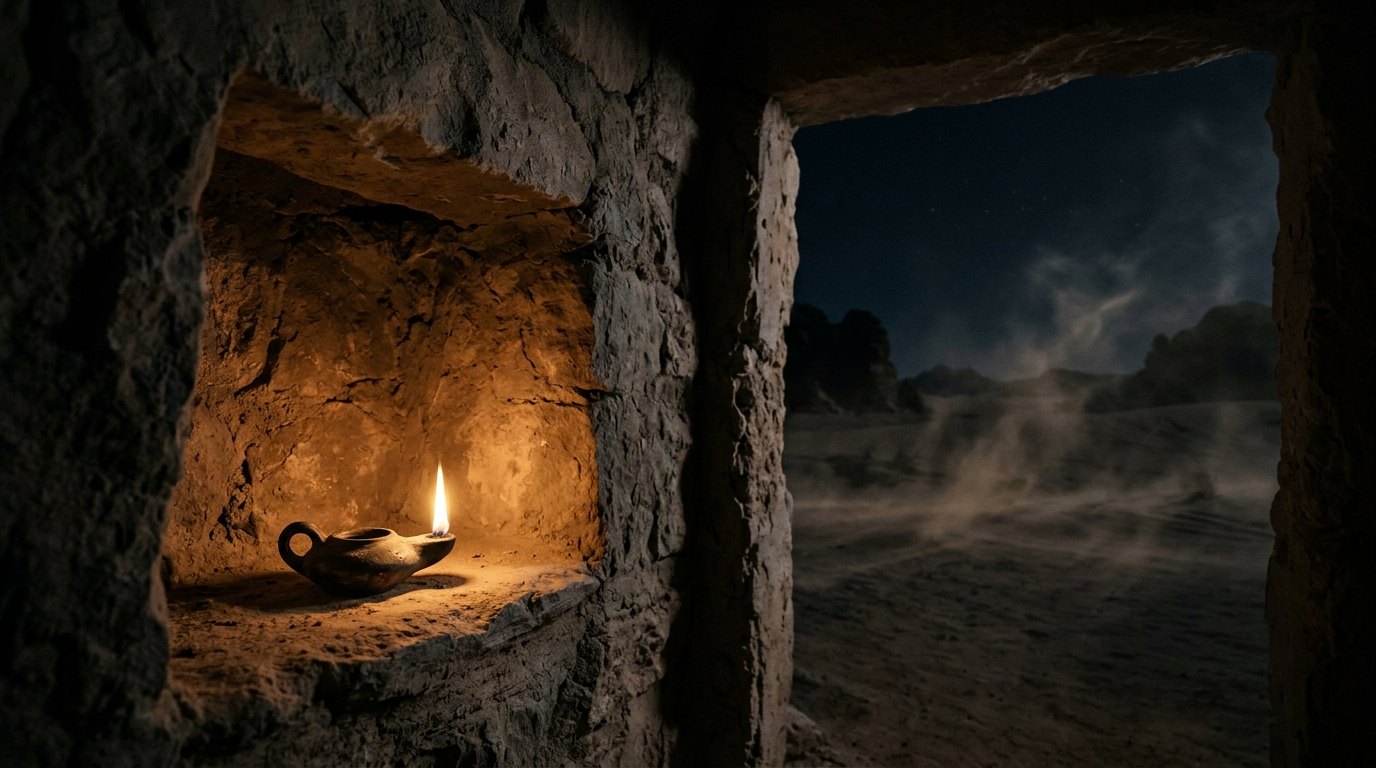
And do not grieve the Holy Spirit of God, with whom you were sealed for the day of redemption.
Ephesians 4:30 (NIV)
It shows that walking by the Spirit requires relational care not to wound the personal Spirit who seals us.
Ephesians 4:30 warns that walking by the Spirit requires sensitive care not to grieve the Holy Spirit of God. The Spirit is not an impersonal cosmic force or an abstract moral influence; He is a divine Person who loves us and who can be wounded by our bitterness, unwholesome speech, and malice. Paul reminds the church that this very Spirit is the seal of our redemption, marking us securely for the day Christ claims His possession. To ignore His quiet promptings or indulge in sins of speech and temper is to bring sorrow to the resident Lord of our hearts.
In a companion exhortation, 1 Thessalonians 5:19 commands us not to quench the Holy Spirit, picturing His active presence as a holy fire that can be smothered by cynicism, stubborn disobedience, or cold apathy. Rather than stifling His work, 1 Thessalonians 5:21 directs believers to test everything by the standard of truth, holding fast with tenacity to what is good. Simultaneously, 1 Thessalonians 5:22 commands total vigilance to abstain from every form of evil, keeping the temple of our lives clean for His fellowship. The catastrophic alternative is seen in Hebrews 10:29, which issues a terrifying warning against apostasy, describing it as trampling the Son of God underfoot and insulting the Spirit of grace. The believer who walks by the Spirit honors His promptings, stays tender to His convicting voice, and flees whatever would diminish His blazing light.
| Passage | What it says |
|---|---|
| Ephesians 4:30 | Commands believers not to grieve the Holy Spirit of God by whom they were sealed. |
| 1 Thessalonians 5:19 | Explicitly instructs believers not to quench the Holy Spirit. |
| 1 Thessalonians 5:21 | Commands believers to test all things and hold fast to what is good. |
| 1 Thessalonians 5:22 | Urges believers to abstain from every form of evil. |
| Hebrews 10:29 | Warns of severe judgment for insulting the Spirit of grace through persistent willful apostasy. |
The Spirit of Truth
Walking In Truth Demands Relying On The Helper
But when he, the Spirit of truth, comes, he will guide you into all the truth. He will not speak on his own; he will speak only what he hears, and he will tell you what is yet to come.
John 16:13 (NIV)
Jesus explains that the Spirit's walk is essentially guided by truth, illuminating Christ rather than self.
In John 16:13, the Lord Jesus reveals that the Spirit of truth will guide you into all truth, ensuring that the believer’s daily steps are rooted never in autonomous impression, but in divine revelation. Walking by the Spirit is fundamentally an intellectual and moral alignment with God's disclosed will, centered upon Jesus Christ Himself. Christ promised in John 14:16 that the Father would give another Helper to abide with His disciples forever, securing continuous divine fellowship. This Paraclete is designated in John 14:17 as the Spirit of truth, whom the world cannot receive because it neither sees Him nor knows Him, yet who makes His permanent dwelling inside believers.
This indwelling presence actively shapes the Christian mind. As Jesus promised in John 14:26, the Holy Spirit teaches His disciples all things and brings to remembrance everything Christ commanded, grounding Christian obedience in sound apostolic doctrine. The Spirit does not direct attention to Himself; rather, as John 15:26 affirms, He proceeds from the Father to bear witness about Jesus Christ, orienting the heart toward the Savior’s glory. Echoing this vital dynamic, 1 John 2:20 assures us that believers possess an anointing from the Holy One, guarding the flock against seductive falsehood. Furthermore, 1 John 2:27 clarifies that this inward anointing abides permanently, instructing the believer in genuine truth so that we remain steadfastly rooted in the Son.
| Passage | What it says |
|---|---|
| John 14:16 | Promises the Holy Spirit as another Helper to abide with believers forever. |
| John 14:17 | Identifies the Spirit of truth who dwells with believers and will be in them. |
| John 14:26 | Explains that the Helper teaches all things and brings Christ's words to remembrance. |
| John 15:26 | Describes the Spirit of truth proceeding from the Father to bear witness about Christ. |
| John 16:13 | Promises that the Spirit of truth guides believers into all truth and reveals Christ's glory. |
| 1 John 2:20 | Reminds that believers have an anointing from the Holy One and know the truth. |
| 1 John 2:27 | States that the inward anointing teaches believers about all things and abides in them. |
Walking Together
The Spirit's Guidance Manifests In Loving Community Relationships

Carry each other’s burdens, and in this way you will fulfill the law of Christ.
Galatians 6:2 (NIV)
It shows that walking by the Spirit immediately expresses itself in concrete, burden-bearing love for fellow believers.
In Galatians 6:2, the Apostle Paul instructs us to bear one another's burdens, and so fulfill the law of Christ, demonstrating that walking by the Spirit is inherently relational. Spiritual maturity is never an isolated personal virtue; it proves its reality within the visible fellowship of the local church. Thus, Galatians 6:1 directs those who are spiritual to restore any brother or sister caught in transgression with a posture of gentleness, keeping watchful guard over their own hearts. Genuine life in the Spirit avoids the delusions of self-sufficiency, knowing that God is not mocked, because a person reaps precisely what they sow (Galatians 6:7).
Sowing to the Spirit demands sustained endurance in sacrificial love. Galatians 6:9 exhorts us not to grow weary in well-doing, assuring an eternal harvest if we do not faint. Consequently, Galatians 6:10 urges the family of God to do good to all people as opportunity allows, especially prioritizing those of the household of faith. This communal rhythm reflects Paul's charge in Ephesians 4:1 to walk in a manner worthy of the calling we have received. Such a walk is defined in Ephesians 4:2 by complete humility, gentleness, patience, and bearing with one another in love, culminating in the urgent command of Ephesians 4:3 to maintain the unity of the Spirit through the bond of peace.
| Passage | What it says |
|---|---|
| Galatians 6:1 | Instructs spiritual believers to restore anyone caught in transgression with gentleness. |
| Galatians 6:2 | Commands bearing one another's burdens to fulfill the law of Christ. |
| Galatians 6:7 | Warns that God is not mocked, for whatever one sows, that will he also reap. |
| Galatians 6:9 | Encourages not growing weary in doing good, promising a due harvest if believers do not give up. |
| Galatians 6:10 | Urges doing good to everyone as opportunity arises, especially to the household of faith. |
| Ephesians 4:1 | Urges walking in a manner worthy of the calling with which believers have been called. |
| Ephesians 4:2 | Describes the worthy walk as marked by humility, gentleness, patience, and mutual love. |
| Ephesians 4:3 | Commands eager maintenance of the unity of the Spirit in the bond of peace. |
Where in the Bible
| Book | Passages |
|---|---|
| Jeremiah | 1 · Jeremiah 31:33 |
| Ezekiel | 4 · Ezekiel 36:26, Ezekiel 36:27, Ezekiel 11:19, Ezekiel 11:20 |
| John | 5 · John 14:16, John 14:17, John 14:26, John 15:26, John 16:13 |
| Romans | 30 · Romans 8:4, Romans 8:5, Romans 8:1, Romans 8:6, Romans 8:9, Romans 8:10, Romans 8:11, Romans 8:12, Romans 8:13, Romans 7:18, Romans 7:21, Romans 7:22, Romans 7:23, Romans 7:24, Romans 7:25, Romans 8:14, Romans 7:6, Romans 8:2, Romans 8:15, Romans 8:16, Romans 8:7, Romans 8:8, Romans 14:17, Romans 6:6, Romans 6:2, Romans 6:3, Romans 6:4, Romans 6:11, Romans 6:12, Romans 6:13 |
| 1 Corinthians | 1 · 1 Corinthians 3:3 |
| 2 Corinthians | 2 · 2 Corinthians 3:6, 2 Corinthians 3:17 |
| Galatians | 20 · Galatians 5:16, Galatians 5:25, Galatians 5:17, Galatians 6:8, Galatians 5:18, Galatians 3:3, Galatians 5:1, Galatians 5:19, Galatians 5:20, Galatians 5:21, Galatians 5:22, Galatians 5:23, Galatians 5:24, Galatians 2:20, Galatians 6:14, Galatians 6:1, Galatians 6:2, Galatians 6:7, Galatians 6:9, Galatians 6:10 |
| Ephesians | 15 · Ephesians 5:3, Ephesians 5:4, Ephesians 5:5, Ephesians 5:11, Ephesians 5:9, Ephesians 5:18, Ephesians 5:19, Ephesians 5:20, Ephesians 4:22, Ephesians 4:23, Ephesians 4:24, Ephesians 4:30, Ephesians 4:1, Ephesians 4:2, Ephesians 4:3 |
| Philippians | 1 · Philippians 1:11 |
| Colossians | 9 · Colossians 3:5, Colossians 3:12, Colossians 3:9, Colossians 3:10, Colossians 2:11, Colossians 2:12, Colossians 3:1, Colossians 3:2, Colossians 3:3 |
| 1 Thessalonians | 4 · 1 Thessalonians 4:8, 1 Thessalonians 5:19, 1 Thessalonians 5:21, 1 Thessalonians 5:22 |
| Hebrews | 1 · Hebrews 10:29 |
| 1 Peter | 1 · 1 Peter 2:11 |
| 2 Peter | 4 · 2 Peter 1:5, 2 Peter 1:6, 2 Peter 1:7, 2 Peter 1:8 |
| 1 John | 2 · 1 John 2:20, 1 John 2:27 |
The story in order
- New Covenant Promised (c. 590 BC) · Ezekiel 36:26 · God promises a new heart and Spirit for obedience.
- Law Written on Hearts (c. 600 BC) · Jeremiah 31:33 · God's law will be internalized under the new covenant.
- Jesus' Ministry and Ascension (c. AD 30) · John 14:16 · Jesus promises the Holy Spirit as Helper.
- Pentecost: Spirit Poured Out (AD 30) · Acts 2:1-4 · The Holy Spirit empowers believers.
- Apostolic Teaching (c. AD 55) · Romans 8:1 · No condemnation for those walking by the Spirit.
- Inner Conflict Described (c. AD 55) · Galatians 5:17 · The flesh and Spirit are in constant conflict.
- Works of the Flesh Listed (c. AD 55) · Galatians 5:19 · Explicit sins are manifestations of the flesh.
- Fruit of the Spirit Listed (c. AD 55) · Galatians 5:22 · Love, joy, peace, etc., are the Spirit's harvest.
- Crucified with Christ (c. AD 55) · Galatians 5:24 · Believers have crucified the flesh with its passions.
- New Life in Christ (c. AD 55) · Romans 6:4 · Baptism signifies walking in newness of life.
- Freedom from Law's Bondage (c. AD 55) · Galatians 5:18 · Led by the Spirit means not under the law.
- Community Relationships (c. AD 60) · Ephesians 4:1 · Believers are called to walk in unity.
- Spirit's Guidance (c. AD 90) · John 16:13 · The Spirit guides into all truth.
The Flesh vs. The Spirit
| Works of the Flesh | Fruit of the Spirit | Passage |
|---|---|---|
| Sexual immorality, impurity, uncontrolled anger, strife, jealousy | Love, joy, peace, patience, kindness, goodness | Galatians 5:19-22 |
| Enmity, hostility, impurity, idolatry, sorcery | Faithfulness, gentleness, self-control | Galatians 5:20-23 |
| Reaps corruption and death | Reaps eternal life | Galatians 6:8 |
| Cannot please God | Fulfills the righteous requirement of the law |
Old vs. New Covenant Living
| Old Way (Letter) | New Way (Spirit) | Passage |
|---|---|---|
| Written code, bondage | Law written on hearts, freedom | |
| Law of sin and death | Law of the Spirit of life | Romans 8:2 |
| Slavery bringing fear | Spirit of adoption crying Abba Father | Romans 8:15 |
| Kills | Gives life | 2 Corinthians 3:6 |
| Yoke of slavery | Freedom in Christ | Galatians 5:1 |
Key words
- Walk by the Spirit
- Conducting daily life under the Spirit's direction, empowerment, and presence, overcoming fleshly desires. · Galatians 5:16
- Flesh
- The fallen human nature, with its desires and inclinations hostile to God. · Galatians 5:17
- Spirit
- The Holy Spirit, God's presence and power enabling believers to live righteously. · Romans 8:4
- Condemnation
- Judgment and punishment for sin. · Romans 8:1
- Legalism
- Attempting to achieve righteousness through adherence to rules rather than by faith in Christ. · Galatians 3:3
- Fruit of the Spirit
- The virtues produced in a believer's life by the Holy Spirit's work. · Galatians 5:22
- Crucified
- Decisively put to death with Christ, severing the power of the flesh. · Galatians 5:24
- Helper (paraklētos (Gk))
- The Holy Spirit, who assists, guides, and comforts believers. · John 14:16
Walking by the Spirit is the steady, daily reality of belonging to Christ, where the Spirit mortifies sin and cultivates the character of God from within. Step forward today in surrender to His promptings and confidence in His Word, knowing that the Spirit Himself provides both the will and the power to obey.
100 passages, each cited once.
Scripture cited
- Galatians 5:16-25
- Romans 8:4-5