What does James 1:2-4 mean?

James 1:2-8
2 Consider it pure joy, my brothers and sisters, whenever you face trials of many kinds,
3 because you know that the testing of your faith produces perseverance.
4 Let perseverance finish its work so that you may be mature and complete, not lacking anything.
5 If any of you lacks wisdom, you should ask God, who gives generously to all without finding fault, and it will be given to you.
6 But when you ask, you must believe and not doubt, because the one who doubts is like a wave of the sea, blown and tossed by the wind.
7 That person should not expect to receive anything from the Lord.
8 Such a person is double-minded and unstable in all they do.
New International Version (NIV)
The answer
James is telling believers that trials should be met with deliberate, settled joy—not because trials are good, but because God is using them to produce spiritual maturity.
What each verse means
James 1:2 — “Count it all joy.” “Count” describes a deliberate act of faith: treat the trial as something that can serve God’s purpose rather than allowing it to be the final word on your soul. This does not require pretending you are not hurting. 1 Peter 1:6 confirms that believers can experience great rejoicing even while feeling heaviness through manifold trials.
James 1:3 — “The testing of your faith produces endurance.” The trial tests faith, and enduring it develops strength to remain faithful under pressure. Enduring does not mean passively accepting everything without thought or action; it means trusting God and continuing to obey Him when difficulty tempts you to give up or turn away.
James 1:4 — “Let endurance have its perfect work.” The result of endurance is a mature and complete Christian life—“perfect and complete, lacking nothing.” In the letter’s wider context, this maturity is seen in faith that acts (James 2:14-26), a controlled tongue (James 3:1-12), and a heart and life purified by God (James 4:1-10). Trials are therefore part of the process by which faith becomes visible in character and conduct.
Why this is not shallow optimism
The related passages show that suffering and God’s grace belong together. 2 Corinthians 12:9-10 records Paul’s answer to weakness: “My grace is sufficient for thee: for my strength is made perfect in weakness.” The trials are real, but Christ’s grace is enough for the need, and His strength reaches perfection through weakness.
Philippians 1:29 says that believing in Christ and suffering for His sake are both part of the life God gives His people. Matthew 5:10-12 and Luke 6:22-23 show that persecution for righteousness and rejection for Christ’s sake are not signs that the believer has failed; Jesus calls those who endure blessed because the kingdom is theirs.
James 1:12 completes the promise: “Blessed is the man that endureth temptation: for when he is tried, he shall receive the crown of life, which the Lord hath promised to them that love him.” The trial is not the reward; Christ and the promised crown are the reward.
A simple way to apply it
When a trial comes:
- Count rather than deny: acknowledge the pain, but consciously treat the trial as an opportunity for endurance rather than defeat.
- Endure rather than escape: remain faithful, seek wisdom, and use healthy support when needed.
- Look beyond the present hardship: James 1:12 points toward the promised crown, while 2 Corinthians 12:9 grounds the present struggle in Christ’s sufficient grace.
The key question is not “Why is this happening?” alone, but “What is God producing through this?” James’s answer is endurance leading toward maturity, confident in God’s grace and promise.
Answered from Scripture · reviewed November 10, 2026
In James 1:2-4, Scripture calls believers to meet sudden hardships with deliberate, unwavering joy, not by celebrating pain itself, but by trusting what God accomplishes through it. The passage teaches that testing purges and strengthens saving faith, producing steadfast endurance that brings spiritual maturity. Across the New Testament, suffering is revealed not as meaningless affliction, but as the proving ground where God conforms His people to Christ and prepares them for an unfading crown.
The Call to Joy
Meeting Trials with a Settled Perspective of Faith
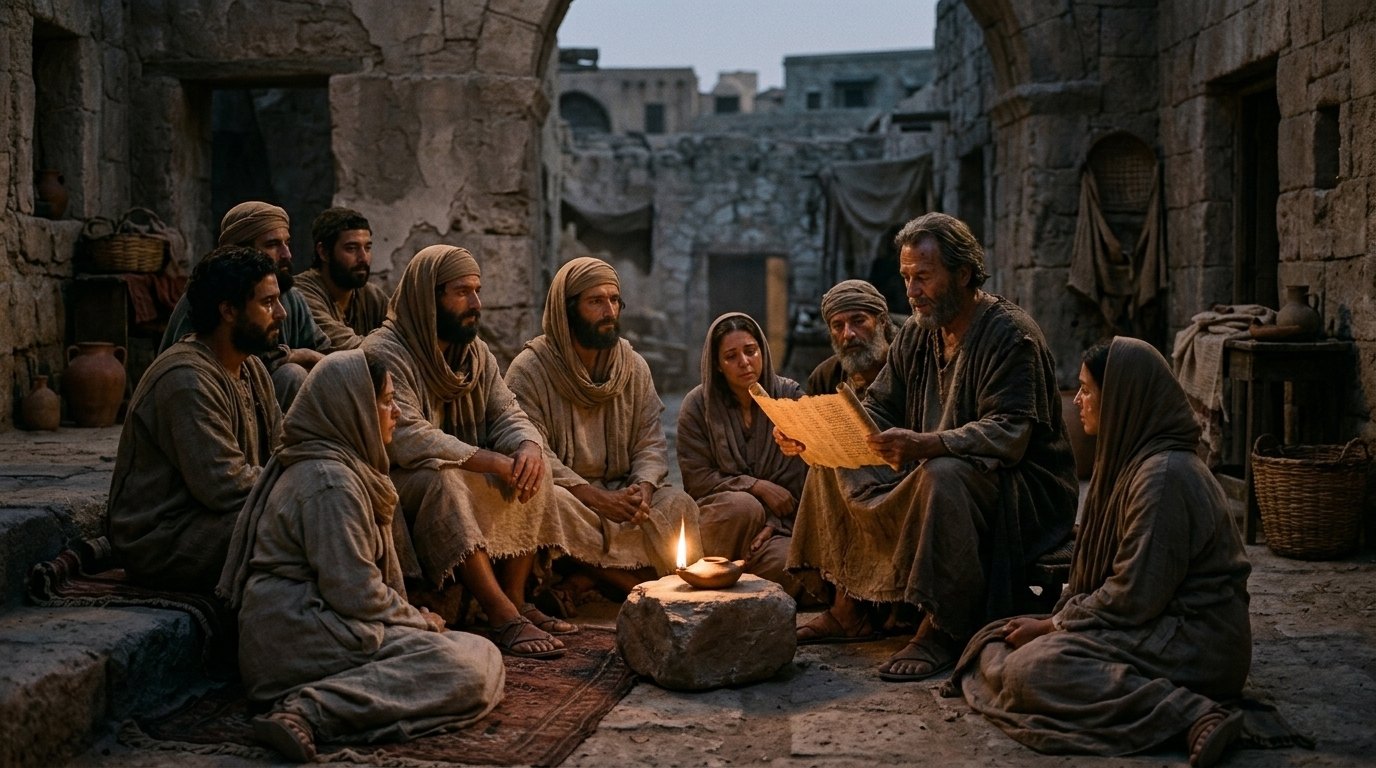
Consider it pure joy, my brothers and sisters, whenever you face trials of many kinds,
James 1:2 (NIV)
James commands believers to reckon manifold trials as pure joy, framing hardship as an occasion for spiritual advancement rather than despair.
In James 1:2, the apostle issues an uncompromising directive to scattered believers: reckon it pure joy when you encounter various trials. James uses a financial term for accounting—demanding a deliberate mental judgment that evaluates unexpected distress not through emotional pain, but through the sovereign purpose of God. This joy does not deny sorrow; rather, as 1 Peter 1:6 observes, believers can rejoice greatly in an incorruptible inheritance even while being grieved by multifaceted afflictions for a necessary season. Peter further clarifies in 1 Peter 1:7 that the genuine testing of faith is infinitely more valuable than perishable gold refined by flame, destined to result in praise, glory, and honor at the revelation of Jesus Christ. Holding fast to this eternal perspective allows disciples, as stated in 1 Peter 1:8, to love the unseen Savior and rejoice with an inexpressible and glorious joy in the thick of persecution. Jesus Himself established this posture in Hebrews 12:2, looking beyond the agony and shame of the cross to the joy set before Him at the right hand of God's throne. Consequently, the Apostle Paul echoes this reckoning in Romans 8:18, concluding that our present earthly afflictions are entirely unworthy to be compared with the transcendent glory that will soon be revealed in the people of God.
| Passage | What it says |
|---|---|
| James 1:2 | Believers are instructed to consider various trials as unmixed joy when surrounded by unexpected hardships. |
| 1 Peter 1:6 | Peter affirms that Christians can greatly rejoice in salvation even while experiencing genuine grief under diverse trials. |
| 1 Peter 1:7 | The trial of faith, more precious than gold refined by fire, results in praise, honor, and glory at Jesus Christ's return. |
| 1 Peter 1:8 | Believers love Christ unseen and rejoice with joy unspeakable and full of glory amid ongoing earthly afflictions. |
| Hebrews 12:2 | Christ endured the cross for the joy set before Him, modeling the ultimate perspective on suffering. |
| Romans 8:18 | Present sufferings are not worth comparing with the glory that will be revealed in believers. |
The Crucible of Testing
Endurance Produced Through Tested and Proven Faith

because you know that the testing of your faith produces perseverance.
James 1:3 (NIV)
Testing is identified as the divinely appointed crucible that produces steady, unyielding endurance under life's pressure.
James 1:3 explains the vital mechanism behind Christian joy: the testing of your faith produces steadfast endurance. The word for testing refers to the assaying of precious metals to verify purity and burn away slag, proving that hardship is never arbitrary in the economy of God. Paul traces the exact same spiritual progression in Romans 5:3, declaring that we exult in tribulations because affliction actively works endurance into the human heart. That endurance, as Romans 5:4 demonstrates, produces proven character, and proven character yields an unshakeable hope that guards the soul. Romans 5:5 assures the believer that this hope never puts us to shame, because God's love has been lavishly poured out into our hearts through the Holy Spirit. This refining work has always been God's way with His saints; in Job 23:10, righteous Job testifies in the depths of his agonizing bewilderment that when God has tried him, he shall come forth as purest gold. Long before, Proverbs 17:3 declared that while the crucible is for silver and the blast furnace for gold, it is the Lord alone who tests and purifies the deepest motives of the human heart.
| Passage | What it says |
|---|---|
| James 1:3 | The testing of personal faith actively generates steadfast patient endurance under divine purpose. |
| Romans 5:3 | Paul teaches that believers glory in tribulations because suffering actively works endurance in the Christian life. |
| Romans 5:4 | Endurance yields approved, proven character, and that proven character anchors a firm hope that does not disappoint. |
| Romans 5:5 | Endurance produces character and hope, which does not put believers to shame because of God's love. |
| Job 23:10 | Job recognizes that when God has tested him, he will come out as refined gold. |
| Proverbs 17:3 | The crucible tests silver and the furnace gold, but the Lord tests hearts. |
The Finished Work
Spiritual Wholeness and the Crown of Life

Let perseverance finish its work so that you may be mature and complete, not lacking anything.
James 1:4 (NIV)
Endurance must run its full course to make the believer mature, whole, and completely equipped in Christ.
In James 1:4, the apostle commands that endurance must have its perfect result, so that you may be mature and complete, lacking nothing. God does not halt the refining fire prematurely; steadfastness must finish its appointed course so the believer attains uncompromised spiritual wholeness. This perseverance carries an eternal reward, as James 1:12 pronounces the man blessed who perseveres under trial, for having passed the test he will receive the crown of life promised to those who love God. Real maturity always evidences itself in practice; James 2:22 explains that Abraham's faith worked together with his works, reaching its fullness through active obedience. Recognizing that adversity exposes human weakness, James 1:5 immediately invites anyone lacking wisdom to ask God, who gives generously to all without reproach. Such mature wholeness is the supreme goal of gospel labor: Colossians 1:28 describes Paul proclaiming Christ to present every person mature in Him, while Colossians 4:12 records Epaphras wrestling continually in prayer that the church might stand mature and fully assured in all the will of God. Finally, Hebrews 5:14 points out that solid spiritual food belongs to the mature, whose faculties have been trained through rigorous exercise to discern good from evil.
| Passage | What it says |
|---|---|
| James 1:4 | Endurance must finish its entire work so believers become mature, complete, and lacking nothing in their walk. |
| James 1:12 | The man who endures testing is blessed and will receive the crown of life promised to those who love God. |
| James 2:22 | Faith works together with obedience, and by practical works faith is brought to its mature completion. |
| James 1:5 | Believers lacking wisdom to navigate trials are invited to ask God, who gives generously without reproach. |
| Colossians 1:28 | Paul's ministry aims to proclaim Christ, warning and teaching everyone to present them mature in Christ. |
| Colossians 4:12 | Epaphras struggles in prayer that believers may stand mature and fully assured in God's will. |
| Hebrews 5:14 | Solid food is for the mature, whose faculties are trained by practice to discern good from evil. |
Grace and Glory
Sufficient Strength and the Reward of Suffering

But he said to me, “My grace is sufficient for you, for my power is made perfect in weakness.” Therefore I will boast all the more gladly about my weaknesses, so that Christ’s power may rest on me.
2 Corinthians 12:9 (NIV)
Christ guarantees that His grace is entirely sufficient, manifesting His divine strength in human weakness.
Under the crushing weight of ongoing infirmity, the Apostle Paul heard Christ's sovereign decree in 2 Corinthians 12:9: My grace is sufficient for you, for power is perfected in weakness. This divine truth transformed suffering from a liability into a vessel for glory, prompting Paul in 2 Corinthians 12:10 to take genuine pleasure in weaknesses, insults, distresses, and persecutions, knowing that whenever he is weak, then he is truly strong in Christ. Suffering for the gospel is never an accident of fate; Philippians 1:29 reveals it has been granted as a sacred privilege not only to believe in Christ but to suffer for His name. The Lord Jesus Himself laid down this paradigm in Matthew 5:10, declaring those persecuted for righteousness blessed, for the kingdom of heaven is theirs. In Matthew 5:11-12, He calls disciples blessed when reviled and slandered on His account, commanding them to rejoice and be exceedingly glad because their reward in heaven is great. Luke 6:22-23 repeats this radical instruction, telling the rejected to leap for joy in that day. Believers endure with confidence because Romans 8:28 promises that God works all things together for good for those who love Him, while 2 Corinthians 4:17 guarantees that momentary, light affliction is preparing for us an eternal weight of glory beyond all measure.
| Passage | What it says |
|---|---|
| 2 Corinthians 12:9 | The Lord declares His grace sufficient, as divine strength achieves its full manifestation in human weakness. |
| 2 Corinthians 12:10 | Paul delights in infirmities and persecutions for Christ, recognizing that personal weakness invites Christ's mighty power. |
| Philippians 1:29 | God grants believers not only the privilege of trusting in Christ, but also of suffering on His behalf. |
| Matthew 5:10 | Jesus pronounces blessed those who are persecuted for righteousness' sake, promising them the kingdom of heaven. |
| Matthew 5:11 | Believers are blessed when reviled and falsely accused on account of their allegiance to Christ. |
| Matthew 5:12 | Christians are commanded to rejoice exceedingly under persecution, knowing their reward in heaven is great. |
| Luke 6:22 | Jesus calls disciples blessed when hated, excluded, and reviled on account of the Son of Man. |
| Luke 6:23 | The Lord instructs sufferers to leap for joy in that day, for their heavenly reward is great. |
| Romans 8:28 | God works all things together for good to those who love Him and are called according to His purpose. |
| 2 Corinthians 4:17 | Light and momentary afflictions prepare an eternal weight of glory beyond all comparison. |
Where in the Bible
| Book | Passages |
|---|---|
| Job | 1 · Job 23:10 |
| Proverbs | 1 · Proverbs 17:3 |
| Matthew | 3 · Matthew 5:10, Matthew 5:11, Matthew 5:12 |
| Luke | 2 · Luke 6:22, Luke 6:23 |
| Romans | 5 · Romans 8:18, Romans 5:3, Romans 5:4, Romans 5:5, Romans 8:28 |
| 2 Corinthians | 3 · 2 Corinthians 12:9, 2 Corinthians 12:10, 2 Corinthians 4:17 |
| Philippians | 1 · Philippians 1:29 |
| Colossians | 2 · Colossians 1:28, Colossians 4:12 |
| Hebrews | 2 · Hebrews 12:2, Hebrews 5:14 |
| James | 6 · James 1:2, James 1:3, James 1:4, James 1:12, James 2:22, James 1:5 |
| 1 Peter | 3 · 1 Peter 1:6, 1 Peter 1:7, 1 Peter 1:8 |
The story in order
- Job tested and refined (c. 1800 BC) · Job 23:10 · Shows God tests hearts to refine them like gold.
- Proverbs on testing (c. 950 BC) · Proverbs 17:3 · God tests hearts, as fire tests metals.
- Jesus teaches on persecution (c. AD 30) · Matthew 5:10-12 · Blessed are those persecuted for righteousness; rejoice greatly.
- Jesus calls disciples blessed (c. AD 30) · Luke 6:22-23 · Blessed when hated for the Son of Man; leap for joy.
- Christ endured the cross (c. AD 65) · Hebrews 12:2 · Christ's example of enduring suffering for future joy.
- Paul's ministry to maturity (c. AD 60) · Colossians 1:28 · Aim is to present everyone mature in Christ.
- Paul's ministry to maturity (c. AD 60) · Colossians 4:12 · Epaphras prays for maturity and assurance.
- James on trials and joy (c. AD 45) · James 1:2-4 · Trials produce endurance, leading to maturity and completeness.
- Peter on rejoicing in trials (c. AD 64) · 1 Peter 1:6-8 · Rejoice in salvation despite grief from trials; faith is tested.
- Paul on suffering and glory (c. AD 57) · Romans 8:18 · Present sufferings are not comparable to future glory.
- Paul on suffering and glory (c. AD 57) · 2 Corinthians 4:17 · Light afflictions prepare an eternal weight of glory.
- Paul on weakness and strength (c. AD 57) · 2 Corinthians 12:9-10 · God's grace is sufficient; His power is made perfect in weakness.
Suffering leads to glory
| Suffering | Result | Comparison | Passage |
|---|---|---|---|
| Present sufferings | Future glory revealed | Not worth comparing | Romans 8:18 |
| Light and momentary afflictions | Eternal weight of glory | Beyond all comparison | 2 Corinthians 4:17 |
| Trials of faith | Praise, honor, glory at Christ's return | More precious than gold | 1 Peter 1:7 |
Joy in suffering
| Circumstance | Response | Reason | Passage |
|---|---|---|---|
| Various trials | Consider it unmixed joy | Testing produces endurance | James 1:2-3 |
| Genuine grief under diverse trials | Greatly rejoice | Trial of faith is precious | 1 Peter 1:6-7 |
| Persecuted for righteousness | Kingdom of heaven is theirs | Rejoice and be glad | Matthew 5:10-12 |
| Hated, excluded, reviled for Son of Man | Leap for joy | Heavenly reward is great | Luke 6:22-23 |
Key words
- Trials (peirasmos, πειρασμός)
- Unexpected hardships that test and refine faith. · James 1:2
- Joy (chara, χαρά)
- A deep, settled gladness in God, even amid suffering. · James 1:2
- Testing (dokimion, δοκίμιον)
- The process of proving the genuineness and strength of faith. · James 1:3
- Endurance (hypomonē, ὑπομονή)
- Steadfastness and patient perseverance through trials. · James 1:3
- Mature (teleios, τέλειος)
- Spiritually whole, complete, and fully developed. · James 1:4
- Glory (doxa, δόξα)
- The radiant splendor and honor of God, revealed in believers. · Romans 8:18
When hardship strikes, the believer is invited to reckon the trial not as a tragedy that ruins faith, but as God's instrument to deepen it. Resting in the sufficiency of Christ's power, Christians can face every affliction with genuine hope, knowing that endurance produces a finished work. In every crucible, the Lord remains faithful, working through present sorrow to bring about an eternal weight of glory.
29 passages, each cited once.
Scripture cited
- James 1:12
- 2 Corinthians 12:9-10
- Matthew 5:10-12
- Luke 6:22-23
- Philippians 1:29