What does John 10:10 mean?

John 10:7-11
7 Therefore Jesus said again, “Very truly I tell you, I am the gate for the sheep.
8 All who have come before me are thieves and robbers, but the sheep have not listened to them.
9 I am the gate; whoever enters through me will be saved. They will come in and go out, and find pasture.
10 The thief comes only to steal and kill and destroy; I have come that they may have life, and have it to the full.
11 “I am the good shepherd. The good shepherd lays down his life for the sheep.
New International Version (NIV)
The answer
John 10:10 contrasts Jesus with a spiritual thief: the thief exploits and destroys the sheep, but Jesus comes to give them full, saving, eternal life. “Abundant” life is life received from Christ and lived under his care—not a guarantee of wealth, perfect health, or freedom from trouble.
The thief takes; the Shepherd gives
In the surrounding parable, the thief has no rightful place among the sheep and no loving commitment to them. The hired hand similarly abandons the sheep when danger arrives (John 10:1-5, 12-13). These pictures expose false, self-serving spiritual leadership that uses people rather than caring for their souls.
Jesus does the opposite. He is the door through whom people are saved, and he is the good shepherd who lays down his life for the sheep (John 10:7-11). The thief’s purpose is taking life; Jesus’ purpose is giving his own life so that others may live.
What abundant life includes
- Salvation and provision: Those who enter through Jesus are saved and find pasture, picturing his provision and care (John 10:9).
- Knowing and following Christ: His sheep recognize his voice, belong to him, and follow him (John 10:27).
- Eternal security: Jesus says, “I give eternal life to them. They will never perish, and no one will snatch them out of my hand” (John 10:28).
This life rests on Jesus’ sacrificial death and resurrection: he willingly lays down his life and takes it up again (John 10:17-18). Its abundance therefore cannot be measured by comfortable circumstances. Even amid hardship, those belonging to Christ remain securely held by him (John 10:28-29).
The fitting response is to trust Jesus for salvation and follow his voice rather than voices that draw people away from him (John 10:27).
Answered from Scripture · reviewed November 11, 2026
In John 10:10, Jesus establishes a sharp contrast between the destructive agenda of false shepherds and the lavish grace He brings to His sheep. The thief arrives solely to take, slaughter, and ruin, whereas Christ enters the world to impart true, eternal, and overflowing life. Understanding this verse requires seeing Jesus both as the true Door and as the Good Shepherd who secures that life by laying down His own.
The Sheepfold Parable
Two Entrances and Two Motives

“Very truly I tell you Pharisees, anyone who does not enter the sheep pen by the gate, but climbs in by some other way, is a thief and a robber.
John 10:1 (NIV)
It defines anyone climbing over the fold by another way as an illegitimate intruder and a robber.
In John 10:1, Jesus confronts the religious leaders who had just cast out the healed blind man, opening a vivid parable about legitimate authority versus unlawful intrusion. He declares that anyone who refuses to enter the sheepfold through the door, but instead climbs up another way, is a thief and a robber. In the ancient Levant, a sheepfold was a stone enclosure with a single narrow entrance. Legitimate oversight belongs solely to the true shepherd who approaches openly.
The genuine shepherd enters directly through the door, as noted in John 10:2. His presence is neither clandestine nor predatory. When he approaches, the watchman recognizes his authority and immediately opens the gate, as described in John 10:3. Here Jesus reveals the intimate bond between the shepherd and his charge: the sheep hear his voice, and he calls each one by name, leading them out to secure pasture. This calling is personal and sovereign.
Once he brings out his flock, the shepherd does not drive them violently from behind; rather, as John 10:4 records, he goes before them, setting the path and absorbing danger first. The sheep follow unhesitatingly because they know his distinct voice. Conversely, John 10:5 underscores the protective instinct of true sheep: they will flee from an unfamiliar voice, refusing to entrust their lives to an imposter. Yet, as John 10:6 concludes, Christ's hearers remained spiritually blind, failing to grasp the solemn distinction between God's appointed Shepherd and the self-serving leaders who sought to dominate them.
| Passage | What it says |
|---|---|
| John 10:1 | Jesus warns that whoever enters the sheepfold unlawfully rather than by the door is a thief and robber. |
| John 10:2 | The legitimate shepherd enters openly through the established door to lead and care for the flock. |
| John 10:3 | The watchman opens to the shepherd, whose voice the sheep know and follow by name. |
| John 10:4 | The shepherd walks ahead of his sheep, and they follow because they recognise his distinct voice. |
| John 10:5 | Sheep will flee from a stranger because his voice is foreign and untrusted. |
| John 10:6 | The hearers do not understand the parabolic figure Jesus uses to address their spiritual blindness. |
The Thief Identified
The Ruin Brought by False Leaders
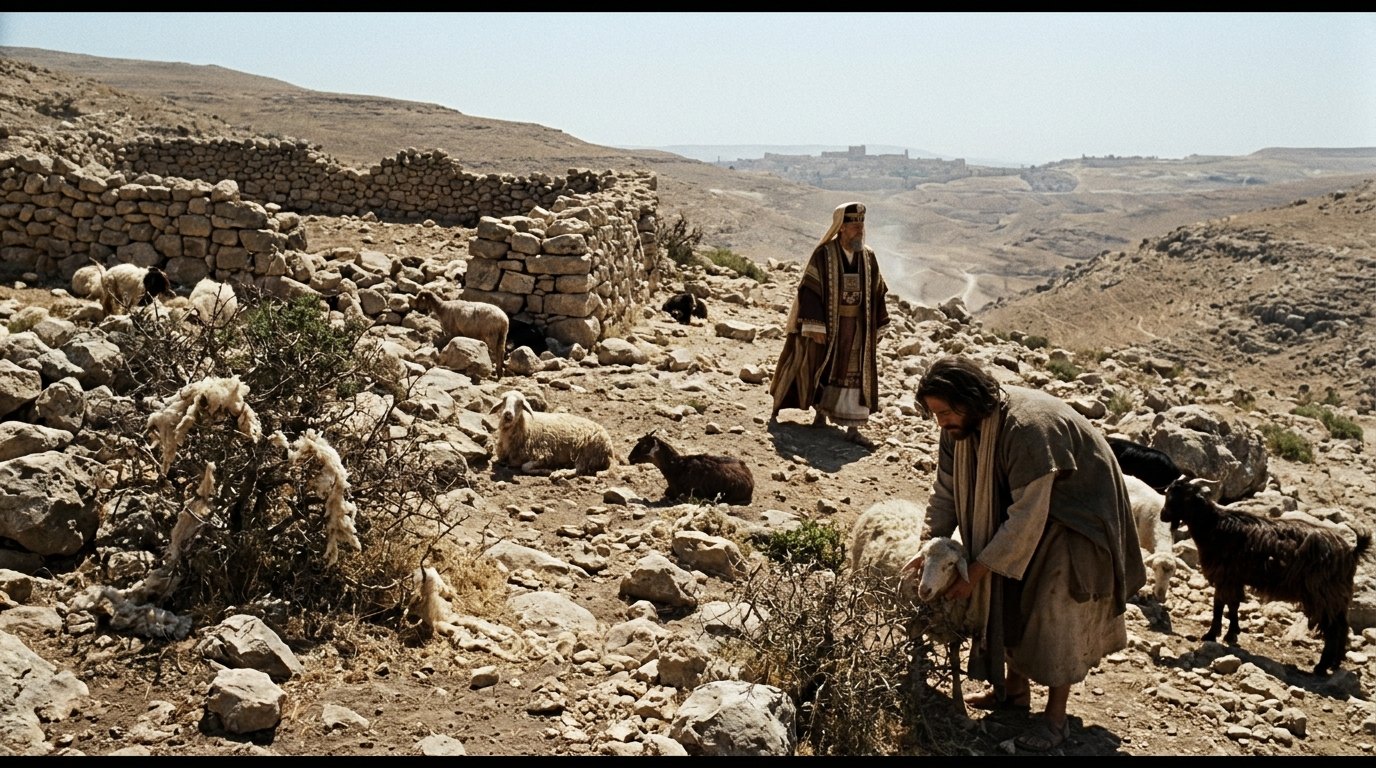
All who have come before me are thieves and robbers, but the sheep have not listened to them.
John 10:8 (NIV)
Jesus exposes all self-appointed predecessors and rival leaders as thieves whose voice true sheep refuse to hear.
Jesus makes His meaning unmistakable in John 10:8, stating firmly that all who came before Him claiming messianic status or independent rule over God's people were thieves and robbers. The true flock of God did not heed their deceptive claims. To establish how life is accessed, Jesus declares in John 10:7, “I am the door of the sheep.” There is no lawful path to divine favor or covenant inclusion apart from Him; every rival claimant who bypasses Christ acts as an extortioner.
This confrontation stands firmly within the prophetic heritage of the Old Testament scriptures. In Ezekiel 34:2, God pronounced a severe woe upon Israel's corrupt rulers: “Woe to the shepherds of Israel who feed themselves! Should not the shepherds feed the flocks?” Rather than safeguarding the sheep, those leaders exploited their office for personal luxury. As Ezekiel 34:3 recounts, they slaughtered the choice animals, clothed themselves with the wool, and neglected the weak and diseased.
Jeremiah delivered the same solemn indictment. In Jeremiah 23:1, the Lord pronounced judgment against faithless pastors who destroy and scatter the sheep of His pasture. When Jesus describes the thief in John 10, He evokes this long history of predatory religious figures who used their positions to plunder the people of God. True sheep, preserved by divine grace, recognize the predatory nature of these intruders and refuse to surrender their souls to their hollow, destructive authority.
| Passage | What it says |
|---|---|
| John 10:7 | Jesus declares plainly that He is the sole door into the sheepfold. |
| John 10:8 | All who came before Christ claiming messianic authority were thieves and robbers whom the sheep did not obey. |
| Ezekiel 34:2 | God pronounces woe on Israel's self-serving shepherds who feed themselves rather than feeding the flock. |
| Ezekiel 34:3 | The corrupt leaders slaughter the fat sheep and clothe themselves with wool without pasturing the sheep. |
| Jeremiah 23:1 | The Lord declares judgment against the faithless pastors who destroy and scatter His pasture's sheep. |
The Great Contrast
Total Destruction Versus Overflowing Life
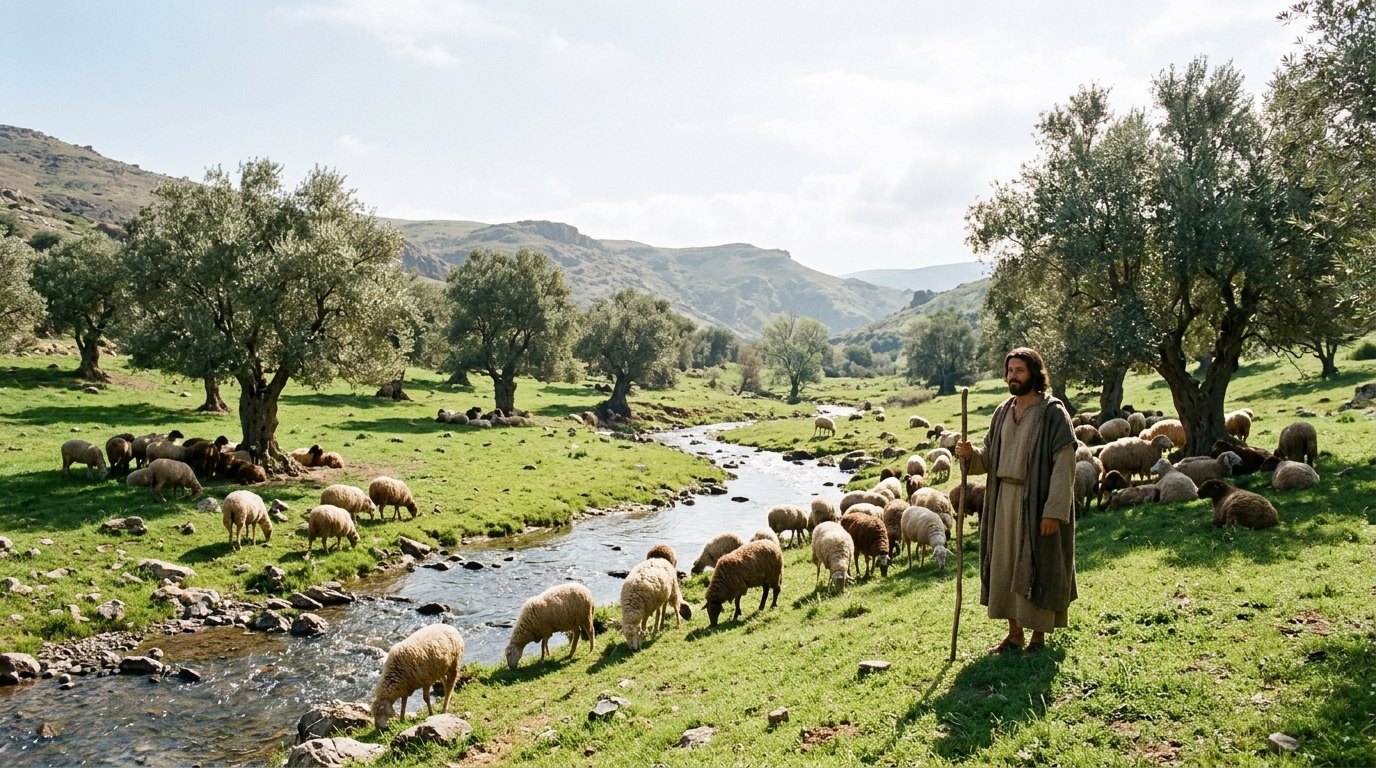
The thief comes only to steal and kill and destroy; I have come that they may have life, and have it to the full.
John 10:10 (NIV)
It concentrates the entire discourse into one verse that contrasts the thief's lethal intent with Christ's gift of abundance.
The core of the entire discourse emerges in John 10:10, where the Lord presents a total, uncompromising contrast: “The thief does not come except to steal, and to kill, and to destroy. I have come that they may have life, and that they may have it more abundantly.” The intruder's ambition terminates in violence and ultimate ruin. He extracts what is not his, slaughters the flock for his own appetite, and leaves devastation behind. Christ's purpose stands diametrically opposed; He enters the fold to impart indestructible spiritual life that overflows with divine goodness.
This life begins at the portal of faith. In John 10:9, Jesus promises that whoever enters by Him will be saved, entering into absolute safety and finding rich pasture. This abundant life is not material wealth or worldly ease; it is eternal salvation, reconciliation with God, and fellowship with the Spirit. It fulfills the eternal purpose articulated in John 3:16, where God gave His only begotten Son so that everyone who believes in Him should not perish but possess everlasting life.
Christ did not arrive to condemn the world, but that the world through Him might be rescued, as affirmed in John 3:17. This life is sustained by Christ Himself, who identifies as the true bread descending from heaven in John 6:33 to give divine life to the world. Furthermore, in John 6:51, Jesus specifies that this living bread is His flesh, which He offers so that believers might feast on His righteousness and never taste the second death.
| Passage | What it says |
|---|---|
| John 10:9 | Anyone who enters through Jesus will be saved, enjoying free pasture and absolute security. |
| John 10:10 | The thief comes only to steal, kill, and destroy, but Christ comes to grant abundant life. |
| John 3:16 | God gave His Son so that all who believe will not perish but have everlasting life. |
| John 3:17 | God sent His Son not to condemn the world, but to save it through Him. |
| John 6:33 | The true bread of God descends from heaven to give divine life to the world. |
| John 6:51 | Jesus gives His living flesh for the eternal life of the entire world. |
The Life's Cost
Purchased by the Shepherd's Death

“I am the good shepherd. The good shepherd lays down his life for the sheep.
John 10:11 (NIV)
Jesus defines the Good Shepherd specifically by His voluntary willingness to lay down His life for the sheep.
Abundant life does not come cheaply; it is purchased by supreme sacrifice. In John 10:11, Jesus declares: “I am the good shepherd. The good shepherd gives His life for the sheep.” A hired worker flees when the wolf attacks because he does not own the flock and cares nothing for their preservation, as Jesus notes in John 10:12. By contrast, Christ stands between His flock and destruction, absorbing the fatal strike in their place.
This substitutionary sacrifice rests upon eternal covenantal unity. In John 10:15, Jesus explains that just as the Father knows Him and He knows the Father, He willingly lays down His life for the sheep. The cross was neither an accident of history nor a defeat orchestrated by men. In John 10:17, the Father's love rests upon the Son because He freely surrenders His soul to reclaim it in victory. Jesus affirms in John 10:18 that no one takes it from Me, but I lay it down of Myself; He possessed sovereign authority both to offer His life and to take it back through His bodily resurrection.
This sacrifice fulfills the fundamental mission of the incarnation. As Paul writes in 1 Timothy 1:15, it is a trustworthy saying worthy of full acceptance that Christ Jesus came into the world to save sinners. The Shepherd came precisely as the Son of Man who, according to Luke 19:10, sought out and redeemed that which was utterly lost, securing by His own blood the overflowing life He freely bestows.
| Passage | What it says |
|---|---|
| John 10:11 | The Good Shepherd sacrifices His own life on behalf of the endangered sheep. |
| John 10:12 | The hireling flees when the wolf approaches because he does not own or care for the sheep. |
| John 10:15 | Jesus knows the Father and the Father knows Him, and He surrenders His life for the flock. |
| John 10:17 | The Father loves the Son because He freely lays down His life in order to take it again. |
| John 10:18 | No one seizes Jesus' life; He surrenders it and reclaims it by His own authority and the Father's command. |
| 1 Timothy 1:15 | Paul confirms the trustworthy message that Christ Jesus entered the world to save sinners. |
| Luke 19:10 | The Son of Man specifically came to seek and save that which was lost. |
Where in the Bible
| Book | Passages |
|---|---|
| Jeremiah | 1 · Jeremiah 23:1 |
| Ezekiel | 2 · Ezekiel 34:2, Ezekiel 34:3 |
| Luke | 1 · Luke 19:10 |
| John | 19 · John 10:1, John 10:2, John 10:3, John 10:4, John 10:5, John 10:6, John 10:7, John 10:8, John 10:9, John 10:10, John 3:16, John 3:17, John 6:33, John 6:51, John 10:11, John 10:12, John 10:15, John 10:17, John 10:18 |
| 1 Timothy | 1 · 1 Timothy 1:15 |
The story in order
- God's judgment on faithless pastors (c. 600 BC) · Jeremiah 23:1 · Shows the destructive nature of false leaders.
- Woe on Israel's self-serving shepherds (c. 570 BC) · Ezekiel 34:2 · Highlights the failure of corrupt leaders to care for the flock.
- God sent His Son to save (AD 30) · John 3:17 · Establishes Christ's saving mission.
- Jesus gives life to the world (AD 30) · John 6:33 · Reveals Christ as the source of divine life.
- Jesus is the Son of Man (AD 30) · Luke 19:10 · Confirms Jesus came to save the lost.
- Jesus is the Door (AD 30) · John 10:7 · Jesus is the only way to salvation.
- Jesus is the Good Shepherd (AD 30) · John 10:11 · Jesus lays down His life for the sheep.
- Jesus gives His life for the flock (AD 30) · John 10:15 · Demonstrates the shepherd's love and sacrifice.
- Jesus lays down and takes His life (AD 30) · John 10:18 · Shows Christ's authority over His own life.
- Christ Jesus came to save sinners (c. AD 65) · 1 Timothy 1:15 · Paul's testimony to Christ's saving purpose.
False Leaders Versus the Good Shepherd
| False Leaders | Good Shepherd | Passage |
|---|---|---|
| Come to steal, kill, and destroy | Comes to give abundant life | John 10:10 |
| Feed themselves, not the flock | Gives His life for the flock | |
| Destroy and scatter the sheep | Seeks and saves the lost | |
| Are thieves and robbers | Is the true Door |
The Shepherd's Voice
| Shepherd's Voice | Sheep's Response | Passage |
|---|---|---|
| Known by the sheep | Follow the shepherd | John 10:3 |
| Distinct and recognized | Follow Him | John 10:4 |
| Foreign and untrusted | Flee from strangers | John 10:5 |
Key words
- Thief (κλέπτης (kleptēs))
- One who comes to steal, kill, and destroy, not to benefit the sheep. · John 10:10
- Abundant Life (περισσεύω (perisseuō))
- Overflowing, true, and eternal life that Christ gives. · John 10:10
- Good Shepherd (ποιμήν (poimēn))
- One who lays down His life for the sheep. · John 10:11
- Door (θύρα (thyra))
- The only legitimate entrance to salvation and security. · John 10:7
- Hireling (μισθωτός (misthōtos))
- One who serves for pay and flees when danger threatens the flock. · John 10:12
The abundant life of John 10:10 is neither earthly luxury nor shallow ease, but the unshakeable fullness of knowing God through Jesus Christ. Rescued from every destructive counterfeit, believers rest securely in the care of the Shepherd who died to make them His own. In Him, the sheep lack nothing, possessing a life that begins now and endures forever.
24 passages, each cited once.
Scripture cited
- John 10:10
- John 10:1-18
- John 10:27-30