What does John 14:6 mean?
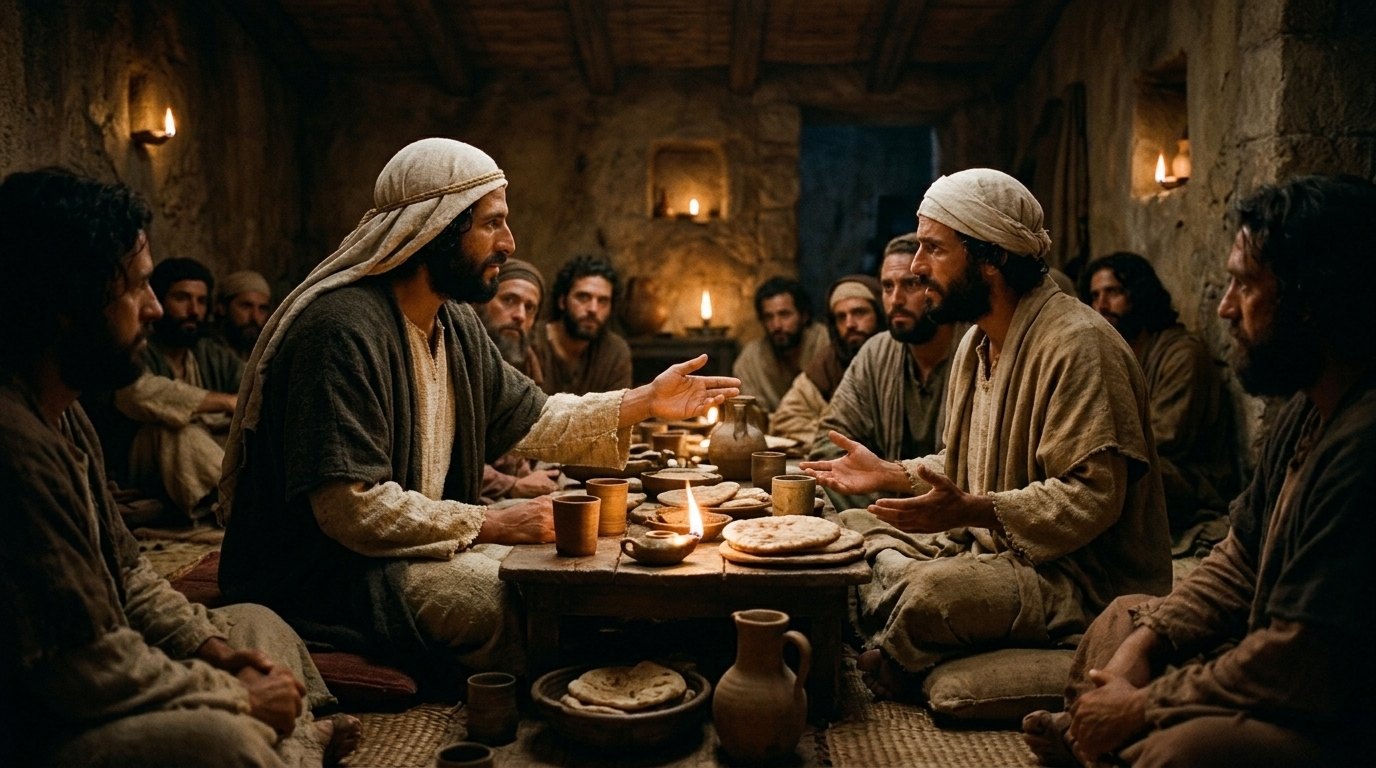
John 14:1-7
1 “Do not let your hearts be troubled. You believe in God ; believe also in me.
2 My Father’s house has many rooms; if that were not so, would I have told you that I am going there to prepare a place for you?
3 And if I go and prepare a place for you, I will come back and take you to be with me that you also may be where I am.
4 You know the way to the place where I am going.”
5 Thomas said to him, “Lord, we don’t know where you are going, so how can we know the way?”
6 Jesus answered, “I am the way and the truth and the life. No one comes to the Father except through me.
7 If you really know me, you will know my Father as well. From now on, you do know him and have seen him.”
New International Version (NIV)
The answer
John 14:6 means that Jesus Himself is the only way to God the Father and the giver of eternal life. He is not merely a guide pointing toward God; salvation and access to God are found in Him.
Jesus has just spoken of His Father’s house and of preparing a place for His disciples (John 14:1-4). When Thomas asks how they can know the way (John 14:5), Jesus answers that the way is a Person, not a map, method, or religious system.
- “The way”: Jesus alone brings people to the Father. He calls Himself the door through whom people enter and are saved (John 10:9), and Ephesians 2:18 says that access to the Father is through Him.
- “The truth”: Jesus perfectly and truthfully reveals God. He goes on to say that knowing Him means knowing the Father (John 14:7). God is not made known ultimately through human speculation, but through His Son.
- “The life”: Life is in Jesus (John 1:4). He is the resurrection and the life, and those who believe in Him receive life that physical death cannot destroy (John 11:25).
The closing words make the claim unmistakable: “No one comes to the Father, except through me.” There is no alternative way of salvation. Good works, religious sincerity, or another spiritual teacher cannot take Jesus’ place; Acts 4:12 declares that salvation is found in no one else.
This is both a solemn warning and a gracious invitation. The way is exclusive, but Jesus plainly calls people to trust Him: “Believe in God. Believe also in me” (John 14:1). Coming to the Father means coming in faith through His Son.
Answered from Scripture · reviewed November 11, 2026
In John 14:6, Jesus makes one of the most definitive declarations in all of Scripture: He is the singular path, the absolute reality, and the living source through whom alone anyone reaches God the Father. Spoken in the Upper Room to settle the troubled hearts of His disciples, this verse anchors the Christian faith in the exclusive and sufficient person of Jesus Christ. Understanding its meaning requires seeing how each title unfolds across God's Word to reveal our complete salvation in Him.
The Upper Room
Jesus Answers the Longing for the Father's House
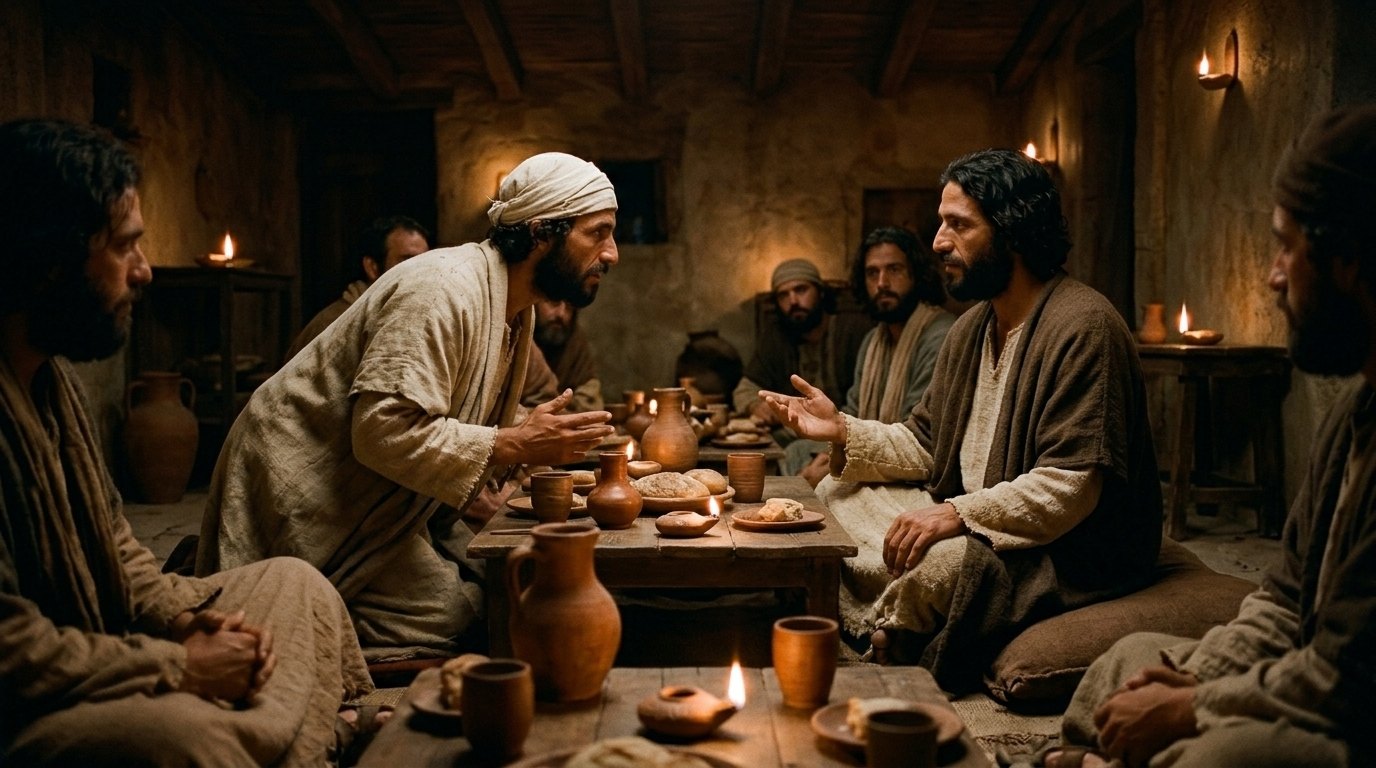
Jesus answered, “I am the way and the truth and the life. No one comes to the Father except through me.
John 14:6 (NIV)
Jesus answers Thomas's confusion with the definitive claim that He alone leads humanity to the Father.
When Jesus spoke the words of John 14:6, He addressed a room filled with grief and deep confusion. Knowing His impending departure, He sought to comfort His disciples, commanding them in John 14:1 to let not your hearts be troubled, anchoring their faith equally in God the Father and in Himself. He lifted their eyes beyond immediate sorrow to eternal permanence, explaining in John 14:2 that His Father's house contains many dwelling places, and promising that He was going ahead to prepare a place specifically for them. In John 14:3, Jesus offered the unbreakable pledge that He would return to bring them into His direct presence forever.
Yet the disciples struggled to comprehend this heavenly destination. In John 14:4, Jesus affirmed that they knew both the place He was going and the way to reach it, prompting Thomas in John 14:5 to object with raw honesty: 'Lord, we do not know where you are going. How can we know the way?' Thomas conceived of the journey as a physical route or geographic path. Jesus met this confusion in John 14:6 with His monumental reply: 'I am the way, and the truth, and the life. No one comes to the Father except through me.' The route to heaven is not a road, a ritual, or a philosophy, but a living Person. He concluded this reassurance in John 14:7 by revealing that to know and see Him is to know and see the eternal Father, unveiling His absolute oneness with God.
| Passage | What it says |
|---|---|
| John 14:1 | Jesus commands His disciples to trust in God and also to trust in Him amid troubled hearts. |
| John 14:2 | Jesus tells of His Father's house having many rooms and promises to prepare a place for believers. |
| John 14:3 | Jesus promises to come again and take His disciples to be where He is. |
| John 14:4 | Jesus tells the disciples that they know where He is going and they know the way. |
| John 14:5 | Thomas confesses they do not know where Jesus is going and asks how they can know the way. |
| John 14:6 | Jesus declares Himself to be the way, the truth, and the life, and the sole means of access to the Father. |
| John 14:7 | Jesus explains that knowing Him means knowing and seeing the Father. |
The Way
The Living Route and Door of Salvation
I am the gate; whoever enters through me will be saved. They will come in and go out, and find pasture.
John 10:9 (NIV)
Jesus identifies Himself as the singular entrance through whom anyone who enters will be saved.
To identify Christ as 'the Way' is to understand Him as the singular gateway connecting separated humanity to a holy God. Jesus underscored this imagery in John 10:7 and John 10:9, declaring Himself the sole door of the sheepfold, assuring that anyone who enters through Him will be delivered, finding spiritual pasture, safety, and liberty. Humanity did not merely lose its compass; through sin, it lost all access to the Divine. Jesus did not come simply to impart directions or offer advice along a perilous journey; He became the open passage Himself.
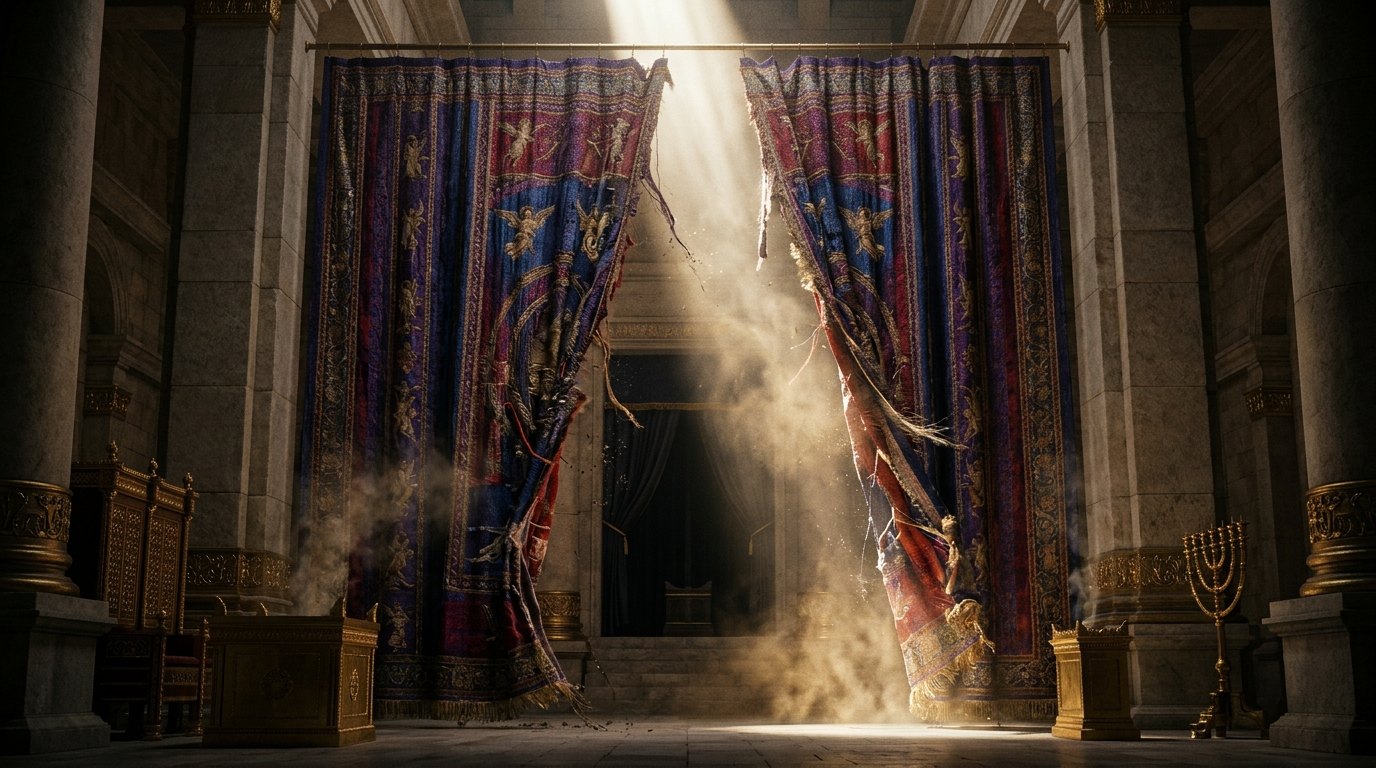
The apostolic witness marvels at this access won by Christ. Paul explains in Romans 5:1–2 that having been justified through faith, we have peace with God through our Lord Jesus Christ, obtaining direct introduction into grace wherein we securely stand. Writing to the Gentile believers in Ephesians 2:18, Paul rejoices that through Jesus, both Jew and Gentile share immediate access to the Father through one Holy Spirit. The author of Hebrews deepens this reality through temple imagery in Hebrews 10:19–20, showing how believers possess boldness to enter the heavenly Holy of Holies through the blood of Jesus. When Christ died, the thick veil of the temple tore from top to bottom, inaugurating for us a new, living way through His sacrificed flesh.
| Passage | What it says |
|---|---|
| John 10:7 | Jesus states plainly that He is the door of the sheep. |
| John 10:9 | Jesus promises salvation, safe pasture, and freedom to whoever enters through Him as the door. |
| Romans 5:1 | Paul explains that believers have peace with God through our Lord Jesus Christ by faith. |
| Romans 5:2 | Through Christ we have obtained access by faith into the grace in which we stand. |
| Ephesians 2:18 | Through Christ both Jewish and Gentile believers have direct access in one Spirit to the Father. |
| Hebrews 10:19 | Believers possess bold confidence to enter the holy places by the blood of Jesus. |
| Hebrews 10:20 | Jesus opened a new and living way for us through the curtain of His flesh. |
The Truth
God's Full Reality Revealed in Flesh
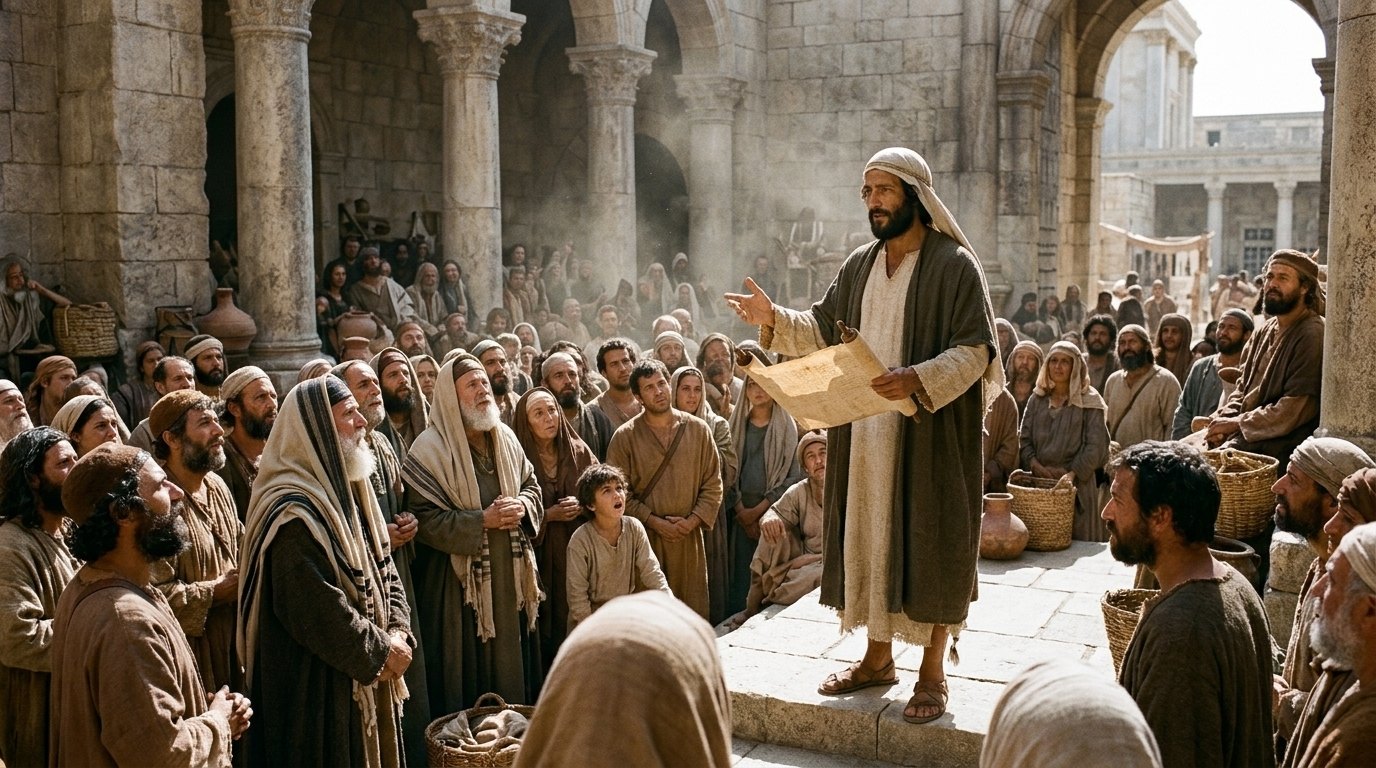
The Word became flesh and made his dwelling among us. We have seen his glory, the glory of the one and only Son, who came from the Father, full of grace and truth.
John 1:14 (NIV)
The Word became flesh and dwelt among humanity, embodying the fullness of grace and truth.
When Jesus declares Himself 'the Truth,' He establishes that divine reality is incarnate in His person rather than mere theoretical doctrine. John 1:14 records that the eternal Word took on human flesh and dwelt among us, manifesting a divine glory full of grace and truth. Shadows and types gave way to substance. While John 1:17 notes that the preparatory law came through Moses, ultimate grace and truth arrived in Jesus Christ. Because God is holy and transcendent, John 1:18 explains that no human has ever seen Him directly, yet the only begotten Son, residing at the Father's side, has perfectly and visibly made Him known.
Truth in Christ is therefore dynamic, liberating, and transforming. In John 8:31–32, Jesus instructs His followers that true discipleship involves remaining steadfast in His word, assuring them that the truth will set you free from the crushing enslavement of sin and falsehood. Christ is the unerring standard against which every world system, lie, and deceit is judged. As the Apostle John summarizes in 1 John 5:20, the Son of God has arrived in history to impart spiritual understanding so that we may intimately know Him who is true. To possess Jesus is to know the authentic reality of God, anchored in eternal life.
| Passage | What it says |
|---|---|
| John 1:14 | The Word took on human flesh and displayed glory full of grace and truth. |
| John 1:17 | The law was given through Moses, but grace and truth came through Jesus Christ. |
| John 1:18 | No one has seen God, but the only Son at the Father's side has made Him known. |
| John 8:31 | Jesus tells believers that abiding in His word makes them truly His disciples. |
| John 8:32 | Jesus promises that knowing the truth will set believers free. |
| 1 John 5:20 | The Son of God gives understanding to know Him who is true, the true God and eternal life. |
The Life
The Source of Resurrection and Eternal Being
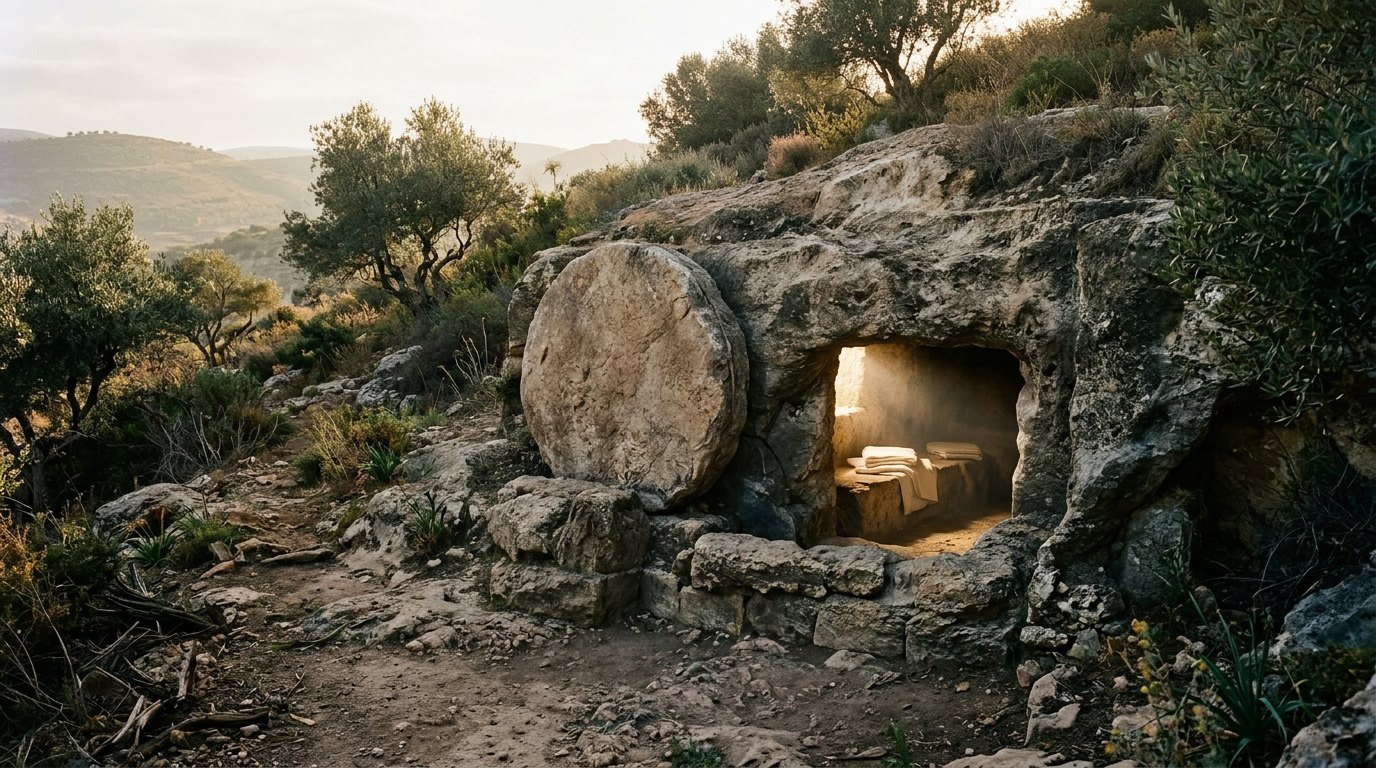
Jesus said to her, “I am the resurrection and the life. The one who believes in me will live, even though they die;
John 11:25 (NIV)
Jesus reveals that resurrection and life are not abstract future events but present in His person.
Finally, Jesus proclaims that He is 'the Life,' demonstrating that He is the uncreated fountainhead of all existence and the sole source of eternal redemption. John 1:4 affirms that in Him was life, and that very life was the light of all humanity. Unlike created beings who depend upon outside sustenance, Jesus possesses inherent self-existence; as John 5:26 reveals, the Father granted the Son to have life in Himself. He descended into a dying, cursed world not merely to reform behavior, but as John 10:10 proclaims, so that His sheep might receive vibrant, overflowing life that death can never extinguish.
This life was vividly manifested outside Bethany. Standing beside a tomb, Jesus declared in John 11:25–26, 'I am the resurrection and the life,' promising that whoever believes in Him will live even if they die physically, and that whoever lives believing in Him will never die spiritually. Paul grasps this glorious reality in Colossians 3:4, designating Christ who is our life, whose appearance will unveil our shared glory. In 1 John 5:11–12, Scripture draws the clear line: God has deposited eternal life strictly in His Son. Whoever has the Son has life, and whoever does not have the Son of God does not have life.
| Passage | What it says |
|---|---|
| John 1:4 | In the Word was life, and that life was the light of all mankind. |
| John 5:26 | As the Father has life in Himself, so He has granted the Son to have life in Himself. |
| John 10:10 | Jesus states He came so that His sheep may have abundant and overflowing life. |
| John 11:25 | Jesus declares Himself the resurrection and the life, giving life even through physical death. |
| John 11:26 | Everyone who lives and believes in Jesus shall never die eternally. |
| Colossians 3:4 | Paul identifies Christ as the very life of the believer, promising shared glory when He appears. |
| 1 John 5:11 | God has given eternal life, and this life is exclusively in His Son. |
| 1 John 5:12 | Whoever possesses the Son possesses life, and whoever lacks the Son lacks life. |
The Exclusive Mediator
No Other Name Given Under Heaven
Salvation is found in no one else, for there is no other name under heaven given to mankind by which we must be saved.”
Acts 4:12 (NIV)
Peter proclaims that salvation exists in no one else under heaven except Jesus Christ.
In Acts 4:12, the apostle Peter delivers the unavoidable corollary to Jesus's declaration in John 14:6: there is salvation in no one else, for God has provided no alternate name under heaven by which fallen humanity can be rescued. Standing before the very council that condemned his Master, Peter identifies Jesus as the cornerstone foretold in Psalm 118, which the builders cast aside in contempt (Acts 4:11). The resurrection proved that God established this rejected stone as the singular foundation of His temple, making every human attempt at reaching God apart from Him futile.
This absolute exclusivity is not arbitrary; it rests upon the unique reality of who Christ is and what He accomplished. As Paul writes, there is one God and one mediator between God and men, the man Christ Jesus (1 Timothy 2:5). Because reconciliation requires a mediator who shares the nature of both parties, only the incarnate Son could bridge the infinite chasm carved by human rebellion. He secured this access by giving Himself as a substitutionary ransom to satisfy the demands of divine justice (1 Timothy 2:6).
Consequently, the dividing line of human history runs directly through a person's response to the Son. To trust Him is to receive eternal life, while to reject Him leaves one under the abiding wrath of holy God (John 3:36). Yet for all who abandon self-reliance and draw near through Him, His mediation is boundless: He is able to save to the uttermost those who draw near to God through Him, continually interceding at the Father's right hand (Hebrews 7:25).
| Passage | What it says |
|---|---|
| Acts 4:11 | Jesus is the stone rejected by the builders that has become the chief cornerstone. |
| Acts 4:12 | Salvation is found in no one else, for there is no other name under heaven given among men. |
| 1 Timothy 2:5 | There is one God and one mediator between God and men, the man Christ Jesus. |
| 1 Timothy 2:6 | Christ Jesus gave Himself as a ransom for all, the testimony given at the proper time. |
| John 3:36 | Whoever believes in the Son has eternal life; whoever disobeys the Son shall not see life. |
| Hebrews 7:25 | Christ saves completely those who draw near to God through Him, living always to intercede. |
Where in the Bible
| Book | Passages |
|---|---|
| John | 20 · John 14:1, John 14:2, John 14:3, John 14:4, John 14:5, John 14:6, John 14:7, John 10:7, John 10:9, John 1:14, John 1:17, John 1:18, John 8:31, John 8:32, John 1:4, John 5:26, John 10:10, John 11:25, John 11:26, John 3:36 |
| Acts | 2 · Acts 4:11, Acts 4:12 |
| Romans | 2 · Romans 5:1, Romans 5:2 |
| Ephesians | 1 · Ephesians 2:18 |
| Colossians | 1 · Colossians 3:4 |
| 1 Timothy | 2 · 1 Timothy 2:5, 1 Timothy 2:6 |
| Hebrews | 3 · Hebrews 10:19, Hebrews 10:20, Hebrews 7:25 |
| 1 John | 3 · 1 John 5:20, 1 John 5:11, 1 John 5:12 |
The story in order
- The Word becomes flesh (c. 4 BC) · John 1:14 · God's truth and glory are displayed in human form.
- Jesus begins His ministry (c. AD 27) · John 1:17 · Grace and truth came through Jesus, surpassing the Law.
- Jesus calls disciples to follow (c. AD 30) · John 10:7 · Jesus identifies Himself as the only entrance to salvation.
- Jesus' final discourse (AD 30) · John 14:6 · Jesus declares Himself the way, truth, and life to the Father.
- Jesus' ascension (AD 30) · Hebrews 10:19 · Believers have access to God through Jesus' sacrifice.
- The early church proclaims Jesus (c. AD 33) · Acts 4:12 · Salvation is exclusively found in Jesus Christ.
- Paul explains justification by faith (c. AD 55) · Romans 5:1 · Peace with God is secured through Jesus Christ.
- Paul on Christ as mediator (c. AD 65) · 1 Timothy 2:5 · Jesus is the one mediator between God and humanity.
- John writes about eternal life (c. AD 90) · 1 John 5:11 · Eternal life is exclusively found in God's Son.
Jesus as the Sole Access to the Father
| Title | How He Provides Access | Passage |
|---|---|---|
| The Way | He is the living route through His sacrifice. | |
| Access by Faith | We gain access through faith in Christ. | |
| Bold Confidence | Jesus' blood grants us bold confidence to enter. | Hebrews 10:19 |
| The Mediator | Jesus Christ is the one mediator. | 1 Timothy 2:5 |
Jesus as the Source of Life
| Title | What He Provides | Passage |
|---|---|---|
| Life in Him | In Him was life, the light of all mankind. | John 1:4 |
| Abundant Life | He came to give abundant and overflowing life. | John 10:10 |
| Resurrection and Life | He is the resurrection and the life. | John 11:25 |
| Eternal Life | This life is exclusively in His Son. | 1 John 5:11-12 |
| Shared Glory | Christ is our life, promising shared glory. | Colossians 3:4 |
Jesus as the Ultimate Truth
| Contrast | Jesus' Truth | Passage |
|---|---|---|
| Law given by Moses | Grace and truth came through Jesus Christ. | John 1:17 |
| Incomplete Knowledge | No one has seen God, but Jesus made Him known. | John 1:18 |
| Freedom through His Word | Abiding in His word makes us His disciples and sets us free. | John 8:31-32 |
| Knowing the True God | The Son gives understanding to know the true God. | 1 John 5:20 |
Key words
- The Way (ἡ ὁδός (hē hodos))
- Jesus is the exclusive path and means of access to God the Father. · John 14:6
- The Truth (ἡ ἀλήθεια (hē alētheia))
- Jesus is the embodiment and revelation of God's reality and faithfulness. · John 14:6
- The Life (ἡ ζωή (hē zōē))
- Jesus is the source of all existence, resurrection, and eternal life. · John 14:6
- Access (πρόσβασις (prosbasi))
- The ability to approach and enter into the presence of God. · Romans 5:2
- Mediator (μεσίτης (mesitēs))
- One who stands between two parties to reconcile them. · 1 Timothy 2:5
John 14:6 is not a cold philosophical boundary, but a living invitation into reconciliation with the Father through the Son. Because Christ alone possesses absolute truth and indestructible life, He alone can bridge the chasm between fallen humanity and a holy God. To rest in this verse is to abandon all human striving and place full confidence in the One who has already prepared our place in the Father's house.
34 passages, each cited once.
Scripture cited
- John 14:6
- Acts 4:12
- John 10:9
- Ephesians 2:18
- John 11:25-26
- John 1:4
- John 14:1-7