What does John 3:16 mean?

John 3:16
16 For God so loved the world that he gave his one and only Son, that whoever believes in him shall not perish but have eternal life.
New International Version (NIV)
The answer
John 3:16 is the gospel in one sentence: God's love for sinners moved Him to give His only Son, and everyone who trusts that Son is rescued from perishing and given everlasting life. Jesus spoke these words to Nicodemus to answer his question about how a person can be born again (John 3:1-15), and the verse lands as a compression of the whole biblical story of salvation.
Unpacked phrase by phrase:
- 'For God' — the saving action starts with God, not with us. He is the one who loved, the one who gave, the one who sent. The whole verse flows from His initiative (John 3:16).
- 'so loved' — the manner is so, measuring how far the love went: it moved Him to hand over His Son. This is the same love Paul describes in Romans 5:8, "while we were yet sinners, Christ died for us" — not a love for the lovely, but a love for the lost.
- 'the world' — the scope is the whole human race, not one tribe or nation. Later in John we'll see Jesus die as the ransom "for the many" and the Saviour of the world (John 4:42; 1 John 4:14). The world here means fallen humanity in need of rescue.
- 'he gave his only begotten Son' — the cost is the deepest thing God could give. Romans 8:32 names it plainly: "He that spared not his own Son, but delivered him up for us all." 1 John 4:9-10 adds, "God sent his only begotten Son into the world, that we might live through him." 'Only begotten' marks the unique, one-of-a-kind relationship between Father and Son — not that Jesus was created, but that He is uniquely the Son.
- 'that whoever believes in him' — the condition is faith: trust in this Son as the one God has given. 'Whoever' widens it to every person without exception. John 3:15 frames it immediately before: he who believes has eternal life. Faith here is not a work that earns life, but the hand that receives what God has already provided (Ephesians 2:8-9).
- 'should not perish' — the alternative is perishing, the judgment and death that sin brings. John 3:15 uses the same word. Jesus said elsewhere, "he that believeth in me, though he were dead, yet shall he live" (John 11:25-26). Perishing is the just sentence on sin, and the cross of Christ is the ground on which it is lifted from the believer (Romans 5:9).
- 'but have eternal life' — the promise is life that does not end, beginning the moment a person believes and consummated at the resurrection. John 6:40 puts it in Jesus' own words: "every one which seeth the Son, and believeth on him, may have everlasting life: and I will raise him up at the last day."
Pulled together, John 3:16 teaches that salvation is God-initiated, God-funded, Christ-centered, faith-received, and life-giving — not earned, deserved, or produced by human effort. The very next verses guard it from being read as a license to sin: "He that believeth on the Son hath everlasting life: and he that believeth not the Son shall not see life; but the wrath of God abideth on him" (John 3:36). To believe the Son is to pass from death to life; to reject Him is to remain under the judgment the cross was given to bear.
A verse to carry
"For God so loved the world, that he gave his only begotten Son, that whosoever believeth in him should not perish, but have everlasting life." — John 3:16
Answered from Scripture · reviewed November 7, 2026
John 3:16 captures the heart of the Christian gospel in a single sentence, revealing the eternal love of God for a fallen world. Spoken by Jesus during His nighttime conversation with Nicodemus, it explains how God initiated humanity's rescue through the ultimate gift of His unique Son. Unpacking this verse phrase by phrase unveils the staggering cost of redemption, the universal offer of mercy, and the glorious reality of everlasting life.
Divine Initiative and Scope
God Initiated Redemption Out of Boundless Love

For God so loved the world that he gave his one and only Son, that whoever believes in him shall not perish but have eternal life.
John 3:16 (NIV)
It shows that salvation originates entirely in the sovereign love and decisive action of God toward a rebellious world.
In John 3:16, the Gospel unveils the supreme fountainhead of human salvation: God loved the world in this manner, demonstrating His mercy through concrete historical action rather than passive sympathy. The term world (kosmos) does not describe an attractive, deserving humanity, but a created order in active rebellion against its Maker. As Paul explains in Romans 5:8, God demonstrates His peculiar and unfathomable love precisely because Christ died while we were yet powerless sinners. This rescue is not bounded by ethnic or national borders. When the Samaritan villagers encounter Jesus in John 4:42, they rightly confess Him as the Savior of the world, a title echoed by the Apostle John in 1 John 4:14 to declare the global scope of the Father’s missionary purpose.
God’s grand objective in the Incarnation is rescue rather than ruin. While humanity stood already guilty under divine law, John 3:17 affirms that the Father did not dispatch His Son on a punitive mission to execute immediate condemnation, but so that the world through Him might be delivered. This aligns directly with the pastoral heart of God revealed in 1 Timothy 2:4, which records His sincere desire for all people to be saved and arrive at the knowledge of the truth. Far from being hasty to destroy, the Lord exercises long-suffering restraint; as 2 Peter 3:9 assures us, He is patient toward humanity, holding back final judgment because He wills that none should perish, but that all should come to repentance.
| Passage | What it says |
|---|---|
| John 3:16 | God loved the world in such a manner that He gave His only begotten Son for everyone who believes. |
| Romans 5:8 | God demonstrates His own love toward sinners because Christ died while humanity was still powerless and ungodly. |
| John 4:42 | The Samaritans recognize and proclaim Jesus as indeed the Christ, the Savior of the entire world. |
| 1 John 4:14 | The apostles testify that the Father sent the Son to be the Savior of the world. |
| John 3:17 | Affirms God sent His Son not to condemn the world, but that the world through Him might be saved. |
| 1 Timothy 2:4 | Declares God desires all people to be saved and to come to the knowledge of the truth. |
| 2 Peter 3:9 | Explains the Lord is patient toward us, not wishing that any should perish but that all reach repentance. |
The Supreme Gift
The Father Gave His Unique Son

He who did not spare his own Son, but gave him up for us all—how will he not also, along with him, graciously give us all things?
Romans 8:32 (NIV)
It explains the staggering magnitude of God sparing not His own Son but delivering Him up for sinners.
The staggering cost of our redemption is laid bare in Romans 8:32, where the Apostle Paul asks how God, who did not spare His own Son but delivered Him up for us all, could fail to freely grant us all things. Love is defined not by sentimental words, but by the magnitude of the gift surrendered. In 1 John 4:9, Scripture emphasizes that God’s love was manifested in the realm of history by sending His only begotten Son (monogenes) into the world so that we might live through Him. True love did not originate in humanity’s reach toward heaven, but in the Father’s initiative: 1 John 4:10 confirms that He loved us and sent His Son as the propitiation, the wrath-absorbing sacrifice that satisfies divine justice.
This willing surrender was prefigured on Mount Moriah in Genesis 22:12, where Abraham withheld not his only son from God, serving as an ancient shadow of the Father’s ultimate sacrifice. Christ is not a created agent or an angelic emissary; John 1:14 declares that the eternal Word took on human flesh, exhibiting the unique glory belonging solely to the Father’s only begotten Son, full of grace and truth. Because no man has seen God at any time, John 1:18 explains that this unique Son, who rests eternally in the very bosom of the Father, has made Him fully and intimately known. In giving the Son, God gave of His very self.
| Passage | What it says |
|---|---|
| 1 John 4:9 | God manifested His love by sending His only begotten Son into the world so that believers might live. |
| 1 John 4:10 | Love consists not in human love for God, but that God sent His Son as the propitiation for sins. |
| Romans 8:32 | God did not spare His own Son but delivered Him up for us all to freely give us all things. |
| Genesis 22:12 | Foreshadows the Father's gift as Abraham does not withhold his only beloved son from God. |
| John 1:14 | Reveals the Word became flesh and dwelt among us, possessing glory as the only Son from the Father. |
| John 1:18 | Declares that the only begotten Son in the bosom of the Father has fully revealed Him. |
The Condition and Rescue
Faith Rescues the Sinner from Perishing

that everyone who believes may have eternal life in him.”
John 3:15 (NIV)
It establishes that believing in the lifted-up Son is the solitary means of escaping destruction and receiving life.
The urgent necessity of faith is anchored in John 3:15, which reveals that whoever places their trust in the lifted-up Son of Man will never perish, but will possess eternal life. Jesus grounded this truth in ancient Israelite history through John 3:14, recalling how Moses lifted up the bronze serpent on a pole in the barren wilderness. In Numbers 21:8 and Numbers 21:9, dying Israelites afflicted by venomous serpents could not cure themselves through effort, medicine, or ritual; they looked upon the lifted emblem by faith and lived. In the same way, the Son of Man was lifted high upon the cross of Calvary so that any sinner looking to Him in simple faith is preserved from eternal destruction.
This deliverance is received entirely apart from human merit. As Ephesians 2:8 and Ephesians 2:9 declare, salvation is by grace through faith, a pure gift of God that completely excludes human works, preventing any flesh from boasting. We are justified by Christ’s poured-out blood, as Romans 5:9 proclaims, securing our full rescue from the coming wrath of God. The stakes are absolute: Romans 6:23 contrasts the earned wage of sin, which is death, with God’s free gift of eternal life. Consequently, John 3:18 and John 3:36 establish the dividing line of eternity: whoever believes is not condemned, but whoever rejects the Son remains under the enduring wrath of holy God.
| Passage | What it says |
|---|---|
| John 3:14 | As Moses lifted up the serpent in the wilderness, the Son of Man must be lifted up on the cross. |
| John 3:15 | Whoever believes in the lifted-up Son of Man will not perish but will possess eternal life. |
| Ephesians 2:8 | Salvation is received by grace through faith as the gift of God, completely excluding human works. |
| Ephesians 2:9 | Salvation cannot be earned through human effort or works, preventing any person from boasting before God. |
| Romans 5:9 | Believers are justified by Christ's blood and saved through Him from the coming wrath of God. |
| John 3:36 | He who believes the Son has life, but whoever disbelieves shall not see life; God's wrath remains. |
| Numbers 21:8 | Typological background where the bronze serpent was lifted up so looking upon it brought physical rescue. |
| Numbers 21:9 | Records that Moses made the bronze serpent, and whoever looked lived, prefiguring saving faith in Christ crucified. |
| John 3:18 | States that whoever believes in Him is not condemned, but whoever does not believe is condemned already. |
| Romans 6:23 | Contrasts the wages of sin, which is death, with the free gift of God, which is eternal life. |
The Promise of Life
Everlasting Life Begins Now and Endures
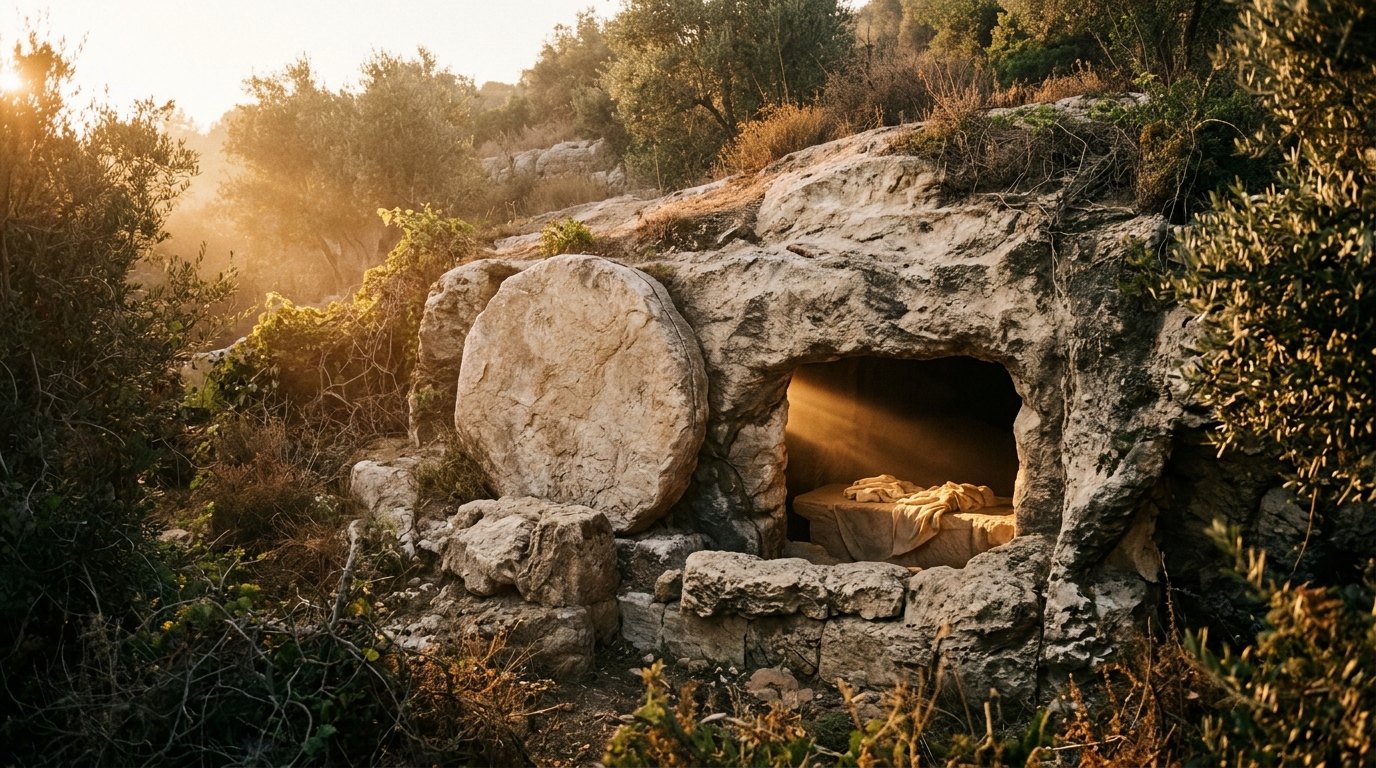
Jesus said to her, “I am the resurrection and the life. The one who believes in me will live, even though they die;
John 11:25 (NIV)
It declares that Jesus Himself is the resurrection and the life, guaranteeing victory over death to the believer.
At the tomb of Lazarus, Jesus made the supreme declaration recorded in John 11:25: He Himself is the resurrection and the life, guaranteeing that whoever believes in Him will live even though they die physically. He immediately follows this in John 11:26 with the piercing promise that whoever lives and believes in Him will never die spiritually. Eternal life is not merely an endless quantity of time in the future, but a radically new quality of existence that begins the moment one trusts Christ. According to John 6:40, it is the explicit will of the Father that everyone who looks upon the Son and believes has everlasting life, with Christ Himself raising them up on the last day.
This transfer from darkness to light is instantaneous and irreversible. In John 5:24, Jesus guarantees that the person who hears His word and believes has passed out of death into life, escaping all condemnation. The believer’s security rests in the invincible grip of the Good Shepherd, who announces in John 10:28 that His sheep shall never perish and no power can pluck them from His hand. This life is personal intimacy with the Creator; as John 17:3 teaches, eternal life is knowing the only true God and Jesus Christ whom He has sent. As 1 John 5:11, 1 John 5:12, and 1 John 5:13 conclude, this life resides exclusively in the Son, offering unwavering assurance that all who believe may know with certainty that they possess life everlasting.
| Passage | What it says |
|---|---|
| John 11:25 | Jesus declares He is the resurrection and the life, granting life to whoever believes even if they die. |
| John 11:26 | Whoever lives and believes in Christ will never die eternally, posing a direct call to personal faith. |
| John 6:40 | The Father's will is that everyone looking to the Son and believing has everlasting life and bodily resurrection. |
| John 5:24 | Asserts that whoever hears and believes has eternal life and has crossed over from death to life. |
| John 10:28 | Promises eternal life to Christ's sheep, guaranteeing they shall never perish or be snatched away. |
| John 17:3 | Defines eternal life as knowing the only true God and Jesus Christ whom He has sent. |
| 1 John 5:11 | Testifies that God gave us eternal life, and this life is in His Son. |
| 1 John 5:12 | Affirms that whoever has the Son has life, while whoever does not have the Son lacks life. |
| 1 John 5:13 | Assures believers in the name of the Son of God that they may know they have eternal life. |
Where in the Bible
| Book | Passages |
|---|---|
| Genesis | 1 · Genesis 22:12 |
| Numbers | 2 · Numbers 21:8, Numbers 21:9 |
| John | 15 · John 3:16, John 4:42, John 3:17, John 1:14, John 1:18, John 3:14, John 3:15, John 3:36, John 3:18, John 11:25, John 11:26, John 6:40, John 5:24, John 10:28, John 17:3 |
| Romans | 4 · Romans 5:8, Romans 8:32, Romans 5:9, Romans 6:23 |
| Ephesians | 2 · Ephesians 2:8, Ephesians 2:9 |
| 1 Timothy | 1 · 1 Timothy 2:4 |
| 2 Peter | 1 · 2 Peter 3:9 |
| 1 John | 6 · 1 John 4:14, 1 John 4:9, 1 John 4:10, 1 John 5:11, 1 John 5:12, 1 John 5:13 |
The story in order
- Creation and Fall (c. 4000 BC) · Genesis 1:1 · God created all things, establishing His perfect order.
- The Fall of Man (c. 4000 BC) · Genesis 3:1-7 · Humanity's disobedience brought sin and separation from God.
- The Bronze Serpent (c. 1400 BC) · Numbers 21:8-9 · A symbol of God's provision for rescue through faith.
- Abraham's Sacrifice (c. 2000 BC) · Genesis 22:12 · Foreshadows God's willingness to give His unique Son.
- The Word Became Flesh (c. AD 30) · John 1:14 · The eternal Son of God entered human history.
- Jesus' Ministry Begins (c. AD 30) · John 3:1-2 · Jesus taught Nicodemus about spiritual birth and God's love.
- Jesus' Crucifixion (AD 30) · John 3:14 · The Son of Man was lifted up for salvation.
- Resurrection and Ascension (AD 30) · John 11:25 · Jesus confirmed His power over death and life.
- The Apostles' Ministry (c. AD 90) · 1 John 4:14 · They proclaimed Jesus as Savior of the world.
God's Love: Initiative and Response
| God's Initiative | Human Response | Result | Passage |
|---|---|---|---|
| God loved the world, giving His Son. | Belief in the Son. | Everlasting life. | John 3:16 |
| God demonstrated love by sending Christ. | Faith in Christ's sacrifice. | Saved from wrath. | Romans 5:8-9 |
| God sent the Son to save. | Belief in Him. | Not condemned. | John 3:18 |
| God gave eternal life in His Son. | Having the Son. | Having life. | 1 John 5:11-12 |
Life and Death Contrasted
| The Wages of Sin | The Gift of God | Passage |
|---|---|---|
| Death. | Eternal life in Christ Jesus our Lord. | Romans 6:23 |
| Perishing. | Everlasting life. | John 3:15-16 |
| Condemnation. | Not condemned. | John 3:18 |
| God's wrath remains. | Life. | John 3:36 |
Key words
- Loved (agapao, ἀγαπάω)
- God's deep, active affection and desire for humanity's well-being. · John 3:16
- World (kosmos, κόσμος)
- All humanity, the entire created order, loved by God. · John 3:16
- Gave (didomi, δίδωμι)
- God's sovereign act of delivering His Son as a sacrifice. · John 3:16
- Only begotten Son (monogenes huios, μονογενὴς υἱός)
- Unique, one-of-a-kind Son, sharing the Father's essence. · John 3:16
- Believes (pisteuo, πιστεύω)
- Trusting in, relying on, and committing to Jesus Christ. · John 3:16
- Perish (apollumi, ἀπόλλυμι)
- To face eternal destruction and separation from God. · John 3:16
- Eternal life (aionios zoe, αἰώνιος ζωή)
- Life with God, beginning now and continuing forever. · John 3:16
John 3:16 invites every reader to reckon with the profound love of God and the decisive reality of faith in Christ. It leaves no room for human boasting, resting salvation entirely upon what God has accomplished through the gift of His Son. Those who trust Him are spared eternal destruction and welcomed immediately into life that never ends.
32 passages, each cited once.
Scripture cited
- John 3:16
- Romans 5:8
- 1 John 4:9-10
- Romans 8:32
- John 3:15
- John 11:25-26
- John 6:40