What does Lamentations 3:22-23 mean?

Lamentations 3:19-26
19 I remember my affliction and my wandering, the bitterness and the gall.
20 I well remember them, and my soul is downcast within me.
21 Yet this I call to mind and therefore I have hope:
22 Because of the LORD’s great love we are not consumed, for his compassions never fail.
23 They are new every morning; great is your faithfulness.
24 I say to myself, “The LORD is my portion; therefore I will wait for him.”
25 The LORD is good to those whose hope is in him, to the one who seeks him;
26 it is good to wait quietly for the salvation of the LORD.
New International Version (NIV)
The answer
Lamentations 3:22-23 teaches that the ground of hope is God’s unfailing mercy and faithful character, not human strength or favorable circumstances. Surrounded by the devastation of judgment, the writer remembers that God’s people have not been destroyed and that His compassion has not run out.
“We are not consumed” is a confession of mercy, not a denial of sin or suffering. Preservation itself is an act of grace. Nehemiah 9:31 gives the same explanation for Israel’s survival: God did not utterly consume or forsake His people because He is gracious and merciful. Micah 7:18-19 likewise celebrates the God who pardons iniquity and delights in mercy. His judgment is real, but He does not abandon His gracious purposes.
“They are new every morning” means that God’s mercies meet His people afresh each day. Yesterday does not exhaust today’s compassion. Each morning brings a renewed call to seek God, confess sin, and depend on Him. This is not a promise that trouble will disappear overnight, nor permission to presume upon grace. Malachi 3:6 connects preservation with the Lord’s unchanging character: His mercy endures because He does not change.
“Great is your faithfulness” turns that truth into direct praise. God remains trustworthy even when circumstances seem to contradict every hope. Psalms 86:15 describes Him as compassionate, gracious, longsuffering, and abounding in mercy and truth. The fitting response is therefore honest grief without despair, repentance without hopelessness, and daily trust rather than self-reliance. These verses do not make pain small; they place an unchanging, merciful God at the center of it.
Answered from Scripture · reviewed November 11, 2026
At the geographic and thematic center of Lamentations, surrounded by the smoking ruins of Jerusalem, Jeremiah anchors his survival in the unchanging character of God. Lamentations 3:22-23 reveals that the reason believers are not utterly destroyed under judgment or affliction is God's covenant mercy, an unexhausted spring renewed with every dawn. Understanding these verses unlocks how biblical hope operates not by ignoring ruin, but by resting on the faithful nature of the Lord who sustains His people through it.
The Literary Center
Hope Rising from the Smoldering Ashes
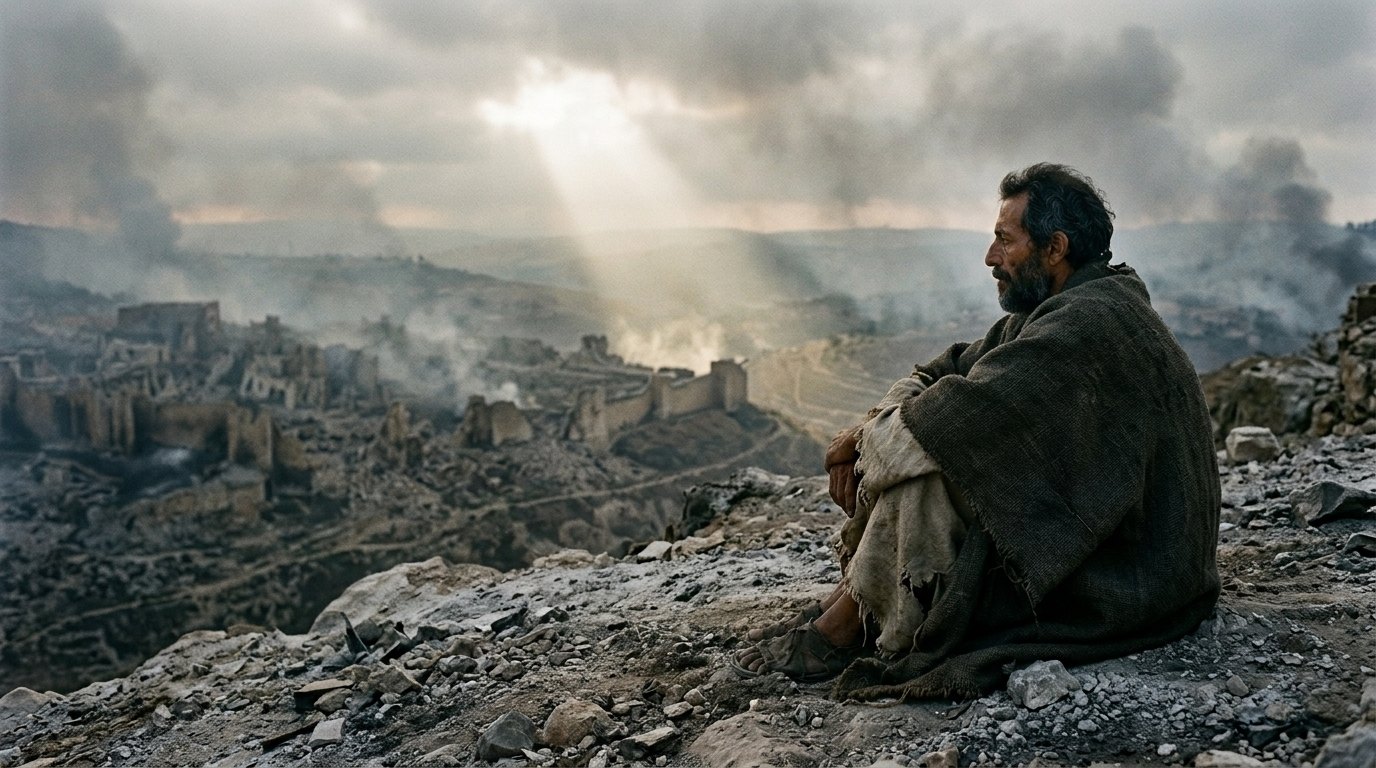
Because of the LORD’s great love we are not consumed, for his compassions never fail.
Lamentations 3:22 (NIV)
It names God's covenant lovingkindness as the sole cause that prevents total annihilation amid severe judgment.
In Lamentations 3:22, the prophet anchors the sheer survival of God's people in a single reality: it is of the Lord's mercies that we are not consumed, because his compassions fail not. This confession forms the exact literary and theological fulcrum of Lamentations. Before reaching this peak, the speaker plummets through the depths of personal and national catastrophe. In Lamentations 3:19-20, he remembers his affliction, the bitter wormwood and the gall, acknowledging how his soul bows down within him under the heavy hand of God's discipline. Yet grief does not have the final word.
Instead of collapsing into utter despair, he makes a deliberate, conscious choice of faith. In Lamentations 3:21, he declares, "This I recall to my mind, therefore have I hope." Looking away from the smoldering ruins of Jerusalem, he fixes his gaze upon the inexhaustible reservoir of God's covenant loyalty. Because those divine compassions never cease, Lamentations 3:23 proclaims that they are new every morning: great is thy faithfulness. Each break of day delivers a fresh supply of sustaining mercy precisely fitted to the day's trial.
From this rock of assurance, faith rises into quiet contentment. Lamentations 3:24 confesses, "The Lord is my portion, saith my soul; therefore will I hope in him." Earthly inheritances, city walls, and the temple itself had crumbled, yet God Himself remained undivided and near. Consequently, Lamentations 3:25-26 affirms that the Lord is good to the soul that seeks Him, urging a quiet waiting for His salvation. This confidence rests on the enduring purpose of God set out in Lamentations 3:31-33: the Lord will not cast off forever, nor does He afflict willingly, but shows compassion according to the multitude of His mercies.
| Passage | What it says |
|---|---|
| Lamentations 3:21 | The prophet deliberately calls this truth to mind in order to generate genuine hope amid deep grief. |
| Lamentations 3:22 | Affirms that Israel is not consumed solely because the Lord's mercies and covenant love never end. |
| Lamentations 3:23 | Declares that God's compassions are renewed every single morning and proclaims the greatness of His faithfulness. |
| Lamentations 3:24 | Confesses that the Lord Himself is the soul's portion, grounding patient expectation entirely in Him. |
| Lamentations 3:19-20 | Jeremiah remembers his affliction, the wormwood, and the gall, bowing low in soul before recalling God's character. |
| Lamentations 3:25-26 | The Lord is declared good to those who wait for Him, urging quiet hope in His salvation. |
| Lamentations 3:31-33 | The Lord will not cast off forever, showing compassion according to His abundant steadfast love. |
The Unconsumed People
Spared Exclusively by Sovereign Compassion
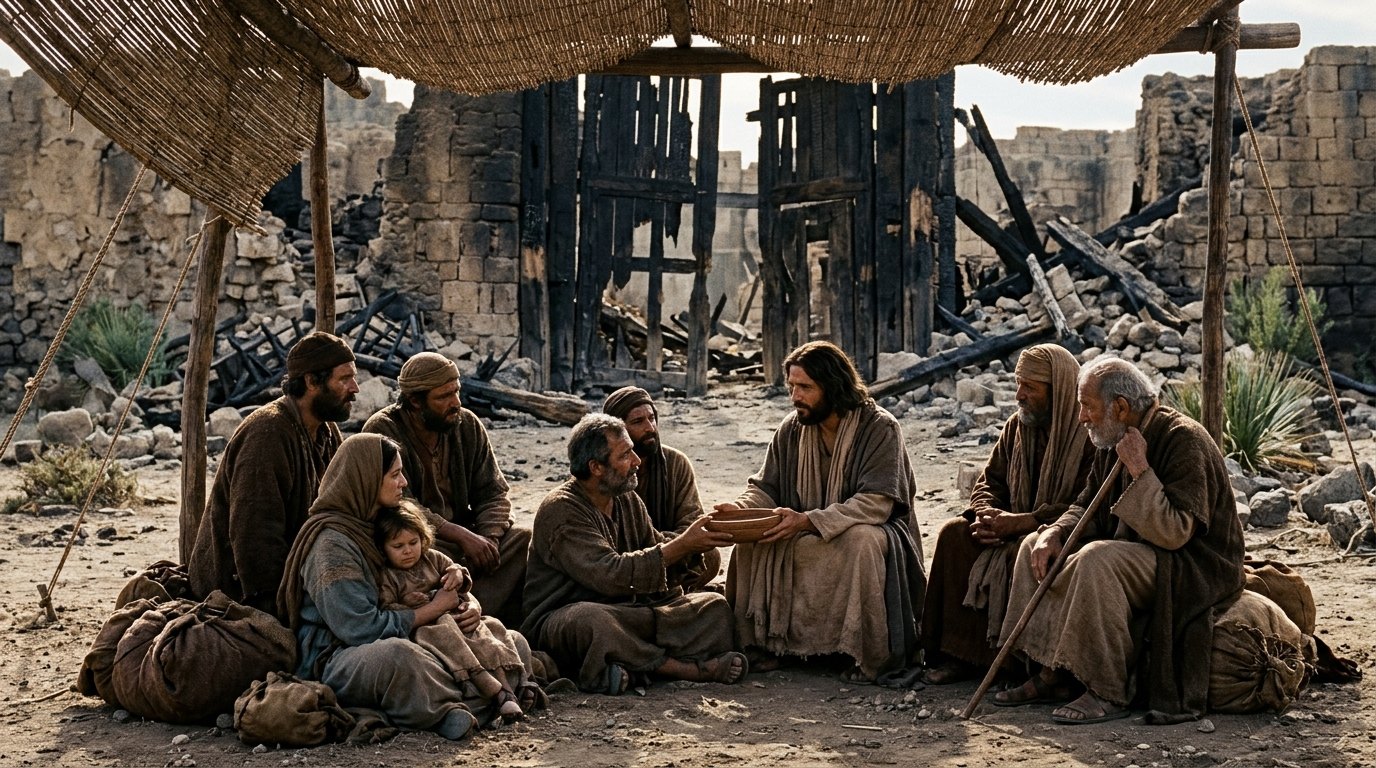
“I the LORD do not change. So you, the descendants of Jacob, are not destroyed.
Malachi 3:6 (NIV)
It links the preservation of Jacob's descendants directly to God's immutable character rather than their worthiness.
The preservation of God's people never stems from their own goodness, but from the immutable nature of the Lord. In Malachi 3:6, God lays down the fundamental law of their history: "For I am the Lord, I change not; therefore ye sons of Jacob are not consumed." Had God dealt with Israel according to their merits, their national story would have ended at Mount Sinai or in the Babylonian siege. Their continuity across generations is living proof of His unchanging covenant.
This theme echoes across the historical and prophetic writings whenever God's people reflect on their survival. In Nehemiah 9:31, the post-exilic community confesses that "for thy great mercies' sake thou didst not utterly consume them, nor forsake them; for thou art a gracious and merciful God." In Psalm 78:38, the psalmist recalls how God, being full of compassion, repeatedly forgave iniquity, destroyed them not, and held back His wrath rather than stirring up all His anger. God's holiness demands judgment, yet His sovereign mercy restrains it.
Confessing this truth kept the remnant humble and grateful. Ezra 9:13 acknowledges that God punished the people far less than their iniquities deserved, granting them an unexpected deliverance. In Jeremiah 30:11, the Lord promises Jacob His presence to save, pledging to correct in measure rather than make a full end of the nation. As Isaiah 1:9 makes plain, unless the Lord of hosts had left a small remnant, Israel would have become as Sodom and Gomorrah, utterly blotted out. Their enduring existence testifies to mercy alone.
| Passage | What it says |
|---|---|
| Malachi 3:6 | God declares that the descendants of Jacob are not consumed because He Himself does not change. |
| Nehemiah 9:31 | Recounts how God did not completely destroy or forsake His rebellious people due to His manifold mercies. |
| Psalms 78:38 | Records that God, full of compassion, forgave iniquity and repeatedly held back His destructive wrath. |
| Ezra 9:13 | Acknowledges that God punished Israel far less than their guilt deserved, leaving a surviving remnant. |
| Jeremiah 30:11 | The Lord promises to save Jacob, disciplining him in just measure rather than making a full end. |
| Isaiah 1:9 | Unless the Lord of hosts had left a remnant, Israel would have become entirely like Sodom and Gomorrah. |
The Covenant Reservoir
Plenteous Mercy and Enduring Faithfulness
But you, Lord, are a compassionate and gracious God, slow to anger, abounding in love and faithfulness.
Psalms 86:15 (NIV)
It brings together the divine attributes of compassion, grace, hesed, and truth proclaimed at Sinai.
The mercies that preserve believers spring from the essential character of God proclaimed throughout redemptive history. In Psalm 86:15, David takes up the foundational confession of Israel, praying, "But thou, O Lord, art a God full of compassion, and gracious, longsuffering, and plenteous in mercy and truth." The word for mercy here is hesed, the steadfast, unbreakable covenant love that God binds to His chosen people.
This language originates at Mount Sinai, where the Lord revealed His glory to Moses. In Exodus 34:6-7, God proclaimed His name as merciful, gracious, slow to anger, keeping mercy for thousands, and forgiving transgression and sin. Every later biblical writer builds upon this divine self-revelation. Micah 7:18-19 marvels that there is no God like Him, who pardons iniquity because He delights in mercy, promising to tread sins underfoot and cast them into the depths of the sea.
Because God's heart overflows with this covenant loyalty, His discipline never exceeds His redemptive aim. Psalm 103:10-12 observes that He has not dealt with us after our sins nor rewarded us according to our iniquities, measuring His steadfast love as high as the heavens above the earth. Deuteronomy 7:9 reminds the assembly that the Lord is the faithful God who keeps covenant to a thousand generations. Therefore, Psalm 89:1-2 vows to sing of His mercies forever, knowing faithfulness is established in the heavens, while Psalm 136:1 sounds the enduring chorus: give thanks unto the Lord; for he is good: for his mercy endureth for ever.
| Passage | What it says |
|---|---|
| Exodus 34:6-7 | Reveals the Lord's fundamental character as compassionate, gracious, slow to anger, and abounding in steadfast love. |
| Psalms 86:15 | Praises the Lord as a God of compassion, longsuffering, and plenteous in mercy and truth. |
| Micah 7:18-19 | Celebrates that God delights in mercy, pardoning iniquity and casting sins into the sea's depths. |
| Psalms 103:10-12 | Observes that God does not deal with us according to our sins, measuring mercy as high as heaven. |
| Deuteronomy 7:9 | The Lord God is the faithful God keeping covenant steadfast love to a thousand generations. |
| Psalms 89:1-2 | The singer proclaims the steadfast love and faithfulness of the Lord established firmly forever. |
| Psalms 136:1 | Thanksgiving offered to the Lord because He is good and His steadfast love endures forever. |
The Daily Dawn
Fresh Grace for Every Generation

His mercy extends to those who fear him, from generation to generation.
Luke 1:50 (NIV)
It confirms that the Lord's covenant mercy endures unbroken from age to age for those who fear Him.
Because God's faithfulness spans all generations, His mercies meet believers in every ordinary morning and across every dispensation. In Luke 1:50, Mary rejoices in the Magnificat, singing that His mercy is on them that fear him from generation to generation. The same covenant goodness that preserved the remnant in Babylon brought forth the Messiah into the world, fulfilling the promises made to the fathers.
This daily renewal of grace transforms how the faithful endure seasons of dark trial. Psalm 30:5 provides the rhythm of the life of faith: weeping may endure for a night, but joy comes in the morning. Moses prays in Psalm 90:14, "O satisfy us early with thy mercy; that we may rejoice and be glad all our days," while David pleads in Psalm 143:8 to hear God's lovingkindness in the morning. In Luke 1:78, Zechariah perceives that through the tender mercy of our God, the Dayspring from on high hath visited us, bringing the light of salvation to those in darkness.
The New Testament confirms that this unfailing faithfulness is anchored in God's very nature and mediated through Christ. As 2 Timothy 2:13 assures us, "If we believe not, yet he abideth faithful: he cannot deny himself." His commitment to His covenant people cannot waver, because to abandon them would be to deny His own name. Therefore, believers are summoned in Hebrews 4:16 to come boldly to the throne of grace, confident that they will obtain mercy and find grace to help in every time of need.
| Passage | What it says |
|---|---|
| Psalms 30:5 | Assures that while weeping may linger through the night, a shout of joy comes with the morning. |
| Psalms 90:14 | Petitions God to satisfy His servants in the morning with His steadfast love for daily gladness. |
| Luke 1:50 | Mary sings that God's mercy extends to those who fear Him from generation to generation. |
| Luke 1:78 | Points to the tender mercy of God through which the Dayspring from on high visits His people. |
| Psalms 143:8 | The psalmist prays to hear the Lord's steadfast love in the morning, trusting in Him. |
| 2 Timothy 2:13 | Even if we are faithless, God remains faithful, for He cannot deny Himself. |
| Hebrews 4:16 | Believers are bid to draw near the throne of grace to receive mercy and find timely help. |
Where in the Bible
| Book | Passages |
|---|---|
| Exodus | 1 · Exodus 34:6-7 |
| Deuteronomy | 1 · Deuteronomy 7:9 |
| Ezra | 1 · Ezra 9:13 |
| Nehemiah | 1 · Nehemiah 9:31 |
| Psalms | 8 · Psalms 78:38, Psalms 86:15, Psalms 103:10-12, Psalms 89:1-2, Psalms 136:1, Psalms 30:5, Psalms 90:14, Psalms 143:8 |
| Isaiah | 1 · Isaiah 1:9 |
| Jeremiah | 1 · Jeremiah 30:11 |
| Lamentations | 7 · Lamentations 3:21, Lamentations 3:22, Lamentations 3:23, Lamentations 3:24, Lamentations 3:19-20, Lamentations 3:25-26, Lamentations 3:31-33 |
| Micah | 1 · Micah 7:18-19 |
| Malachi | 1 · Malachi 3:6 |
| Luke | 2 · Luke 1:50, Luke 1:78 |
| 2 Timothy | 1 · 2 Timothy 2:13 |
| Hebrews | 1 · Hebrews 4:16 |
The story in order
- God's covenant love revealed (c. 1446 BC) · Exodus 34:6-7 · God's character as compassionate and gracious is foundational.
- Davidic covenant and God's faithfulness (c. 1000 BC) · Psalms 89:1-2 · The enduring nature of God's steadfast love is proclaimed.
- God's mercy endures forever (c. 1000 BC) · Psalms 136:1 · A call to give thanks for God's unending mercy.
- God forgives iniquity (c. 750 BC) · Psalms 78:38 · God's compassion leads Him to withhold His wrath.
- God's judgment and remnant (c. 740 BC) · Isaiah 1:9 · God spares a remnant, showing His mercy despite judgment.
- God's mercy in judgment (c. 620 BC) · Jeremiah 30:11 · God promises discipline, not complete destruction.
- Jeremiah remembers God's faithfulness (c. 586 BC) · Lamentations 3:19-20 · Amid suffering, Jeremiah recalls God's character.
- God's mercies renewed daily (c. 586 BC) · Lamentations 3:22-23 · Hope is grounded in God's unfailing mercy and faithfulness.
- God's faithfulness despite human faithlessness (c. AD 67) · 2 Timothy 2:13 · God's nature ensures His faithfulness, even when people are not.
- Access to God's grace (c. AD 68) · Hebrews 4:16 · We can approach God for mercy and help.
- Mary's song of God's mercy (c. AD 4) · Luke 1:50 · God's mercy is from generation to generation.
God's Unchanging Character Sustains His People
| Situation | God's Action/Character | Result | Passage |
|---|---|---|---|
| Israel's rebellion and sin | God's manifold mercies | Not completely destroyed or forsaken | Nehemiah 9:31 |
| Israel's guilt | God punished less than deserved | A surviving remnant | Ezra 9:13 |
| Jacob's sin and discipline | God's promise to save | Disciplined in just measure, not a full end | Jeremiah 30:11 |
| Israel's sin | Lord of hosts left a remnant | Not become like Sodom and Gomorrah | Isaiah 1:9 |
| Affliction and grief | Lord's mercies and covenant love | Not consumed | Lamentations 3:22 |
| Human faithlessness | God remains faithful | He cannot deny Himself | 2 Timothy 2:13 |
The Daily Renewal of God's Mercy
| Time | God's Provision | Human Response | Passage |
|---|---|---|---|
| Night | Weeping may linger | Joy comes with the morning | Psalms 30:5 |
| Morning | Satisfy with steadfast love | Daily gladness | Psalms 90:14 |
| Morning | Hear steadfast love | Trust in Him | Psalms 143:8 |
| Every dawn | Compassions are renewed | Greatness of His faithfulness | Lamentations 3:23 |
| Every generation | Mercy extends to those who fear Him | Fear Him | Luke 1:50 |
| Through tender mercy | Dayspring from on high visits | Receive mercy and find help | Luke 1:78 |
Key words
- Mercy (raḥam, רַחַם)
- Compassionate kindness, especially shown toward the vulnerable or those deserving punishment. · Lamentations 3:22
- Steadfast Love (ḥesed, חֶסֶד)
- Unwavering, loyal covenant love and faithfulness. · Lamentations 3:22
- Faithfulness (ʾĕmûnâ, אֱמוּנָה)
- Reliability and truthfulness; God's unwavering commitment to His promises. · Lamentations 3:23
- Compassions (rāḥămîm, רַחֲמִים)
- God's tender, gut-level mercy and pity. · Lamentations 3:23
These verses remind us that our continued breath in the wake of trial or failure is not a testament to human resilience, but to divine mercy. Because the Lord's steadfast love does not run dry, each sunrise brings a tailored, fresh provision of grace sufficient for the trials of that day. We can face our deepest sorrows and confess our real guilt with boldness, knowing that great is His faithfulness.
27 passages, each cited once.
Scripture cited
- Lamentations 3:22-23
- Psalms 86:15
- Nehemiah 9:31
- Micah 7:18-19
- Malachi 3:6
- Lamentations 3:19-33