What does Romans 10:9 mean?

Romans 10:9-13
9 If you declare with your mouth, “Jesus is Lord,” and believe in your heart that God raised him from the dead, you will be saved.
10 For it is with your heart that you believe and are justified, and it is with your mouth that you profess your faith and are saved.
11 As Scripture says, “Anyone who believes in him will never be put to shame.”
12 For there is no difference between Jew and Gentile—the same Lord is Lord of all and richly blesses all who call on him,
13 for, “Everyone who calls on the name of the Lord will be saved.”
New International Version (NIV)
The answer
Romans 10:9 teaches that salvation comes through genuine faith in the risen Jesus Christ, expressed by openly confessing Him as Lord. Inward belief and outward confession belong together; merely reciting words without believing them does not save.
- “Confess with your mouth that Jesus is Lord” means openly acknowledging who Jesus is and owning His rightful authority over your life. This is more than speaking respectfully about Him: it is willingly identifying yourself with Him rather than being ashamed to belong to Him. Jesus likewise speaks of confessing Him before other people in Matthew 10:32-33.
- “Believe in your heart that God raised him from the dead” identifies the resurrection as essential to saving faith. Faith is not simply agreeing that Jesus existed or accepting a few facts about God; it is trusting the living Jesus, whom God raised from the dead. The resurrection is therefore not an optional addition to the gospel.
- “You will be saved” is God’s promise of salvation to the person who responds with this faith and confession. Romans 10:10 explains their relationship: “For with the heart one believes resulting in righteousness; and with the mouth confession is made resulting in salvation.” Confession is the outward expression of faith, not a payment that earns salvation.
The surrounding verses also show how wide this promise is. There is no distinction between Jew and Greek, because the same Jesus is Lord of all, and “Whoever will call on the name of the Lord will be saved” (Romans 10:12-13). The verse therefore calls for wholehearted trust in the risen Christ and an open, unashamed confession of His lordship.
Answered from Scripture · reviewed November 11, 2026
Romans 10:9 declares the clear and accessible terms of God's saving grace: confessing with your mouth that Jesus is Lord and believing in your heart that God raised Him from the dead. Paul presents neither an impossible ritual nor empty words, but genuine inner trust joined to open, public allegiance. To understand this verse is to grasp the very core of the gospel, where heart and voice unite under Christ's absolute lordship.
Word Near You
Righteousness by Faith Replaces Human Striving

But what does it say? “The word is near you; it is in your mouth and in your heart,” that is, the message concerning faith that we proclaim:
Romans 10:8 (NIV)
It shows that God brings the gospel of grace directly near to man, placed within the mouth and heart rather than earned through impossible human ascents.
In Romans 10:8, Paul reveals that salvation is not a distant prize to be earned by human heroics, but a gift placed directly within reach. He anchors this truth in Deuteronomy 30:11-14, where Moses assured Israel that God's word was neither locked in heaven nor stranded across the sea. Paul applies this historic principle to the gospel itself in Romans 10:5-7, warning against the self-reliant delusion that seeks to scale heaven to bring Christ down or plunge into the abyss to bring Him up from the dead. Such striving assumes Christ's work is unfinished and that righteousness must be conquered through human sweat.
Instead, God has brought His word exceedingly close. As Paul declares in Romans 10:8, the message of salvation is "the word of faith which we preach," an accessible reality that meets a person right where they are. This aligns with Romans 3:21-22, which makes clear that God's righteousness apart from the law has now been manifested through faith in Jesus Christ for all who believe. No arduous pilgrimage or heroic spiritual ascent is demanded. The barrier of human inability has been dismantled; the living word is present, whispered into the ear, offered to the heart, and ready to be spoken upon the lips.
| Passage | What it says |
|---|---|
| Deuteronomy 30:11-14 | Moses affirms the commandment is not hidden or far off, but exceedingly near in the mouth and heart to do it. |
| Romans 10:5-7 | Paul contrasts the law's strict demand of perfect works with the righteousness of faith that does not seek to bring Christ down or up. |
| Romans 10:8 | Paul identifies the word near you, in your mouth and in your heart, as the word of faith preached by the apostles. |
| Romans 3:21-22 | The righteousness of God apart from the law is manifested through faith in Jesus Christ for all who believe. |
Heart and Mouth
The Inseparable Union of Belief and Confession
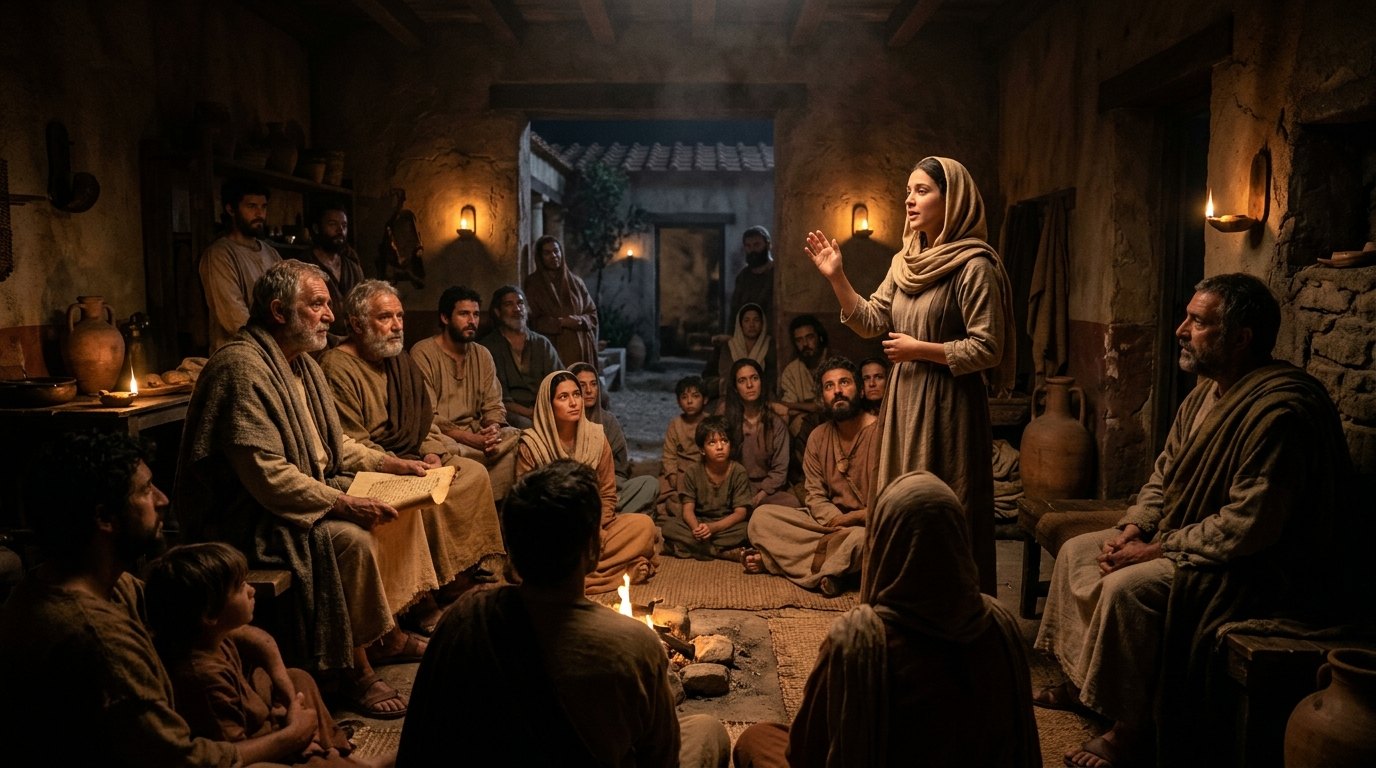
If you declare with your mouth, “Jesus is Lord,” and believe in your heart that God raised him from the dead, you will be saved.
Romans 10:9 (NIV)
This central promise declares that confessing Jesus as Lord and believing God raised Him from the dead results in salvation.
The heartbeat of Paul's letter sounds in Romans 10:9, where he declares that if you confess with your mouth that Jesus is Lord and believe in your heart that God raised Him from the dead, you will be saved. This verse is neither a formulaic incantation nor a casual checklist. In Romans 10:10, Paul unpacks the organic symmetry between the inner man and the public voice: with the heart one believes unto righteousness, and with the mouth confession is made unto salvation. Heart and mouth operate as an indivisible unity, reflecting an undivided allegiance.
Scripture leaves no room for a fictitious faith that cowers in secret while claiming Christ in private. As the Lord Jesus taught in Luke 6:45, a person speaks out of the overflow of what fills the heart; true treasure within inevitably breaks out into speech. Paul echoes this in 2 Corinthians 4:13 by adopting the ancient posture of the psalmist: "I believed and therefore I spoke." Genuine saving faith is not mere intellectual consent to abstract data; it is an inward trusting of the heart that naturally and courageously confesses Christ before a watching world.
| Passage | What it says |
|---|---|
| Romans 10:9 | Confessing with the mouth the Lord Jesus and believing in the heart God raised Him guarantees you will be saved. |
| Romans 10:10 | With the heart one believes unto righteousness, and with the mouth confession is made unto salvation. |
| Luke 6:45 | A good person out of the good treasure of the heart brings forth good, for the mouth speaks what fills the heart. |
| 2 Corinthians 4:13 | Possessing the same spirit of faith according to what is written, believers believe and therefore speak. |
Jesus Is Lord
Bowing to the Risen King
and every tongue acknowledge that Jesus Christ is Lord, to the glory of God the Father.
Philippians 2:11 (NIV)
It defines the ultimate scope of the confession, that every tongue will declare Jesus Christ is Lord to God's glory.
To utter the words "Jesus is Lord" was never a light gesture in the Roman world; Philippians 2:11 establishes that every tongue will ultimately confess that Jesus Christ is Lord to the glory of God the Father. In an empire demanding ultimate civil and spiritual loyalty to Caesar, calling Jesus Kyrios meant submitting to a sovereign whose throne eclipses every earthly crown. In 1 Corinthians 12:3, Paul makes clear that no one can sincerely make this confession except by the Holy Spirit, for it requires the utter surrender of self-will to Christ's royal reign.
This sovereign title is precisely what the early church heralded across the nations. On the day of Pentecost in Acts 2:36, Peter boldly confronted Jerusalem with the decree that God had made this crucified Jesus both Lord and Christ. When the terrified Philippian jailer asked how to be delivered in Acts 16:31, Paul and Silas gave the unwavering answer: "Believe on the Lord Jesus Christ, and you will be saved." To receive Jesus as Savior without bowing to Him as King is impossible; saving faith acknowledges His absolute right to rule every corner of our lives.
| Passage | What it says |
|---|---|
| 1 Corinthians 12:3 | No one can say Jesus is Lord except by the Holy Spirit moving within. |
| Philippians 2:9-11 | God exalted Christ and gave Him the name above every name, that every knee should bow and every tongue confess Him Lord. |
| Acts 2:36 | Peter proclaims that God has made Jesus, whom Israel crucified, both Lord and Christ. |
| Acts 16:31 | Paul and Silas instruct the jailer to believe on the Lord Jesus Christ to be saved with his household. |
Raised from Death
The Resurrection as the Bedrock of Faith
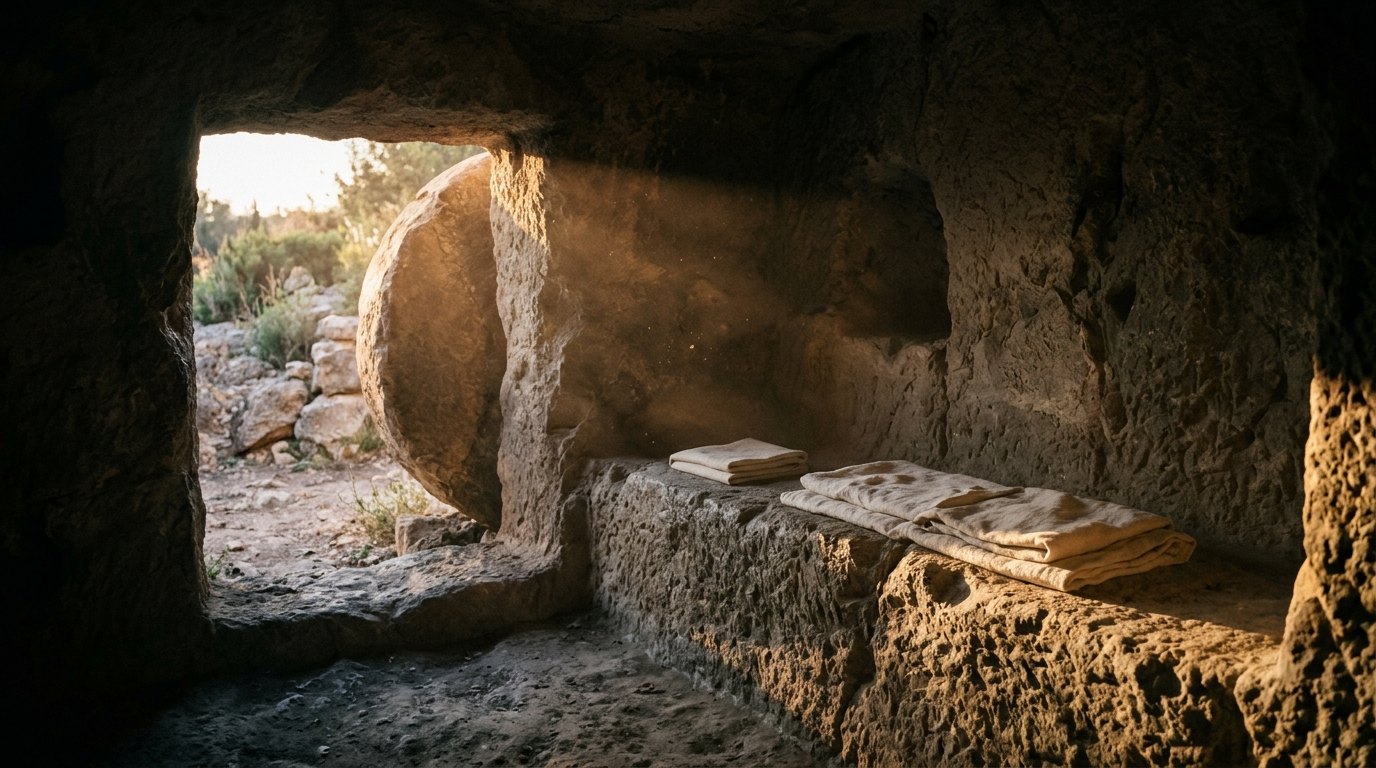
Through him you believe in God, who raised him from the dead and glorified him, and so your faith and hope are in God.
1 Peter 1:21 (NIV)
It highlights God as the one who raised Christ and gave Him glory so faith rests securely in God.
Saving trust is firmly rooted in history, as 1 Peter 1:21 reminds us that our faith and hope rest securely in the God who raised Christ from the dead. The gospel does not call believers to embrace a subjective philosophy, but to bank their eternity on a physical, historical triumph. Paul explains in Romans 4:24-25 that righteousness will be counted to all who believe in Him who raised Jesus our Lord from the dead—the One delivered up on account of our offenses and raised for our justification. The resurrection is God's public receipt that the debt of sin has been paid in full.
Without this reality, salvation collapses entirely. In 1 Corinthians 15:14-17, Paul warns starkly that if Christ is not risen, Christian preaching is useless, faith is futile, and we remain dead in our sins. Yet through that miraculous dawn, Christ was powerfully designated as the Son of God according to the Spirit of holiness, as affirmed in Romans 1:4. Believing in the heart that God raised Him means trusting in the living Conqueror who shattered the grave and lives forevermore to intercede for His people.
| Passage | What it says |
|---|---|
| Romans 4:24-25 | Righteousness is counted to those believing in God who raised Jesus, delivered for offences and raised for our justification. |
| 1 Corinthians 15:14-17 | If Christ is not raised, preaching and faith are vain, and believers remain in their sins. |
| Romans 1:4 | Jesus was declared to be the Son of God with power according to the Spirit of holiness by the resurrection. |
| 1 Peter 1:21 | Believers through Christ trust in God who raised Him from the dead and gave Him glory. |
Public Allegiance
The Sincerity of Unashamed Witness

“Whoever acknowledges me before others, I will also acknowledge before my Father in heaven. But whoever disowns me before others, I will disown before my Father in heaven.
Matthew 10:32-33 (NIV)
Christ establishes that unashamed public confession before men is met with His personal acknowledgement before the Father.
In Matthew 10:32-33, the Lord Jesus sets the eternal stakes of vocal allegiance: whoever confesses Me before men, him I will also confess before My Father who is in heaven. Confession is not a mere incantation; it is the natural, necessary fruit of a heart captive to Christ. A secret faith that cowers to preserve self-interest denies the sovereign worth of the King. Luke 12:8 reinforces this cosmic accountability, warning that the Son of Man will confess the faithful witness before the very angels of God, while the denier is cut off from that advocacy.
Such confession carries doctrinal substance and spiritual vitality. The Apostle John explains in 1 John 4:2-3 that confessing that Jesus Christ has come in the flesh marks the true indwelling of the Holy Spirit against the spirits of antichrist. True belief does not rewrite Christ to appease worldly culture; it affirms His historical incarnation and deity. Then, in 1 John 4:15, John ties this verbal identification directly to salvation: whoever confesses that Jesus is the Son of God, God abides in him, and he in God. The declaration of Christ's identity proves the living presence of God within the believer.
Because the Christian lives in a hostile world, this allegiance requires steadfast endurance. Hebrews 10:23 commands, "Let us hold fast the confession of our hope without wavering, for He who promised is faithful." Vocal confession is not an isolated transaction performed once at an altar; it is a permanent posture of public loyalty. The believer speaks because Christ is trustworthy, unashamedly aligning his life and words with the exalted Redeemer.
| Passage | What it says |
|---|---|
| Matthew 10:32-33 | Whoever confesses Jesus before men, Christ confesses before the Father; whoever denies Him, Christ denies. |
| Luke 12:8 | Whoever confesses the Son of Man before men, Him shall the Son of Man confess before the angels of God. |
| 1 John 4:2-3 | Every spirit confessing that Jesus Christ has come in the flesh is of God, while denying Him reveals deception. |
| 1 John 4:15 | Whoever confesses that Jesus is the Son of God, God abides in him and he in God. |
| Hebrews 10:23 | Believers are urged to hold fast the confession of their hope without wavering, for He who promised is faithful. |
Universal Call
Salvation to Everyone Who Calls Upon Him
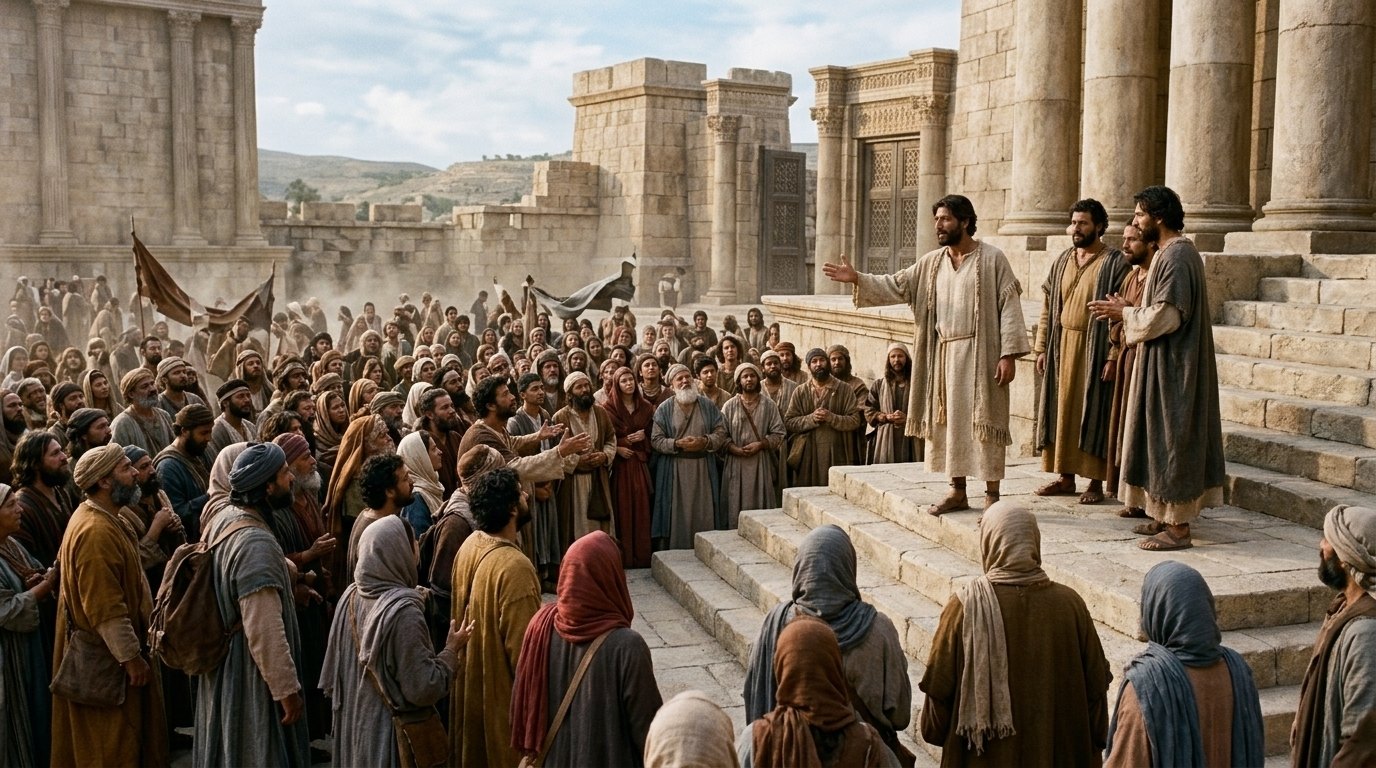
for, “Everyone who calls on the name of the Lord will be saved.”
Romans 10:13 (NIV)
It shows that the promise of Romans 10:9 is boundless, extending full salvation to all who call upon the Lord's name.
In Romans 10:13, the Apostle Paul reaches the triumphant crescendo of his argument by declaring that whoever calls on the name of the Lord shall be saved. This promise dissolves every ethnic, cultural, and moral barrier, offering instantaneous rescue to anyone who cries out to the reigning Christ. Paul roots this broad mercy in Isaiah's ancient assurance, noting in Romans 10:11 that "whoever believes in Him will not be put to shame." Trusting in Christ never ends in disgrace, disillusionment, or divine abandonment.
This boundless grace levels humanity before one sovereign Lord. Romans 10:12 explicitly strips away human pretension: there is no distinction between Jew and Greek, for the same Lord over all is rich to all who call upon Him. His spiritual wealth is not hoarded, nor is His saving favor rationed by pedigree. Whether an observant son of Abraham or an uncircumcised Gentile pagan, the same treasury of pardon belongs to anyone who petitions the true Master.
This glorious access fulfills God's long-standing prophetic purpose. Centuries earlier, Joel 2:32 announced that deliverance would come to everyone crying out to the Lord during the days of judgment on Mount Zion and Jerusalem. On the day of Pentecost, the Apostle Peter seized upon this very text in Acts 2:21, proclaiming to the assembled multitudes that the era of salvation had dawned. To call upon the name of Jesus is to invoke the covenant Name of God Himself, receiving full, immediate, and everlasting deliverance.
| Passage | What it says |
|---|---|
| Romans 10:11 | Scripture promises that whoever believes in Him will not be put to shame. |
| Romans 10:12 | There is no distinction between Jew and Greek, for the same Lord is rich to all who call upon Him. |
| Romans 10:13 | Whoever calls on the name of the Lord shall be saved. |
| Joel 2:32 | The prophet Joel foretells that whoever calls on the name of the Lord shall be delivered in Mount Zion. |
| Acts 2:21 | Peter quotes Joel at Pentecost, proclaiming that everyone calling on the name of the Lord shall be saved. |
Where in the Bible
| Book | Passages |
|---|---|
| Deuteronomy | 1 · Deuteronomy 30:11-14 |
| Joel | 1 · Joel 2:32 |
| Matthew | 1 · Matthew 10:32-33 |
| Luke | 2 · Luke 6:45, Luke 12:8 |
| Acts | 3 · Acts 2:36, Acts 16:31, Acts 2:21 |
| Romans | 10 · Romans 10:5-7, Romans 10:8, Romans 3:21-22, Romans 10:9, Romans 10:10, Romans 4:24-25, Romans 1:4, Romans 10:11, Romans 10:12, Romans 10:13 |
| 1 Corinthians | 2 · 1 Corinthians 12:3, 1 Corinthians 15:14-17 |
| 2 Corinthians | 1 · 2 Corinthians 4:13 |
| Philippians | 1 · Philippians 2:9-11 |
| Hebrews | 1 · Hebrews 10:23 |
| 1 Peter | 1 · 1 Peter 1:21 |
| 1 John | 2 · 1 John 4:2-3, 1 John 4:15 |
The story in order
- The Law is Given (c. 1400 BC) · Deuteronomy 30:11-14 · The commandment is near, in the mouth and heart.
- Jesus is Declared Lord (AD 30) · Acts 2:36 · God made Jesus, crucified by Israel, both Lord and Christ.
- The Gospel is Preached (c. AD 55) · Romans 10:8 · The word of faith is near, in your mouth and heart.
- Faith and Resurrection (c. AD 55) · Romans 4:24-25 · Righteousness is counted to those believing God raised Jesus.
- Christ's Exaltation (c. AD 61) · Philippians 2:9-11 · Every knee bows and tongue confesses Jesus as Lord.
- The Resurrection's Necessity (c. AD 55) · 1 Corinthians 15:14-17 · If Christ is not raised, faith is vain.
- Confession Before Men (c. AD 30) · Matthew 10:32-33 · Confessing Jesus before men leads to Christ's confession before God.
- The Spirit of Faith (c. AD 56) · 2 Corinthians 4:13 · Believers believe and therefore speak because of the spirit of faith.
- Jesus Comes in Flesh (c. AD 90) · 1 John 4:2-3 · Confessing Jesus Christ in the flesh is of God.
- Salvation for All (c. AD 55) · Romans 10:11-13 · Whoever believes or calls on the Lord will be saved.
- Pentecost Proclamation (AD 30) · Acts 2:21 · Everyone calling on the name of the Lord shall be saved.
The Word of Faith: Near and Active
| The Word's Location | Its Nature | Its Effect | Passage |
|---|---|---|---|
| Exceedingly near, in your mouth and heart | Not hidden or far off | To do it | Deuteronomy 30:11-14 |
| Near you, in your mouth and in your heart | The word of faith preached by apostles | Confess and believe | Romans 10:8 |
| In your mouth and in your heart | Confessing Jesus is Lord, believing God raised Him | Salvation | Romans 10:9 |
| In the heart and mouth | Belief unto righteousness, confession unto salvation | Righteousness and salvation | Romans 10:10 |
Confession and Belief: Inseparable
| Belief | Confession | Result | Passage |
|---|---|---|---|
| Believing in the heart God raised Him | Confessing with the mouth the Lord Jesus | Salvation | Romans 10:9 |
| Believes unto righteousness | Confession is made unto salvation | Righteousness and salvation | Romans 10:10 |
| The same spirit of faith | Believers speak | Outpouring of faith | 2 Corinthians 4:13 |
| Confesses that Jesus Christ has come in the flesh | Is of God | Abides in God | 1 John 4:2-3 |
| Confesses that Jesus is the Son of God | God abides in him | He abides in God | 1 John 4:15 |
Lordship and Salvation
| Action | Confession | Outcome | Passage |
|---|---|---|---|
| Believe on the Lord Jesus Christ | Be saved with your household | Household salvation | Acts 16:31 |
| Confess with your mouth that Jesus is Lord | Believe in your heart God raised Him | Salvation | Romans 10:9 |
| Call upon the name of the Lord | Will not be put to shame | Deliverance from shame | Romans 10:11 |
| Call upon Him | The same Lord is rich to all | Abundant provision | Romans 10:12 |
| Calls on the name of the Lord | Shall be saved | Salvation | Romans 10:13 |
| Calls on the name of the Lord | Shall be delivered | Deliverance | Joel 2:32 |
Key words
- Lord (kurios, κύριος)
- Absolute master, sovereign ruler, to whom allegiance is due. · Romans 10:9
- Believe (pisteuō, πιστεύω)
- To trust in, rely on, commit oneself to. · Romans 10:9
- Raised (egeirō, ἐγείρω)
- Brought back to life from death. · Romans 10:9
- Confess (homologeō, ὁμολογέω)
- To say the same thing as, to agree with, to declare openly. · Romans 10:9
- Salvation (sōtēria, σωτηρία)
- Deliverance from sin and its consequences, leading to eternal life. · Romans 10:9
Romans 10:9 offers an unshakable assurance: anyone who relies completely on the risen Christ and owns Him openly as Master is fully and eternally saved. God does not demand an ascent to heaven or a descent into the deep to secure righteousness, for the word of faith is as near as your own heart and lips. If you place your trust in Him today, calling upon His name in truth, Scripture promises you will never be put to shame.
26 passages, each cited once.
Scripture cited
- Romans 10:9
- Matthew 10:32-33
- Romans 10:8-13