What does 'selah' mean?
Psalms 3:1-4
1 LORD, how many are my foes! How many rise up against me!
2 Many are saying of me, “God will not deliver him.”
3 But you, LORD, are a shield around me, my glory, the One who lifts my head high.
4 I call out to the LORD, and he answers me from his holy mountain.
New International Version (NIV)
The answer
Selah most likely marks a musical pause or interlude, although its precise meaning is uncertain. The Hebrew term carries the idea of a suspension of music. It may indicate a silence, a division in the song, or a break in the singing while the instruments continued; Scripture does not define the technical direction more precisely.
Its placement in Psalm 3 gives the reader a natural moment to stop and reflect. After David’s enemies say, “There is no help for him in God,” Psalm 3:2 ends with “Selah.” Psalm 3:3 then answers that taunt: Yahweh is David’s shield, his glory, and the one who lifts up his head. When David says that God answers him “out of his holy hill,” “Selah” appears again in Psalm 3:4.
Selah is therefore a direction attached to the song, not another statement about God. For readers, it offers a fitting cue to pause and weigh the contrast between threatening human voices and God’s faithful help.
Answered from Scripture · reviewed November 11, 2026
The Hebrew word Selah appears seventy-four times in Scripture as an ancient liturgical and musical directive, calling the singer and hearer to suspend the song and reflect. Though its exact technical mechanics remain an ancient mystery, the biblical text uses it consistently to arrest our attention, punctuating profound crisis, sovereign deliverance, and sacred truth. Understanding Selah transforms routine Bible reading into reverent contemplation, training God's people to pause and weigh what the Lord has spoken.
The Opening Cry
David Pauses Amid Betrayal and Divine Protection
Many are saying of me, “God will not deliver him.”
Psalms 3:2 (NIV)
It shows Selah immediately arresting the singer after the enemy's cruel lie that God will not deliver.
When Psalm 3:2 records the taunt of David's enemies—that "there is no salvation for him in God"—the text abruptly halts the song with Selah. David does not rush to defend himself or panic at the slander. Instead, the musical notation suspends the melody right at the point of greatest vulnerability, forcing the worshipper to linger on the gravity of human despair before looking up. David's crisis was severe, as Psalm 3:1 opens with a lament over multiplying adversaries rising in violent revolt. Yet right after the scornful lie is uttered in verse 2, the silence of Selah makes room for faith to speak.
From that quiet breath rises one of Scripture's greatest confessions: Psalm 3:3 declares, "But You, O Yahweh, are a shield about me, my glory, and the lifter of my head." David knew that the mockery of men cannot overturn the covenant of God. He cries aloud to Yahweh in Psalm 3:4, confident that his voice reaches the holy hill. Here the music pauses with a second Selah, letting the certainty of divine hearing settle deep within the heart. The psalm moves from acute peril to unbroken rest, culminating in Psalm 3:8, which confesses that salvation belongs entirely to Yahweh and His blessing rests upon His people. The final Selah seals this truth as an enduring reality. In the crucible of rejection, the pause teaches us to halt the clamour of fear and rest in God's sovereign protection.
| Passage | What it says |
|---|---|
| Psalms 3:1 | David records the sharp increase of adversaries rising against him as he flees from Absalom his son. |
| Psalms 3:2 | Foes declare there is no help for David in God, punctuated immediately by the reflective pause of Selah. |
| Psalms 3:3 | David affirms Yahweh as his shield, his glory, and the lifter of his head against the multitude. |
| Psalms 3:4 | David cries aloud to Yahweh, receives an answer from His holy hill, and marks the assurance with Selah. |
| Psalms 3:8 | Salvation belongs to Yahweh, and His blessing rests upon His people, sealed with an emphatic final Selah. |
Historical Crucible
The Dark Rebellions That Formed David's Prayers
A messenger came and told David, “The hearts of the people of Israel are with Absalom.”
2 Samuel 15:13 (NIV)
It captures the sudden, crushing news of Absalom's conspiracy that drove David into the wilderness crying to God.
The reflective pauses of the Psalms were not composed in comfortable academic studies; they were forged in the bitter soil of real human anguish, epitomized by 2 Samuel 15:13 when a breathless messenger informed David that "the hearts of the men of Israel have gone after Absalom." This was not merely political mutiny but the heartbreaking rebellion of a beloved son against his father. As recorded in 2 Samuel 15:12, Absalom had shrewdly pulled David's chief counselor, Ahithophel the Gilonite, into the conspiracy, creating an insurrection so fierce that Jerusalem became instantly indefensible. David recognized the mortal danger immediately and ordered a hasty evacuation in 2 Samuel 15:14, fleeing on foot to spare the city from the edge of the sword.
The descent was gut-wrenching. 2 Samuel 15:30 paints the agonizing portrait of David weeping as he ascended the Mount of Olives, his head covered and his feet bare in profound mourning. The rebellion consolidated quickly; 2 Samuel 16:15 shows Absalom and all the men of Israel marching triumphantly into Jerusalem with Ahithophel at his side. The danger intensified as Hushai offered deceptive counsel in 2 Samuel 17:11, advising a massive national muster from Dan to Beersheba. Hushai graphically described falling upon David like dew upon the ground in 2 Samuel 17:12, and in 2 Samuel 17:13 envisioned pulling David's fortified city into the river with ropes until not a small stone remained. It was against this brutal backdrop of betrayal, exile, and impending slaughter that David reached for his harp and penned the prayers that would instruct the church for centuries.
| Passage | What it says |
|---|---|
| 2 Samuel 15:12 | Absalom draws David's counselor Ahithophel into the conspiracy, causing the insurrection to gain immense strength. |
| 2 Samuel 15:13 | A messenger reports to David that the hearts of the men of Israel have gone after Absalom. |
| 2 Samuel 15:14 | David commands his servants in Jerusalem to flee immediately before Absalom overtakes the city. |
| 2 Samuel 15:30 | David weeps as he ascends the Mount of Olives with his head covered and his feet bare. |
| 2 Samuel 16:15 | Absalom enters Jerusalem with all the men of Israel, accompanied by David's former advisor Ahithophel. |
| 2 Samuel 17:11 | Hushai advises Absalom to gather all Israel from Dan to Beersheba before attacking David in person. |
| 2 Samuel 17:12 | Hushai counsels striking David like dew falling on the ground so none of his men survive. |
| 2 Samuel 17:13 | Hushai urges dragging David's refuge into a river with ropes until not one small stone remains. |
The Prophetic Canticle
Habakkuk Anchors Faith in God's Marching Glory

God came from Teman, the Holy One from Mount Paran. His glory covered the heavens and his praise filled the earth.
Habakkuk 3:3 (NIV)
It introduces Selah outside the Psalter as God's majestic brightness covers the heavens.
Outside the Psalter, the mysterious liturgical term appears only in the prophetic prayer of Habakkuk, breaking into Habakkuk 3:3 as the prophet contemplates the dread majesty of the Almighty: "God comes from Teman, and the Holy One from Mount Paran. Selah." Habakkuk was facing the imminent, devastating invasion of the Chaldeans, a judgment that left him trembling. Yet rather than spiraling into hopeless despair, Habakkuk 3:1 frames his petition according to Shigionoth, setting his prophetic burden to music. In Habakkuk 3:2, he pleads, "O Yahweh, revive Your work in the midst of the years... in wrath remember mercy." As the memory of God's historic wonders floods his mind, the text halts at verse 3 with Selah, demanding that the hearer stand in awe before the blinding radiance that covers the heavens.
The prophet continues his vivid description of God marching as a warrior to redeem His people. In Habakkuk 3:9, Yahweh's bow is made completely bare according to the sworn oaths of His word, punctuated once more by Selah as the earth splits with rivers under His power. When God strides forth for the salvation of His people and His anointed in Habakkuk 3:13, striking the head of the house of the evil one, another Selah bids the worshipper contemplate the crushing of wicked rulers. Habakkuk concludes in Habakkuk 3:19 with unwavering faith, declaring that the Lord Yahweh is his strength, making his feet like deer's feet upon high places. The pauses throughout the canticle train our souls to anchor in the terrifying glory of God when all earthly foundations crumble.
| Passage | What it says |
|---|---|
| Habakkuk 3:1 | The prophet frames his prayer according to Shigionoth, setting it as a liturgical, musical petition. |
| Habakkuk 3:2 | Habakkuk pleads for Yahweh to revive His work in the midst of years and remember mercy in wrath. |
| Habakkuk 3:3 | God comes from Teman and the Holy One from Mount Paran, pausing with Selah as praise fills earth. |
| Habakkuk 3:9 | Yahweh's bow is made bare according to sworn oaths, followed by Selah as rivers divide the earth. |
| Habakkuk 3:13 | God marches for the salvation of His people and His anointed, marking the crushing of wicked rulers with Selah. |
| Habakkuk 3:19 | The prophet concludes that the Lord Yahweh is his strength, directing the song to his chief musician. |
Suffering and Trust
Echoes of Betrayal From David to Christ
Show me the wonders of your great love, you who save by your right hand those who take refuge in you from their foes.
Psalms 17:7 (NIV)
It shows the righteous plea for steadfast love that finds ultimate expression in Jesus' trust upon the cross.
The suffering celebrated and paused over in the Psalter finds its ultimate substance in the passion of Jesus Christ, who embodied the prayer of Psalm 17:7 when David begged God to show marvellous lovingkindness and save those taking refuge at His right hand. As David looked to the Lord amid malicious slander, so Christ perfectly entrusted Himself to the Father who judges righteously, fulfilled in 1 Peter 2:23 when He refused to revile in return during His trial and crucifixion. The deep treachery David endured from his trusted companions foreshadowed the bitter betrayal of the Son of God. In Psalm 41:9, David wept that "even my close friend in whom I trusted, who ate my bread, has lifted up his heel against me," a prophecy fulfilled to the letter in John 13:18 when Judas Iscariot dipped his bread with Jesus at the Last Supper before walking out into the night.
This typological trajectory reaches its zenith in the cry of utter dereliction. In Psalm 22:1, the Davidic sufferer cries, "My God, my God, why have You forsaken me?"—the very words fulfilled on Golgotha in Matthew 27:46 as Christ bore the crushing weight of divine wrath for our sins. Christ warned in Matthew 10:21 that familial betrayal would mark the path of righteousness, with brothers delivering brothers to death. This wicked rebellion climaxed in Matthew 27:25, where the frenzied crowds rejected their true King, demanding His crucifixion. Every Selah that punctuated David's tears ultimately points the church to the cross, bidding us to pause and behold the righteous King who suffered betrayal so that His redeemed people might dwell forever in peace.
| Passage | What it says | Fulfilled |
|---|---|---|
| Psalms 17:7 | David pleads for God to show marvellous lovingkindness and save those trusting His right hand. | 1 Peter 2:23 |
| Psalms 41:9 | David laments that his own familiar friend who ate his bread has lifted up his heel against him. | John 13:18 |
| Psalms 22:1 | The forsaken sufferer cries out in anguish over divine abandonment amid surrounding mocks and taunts. | Matthew 27:46 |
| Matthew 10:21 | Jesus warns that brothers will deliver brothers to death and children will rise against their parents. | |
| Matthew 27:25 | The crowds cry out before Pilate that the blood of the righteous King be upon them and their children. |
Liturgical Marks
The Musical and Liturgical Pauses Throughout the Psalter
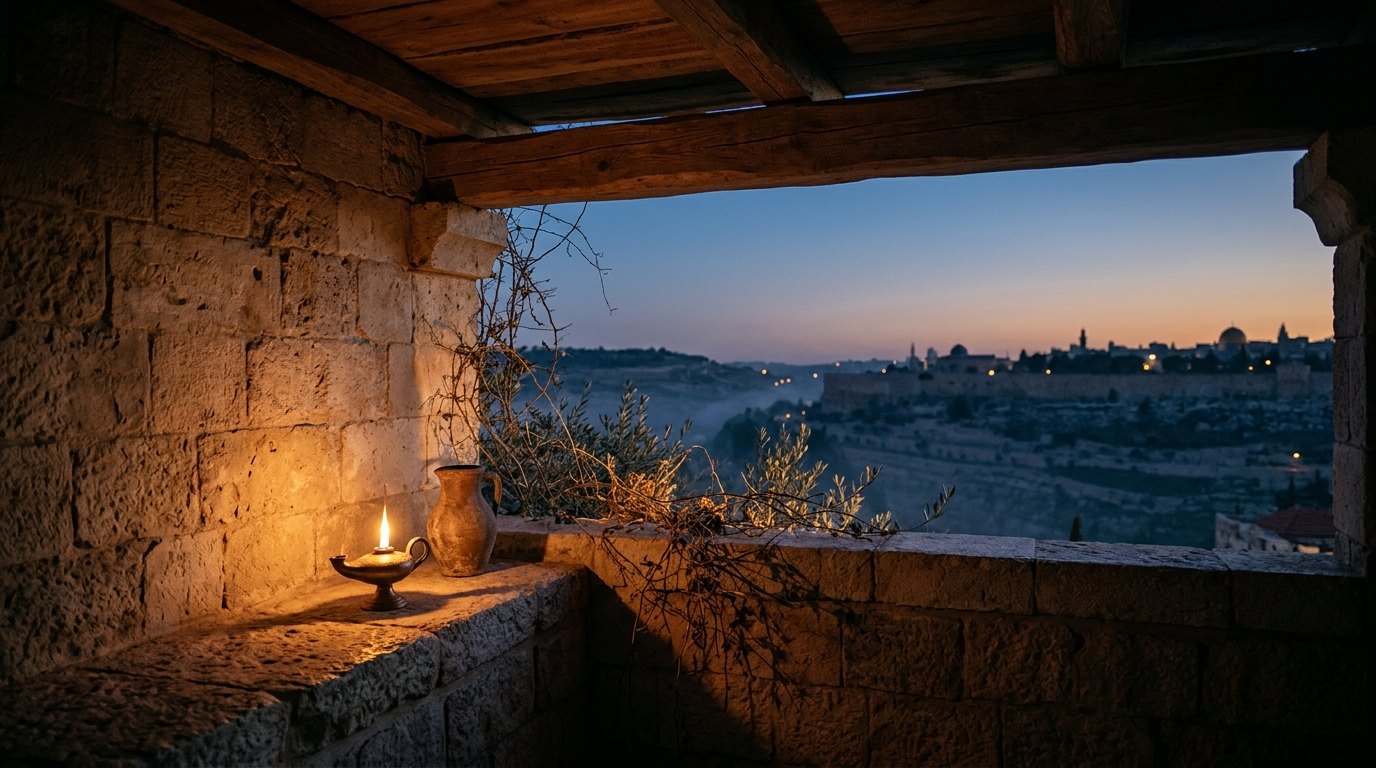
The LORD is known by his acts of justice; the wicked are ensnared by the work of their hands.
Psalms 9:16 (NIV)
It couples Higgaion with Selah, demonstrating a call for meditation and musical pause upon God's righteous judgments.
In Psalm 9:16, the psalmist combines Higgaion—a term denoting deep meditation or hushed, resonant music—with Selah, arresting the sanctuary choir with the sobering reality that the wicked are snared by the work of their own hands. This rare pairing clarifies how Selah operates throughout corporate worship: it is not mere punctuation, but an intentional, reverent stillness commanded in the presence of God's sovereign acts. David models this contemplative discipline in Psalm 4:2 and Psalm 4:4, crying Selah as he confronts deceitful pursuers and commands the soul to ponder truth silently upon the bed. The mark ascends to majestic heights in Psalm 24:6 and Psalm 24:10, pausing first over the generation seeking God's face and finally sealing the arrival of the King of glory through ancient gates.
The Psalter also uses Selah to map the interior terrain of divine conviction and mercy. In Psalm 32:4, Psalm 32:5, and Psalm 32:7, three successive pauses track David's agony under God's heavy hand, the sudden peace of confession, and the joyous assurance of being preserved within songs of deliverance. When cosmic upheaval strikes in Psalm 46:3, Psalm 46:7, and Psalm 46:11, Selah punctuates the terrifying surge of oceanic storms before anchoring the heart twice in the steady truth that the Lord of hosts is our unyielding fortress. In Psalm 66:4, Psalm 66:7, and Psalm 66:15, the musical pause frames global adoration, warns rebellious kingdoms against pride, and crowns sacrificial devotion. It warms the soul longing for God's dwelling place in Psalm 84:4 and Psalm 84:8, and frames the solemn sweep of the Davidic covenant and human mortality in Psalm 89:37, Psalm 89:45, and Psalm 89:48. In every setting, Selah commands the worshiper to rest the tongue and let the weight of truth settle upon the heart.
| Passage | What it says |
|---|---|
| Psalms 4:2 | David marks Selah as he challenges men seeking falsehood and vanity. |
| Psalms 4:4 | Selah follows the command to meditate silently on one's bed. |
| Psalms 9:16 | Combines Higgaion and Selah to highlight the judgment of the wicked. |
| Psalms 24:6 | Selah marks the generation seeking the face of the God of Jacob. |
| Psalms 24:10 | Closes the coronation psalm praising the King of glory with Selah. |
| Psalms 32:4 | Selah emphasizes the heavy conviction of David's unconfessed sin. |
| Psalms 32:5 | Selah follows David's confession and the forgiveness of his iniquity. |
| Psalms 32:7 | Selah crowns God surrounding the believer with songs of deliverance. |
| Psalms 46:3 | Selah punctuates the roaring waters and shaking mountains before God's refuge. |
| Psalms 46:7 | Selah affirms the Lord of hosts is our fortress. |
| Psalms 46:11 | Selah concludes the psalm affirming the God of Jacob is our fortress. |
| Psalms 66:4 | Selah follows all the earth worshiping and singing praise to God. |
| Psalms 66:7 | Selah pauses the song after warning rebellious nations against exalting themselves. |
| Psalms 66:15 | Selah concludes the offer of burnt sacrifices and heartfelt dedication. |
| Psalms 84:4 | Selah marks the blessedness of those dwelling in God's house. |
| Psalms 84:8 | Selah follows the heartfelt plea for God to hear prayer. |
| Psalms 89:37 | Selah seals the eternal covenant promise of David's throne like the moon. |
| Psalms 89:45 | Selah punctuates the lament over the shortened days of youth. |
| Psalms 89:48 | Selah follows the reflection on mortal man escaping death and Sheol. |
Where in the Bible
| Book | Passages |
|---|---|
| 2 Samuel | 8 · 2 Samuel 15:12, 2 Samuel 15:13, 2 Samuel 15:14, 2 Samuel 15:30, 2 Samuel 16:15, 2 Samuel 17:11, 2 Samuel 17:12, 2 Samuel 17:13 |
| Psalms | 27 · Psalms 3:1, Psalms 3:2, Psalms 3:3, Psalms 3:4, Psalms 3:8, Psalms 17:7, Psalms 41:9, Psalms 22:1, Psalms 4:2, Psalms 4:4, Psalms 9:16, Psalms 24:6, Psalms 24:10, Psalms 32:4, Psalms 32:5, Psalms 32:7, Psalms 46:3, Psalms 46:7, Psalms 46:11, Psalms 66:4, Psalms 66:7, Psalms 66:15, Psalms 84:4, Psalms 84:8, Psalms 89:37, Psalms 89:45, Psalms 89:48 |
| Habakkuk | 6 · Habakkuk 3:1, Habakkuk 3:2, Habakkuk 3:3, Habakkuk 3:9, Habakkuk 3:13, Habakkuk 3:19 |
| Matthew | 2 · Matthew 10:21, Matthew 27:25 |
The story in order
- David flees Absalom (c. 1000 BC) · Psalms 3:1 · Selah punctuates the crisis of betrayal and divine protection.
- Absalom's rebellion gains strength (c. 1000 BC) · 2 Samuel 15:12 · Selah is not present, but the context of crisis is established.
- David weeps on Mount of Olives (c. 1000 BC) · 2 Samuel 15:30 · A moment of profound sorrow in David's flight.
- Absalom enters Jerusalem (c. 1000 BC) · 2 Samuel 16:15 · The height of Absalom's usurpation.
- David's lament of betrayal (c. 1000 BC) · Psalms 41:9 · Echoes of personal betrayal, a theme Selah often marks.
- Habakkuk's prayer for revival (c. 600 BC) · Habakkuk 3:2 · Habakkuk frames his prayer with liturgical and musical directives.
- God's glory appears (c. 600 BC) · Habakkuk 3:3 · Selah marks the awe-inspiring appearance of God.
- God marches for salvation (c. 600 BC) · Habakkuk 3:13 · Selah emphasizes the victory over wicked rulers.
- Jesus warns of betrayal (AD 30) · Matthew 10:21 · Foreshadows the ultimate betrayal and suffering.
- Crowds demand Christ's crucifixion (AD 30) · Matthew 27:25 · A profound moment of rejection and divine judgment.
- David's confession and forgiveness (c. 1000 BC) · Psalms 32:5 · Selah follows the joy of confessed sin and divine forgiveness.
- The Lord of hosts is our fortress (c. 1000 BC) · Psalms 46:7 · Selah affirms God's steadfast protection.
- Eternal covenant of David's throne (c. 1000 BC) · Psalms 89:37 · Selah seals a foundational promise of God's faithfulness.
Selah as a Liturgical and Musical Pause
| Context | Selah's Placement | Significance | Passage |
|---|---|---|---|
| David's personal crisis and prayer | After affirmation of God's protection | To reflect on God's deliverance | Psalms 3:4 |
| Habakkuk's prayer for God's work | After God's majestic appearance | To contemplate God's awesome presence | Habakkuk 3:3 |
| David's lament of sin | After confession of iniquity | To savor the joy of forgiveness | Psalms 32:5 |
| David's trust in God's refuge | After affirming God as fortress | To internalize God's security | Psalms 46:7 |
| David's prayer for lovingkindness | After plea for salvation | To meditate on God's mercy | Psalms 17:7 |
Selah in Moments of Crisis and Deliverance
| Situation | Selah's Function | Biblical Passage | Passage |
|---|---|---|---|
| David flees from Absalom | Marks the affirmation of God's help amidst foes | Psalms 3:2, 3:4 | Psalms 3:2 |
| Habakkuk witnesses God's power | Pauses to praise God's marching glory | Habakkuk 3:3, 3:9, 3:13 | Habakkuk 3:3 |
| David's sin and confession | Emphasizes the weight of sin and the relief of forgiveness | Psalms 32:4, 32:5 | Psalms 32:4 |
| The world worships God | Highlights the universal scope of God's praise | Psalms 66:4 | Psalms 66:4 |
| Jesus' followers face persecution | Implies a call to pause and consider the divine plan | Matthew 10:21 | Matthew 10:21 |
Key words
- Selah (Hebrew (סֶלָה))
- A musical or liturgical direction to pause and reflect. · Psalms 3:2
- Higgaion (Hebrew (הִגָּיוֹן))
- A musical term likely indicating meditation or a solemn sound. · Psalms 9:16
- Shigionoth (Hebrew (שִׁגָּיוֹן))
- A musical term possibly referring to a type of psalm or lament. · Habakkuk 3:1
- Yahweh (Hebrew (יהוה))
- The covenant name of God, often translated LORD. · Psalms 3:3
Whenever you encounter Selah across the Psalms or Habakkuk, receive it as an inspired invitation to stillness before the Living God. Resist the urge to rush past these quiet markers, allowing the truth of God's sovereignty and salvation to sink deeply into your spirit. In a noisy world, Selah remains a gracious discipline, bidding every believer to stop, pray, and listen.
43 passages, each cited once.