Is it okay to be angry at God?

Psalms 22:1-2
1 My God, my God, why have you forsaken me? Why are you so far from saving me, so far from my cries of anguish?
2 My God, I cry out by day, but you do not answer, by night, but I find no rest.
New International Version (NIV)
The answer
Anger that accuses God of wrongdoing is sin; honest anguish poured out to God is not. God is holy and never unjust, so cursing Him, calling Him evil, or defending bitter unbelief is rebellion. Yet pain, confusion, and unanswered questions may be spoken plainly to Him rather than hidden behind pious words.
Scripture itself gives that kind of prayer. David cries in Psalm 22:1, “My God, my God, why have you forsaken me?” and describes unanswered prayer in Psalm 22:2, yet confesses in Psalm 22:3, “But you are holy.” He does not pretend everything is fine, but neither does he conclude that God is unjust. Psalm 62:8 therefore commands, “Trust in him at all times, you people. Pour out your heart before him.”
Habakkuk also asks why God seems to tolerate violence and delayed justice in Habakkuk 1:2-4. His questioning ends not in rejection but in rejoicing in God even if every earthly provision fails, as Habakkuk 3:17-19 records. Lament speaks to God; sinful anger sits in judgment on Him.
Job marks the same boundary. He grieved openly and worshipped, and Job 1:20-22 says that he did not sin or charge God with wrongdoing. When he later spoke beyond his understanding, he acknowledged it and repented, as Job 42:3 and Job 42:6 record. Pain does not make accusations against God true, but repentance does not require denying that the pain is real.
At the cross, the sinless Jesus took Psalm 22’s cry onto His own lips, as Matthew 27:46 records. Anguished prayer is therefore not automatically unbelief. Where anger has become accusation, however, it must be confessed rather than defended. First John 1:9 promises that God faithfully forgives and cleanses those who confess their sins. The way forward is to tell God the whole truth about the hurt, refuse to call Him unjust, ask for mercy and grace, and keep praying even before the answer comes.
Answered from Scripture · reviewed November 11, 2026
Scripture draws a vital distinction between pouring out honest anguish to God and harboring resentful anger that puts Him on trial. While God invites His children to bring their deepest grief, confusion, and raw questions to Him in lament, charging the Holy One with injustice is sin. Understanding this boundary frees the believer to pray honestly while resting fully in the unshakeable righteousness of God.
Heart Cry
Scripture Welcomes Raw, Honest Lament
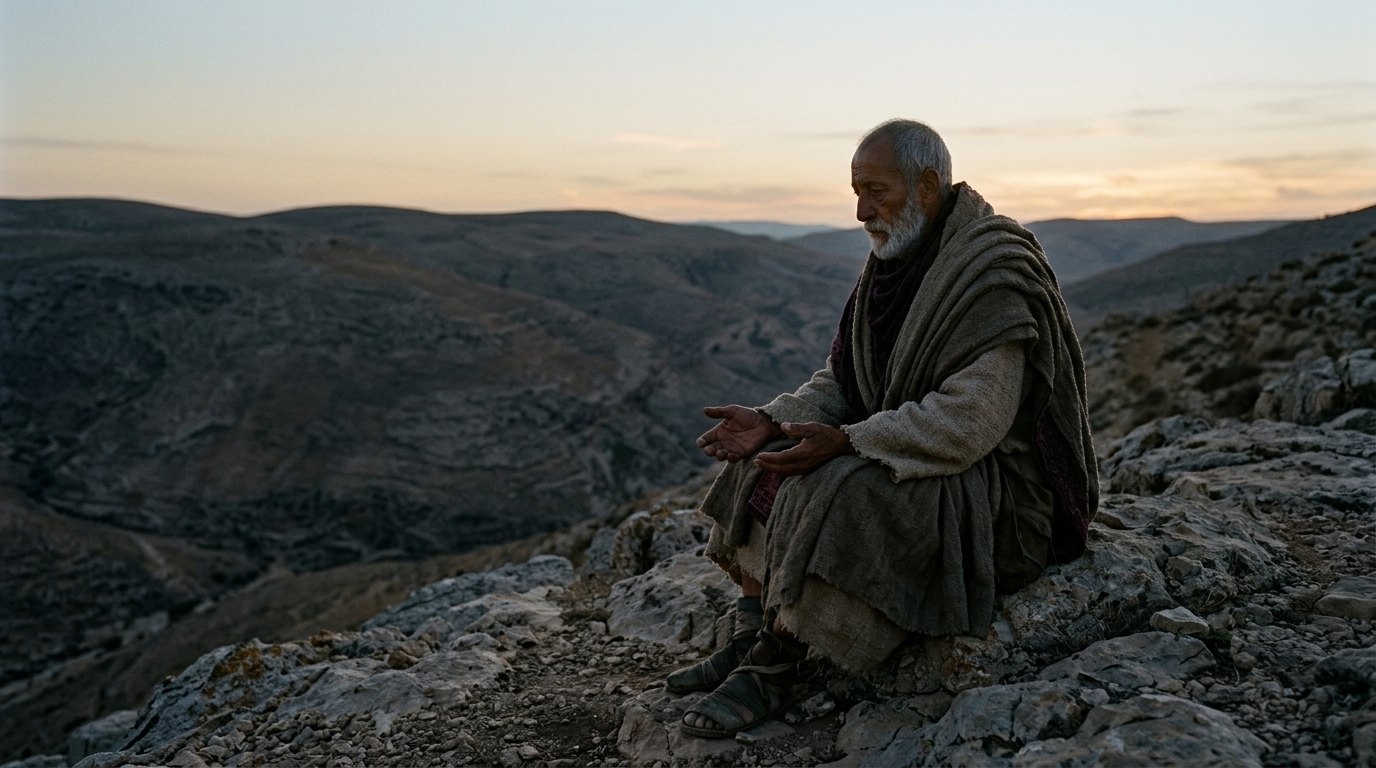
Trust in him at all times, you people; pour out your hearts to him, for God is our refuge.
Psalms 62:8 (NIV)
It commands believers to pour out their whole hearts before God as a refuge, holding nothing back.
In Psalm 62:8, the psalmist commands the people of God to "trust in him at all times; ye people, pour out your heart before him: God is a refuge for us." This divine invitation establishes that honest sorrow, perplexity, and the unvarnished cries of the soul are not forbidden in the life of faith; rather, God welcomes the pouring out of the heart as an act of genuine dependence. When pain overwhelms the believer, Scripture provides language that refuses to hide behind polite pretenses.
David exemplifies this vulnerability in Psalm 22:1, crying out, "My God, my God, why hast thou forsaken me? why art thou so far from helping me, and from the words of my roaring?" He follows in Psalm 22:2 with the agony of unanswered petition, weeping day and night without rest. Far from condemning such anguish, the Holy Spirit inspired these prayers for the church's instruction. In Psalm 10:1, the psalmist asks why the Lord stands far off and hides Himself in times of trouble, and in Psalm 13:1, the soul pleads, "How long wilt thou forget me, O Lord? for ever? how long wilt thou hide thy face from me?"
Even when darkness seems unrelieved, the saints continue addressing God directly. Heman the Ezrahite cries out in Psalm 88:13-14, coming before the Lord in the morning to ask why his soul is cast off and why God hides His face. Similarly, David declares in Psalm 142:1-2 that he pours out his complaint before the Lord and shows Him his trouble openly. Asaph wrestles through similar perplexity in Psalm 77:7-9, asking if the Lord's mercy is clean gone forever and whether He has forgotten to be gracious. Throughout the Psalter, grief turns toward God rather than turning away from Him, culminating in the New Testament exhortation of 1 Peter 5:7, which commands believers to cast all their anxieties upon Him, because He cares for them.
| Passage | What it says |
|---|---|
| Psalms 62:8 | Exhorts God's people to trust Him continually and pour out their inner heart before His presence. |
| Psalms 22:1 | David cries out asking why God seems distant and has forsaken him in his groaning. |
| Psalms 22:2 | Describes crying out day and night without receiving an immediate answer from the Lord. |
| Psalms 10:1 | Asks why the Lord stands far off and hides Himself during seasons of trouble. |
| Psalms 13:1 | Pleads with God over how long He will forget and hide His face from His servant. |
| Psalms 88:13-14 | Cries to the Lord in the morning, asking why His soul is cast off. |
| Psalms 142:1-2 | David pours out his complaint before the Lord and openly shows Him his trouble. |
| Psalms 77:7-9 | Asaph honestly questions whether the Lord has forgotten to be gracious or shut up compassion in anger. |
| 1 Peter 5:7 | Believers are instructed to cast all their anxieties and burdens upon God because He cares for them. |
Righteous Boundary
Accusing God of Wrongdoing Is Sin
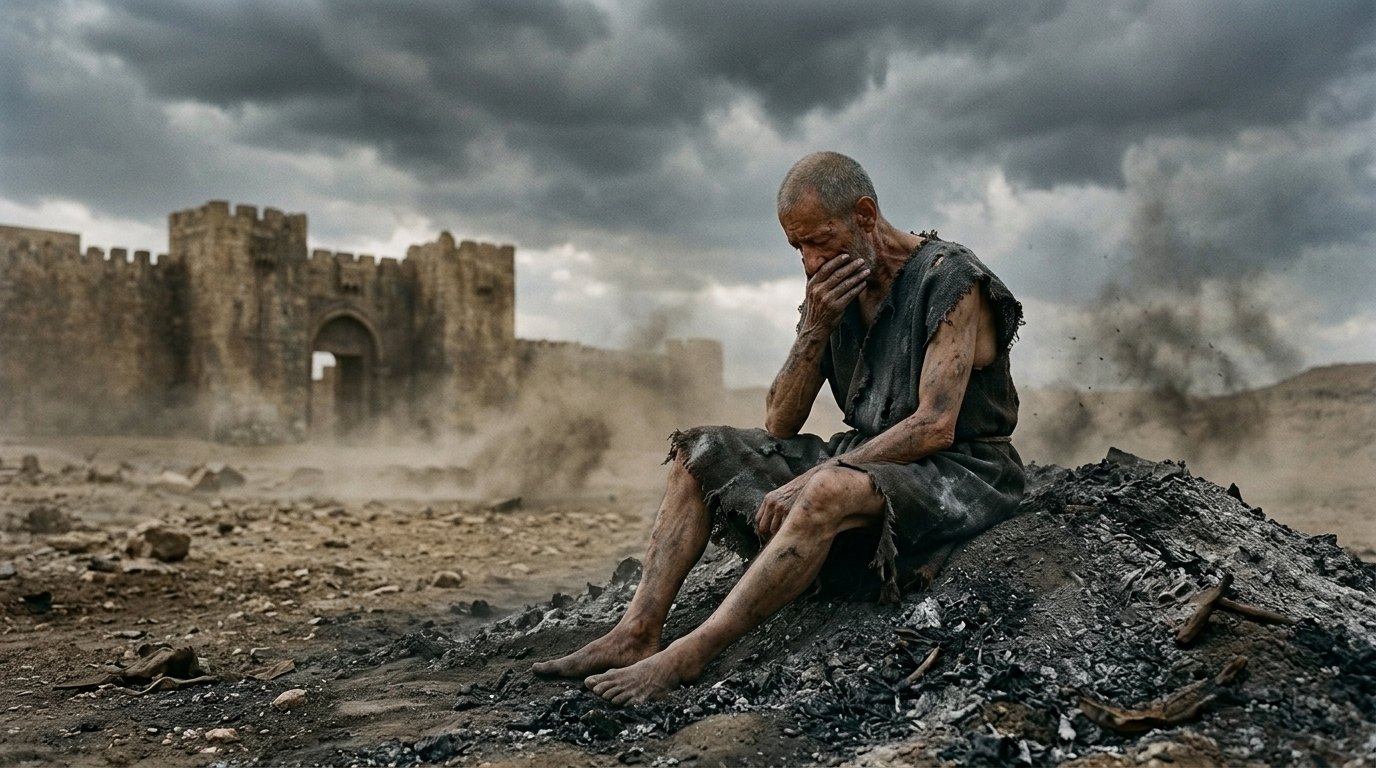
In all this, Job did not sin by charging God with wrongdoing.
Job 1:22 (NIV)
It marks the biblical line between profound grief and sinful rebellion against God's character.
While Scripture allows the wounded soul to weep and question, it marks an absolute moral line in Job 1:22: "In all this Job sinned not, nor charged God foolishly." Here God establishes the crucial boundary: grief is not sin, but accusing God of wrongdoing is wicked. When suffering tempts a man to seat himself on the judge's bench and summon the Almighty to the dock, holy awe is replaced by pride.
When Job later demanded an explanation and sought to justify himself, the Lord confronted him directly in Job 40:8, asking, "Wilt thou also disannul my judgment? wilt thou condemn me, that thou mayest be righteous?" Confronted with the unsearchable majesty and sovereign wisdom of the Creator, Job withdrew his arrogant words in Job 42:3, admitting he had uttered things he understood not, wonders too great for him. In Job 42:6, true repentance followed: "Wherefore I abhor myself, and repent in dust and ashes." The creature has no standing to sit in judgment over the Maker, as the apostle warns in Romans 9:20: "Nay but, O man, who art thou that repliest against God? Shall the thing formed say to him that formed it, Why hast thou made me thus?"
God's character remains unimpeachable, for Deuteronomy 32:4 proclaims of the Rock that His work is perfect and all His ways are judgment, a God of truth and without iniquity. Human rage against heaven often stems from human failure, as Proverbs 19:3 reveals that a man's own foolishness perverts his way, yet his heart fretteth against the Lord. Jonah exhibited this bitter indignation in Jonah 4:1-4 when God spared Nineveh; the Lord challenged him, "Doest thou well to be angry?" Yet Jonah clung to his resentment, insisting in Jonah 4:9 that he did well to be angry, even unto death. Scripture warns against such murmuring in 1 Corinthians 10:10, recalling how Israel murmured in the wilderness and perished, and Isaiah 45:9 pronounces woe on him that striveth with his Maker.
| Passage | What it says |
|---|---|
| Job 1:22 | Records that through severe loss Job did not sin nor charge God foolishly with wrongdoing. |
| Job 40:8 | God questions whether Job will disannul His judgment and condemn Him to appear righteous. |
| Job 42:3 | Job confesses that he uttered things he did not understand, wonders beyond his knowledge. |
| Job 42:6 | Job abhors his arrogant words and repents before God in dust and ashes. |
| Romans 9:20 | Warns humanity against answering back to God or demanding an account from the Potter. |
| Deuteronomy 32:4 | Declares that the Rock's work is perfect, all His ways justice, without iniquity. |
| Proverbs 19:3 | A person's own foolishness ruins their way, yet their heart rages against the Lord. |
| Jonah 4:1-4 | Jonah becomes intensely angry over God's mercy to Nineveh, and the Lord challenges his right to be angry. |
| Jonah 4:9 | God questions Jonah about his anger over the plant, confronting Jonah's insistence that he does well to be angry. |
| 1 Corinthians 10:10 | Scripture warns believers not to grumble against God as Israel did in the wilderness and perished. |
| Isaiah 45:9 | Woe is pronounced on the one who quarrels with his Maker, a clay pot among earthen pots. |
Faithful Wrestling
Prophets Questioned God Without Forsaking Trust

Though the fig tree does not bud and there are no grapes on the vines, though the olive crop fails and the fields produce no food, though there are no sheep in the pen and no cattle in the stalls, yet I will rejoice in the LORD, I will be joyful in God my Savior.
Habakkuk 3:17-18 (NIV)
It demonstrates that questioning God's providence resolves not in bitter departure, but in determined joy in the Lord.
The prophets of Israel demonstrate how a servant of God can bring profound distress to the Lord without abandoning reverent trust, reaching its pinnacle in Habakkuk 3:17-18: "Although the fig tree shall not blossom, neither shall fruit be in the vines... yet I will rejoice in the Lord, I will joy in the God of my salvation." Habakkuk began in deep perplexity, asking in Habakkuk 1:2 how long he must cry out against violence without God intervening. Observing God's sovereign plan to raise up the ruthless Chaldeans, he asked in Habakkuk 1:13 how purer eyes than to behold evil could look upon the treacherous and remain silent. Yet Habakkuk did not defect into bitter rebellion; instead, he stationed himself on the watchtower in Habakkuk 2:1 to watch, listen, and receive the Lord's reproof.
Jeremiah likewise brought his inward fractures before the Lord while maintaining unwavering submission to His holiness. In Jeremiah 12:1, he begins his plea by confessing, "Righteous art thou, O Lord, when I plead with thee," even while asking why the way of the wicked prospers. In Jeremiah 20:7-9, he admits the searing cost of his calling, experiencing derision until God's word burned like fire shut up in his bones, unable to be stayed. In Jeremiah 15:18, he voices the piercing temptation to view his wound as incurable, yet receives the Lord's call to separate the precious from the vile and return.
Other faithful servants collapsed under grief without being rejected by God. In Numbers 11:11-15, Moses spread before the Lord the crushing load of carrying an entire complaining nation, frankly asking why the Lord afflicted His servant. In 1 Kings 19:4, Elijah fled into the wilderness, sat under a broom tree, and prayed that he might die, saying, "It is enough; now, O Lord, take away my life." God met each prophet not with wrath, but with tender sustenance and renewed commissioning.
| Passage | What it says |
|---|---|
| Habakkuk 1:2 | Habakkuk laments how long he must cry for help against violence while God appears silent. |
| Habakkuk 1:13 | Asks how God's pure eyes can look upon treacherous people and hold His tongue. |
| Habakkuk 2:1 | The prophet sets himself upon the watchtower to wait for the Lord's reproof and answer. |
| Habakkuk 3:17-18 | Rejoices in the Lord even if the fig tree does not blossom and fields yield no meat. |
| Jeremiah 12:1 | Affirms God's righteousness while bringing a plea concerning the prosperity of the wicked. |
| Jeremiah 20:7-9 | Jeremiah describes his inner turmoil and wearying struggle under God's compelling call. |
| Numbers 11:11-15 | Moses lays his deep burden and distress before the Lord over carrying the entire rebellious nation. |
| 1 Kings 19:4 | Elijah pours out his exhaustion and despair under the broom tree, asking God to take his life. |
| Jeremiah 15:18 | Jeremiah asks why his pain is perpetual, honestly voicing his struggle before God restores him. |
The Cross
Christ Carried Our Deepest Anguish

About three in the afternoon Jesus cried out in a loud voice, “Eli, Eli, lema sabachthani?” (which means “My God, my God, why have you forsaken me?”).
Matthew 27:46 (NIV)
Jesus takes the raw lament of Psalm 22 onto His lips, proving that anguished cries do not equal sin.
The ultimate resolution of human sorrow and alienation is found at Calvary, where in Matthew 27:46 Jesus cried with a loud voice, "Eli, Eli, lama sabachthani? that is to say, My God, my God, why hast thou forsaken me?" By quoting the opening line of Psalm 22, the sinless Son of God sanctified the language of raw agony. He took upon Himself the fullness of divine judgment against human sin, enduring the horror of curse and separation so that sinners might be reconciled to God. Christ carried the full weight of human anguish without sinning, proving that genuine grief and holy submission walk together.
This perfect obedience was forged through intense supplication, as Hebrews 5:7 recounts that Christ in the days of His flesh "offered up prayers and supplications with strong crying and tears unto him that was able to save him from death, and was heard in that he feared." Centuries earlier, Isaiah 53:3 prophesied that the Messiah would be "a man of sorrows, and acquainted with grief," a prophetic type fulfilled in Matthew 8:17 as He bore our sicknesses and in 1 Peter 2:24 as He bare our sins in His own body on the tree.
In the Garden of Gethsemane, Matthew 26:39 reveals the perfect posture of heart in extreme affliction: Jesus fell on His face and prayed that if possible the cup might pass from Him, yet immediately concluded, "nevertheless not as I will, but as thou wilt." Because He entered our suffering, Hebrews 4:15-16 assures us that we have not a high priest who cannot be touched with the feeling of our infirmities, but one who was tempted in all points like as we are, yet without sin; therefore we may come boldly to the throne of grace to find mercy. And where bitterness or sinful accusations against God have stained our hearts, 1 John 1:9 holds out cleansing grace: "If we confess our sins, he is faithful and just to forgive us our sins, and to cleanse us from all unrighteousness."
| Passage | What it says | Fulfilled |
|---|---|---|
| Hebrews 5:7 | Recounts Christ offering up prayers with strong crying and tears unto Him that could save. | |
| Isaiah 53:3 | Foreshadows the Messiah as a man of sorrows, acquainted with our deepest grief. | Matthew 8:17, 1 Peter 2:24 |
| 1 John 1:9 | Promises that if we confess our sins, God is faithful and just to forgive and cleanse us. | |
| Matthew 26:39 | Jesus models honest anguish in Gethsemane while submitting fully to the Father's will. | |
| Matthew 27:46 | Jesus cries out with Psalm 22:1 on the cross, taking our sin and forsakenness upon Himself. | |
| Hebrews 4:15-16 | Our High Priest sympathizes with our weaknesses, inviting us to draw near to the throne of grace with confidence. |
Anger's Danger
God Calls Us to Surrender Bitter Wrath
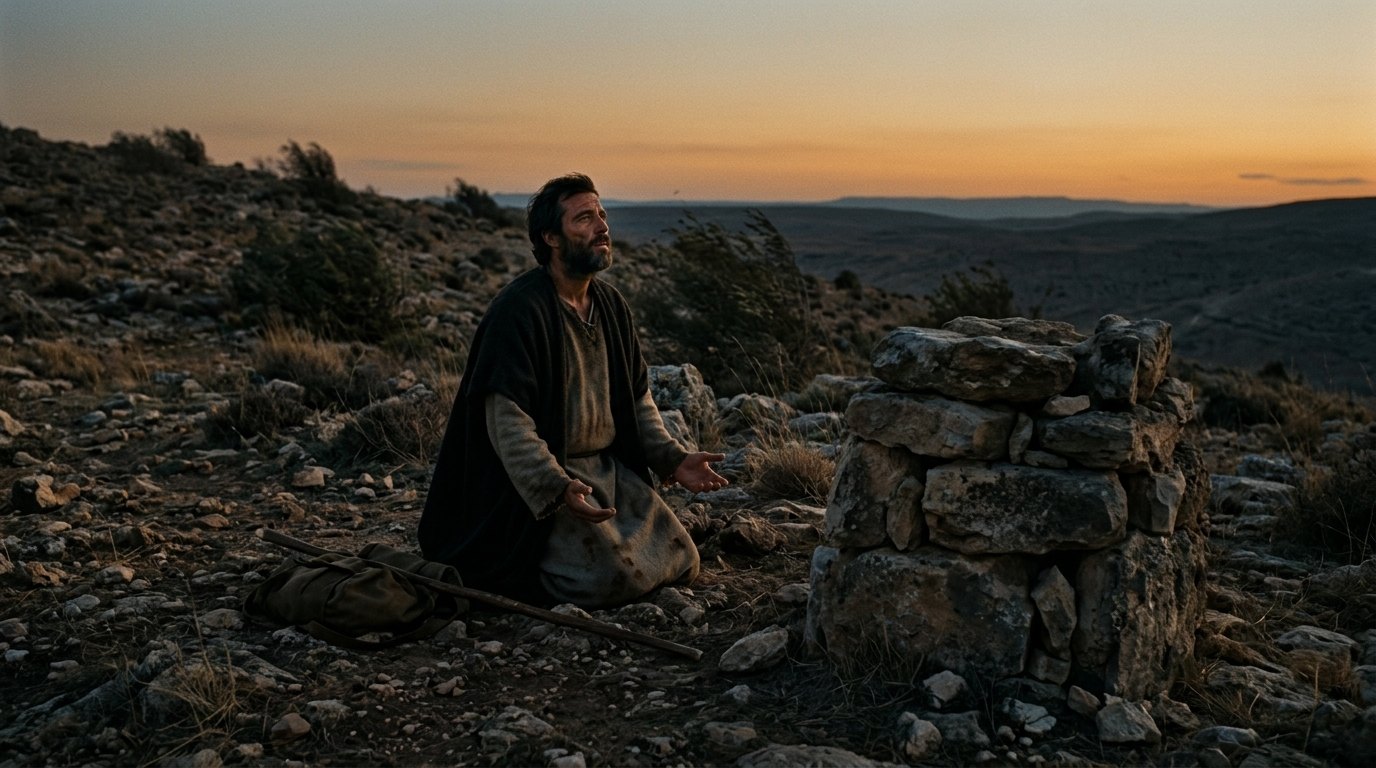
My dear brothers and sisters, take note of this: Everyone should be quick to listen, slow to speak and slow to become angry, because human anger does not produce the righteousness that God desires.
James 1:19-20 (NIV)
It shows that human anger cannot achieve God's righteous purposes and must yield to trusting submission.
James 1:19-20 sets forth an unbending principle for the human heart: the anger of man does not produce the righteousness of God. When trials, loss, or unexplained suffering strike, human nature naturally flares up in indignation. Yet James commands believers to be quick to hear, slow to speak, and slow to anger, because entrenched human wrath cannot bring about God's holy ends.
Nursing hostility, even toward sovereign providence, opens a dangerous spiritual door. Paul warns in Ephesians 4:26-27, "Be angry and do not sin; do not let the sun go down on your anger, and give no opportunity to the devil." While grief and indignation over evil occur, nursing bitter resentment gives Satan a direct foothold in the believer's affections. Lingering wrath darkens the mind, calcifying honest pain into accusatory rebellion.
Scripture constantly urges the suffering saint to release this smoldering indignation before it ruins the soul. David commands in Psalm 37:8, "Refrain from anger, and forsake wrath! Fret not yourself; it tends only to evil." To sit in judgment of God's ways leads inevitably to spiritual destruction, cutting the soul off from the posture of humble reliance.
Instead of stewing in resentful fury, believers are instructed to channel their deep distress into humble petition. Philippians 4:6-7 directs: "Do not be anxious about anything, but in everything by prayer and supplication with thanksgiving let your requests be made known to God." As an agitated heart yields its bitter complaints to the Lord with genuine trust and thanksgiving, the supernatural peace of God guards both heart and mind in Christ Jesus.
| Passage | What it says |
|---|---|
| Ephesians 4:26-27 | Believers are warned not to sin in anger or let the sun go down on wrath, giving the devil a foothold. |
| James 1:19-20 | Human anger does not produce the righteousness that God requires. |
| Psalms 37:8 | The psalmist commands believers to refrain from anger and forsake wrath, for it leads only to evil. |
| Philippians 4:6-7 | Instead of anxious hostility, believers are to present their requests to God with thanksgiving, receiving His peace. |
Where in the Bible
| Book | Passages |
|---|---|
| Numbers | 1 · Numbers 11:11-15 |
| Deuteronomy | 1 · Deuteronomy 32:4 |
| 1 Kings | 1 · 1 Kings 19:4 |
| Job | 4 · Job 1:22, Job 40:8, Job 42:3, Job 42:6 |
| Psalms | 9 · Psalms 62:8, Psalms 22:1, Psalms 22:2, Psalms 10:1, Psalms 13:1, Psalms 88:13-14, Psalms 142:1-2, Psalms 77:7-9, Psalms 37:8 |
| Proverbs | 1 · Proverbs 19:3 |
| Isaiah | 2 · Isaiah 45:9, Isaiah 53:3 |
| Jeremiah | 3 · Jeremiah 12:1, Jeremiah 20:7-9, Jeremiah 15:18 |
| Jonah | 2 · Jonah 4:1-4, Jonah 4:9 |
| Habakkuk | 4 · Habakkuk 1:2, Habakkuk 1:13, Habakkuk 2:1, Habakkuk 3:17-18 |
| Matthew | 2 · Matthew 26:39, Matthew 27:46 |
| Romans | 1 · Romans 9:20 |
| 1 Corinthians | 1 · 1 Corinthians 10:10 |
| Ephesians | 1 · Ephesians 4:26-27 |
| Philippians | 1 · Philippians 4:6-7 |
| Hebrews | 2 · Hebrews 5:7, Hebrews 4:15-16 |
| James | 1 · James 1:19-20 |
| 1 Peter | 1 · 1 Peter 5:7 |
| 1 John | 1 · 1 John 1:9 |
The story in order
- Creation and Fall (c. 4000 BC) · Genesis 1:27 · Establishes humanity in God's image, male and female.
- Israel's Wilderness Journey (c. 1450 BC) · 1 Corinthians 10:10 · Warns against grumbling and perishing.
- Prophetic Laments (c. 600 BC) · Habakkuk 1:2 · Prophets question God's silence amidst injustice.
- Job's Trial and Repentance (c. 600 BC) · Job 1:22 · Job does not charge God foolishly despite loss.
- Jonah's Anger at God's Mercy (c. 750 BC) · Jonah 4:1-4 · Jonah is angry at God's compassion.
- Jesus' Anguish in Gethsemane (AD 30) · Matthew 26:39 · Jesus submits to the Father's will in distress.
- Jesus' Cry on the Cross (AD 30) · Matthew 27:46 · Jesus quotes Psalm 22, experiencing forsakenness.
- Apostolic Instruction on Anger (c. AD 60) · Ephesians 4:26-27 · Warning against sinning in anger.
- Casting Anxieties on God (c. AD 60) · 1 Peter 5:7 · Believers cast burdens on God who cares.
Lament to Trust
| Cry of Anguish | Question or Complaint | Expression of Trust or Resolution | Passage |
|---|---|---|---|
| David cries out, why have you forsaken me? | My God, I cry by day, but you do not answer. | Yet you are holy, enthroned on the praises of Israel. | Psalms 22:1-3 |
| Habakkuk laments, How long shall I cry for help? | Why do you make me see wrongdoing and look at trouble? | I will stand at my watch and set myself on the rampart. | |
| Jeremiah questions God's ways. | Why do the wicked prosper? Why are they at ease? | But the Lord is in his holy temple; let all the earth keep silence before him. | Jeremiah 12:1-5 |
| Elijah despairs under the broom tree. | It is enough; now, O Lord, take away my life. | He lay down and slept under a broom tree. And behold, an angel touched him. | 1 Kings 19:4-6 |
Key words
- Lament
- An expression of grief, sorrow, or regret, often directed towards God. · Psalms 22:1
- Anger
- A strong feeling of annoyance, displeasure, or hostility. · Ephesians 4:26
- Trust
- Firm belief in the reliability, truth, ability, or strength of someone or something. · Psalms 62:8
- Righteousness
- The quality of being morally right or justifiable; God's perfect justice. · Deuteronomy 32:4
- Sin
- An act that is contrary to the will of God. · Job 1:22
- Repent
- To feel or express sincere regret or remorse about one's wrongdoing or sin. · Job 42:6
Believers need never hide their tears or pretend confusion does not hurt, for God welcomes broken hearts that turn toward Him. Yet true healing begins when we refuse to accuse our Creator, taking our wounds to the foot of the cross where Christ bore our sorrows and won our eternal peace.
39 passages, each cited once.
Scripture cited
- Matthew 27:46
- Psalms 22:1-24
- Job 1:20-22
- Job 42:1-6
- Psalms 62:8
- 1 John 1:9
- Habakkuk 1:2-4
- Habakkuk 3:17-19