Is the God of the Old Testament a moral monster?

Psalms 145:8-9
8 The LORD is gracious and compassionate, slow to anger and rich in love.
9 The LORD is good to all; he has compassion on all he has made.
New International Version (NIV)
The answer
No. The God of the Old Testament is not a moral monster. He is good, merciful, patient, and forgiving, while also being righteous in His treatment of guilt. His justice is part of His goodness, not evidence against it.
His character is repeatedly declared
The Old Testament does not merely claim that God is powerful; it explicitly declares His moral character: “Yahweh is gracious, merciful, slow to anger, and of great loving kindness” (Psalms 145:8). The next verse extends that goodness broadly: “Yahweh is good to all. His tender mercies are over all his works” (Psalms 145:9).
That description contradicts the essential elements of the accusation. A moral monster would be cruel, arbitrary, or delight in evil. God is instead described as compassionate, patient, and abundant in loving kindness.
Justice is not cruelty
God’s patience does not mean that evil is harmless, and His forgiveness does not mean that guilt is imaginary. Numbers 14:18 holds these truths together: “The LORD is longsuffering, and of great mercy, forgiving iniquity and transgression, and by no means clearing the guilty.”
This rules out two distortions:
- Judgment cannot simply be equated with cruelty. A good God must oppose evil rather than treat it as morally insignificant.
- Mercy cannot be reduced to indifference. God genuinely forgives, but He does not pretend that guilt does not exist.
Psalms 116:5 explicitly joins these attributes: “Gracious is the LORD, and righteous; yea, our God is merciful.” Righteousness and mercy are not competing gods or contradictory portraits; they belong to the same Lord.
How to approach the severe judgments
Particular Old Testament judgments deserve careful examination in their own passages and contexts. Their severity alone, however, does not prove that God acted wickedly. The relevant questions include what guilt is identified, what patience preceded judgment, and whether the passage presents God acting according to righteousness.
Human outrage is not automatically a higher moral court. To condemn God as evil requires an objective standard of goodness, not merely the assertion that His actions are disturbing. The Old Testament’s stated standard is not raw power: it is the Lord who is gracious, righteous, merciful, and good to all.
His readiness to forgive is genuine: “For thou, Lord, art good, and ready to forgive; and plenteous in mercy unto all them that call upon thee” (Psalms 86:5). The proper response is therefore neither to call evil good nor to accuse God of cruelty, but to recognize righteousness in His judgments and seek the mercy He offers.
Answered from Scripture · reviewed November 12, 2026
The accusation that the God of the Old Testament is a cruel and vindictive tyrant collapses before the actual testimony of Scripture. Far from capricious or malicious, the Lord reveals Himself across the Old Testament as righteous, compassionate, slow to anger, and abundant in steadfast love. His severe judgments never spring from petty malice, but from a holy justice that confronts genuine evil while consistently holding out mercy to the repentant.
The Divine Name
God proclaims His own character as compassionate and patient

And he passed in front of Moses, proclaiming, “The LORD, the LORD, the compassionate and gracious God, slow to anger, abounding in love and faithfulness,
Exodus 34:6 (NIV)
When God declares His name and nature to Moses, He leads with compassion, grace, and longsuffering rather than sheer power.
When God reveals His intrinsic nature to Moses on Mount Sinai, He does not lead with consuming power or aloof sovereignty, but with tender mercy. In Exodus 34:6, the Lord passes before Moses and proclaims His name as merciful and gracious, longsuffering, and abundant in goodness and truth. This foundational self-revelation sets the framework for the entire Old Testament witness. The very next verse, Exodus 34:7, affirms that while God forgives iniquity and transgressions across thousands of generations, He maintains holy justice and will by no means clear the guilty. This self-description is not an isolated exception; it becomes the repeated liturgical anchor for Israel’s faith whenever the nation faces crisis or guilt. When Moses pleads for Israel after their refusal to enter the promised land, he quotes this exact character back to God in Numbers 14:18, asking for pardon based on the Lord's great patience and steadfast love.
Generations later, following the return from Babylonian exile, the Levites rehearse their history in Nehemiah 9:17, recalling how God was ready to pardon, gracious and merciful, slow to anger, refusing to forsake Israel even when they formed the golden calf. The psalmists consistently rest their hope in this identical confession. In Psalms 86:15, David leans upon the Lord as a God full of compassion, and gracious, longsuffering, and plenteous in mercy. Similarly, Psalms 103:8 echoes that the Lord is merciful and slow to wrath, dealing with His people not according to their sins, but removing their transgressions as far as the east is from the west. When the prophets summon a backsliding nation to repentance, they do not depict an unappeasable tyrant, but a Father waiting to heal. In Joel 2:13, the prophet urges the people to rend their hearts because God is gracious, slow to anger, and relents from sending calamity. The prophet Micah closes his prophecy in Micah 7:18 with holy wonder, asking who is a God like Him, who pardons iniquity and delights in steadfast love. When King Hezekiah calls the remnant of Israel to return to the temple in 2 Chronicles 30:9, he assures them that the Lord will not turn away His face from them, because He is thoroughly gracious.
| Passage | What it says |
|---|---|
| Exodus 34:6 | The Lord proclaims His name as merciful, gracious, longsuffering, and abundant in goodness and truth. |
| Exodus 34:7 | God keeps steadfast love for thousands and forgives iniquity, while upholding justice by not clearing the guilty. |
| Numbers 14:18 | Moses recites God's character as longsuffering and of great mercy, forgiving sin while executing righteous justice. |
| Nehemiah 9:17 | Nehemiah reminds Israel that God remained ready to pardon, gracious, merciful, and slow to anger despite their rebellion. |
| Psalms 86:15 | David confesses that the Lord is a God full of compassion, gracious, longsuffering, and plenteous in mercy. |
| Psalms 103:8 | The psalmist praises God for being merciful, gracious, slow to anger, and plenteous in steadfast love. |
| Joel 2:13 | Calls Israel to repent because God is gracious, merciful, slow to anger, and abounds in steadfast love. |
| Micah 7:18 | Asks who is a God like Him, who pardons iniquity and delights in steadfast love. |
| 2 Chronicles 30:9 | Reminds returning Israelites that the Lord will not turn His face away because He is gracious. |
Universal Goodness
The Lord's tender care extends over all His works

The LORD is good to all; he has compassion on all he has made.
Psalms 145:9 (NIV)
This verse explicitly refutes tribal cruelty by declaring that God's goodness and tender mercies encompass everything He made.
The charge that the Old Testament presents merely a tribal deity concerned with bloodlust and ethnic favoritism is completely shattered by the Psalms. In Psalms 145:9, David declares that the Lord is good to all: and his tender mercies are over all his works. Divine compassion is not narrow, stingy, or restricted to a favored elite; it extends across every creature He has made. Preceding this, Psalms 145:8 reiterates that the Lord is full of compassion and of great mercy, providing bread for every living thing and upholding all who fall.
This boundless goodness is the bedrock of biblical prayer and worship. David cries out in Psalms 86:5 with total confidence: For thou, Lord, art good, and ready to forgive; and plenteous in mercy unto all them that call upon thee. God’s disposition toward humanity is fundamentally benevolent and forgiving. The community of faith gathers in Psalms 100:5 with unreserved thanksgiving precisely because the Lord is good; his mercy is everlasting; and his truth endureth to all generations. Far from arbitrary whim or unpredictable volatility, His covenant love remains fixed and unshakeable across every age.
The historic witness of Israel is structured around this unwavering confession of divine love. The great liturgical hymn of redemption in Psalms 107:1 commands all men to give thanks unto the Lord because he is good: for his mercy endureth for ever, recounting in detail how He delivers the wanderer, frees the chained prisoner, heals the sick, and calms the raging tempest. When the sanctuary resounds with antiphon in Psalms 136:1, the repeated refrain of the entire biblical story is established upon this single, unchanging truth: God's mercy endures forever.
| Passage | What it says |
|---|---|
| Psalms 145:8 | The Lord is gracious, full of compassion, slow to anger, and of great mercy. |
| Psalms 145:9 | The Lord is good to all, and His tender mercies are over all His creation. |
| Psalms 86:5 | The Lord is good, ready to forgive, and abundant in mercy to all who call upon Him. |
| Psalms 100:5 | The Lord is fundamentally good, His mercy is everlasting, and His truth endures to all generations. |
| Psalms 107:1 | The psalm opens with praise because the Lord is good and His steadfast love endures forever. |
| Psalms 136:1 | Thanks is given to the Lord on the foundational ground of His inherent goodness and enduring mercy. |
Justice and Righteousness
Righteous judgment is essential to divine goodness

The LORD is gracious and righteous; our God is full of compassion.
Psalms 116:5 (NIV)
Scripture explicitly couples grace and righteousness together, proving that God's justice is an expression of His goodness.
Critics frequently pit God’s justice against His goodness, treating divine judgment as if it were cruelty. Yet Scripture explicitly reveals that righteous judgment is an indispensable requirement of true love. In Psalms 116:5, the psalmist directly couples these attributes: Gracious is the Lord, and righteous; yea, our God is merciful. God’s righteousness is not the antithesis of His grace, but its holy integrity. A God who indifferent to evil, who ignored rape, oppression, idolatry, and murder, would be morally deficient. Judgment is the necessary defense of the vulnerable and the vindication of holiness.
When Abraham intercedes for Sodom in Genesis 18:25, he appeals directly to God’s immutable moral nature, asking: Shall not the Judge of all the earth do right? Abraham knew that God cannot act arbitrarily, maliciously, or unfairly. Moses sings of this absolute purity in Deuteronomy 32:4, calling God the Rock, his work is perfect: for all his ways are judgment: a God of truth and without iniquity, just and right is he. God’s authority is never tyranny because it is grounded in absolute rectitude. The psalmist confirms this in Psalms 89:14, declaring that justice and judgment are the habitation of thy throne: mercy and truth shall go before thy face. The same reality is affirmed in Psalms 97:2, where the awe-inspiring majesty of God’s rule is anchored firmly in righteousness.
Elihu refutes the charge of divine injustice in Job 34:12, saying with certainty that God will not do wickedly, neither will the Almighty pervert judgment. God has no dark impulses, no selfish cruelty, and no arbitrary malice. The Lord Himself declares what He values most in Jeremiah 9:24, commanding men to glory in understanding Him: that I am the Lord which exercise lovingkindness, judgment, and righteousness, in the earth: for in these things I delight, saith the Lord. Divine judgment is the necessary and righteous overthrow of wicked destructiveness.
| Passage | What it says |
|---|---|
| Psalms 116:5 | The Lord is described simultaneously as gracious, righteous, and thoroughly merciful. |
| Genesis 18:25 | Abraham grounds his plea in the certainty that the Judge of all the earth will always do right. |
| Deuteronomy 32:4 | Moses praises God as the Rock whose work is perfect, whose ways are justice, and who is without iniquity. |
| Psalms 89:14 | Righteousness and justice are the very foundation of God's throne, accompanied by mercy and truth. |
| Psalms 97:2 | Clouds and darkness surround God, while righteousness and justice remain the foundation of His reign. |
| Job 34:12 | Affirms with certainty that God will never do wickedness or pervert justice. |
| Jeremiah 9:24 | States that the Lord exercises steadfast love, justice, and righteousness in the earth, delighting in these. |
Patience and Hesitation
God delays wrath and takes no pleasure in destruction

Do I take any pleasure in the death of the wicked? declares the Sovereign LORD. Rather, am I not pleased when they turn from their ways and live?
Ezekiel 18:23 (NIV)
God directly repudiates the idea that He delights in the death of the wicked, affirming His desire for repentance.
A vindictive tyrant takes pleasure in punishing his subjects, but the Old Testament repeatedly emphasizes that God delays wrath and grieves over human destruction. In Ezekiel 18:23, God exposes the false accusation of divine malice by asking: Have I any pleasure at all that the wicked should die? saith the Lord God: and not that he should return from his ways, and live? He underscores this with an absolute divine oath in Ezekiel 33:11, declaring, As I live, saith the Lord God, I have no pleasure in the death of the wicked; but that the wicked turn from his way and live: turn ye, turn ye from your evil ways; for why will ye die? God’s ultimate desire is not retribution, but repentance and life.
This patience is evident throughout biblical history. In Genesis 15:16, God explains to Abraham that his descendants will remain in Egypt for four hundred years because the iniquity of the Amorites is not yet full. God restrained judgment upon Canaan for four centuries, waiting for moral depravity to reach its limit while withholding wrath. Before the flood, Genesis 6:3 records God giving an unhurried grace period of one hundred and twenty years. The New Testament confirms this identical character in 2 Peter 3:9, explaining that God is not slack concerning his promise... but is longsuffering to us-ward, not willing that any should perish, but that all should come to repentance.
The prophet Jonah understood this divine hesitation all too well. Displeased that brutal Nineveh was spared upon repenting, he confesses in Jonah 4:2 that he fled because he knew God was a gracious God, and merciful, slow to anger, and of great kindness, and repentest thee of the evil. In Isaiah 30:18, the prophet reveals that the Lord wait, that he may be gracious unto you. Even when chastisement falls, Lamentations 3:32 promises that though He causes grief, He will have compassion according to His mercies, while Lamentations 3:33 confirms the profound truth that God doth not afflict willingly nor grieve the children of men. Judgment is His strange work; mercy is His delight.
| Passage | What it says |
|---|---|
| Genesis 15:16 | God waited four centuries to judge the Amorites because their iniquity was not yet complete. |
| Ezekiel 18:23 | The Lord asks whether He has any pleasure at all that the wicked should die rather than repent and live. |
| Ezekiel 33:11 | God swears by His own life that He takes no pleasure in the death of the wicked, urging them to turn. |
| Jonah 4:2 | Jonah acknowledges that God is gracious, merciful, slow to anger, and relents from sending calamity upon Nineveh. |
| Isaiah 30:18 | The Lord waits so that He may be gracious to His people and exalted in showing mercy. |
| Genesis 6:3 | God gives humanity an unhurried span of one hundred and twenty years before the flood. |
| 2 Peter 3:9 | Explains divine patience: God is not slow, but does not wish that any should perish. |
| Lamentations 3:32 | Declares that though He causes grief, God shows compassion according to His abundant love. |
| Lamentations 3:33 | Affirms that God does not afflict or grieve the children of men willingly or from the heart. |
Mercy for the Vulnerable
The Law commands extraordinary protection for the weak
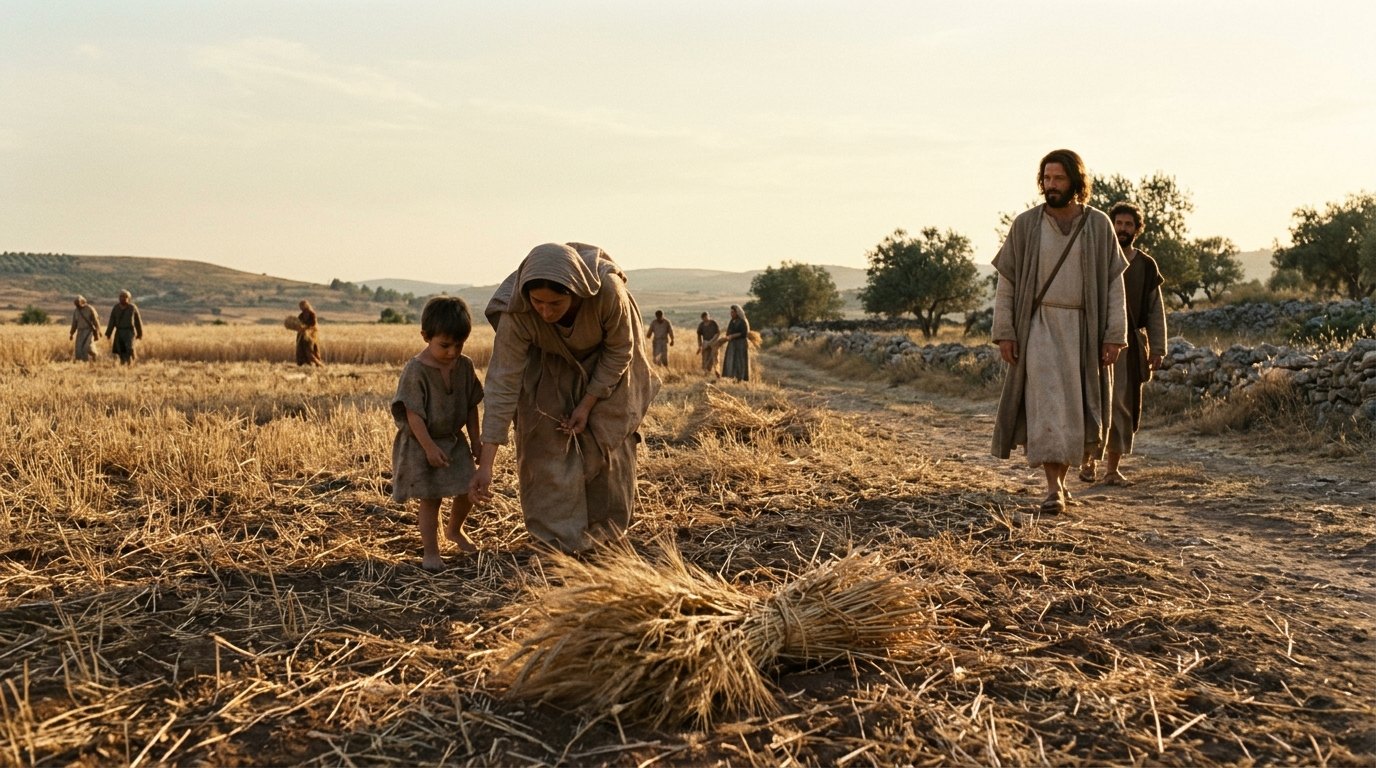
He defends the cause of the fatherless and the widow, and loves the foreigner residing among you, giving them food and clothing.
Deuteronomy 10:18 (NIV)
Far from oppressing the weak, the Lord defines His reign by executing justice for orphans, widows, and strangers.
In Deuteronomy 10:18, Scripture reveals the beating heart of God's law: the Lord executes justice for the fatherless and the widow, and loves the stranger, giving him food and clothing. Far from being an uncaring or despotic deity, God uniquely stakes His own glory on defending those who possess neither social leverage nor political power. The nations around Israel operated on raw strength and the ruthless exploitation of the defenseless, but Israel's God demanded that His people reflect His distinct holiness by cherishing the vulnerable.
This protective ethic is woven throughout the Mosaic statutes. In Exodus 22:21, God strictly commands, 'You shall neither mistreat a stranger nor oppress him, for you were strangers in the land of Egypt.' Immediately following, in Exodus 22:22, the Lord issues a terrifying warning to potential oppressors: if anyone afflicts a widow or an orphan and they cry out to Him, He will surely hear their cry and pour out fierce judgment. God does not merely forbid oppression; He legislates positive affection. Leviticus 19:34 elevates this care to an astounding standard, commanding Israel to love the resident alien as oneself.
Even economic laws were structured around this divine compass. Deuteronomy 24:19 mandates that sheaves of grain accidentally left behind during harvest must remain in the field for the sojourner, the orphan, and the widow, turning agricultural labor into institutional charity. As Proverbs 14:31 observes, oppressing the poor insults their Maker, but being generous to the needy honors Him. God takes the treatment of the impoverished personally because every human being bears His image.
The worship and prophetic witness of Israel reinforce this unchanging character. Psalm 68:5 exalts God in His holy dwelling as a father of the fatherless and a protector of widows, while Psalm 146:9 praises the Lord who preserves the stranger and upholds the broken. When Israel strayed into empty ritualism, the prophets summoned them back to God's heart: Isaiah 1:17 calls the nation to learn to do good, correct oppression, and plead the case of the fatherless. The Old Testament bears consistent witness not to a tyrant, but to a righteous Father who fiercely guards the weak.
| Passage | What it says |
|---|---|
| Exodus 22:21 | Israel is forbidden to mistreat or oppress a stranger, remembering their own vulnerability in Egypt. |
| Exodus 22:22 | God warns that He will hear the cry of any afflicted widow or fatherless child and execute judgment. |
| Leviticus 19:34 | The Law commands Israel to love the resident stranger as oneself. |
| Deuteronomy 10:18 | The Lord defends the fatherless and the widow, loving the stranger by providing food and clothing. |
| Psalms 68:5 | God in His holy habitation is revealed as a father of the fatherless and a defender of widows. |
| Psalms 146:9 | The Lord preserves the stranger and relieves the fatherless and widow, but turns the way of the wicked upside down. |
| Deuteronomy 24:19 | Commands harvesters to leave forgotten sheaves for the sojourner, fatherless, and widow. |
| Proverbs 14:31 | States that oppressing the poor insults their Maker, but being generous to the needy honors Him. |
| Isaiah 1:17 | Pleads to learn to do good, seek justice, correct oppression, and bring justice to the fatherless. |
Where in the Bible
| Book | Passages |
|---|---|
| Genesis | 3 · Genesis 18:25, Genesis 15:16, Genesis 6:3 |
| Exodus | 4 · Exodus 34:6, Exodus 34:7, Exodus 22:21, Exodus 22:22 |
| Leviticus | 1 · Leviticus 19:34 |
| Numbers | 1 · Numbers 14:18 |
| Deuteronomy | 3 · Deuteronomy 32:4, Deuteronomy 10:18, Deuteronomy 24:19 |
| 2 Chronicles | 1 · 2 Chronicles 30:9 |
| Nehemiah | 1 · Nehemiah 9:17 |
| Job | 1 · Job 34:12 |
| Psalms | 13 · Psalms 86:15, Psalms 103:8, Psalms 145:8, Psalms 145:9, Psalms 86:5, Psalms 100:5, Psalms 107:1, Psalms 136:1, Psalms 116:5, Psalms 89:14, Psalms 97:2, Psalms 68:5, Psalms 146:9 |
| Proverbs | 1 · Proverbs 14:31 |
| Isaiah | 2 · Isaiah 30:18, Isaiah 1:17 |
| Jeremiah | 1 · Jeremiah 9:24 |
| Lamentations | 2 · Lamentations 3:32, Lamentations 3:33 |
| Ezekiel | 2 · Ezekiel 18:23, Ezekiel 33:11 |
| Joel | 1 · Joel 2:13 |
| Jonah | 1 · Jonah 4:2 |
| Micah | 1 · Micah 7:18 |
| 2 Peter | 1 · 2 Peter 3:9 |
The story in order
- God proclaims His name (c. 1446 BC) · Exodus 34:6 · Reveals Himself as merciful, gracious, slow to anger, and abundant in love and truth.
- God's justice and mercy foundational (c. 1000 BC) · Psalms 89:14 · Righteousness and justice are the foundation of His throne, with mercy and truth.
- God's goodness to all (c. 1000 BC) · Psalms 145:9 · His tender mercies are over all His creation; He is good to all.
- God waits to judge (c. 2000 BC) · Genesis 15:16 · God delayed judgment on the Amorites for centuries due to their iniquity not being complete.
- God's pleasure is repentance, not death (c. 590 BC) · Ezekiel 18:23 · God asks if He delights in the death of the wicked, rather than their repentance.
- Law protects the vulnerable (c. 1446 BC) · Exodus 22:22 · God hears the cry of the afflicted widow or fatherless child.
- God defends the vulnerable (c. 1406 BC) · Deuteronomy 10:18 · The Lord defends the fatherless and widow, loving the stranger.
- God exercises justice on earth (c. 627 BC) · Jeremiah 9:24 · God exercises steadfast love, justice, and righteousness in the earth.
- God is slow to anger (c. 785 BC) · Jonah 4:2 · Jonah acknowledges God's gracious, merciful, slow-to-anger nature.
- God waits to be gracious (c. 740 BC) · Isaiah 30:18 · The Lord waits to be gracious and exalted in showing mercy.
- God does not grieve willingly (c. 586 BC) · Lamentations 3:33 · God does not afflict or grieve the children of men willingly.
- Divine patience explained (c. AD 65) · 2 Peter 3:9 · God is patient, not wishing any to perish, but all to come to repentance.
God's Character: Mercy and Justice
| Mercy/Grace | Justice/Righteousness | Longsuffering/Patience | Passage |
|---|---|---|---|
| Merciful, gracious, abundant in goodness and truth | Upholding justice by not clearing the guilty | Longsuffering | Exodus 34:6-7 |
| Ready to pardon, gracious, merciful, slow to anger | Executing righteous justice | Slow to anger | Numbers 14:18 |
| Full of compassion, gracious, longsuffering, plenteous in mercy | Righteousness and justice are the foundation of His throne | Longsuffering | Psalms 86:15 |
| Merciful, gracious, slow to anger, plenteous in steadfast love | Righteousness and justice are the foundation of His reign | Slow to anger | Psalms 97:2 |
| Gracious, merciful, slow to anger, abounding in steadfast love | Exercises steadfast love, justice, and righteousness | Slow to anger | Joel 2:13 |
God's Care for the Vulnerable
| Command to Israel | God's Action/Character | Passage |
|---|---|---|
| Do not mistreat or oppress a stranger | God hears the cry of the afflicted widow or fatherless child | Exodus 22:21-22 |
| Love the resident stranger as yourself | God defends the fatherless and the widow, loves the stranger | |
| Leave forgotten sheaves for the sojourner, fatherless, and widow | God preserves the stranger and relieves the fatherless and widow | |
| Seek justice, correct oppression, bring justice to the fatherless | God is a father of the fatherless and a defender of widows |
God's Patience and Judgment
| Divine Patience | Reason for Delay | Ultimate Action | Passage |
|---|---|---|---|
| Waited four centuries | Amorites' iniquity was not yet complete | Judgment | Genesis 15:16 |
| Gives humanity 120 years | Before the flood | Judgment | Genesis 6:3 |
| Asks if He delights in wicked dying | Rather than repenting and living | Mercy/Life | Ezekiel 18:23 |
| Swears He takes no pleasure in wicked dying | Urging them to turn | Mercy/Life | Ezekiel 33:11 |
| Waits to be gracious | To show mercy | Grace/Mercy | Isaiah 30:18 |
| Is patient | Does not wish any to perish | Salvation | 2 Peter 3:9 |
Key words
- Steadfast love (ḥesed, חֶסֶד)
- Enduring, loyal, covenantal love; kindness and faithfulness. · Exodus 34:6
- Gracious (ḥānan, חָנַן)
- Showing favor and kindness, especially undeserved. · Exodus 34:6
- Longsuffering ('āreḵ 'appāyim, אָרֵךְ אַפַּיִם)
- Slow to anger, patient, enduring provocation. · Exodus 34:6
- Mercy (raḥam, רַחַם)
- Compassion or forgiveness shown toward someone whom it is within one's power to punish or harm. · Exodus 34:6
- Justice (mišpāṭ, מִשְׁפָּט)
- The quality of being fair and reasonable; upholding what is right. · Genesis 18:25
- Righteousness (ṣedāqāh, צְדָקָה)
- Conformity to divine law or morality; uprightness. · Deuteronomy 32:4
Rather than a moral monster, the God of the Old Testament is the holy, loving Creator who took decades and centuries to warn rebellious nations and His own people before judgment fell. His righteous hatred of sin and His boundless mercy meet perfectly at the cross of Christ, where justice is satisfied and grace is lavished on all who believe.
40 passages, each cited once.
Scripture cited
- Numbers 14:18
- Psalms 86:5
- Psalms 116:5