What does 'shalom' mean?

John 14:27
27 Peace I leave with you; my peace I give you. I do not give to you as the world gives. Do not let your hearts be troubled and do not be afraid.
New International Version (NIV)
The answer
Shalom is the Hebrew word commonly translated “peace,” but it means more than the absence of conflict. It carries the ideas of wholeness, completeness, welfare, safety, and well-being—life being sound and rightly ordered. It includes peace with God and harmonious relationships with others, not merely a calm feeling.
Jesus’ words in John 14:27 show why His peace differs from circumstantial calm: “Peace I leave with you. My peace I give to you; not as the world gives, I give to you. Don’t let your heart be troubled, neither let it be fearful.” The world’s peace often depends on everything going well; Christ’s peace is His own gift, grounded in Him rather than in changing circumstances.
This does not mean a life without trouble. Jesus says in John 16:33, “In the world ye shall have tribulation: but be of good cheer; I have overcome the world.” His peace sustains believers within tribulation because He has overcome. Philippians 4:7 describes God’s peace as passing all understanding and keeping hearts and minds through Christ Jesus, while Colossians 3:15 tells believers to let that peace rule in their hearts.
So shalom is not pretending that nothing is wrong. In its fullest biblical sense, it is God-given peace and wholeness: being reconciled to God, guarded inwardly, and brought into rightly ordered relationships with others.
Answered from Scripture · reviewed November 11, 2026
In the biblical text, shalom means far more than an easy ceasefire or quiet circumstances; its root conveys total completeness, soundness, welfare, and restored relationship. From the covenants of the Old Testament to the saving work of Christ, Scripture reveals that true shalom is God's own wholeness granted to broken humanity. Tracing this word across the canon unveils how the Lord Himself becomes our peace in a troubled world.
The Root Meaning
Wholeness, Safety, and Total Well-Being

“ ‘ “The LORD bless you and keep you; the LORD make his face shine on you and be gracious to you; the LORD turn his face toward you and give you peace.” ’
Numbers 6:24-26 (NIV)
The Aaronic blessing culminates in God lifting His countenance upon His people to give them shalom as the crown of all divine favour.
The high priestly blessing in Numbers 6:24-26 reveals that shalom is the climactic gift of God's favor, where the Lord lifts His countenance upon His people to bestow comprehensive wholeness. Far from a mere cessation of hostilities, the Hebrew root shalam conveys completeness, soundness, and full restoration. We see its concrete legal meaning in Exodus 22:14, where making restitution requires making something whole again. This soundness encompasses bodily life, safe dwelling, and relational harmony. In Genesis 15:15, God promises Abram a peaceful departure in a ripe old age, while Abimelech in Genesis 26:29 recognizes that Isaac departed without injury or conflict. Similarly, Joseph's steward calms the terrified brothers in Genesis 43:23 with a greeting of peace, and in Genesis 43:27 Joseph inquires concerning the physical health and welfare of his father Jacob. When covenant life flourishes under the law, Leviticus 26:6 promises quiet nights without terror, parallel to David's quiet confidence in Psalm 4:8 and the pastoral greeting of peace spoken over Nabal in 1 Samuel 25:6. Even Israel's warfare in Deuteronomy 20:10 opened with offers of peaceful surrender, because God's desire for human life is wholeness. When the psalmist urges the faithful to pray for the peace of Jerusalem in Psalm 122:6, he calls for its total flourishing under God's hand. In Psalm 29:11, the Lord strengthens His flock to crown them with peace, while Psalm 34:14 commands the righteous to actively seek and pursue it. Walking in divine wisdom brings longevity and shalom (Proverbs 3:2). Even in Babylonian exile, Jeremiah 29:7 instructs the people to seek the shalom of their captors' city, because God's overarching purpose in Jeremiah 29:11 remains fixed: thoughts of peace, welfare, and an assured future.
| Passage | What it says |
|---|---|
| Genesis 15:15 | God promises Abram that he will go to his fathers in peace at a good old age. |
| Genesis 26:29 | Abimelech covenants with Isaac, acknowledging that Isaac departed from him in undisturbed peace. |
| Genesis 43:23 | Joseph's steward greets the fearful brothers with peace, assuring them not to be afraid. |
| Genesis 43:27 | Joseph inquires regarding the health, welfare, and soundness of his elderly father Jacob. |
| Exodus 22:14 | The verbal root shalam specifies making full restitution to restore what was damaged or lost. |
| Numbers 6:24-26 | The high priestly blessing asks the Lord to establish His countenance and grant shalom. |
| Psalms 122:6 | Worshipers are commanded to pray for the peace, welfare, and prosperity of Jerusalem. |
| Leviticus 26:6 | God promises peace across the land so that His people may sleep without terror or sword. |
| Deuteronomy 20:10 | Israel is instructed to offer terms of peace before engaging any city in battle. |
| 1 Samuel 25:6 | David sends greetings blessing Nabal, his house, and all that he owns with peace and wholeness. |
| Psalms 4:8 | The psalmist lies down and sleeps in peace, sustained safely by the Lord alone. |
| Psalms 29:11 | The Lord provides strength to His covenant people and blesses them with comprehensive peace. |
| Psalms 34:14 | The righteous are commanded to turn away from evil, do good, and actively pursue peace. |
| Proverbs 3:2 | Keeping God's commandments brings length of days, years of life, and abundant peace. |
| Jeremiah 29:7 | Exiles are told to seek the peace and welfare of the city where they dwell. |
| Jeremiah 29:11 | God declares His plans for His people are for peace and wholeness, not evil or disaster. |
The Messianic Promise
The Prince of Peace and the Covenant

For to us a child is born, to us a son is given, and the government will be on his shoulders. And he will be called Wonderful Counselor, Mighty God, Everlasting Father, Prince of Peace.
Isaiah 9:6 (NIV)
The promised Davidic child is uniquely titled the Prince of Peace, destined to govern an endless kingdom of righteous wholeness.
Isaiah 9:6 establishes the Davidic King as the Prince of Peace, guaranteeing an endless dominion of justice that fulfills every prophetic longing. This peace is rooted in God's holy character: Gideon built an altar naming the Lord Yahweh-Shalom in Judges 6:24, anticipating Ephesians 2:14 where Christ Himself is our peace. The prophetic vision reveals how God resolves human estrangement. In Psalm 85:10, righteousness and peace kiss each other in covenant faithfulness, fulfilled when justification brings peace with God in Romans 5:1. As Psalm 72:7 proclaims, the righteous King's era brings flourishing shalom. The faithful experience this inwardly: Isaiah 26:3 promises that God keeps the steadfast mind in perfect peace, just as Isaiah 41:10 removes terror through His righteous right hand, fulfilled in 2 Timothy 1:7. Scripture anchors this shalom in divine law and righteousness, for Psalm 119:165 declares that great peace belongs to those who love God's law, and Isaiah 32:17 makes quiet assurance the direct effect of righteousness. Obedience causes peace to flow like a river (Isaiah 48:18). Crucially, this peace was purchased through substitutionary atonement. Isaiah 53:5 declares that the chastisement for our peace fell upon the suffering Servant, fulfilling our redemption in 1 Peter 2:24 and Romans 5:1. Therefore, God's covenant of peace remains unshakable (Isaiah 54:10; Hebrews 13:20). He makes an everlasting covenant where predators vanish (Ezekiel 34:25; John 10:11) and plants His sanctuary forever (Ezekiel 37:26). Isaiah 52:7 celebrates the feet of messengers preaching peace, while Isaiah 57:19 and Jeremiah 33:6 proclaim healing near and far. Micah 5:5 names Bethlehem's Ruler as our very peace, Haggai 2:9 promises glory in the temple, and Zechariah 9:10 sees the Messiah speaking peace to every nation.
| Passage | What it says | Fulfilled |
|---|---|---|
| Judges 6:24 | Gideon builds an altar and names it Yahweh-Shalom, declaring the Lord Himself is peace. | Ephesians 2:14 |
| Psalms 85:10 | Righteousness and peace kiss each other in the steadfast mercy of God's redemption. | Romans 5:1 |
| Isaiah 9:6 | The prophetic Son born unto Israel is called Wonderful Counselor, Mighty God, Prince of Peace. | Luke 2:14 |
| Isaiah 26:3 | The Lord keeps the steadfast mind in perfect peace because it trusts in Him. | Philippians 4:7 |
| Isaiah 41:10 | God commands His people not to fear, promising His presence, strength, and righteous right hand. | 2 Timothy 1:7 |
| Isaiah 53:5 | The chastisement that brings our shalom was placed upon the suffering Servant. | 1 Peter 2:24, Romans 5:1 |
| Isaiah 54:10 | The Lord swears that His covenant of peace will never be removed from His people. | Hebrews 13:20 |
| Ezekiel 34:25 | The Lord promises an everlasting covenant of peace where wild beasts vanish from the land. | John 10:11 |
| Psalms 72:7 | The reign of the righteous King brings flourishing righteousness and abundance of peace. | |
| Psalms 119:165 | Great peace belongs to those who love God's law, and nothing causes them to stumble. | |
| Isaiah 32:17 | The fruit of righteousness is quietness, assurance, and abiding peace forever. | |
| Isaiah 48:18 | Obedience to God's commandments yields peace flowing steadily like an uninterrupted river. | |
| Isaiah 52:7 | Blessed are the feet of the messenger who announces good tidings and publishes peace. | |
| Isaiah 57:19 | The Lord creates the fruit of the lips, proclaiming peace to those near and far. | |
| Jeremiah 33:6 | The Lord promises to heal His people and reveal to them an abundance of peace and truth. | |
| Ezekiel 37:26 | God establishes an everlasting covenant of peace, placing His sanctuary among His people forever. | |
| Micah 5:5 | The coming Ruler from Bethlehem is Himself the peace when enemies invade the land. | |
| Haggai 2:9 | In the restored temple of the Lord, God promises to grant lasting peace. | |
| Zechariah 9:10 | The Messianic King cuts off the chariot and war horse to speak peace to the nations. |
Christ Our Shalom
A Peace the World Cannot Give
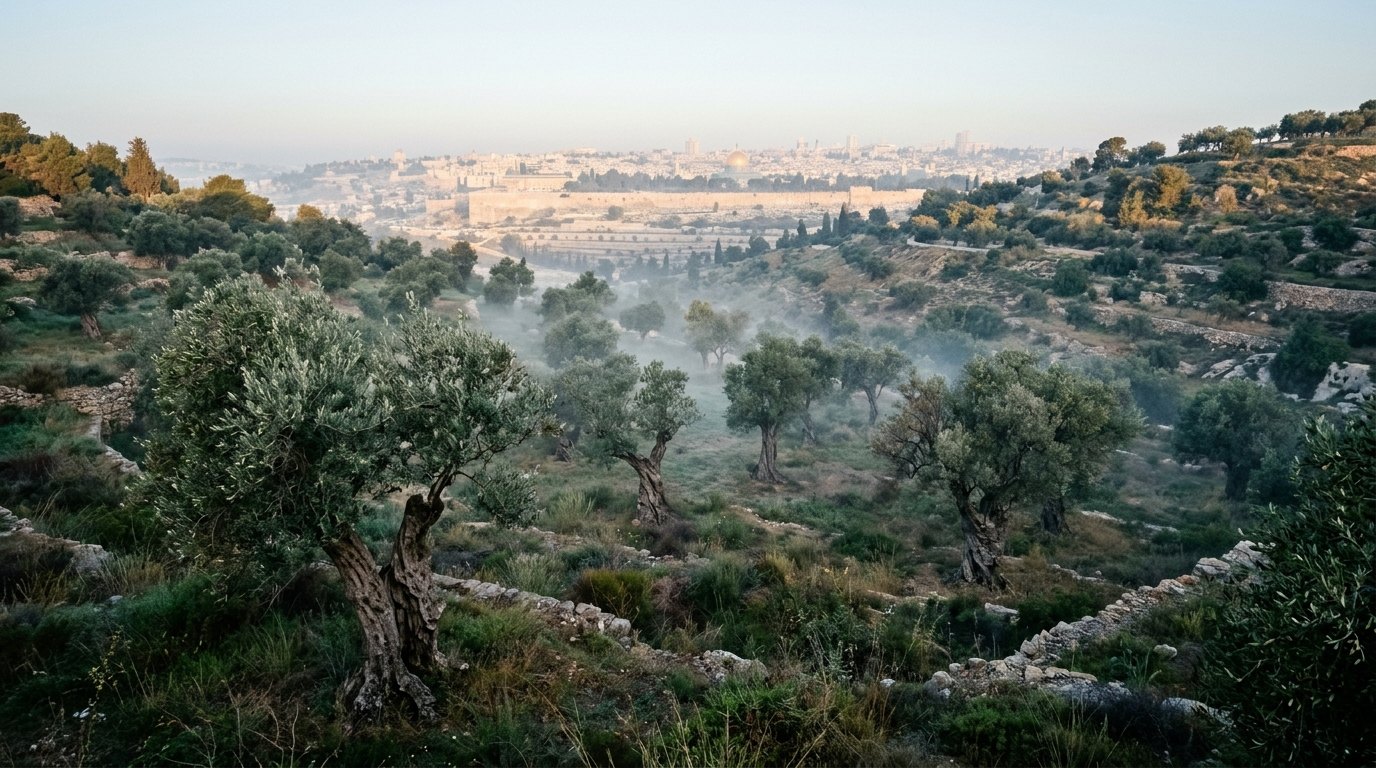
Peace I leave with you; my peace I give you. I do not give to you as the world gives. Do not let your hearts be troubled and do not be afraid.
John 14:27 (NIV)
Jesus explicitly distinguishes His gift of shalom from the world's fragile and external counterfeits.
In the upper room, Jesus declared in John 14:27 that His peace is distinct from the world's fragile counterfeits, providing an unshakeable anchor for troubled hearts. Earthly peace depends upon compliant circumstances, but Christ's shalom is an enduring spiritual reality rooted in His finished work. His entrance into the world was heralded by angels in Luke 2:14 proclaiming peace on earth, fulfilling Zechariah's song in Luke 1:79 that the Messiah would direct our feet into the way of peace. Throughout His earthly ministry, Jesus bestowed this transformative restoration upon broken sinners. In Luke 7:50 He told the repentant woman that her faith had saved her and urged her to go in peace; in Luke 8:48 He spoke the identical blessing over the trembling woman healed of her hemorrhage. Yet Jesus also wept over Jerusalem in Luke 19:42 because the nation rejected the things that belonged to its true shalom. Facing the cross, Jesus promised in John 16:33 that while believers endure tribulation in the world, in Him they possess enduring peace because He has overcome the world. Following His resurrection, the Lord stood among His terrified disciples in John 20:19 and John 20:21, repeatedly greeting them with shalom before sending them forth. This resurrected peace forms the core of apostolic preaching: Acts 10:36 and Romans 10:15 define the gospel itself as the good news of peace through Jesus Christ. In Romans 5:1, Paul affirms that being justified by faith gives us objective peace with God. Through the cross, Jesus abolished the ancient enmity between Jew and Gentile, creating one new man and reconciling both to God (Ephesians 2:14-17), having made peace through His shed blood (Colossians 1:20).
| Passage | What it says |
|---|---|
| Luke 2:14 | The heavenly host proclaims peace on earth toward those on whom God's favor rests. |
| John 14:27 | Christ bequeaths His supernatural peace to His disciples to still their troubled hearts. |
| John 16:33 | Jesus guarantees tribulation in the world but promises abiding peace in His overcoming victory. |
| John 20:19 | The risen Lord greets His gathered, fearful disciples with the announcement of peace. |
| John 20:21 | Jesus repeats His greeting of peace before commissioning the disciples to the world. |
| Romans 5:1 | Being justified by faith, believers have objective peace with God through Jesus Christ. |
| Ephesians 2:14 | Paul declares that Christ Himself is our peace, having broken down the dividing wall. |
| Luke 1:79 | The Messiah shines light on those in darkness to guide their feet into the way of peace. |
| Luke 7:50 | Jesus tells the forgiven woman that her faith has saved her and bids her go in peace. |
| Luke 8:48 | Christ heals the woman with the flow of blood, telling her to depart in wholeness and peace. |
| Luke 19:42 | Jesus weeps over Jerusalem because the city failed to recognize the things making for its peace. |
| Acts 10:36 | God preached the good news of peace through Jesus Christ, who is Lord of all. |
| Romans 10:15 | Scripture honors the messengers who preach the gospel of peace and bring glad tidings of good things. |
| Ephesians 2:15 | Christ abolished hostility in His flesh to create one new man from both groups, making peace. |
| Ephesians 2:17 | Christ came and preached peace to those who were far off and peace to those who were near. |
| Colossians 1:20 | God reconciled all things to Himself, having made peace through the blood of Christ's cross. |
Living in Shalom
The Guarded Mind and the Unbroken Walk

And the peace of God, which transcends all understanding, will guard your hearts and your minds in Christ Jesus.
Philippians 4:7 (NIV)
God's peace transcends human comprehension to actively guard the believer's heart and mind in Christ.
Philippians 4:7 promises that the peace of God surpasses all understanding to guard our hearts and minds in Christ, acting as a garrison against anxious fears. This peace is not passive resignation; it is the active, indwelling work of the Holy Spirit, listed in Galatians 5:22 as His supernatural fruit. Scripture commands the peace of Christ to arbitrate and rule in the believer's inner life (Colossians 3:15). In Romans 8:6, Paul contrasts the death of the carnal mind with the life and peace of a mind set on the Spirit. As 2 Timothy 1:7 reminds us, God did not give us a spirit of fear, but of power, love, and a sound mind. Because believers serve the God of peace, they are called to manifest His nature. Jesus declared the peacemakers blessed as true sons of God in Matthew 5:9, while Mark 9:50 urges disciples to be at peace among themselves. Romans 12:18 and Romans 14:19 command us to actively pursue peace with everyone and build one another up, for God's kingdom consists of righteousness, peace, and joy in the Holy Spirit (Romans 14:17). The church community reflects this order: God is not the author of confusion but of peace (1 Corinthians 14:33), and believers must preserve the unity of the Spirit in the bond of peace (Ephesians 4:3; 1 Thessalonians 5:13). Our spiritual armor includes shoes fitted with the readiness of the gospel of peace (Ephesians 6:15). In James 3:18 and 1 Peter 3:11, the harvest of righteousness is sown in peace by those who make peace. As Hebrews 12:14 and Philippians 4:9 urge a holy pursuit of peace, Paul anchors our confidence in the God of peace who sanctifies us completely (1 Thessalonians 5:23), will crush Satan underfoot (Romans 16:20), and brought Christ from the dead through the eternal covenant (Hebrews 13:20; 2 Thessalonians 3:16; Romans 15:13).
| Passage | What it says |
|---|---|
| Galatians 5:22 | Peace is explicitly identified as an indispensable fruit produced by the indwelling Holy Spirit. |
| Philippians 4:7 | The transcendent peace of God garrison-guards the believer's inner life through Christ Jesus. |
| Colossians 3:15 | The peace of Christ is commanded to rule as an umpire within believers' hearts. |
| 2 Thessalonians 3:16 | Paul petitions the Lord of peace to grant peace continually and in every way. |
| 2 Timothy 1:7 | God has not given a spirit of fear, but of power, love, and a sound mind. |
| James 3:18 | A harvest of righteousness is sown in peace by those who cultivate peace. |
| Matthew 5:9 | Blessed are the peacemakers, for they shall be called the sons of God. |
| Mark 9:50 | Disciples are urged to have salt in themselves and be at peace with one another. |
| Romans 8:6 | Setting the mind on the flesh is death, but setting the mind on the Spirit is life and peace. |
| Romans 12:18 | Believers are urged, as far as it depends on them, to live peaceably with all men. |
| Romans 14:17 | The kingdom of God is not eating and drinking, but righteousness, peace, and joy in the Holy Spirit. |
| Romans 14:19 | Believers must pursue the things that make for peace and for mutual building up. |
| Romans 15:13 | The God of hope fills believers with all joy and peace in believing through the Holy Spirit. |
| Romans 16:20 | The God of peace will soon crush Satan under the feet of His saints. |
| 1 Corinthians 14:33 | God is not the author of confusion and disorder, but of peace in all the churches. |
| Ephesians 4:3 | Saints are exhorted to maintain the unity of the Spirit in the bond of peace. |
| Ephesians 6:15 | The armor of God includes fitting feet with the preparation of the gospel of peace. |
| Philippians 4:9 | Practicing apostolic truth ensures that the God of peace will be with His people. |
| 1 Thessalonians 5:13 | Believers are instructed to esteem their leaders highly and be at peace among themselves. |
| 1 Thessalonians 5:23 | The God of peace sanctifies His people wholly in spirit, soul, and body blameless at Christ's coming. |
| Hebrews 12:14 | Believers must strive for peace with everyone and for holiness, without which no one sees the Lord. |
| Hebrews 13:20 | The God of peace brought again from the dead our Lord Jesus through the blood of the eternal covenant. |
| 1 Peter 3:11 | Believers must turn from evil, do good, and actively seek and pursue peace. |
Where in the Bible
| Book | Passages |
|---|---|
| Genesis | 4 · Genesis 15:15, Genesis 26:29, Genesis 43:23, Genesis 43:27 |
| Exodus | 1 · Exodus 22:14 |
| Leviticus | 1 · Leviticus 26:6 |
| Numbers | 1 · Numbers 6:24-26 |
| Deuteronomy | 1 · Deuteronomy 20:10 |
| Judges | 1 · Judges 6:24 |
| 1 Samuel | 1 · 1 Samuel 25:6 |
| Psalms | 7 · Psalms 122:6, Psalms 4:8, Psalms 29:11, Psalms 34:14, Psalms 85:10, Psalms 72:7, Psalms 119:165 |
| Proverbs | 1 · Proverbs 3:2 |
| Isaiah | 9 · Isaiah 9:6, Isaiah 26:3, Isaiah 41:10, Isaiah 53:5, Isaiah 54:10, Isaiah 32:17, Isaiah 48:18, Isaiah 52:7, Isaiah 57:19 |
| Jeremiah | 3 · Jeremiah 29:7, Jeremiah 29:11, Jeremiah 33:6 |
| Ezekiel | 2 · Ezekiel 34:25, Ezekiel 37:26 |
| Micah | 1 · Micah 5:5 |
| Haggai | 1 · Haggai 2:9 |
| Zechariah | 1 · Zechariah 9:10 |
| Matthew | 1 · Matthew 5:9 |
| Mark | 1 · Mark 9:50 |
| Luke | 5 · Luke 2:14, Luke 1:79, Luke 7:50, Luke 8:48, Luke 19:42 |
| John | 4 · John 14:27, John 16:33, John 20:19, John 20:21 |
| Acts | 1 · Acts 10:36 |
| Romans | 8 · Romans 5:1, Romans 10:15, Romans 8:6, Romans 12:18, Romans 14:17, Romans 14:19, Romans 15:13, Romans 16:20 |
| 1 Corinthians | 1 · 1 Corinthians 14:33 |
| Galatians | 1 · Galatians 5:22 |
| Ephesians | 5 · Ephesians 2:14, Ephesians 2:15, Ephesians 2:17, Ephesians 4:3, Ephesians 6:15 |
| Philippians | 2 · Philippians 4:7, Philippians 4:9 |
| Colossians | 2 · Colossians 1:20, Colossians 3:15 |
| 1 Thessalonians | 2 · 1 Thessalonians 5:13, 1 Thessalonians 5:23 |
| 2 Thessalonians | 1 · 2 Thessalonians 3:16 |
| 2 Timothy | 1 · 2 Timothy 1:7 |
| Hebrews | 2 · Hebrews 12:14, Hebrews 13:20 |
| James | 1 · James 3:18 |
| 1 Peter | 1 · 1 Peter 3:11 |
The story in order
- God's promise of peace to Abram (c. 2000 BC) · Genesis 15:15 · God assures Abram of a peaceful end to his life.
- Isaac's peaceful departure (c. 1900 BC) · Genesis 26:29 · Abimelech acknowledges Isaac's peaceful separation.
- Joseph reassures his brothers (c. 1800 BC) · Genesis 43:23 · Joseph's steward brings words of peace and safety.
- The priestly blessing of shalom (c. 1400 BC) · Numbers 6:24-26 · The Lord's blessing includes His countenance and peace.
- Offer terms of peace in war (c. 1400 BC) · Deuteronomy 20:10 · Israel is instructed to seek peace before battle.
- David's greeting of wholeness (c. 1000 BC) · 1 Samuel 25:6 · David blesses Nabal's household with peace.
- Gideon names altar Yahweh-Shalom (c. 1100 BC) · Judges 6:24 · The Lord Himself is declared to be peace.
- Prophecy of the Prince of Peace (c. 740 BC) · Isaiah 9:6 · The coming Messiah is named Prince of Peace.
- The suffering servant brings shalom (c. 700 BC) · Isaiah 53:5 · Our peace comes through the Servant's suffering.
- Jesus' birth and the announcement of peace (c. 4 BC) · Luke 2:14 · Heavenly host proclaims peace on earth.
- Jesus commissions disciples with peace (AD 30) · John 20:19 · The risen Christ grants His disciples peace.
- Christ is our peace (c. AD 60) · Ephesians 2:14 · Jesus breaks down barriers, creating peace.
- Peace as a fruit of the Spirit (c. AD 55) · Galatians 5:22 · Shalom is a key characteristic of the Spirit's work.
- The God of peace crushes Satan (c. AD 57) · Romans 16:20 · God's ultimate victory brings peace.
Key words
- Shalom (shalom, שָׁלוֹם)
- Wholeness, completeness, safety, welfare, and restored relationship. · Genesis 15:15
- Peace (shalom, שָׁלוֹם)
- The state of tranquility, security, and well-being granted by God. · Numbers 6:24-26
- Prince of Peace (Sar Shalom, שַׂר שָׁלוֹם)
- The Messiah, whose reign brings ultimate peace and righteousness. · Isaiah 9:6
- Our Peace (eirēnē, εἰρήνη)
- Christ Himself, who reconciles humanity to God and to each other. · Ephesians 2:14
- Fruit of the Spirit (karpos, καρπός)
- The qualities produced in believers by the Holy Spirit, including peace. · Galatians 5:22
- God of Peace (Theos tēs eirēnēs, Θεὸς τῆς εἰρήνης)
- The divine source and author of all peace. · Romans 15:33
Biblical shalom is neither a fragile human truce nor an inner mood contingent on favorable circumstances. It is the objective, enduring wholeness won through the blood of Christ and granted by the Lord of peace Himself. Rooted in His finished work, the believer can rest securely, knowing every fracture in our lives and world will one day yield to His eternal peace.
74 passages, each cited once.
Scripture cited
- John 14:27
- Philippians 4:7
- John 16:33
- Colossians 3:15